
Contract vs Full-Time Work in Canada: Which Career Path Is Right for You?
The way Canadians work is changing quickly. Remote and hybrid work are now mainstream, digital tools make it easier to work independently, and the gig economy continues to grow across nearly every industry. Today, more Canadians are actively weighing the pros and cons of flexible contract work versus the stability of full-time roles, and for many, the answer is no longer obvious.
According to Statistics Canada, nearly 2.7 million Canadians were self-employed as of early 2025, reflecting a steady shift toward contract, freelance, and independent work. Some professionals are drawn to the autonomy, earning potential, and variety that contract work can offer. Others still value the predictability, benefits, and structure of traditional full-time employment. As inflation, cost-of-living pressures, and workplace expectations evolve, choosing the right work model has become an important financial and lifestyle decision.
This choice matters more than ever because it affects far more than your paycheque. Your employment structure influences job security, taxes, benefits, work-life balance, and long-term financial planning. Whether you are early in your career, transitioning out of a corporate role, returning to the workforce, or considering self-employment, understanding how contract, freelance, and full-time work differ can help you make a decision that aligns with your goals.
Choosing how you work is not just about employment status. It is about designing a career that supports the way you want to live, grow, and build financial confidence over time.
Key Takeaways
- Contract work offers flexibility, higher short-term pay, and project variety, but may lack long-term stability.
- Freelance and contract work are not the same; freelancers are typically self-employed with multiple clients.
- Career planning helps you get the best of any path; understanding the trade-offs is key.
- Industries like tech, healthcare, and marketing are especially lucrative for contractors.
Understanding Today’s Work Models in Canada
Before weighing the pros and cons, it helps to clearly understand how full-time employment, contract work, and freelancing differ. These terms are often used interchangeably, but they represent very different working arrangements with distinct expectations around pay, security, taxes, and independence.
Full-Time employment
Full-time employment is the most traditional path. You work for one employer on an ongoing basis, receive a consistent paycheck, and usually have access to benefits such as extended health coverage, paid vacation, and sometimes retirement plans. This option appeals to people who value stability, predictable income, and clear career progression within an organization.
Contract work
Contract work sits between full-time employment and freelancing. Contractors are typically hired for a specific role, project, or time period. While you may work similar hours to full-time employees, you are paid a higher hourly or project rate instead of receiving benefits. Contract work is common in industries like technology, healthcare, engineering, and marketing, and it often appeals to professionals who want flexibility while still working with established organizations.
Freelancing
Freelancers operate as independent businesses. You work with multiple clients, set your own rates, and control when and how you work. This model offers the greatest flexibility and variety, but also comes with more responsibility. Freelancers handle their own marketing, invoicing, taxes, and expenses, and income can fluctuate from month to month. Many Canadians choose freelancing for the autonomy it provides, especially in creative, digital, and professional service industries.
Full-Time, Contract, and Freelance Work Compared
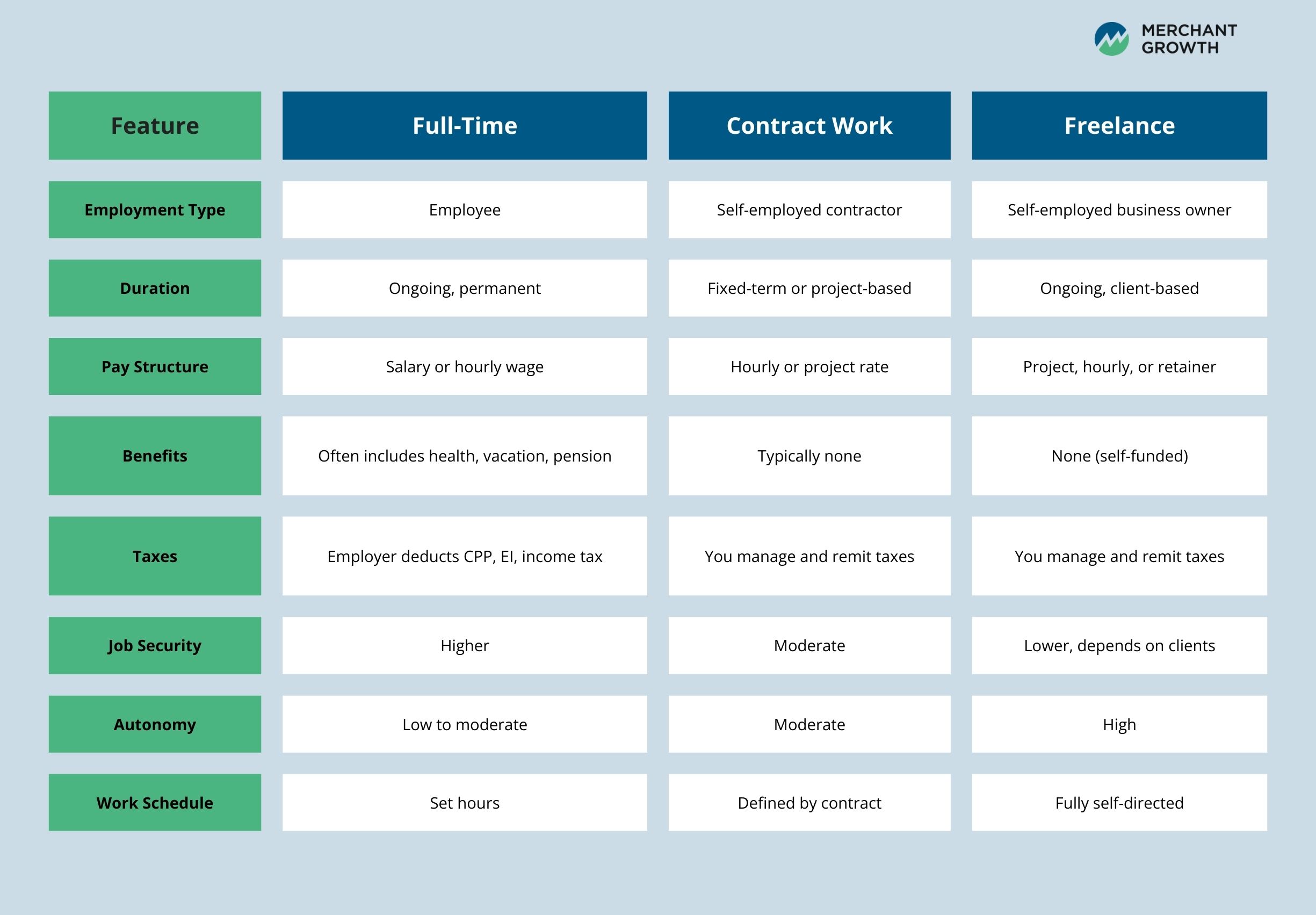
How the CRA Defines Employees vs. Contractors
In Canada, the Canada Revenue Agency (CRA) determines whether someone is an employee or a contractor based on the actual working relationship, not the job title. The CRA looks at factors such as control (who decides how the work is done), ownership of tools, chance of profit and risk of loss, and how integrated the worker is into the business. Understanding this distinction matters because it affects taxes, deductions, and eligibility for benefits.
If you are considering contract or freelance work, reviewing the CRA’s guidance on employment classification can help you avoid misclassification issues and plan properly for taxes and financial obligations.
The Pros and Cons of Contract, Freelance, and Full-Time Employment
There is no single “right” way to work. The best option depends on what you value most at this stage of your career, whether that is stability, flexibility, income potential, or independence. Understanding the trade-offs of each work style can help you choose a path that supports both your professional goals and your personal priorities.
Below is a side-by-side comparison of the most common advantages and challenges associated with full-time employment, contract work, and freelancing in Canada.
| Work Type | Pros | Cons |
|---|---|---|
| Full-Time | – Reliable, steady income – May include employer-covered benefits (health, vacation, retirement) – Job security and career path opportunities |
– Less flexibility in schedule and location – Limited control over workload or projects |
| Contract Work | – Higher hourly or project pay – More control over work environment and schedule – Exposure to varied industries and roles |
– Typically no benefits or paid leave – Income depends on contract availability – Responsible for own taxes |
| Freelance | – Maximum flexibility and independence – Ability to choose clients and projects – Opportunity to build a personal brand |
– Irregular income – Must self-manage taxes, insurance, and retirement – Requires constant self-promotion |
When reviewing these options, it helps to think beyond just income. Consider how much flexibility you want, how comfortable you are with financial uncertainty, and whether you prefer structure or autonomy in your day-to-day work. Many Canadians move between these models over time, starting in full-time roles, transitioning into contract work, and eventually freelancing or running a business of their own. The goal is not to pick a permanent label, but to choose the model that best fits your current needs and long-term plans.
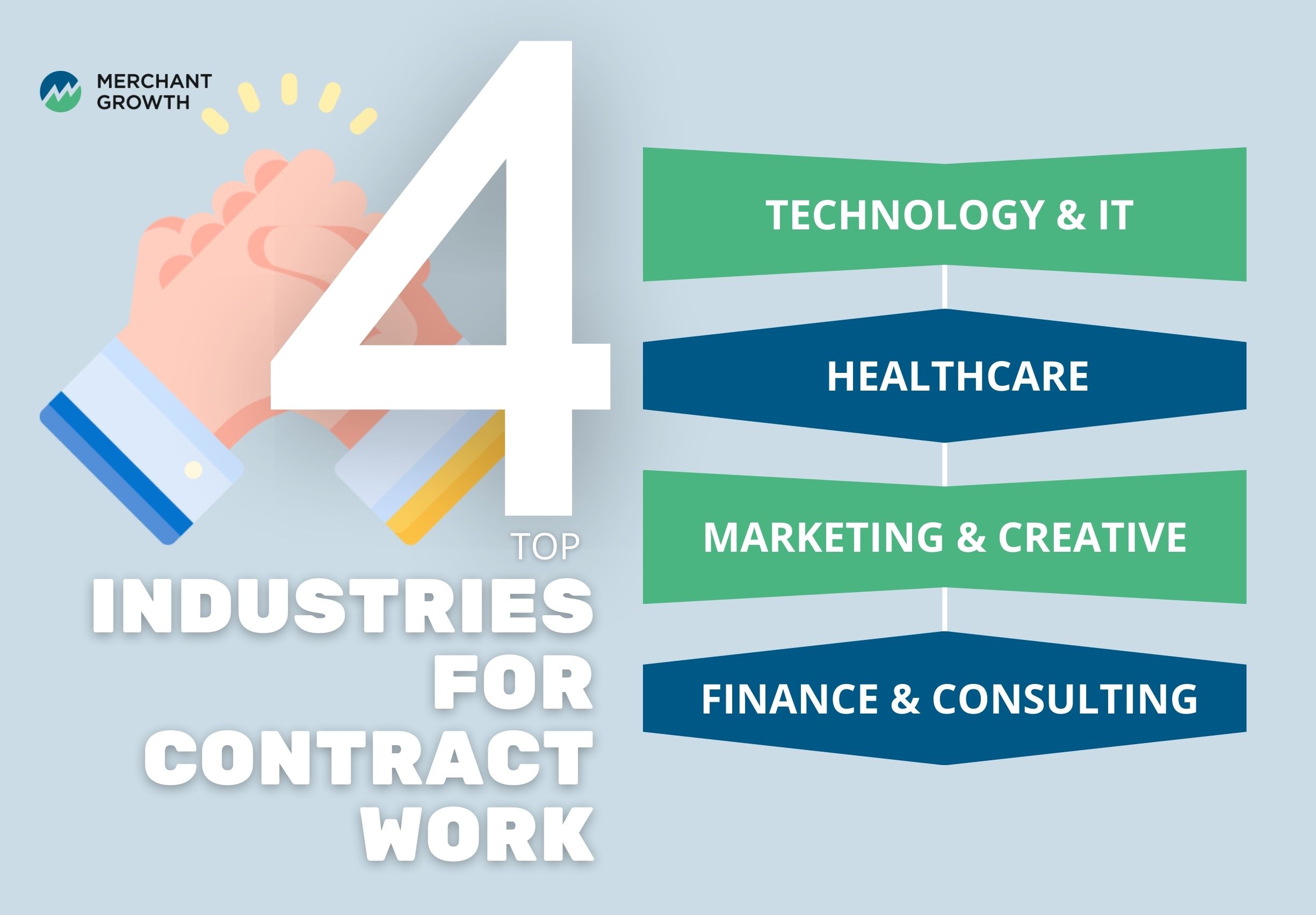
Top Industries for Contract Work in Canada
Contract work has become a core part of the Canadian labour market, particularly in industries where demand fluctuates, projects are time-bound, or specialized skills are required. In fact, 70% of employers report plans to increase their use of contract workers and freelancers, reflecting a long-term shift toward more flexible workforce models. While contract opportunities exist across most sectors, some industries consistently rely on independent talent to stay agile and competitive.
Technology and IT
Technology continues to lead when it comes to contract work. Companies often bring in contract professionals to support software development, cybersecurity initiatives, system migrations, or short-term product launches. The fast pace of innovation makes flexible talent especially valuable, allowing businesses to scale expertise without long-term commitments. Roles such as software developers, UI and UX designers, and cybersecurity analysts remain in steady demand, particularly in areas related to cloud infrastructure, artificial intelligence, and data security.
Healthcare
Contract work plays a critical role in healthcare, especially where staffing shortages or regional demand create gaps. Travel nurses, locum physicians, and medical coders are frequently engaged to ensure continuity of care in hospitals, clinics, and long-term care facilities. These roles often require specific licensing and certifications, but they offer professionals the ability to work across locations while maintaining a flexible schedule.
Marketing and creative services
Marketing and creative fields have long embraced contract and freelance models. Businesses often hire specialists for campaign launches, rebrands, website projects, or content creation rather than building permanent in-house teams. Writers, graphic designers, video producers, and digital marketers are commonly engaged on a project basis, with demand particularly strong for professionals who understand digital channels and brand storytelling.
Finance and consulting
In finance and consulting, contract roles are frequently tied to audits, budgeting cycles, system implementations, or strategic initiatives. Accountants, financial analysts, and business consultants may be brought in to provide targeted expertise during peak periods or times of change. These roles are often well-compensated but require strong credentials and the ability to deliver results within defined timelines.
Together, these industries highlight why contract work continues to grow. Businesses gain flexibility and specialized expertise, while professionals gain access to varied projects, income opportunities, and career mobility.
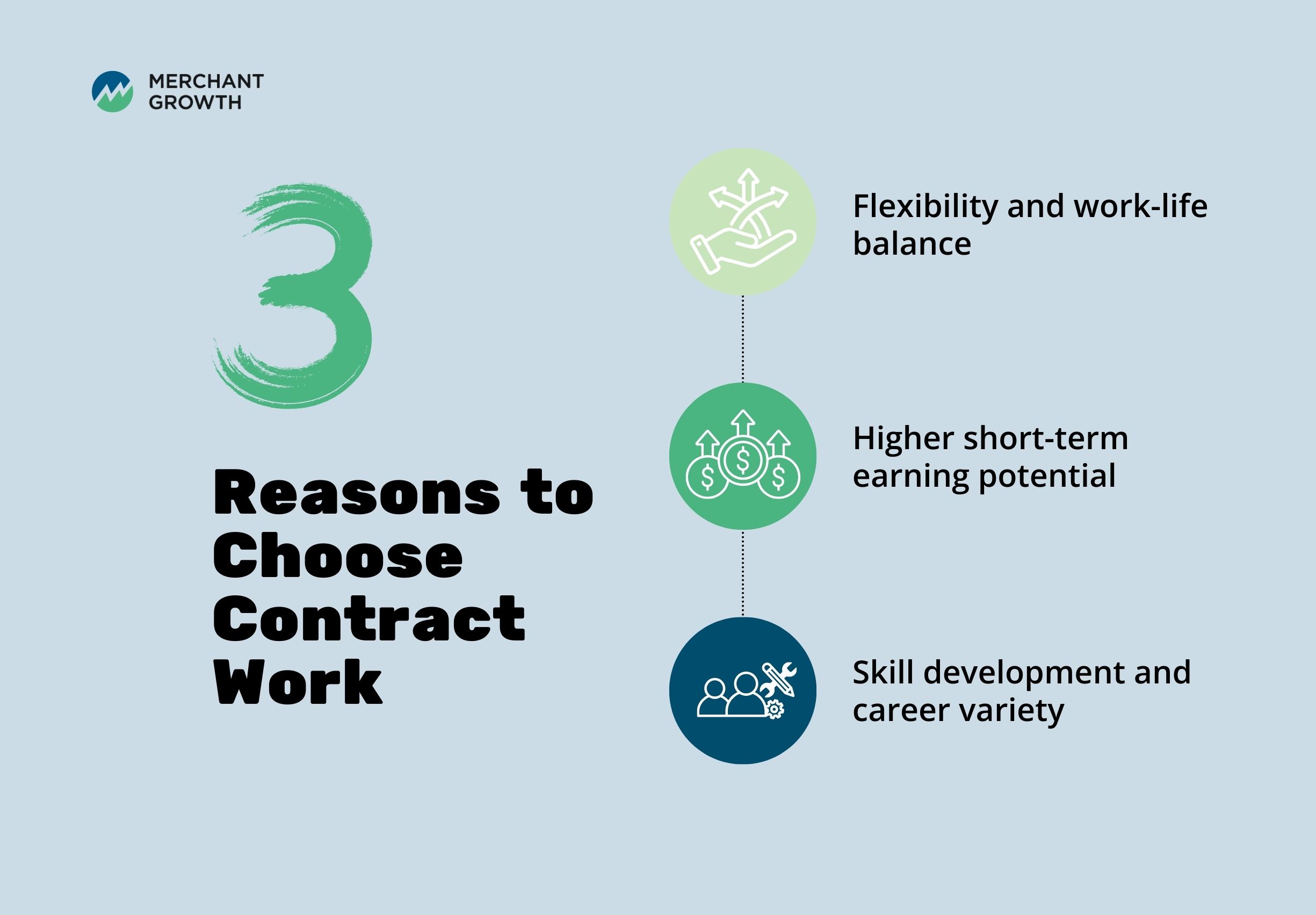
Why Many Canadians Choose Contract Work Over Full-Time Roles
Contract work is not simply an alternative to full-time employment. For many Canadians, it is a deliberate choice shaped by lifestyle goals, career priorities, and changing expectations about work. While it is not the right fit for everyone, contract roles offer advantages that traditional employment may not provide at certain stages of life.
Flexibility and work-life balance
One of the most common reasons people move into contract work is flexibility. Contractors often have greater control over their schedules, locations, and workloads. This can be especially valuable for parents, caregivers, or individuals seeking better balance between personal and professional responsibilities. Remote and hybrid contract roles also reduce commute time, giving people back hours each week.
Higher short-term earning potential
In many industries, contract professionals earn higher hourly or project-based rates than salaried employees performing similar work. For individuals focused on accelerating savings, paying down debt, or building a financial cushion, contract work can provide a faster path toward those goals. This model works particularly well for people whose benefits are covered elsewhere or who prefer to manage them independently.
Skill development and career variety
Contract work exposes professionals to different teams, tools, and challenges in a shorter time frame. This variety accelerates learning and builds a diverse skill set that can increase long-term career value. For example, a marketing consultant may work with a startup on brand positioning, then support an established company with digital campaigns, gaining insights that would take years to acquire in a single role.
Ultimately, many people choose contract work because it aligns more closely with how they want to live and grow. Whether the goal is flexibility, income growth, or professional variety, contract roles offer an alternative path that can evolve alongside changing personal and career priorities.
Flexible Work Models: Contract vs. Freelance Explained
Contract and freelance work are often grouped together because both offer more flexibility than traditional employment. However, the day-to-day realities, responsibilities, and risks are quite different. Understanding these differences is especially important if you are considering independent work for the first time.
Compensation and pay structure
Contract workers are typically hired for a defined role or project and are paid an agreed hourly or project rate. That rate is often higher than a salaried position because it accounts for the lack of long-term security. Freelancers also set their own rates, but income can vary significantly month to month depending on how many clients they secure and how consistently work flows in.
Benefits and expenses
Contractors usually do not receive benefits like health coverage, paid vacation, or retirement contributions. Freelancers face the same reality, but with added responsibility. Freelancers must also cover business expenses such as software, equipment, insurance, and marketing costs. In both cases, planning ahead for benefits and time off is essential.
Flexibility and control
Freelancers have the highest level of control. They choose their clients, set their schedules, and decide which projects to accept. Contractors typically have more structure. While contracts are temporary, contractors often work set hours and follow company processes during the contract period. This can feel closer to full-time work, just without permanence.
Job security and stability
Full-time roles offer predictability, while flexible work trades stability for opportunity. Contracts can end when projects wrap up or budgets change. Freelancers face even more variability, as they are responsible for continuously finding new work. The upside is freedom and growth potential, but it requires strong financial planning and comfort with uncertainty.
Choosing between contract and freelance work is less about titles and more about how much responsibility you want to carry. Contract work can be a stepping stone into flexible employment, offering independence without fully running a business. Freelancing suits those ready to manage income swings, taxes, and client relationships in exchange for maximum autonomy.

Taxes, Deductions, and Legal Responsibilities in Canada
How you work doesn’t just affect your schedule and income. It also changes how you’re taxed, what you’re responsible for legally, and how much planning you need to do throughout the year. Understanding these differences upfront can help you avoid surprises and stay onside with the Canada Revenue Agency.
How taxes work for full-time employees
If you are a full-time employee, taxes are relatively straightforward. Your employer automatically deducts income tax, Canada Pension Plan contributions, and Employment Insurance premiums from each paycheque. At year end, you receive a T4 summarizing your earnings and deductions, which you use to file your personal tax return. Most employees do not need to worry about setting money aside or making installment payments because those obligations are handled at the payroll level.
How taxes work for contractors and freelancers
Contractors and freelancers are treated as self-employed individuals in most cases. This means taxes are not deducted at source. You are responsible for calculating and remitting your own income tax, Canada Pension Plan contributions, and, in some situations, Employment Insurance if you opt in voluntarily.
If your annual revenue exceeds the small supplier threshold, you must also register for and charge GST or HST, collect it from clients, and remit it to the CRA on schedule. Because nothing is withheld automatically, many independent workers set aside a portion of every payment to avoid cash flow strain at tax time.
One advantage of self-employment is the ability to deduct legitimate business expenses. Common deductions include home office costs, software subscriptions, professional fees, equipment, marketing, and a portion of phone or internet expenses used for work. Keeping detailed records and receipts is essential.
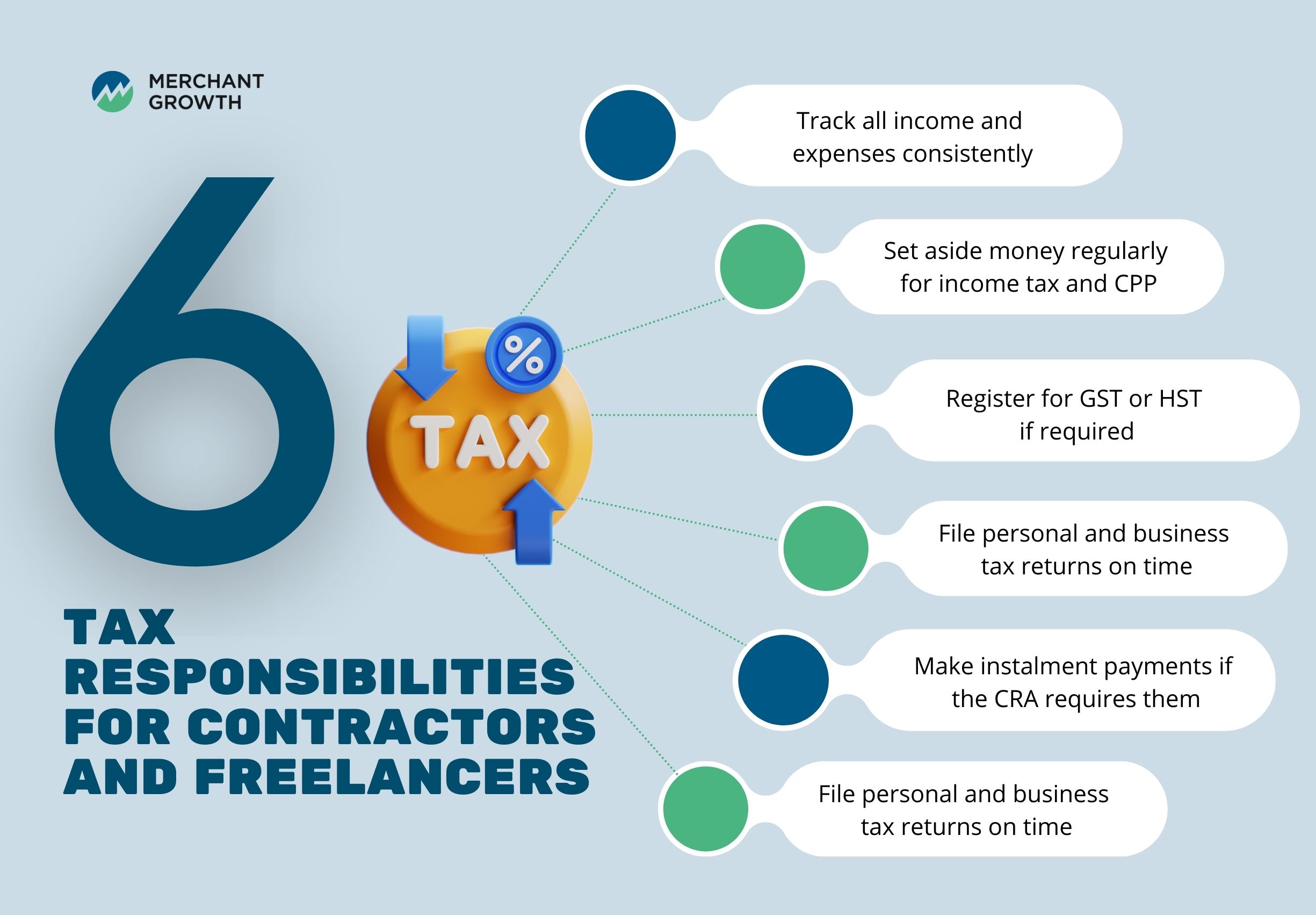
Tax responsibilities for contractors and freelancers
If you are working independently, this checklist can help you stay organized:
- Track all income and expenses consistently
- Set aside money regularly for income tax and CPP
- Register for GST or HST if required
- File personal and business tax returns on time
- Make instalment payments if the CRA requires them
- Keep records and receipts for at least six years
CRA classification and misclassification risks
The CRA distinguishes between employees and independent contractors based on factors such as control over work, ownership of tools, financial risk, and integration into the business. Misclassification can create serious issues. If a worker is treated as a contractor but should be considered an employee, the hiring company may be liable for unpaid payroll taxes, penalties, and interest.
For workers, misclassification can affect eligibility for benefits, tax deductions, and legal protections. If your work arrangement feels unclear, it is worth reviewing CRA guidance or speaking with a tax professional to confirm your status.
Understanding your tax and legal obligations early allows you to plan with confidence, protect your income, and choose the work structure that best supports your long-term goals.

Career Growth and Lifestyle Considerations
Beyond pay and taxes, the way you work has a real impact on how your career develops and how your day-to-day life feels. Full-time, contract, and freelance roles each offer different paths for growth, learning, and work-life balance. Understanding these differences can help you choose an option that supports both your professional goals and your personal priorities.
Career growth and skill development
Full-time roles often provide a more structured approach to career development. Employees typically have access to formal training programs, mentorship, performance reviews, and clearly defined promotion paths. Working within a single organization also makes it easier to build long-term relationships, gain institutional knowledge, and move into leadership roles over time. For people who value stability and a clear trajectory, this structure can be a major advantage.
Contractors, by contrast, tend to build their skills through variety rather than hierarchy. Working across multiple projects, teams, or industries can accelerate learning and broaden expertise quickly. However, professional development is largely self-directed. Contractors need to actively pursue certifications, networking opportunities, and new challenges if they want to continue advancing.
Freelancers experience growth differently again. Because they are effectively running their own businesses, skill development often includes both technical expertise and business skills like pricing, negotiation, marketing, and client management. This can be incredibly empowering, but it requires initiative and ongoing investment in learning.
Lifestyle and work-life balance
Lifestyle considerations are often the deciding factor for many professionals. Full-time employment offers predictability. Set hours, steady income, and defined time off make it easier to plan family commitments, vacations, and long-term financial goals. For some, this consistency reduces stress and supports a healthier work-life balance.
Contract and freelance work provide greater flexibility but come with trade-offs. Independent workers often have more control over when and where they work, which can be ideal for parents, caregivers, or people who value autonomy. At the same time, they must manage administrative tasks like invoicing, contracts, taxes, and client communication.
For example, a freelance developer may enjoy choosing projects that align with their interests and working remotely, but they are also responsible for finding clients, negotiating rates, and ensuring they get paid on time. That freedom can be rewarding, but it requires discipline and strong organizational habits.
Ultimately, there is no universally “better” option. The right choice depends on how you want to grow, how much structure you prefer, and how you want work to fit into your life.

Risks and Financial Management for Contractors
Contract and freelance work offer flexibility and income potential, but they also come with financial realities that full-time employees rarely have to manage on their own. Without a guaranteed paycheck or employer-provided safety net, independent workers need to be more intentional about planning, cash flow, and risk management.
One of the biggest challenges contractors face is income variability. Some months may be highly profitable, while others are slower or unexpectedly quiet. Contracts can end with little notice, clients may delay payments, and work can be seasonal depending on your industry. This unpredictability makes financial discipline especially important, not just for covering day-to-day expenses, but for maintaining peace of mind.
Managing Irregular Income Like a Pro
Successfully navigating irregular income starts with building strong financial habits. Setting aside money for taxes is critical, as contractors are responsible for remitting income tax, CPP, and potentially GST or HST themselves. A separate savings account for tax obligations can prevent unpleasant surprises at filing time.
An emergency fund is equally important. Many independent professionals aim to save three to six months of essential expenses to cover gaps between contracts or slower periods. This buffer gives you flexibility to choose better opportunities instead of feeling pressured to accept any work that comes along.
Using accounting and budgeting tools can also make a significant difference. Tracking income, expenses, and upcoming invoices helps you understand cash flow patterns and plan ahead. When you can clearly see which months tend to be slower or which clients take longer to pay, it becomes easier to adjust spending or prepare in advance.
Even with careful planning, there may be times when cash flow gaps arise. This is where financing can play a strategic role. Term financing, such as the options offered by Merchant Growth, can help contractors smooth income between contracts, cover short-term expenses, or invest in tools and training that support long-term earning potential. Used thoughtfully, financing provides breathing room without disrupting your momentum or forcing you to pause your work.
Independent work rewards flexibility and initiative, but it also requires a proactive approach to financial management. By planning for variability and using the right tools and resources, contractors can reduce risk and create a more stable, sustainable way of working.
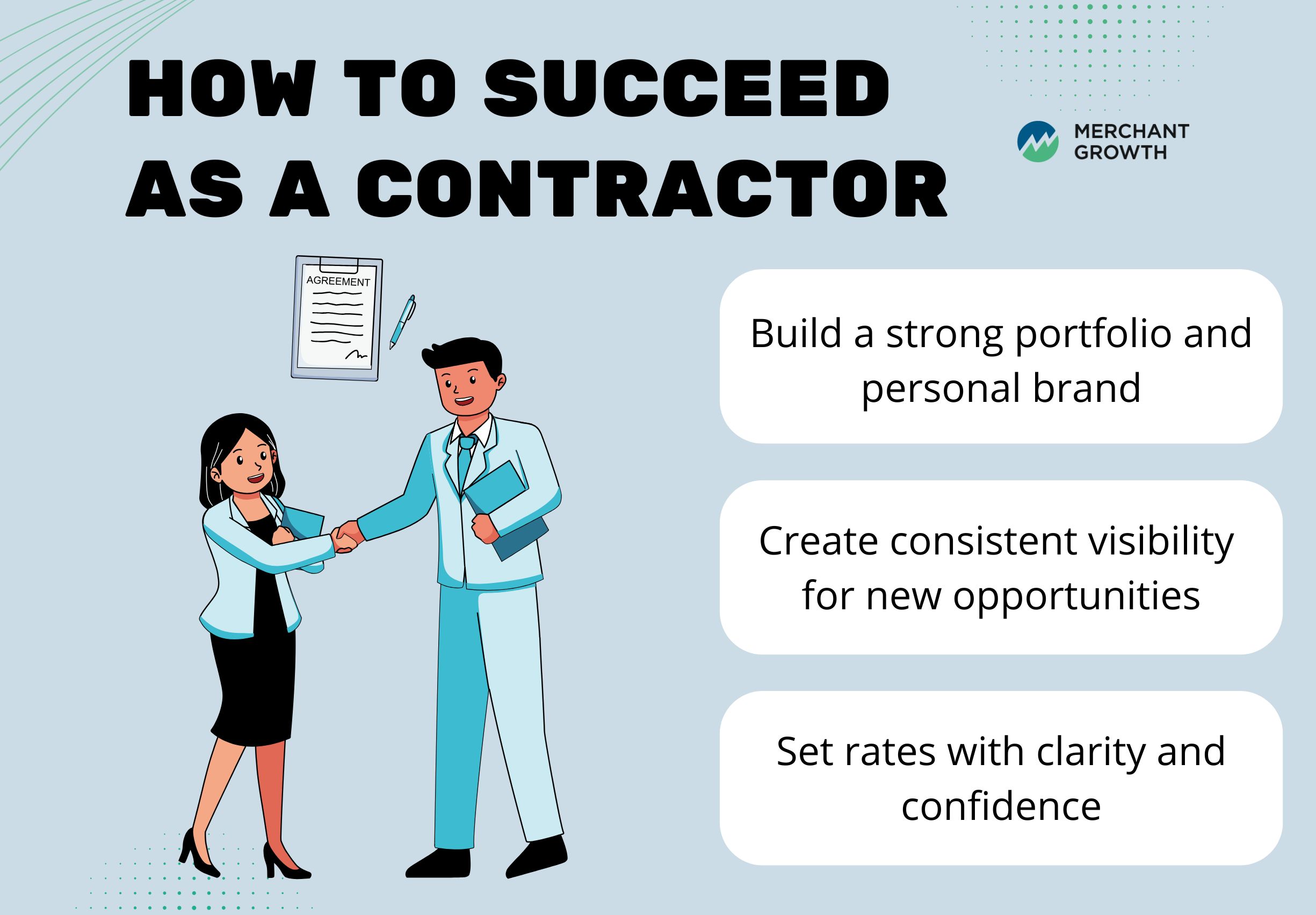
How to Succeed as a Contractor or Freelancer
Choosing contract or freelance work is only the first step. Long-term success depends on how well you position yourself, manage your workload, and plan for growth. Independent work rewards initiative, but it also requires structure. Contractors and freelancers who treat their work like a business, even when they are just starting out, tend to be more resilient, confident, and financially stable over time.
Build a strong portfolio and personal brand
Your portfolio is often your first impression, and in many cases, it replaces a traditional resume. A simple website that highlights your services, past projects, and client results helps establish credibility. Keeping your LinkedIn profile up to date, sharing insights related to your field, and collecting testimonials from satisfied clients all reinforce your expertise. Even early in your journey, documenting real work, side projects, or pilot contracts can make a meaningful difference.
Create consistent visibility for new opportunities
Contract work rarely comes from a single source. Many professionals combine online platforms, referrals, networking, and direct outreach to keep their pipeline active. Staying visible means regularly letting people know what you do and what problems you solve. This could be as simple as posting updates on LinkedIn, attending industry events, or reconnecting with former colleagues. Over time, this consistency reduces the stress of finding your next contract.
Set rates with clarity and confidence
Pricing is one of the most common challenges for independent workers. Strong rates are based on market research, experience, and the value you deliver, not just hours worked. Whether you charge hourly or per project, clear pricing sets expectations and builds trust. As demand for your skills grows, revisiting your rates ensures your income keeps pace with your expertise and workload.
Success as a contractor or freelancer does not come from doing everything at once. It comes from building solid habits, refining your positioning, and making thoughtful decisions that support sustainable growth.

Hybrid Models and Modern Work Trends
Work is no longer a simple choice between full-time employment and independent contracting. Many businesses and professionals are now meeting in the middle through hybrid work models that offer flexibility without fully committing to one structure. These arrangements are becoming increasingly common across Canada as companies adapt to remote work, talent shortages, and project-based demands.
One popular option is the contract-to-hire model. In this setup, a professional is brought on as a contractor for a defined period, with the possibility of transitioning into a full-time role if the fit is right. This allows both the worker and the employer to assess skills, culture fit, and long-term needs before making a permanent commitment.
Part-time contracting is another growing trend. Professionals may work on a reduced schedule for one or more companies, balancing steady income with flexibility. This model is common in roles like marketing, IT support, finance, and HR, where businesses need ongoing expertise but not a full-time presence.
Many Canadian employers are also adopting mixed workforce structures. These teams combine full-time employees with contractors and freelancers to scale up or down as needed. For example, a tech company might rely on full-time developers for core products while hiring contract specialists for cybersecurity audits or short-term development sprints. Retail and e-commerce businesses often use contractors during peak seasons, while professional service firms bring in freelance designers, writers, or analysts for specific client projects.
At the same time, freelance platforms and remote work tools are making it easier than ever to connect talent with opportunity. Professionals can now work with companies across provinces or internationally, while employers gain access to a broader talent pool without geographic limitations. These shifts reflect a larger move toward flexibility, adaptability, and outcome-focused work rather than rigid employment structures.

Employer Perspective: Choosing the Right Hire
For business owners, the decision between hiring a full-time employee or engaging a contractor is both strategic and financial. Each option offers distinct advantages, and the right choice depends on your operational needs, budget, and long-term goals.
Contractors provide flexibility. They can be brought in quickly, scaled up or down, and hired for specialized skills without long-term commitments. This makes them ideal for seasonal demand, short-term projects, or highly technical work that is not needed year-round. However, contractors typically come at a higher hourly or project cost and offer less control over schedules and workflows.
Full-time employees, on the other hand, offer stability and continuity. They are more deeply integrated into the business, understand internal systems, and contribute to long-term growth and culture. Hiring full-time also reduces the risk of turnover during critical projects and helps build institutional knowledge. The trade-off is higher fixed costs, including salaries, benefits, payroll taxes, and onboarding time.
Compliance is another important factor. Misclassifying workers can lead to penalties, back taxes, and legal issues. Employers must ensure contractors meet CRA criteria for self-employment, including control over work, ownership of tools, and independence from the organization. When in doubt, seeking professional advice can help avoid costly mistakes.
When to Hire a Contractor vs. a Full-Time Employee
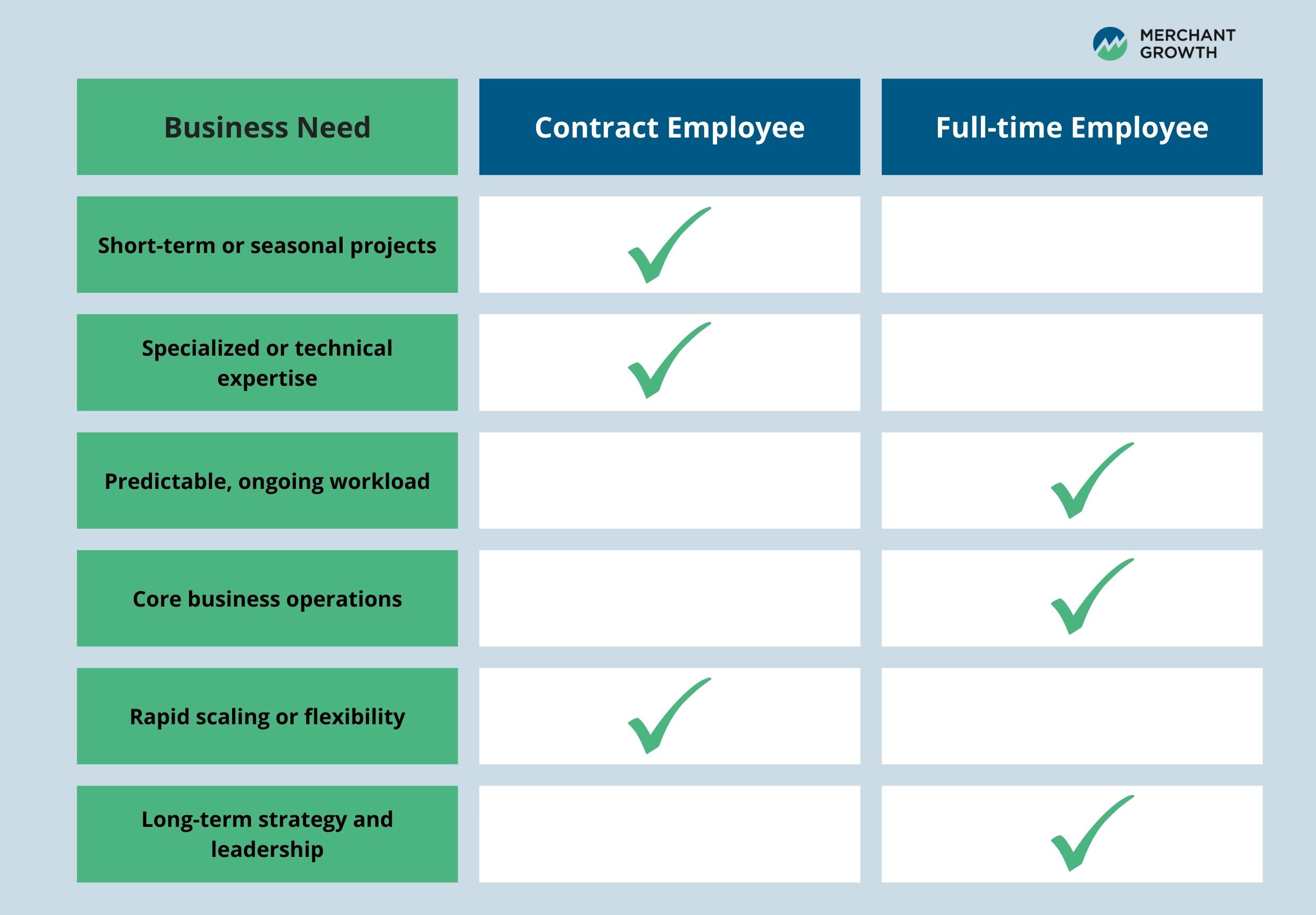
Many businesses use a blend of both to stay agile while maintaining a strong core team. By matching the type of work to the right hiring model, employers can control costs, reduce risk, and build teams that support sustainable growth.
These decisions also tie closely to cash flow and planning. Flexible workforce models often work best when businesses have access to financing that helps manage payroll, project costs, or growth periods. In this way, workforce strategy and financial strategy go hand in hand, supporting both operational stability and long-term success.
Take the quiz to see what type of hire is best for your business.
Ready for Flexible Work? Find Out If Contract or Freelance Life Fits You
Thinking about contract or freelance work is exciting, but it’s also a big shift in how you earn, plan, and manage your career. Before making the leap, it’s worth taking a moment to reflect on what this kind of work really demands day to day.
Ask yourself a few honest questions:
- Do you enjoy variety, independence, and taking on new challenges regularly?
- Are you comfortable with income that may fluctuate from month to month?
- Can you stay organized when it comes to invoicing, taxes, and budgeting?
- Do you feel motivated working on your own without a traditional team or manager?
There’s no right or wrong answer. Contract and freelance work can be incredibly rewarding for the right person, but it works best when your lifestyle, financial habits, and career goals are aligned.
To help you decide with confidence, download our free worksheet. It walks you through practical considerations around income stability, taxes, lifestyle priorities, and long-term goals so you can determine whether flexible work is the right next step for you — or whether a hybrid or full-time path makes more sense right now.
Download the worksheet and map out your next move with clarity.
This keeps the tone encouraging and practical, while giving readers a clear, actionable takeaway at the end of the article.
Choosing the Path That Fits Your Career and Life
There is no single “best” way to work. Full-time roles, contract work, and freelancing all offer meaningful opportunities, and the right choice depends on your priorities, risk tolerance, and long-term goals. For some Canadians, stability, benefits, and predictable income matter most. For others, flexibility, autonomy, and control over how and when they work are worth the trade-offs.
As Canada’s job market continues to evolve, with more professionals moving toward contract, freelance, and hybrid models, understanding the financial and tax implications of each option is essential. Independent work can be rewarding, but it requires thoughtful planning around cash flow, taxes, and income variability. Taking time to assess your readiness and test different models can help you make decisions with confidence rather than pressure.
Ultimately, the most sustainable career is one that aligns with how you want to live and work. Whether you choose full-time employment, flexible contract work, or a mix of both, being informed and proactive puts you in control of your next step.