Modern Marketing Tips for Small Business: Proven Tactics to Attract and Keep Customers
Marketing can feel overwhelming for small business owners. There are endless platforms to choose from, limited hours in the day, and a constant pressure to “post more,” “optimize,” or “go viral.” The reality is that marketing does not have to be complicated to be effective. With the right strategy and by adopting a few simple habits, even the smallest team can compete with big brands online and offline. 72% of small businesses in Canada plan to increase their digital marketing investment this year, which means having a smart approach matters more than ever. This guide breaks down proven marketing tips for small business owners, showing you where to focus your time (and money), how to choose the right tactics, and how to turn awareness into revenue without burning out or overspending.
What Is Small Business Marketing and Why It Matters
Marketing is how you communicate what you offer, why it matters, and why customers should choose you over someone else. At its core, good marketing helps people discover your business, understand your value, and make confident decisions to buy, book, or request more information. It supports every stage of the customer journey from awareness and research to purchase, retention, and referrals.
Many small businesses make the mistake of treating marketing as a set of one-off tasks. A post here, an ad there, maybe a seasonal flyer. The problem with random tactics is that they do not build momentum. A structured marketing strategy gives you consistency, clarity, and measurable results. Even simple planning makes a major difference. With a clear message, a few reliable channels, and a repeatable weekly routine, small businesses can build strong visibility and long-term loyalty.

Tip 1: Clearly Define Your Marketing Objectives
Successful marketing begins with clear goals. Before choosing platforms or tactics, decide what you want marketing to achieve for your business. Are you trying to increase monthly sales, generate more leads, build a stronger local reputation, or improve repeat business?
A helpful framework is setting SMART objectives: specific, measurable, achievable, relevant, and time-based. Instead of saying “we want more customers,” try something like “increase online inquiries by 15% in sixty days through consistent email marketing and social content.” This type of goal keeps your marketing team focused and makes it easier to track results.
Once objectives are defined, link them to clear metrics such as website visits, conversion rates, foot traffic, leads collected, or customer retention. When your goals are measurable, it becomes much easier to see what is working and where to adjust.

Tip 2: Select the Right Marketing Channels and Activities
Small businesses don’t need to be everywhere. The key is choosing a few marketing channels that reach your ideal customers consistently. These are the core places where businesses show up, communicate value, and build awareness. The following channels form a strong marketing foundation no matter your industry or location.

Website and search visibility
A well-structured website is often the first place customers get to know your business. It should be easy to navigate, mobile-friendly, and clearly explain what you offer. Search engine visibility is equally important because it helps nearby customers find you when they look for solutions. Businesses that invest in clear page titles, accurate business information, and helpful content tend to appear more often in local search results.
Social media
Social platforms let customers interact with your business in a human and conversational way. Posting consistently, replying to comments, and sharing useful or inspiring content builds familiarity and keeps your brand top of mind. The right channel depends on where your audience spends time. Visual brands often thrive on Instagram, service providers build authority on LinkedIn, and many consumer-facing businesses reach new audiences through Facebook and TikTok.
Email marketing
Email gives you a direct line to customers who already care about your business. Regular newsletters keep your audience updated on promotions, new products, or seasonal services. It’s one of the most cost-effective ways to drive repeat business because you’re speaking to people who have already shown interest.
Local marketing
Local outreach deepens relationships beyond the digital world. Participating in community events, partnering with nearby businesses, sponsoring local initiatives, or joining business associations creates strong brand recognition. Small gestures such as hosting a workshop or donating a prize for a local fundraiser can build visibility and goodwill.
Paid advertising
Paid ads offer fast results when you need a boost in visibility. Small targeted campaigns work best. They allow you to control spending, reach specific audiences, and test new messaging before investing heavily. Paid ads are especially useful for time-sensitive promotions or reaching new customers beyond your existing network.

Tip 3: Utilize Proven Marketing Tactic
Once you understand where to show up, the next step is choosing tactics and strategies that consistently attract and retain customers. These approaches work across industries, regions, and business sizes because they center on value, trust, and customer experience. You do not need to implement everything at once. Pick two or three strategies, test them for a month or two, and build from there. Over time, these habits create stronger brand awareness and steady growth.

Content marketing
Content marketing positions your business as a knowledgeable, trustworthy resource before a customer even reaches out. This can look like blog posts, tutorials, short videos, FAQs, or educational guides that answer common questions. The focus is always on helping first, selling second. Content becomes even more powerful when you repurpose it across channels. A single how-to article can fuel social posts, email content, or in-store handouts, making your marketing far more efficient over time.
Works best for:
- Professional services
- Home and trades services
- Retail and e-commerce
Referral programs and loyalty rewards
Word of mouth remains one of the most effective growth drivers for small businesses. Referral and loyalty programs turn happy customers into repeat buyers and brand advocates. Keep your incentives simple and attainable. A small discount, a free upgrade, or a points-based reward system is often all you need. The key is consistency. When customers know you value their loyalty and referrals, they are more likely to recommend you without being asked.
Works best for:
- Retail and boutiques
- Gyms and wellness studios
- Personal services like salons, barbers, and spas
Testimonials and reviews
Customer reviews provide social proof and help remove uncertainty for new buyers. A few strong testimonials can significantly improve conversion rates on landing pages, social posts, and Google listings. Ask customers to share what problem you solved for them or what made their experience positive. Feature those quotes in high-visibility areas like product pages, email campaigns, or a dedicated testimonial section on your website. The easier you make it to find positive feedback, the more confidence you build.
Works best for:
- Restaurants and cafés
- Real estate, trades, and home services
- Local contractors and professional services
Local SEO
Local SEO is one of the highest-return strategies for location-based businesses. Keeping listings accurate, adding recent photos, and responding to every review helps you show up in local search results. Many potential customers do not scroll past the first page, and appearing in the “map pack” or “near me” results increases your chances of getting clicks, calls, and bookings. Even simple updates, such as adding holiday hours or listing service areas, make a difference.
Works best for:
- Multi-location businesses
- Regional service providers
- Retail storefronts
Email campaigns
Email marketing keeps you present in customers’ inboxes long after they leave your website or store. You do not have to send long newsletters. Short emails with seasonal tips, exclusive offers, or helpful reminders build ongoing relationships and increase repeat sales. Because you own your email audience, it is protected from algorithm changes, platform updates, or social media shifts, making it one of the most reliable marketing channels long term.
Works best for:
- E-commerce and subscription businesses
- Professional services
- Local service providers

Tip 4: Connect Online and Offline Experiences with an Omnichannel Approach
Customers do not follow a single, predictable path to purchase anymore. They might notice a product on Instagram while scrolling at night, search Google for reviews the next morning, ask a friend about their experience, and then finally visit your store or click “buy now.” An omnichannel marketing approach recognizes that customer journeys are fluid and ensures that every touchpoint feels connected rather than random.
At its core, omnichannel marketing means offering a consistent experience across all the places customers interact with your business. This includes your website, social platforms, email newsletters, storefront, point of sale system, business listings, print materials, and even customer service conversations. When everything works together, customers feel like they are interacting with one unified brand rather than jumping between disconnected systems or mixed messages.
A strong omnichannel approach matters for three big reasons. First, it meets customers where they already spend time, making it easier for them to learn, compare, and purchase without friction. Second, it builds trust because your messaging, visuals, pricing, and service stay consistent everywhere. Third, it improves conversions. Research shows that customers exposed to multiple aligned touchpoints are significantly more likely to buy and remain loyal.
So, how do you create an omnichannel marketing strategy as a small business? Start by identifying your primary digital and physical touchpoints, then look for ways to connect them. Consistency is the goal, not complexity.
Here are ways small businesses use omnichannel marketing effectively:
- Offer in-store pickup or curbside pickup for online purchases to bridge digital browsing with real-world convenience.
- Add QR codes to print materials, packaging, or signage that link to product pages, booking systems, or special offers.
- Sync loyalty programs between your point-of-sale system and your website so rewards are tracked automatically, whether customers shop online or in person.
- Use email automation to send reminders about abandoned carts, upcoming appointments, or new items related to past purchases.
- Post behind-the-scenes content or product demos on social media that support in-store conversations and build familiarity before a customer ever visits.
A unified brand experience does not mean being everywhere at once. It means being consistent wherever you decide to show up. When customers encounter the same tone, style, level of service, and clear calls to action across your channels, it becomes easier for them to make decisions and more likely they will return. Omnichannel marketing aligns all your efforts into one clear, connected story that guides customers smoothly from discovery to purchase.

Tip 5: Always Make Sure to Measure Your Success
Tracking performance is the only reliable way to know whether your marketing is actually working. Otherwise, you’re guessing and guessing can get expensive fast. Even a simple dashboard gives you clarity and confidence by showing what’s driving results and where you should spend more (or less) time.
A few helpful metrics to track include website traffic, inquiries, email open rates, social media engagement, cost per lead, and sales generated from specific campaigns. Free and low-cost tools like Google Analytics, Mailchimp reports, or Square Dashboard make it easy to monitor these numbers without needing a marketing degree.
Try reviewing results at least once a month. Look for patterns, not perfection. If Instagram posts are boosting website traffic but sales stay flat, maybe your website needs clearer buttons, simpler booking, or more visible pricing. If email subscribers consistently click a certain topic, double down and create more content around it. Measurement turns marketing from a set of random tasks into a feedback loop; test, learn, adjust, repeat. It’s how small businesses improve steadily over time instead of starting from scratch every single month.

Tip 6: Nurture Existing Customers and Build Brand Loyalty
Winning customers matters but keeping them is where real growth happens. Retention drives predictable revenue and saves you the time and expense of constantly chasing new leads. Loyal customers are also your best marketers; they refer friends, leave positive reviews, and talk about your business in their communities.
The key is to make customers feel seen and appreciated. Personalized communication goes a long way: send follow-up emails after a purchase, share exclusive offers, or surprise customers with loyalty rewards. Even simple touches like birthday messages or “thank you for supporting local” notes help people feel connected to your brand. Some businesses host appreciation events, publish customer success stories, or spotlight clients on social media to deepen relationships.
Loyalty really comes down to consistent value and real listening. Ask for feedback, respond quickly, and show that you’re paying attention to customer needs. Over time, these small efforts turn one-time buyers into repeat customers and repeat customers into long-term ambassadors who champion your business without being asked.
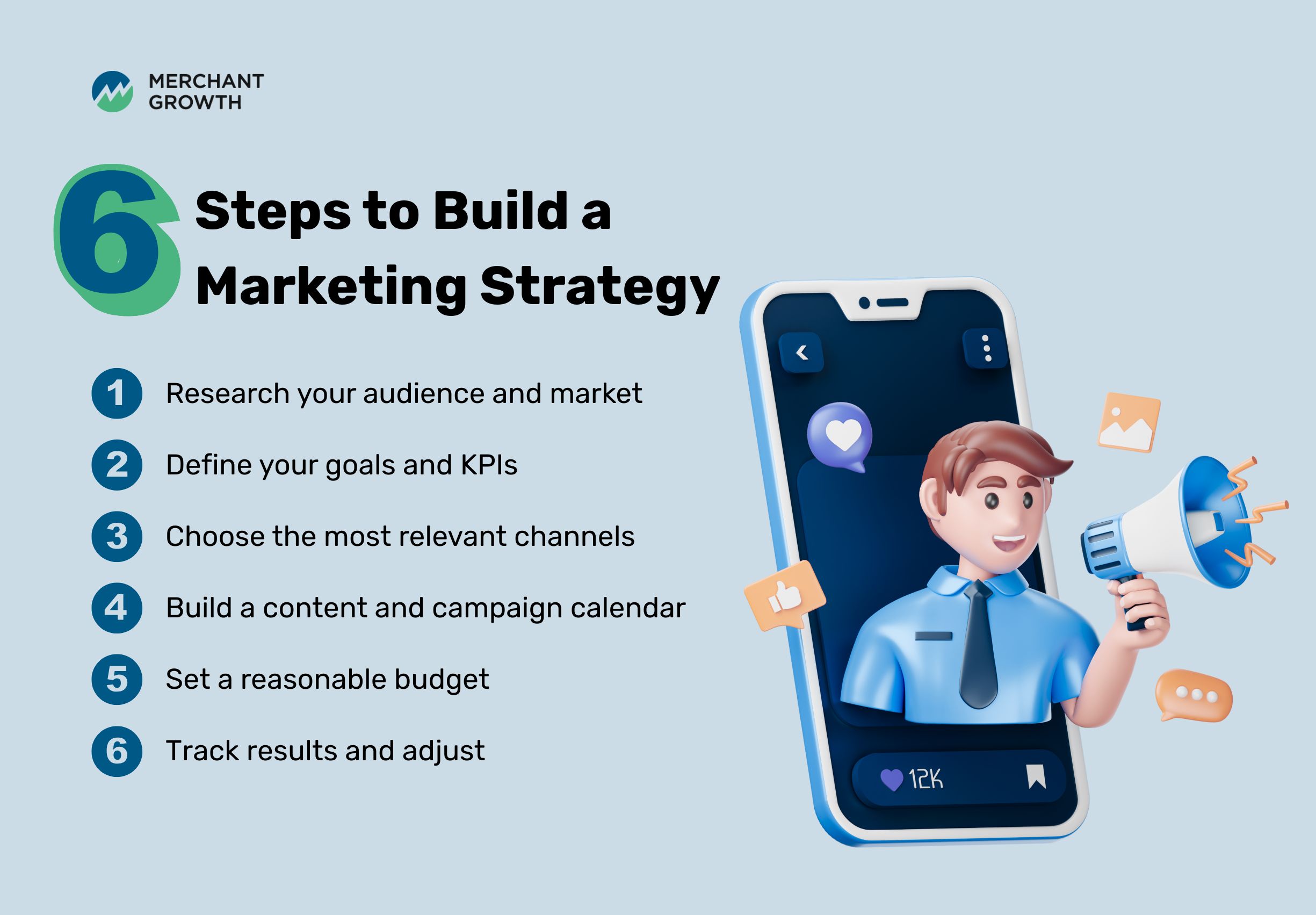
How to Create a Marketing Strategy
A strong marketing strategy gives you structure, consistency, and confidence. Instead of posting randomly or guessing what will work, you follow a plan that aligns with your business goals and customer needs. Below is a step-by-step approach that any small business owner can follow. Small, intentional planning upfront saves time later and leads to better results.
1. Research your audience and market
Before you choose platforms or design campaigns, get clear on who you want to reach. Start by identifying the demographics, interests, and behaviours of your ideal customers. What problems are they trying to solve? Where do they spend time online? How do they prefer to contact businesses? Research does not need to be complicated. Read customer reviews, look at competitors’ social media, and talk to your existing clients. The more you understand your audience, the easier it becomes to create marketing that resonates.
2. Define your goals and key performance indicators
Decide what you want your marketing to achieve. Goals should be specific and measurable, not vague ideas like “do more marketing.” Instead, aim for targets such as increasing monthly leads by 20%, doubling website traffic within six months, or booking five additional consultations per week. Then choose key performance indicators that show whether you are making progress, including website visits, inquiry form submissions, phone calls, email signups, or sales conversions. Clear goals give you direction and help you understand what success looks like.
3. Choose the most relevant channels
Not every marketing channel fits every business. Pick two or three that align with your audience and industry, and commit to showing up consistently. For example, a home service business might focus on local SEO and Google reviews, while a boutique retail shop might prioritize Instagram and email marketing. Choosing fewer channels prevents burnout and usually delivers stronger, more consistent results than trying to be everywhere at once.
4. Build a content and campaign calendar
A content calendar helps turn marketing from a reactive task into a routine system. Instead of scrambling for ideas every week, you plan campaigns in advance. Map out monthly themes, seasonal promotions, product launches, or service reminders. Schedule email newsletters, social posts, and blog topics so they support each other. Even a simple spreadsheet or shared calendar works. The goal is to stay consistent and avoid last-minute marketing stress.
5. Set a reasonable budget
Decide how much you can invest each month in marketing. Budgeting does not have to mean big spending. Start small with manageable amounts for ads, tools, or professional services. For instance, you might allocate a modest amount for Meta or Google ads to test audiences and then increase spending only when you see positive results. A budget makes planning realistic and helps ensure marketing dollars go where they are most effective.
6. Track results and adjust
Marketing is not a set-and-forget activity. Review performance monthly to see what worked and what did not. Look at which posts, emails, or ads generated the most engagement, inquiries, or sales. If something performs well, repeat it. If something falls flat, try a different approach. Small, continual adjustments help you build a strategy based on data rather than assumptions.
Free marketing planning templates from Shopify, BDC, and HubSpot can simplify this entire process. They provide structure, reminders, and worksheets that make planning approachable, even if you are building your first marketing strategy from scratch.
Image Alt Text: Marketing tools title image
Recommended Tools for Popular Marketing Tactics
The right tools make marketing easier to manage and much more effective. These suggestions are accessible, user-friendly, and affordable for small businesses. You do not need everything on this list; choose one tool per tactic to get started and expand only as your marketing system grows.
Content marketing tools
The right content tools help small businesses create useful articles, videos, and resources without spending hours on production. Even simple platforms can make it easier to brainstorm ideas, organize topics, and publish consistently across multiple channels. A good content tool saves time, ensures branding consistency, and helps you produce material that actually resonates with your audience. Below are five options to explore.
- ChatGPT: content ideas, outlines, and editing suggestions
- Canva: branded graphics, templates, and visual content
- Grammarly: writing clarity and grammar improvement
- Notion: content planning boards and editorial calendars
- BuzzSumo: topic research and performance insights
Referral and loyalty program tools
Referral and loyalty software encourages existing customers to recommend your business and return more often. These tools automate rewards, track participation, and make it easier to thank customers who help you grow. Instead of manually managing referrals or repeat purchase bonuses, you can set up systems that run in the background. That turns your happiest customers into steady promoters without creating extra administrative work. Here are five options to consider.
- Smile.io: rewards and points-based loyalty programs
- ReferralCandy: automated referral incentives
- Square Loyalty: physical storefront loyalty tracking
- TapMango: SMS and app-based reward systems
- Fivestars: digital punch cards and customer retention tools
Testimonial and review tools
Online reviews influence buying decisions more than ever, and software can simplify the entire process of collecting, managing, and displaying them. These tools allow businesses to request reviews automatically, respond quickly to customer feedback, and share testimonials where they have the most impact. With the right review management platform, even a handful of positive ratings can significantly boost credibility. The tools below can help streamline review collection and tracking.
- Google Business Profile: essential for local visibility
- Podium: SMS review invitations
- NiceJob: automated collection and sharing
- Trustpilot: external credibility and review hosting
- Birdeye: review monitoring and reputation management
Local SEO tools
Local search visibility determines whether nearby customers find your business when they look for services, products, or solutions. Local SEO tools help you manage listings, update business information everywhere it appears online, and track how often customers are discovering you in their area. Investing in local search software is one of the highest-impact steps a small business can take because it directly supports foot traffic and inbound inquiries. Here are five options worth exploring.
- Moz Local: listing consistency and local rankings
- BrightLocal: citations, audits, and performance tracking
- Uberall: multi-platform listing management
- Whitespark: citation building for local searches
- Semrush Local: advanced reporting and optimization features
Email marketing tools
Email marketing tools make it easier to stay in touch with customers, send targeted messages, and automate follow-ups based on customer behaviour. Instead of manually writing and sending every email, you can design templates, schedule campaigns, and review performance data to see what is driving engagement. With reliable email software, even a small team can deliver professional, consistent communication that strengthens customer relationships. Below are five platforms that can help you get started.
- Mailchimp: beginner-friendly newsletters and automations
- Klaviyo: targeted campaigns for e-commerce
- Constant Contact: drag-and-drop builders and event features
- MailerLite: cost-effective templates and landing pages
- HubSpot Email: CRM integration and automated workflow
A successful marketing toolkit does not need to be complicated. What matters most is choosing a few tools that support your goals, simplify daily tasks, and keep you consistent. Every business will prefer different platforms, but the right tools make it easier to plan content, stay organized, and track what works. Instead of trying everything at once, start with one marketing tactic and adopt one tool that helps you manage it more efficiently. As you gain confidence and see results, you can gradually expand. The goal is to create a system that supports steady, repeatable marketing activity without overwhelming your time, your team, or your budget.
Marketing Ideas for Small Businesses
If you ever feel stuck staring at a blank screen, wondering what to post, send, or share, you are not alone. Every business goes through moments where inspiration runs low. The good news is that effective marketing does not have to be complicated. A few consistent, well-chosen actions can keep your business visible, build trust, and encourage repeat engagement without requiring big budgets or long planning sessions. If you need inspiration today, try one or two of the ideas below. They are simple, practical, and proven to increase visibility and customer interaction.
- Collaborate with a local business on a combined promotion.
- Start an educational blog or video series that answers common customer questions.
- Run a social media giveaway to increase reach.
- Send a monthly “insider” newsletter to share updates and exclusive offers.
- Ask customers to review your business on Google or Facebook.
- Host a small workshop or demonstration related to your services.
- Sponsor a local charity event or fundraiser.
- Offer referral rewards for returning clients.
- Create a seasonal marketing campaign tied to holidays or community events.
These ideas are low-cost and work well for retail, service providers, trades, restaurants, and professional services. The key is to take action consistently. Every post, event, email, or conversation builds momentum over time. Start with one idea today, see what resonates, and keep experimenting. Small creative efforts, repeated regularly, can turn casual browsers into loyal customers who feel connected to your business and its story.

Creating a Content Calendar That Works
Marketing consistency depends on planning. A content calendar helps you stay organized, reduce stress, and maintain steady visibility throughout the year. Instead of wondering what to post each day, you have a schedule that supports your goals and keeps marketing from becoming a last-minute scramble.
Start by mapping out key dates such as holidays, seasonal trends, product launches, or community events. Then assign simple content themes for each week: testimonials, educational tips, behind-the-scenes posts, or promotions. Try batching content creation once a month, then scheduling posts in advance so marketing becomes routine rather than reactive.
Tools like Later, Buffer, or Hootsuite make automation easy, but the real goal isn’t volume, it’s reliability. Even three posts a week and one email every two weeks can build recognition and trust over time. Want a simple place to begin? Download our ready-to-use content calendar template to start planning with confidence.
From Marketing Plan to Growth: How Merchant Growth Can Help
Strong marketing lays the foundation for visibility and brand recognition, but scaling campaigns often requires capital. Whether you want to hire a marketing specialist, invest in SEO, run paid ads, or launch a new product line, having access to flexible financing can help you move forward confidently.
Merchant Growth supports small businesses with financing solutions designed to fuel marketing initiatives. Instead of delaying important campaigns or missing out on seasonal opportunities, you can secure financing that aligns with your goals, timeline, and growth potential. This approach helps turn marketing ideas into measurable results and sustainable growth.
If you are ready to improve your marketing strategy and attract the right customers, connect with Merchant Growth to explore flexible funding options that support your next big opportunity.