

Why Cash Flow Management Matters for Small Businesses
Cash flow is one of the most important indicators of a business’s financial health, yet it is also one of the most misunderstood. For many small business owners, cash flow becomes a concern only when a shortage appears. The reality is that healthy cash flow is not just about having enough money to cover today’s bills. It is about having the financial stability to operate confidently, plan ahead, and grow without unnecessary stress.
In simple terms, cash flow management is the process of tracking how money moves in and out of your business and making sure you always have enough available to meet your obligations. That includes paying suppliers, covering payroll, keeping up with tax remittances, and managing loan payments. A business with strong cash flow can act quickly on new opportunities, handle seasonal fluctuations, and avoid financial strain.
Research consistently shows how essential this is. According to M&F Bank, 82% of business failures can be linked to poor cash flow. Understanding how to manage it effectively can give your business the resilience it needs to thrive in any economic climate.
What Is Cash Flow (and Why It Matters)
Cash flow is the movement of money into and out of your business over a specific period of time. In simple terms, cash flow equals the cash coming in from sales, collections, and other income minus the cash going out for expenses, payroll, inventory, and loan payments. It is the real-time financial heartbeat of your business, showing whether you have enough money on hand to operate today, tomorrow, and next month.
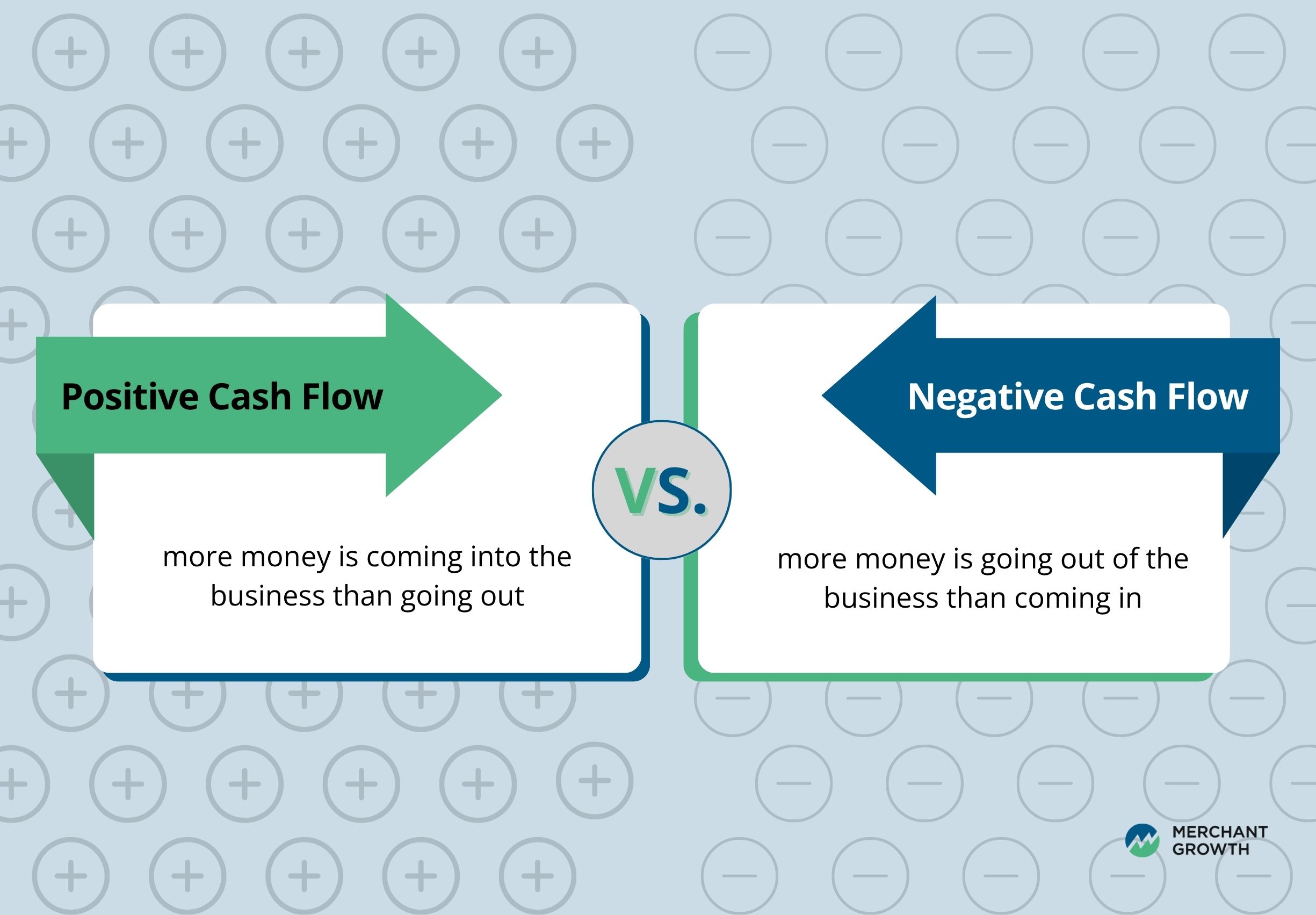
Positive cash flow occurs when more money flows in than flows out. Negative cash flow happens when expenses outpace income, which can quickly lead to missed payments, operational setbacks, and financial stress if it continues for too long.
Cash Flow is Not the Same as Profit or Revenue
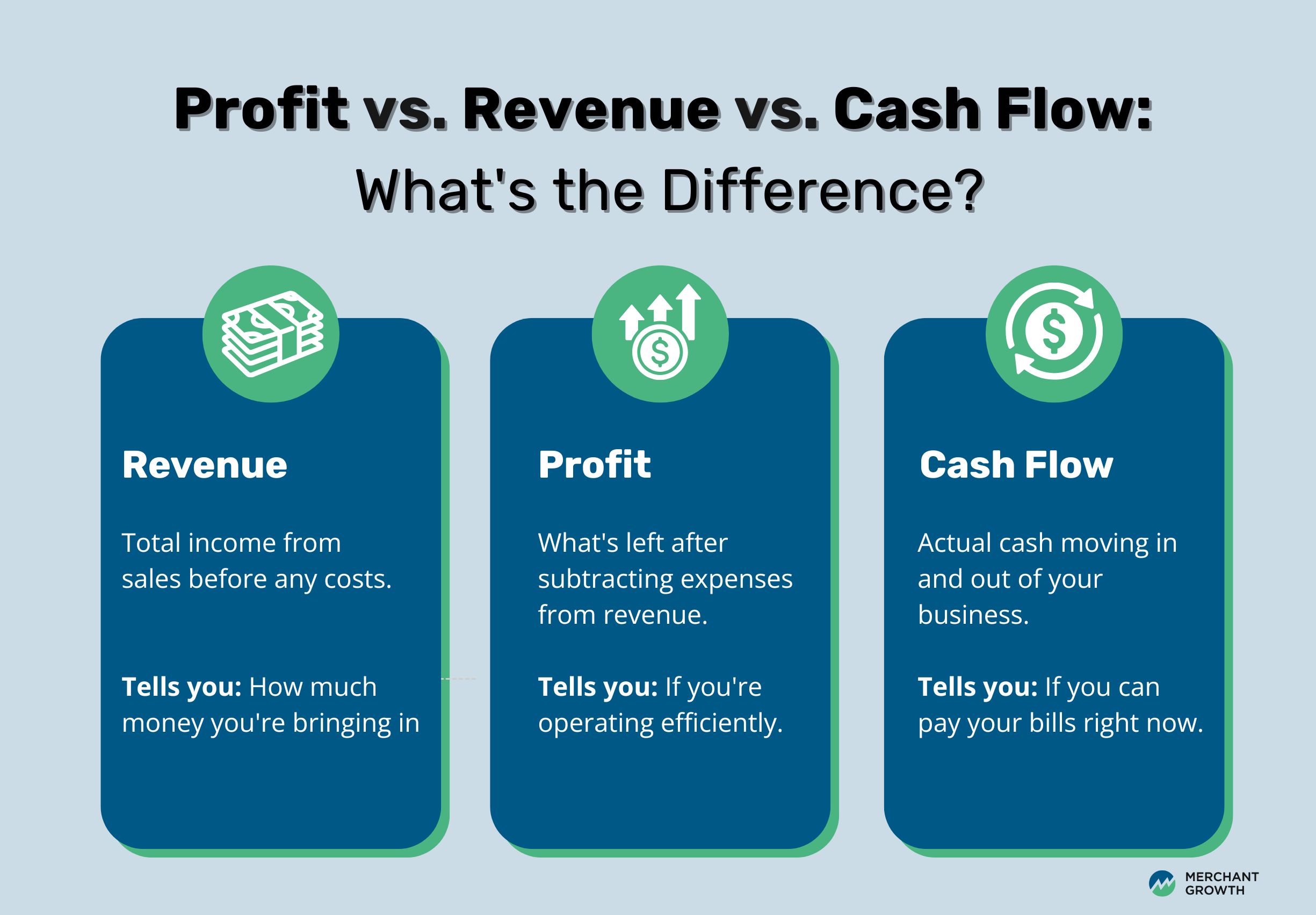
A business can show a profit on paper while still struggling to pay its bills because profit reflects what you have earned, not what you have collected. Revenue reports sales activity, while cash flow reflects what money is actually available to spend. Daily operations rely on cash, not accounting results, which is why understanding your cash flow is critical.
For Canadian small businesses, this becomes even more important. Many operate with seasonal sales cycles, longer payment windows, rising input costs, and supply chain delays. Without careful attention to how and when money moves, even strong businesses can find themselves squeezed at the wrong moment.
Good cash flow management sits at the centre of this. It involves tracking inflows and outflows regularly, planning for upcoming needs, and making strategic decisions to ensure your business always has enough liquidity to stay steady and take advantage of new opportunities. Whether you are budgeting for next quarter, preparing for a slower season, or planning the timing of a major purchase, a clear understanding of cash flow gives you the confidence to move forward without guesswork.
What Are the Key Aspects for Cash Flow Management?
Mastering cash flow doesn’t happen by chance—it requires discipline, planning, and a proactive mindset. Successful business owners treat cash flow management as an ongoing practice, not just a financial report to glance at during tax season. By focusing on a few essential pillars, you can create a system that helps your business stay resilient in lean times and ready to grow when opportunity strikes.
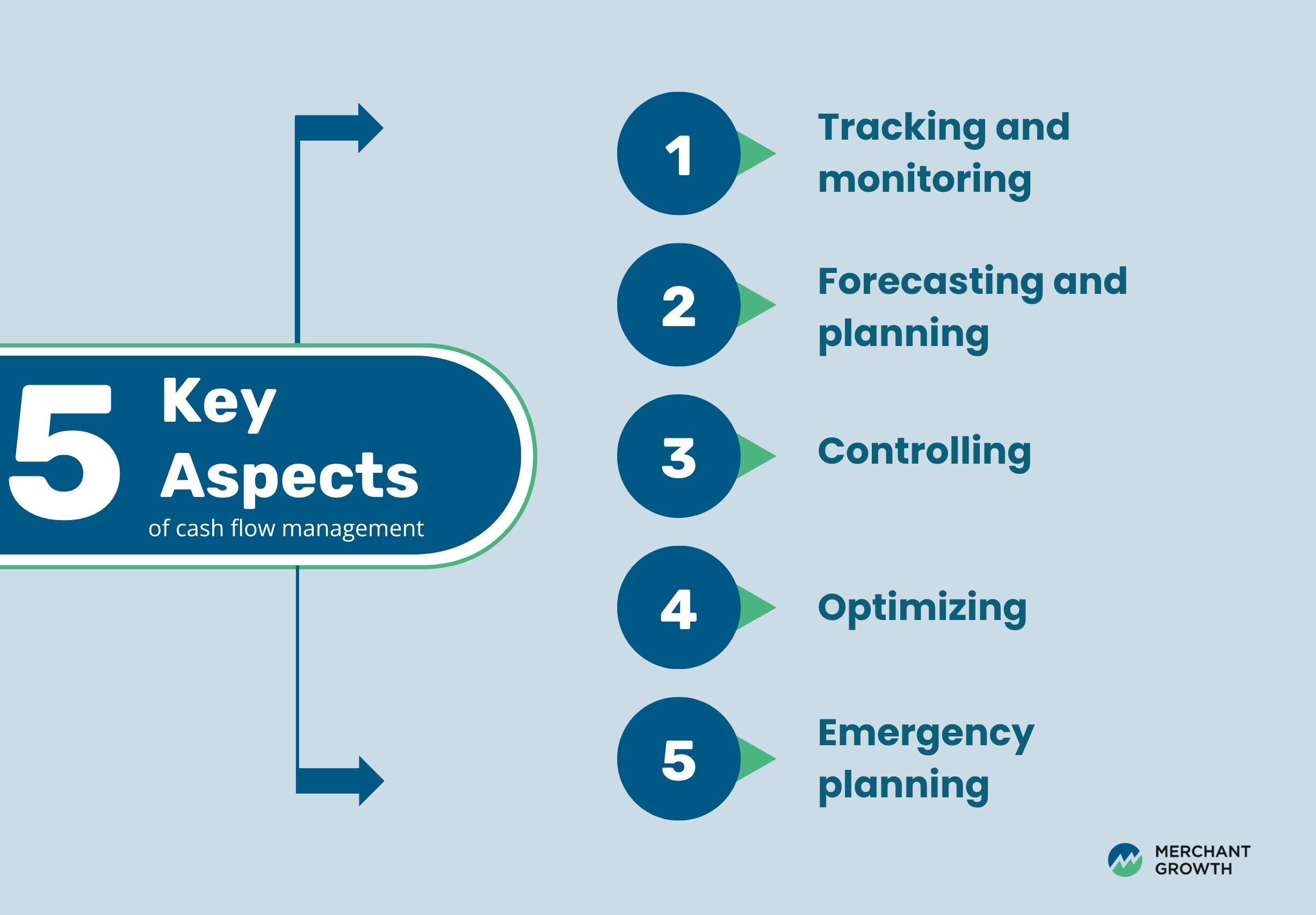
Here are five foundational elements of strong cash flow management:
1. Tracking and monitoring
The first step in managing cash flow is knowing where your money is going—and when it’s arriving. Regularly tracking daily, weekly, and monthly cash movements allows you to stay ahead of any gaps, delays, or unexpected expenses. This isn’t just bookkeeping—it’s visibility. The more frequently you monitor your cash inflow and outflow, the better equipped you’ll be to make real-time adjustments and avoid unpleasant surprises.
Tip: Use cloud-based accounting tools or connect with a bookkeeper who can provide ongoing reports that show cash trends over time.
2. Forecasting and planning
Cash flow forecasting involves projecting your income and expenses over the weeks and months ahead. By using historical data and factoring in upcoming seasonal trends, large purchases, or potential slow periods, you can anticipate when cash might get tight and plan accordingly. Effective forecasting turns your finances from reactive to strategic, helping you avoid last-minute scrambles.
Tip: Build forecasts for multiple scenarios (e.g., best case, expected, and worst case) so you’re always prepared.
3. Controlling
Controlling your cash flow is about actively managing expenses and tightening up areas where money might be leaking. This means sticking to budgets, reviewing costs regularly, and keeping a close eye on payment terms. Ensure you’re not paying vendors faster than you’re being paid, and try to align outflows with inflows as closely as possible.
Tip: Implement approval processes for larger expenses and review recurring charges quarterly to trim unnecessary costs.
4. Optimizing
Optimization focuses on getting the most out of every dollar your business spends or earns. This can include renegotiating supplier contracts, improving your invoicing process to speed up payments, or incentivizing early customer payments. Small adjustments to operations or cash management processes can have a big impact over time.
Tip: Offer early payment discounts to clients and consider automating your billing system to avoid delays.
5. Emergency planning
No matter how well you plan, unexpected costs can and will arise—whether it’s a broken piece of equipment, a late-paying client, or a market downturn. Emergency cash flow planning involves setting aside a financial buffer or access to fast capital so you’re not caught off guard. This fund is your safety net, helping you cover urgent expenses without disrupting operations or going into high-interest debt.
Tip: Aim to build a contingency reserve equivalent to at least one month of operating expenses, and consider maintaining access to a line of credit for additional flexibility.

How Strong Cash Flow Supports a Healthy Business
Understanding cash flow is important, but knowing why it matters on a day-to-day basis is what truly empowers business owners. Healthy cash flow gives you the stability to handle challenges, the flexibility to grow, and the clarity to make confident financial decisions. When you manage cash flow intentionally, you create a business that feels less reactive and far more in control.
It Strengthens Financial Stability
Tracking inflows and outflows consistently helps you spot early warning signs such as rising expenses, slower customer payments, or declining revenue. When you catch issues early, you can adjust before they turn into real problems. This keeps essential obligations like payroll, rent, and supplier payments running smoothly.
It Supports Sustainable Growth
Growth requires resources. Whether you are hiring new employees, investing in equipment, or expanding into a new market, available cash gives you the freedom to move forward without taking on unnecessary debt. Strong cash flow opens the door to opportunities rather than limiting them.
It Prevents Financial Distress
Cash shortages can quickly lead to missed payments, penalties, damaged credit, and strained supplier relationships. If the pattern continues, the business may even face insolvency. Healthy cash flow helps you stay ahead of your obligations and avoid the stress that comes with constantly trying to catch up.
It Leads to Smarter Decision Making
When you clearly understand how money moves through your business, you can plan with intention. You can budget accurately, evaluate investments realistically, and prepare for slower periods instead of being surprised by them. This clarity turns decision making from reactive to strategic.
Strong cash flow forms the foundation for every other part of your financial planning. To manage it effectively, it helps to understand how cash flow is tracked and organized. Next, we will look at the cash flow statement and the categories that show where your money is coming from and where it is going.
Understanding Cash Flow Statements and Categories
A cash flow statement is one of the most powerful financial tools available to your business. It shows exactly how money moves in and out of your company and helps you understand how effectively you are generating, using, and preserving cash. For lenders and investors, it reveals whether the business is healthy and sustainable. For owners, it provides insight that supports better decisions about spending, saving, and planning.
A cash flow statement is divided into three main sections. Each section highlights a different part of your operations, and together they create a complete picture of your financial activity.
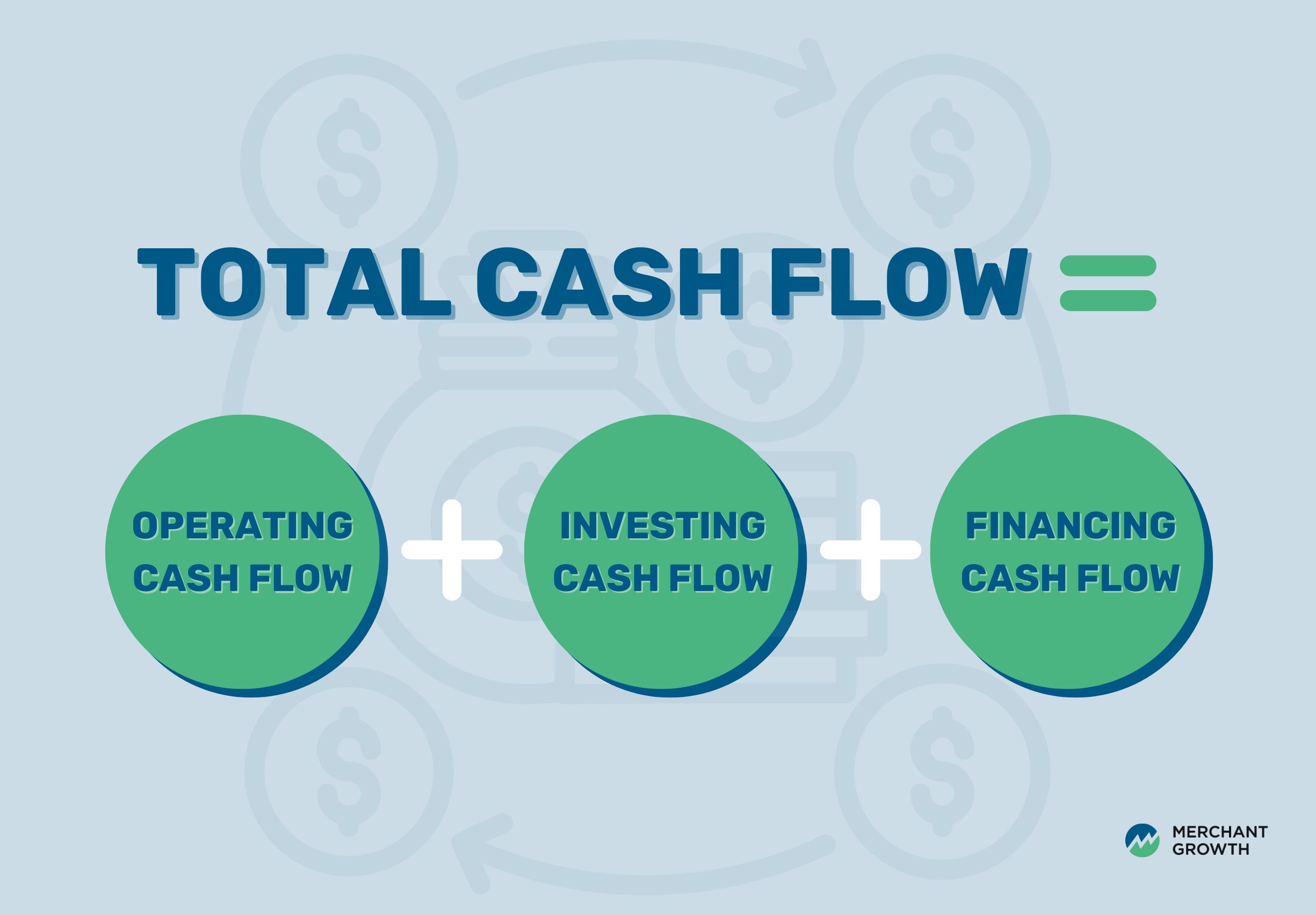
Operating Activities
Operating activities capture the cash generated or spent through your everyday business operations. This section reflects the financial strength of your core business model and is often the first place lenders and investors look when assessing performance. A healthy business typically shows positive operating cash flow because day-to-day activities bring in more cash than they consume.
Common items included in operating activities are the following.
- Cash received from sales of products or services
- Payments to suppliers for inventory or materials
- Employee wages and payroll expenses
- Rent, utilities, and office supplies
- Insurance premiums
- Income taxes paid
- Marketing and advertising costs
- Short-term software subscriptions
If a transaction is tied to your normal operations, it likely belongs in this category.
Investing Activities
Investing activities capture cash used to acquire or sell long-term assets. These transactions support the future direction or growth of your business. It is common for investing cash flow to be negative during periods of expansion, and in many cases that is a positive sign. For example, a retailer may show strong operating cash flow from healthy sales while also showing negative investing cash flow because they purchased new equipment or opened an additional location. This combination can signal strategic growth rather than financial strain.
Investing activities commonly include the following.
- Purchase or sale of property, equipment, or vehicles
- Investments in technology infrastructure or capitalized software
- Buying or selling shares in other companies
- Proceeds from selling long-term assets
Although these items do not appear frequently, they reveal how your business reinvests capital and prepares for the future.
Financing Activities
Financing activities show how your business raises money and how it repays those obligations. This section outlines your reliance on loans, equity, or owner contributions. It also shows how effectively you are managing your debt and funding structure.
Financing activities often include the following.
- Cash received from business loans, lines of credit, or merchant advances
- Equity investments from owners or shareholders
- Principal repayments on loans
- Owner withdrawals or shareholder dividends
- Repurchasing company shares
This section helps both owners and lenders understand how your business is funded and how responsibly it handles that financing.
Putting It All Together
When you review all three sections side by side, they reveal a story about the health and direction of your business. A company with strong operating cash flow and negative investing cash flow may be expanding wisely. A company with weak operating cash flow and high financing inflows may be relying too heavily on borrowed money to stay afloat. Understanding these patterns allows you to see what is working, what needs attention, and where your business is headed.
Accounting software makes reviewing your cash flow statement easier, but even with professional tools, it is important to interpret these sections regularly. This ensures you are making decisions based on actual liquidity, not just accounting profit.
🔗 Download our Cash Flow Statement Template here.

The Five Cash Flow Categories
In addition to the three sections of the cash flow statement, it can be helpful to think about cash flow through five broader categories. These categories make it easier to analyze trends, uncover inefficiencies, and plan for future needs.
| Cash Flow Category | Definition |
|---|---|
| Operating cash flow | Cash generated from day-to-day operations such as sales and services. |
| Investing cash flow | Cash spent or received from buying or selling assets like property, equipment, or investments. |
| Financing cash flow | Cash from funding sources, including loans, equity investment, or repayments. |
| Net cash flow | The total amount of cash a business gains or loses over a specific period. |
| Future cash flow | Projected cash flow based on current operations and trends, used for planning ahead. |
Understanding these categories helps you see not only how cash moves today but also how it might move tomorrow. This clarity lays the foundation for stronger forecasting and more strategic cash flow management.

Key Cash Flow Metrics Every Business Should Track
Understanding your cash flow statement is a strong start, but the next step is knowing how to measure the speed and efficiency of your cash movement. This is where cash flow metrics come in. These numbers help you look beyond your bank balance and understand how quickly your business turns its investments into cash. When you track these metrics regularly, you can spot issues early and make small adjustments that lead to meaningful improvements.
Cash Conversion Cycle
The cash conversion cycle shows the amount of time it takes to turn your investment in inventory and other resources into cash from sales. It connects the full journey of your cash: how long money is tied up in inventory, how quickly that inventory sells, and how fast customers pay their invoices. A shorter cycle means your business recovers cash more quickly, which improves flexibility and gives you more room to make proactive decisions.
Days Sales Outstanding
Days Sales Outstanding measures how long it takes customers to pay you after receiving an invoice. A rising number is often a sign that your customers are paying more slowly than before, which can strain cash flow even if sales remain strong. Clear invoicing, automated reminders, and convenient payment options can significantly improve this metric and bring cash in faster.
Days Payables Outstanding
Days Payables Outstanding shows how long your business takes to pay suppliers. Extending this period, when done responsibly, helps you hold on to cash longer and smooth out timing gaps between payables and receivables. It is important to balance this metric with strong supplier relationships, since paying too slowly can affect trust and future terms.
Days Inventory Outstanding
Days Inventory Outstanding tracks how long inventory sits before it is sold. High numbers can indicate slow-moving products or excess stock, both of which tie up cash that could be used elsewhere in the business. Reducing this metric through better inventory planning or stronger forecasting helps free up capital and keeps your cash cycle moving.
These metrics offer a clearer view of how your business uses cash and where improvements can be made. When you understand them, you can make targeted adjustments that strengthen your financial position without dramatic operational changes. This sets the stage for more effective forecasting and smarter planning, which we explore next.
Forecasting and Scenario Planning
Forecasting is one of the most valuable tools for maintaining healthy cash flow. Instead of guessing what your financial position will look like next month or next quarter, forecasting helps you anticipate upcoming demands, prepare for slow periods, and make confident decisions based on real numbers. It turns cash flow management into a proactive process rather than a reactive one.
A strong forecast does not need to be complicated. What matters most is building a process that is consistent, easy to maintain, and based on reliable information. A thirteen-week rolling forecast is a common choice among accountants and financial advisors because it gives you enough visibility to stay ahead while still being flexible enough to update regularly.
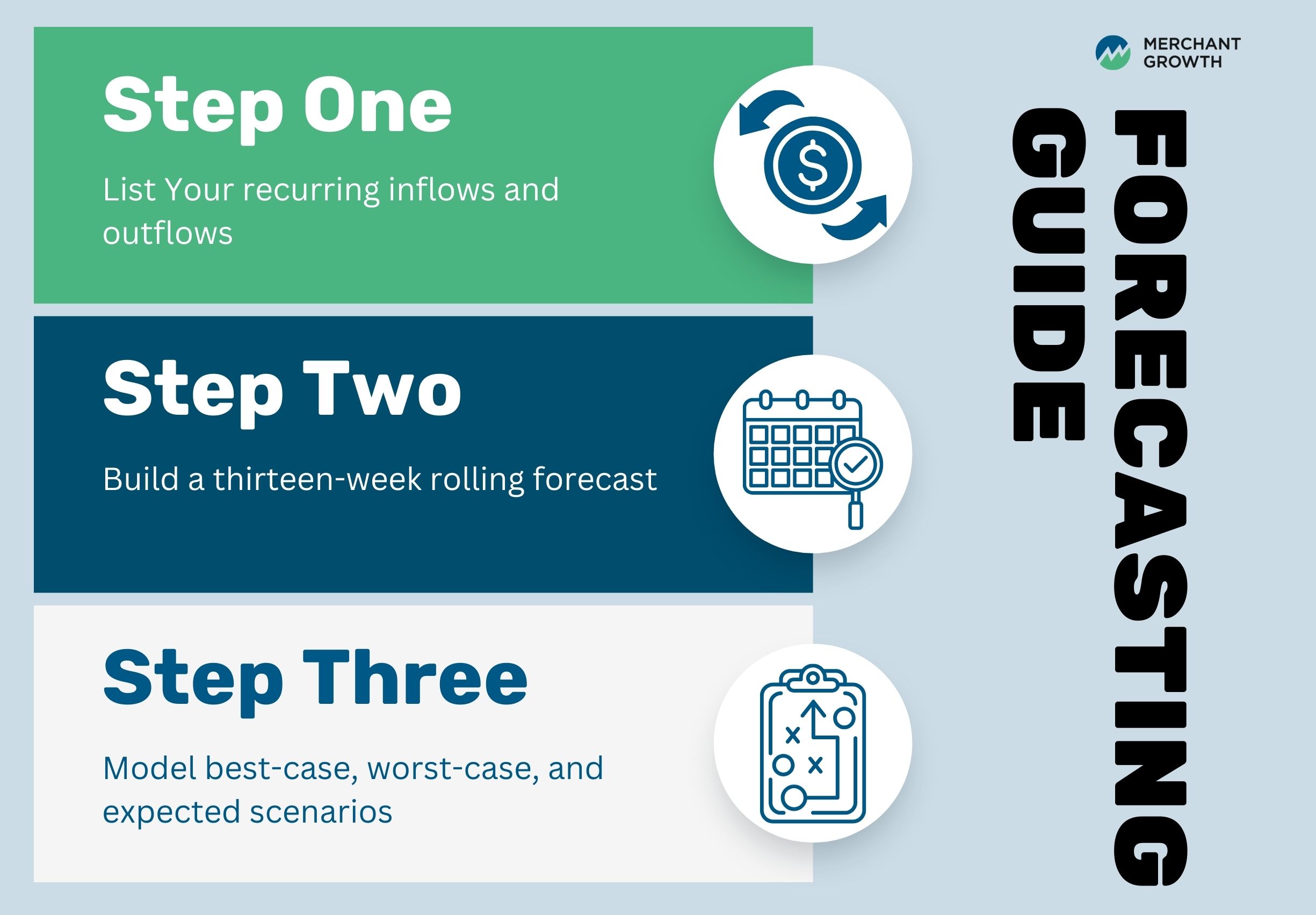
Step One: List Your Recurring Inflows and Outflows
Begin by identifying every predictable movement of cash. This includes customer payments, subscription revenue, payroll, rent, supplier invoices, utilities, and loan repayments. Listing these items helps you build a baseline that reflects your regular financial rhythm.
At this stage, accuracy matters more than perfection. If a payment or expense recurs every month, include it. If revenue fluctuates seasonally, note that as well, since it will help you plan more effectively.
Step Two: Build a Thirteen-Week Rolling Forecast
Once you know your recurring inflows and outflows, map them across the next thirteen weeks. This timeline is long enough to anticipate upcoming obligations and short enough to update easily as new information comes in.
Your forecast should show how much cash you expect to have at the beginning of each week, how much will come in, how much will go out, and how much will remain at the end. As each week passes, add a new week to maintain the thirteen-week view. Over time, this rolling method creates a clear picture of patterns, challenges, and opportunities.
Step Three: Model Best-Case, Worst-Case, and Expected Scenarios
Forecasting becomes even more powerful when you explore different possibilities. Scenario planning helps you understand how your cash flow will respond to changes beyond your control, such as sales fluctuations, delayed customer payments, or unexpected expenses.
Your expected scenario reflects what is most likely to happen based on your current data.
Your best-case scenario could include stronger sales, faster customer payments, or reduced expenses.
Your worst-case scenario might explore slower revenue, a large unexpected cost, or a client paying later than usual.
Comparing these scenarios helps you prepare for challenges before they arise and take advantage of opportunities when conditions improve.
A Simple Example
Imagine a busy landscaping company heading into its slower winter season. Its thirteen-week forecast shows that revenue naturally declines in January and February. In a worst-case scenario, two major clients delay payments by three weeks. Without forecasting, this delay might lead to payroll stress or late supplier payments. With forecasting, the owner sees the shortfall coming and arranges a line of credit or adjusts spending to bridge the gap. What could have been a crisis becomes a manageable situation.
Using Automation for Better Forecasting
Modern accounting and cash flow tools can make forecasting even more accurate. Software that connects directly to your bank feeds, invoicing system, and payables can pull real-time data into your forecast. With automated updates, you can see the impact of new sales, delayed payments, or changing expenses immediately. This helps you make decisions quickly and maintain confidence in your financial planning.
Forecasting and scenario planning work together to give you visibility, control, and peace of mind. With clearer insight into what is coming, you can run your business with more stability and respond to challenges with confidence.
Practical Strategies to Improve Cash Flow
Managing cash flow effectively comes down to pulling a few key financial levers that influence how quickly money enters your business, how carefully it is spent, and how efficiently resources are managed inside your operation. These levers align directly with the core metrics you already track, including your cash conversion cycle, days sales outstanding, days payables outstanding, and days inventory outstanding. When you understand how each lever works, you can make small, targeted adjustments that lead to meaningful improvements in your cash position.
Improving Cash Inflows
Improving inflows begins with strengthening your receivables process. This is where your days’ sales outstanding plays a major role. The faster customers pay, the healthier your cash flow becomes.
Sending invoices immediately after work is completed, offering multiple payment options, and following up consistently all help reduce the time between completing a sale and receiving cash. Many businesses also see success by offering small incentives for early payments, such as a modest discount for paying within ten days. These tactics shorten your days’ sales outstanding and bring cash in sooner without sacrificing profitability.
You can also explore financial tools such as invoice financing or short-term credit to bridge temporary gaps. These solutions allow you to access cash based on outstanding invoices, which can be especially useful if your customers operate with longer payment terms.
Controlling Cash Outflows
Controlling outflows is equally important and closely tied to your days’ payables outstanding. Regularly reviewing your expenses helps you identify where you can reduce costs, negotiate better pricing, or adjust spending habits. Many suppliers are open to extending payment terms, and lengthening these timelines responsibly can help you hold on to cash longer while maintaining strong relationships.
Before making large purchases, consider whether leasing equipment, purchasing used, or phasing investments over time might support more stable cash flow. Small adjustments to how and when you spend can significantly ease pressure on your cash position.
Optimizing Working Capital
Working capital management has a direct impact on your cash conversion cycle. The faster you turn inventory into sales and sales into cash, the stronger your financial position becomes.
Reducing excess inventory is one of the most effective ways to free up cash. Whether that means ordering smaller quantities, improving your forecasting, or negotiating with suppliers for more frequent deliveries, the goal is to lower your days inventory outstanding. When inventory moves more quickly, you spend less time with cash tied up on the shelf.
Strategic use of credit can also support your working capital. A line of credit or short-term financing can help you cover temporary shortfalls, manage seasonal fluctuations, or take advantage of time-sensitive opportunities without disrupting daily operations.
Seeing Your Cash Levers as a System
These strategies work best when viewed as part of a larger system. Improving inflows reduces your days’ sales outstanding. Controlling outflows influences your days payables outstanding. Optimizing working capital strengthens your cash conversion cycle. Small improvements across these areas add up and create a more resilient and predictable cash flow.
With the right strategies in place, the next step is choosing tools that help you track performance, automate tasks, and make these processes easier to manage. That is where modern financial software can make a meaningful difference.
Tools, Software, and Automation
Technology can transform how you manage cash flow. Modern accounting and financial tools automate time-consuming tasks, reduce errors, and give you clearer visibility into your financial position.
Cloud-based accounting platforms such as QuickBooks, Xero, Wave, and Sage offer helpful features like automatic bank feeds, receipt scanning, and real-time reporting. AP and AR automation tools streamline payment processing, send invoice reminders, and provide alerts when due dates are approaching.
Dashboards and visualization tools allow you to see trends at a glance. Instead of sorting through spreadsheets, you can instantly understand whether your cash flow is improving or declining. These tools make daily financial management faster, more accurate, and significantly less stressful.
Cash Flow Analysis and Reviewing Results
Regular cash flow analysis gives you a deeper understanding of how your business is performing and helps you take corrective action before small issues turn into larger problems. For most small businesses, reviewing cash flow monthly is enough to stay confident and in control. Businesses with high transaction volumes may prefer weekly check-ins to maintain a closer watch.
Start your review by comparing your actual inflows and outflows to your forecast. Look for patterns such as delayed customer payments, rising expenses, or weaker-than-expected sales. These differences help you understand where adjustments may be needed and which assumptions should be updated going forward.
Once you have reviewed the timing of cash movement, take a closer look at your cash flow metrics. Improvements in areas such as days sales outstanding or days inventory outstanding can make an immediate difference in stability. These metrics give you a measurable way to evaluate whether your operational processes are moving in the right direction.
It is also helpful to understand how lenders and investors interpret your cash flow. They look at your numbers not only to assess performance but also to determine how well your business can handle debt. Two simple measures are especially important. Free cash flow shows how much cash your business has available after covering operating costs and necessary investments. This number indicates your capacity to grow, repay debt, or withstand unexpected expenses. The cash flow coverage ratio compares your cash flow to your debt obligations and reflects how comfortably you can make payments. A stronger ratio signals lower financial risk and greater borrowing power.
When your cash flow is steady and predictable, securing financing becomes easier. Lenders feel more confident, and your business gains access to the capital needed to bridge short-term gaps or support long-term expansion.
By making cash flow analysis a consistent part of your routine, you develop a clearer financial picture and the confidence to plan for growth rather than react to surprises.
Common Cash Flow Pitfalls and Risk Scenarios
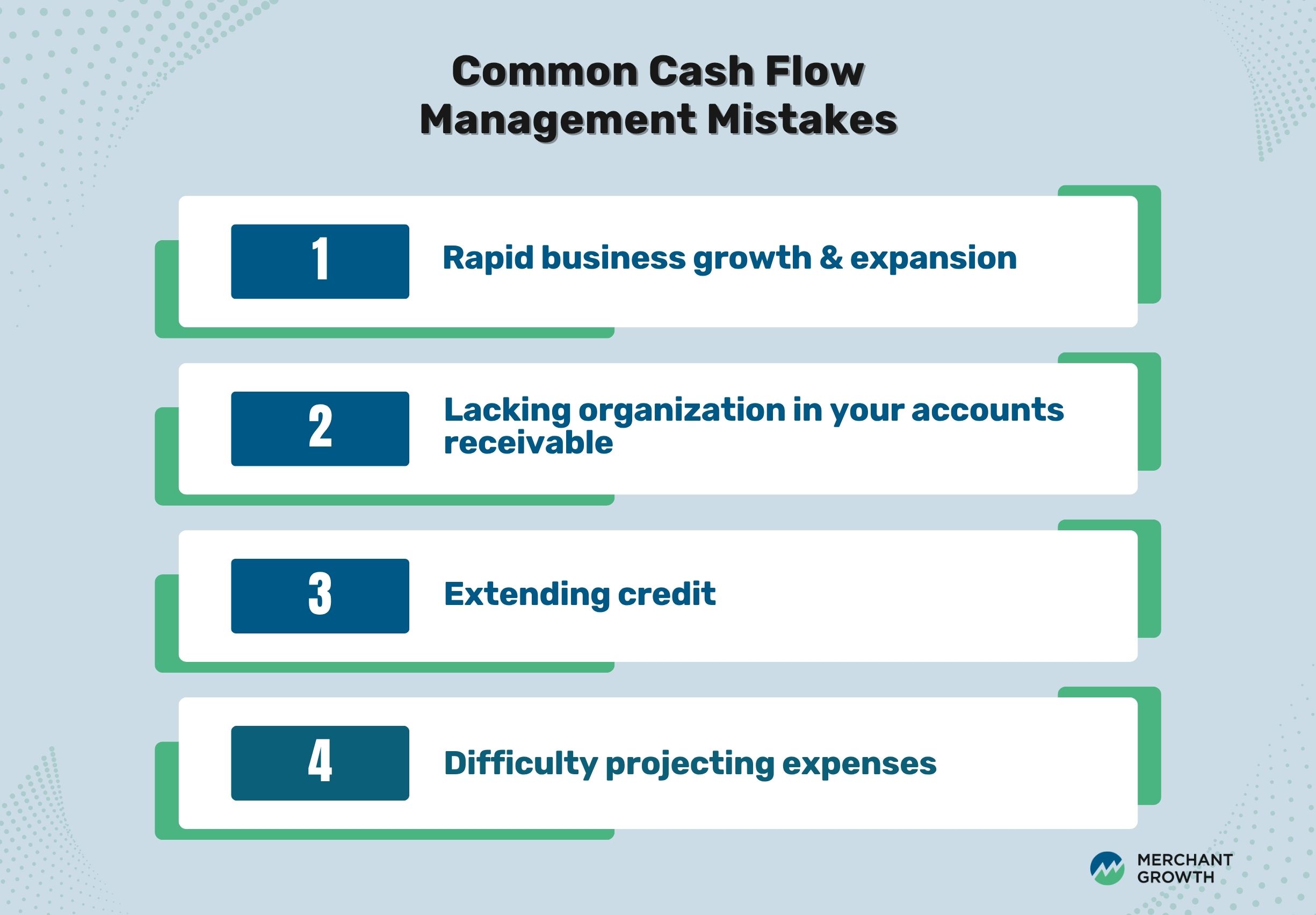
Even with strong habits and thoughtful planning, cash flow challenges can still appear when certain business practices slip under the radar. Recognizing these issues early makes it much easier to stay financially steady and avoid unnecessary stress. Here are some of the most common cash flow pitfalls small and growing businesses face, along with why they matter.
Rapid Business Growth and Expansion
Growth is exciting, but scaling too quickly can strain your finances. New hires, inventory purchases, marketing campaigns, and equipment upgrades often require significant cash upfront. If revenue does not arrive fast enough to offset these costs, your business can become overextended. Even healthy sales numbers cannot compensate for a cash gap if expenses rise faster than inflows. Thoughtful planning and clear financial projections help ensure your growth is sustainable rather than overwhelming.
Lack of Organization in Accounts Receivable
One of the fastest ways to weaken cash flow is to let receivables pile up. When invoices go out late, follow-ups are inconsistent, or overdue accounts are not monitored, money you have already earned sits uncollected. Disorganized accounts receivable processes can leave you short on cash even during strong sales periods. A structured invoicing system, timely reminders, and clear payment expectations help keep cash flowing in when it should.
Extending Credit Without Safeguards
Offering payment terms can attract customers and close deals, but it also shifts risk onto your business. Without basic safeguards like credit checks, limits, or deposit requirements, too much capital can become tied up in unpaid invoices. This leaves your business covering its own expenses while waiting on customer payments. A well-managed credit policy protects your cash flow while still giving customers flexibility.
Difficulty Projecting Expenses
Unexpected costs are unavoidable, but failing to anticipate them can disrupt your cash flow quickly. Many businesses underestimate recurring expenses such as tax instalments, equipment maintenance, or seasonal slowdowns. Others forget to set aside funds for unplanned repairs or emergencies. A reliable forecast that includes both predictable expenses and a buffer for surprises helps your business stay steady even when something unexpected comes up.
How Lenders and Investors View Cash Flow
When lenders and investors evaluate a business, cash flow is often the first thing they look at. It tells them, in practical terms, whether your business can pay its bills, handle new debt, and continue operating smoothly. While profit matters, cash flow reveals your real financial strength and day-to-day stability.
Lenders use cash flow to assess creditworthiness because it shows how much money your business consistently generates and how reliably you can cover obligations like loan payments, payroll, and supplier invoices. Strong, predictable cash flow signals lower risk, which can improve your chances of securing financing and even help you negotiate better terms.
Two measurements are especially important. Free cash flow represents the money left after covering operating expenses and necessary investments like equipment. It shows how much cash you have available for growth, savings, or debt repayment. The cash flow coverage ratio compares your available cash to your debt payments. A higher ratio tells lenders you have more than enough cash to meet your obligations, which increases their confidence in your financial stability.
When your cash flow is healthy, accessing funding becomes much easier. Lenders are more willing to support your plans, and investors view your business as capable of sustaining growth. This is also where flexible financing partners, like Merchant Growth, can play an important role by helping businesses smooth out cash flow gaps, manage seasonal swings, or take advantage of strategic opportunities.
Understanding how external stakeholders interpret your cash flow puts you in a stronger position when seeking support and helps you address any weaknesses before applying for financing.
Financing for Cash Flow Management
Financing can play a meaningful role in keeping your cash flow healthy, especially during slower seasons, unexpected dips in revenue, or moments when large expenses land all at once. Instead of draining your cash reserves to cover operating costs or make strategic purchases, the right financing can give you the breathing room you need to stay steady. Tools like a line of credit or short-term loan help bridge temporary gaps, support predictable operations, and let you take advantage of growth opportunities without putting pressure on your day-to-day budget. The key is choosing a financing option that complements your broader financial strategy rather than adding strain.
Line of credit
A business line of credit offers flexible access to funds whenever you need them. It’s a practical way to smooth out cash flow swings, cover short-term expenses, or take advantage of unexpected opportunities. By giving you the ability to draw and repay funds as needed, a line of credit can help you avoid late payment fees, maintain strong supplier relationships, and keep operations running smoothly.
Invoice factoring
Invoice factoring improves cash flow by turning unpaid invoices into immediate working capital. Instead of waiting weeks or months for customers to pay, you can access a portion of that cash right away. This reduces reliance on collections, stabilizes inflows, and allows you to offer competitive payment terms without weakening your cash position. Since it is not a loan, it also avoids adding new debt to your balance sheet.
Term financing
Term financing provides an upfront lump sum based on projected future sales, including credit and debit card revenue. This type of funding is typically easier to qualify for, does not require collateral, and offers repayment schedules that adjust alongside your cash flow. For many businesses, this flexibility makes planning easier and provides a more predictable financial path forward.
Strategic use of financing can be the difference between pausing progress and moving ahead with confidence. Whether you are preparing for a busy season, upgrading equipment, or smoothing out uneven revenue cycles, access to flexible capital supports your ability to grow without disrupting everyday operations. If you are considering how financing fits into your cash flow plan, these options are a great place to begin exploring what works best for your business.
How Merchant Growth Helps Businesses Manage Cash Flow
Even with strong planning and systems in place, many small businesses experience cash flow gaps due to slow receivables, seasonal fluctuations, or unexpected expenses. Merchant Growth provides flexible funding solutions that can help you bridge these periods, invest in new opportunities, or build a buffer for future challenges.
Working capital loans and revenue-based financing can support inventory purchases, equipment upgrades, digital improvements, and other initiatives that strengthen your business. By pairing smart cash flow management with the right financing tools, you give your business the stability it needs to grow with confidence.
If you are looking to strengthen your cash flow or prepare for your next stage of growth, Merchant Growth can help you find the right solution for your goals.
VANCOUVER, BC, February 2, 2026 — The relationship between Canada and the U.S. looks drastically different now compared to previous years, with February 1st representing one year since the trade war began across both countries. As cross-border tariffs and ‘buy local’ messaging moulded supply chains and consumer trends in 2025, many Canadian small businesses are recalibrating how they procure from, and sell to, the U.S.
More than half (57%) of Canadian small businesses with U.S.-related activity (sales, customers, trade) 12 months ago have since scaled it back, while about 1 in 10 (14%) have cut ties with the U.S. altogether, according to The Trade War survey by Merchant Growth, Canada’s online financing and growth solution for small businesses.
“When tariffs, other trade-related fees, and supply chain conditions change quickly, businesses can’t plan with confidence; they can only react and adapt. This shows resilience, but it comes at the expense of their long-term growth,” says David Gens, Founder and CEO of Merchant Growth. “If we want small businesses to keep hiring and growing, they need steady support, from government policy that brings meaningful relief and from consumers who choose to back the businesses that employ their communities.”
The survey captured insights from 103 small businesses across Canada, offering direct visibility into the challenges they faced since the trade war began and how they’re adapting. The data reveals how much small businesses have spent on additional trade-related fees, how many have avoided passing cost hikes to customers, their hiring plans in the coming months, and their plans to manage cash flow.
Tariffs are squeezing margins for many small businesses
Over the past 12 months, about 2 in 5 (41%) of small businesses said tariffs and trade disruptions decreased their profit margin.
That pressure is also reflected in out-of-pocket costs tied to cross-border challenges, as roughly 1 in 3 (32%) said they spent between $5,000 to $25,000 in additional costs due to tariffs and trade-related fees in the past year.
Nearly 1 in 10 businesses (9%) reported substantial added costs, saying they spent between $26,000 to $100,000.
“We foresee increasing disruption due to tariffs, the potential loss of the USMCA, and uncertainty with respect to customer spending,” says a retail business owner from Manitoba.
Businesses absorb more of the price hike shocks
When it comes to passing higher costs through to customers, data suggests that many small businesses prioritized protecting consumer demand in the past 12 months.
Nearly half (48%) said they didn’t pass any of the added costs to customers since the trade war began last year.While many small businesses have absorbed cost increases so far, 43% plan to raise prices over the next 6 months to manage their cash flow.
“I’m hoping to control costs and modify prices to reflect increasing costs, prioritize raises for staff, but profit margin has to increase,” says a dental business owner from Nova Scotia.
Cost-cutting measures, improving cash flow top businesses’ priorities for 2026
As businesses plan for the next phase of the trade war environment, respondents point to a mix of near-term cost discipline, selective price action, and cash flow tools.
Over the next 6 months, small businesses say they plan to pursue the following measures:
- 55% will cut discretionary spending (marketing, travel, subscriptions)
- 45% will take on additional financing (loan, line of credit, merchant cash advance)
- 43% will raise prices
- 29% will negotiate payment terms with suppliers
- 25% will reduce inventory levels
- 19% will pause hiring
- 19% will use personal savings or personal credit
“I expect my business to grow in 2026 through new supplier relationships, private-label opportunities, and increased customer interest in premium, authentic food products. Growth is being driven by product differentiation, local support for small businesses, and stronger seasonal sales. Strategic purchasing and focused marketing will support continued expansion despite broader economic uncertainty,” says Kathy Lynne McLennan, owner of Roots to Wellness in Manitoba.
Headcount has been steady, many plan to hold workforce numbers
Findings from the study suggest that many businesses are managing through disruption without widespread staffing expansion or reduction.
Over the past 12 months, more than half (53%) said their headcount stayed the same, while 23% said their headcount decreased.
Looking ahead, most businesses (59%) said they’re expecting their headcount to stay about the same over the next six months, while about one-third (31%) said they’re expecting their headcount to increase. Only 9% said they’re expecting their headcount to decrease over the next 6 months, which indicates that businesses are remaining cautious but are still keeping options open to grow.
About Merchant Growth
Merchant Growth is a leading Canadian financial technology company that specializes in small business financing. Founded in 2009, Merchant Growth has provided more than $1 billion in growth financing to entrepreneurs across the country. Using technology-driven underwriting, transparent terms, and dedicated customer support, Merchant Growth makes business financing convenient, accessible, and built for growth.
Merchant Growth was named one of Canada’s Top Growing Companies by The Globe and Mail’s Report on Business magazine in 2025.
To learn more, visit: www.merchantgrowth.com.
Survey Methodology: From January 12 to January 23, 2026, Merchant Growth surveyed 103 businesses in Canada that received funding from the company.
Modern Marketing Tips for Small Business: Proven Tactics to Attract and Keep Customers
Marketing can feel overwhelming for small business owners. There are endless platforms to choose from, limited hours in the day, and a constant pressure to “post more,” “optimize,” or “go viral.” The reality is that marketing does not have to be complicated to be effective. With the right strategy and by adopting a few simple habits, even the smallest team can compete with big brands online and offline. 72% of small businesses in Canada plan to increase their digital marketing investment this year, which means having a smart approach matters more than ever. This guide breaks down proven marketing tips for small business owners, showing you where to focus your time (and money), how to choose the right tactics, and how to turn awareness into revenue without burning out or overspending.
What Is Small Business Marketing and Why It Matters
Marketing is how you communicate what you offer, why it matters, and why customers should choose you over someone else. At its core, good marketing helps people discover your business, understand your value, and make confident decisions to buy, book, or request more information. It supports every stage of the customer journey from awareness and research to purchase, retention, and referrals.
Many small businesses make the mistake of treating marketing as a set of one-off tasks. A post here, an ad there, maybe a seasonal flyer. The problem with random tactics is that they do not build momentum. A structured marketing strategy gives you consistency, clarity, and measurable results. Even simple planning makes a major difference. With a clear message, a few reliable channels, and a repeatable weekly routine, small businesses can build strong visibility and long-term loyalty.

Tip 1: Clearly Define Your Marketing Objectives
Successful marketing begins with clear goals. Before choosing platforms or tactics, decide what you want marketing to achieve for your business. Are you trying to increase monthly sales, generate more leads, build a stronger local reputation, or improve repeat business?
A helpful framework is setting SMART objectives: specific, measurable, achievable, relevant, and time-based. Instead of saying “we want more customers,” try something like “increase online inquiries by 15% in sixty days through consistent email marketing and social content.” This type of goal keeps your marketing team focused and makes it easier to track results.
Once objectives are defined, link them to clear metrics such as website visits, conversion rates, foot traffic, leads collected, or customer retention. When your goals are measurable, it becomes much easier to see what is working and where to adjust.

Tip 2: Select the Right Marketing Channels and Activities
Small businesses don’t need to be everywhere. The key is choosing a few marketing channels that reach your ideal customers consistently. These are the core places where businesses show up, communicate value, and build awareness. The following channels form a strong marketing foundation no matter your industry or location.

Website and search visibility
A well-structured website is often the first place customers get to know your business. It should be easy to navigate, mobile-friendly, and clearly explain what you offer. Search engine visibility is equally important because it helps nearby customers find you when they look for solutions. Businesses that invest in clear page titles, accurate business information, and helpful content tend to appear more often in local search results.
Social media
Social platforms let customers interact with your business in a human and conversational way. Posting consistently, replying to comments, and sharing useful or inspiring content builds familiarity and keeps your brand top of mind. The right channel depends on where your audience spends time. Visual brands often thrive on Instagram, service providers build authority on LinkedIn, and many consumer-facing businesses reach new audiences through Facebook and TikTok.
Email marketing
Email gives you a direct line to customers who already care about your business. Regular newsletters keep your audience updated on promotions, new products, or seasonal services. It’s one of the most cost-effective ways to drive repeat business because you’re speaking to people who have already shown interest.
Local marketing
Local outreach deepens relationships beyond the digital world. Participating in community events, partnering with nearby businesses, sponsoring local initiatives, or joining business associations creates strong brand recognition. Small gestures such as hosting a workshop or donating a prize for a local fundraiser can build visibility and goodwill.
Paid advertising
Paid ads offer fast results when you need a boost in visibility. Small targeted campaigns work best. They allow you to control spending, reach specific audiences, and test new messaging before investing heavily. Paid ads are especially useful for time-sensitive promotions or reaching new customers beyond your existing network.

Tip 3: Utilize Proven Marketing Tactic
Once you understand where to show up, the next step is choosing tactics and strategies that consistently attract and retain customers. These approaches work across industries, regions, and business sizes because they center on value, trust, and customer experience. You do not need to implement everything at once. Pick two or three strategies, test them for a month or two, and build from there. Over time, these habits create stronger brand awareness and steady growth.

Content marketing
Content marketing positions your business as a knowledgeable, trustworthy resource before a customer even reaches out. This can look like blog posts, tutorials, short videos, FAQs, or educational guides that answer common questions. The focus is always on helping first, selling second. Content becomes even more powerful when you repurpose it across channels. A single how-to article can fuel social posts, email content, or in-store handouts, making your marketing far more efficient over time.
Works best for:
- Professional services
- Home and trades services
- Retail and e-commerce
Referral programs and loyalty rewards
Word of mouth remains one of the most effective growth drivers for small businesses. Referral and loyalty programs turn happy customers into repeat buyers and brand advocates. Keep your incentives simple and attainable. A small discount, a free upgrade, or a points-based reward system is often all you need. The key is consistency. When customers know you value their loyalty and referrals, they are more likely to recommend you without being asked.
Works best for:
- Retail and boutiques
- Gyms and wellness studios
- Personal services like salons, barbers, and spas
Testimonials and reviews
Customer reviews provide social proof and help remove uncertainty for new buyers. A few strong testimonials can significantly improve conversion rates on landing pages, social posts, and Google listings. Ask customers to share what problem you solved for them or what made their experience positive. Feature those quotes in high-visibility areas like product pages, email campaigns, or a dedicated testimonial section on your website. The easier you make it to find positive feedback, the more confidence you build.
Works best for:
- Restaurants and cafés
- Real estate, trades, and home services
- Local contractors and professional services
Local SEO
Local SEO is one of the highest-return strategies for location-based businesses. Keeping listings accurate, adding recent photos, and responding to every review helps you show up in local search results. Many potential customers do not scroll past the first page, and appearing in the “map pack” or “near me” results increases your chances of getting clicks, calls, and bookings. Even simple updates, such as adding holiday hours or listing service areas, make a difference.
Works best for:
- Multi-location businesses
- Regional service providers
- Retail storefronts
Email campaigns
Email marketing keeps you present in customers’ inboxes long after they leave your website or store. You do not have to send long newsletters. Short emails with seasonal tips, exclusive offers, or helpful reminders build ongoing relationships and increase repeat sales. Because you own your email audience, it is protected from algorithm changes, platform updates, or social media shifts, making it one of the most reliable marketing channels long term.
Works best for:
- E-commerce and subscription businesses
- Professional services
- Local service providers

Tip 4: Connect Online and Offline Experiences with an Omnichannel Approach
Customers do not follow a single, predictable path to purchase anymore. They might notice a product on Instagram while scrolling at night, search Google for reviews the next morning, ask a friend about their experience, and then finally visit your store or click “buy now.” An omnichannel marketing approach recognizes that customer journeys are fluid and ensures that every touchpoint feels connected rather than random.
At its core, omnichannel marketing means offering a consistent experience across all the places customers interact with your business. This includes your website, social platforms, email newsletters, storefront, point of sale system, business listings, print materials, and even customer service conversations. When everything works together, customers feel like they are interacting with one unified brand rather than jumping between disconnected systems or mixed messages.
A strong omnichannel approach matters for three big reasons. First, it meets customers where they already spend time, making it easier for them to learn, compare, and purchase without friction. Second, it builds trust because your messaging, visuals, pricing, and service stay consistent everywhere. Third, it improves conversions. Research shows that customers exposed to multiple aligned touchpoints are significantly more likely to buy and remain loyal.
So, how do you create an omnichannel marketing strategy as a small business? Start by identifying your primary digital and physical touchpoints, then look for ways to connect them. Consistency is the goal, not complexity.
Here are ways small businesses use omnichannel marketing effectively:
- Offer in-store pickup or curbside pickup for online purchases to bridge digital browsing with real-world convenience.
- Add QR codes to print materials, packaging, or signage that link to product pages, booking systems, or special offers.
- Sync loyalty programs between your point-of-sale system and your website so rewards are tracked automatically, whether customers shop online or in person.
- Use email automation to send reminders about abandoned carts, upcoming appointments, or new items related to past purchases.
- Post behind-the-scenes content or product demos on social media that support in-store conversations and build familiarity before a customer ever visits.
A unified brand experience does not mean being everywhere at once. It means being consistent wherever you decide to show up. When customers encounter the same tone, style, level of service, and clear calls to action across your channels, it becomes easier for them to make decisions and more likely they will return. Omnichannel marketing aligns all your efforts into one clear, connected story that guides customers smoothly from discovery to purchase.

Tip 5: Always Make Sure to Measure Your Success
Tracking performance is the only reliable way to know whether your marketing is actually working. Otherwise, you’re guessing and guessing can get expensive fast. Even a simple dashboard gives you clarity and confidence by showing what’s driving results and where you should spend more (or less) time.
A few helpful metrics to track include website traffic, inquiries, email open rates, social media engagement, cost per lead, and sales generated from specific campaigns. Free and low-cost tools like Google Analytics, Mailchimp reports, or Square Dashboard make it easy to monitor these numbers without needing a marketing degree.
Try reviewing results at least once a month. Look for patterns, not perfection. If Instagram posts are boosting website traffic but sales stay flat, maybe your website needs clearer buttons, simpler booking, or more visible pricing. If email subscribers consistently click a certain topic, double down and create more content around it. Measurement turns marketing from a set of random tasks into a feedback loop; test, learn, adjust, repeat. It’s how small businesses improve steadily over time instead of starting from scratch every single month.

Tip 6: Nurture Existing Customers and Build Brand Loyalty
Winning customers matters but keeping them is where real growth happens. Retention drives predictable revenue and saves you the time and expense of constantly chasing new leads. Loyal customers are also your best marketers; they refer friends, leave positive reviews, and talk about your business in their communities.
The key is to make customers feel seen and appreciated. Personalized communication goes a long way: send follow-up emails after a purchase, share exclusive offers, or surprise customers with loyalty rewards. Even simple touches like birthday messages or “thank you for supporting local” notes help people feel connected to your brand. Some businesses host appreciation events, publish customer success stories, or spotlight clients on social media to deepen relationships.
Loyalty really comes down to consistent value and real listening. Ask for feedback, respond quickly, and show that you’re paying attention to customer needs. Over time, these small efforts turn one-time buyers into repeat customers and repeat customers into long-term ambassadors who champion your business without being asked.
How to Create a Marketing Strategy
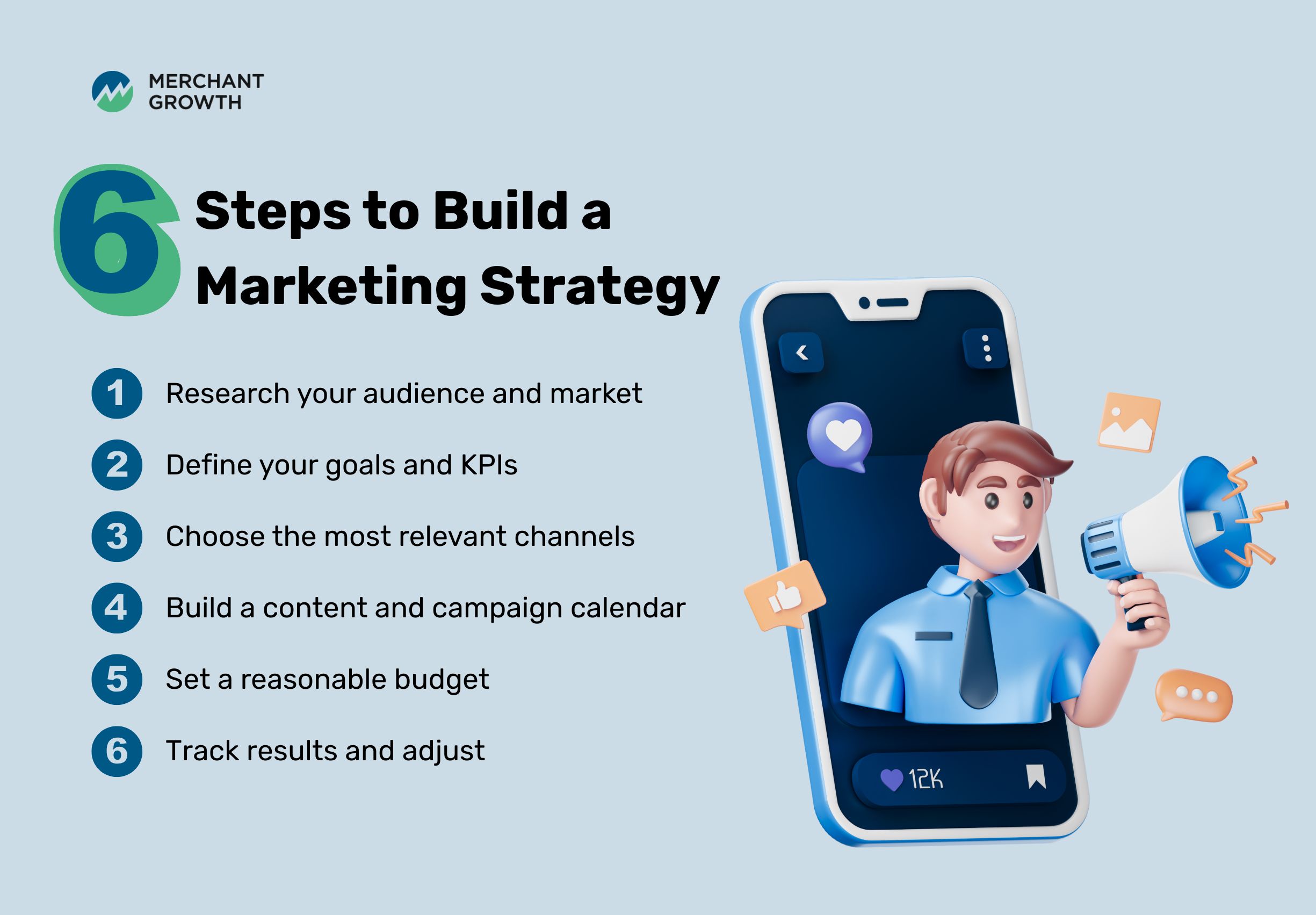
A strong marketing strategy gives you structure, consistency, and confidence. Instead of posting randomly or guessing what will work, you follow a plan that aligns with your business goals and customer needs. Below is a step-by-step approach that any small business owner can follow. Small, intentional planning upfront saves time later and leads to better results.
1. Research your audience and market
Before you choose platforms or design campaigns, get clear on who you want to reach. Start by identifying the demographics, interests, and behaviours of your ideal customers. What problems are they trying to solve? Where do they spend time online? How do they prefer to contact businesses? Research does not need to be complicated. Read customer reviews, look at competitors’ social media, and talk to your existing clients. The more you understand your audience, the easier it becomes to create marketing that resonates.
2. Define your goals and key performance indicators
Decide what you want your marketing to achieve. Goals should be specific and measurable, not vague ideas like “do more marketing.” Instead, aim for targets such as increasing monthly leads by 20%, doubling website traffic within six months, or booking five additional consultations per week. Then choose key performance indicators that show whether you are making progress, including website visits, inquiry form submissions, phone calls, email signups, or sales conversions. Clear goals give you direction and help you understand what success looks like.
3. Choose the most relevant channels
Not every marketing channel fits every business. Pick two or three that align with your audience and industry, and commit to showing up consistently. For example, a home service business might focus on local SEO and Google reviews, while a boutique retail shop might prioritize Instagram and email marketing. Choosing fewer channels prevents burnout and usually delivers stronger, more consistent results than trying to be everywhere at once.
4. Build a content and campaign calendar
A content calendar helps turn marketing from a reactive task into a routine system. Instead of scrambling for ideas every week, you plan campaigns in advance. Map out monthly themes, seasonal promotions, product launches, or service reminders. Schedule email newsletters, social posts, and blog topics so they support each other. Even a simple spreadsheet or shared calendar works. The goal is to stay consistent and avoid last-minute marketing stress.
5. Set a reasonable budget
Decide how much you can invest each month in marketing. Budgeting does not have to mean big spending. Start small with manageable amounts for ads, tools, or professional services. For instance, you might allocate a modest amount for Meta or Google ads to test audiences and then increase spending only when you see positive results. A budget makes planning realistic and helps ensure marketing dollars go where they are most effective.
6. Track results and adjust
Marketing is not a set-and-forget activity. Review performance monthly to see what worked and what did not. Look at which posts, emails, or ads generated the most engagement, inquiries, or sales. If something performs well, repeat it. If something falls flat, try a different approach. Small, continual adjustments help you build a strategy based on data rather than assumptions.
Free marketing planning templates from Shopify, BDC, and HubSpot can simplify this entire process. They provide structure, reminders, and worksheets that make planning approachable, even if you are building your first marketing strategy from scratch.
Image Alt Text: Marketing tools title image
Recommended Tools for Popular Marketing Tactics
The right tools make marketing easier to manage and much more effective. These suggestions are accessible, user-friendly, and affordable for small businesses. You do not need everything on this list; choose one tool per tactic to get started and expand only as your marketing system grows.
Content marketing tools
The right content tools help small businesses create useful articles, videos, and resources without spending hours on production. Even simple platforms can make it easier to brainstorm ideas, organize topics, and publish consistently across multiple channels. A good content tool saves time, ensures branding consistency, and helps you produce material that actually resonates with your audience. Below are five options to explore.
- ChatGPT: content ideas, outlines, and editing suggestions
- Canva: branded graphics, templates, and visual content
- Grammarly: writing clarity and grammar improvement
- Notion: content planning boards and editorial calendars
- BuzzSumo: topic research and performance insights
Referral and loyalty program tools
Referral and loyalty software encourages existing customers to recommend your business and return more often. These tools automate rewards, track participation, and make it easier to thank customers who help you grow. Instead of manually managing referrals or repeat purchase bonuses, you can set up systems that run in the background. That turns your happiest customers into steady promoters without creating extra administrative work. Here are five options to consider.
- Smile.io: rewards and points-based loyalty programs
- ReferralCandy: automated referral incentives
- Square Loyalty: physical storefront loyalty tracking
- TapMango: SMS and app-based reward systems
- Fivestars: digital punch cards and customer retention tools
Testimonial and review tools
Online reviews influence buying decisions more than ever, and software can simplify the entire process of collecting, managing, and displaying them. These tools allow businesses to request reviews automatically, respond quickly to customer feedback, and share testimonials where they have the most impact. With the right review management platform, even a handful of positive ratings can significantly boost credibility. The tools below can help streamline review collection and tracking.
- Google Business Profile: essential for local visibility
- Podium: SMS review invitations
- NiceJob: automated collection and sharing
- Trustpilot: external credibility and review hosting
- Birdeye: review monitoring and reputation management
Local SEO tools
Local search visibility determines whether nearby customers find your business when they look for services, products, or solutions. Local SEO tools help you manage listings, update business information everywhere it appears online, and track how often customers are discovering you in their area. Investing in local search software is one of the highest-impact steps a small business can take because it directly supports foot traffic and inbound inquiries. Here are five options worth exploring.
- Moz Local: listing consistency and local rankings
- BrightLocal: citations, audits, and performance tracking
- Uberall: multi-platform listing management
- Whitespark: citation building for local searches
- Semrush Local: advanced reporting and optimization features
Email marketing tools
Email marketing tools make it easier to stay in touch with customers, send targeted messages, and automate follow-ups based on customer behaviour. Instead of manually writing and sending every email, you can design templates, schedule campaigns, and review performance data to see what is driving engagement. With reliable email software, even a small team can deliver professional, consistent communication that strengthens customer relationships. Below are five platforms that can help you get started.
- Mailchimp: beginner-friendly newsletters and automations
- Klaviyo: targeted campaigns for e-commerce
- Constant Contact: drag-and-drop builders and event features
- MailerLite: cost-effective templates and landing pages
- HubSpot Email: CRM integration and automated workflow
A successful marketing toolkit does not need to be complicated. What matters most is choosing a few tools that support your goals, simplify daily tasks, and keep you consistent. Every business will prefer different platforms, but the right tools make it easier to plan content, stay organized, and track what works. Instead of trying everything at once, start with one marketing tactic and adopt one tool that helps you manage it more efficiently. As you gain confidence and see results, you can gradually expand. The goal is to create a system that supports steady, repeatable marketing activity without overwhelming your time, your team, or your budget.
Marketing Ideas for Small Businesses
If you ever feel stuck staring at a blank screen, wondering what to post, send, or share, you are not alone. Every business goes through moments where inspiration runs low. The good news is that effective marketing does not have to be complicated. A few consistent, well-chosen actions can keep your business visible, build trust, and encourage repeat engagement without requiring big budgets or long planning sessions. If you need inspiration today, try one or two of the ideas below. They are simple, practical, and proven to increase visibility and customer interaction.
- Collaborate with a local business on a combined promotion.
- Start an educational blog or video series that answers common customer questions.
- Run a social media giveaway to increase reach.
- Send a monthly “insider” newsletter to share updates and exclusive offers.
- Ask customers to review your business on Google or Facebook.
- Host a small workshop or demonstration related to your services.
- Sponsor a local charity event or fundraiser.
- Offer referral rewards for returning clients.
- Create a seasonal marketing campaign tied to holidays or community events.
These ideas are low-cost and work well for retail, service providers, trades, restaurants, and professional services. The key is to take action consistently. Every post, event, email, or conversation builds momentum over time. Start with one idea today, see what resonates, and keep experimenting. Small creative efforts, repeated regularly, can turn casual browsers into loyal customers who feel connected to your business and its story.

Creating a Content Calendar That Works
Marketing consistency depends on planning. A content calendar helps you stay organized, reduce stress, and maintain steady visibility throughout the year. Instead of wondering what to post each day, you have a schedule that supports your goals and keeps marketing from becoming a last-minute scramble.
Start by mapping out key dates such as holidays, seasonal trends, product launches, or community events. Then assign simple content themes for each week: testimonials, educational tips, behind-the-scenes posts, or promotions. Try batching content creation once a month, then scheduling posts in advance so marketing becomes routine rather than reactive.
Tools like Later, Buffer, or Hootsuite make automation easy, but the real goal isn’t volume, it’s reliability. Even three posts a week and one email every two weeks can build recognition and trust over time. Want a simple place to begin? Download our ready-to-use content calendar template to start planning with confidence.
From Marketing Plan to Growth: How Merchant Growth Can Help
Strong marketing lays the foundation for visibility and brand recognition, but scaling campaigns often requires capital. Whether you want to hire a marketing specialist, invest in SEO, run paid ads, or launch a new product line, having access to flexible financing can help you move forward confidently.
Merchant Growth supports small businesses with financing solutions designed to fuel marketing initiatives. Instead of delaying important campaigns or missing out on seasonal opportunities, you can secure financing that aligns with your goals, timeline, and growth potential. This approach helps turn marketing ideas into measurable results and sustainable growth.
If you are ready to improve your marketing strategy and attract the right customers, connect with Merchant Growth to explore flexible funding options that support your next big opportunity.
Business Bankruptcy in Canada: What Small Business Owners Need to Know
Facing bankruptcy is one of the hardest situations any business owner can experience. But in Canada, bankruptcy isn’t the end of the road. It’s a legal process designed to help entrepreneurs manage overwhelming debt, protect what they can, and start again with a clean slate.
Understanding how bankruptcy works, what it means for your business structure, and what alternatives exist can make the difference between panic and a plan. Whether you’re struggling to pay suppliers or facing pressure from creditors, learning your options is the first step toward regaining control.
As of January 2025, 4,470 Canadian businesses had filed for bankruptcy in the year prior, marking an eleven percent increase from the previous period. Understanding how the process works can help you make informed decisions long before your business reaches that stage.
Understanding Business Bankruptcy in Canada
Business bankruptcy is a formal process under the Bankruptcy and Insolvency Act (BIA) that allows a business to legally declare it can no longer pay its debts. Once bankruptcy is filed, a Licensed Insolvency Trustee (LIT) takes over the process, managing the company’s assets and distributing funds fairly among creditors.
When a business reaches a point where debt is no longer manageable, and other solutions are not enough, bankruptcy becomes one of the formal options available. Before exploring the full bankruptcy process, it helps to understand how bankruptcy compares to insolvency and receivership. These terms are often used together, but they describe very different situations that impact a business in different ways.
Insolvency
Insolvency is a financial condition, not a legal process. It describes the point at which a business is struggling to pay its bills on time, or its debts have grown larger than the value of its assets. In other words, insolvency is the warning stage where the business is experiencing financial strain but has not yet entered a formal proceeding.
A business may become insolvent because cash flow has tightened, sales have slowed, or an unexpected expense has created pressure. Unlike bankruptcy, insolvency does not involve the courts or a trustee. The business still has control over its operations and can explore solutions such as renegotiating payment terms, restructuring debt, cutting expenses, or seeking short-term financing.
Insolvency does not mean the business has failed. It simply means the business is under financial stress. Many companies recover from insolvency by taking action early and seeking advice before the situation progresses to bankruptcy.
Bankruptcy
When financial challenges reach a point where a business can no longer realistically recover through restructuring or negotiation, bankruptcy becomes one of the formal options available. Unlike insolvency, which is a financial condition, bankruptcy is a legal process that changes who controls the business’s assets and how debts are handled.
In Canada, bankruptcy must be carried out with the support of a Licensed Insolvency Trustee. Once the process begins, the trustee steps in to manage the business’s assets, communicate with creditors, and oversee the repayment or distribution process. This legal structure provides protection from further creditor action and brings clarity to what would otherwise be a very difficult situation.
While bankruptcy is often viewed as a last resort, it can also give business owners a structured path to wind down operations, address overwhelming debt, and rebuild with a clean slate.
Receivership
Receivership occurs when a secured creditor or a court appoints a receiver to take control of a business’s assets. The receiver acts on behalf of the creditor and is responsible for collecting, safeguarding, and selling the company’s property to repay the debt owed. This process focuses on the creditor’s recovery rather than the long-term operation or restructuring of the business.
Businesses may enter receivership when they default on a loan or breach the terms of a secured credit agreement. Unlike bankruptcy, receivership is not initiated by the business owner. It is typically triggered by lenders who need to recover the value of collateral tied to their financing.
Understanding receivership is important because it highlights how creditor rights can impact the future of a financially distressed business. To navigate these situations effectively, it helps to understand the legal framework that governs insolvency and bankruptcy in Canada, which is outlined in the Bankruptcy and Insolvency Act.
The Bankruptcy and Insolvency Act and What It Covers
Understanding insolvency, bankruptcy, and receivership is easier when you know the legislation that governs them. In Canada, all of these processes fall under the Bankruptcy and Insolvency Act, commonly referred to as the BIA. This Act establishes the rules for how financial distress is handled, who is involved, and what rights both businesses and creditors have throughout the process.
The BIA sets out who is eligible to file, how a filing works, and the legal protections that take effect once it begins. To qualify for bankruptcy, a business must owe at least one thousand dollars and be unable to meet its debt obligations as they come due. Only a Licensed Insolvency Trustee is permitted to administer a bankruptcy or a proposal, and the Act outlines the trustee’s duties clearly. This includes assessing the business’s financial position, taking control of assets, communicating with creditors, and ensuring every step is carried out fairly and transparently.
One of the reasons the BIA is so important for business owners is that it provides more than one path. In addition to bankruptcy, it allows for Division I Proposals, which help businesses negotiate new repayment terms with creditors. These proposals often enable companies to avoid bankruptcy entirely while continuing to operate and regain stability.
To help business owners understand what the Act covers, here are some of the most important components:
- Definitions of key terms such as insolvent person, trustee, and property
- Rules for filing a bankruptcy or making an assignment
- Legal framework for creating a Division I Proposal to avoid bankruptcy
- Automatic stay of proceedings that stops creditor enforcement once a filing is submitted
- Rights of secured creditors and unpaid suppliers
- Rules about how creditors are paid and in what order
- Duties and responsibilities of Licensed Insolvency Trustees
- Processes for receiving a discharge and the types of debts that cannot be discharged
Together, these elements create a structure that protects everyone involved while giving honest business owners an opportunity to reorganize or start fresh. The BIA plays a crucial role in ensuring that financial distress does not lead to chaos and that businesses have a clear, step-by-step path forward.

Who Can File for Bankruptcy?
A business can file for bankruptcy in Canada when it meets a few key conditions. The company must owe at least one thousand dollars, be unable to pay its debts as they become due and be considered insolvent based on its overall financial position. These criteria apply to all types of businesses, including sole proprietorships, partnerships, and incorporated companies.
While bankruptcy is a serious step, reaching eligibility does not automatically mean it is the only or best option. Some businesses explore alternatives such as refinancing, restructuring, or negotiating repayment terms before deciding whether to move forward.

How Bankruptcy Differs by Business Structure
Bankruptcy does not affect every business the same way. The impact depends heavily on how your business is legally structured, because each structure comes with different rules around liability, ownership, and personal responsibility. Understanding these distinctions helps business owners anticipate what bankruptcy might mean for both the company and their personal finances.
Sole Proprietorships:
For sole proprietors, the business and the individual are legally the same. This means the owner is personally responsible for all business debts. If the business files for bankruptcy, the owner is essentially filing as an individual as well. Both personal and business assets may be used to repay creditors, although provincial exemptions may protect certain property such as basic household items or tools used for work.
This structure can feel risky, but it also means sole proprietors may access consumer-focused relief options or proposals, which can sometimes be more flexible than corporate processes. Bankruptcy may come into play when personal credit is heavily tied to the business or when debt has accumulated faster than revenue can support.
Partnerships:
In a partnership, each partner is jointly and severally liable for the debts of the business. This means every partner can be held fully responsible for all partnership debts, regardless of who incurred them. If one partner files for bankruptcy, creditors may pursue the remaining partners for payment. In some cases, the bankruptcy of one partner can trigger insolvency for the entire partnership.
Because of this shared responsibility, partners often need to approach financial difficulties collaboratively. Early communication and professional advice are essential to prevent unexpected personal financial fallout. Many partnerships explore proposals or restructuring before considering formal bankruptcy, since these options may protect both the business and the partners’ personal finances.
Corporations:
A corporation is its own legal entity, separate from its owners and directors. When a corporation files for bankruptcy, the business itself is the entity entering the process. Shareholders generally lose their investment, but their personal assets remain protected unless they have personally guaranteed loans or credit agreements.
However, corporate directors do carry some personal responsibility. They can be held personally liable for unpaid GST or HST, outstanding payroll source deductions, and up to six months of unpaid employee wages. Because of these obligations, directors often seek professional guidance early to understand their exposure and ensure statutory payments remain up to date.

The Role of a Licensed Insolvency Trustee
A Licensed Insolvency Trustee, often called an LIT, is the only professional in Canada who is legally authorized to administer bankruptcies and formal debt proposals. They serve as an impartial guide through what can be a very stressful process, ensuring that both the business and its creditors are treated fairly under Canadian law.
When a business decides to move forward with bankruptcy, the trustee steps in to review the company’s financial situation in detail. They prepare and file the required legal documents, secure and manage the business’s assets, and communicate directly with creditors. The trustee is also responsible for selling or liquidating assets and overseeing how the proceeds are distributed. Their role is to ensure transparency, accuracy, and compliance with the Bankruptcy and Insolvency Act throughout every stage of the process.
Many business owners find it helpful to speak with a trustee long before any formal filing takes place. An early conversation can provide clarity about the company’s financial options, including restructuring, proposals, or other strategies that may help the business recover without entering bankruptcy. A trustee’s guidance can make the path forward feel much more manageable, no matter which direction you ultimately choose.

What Happens to My Assets in Bankruptcy?
When a business enters bankruptcy, its assets are typically sold, and the proceeds are used to repay creditors. For incorporated businesses, these assets belong to the company rather than the owners personally. For sole proprietors, personal property that is tied to the business can be included in the process, although provincial exemption laws protect certain essentials such as tools needed to earn a livelihood.
After assets are sold, the funds are distributed in a set order. Secured creditors are paid first, followed by unsecured creditors. Any remaining qualifying debts may be discharged once the process is complete, giving the business or owner the chance to move forward with a clean slate.

What Happens to Debts in Bankruptcy?
Bankruptcy eliminates most unsecured debts, including credit cards, lines of credit, and outstanding vendor balances. However, some debts remain. Court fines, alimony, fraud-related debts, and certain tax obligations cannot be discharged.
Secured debts work differently because they are tied to specific assets. If a loan is connected to equipment, vehicles, or other collateral, the lender may take back that asset. In some cases, income-related obligations may continue throughout the bankruptcy, especially if surplus income payments or CRA remittances apply.

Does Bankruptcy Impact My Personal Credit?
Personal credit is affected differently depending on how the business is structured. For sole proprietors and partners, a business bankruptcy appears on personal credit reports and can influence borrowing ability for several years. Most bankruptcies stay on file for six to seven years after discharge.
For incorporated businesses, the impact is usually limited to the company’s credit profile unless the owner has signed personal guarantees. The encouraging news is that credit can be rebuilt. Consistent payments, responsible use of credit, and careful recordkeeping all contribute to a stronger financial profile over time.

Can I Continue Operating My Business During Bankruptcy?
In certain situations, a business may continue operating during bankruptcy, usually under the supervision of a Licensed Insolvency Trustee. This is more common when ongoing operations help preserve value for creditors or support the sale of the business as a functioning entity.
For sole proprietors, income earned after filing generally belongs to them personally rather than to the bankruptcy estate. Because every situation is unique, it is important to speak with the trustee about what is permitted before making any operational decisions.

Can I Recover My Business After Bankruptcy?
Yes. Many entrepreneurs rebuild successfully after bankruptcy and often emerge with stronger financial habits and clearer plans. Once the bankruptcy is discharged, you can start fresh by re-registering a new business, re-establishing credit, and building new relationships with lenders and suppliers.
Recovery begins with a solid plan. Setting realistic budgets, staying current with taxes, and being proactive with financial monitoring all help create a healthier foundation for the next chapter. For many business owners, bankruptcy becomes a turning point that leads to more sustainable growth in the future.

Alternatives to Bankruptcy
Bankruptcy may feel like the only option when debt becomes overwhelming, but many Canadian businesses are able to avoid it by exploring other forms of debt relief first. These alternatives give you breathing room, help preserve relationships with creditors and often allow you to continue operating without the long-term consequences that come with a formal bankruptcy filing. The key is to take action early and understand the tools available to you.
Division I Proposals and Consumer Proposals
One of the most common alternatives is a formal proposal under the Bankruptcy and Insolvency Act. These proposals allow you to negotiate a structured repayment plan with your creditors, often settling the debt for less than the full amount owed. During this process, creditors are prevented from taking legal action, and your business can continue operating while you make the agreed-upon payments.
Division I Proposals are designed for businesses or individuals with large debts, while Consumer Proposals apply to individuals who owe less than a specific threshold. In both cases, the goal is the same: to help you regain control without entering bankruptcy. These proposals must be filed through a Licensed Insolvency Trustee, who helps you build a repayment plan and communicates with creditors on your behalf.
Informal Settlements, Restructuring, or Refinancing
Not every situation requires a formal filing. Sometimes, creditors are open to renegotiating payment terms directly, especially if doing so increases the likelihood of repayment. This may involve adjusting timelines, lowering interest rates, or rolling multiple debts into a single structured loan.
Restructuring may also include refinancing existing debt through a new lender or consolidating multiple obligations into one manageable payment. These options often work best when the business still has strong fundamentals but is facing temporary financial strain such as a seasonal downturn or unexpected expenses.
Voluntary Wind-Down or Liquidation
If continuing operations is no longer viable, a voluntary wind-down allows you to close the business and liquidate assets without engaging in formal bankruptcy. This approach can be less damaging to your personal credit and offers more control over the timeline. It may also help preserve professional relationships by demonstrating transparency and responsibility.
A voluntary wind-down is often chosen when owners want a clean exit without the legal requirements that accompany bankruptcy. It involves selling assets, settling debts to the extent possible, and formally closing the business.
Why Exploring Alternatives Early Matters
The earlier you consider these alternatives, the more options you have. Once creditor pressure increases or legal action begins, the ability to negotiate flexible arrangements decreases. Speaking with a Licensed Insolvency Trustee or financial advisor as soon as financial challenges arise can make a significant difference. They can assess your situation, explain each option clearly, and guide you toward the solution that best supports your financial recovery.
By exploring alternatives before taking the formal step into bankruptcy, many business owners find a path that preserves their operations, protects their credit, and gives them the opportunity to rebuild with confidence.
From Financial Distress to Recovery: How Merchant Growth Can Help
While bankruptcy provides a legal framework for starting over, many businesses can avoid reaching that point with the right support. Merchant Growth helps Canadian small business owners’ access fast, flexible funding to manage cash flow, pay off high-interest debt, or invest in operational recovery.
Whether you’re restructuring, stabilizing, or preparing for growth, Merchant Growth provides solutions that help you regain control and keep your business moving forward.
If financial stress is weighing on your business, you don’t have to face it alone. Talk to Merchant Growth about funding options designed to help you rebuild confidence, protect what you’ve worked for, and move toward a stronger financial future.
Business Trends 2026: What Small Businesses Need to Know to Stay Ahead
If there is one word that describes 2026, it is momentum. Artificial intelligence is stepping into everyday workflows, customers want smoother and more personal experiences, and teams are operating in new ways that support creativity and balance. Paying attention to business trends is not about chasing every new idea. It is about identifying the changes that can make your business run better.
Recent BDC insights show that Canadian businesses are investing more in digital tools, automation, and flexible staffing solutions to stay nimble in a changing market. These developments are not just for large companies with big technology budgets. They are practical, accessible, and increasingly affordable for small business owners across every sector. In this guide, we explore the key business trends shaping 2026 and how you can use them to strengthen operations, delight customers, and fuel growth in the year ahead.
What Are Business Trends and Why Do They Matter
Business trends are recognizable patterns in technology, customer behaviour, and the economy that shape how companies grow and compete. Staying aware of these shifts helps you understand what is changing and where to focus your efforts, so you can make decisions proactively rather than reacting to surprises. This awareness is especially valuable for small business owners because you can adapt quickly and align your strategy with what customers and markets are actually demanding. Understanding trends matters for three big reasons:
- It helps you reduce risk by anticipating challenges and making adjustments early.
- It reveals opportunities to improve efficiency, attract customers, or launch new products while demand is growing.
- It supports better long-term planning, giving you clarity and confidence in decisions around hiring, marketing, technology, and investment.
Large enterprises might have teams dedicated to watching the market, but small businesses have an advantage of their own. They can be nimble. You do not need lengthy reports or complex planning to start acting on a trend. Staying curious, paying attention to customer feedback, and trying small tests or pilot ideas can help you respond in a way that fits your business. When you treat trends as information to learn from rather than pressure to keep up with, they become a practical tool for growth.

Technology and Digital Transformation Trends
Technology continues to reshape how businesses operate and deliver value, and that momentum is accelerating as we move into 2026. Artificial intelligence is getting most of the attention, but it is only one part of a much larger digital shift happening across every sector. Small businesses are adopting tools that used to be reserved for large enterprises, from automated accounting systems to smart inventory management and digital customer service. The common thread is simple: technology is moving from being a “nice to have” to becoming a core part of everyday business operations. Understanding these digital trends will help you decide where to invest, how to streamline work, and which tools can make the biggest impact on your bottom line.
Artificial Intelligence and Automation
AI is no longer just a trend; it is becoming part of everyday business operations. In fact, 93% of Canadian businesses surveyed by KPMG report using AI in some capacity. For small business owners, the biggest benefit is time. Automation tools can handle administrative work, schedule appointments, answer common customer questions, summarize financial data, and even detect patterns in sales or inventory movement. When repetitive tasks are taken off your plate, you have more time to focus on growth and strategy.
If you are new to AI, start small. Look for a task you do every day and test an AI tool that can do it faster. For customer service, chat assistants can help respond to inquiries after hours. For marketing, AI software can write social posts, recommend keywords, or create ad copy in seconds. For finance, tools can categorize transactions, flag unusual spending, or forecast cash flow.
Some popular AI tools for small businesses include:
- ChatGPT for writing
- Jasper and Copy.ai for marketing content
- QuickBooks and Xero for automated accounting
- HubSpot for AI-powered customer management
There are also industry-specific options, such as AI scheduling for salons, automated quote generators for contractors, and retail inventory prediction tools for e-commerce sellers.
A helpful rule of thumb is to choose tools that integrate with systems you already use. That way, AI adds value without creating more work. As these tools continue to improve, small businesses that learn to incorporate AI thoughtfully will save time, reduce errors, and make faster, data-driven decisions.
Data and Analytics
Data is becoming easier for small businesses to collect, understand, and use. Instead of guessing what customers want or which products are driving revenue, you can now see the answers in real time. Customer purchase history, website behaviour, email engagement, inventory movement, and marketing results can all be tracked automatically. This kind of visibility helps you make decisions based on facts rather than assumptions.
For example, website analytics tools like Google Analytics and Hotjar show which pages visitors spend time on and where they drop off, helping you fine-tune your online store or booking flow. CRM platforms such as Zoho and Salesforce reveal which customers are repeat buyers, which leads are most engaged, and where sales slow down in the pipeline. On the financial side, accounting tools like Wave provide easy-to-use dashboards that highlight cash flow trends, overdue invoices, and recurring expenses.
You don’t need a data team to take advantage of these insights. Start by choosing two or three metrics that matter most to your business, such as customer lifetime value, inventory turnover, or cost per lead. Review them each month and look for patterns. Even simple steps like seeing which products sell fastest or which marketing channels bring the highest return can help you adjust pricing, shift advertising budgets, or change stock levels.
E-commerce and Social Commerce
As of 2024, 65% of Canadian businesses have an online presence where they accept payments. Selling online is no longer limited to e-commerce brands. Local retailers, service providers, wellness studios, contractors, and independent professionals are all expanding revenue through online storefronts, booking platforms, and social selling.
Customers expect to browse, schedule, and pay from their phones, so offering digital options is now a baseline requirement rather than a bonus. The good news is that getting started has never been easier. Platforms like Shopify, Wix, and Squarespace let you build online stores quickly.
Digital payment processing is a major part of this shift. Tools like Square, Stripe, PayPal, Moneris, and Helcim provide secure checkout experiences, recurring billing, and mobile payment solutions. Many of these platforms integrate directly with websites and CRM systems, so customers can pay in just a few clicks.
If you are exploring online selling, start with one simple step: add an option for customers to make payments digitally. Even something as straightforward as sending online invoices or offering tap-to-pay can reduce friction and increase conversions. Once customers realize they can interact with your business on their terms, you build trust, improve convenience, and open the door to new revenue streams.
Cybersecurity and Digital Trust
83% of Canadian online shoppers express concern about providing personal information to complete an online purchase. As digital tools become essential for doing business, protecting that information is no longer optional. Customers reward companies that take data privacy seriously, and they are more likely to complete a purchase when they feel their information is safe.
There are several simple ways small businesses can strengthen security without becoming cybersecurity experts. Start with multi-factor authentication on every account that stores financial or customer data. This adds a second step, such as a text code or authentication app, to logins and greatly reduces the risk of breaches.
Secure payment systems are another must-have. Reliable processors automatically encrypt sensitive information, monitor transactions for fraud, and stay compliant with PCI security standards. Adding SSL certificates to your website through platforms like Let’s Encrypt or Cloudflare provides an additional layer of encryption that reassures customers when they see the lock icon in their browser.
It also helps to communicate your privacy practices clearly. A simple note on your checkout page stating that data is encrypted and never shared builds confidence instantly. When customers see that you actively protect their information, they feel more comfortable completing purchases, which supports conversion rates and long-term customer trust.
Technology is moving quickly, but embracing it does not have to be overwhelming. The goal is not to adopt every new tool at once, but to choose solutions that genuinely simplify your work and improve customer experience. Whether you start with a simple online payment system, an AI scheduling assistant, or better analytics dashboards, even one smart digital shift can unlock real gains in efficiency and growth. As we continue looking at the major business trends shaping 2026, it becomes clear that technology is not replacing the human side of business. It is supporting it, helping owners make better decisions and freeing up time to focus on what matters most.

Customer and Market Behaviour Trends
Customers are changing the way they shop, research brands, and make decisions. They are more informed, more selective, and more value-driven than ever before. Instead of relying on traditional advertising, buyers now look for proof, personalization, and convenience before committing to a purchase. These shifts are reshaping how businesses communicate, close sales, and build loyalty. Understanding what customers expect in 2026 can help you design experiences that feel natural to them and profitable for you.
Personal Value and Brand Purpose
57% of consumers say their purchasing decisions are influenced by a company’s ethical values and authenticity. More people want to know not just what you sell, but what your business stands for. Transparency and responsible practices are moving from marketing language to buying requirements.
Here are a few simple ways different types of small businesses can communicate values effectively:
- Retail: Tag products with locally made or sustainably sourced labels, and share supplier stories on social media.
- Service providers: Add a section on your website outlining sustainability commitments or community organizations you support.
- Restaurants and cafés: Use signage or menu icons to indicate local ingredients, compostable packaging, or low-waste initiatives.
- Trades and home services: Feature before and after project photos, recycling practices, or partnerships with eco-friendly suppliers.
- Professional services: Publish a short values statement that explains how your company approaches ethics, diversity, or community impact.
The key is to show evidence rather than making vague claims. A simple sign in your store, a line on a receipt, or a short homepage section can communicate values that build trust.
Personalization and Experience
80% of consumers are more likely to make a purchase when brands offer personalized interactions. Customers want to feel like businesses remember them and value their preferences. Fortunately, personalization does not require massive databases or complex systems.
Here are practical ways businesses can add personalization:
- E-commerce stores: Recommend related items based on browsing history or past purchases.
- Gyms, salons, and wellness studios: Send appointment reminders and personalized follow-up messages.
- Restaurants: Track customer favourites through loyalty programs and offer targeted promos.
- Retail shops: Provide tailored product suggestions at checkout based on shopping patterns.
- Consultants and agencies: Send personalized email updates or curated resource lists tailored to client needs.
Small touches go a long way. Even remembering a returning customer’s usual order or preferred service creates a stronger, more memorable experience.
Social Proof
93% of customers rely on reviews when buying from a retailer they have never used before. Social proof acts like a referral system powered by the internet, and it can influence decisions more effectively than traditional marketing.
Different businesses can put social proof to work by:
- Retail and e-commerce: Feature customer reviews and ratings on product pages.
- Restaurants and cafés: Display Google and Yelp reviews on your website or in-store.
- Contractors and home services: Post client testimonials on social media.
- Professional services: Collect LinkedIn recommendations or case studies that show results.
- Local shops: Encourage customers to share photos or tag your business on Instagram.
Asking for reviews is simple. Send a follow-up email after a purchase, include a QR code on the receipt, or offer a small incentive for leaving feedback. The more visible positive experiences are, the easier it becomes to convert new customers.
Seamless Checkout and Fulfillment
73% of customers want a smooth, consistent shopping experience across online and in-person channels. That means simple checkout systems, fast communication, and clear expectations.
Here are ways small businesses can improve the buying experience right away:
- Add mobile-friendly payment options such as tap to pay, Apple Pay, Google Pay, Square, or Stripe.
- Offer flexible delivery or pickup choices, including local delivery windows, curbside pickup, or same-day scheduling.
- Improve clarity around pricing with upfront totals, no surprises, and shipping or service fees shown early.
- Simplify returns and exchanges through prepaid labels or easy online booking for service follow-up.
Customers reward convenience. The fewer clicks, steps, or barriers in the buying process, the more likely customers are to return and recommend your business.
When you focus on authenticity, personalization, social proof, and smooth purchasing experiences, you build relationships that go beyond a single transaction. The real advantage lies in taking small, consistent steps that show customers you understand their needs and respect their values. As we move into the next set of business trends, it becomes clear that the companies thriving in 2026 are not necessarily the biggest ones. They are the ones who listen closely, adapt quickly, and make every interaction feel thoughtful and human.

Sustainability and Social Responsibility Trends
Sustainability has moved from a marketing angle to a core expectation for modern businesses. Customers are paying attention to how companies source products, manage waste, and contribute to their communities. They want to support businesses that take responsibility for their impact, not just talk about it. The good news is that sustainability is more accessible than ever. With simple changes and honest communication, small businesses can reduce costs, build customer loyalty, and create meaningful local impact while staying competitive in a rapidly changing market.
Local Sourcing and Reduced Waste
Customers increasingly expect businesses to take real steps toward waste reduction and responsible sourcing. In fact, 73% say companies themselves should be leading the change in environmental matters such as local sourcing and waste reduction. Small actions can make a noticeable difference. A retail shop might switch to recyclable or reusable packaging. A café could use compostable to-go containers or partner with local bakeries to reduce shipping emissions. Trades and contractors might donate surplus materials to community organizations rather than sending them to landfill. These types of improvements lower environmental impact and send a clear message that your business is committed to practical sustainability, not just slogans.
Ethical Supply Chains
Customers want transparency in how products are made, shipped, and priced. 85% of customers say they are more likely to buy from companies that are open about their sourcing. Sharing details about suppliers and production processes builds trust and credibility. Clothing stores can highlight fair trade brands and show behind-the-scenes sourcing information. Restaurants may feature local farms on their menu or social channels. A wellness studio could showcase ethically made body care products. Even service-based businesses can communicate environmental priorities by choosing responsible vendors and posting their supplier criteria online.
Community Impact
Sustainability is not just about environmental action; it is about social responsibility as well. Small businesses are uniquely positioned to support the communities they serve. Sponsoring youth sports teams, offering gift cards to local fundraisers, volunteering at neighbourhood events, or hosting charity classes can all create connection and goodwill. Professional services might offer reduced-rate support for nonprofits, while e-commerce brands can donate a percentage of sales during community campaigns. These actions deepen relationships and show customers that your business contributes to local well-being, not just local commerce.
Authenticity Matters
Customers notice when sustainability claims do not match reality. Instead of trying to overhaul every process overnight, focus on transparency about what you are doing now and what you plan to improve. Sharing small wins, a switch to energy-efficient lighting, a new recycling system, or a seasonal partnership with a local supplier builds credibility over time. The goal is steady, realistic progress that customers can see. Authenticity makes a bigger impact than perfection, and it encourages long-term loyalty rather than quick transactions.
Across Canada, federal and provincial programs are helping small businesses invest in sustainability. Energy efficiency rebates, grants for building upgrades, and incentives for adopting green technology reduce the cost of innovation. Programs through organizations such as Natural Resources Canada and Sustainable Development Technology Canada can help offset investment in greener operations. Taking advantage of these programs turns sustainability into a financial benefit rather than just a brand value.
When sustainability is approached with clarity and purpose, it becomes a growth strategy rather than an extra task. Customers reward businesses that take responsible action, and even small changes can lead to lasting loyalty and positive community impact.

Workforce and Workplace Trends
The way people work is undergoing major shifts, and small businesses are rethinking how they hire, collaborate, and build teams. Employees today expect flexibility, purpose, and ongoing development. At the same time, labour shortages and rising costs mean companies are looking for ways to operate efficiently without sacrificing quality or culture. Understanding workplace trends helps small businesses compete for talent, improve productivity, and create a work environment that feels modern and sustainable.
Remote and Hybrid Work
Flexible work remains a top priority for employees. Over half (52%) of Canadian workers cite work-life balance, such as hybrid scheduling, as the most valuable workplace benefit. Even businesses that cannot be fully remote can incorporate flexibility in practical ways:
- Service-based companies can offer remote quoting, booking, and customer follow-up.
- Medical, wellness, or professional services can open a few remote appointments each week.
- Retail and hospitality businesses can provide flexible shift rotations and digital scheduling to help employees plan their time.
Simple tools can make hybrid work easier. Slack or Microsoft Teams for communication, Zoom or Google Meet for video, and cloud-based document tools like Google Workspace or Dropbox help keep everyone connected. The goal is not necessarily to move fully remote, but to give employees meaningful control over how and when work gets done.
Ongoing Labour Shortages
More than half (55%) of Canadian entrepreneurs say they are struggling to hire the workers they need. Manufacturing, skilled trades, healthcare, and hospitality are feeling the largest pinch, but nearly every industry has been affected. Small businesses are responding by shifting their approach to hiring:
- Improving onboarding processes to get new hires productive faster
- Offering internal training instead of waiting for experienced candidates
- Highlighting culture and purpose in job postings, not just requirements
Restaurants might offer paid training for new cooks, retail shops may promote growth opportunities for key holders or supervisors, and trade businesses are increasingly hiring apprentices and offering tuition reimbursement for certifications. Competing on culture, growth, and flexibility rather than just wages can make a noticeable difference in talent attraction and retention.
Automation as a Productivity Tool
Automation is becoming a staffing strategy. Rather than replacing workers, AI and digital tools are helping teams focus on tasks that require customer interaction, creativity, or problem-solving. Automation can support staff by handling repetitive work:
- Scheduling and shift management tools like Homebase or Deputy
- Payroll automation through Wave, QuickBooks, or Dayforce
- AI chat tools like Intercom or Tidio to answer common customer questions
- Digital onboarding platforms that store contracts, training, and employee forms
For example, a salon can automate appointment booking and reminders to reduce administrative work. A plumbing company can use AI to create instant estimates from customer photos. A law office might use automation to organize documents and draft standard client communications. The result is less burnout, faster turnaround, and better use of human talent.
Skill Development and Upskilling
The desire to grow professionally is stronger than ever. 79% of Gen Z employees and 75% of Millennials say they would actively look for a new job if their employer did not offer learning opportunities. Upskilling is no longer a perk. It is a competitive advantage.
Here are realistic ways small businesses across industries can incorporate skill development:
- Retail: cross-train staff in merchandising, e-commerce management, or social selling
- Trades: invest in certifications, safety training, or manufacturer product courses
- Professional services: offer access to online courses on platforms like Coursera or LinkedIn Learning
- Hospitality: train employees on barista skills, wine knowledge, or event planning to increase versatility
Development does not have to mean expensive programs. Even monthly “team learning hours,” job shadowing, or weekly tool demonstrations help employees feel supported and invested in.

Economic and Operational Trends
Economic pressures are shaping how small businesses plan, spend, and operate. Rising costs, supply chain disruptions, and tighter access to credit mean owners are taking a closer look at efficiency and financial resilience. The businesses that are thriving are not necessarily spending more; they are becoming more intentional about how money moves through the company and what delivers value.
Inflation and Rising Costs
55% of entrepreneurs are having problems obtaining finished products, components, or raw materials. Supply chain delays and higher labour expenses are putting immediate pressure on margins, especially for product-based companies and service providers that rely on parts.
Many businesses are adapting with smarter purchasing strategies:
- Retailers are building stronger relationships with two or three key suppliers rather than relying on a single source.
- Restaurants are updating menus seasonally to work with locally available ingredients rather than expensive imports.
- Trades and manufacturing operations are buying in bulk when possible or using automated reorder systems to lock in pricing before costs rise.
Improved cash flow forecasting also helps. By projecting expenses over the next quarter, owners can anticipate higher costs and adjust pricing or order schedules before margins get squeezed.
Lean Operations
Research shows that 75% to 95% of the work in a typical company adds no real value for customers. It increases effort without increasing revenue. Lean operations aim to remove that waste and simplify how work gets done.
Small changes can deliver big results:
- A retail shop might batch administrative tasks like ordering and inventory to one day per week instead of handling them reactively.
- Contractors and service companies can automate estimates and invoices, reducing time spent on paperwork.
- Professional offices can use digital document management to eliminate filing, searching, and printing.
Lean thinking often starts with one simple question: What tasks slow us down that customers don’t actually care about? Reducing those steps frees up time and resources for the work that matters, such as sales, service, and customer relationships.
Financial Flexibility
Financial resilience is becoming a differentiator. Diversifying revenue streams and building cash reserves helps businesses handle unexpected shifts in demand, interest rates, or supply costs.
Practical examples include:
- A boutique adding subscription boxes or recurring deliveries in addition to in-store sales.
- A landscaping business offering winter services like snow removal to balance seasonal dips.
- A consulting firm building a digital product, such as a course, alongside hourly billing.
Scenario planning is another tool gaining traction. Instead of guessing, businesses model a few “what if” situations:
- What if sales drop 20% next quarter?
- What if suppliers increase costs by 10%?
- What if demand suddenly doubles?
Even simple models help owners prepare rather than react. They can identify which expenses are flexible, when to request alternative financing, or when to delay large purchases.
Economic and operational trends are not about doing more. They are about doing smarter. By addressing rising costs proactively, eliminating wasted effort, and building financial flexibility, small businesses stay resilient even when conditions change. The goal is to create operations that can adapt quickly, deliver value efficiently, and stay prepared for whatever the market brings next.
Regional and Sector Differences in Trends
Trends do not impact every business equally. Location, customer base, and industry all influence how changes actually show up day to day. A retail shop in Vancouver will not face the same pressures as a construction firm in Halifax or a tech startup in Toronto. Understanding regional and sector differences helps business owners focus on the trends that matter most to them, rather than trying to react to everything all at once. It also makes strategic planning more realistic because you can prioritize the shifts that are most likely to impact your revenue, hiring, supply chain, or marketing efforts.

Canadian Perspective
Businesses across Canada are experiencing very different realities depending on where they operate. Regional economies, talent trends, customer expectations, and resource availability all shape how business trends take hold. Understanding these differences helps small business owners set priorities that make sense for their market and avoid adopting strategies that are misaligned with local demand. Below is a look at how key business trends are unfolding across the country.
Western Canada (BC and Alberta)
Western Canada continues to see strong growth in technology adoption, particularly in artificial intelligence, clean energy, and digital services. Vancouver and Calgary are becoming important tech hubs, which means small businesses have access to more digital tools and a talent pool that is comfortable with automation and software integration. Retailers and trades throughout the West are using digital payment tools, customer management software, and AI scheduling systems to improve service and efficiency. Sustainability is also a strong priority in BC, so eco-friendly practices tend to resonate with customers.
The Prairies (Saskatchewan and Manitoba)
Agriculture, logistics, and manufacturing remain major economic drivers in the Prairies. Automation tools and precision agriculture technologies are helping farmers and agriculture suppliers manage resources more efficiently and respond to changing weather, labour shortages, and cost pressures. Local service businesses are also adopting digital booking systems and online invoicing to streamline operations. Because many Prairie communities are tight-knit, word of mouth, customer loyalty programs, and community partnerships continue to be effective marketing strategies.
Ontario
Ontario remains a national leader in manufacturing digitization and fintech development. In cities like Toronto, Ottawa, and Kitchener-Waterloo, small businesses benefit from access to digital infrastructure, skilled workers, and funding programs that support innovation. Manufacturers are using connected machinery and predictive maintenance to improve production schedules and reduce downtime. Retailers can take advantage of a wide range of payment options, customer analytics tools, and AI-driven marketing systems. Economic diversity in Ontario also means businesses can grow through partnerships, collaborations, and digital expansion more easily than in some other regions.
Quebec
Quebec businesses are experiencing strong demand for bilingual customer service, digital transformation, and regional sourcing. Montreal’s tech sector has grown significantly, especially in video game development, AI research, and logistics technology. Small businesses across Quebec are investing in tools that support automation, hybrid work, and digital marketing to reach both French and English-speaking audiences. Sustainability is also a major focus, with consumers showing interest in local products, ethical branding, and reduced waste initiatives.
Atlantic Canada
Atlantic Canada is seeing steady growth in tourism, hospitality, and food-based businesses, especially in Nova Scotia and Prince Edward Island. Local businesses are differentiating themselves with sustainability initiatives such as compostable packaging, eco-certified accommodations, and community investment efforts. Social commerce, storytelling, and values-based marketing resonate strongly with customers in the Atlantic provinces, where supporting local businesses is a point of pride. Seasonal planning and cash flow management are essential, especially for tourism-driven companies.
Northern Canada (Yukon, Northwest Territories, Nunavut)
While smaller in population, Northern Canada presents unique business opportunities tied to resource development, culture, tourism, and transportation. Logistics, shipping, and supply chain reliability are major concerns for businesses in the North. Digital tools that improve inventory tracking, automate scheduling, or support remote teamwork can make operations far more efficient. Tourism businesses are promoting authentic cultural experiences and environmentally responsible adventures, which align with global travel trends. Access to financing, grants, and government programs is an important part of growth planning for businesses in these regions.
While national business trends provide an important big picture, local realities determine how those trends should be applied. By assessing what is happening in your province or territory and watching what similar businesses are doing successfully, you can adopt ideas at the right pace, invest where it matters most, and build strategies that work in your market. Tracking both national and regional shifts gives small business owners the clearest view of where opportunities are emerging and where to focus next.

Industry Variation
Business trends do not impact every industry in the same way. Customer expectations, cost pressures, technology options, and talent needs all vary depending on what a company sells and how it serves its market. Understanding these industry-specific shifts helps small business owners decide which trends matter most and where to focus time and resources. Below are some of the most notable changes happening across key industries as we enter 2026.
Retail
Retail is seeing rapid adoption of e-commerce and mobile shopping. Customers expect real-time product availability, flexible delivery options, and fast checkout experiences. Many small retailers are moving to platforms like Shopify, WooCommerce, and Lightspeed to manage inventory, track sales, and offer digital payments. Social commerce is also playing a growing role, with consumers discovering new brands through Instagram, Facebook Marketplace, and TikTok Shops. Even brick-and-mortar stores are using digital tools such as QR codes for product information and loyalty apps to encourage repeat purchases.
Trades and Home Services
Trades are increasingly using digital scheduling, invoicing, and quoting tools to streamline operations and improve customer communication. Platforms such as Jobber, Housecall Pro, and ServiceTitan help contractors send estimates, book service calls, and accept payments from mobile devices. Automation reduces paperwork, speeds up response times, and creates a more professional customer experience. These tools also provide valuable data on job history and customer frequency, helping trades businesses predict demand and manage cash flow more efficiently.
Professional Services
Professional service firms in industries such as accounting, consulting, marketing, real estate, and legal services are focusing heavily on automation and hybrid work models. AI-powered research assistants, document automation tools, and practice management systems allow teams to spend less time on manual tasks and more time delivering value to clients. Hybrid work requires strong digital collaboration tools, including Slack, Microsoft Teams, and Zoom, along with secure cloud storage for sensitive client information. Many firms are also experimenting with flexible staffing, outsourced administrative support, and online client intake processes to improve service and reduce operational costs.
Hospitality and Tourism
Tourism-based businesses and hospitality operators are leaning into personalization, digital booking, and sustainability. Hotels, cafés, and tour operators are using online reservation systems, targeted email marketing, and digital feedback surveys to build stronger connections with guests. Eco-friendly practices such as local sourcing and waste reduction are becoming key differentiators, especially in regions where tourism supports local economies. Seasonal planning, cash flow forecasting, and social storytelling are essential tools for success in this industry.
Health, Wellness, and Personal Services
Gyms, spas, salons, and wellness studios are adopting digital memberships, online booking apps, and automated reminders to improve scheduling and reduce no shows. Tools like Mindbody, Fresha, and Vagaro help manage client information and allow businesses to sell packages, gift cards, and subscriptions online. Personalization matters here too, with businesses collecting information on preferences and offering tailored product recommendations or service bundles.
Each industry faces unique pressures and opportunities, but the overall direction is the same. Technology, customer experience, and operational flexibility are becoming the driving forces behind growth. The key for small business owners is not to adopt every new trend, but to choose the tools and strategies that align with their industry, customers, and long-term goals. Staying curious and experimenting in manageable steps can deliver significant advantages without overwhelming your operations.

Turning Trends into Strategy
Knowing what is happening in the business world is only step one. The real value comes from applying that knowledge in a way that supports growth, improves operations, and strengthens customer relationships. Trend awareness is not about overhauling your entire business at once. It is about making thoughtful, manageable changes that position you to stay competitive. Here is a simple approach to move from insight to action.
1. Identify Relevance
Not every trend matters for every business. Start by selecting two or three that align with your customers, industry, or operational needs. For example, a retail store might focus on offering digital payment options and sustainability messaging, while a professional services firm may prioritize AI-powered scheduling and hybrid collaboration tools. This step narrows your focus so you are only investing time and energy where it has real potential.
2. Create Small Pilots
Once you have chosen areas to explore, test new ideas on a small scale. This could mean running a four-week trial of an online booking tool, offering a limited drop of locally sourced products, experimenting with AI-generated social posts, or adding a sustainability section to your website. The goal is to gather data and feedback before committing fully. Small pilots reduce risk and help build internal confidence around change.
3. Measure Results
Tracking results is essential for turning experiments into a strategy. Decide what success looks like before you begin. Are you hoping to reduce manual work, increase online sales, boost customer retention, or free up staff time? Measure customer engagement, efficiency improvements, or revenue shifts after trying something new. Even simple metrics like faster invoicing, fewer appointment no-shows, or more repeat customers can point you in the right direction.
4. Keep Learning
Trends evolve quickly, and staying informed ensures you are not caught off guard. Subscribe to industry reports from organizations like BDC, Shopify, or Xero, follow credible business publications, and listen to conversations happening in your sector. Customer feedback is also a powerful source of insight. Ask what they want more of, where they see value, and what would make their experience easier or more enjoyable.
Small moves over time create meaningful progress. You do not need a five year transformation plan to benefit from trend awareness. Consistent learning, focused testing, and small improvements help your business remain agile without overwhelming your team or budget. When trends are approached thoughtfully, they become a strategic advantage rather than a source of stress.
From Awareness to Action: How Merchant Growth Helps Businesses Stay Ahead
Spotting business trends is important, but acting on them requires time, capital, and confidence. Whether you want to upgrade your technology, train your team, launch a new product, or invest in customer experience, financial flexibility matters.
Merchant Growth provides funding solutions that help small businesses turn insight into action. Access to working capital allows owners to experiment with digital tools, test new marketing channels, restructure operations, or smooth out cash flow while pursuing growth.
Keeping pace with trends does not mean chasing every new idea. It means staying curious, staying prepared, and building a business that adapts as markets shift. With the right knowledge and support, small businesses can use today’s trends to create tomorrow’s opportunities.