

Sustainability in Business: Why It Matters and How to Get Started
Businesses today are expected to do more than simply deliver quality products and services. Customers are paying closer attention to how companies operate, employees want to work for organizations that share their values, and investors increasingly view responsible business practices as a sign of long-term stability. At the same time, rising operating costs, supply chain disruptions, and growing environmental concerns are encouraging businesses of every size to think differently about how they grow.
Sustainability is no longer just a conversation happening in large corporations. According to the Canadian Survey on Business Conditions, 68.4% of Canadian businesses had at least one environmental or green practice in place during the third quarter of 2023. That growing adoption reflects a broader shift in how businesses view sustainability, not simply as an environmental initiative, but as a practical way to improve efficiency, strengthen resilience, and create long-term value.
The good news is that becoming a more sustainable business doesn't require a complete transformation overnight. Many small and medium-sized businesses are already making decisions that support sustainability without even realizing it. Whether it's reducing waste, investing in employees, sourcing products locally, or improving operational efficiency, small improvements can add up to meaningful long-term benefits.
In this guide, we'll explain what sustainability in business really means, why it has become an essential part of modern business strategy, and how organizations of every size can implement sustainable business practices. We'll also explore the three pillars of sustainability, the role of ESG, practical ways to improve your operations, and how investing in sustainability today can help build a stronger, more resilient business for the future.
Key Takeaways
- Sustainability in business balances profitability with environmental and social responsibility.
- Sustainable businesses often improve efficiency, reduce waste, and strengthen long-term resilience.
- The three pillars of sustainability are environmental, social, and economic responsibility.
- ESG provides a framework for measuring sustainability efforts.
- Sustainable business practices can strengthen customer trust, attract employees, and reduce operational risk.
- Small operational improvements can create meaningful long-term results.
- Sustainability is an ongoing business strategy, not a one-time initiative.
What Does Sustainability in Business Really Mean?
If you asked ten business owners to define sustainability, you'd probably receive ten different answers. Some might immediately think about reducing plastic waste or lowering carbon emissions, while others might associate it with corporate social responsibility or environmental regulations. Although those ideas all contribute to sustainability, none of them tells the whole story.
Sustainability in business is the practice of making decisions that support long-term success while balancing financial performance with environmental stewardship and social responsibility. Rather than focusing only on short-term profits, sustainable businesses consider how today's decisions will affect future growth, operational resilience, customer trust, and the communities they serve. In other words, sustainability is about creating a business that can continue to thrive without placing unnecessary strain on people, resources, or the environment.
It's also important to recognize that sustainability looks different for every business. A manufacturing company may focus on reducing energy consumption and sourcing recycled materials, while a consulting firm might prioritize flexible work arrangements, digital workflows, and employee wellbeing. The goal isn't for every organization to follow the same checklist. It's to make thoughtful decisions that create lasting value while minimizing negative impacts wherever possible.
Why Sustainability in Business Matters More Than Ever
Not long ago, sustainability was often viewed as a "nice-to-have" initiative or a marketing advantage for larger organizations. Today, it's increasingly becoming a business expectation. Customers, employees, investors, and business partners are paying closer attention to how companies operate, making sustainability an important consideration for businesses of every size.
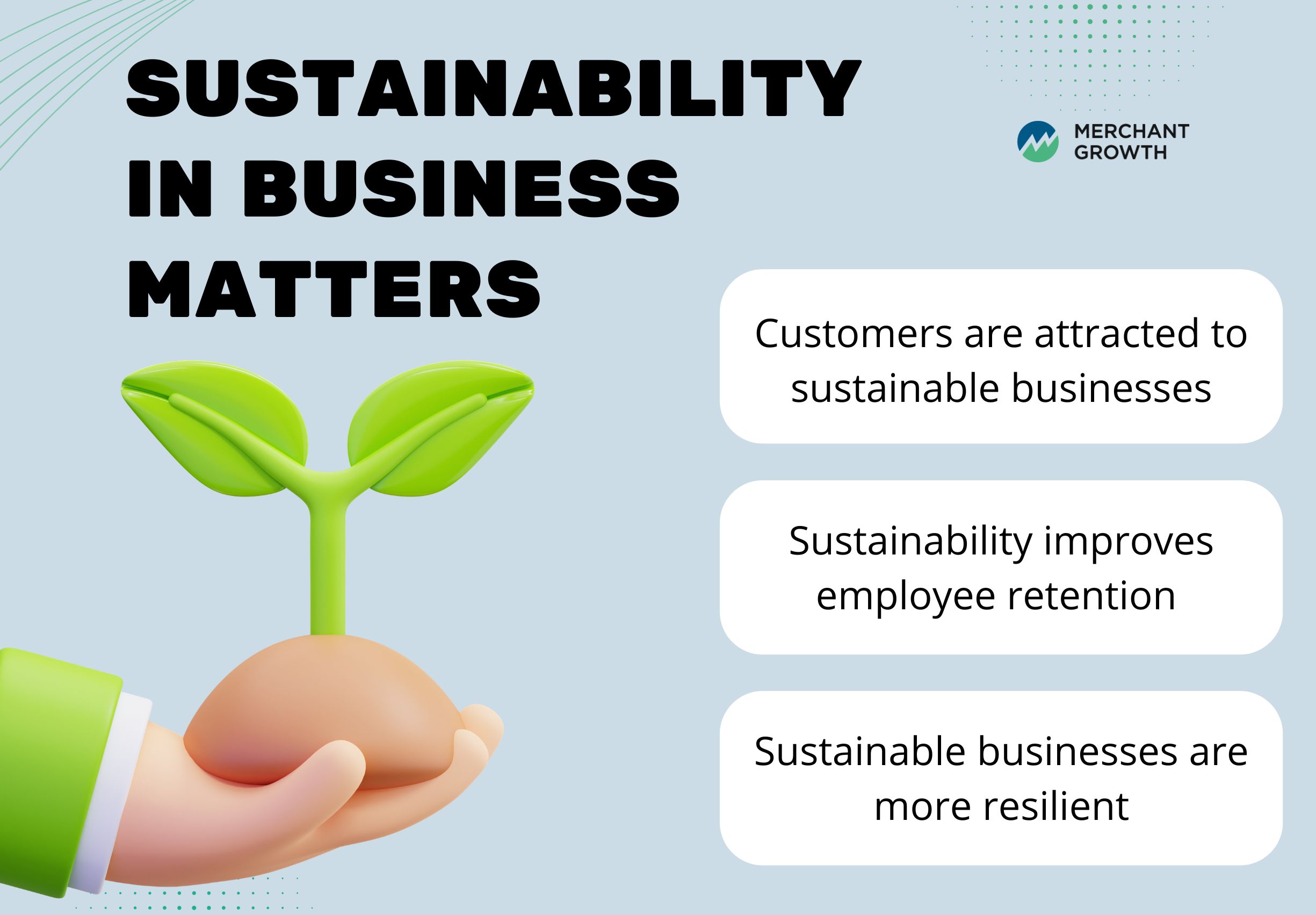
Consumers are attracted to sustainable businesses
Consumer expectations have evolved significantly over the past decade. People are increasingly interested in supporting businesses that demonstrate responsible practices, whether that's reducing waste, sourcing products ethically, supporting local communities, or treating employees fairly. In fact, 48% of Canadians surveyed by Canada Post reported they pay attention when businesses talk about investments in sustainable practices. While price and quality remain important purchasing factors, trust and shared values are becoming increasingly influential when customers decide where to spend their money.
Going green can help businesses retain and acquire employees
Sustainability also plays an important role in attracting and retaining talented employees. Deloitte found that 70% of young workers will stay longer in a role if they feel their values align with the environmental practices of the company. People want to feel proud of the organizations they work for, and businesses that prioritize employee wellbeing, inclusion, professional development, and ethical leadership often create stronger workplace cultures. Those investments not only improve recruitment and retention but also contribute to higher engagement and productivity over time.
Changes made today can change the future of the business
Beyond reputation, sustainability helps businesses become more resilient. Improving energy efficiency, reducing waste, diversifying suppliers, and strengthening operational processes can lower costs while reducing exposure to future risks. As markets, regulations, and customer expectations continue evolving, businesses that think strategically about sustainability are often better prepared to adapt than those focused solely on short-term results.
Perhaps most importantly, sustainability encourages businesses to think beyond immediate gains. Rather than asking, "How can we increase profits this quarter?" sustainable organizations also ask, "How can we build a business that continues creating value five, ten, or twenty years from now?" That shift in perspective often leads to stronger decision-making, greater resilience, and more sustainable long-term growth.
Is Your Business Already More Sustainable Than You Think?
When people hear the phrase sustainability in business, they often picture solar panels, electric vehicle fleets, or large-scale environmental initiatives. While those investments certainly contribute to sustainability, they're far from the only ways businesses can operate more responsibly. In fact, many organizations are already making meaningful progress without formally describing their efforts as sustainability initiatives.
Think about some of the everyday decisions your business already makes. Perhaps you've switched to digital invoicing to reduce paper waste, partnered with local suppliers to shorten transportation distances, invested in energy-efficient equipment, or introduced flexible work arrangements for your team. Individually, these changes may seem small, but together they contribute to a business that is more efficient, resilient, and responsible.
Many businesses are also improving sustainability simply by focusing on better operations. Preventative maintenance helps equipment last longer, reducing unnecessary replacements. Careful inventory management minimizes waste, while employee training creates safer workplaces and improves retention. These initiatives often lower costs while supporting broader sustainability goals, demonstrating that responsible business practices and strong financial performance frequently go hand in hand.
The biggest misconception about sustainability is that businesses need to make dramatic changes before they can call themselves "sustainable." In reality, sustainability isn't an all-or-nothing goal. It's an ongoing process of making thoughtful decisions that strengthen your business while reducing unnecessary environmental and social impacts over time.
Every business starts from a different place and faces different challenges. A manufacturer will naturally approach sustainability differently from a retail store or marketing agency, but each can identify practical improvements that fit their operations and long-term goals. Rather than trying to tackle everything at once, focus on building on the positive practices already in place. Small improvements implemented consistently over time often create a much greater impact than ambitious plans that never move beyond the planning stage.
The Three Pillars That Make a Business Sustainable
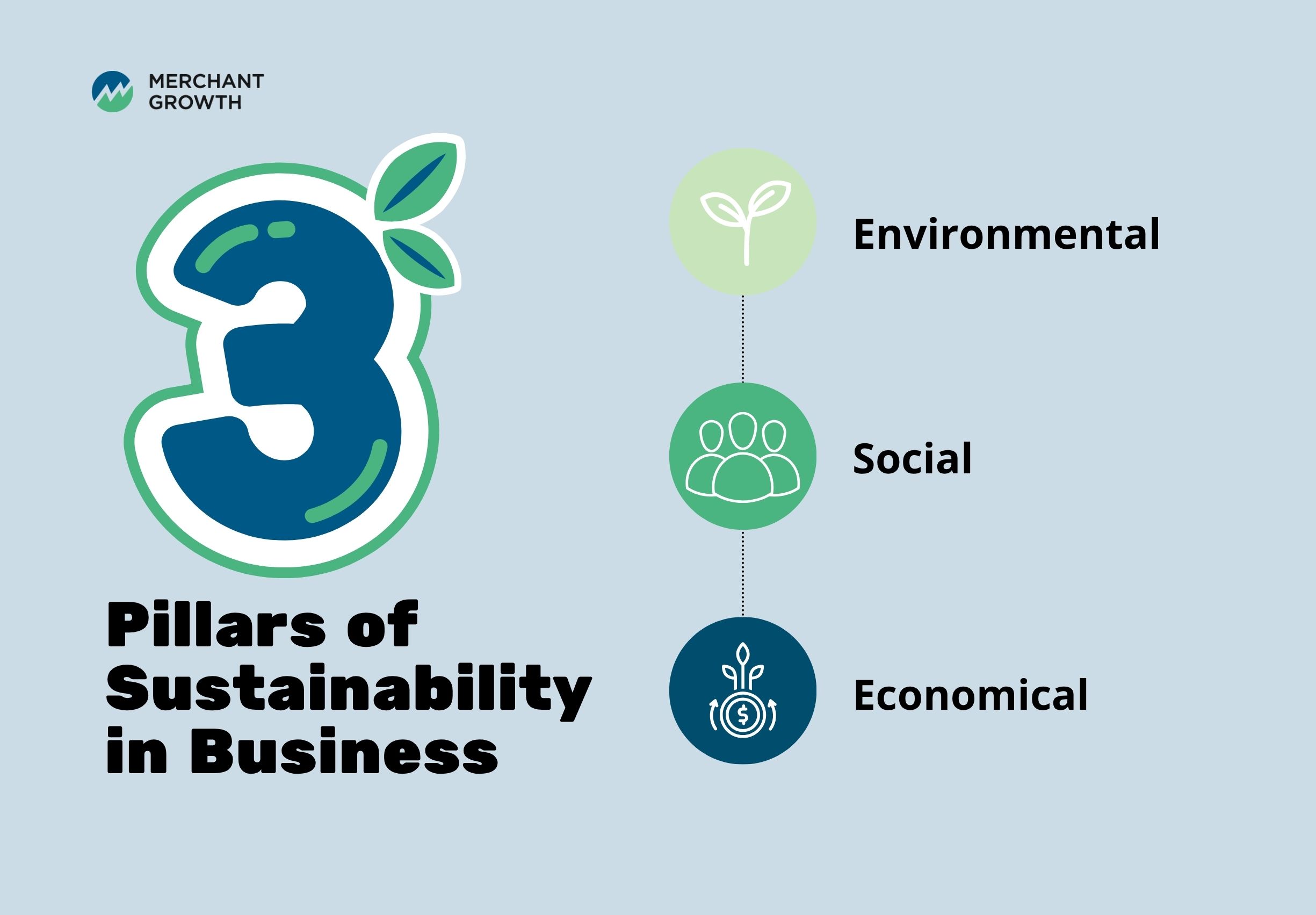
If sustainability looks different for every business, how do you know where to focus your efforts? While there isn't a single roadmap that works for every organization, most successful sustainability strategies are built around the same three core pillars:
- Environmental sustainability
- Social sustainability
- Economic sustainability
Together, they provide a practical framework for making decisions that support long-term business success without sacrificing profitability, people, or the planet.
Rather than thinking of these pillars as separate initiatives, it's helpful to see them as different perspectives on the same goal. Every business decision can influence more than one pillar at the same time. Understanding how each pillar contributes to a healthier business makes it easier to identify practical improvements that align with your goals and resources.
Environmental Sustainability: Reducing Your Impact While Improving Efficiency
Environmental sustainability focuses on reducing the impact a business has on natural resources while finding more efficient ways to operate. Although this is often the aspect people associate most closely with sustainability, it isn't limited to large environmental initiatives or expensive technology investments.
Many businesses begin by identifying opportunities to reduce waste, lower energy consumption, conserve water, or improve resource management. Simple operational changes like switching to LED lighting, maintaining equipment regularly, digitizing paperwork, or reducing unnecessary packaging can lower operating costs while also reducing environmental impact.
Supply chain decisions also play an important role. Choosing local suppliers where possible, sourcing sustainable materials, and minimizing transportation requirements can improve both environmental performance and operational resilience. In many cases, these decisions help businesses become more efficient while strengthening relationships with customers who increasingly value responsible business practices.

Social Sustainability: Putting People at the Centre of Your Business
Successful businesses are built by people, which is why social sustainability focuses on creating positive outcomes for employees, customers, suppliers, and the communities a business serves. Organizations that invest in people often build stronger workplace cultures, improve customer loyalty, and create lasting relationships that support long-term success.
For employees, social sustainability may involve providing safe working conditions, opportunities for professional development, flexible work arrangements, or initiatives that support mental health and wellbeing. These investments can improve engagement, strengthen retention, and make it easier to attract talented employees in competitive labour markets.
Social sustainability also extends beyond your own team. Supporting local organizations, partnering with community groups, maintaining ethical labour practices throughout your supply chain, and delivering honest, transparent customer service all contribute to building trust. Businesses that consistently demonstrate integrity often strengthen their reputation while creating meaningful value beyond their products or services.
Economic Sustainability: Building a Business That Lasts
Without financial stability, it's difficult for any business to invest in sustainability over the long term. Economic sustainability focuses on building a company that remains profitable, resilient, and adaptable while continuing to create value for customers, employees, and stakeholders.
This includes maintaining healthy cash flow, managing expenses responsibly, planning for future growth, and making strategic investments that improve operational performance. Businesses with strong financial foundations are often better equipped to navigate economic uncertainty, respond to changing customer expectations, and invest in innovation when new opportunities arise.
Economic sustainability also encourages businesses to think beyond short-term profits. Decisions that strengthen customer relationships, improve operational efficiency, and reduce unnecessary risk may require investment today, but they often contribute to greater stability and stronger financial performance in the years ahead. Rather than chasing quick wins, sustainable businesses focus on creating long-term value that supports continued growth.
Sustainable Business Practices That Make a Real Difference
Understanding sustainability is one thing, but putting it into practice is where businesses begin to see real benefits. Sustainable business practices don't have to involve expensive technology or sweeping organizational change. Many of the best improvements begin with everyday operational decisions that reduce waste, improve efficiency, and create a better experience for employees and customers alike.
Rather than trying to implement dozens of initiatives at once, focus on the areas where your business can create the greatest impact. The best sustainability strategies are practical, realistic, and aligned with the way your business already operates. Over time, these smaller improvements become part of your company culture, helping your business grow stronger while creating positive environmental and social outcomes.
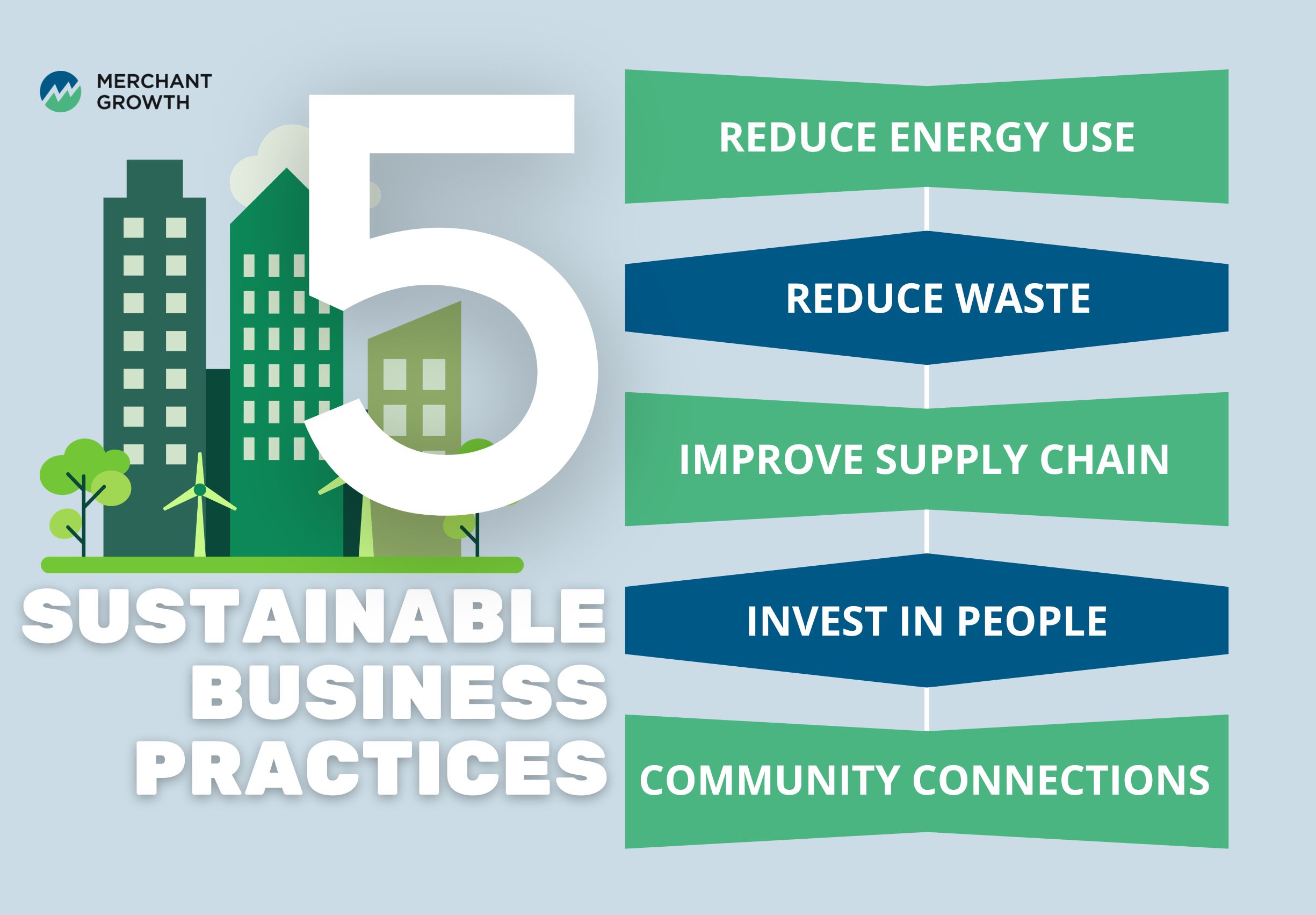
1. Reduce Energy Use Without Reducing Productivity
Energy efficiency is often one of the easiest places for businesses to begin. Lowering energy consumption doesn't just reduce environmental impact; it can also lower operating expenses and free up resources to invest elsewhere in the business.
Simple improvements such as switching to LED lighting, maintaining heating and cooling systems, upgrading aging equipment, installing programmable thermostats, or encouraging employees to power down unused devices can all make a noticeable difference. Businesses don't need to invest in major renewable energy projects to see results. Consistent operational improvements often deliver meaningful savings while reducing resource consumption.
2. Find Smarter Ways to Reduce Waste
Reducing waste goes beyond recycling bins. It starts by evaluating how materials, products, and resources move through your business and identifying opportunities to eliminate unnecessary waste before it's created.
For some businesses, that may mean replacing paper-based processes with digital workflows. Others may reduce packaging, improve inventory management to minimize expired stock, or introduce reusable materials into daily operations. These improvements often reduce purchasing costs while creating more efficient and sustainable operations.
3. Build a More Sustainable Supply Chain
A business's sustainability efforts don't stop at its front door. The suppliers you work with, the products you purchase, and the way materials move through your supply chain all influence your overall environmental and social impact.
Whenever practical, consider partnering with suppliers that prioritize responsible sourcing, ethical labour practices, or sustainable materials. Working with local suppliers where possible can also shorten transportation distances, improve supply chain reliability, and strengthen local economies. These decisions often benefit both your business and your customers by creating a more resilient and transparent supply chain.
4. Invest in Your People
Employees are one of the most valuable assets any business has, making investment in people an essential part of sustainability. Businesses that support their employees often experience stronger engagement, lower turnover, and healthier workplace cultures.
Supporting your team may include providing professional development opportunities, flexible work arrangements, competitive benefits, mental health resources, or creating a workplace where employees feel safe, respected, and included. Investing in people not only strengthens your business internally but also improves the experience customers receive through a more engaged and motivated workforce.
5. Strengthen Your Community Connections
Businesses don't operate in isolation. They rely on customers, suppliers, employees, and the communities around them to succeed. Building strong community relationships helps businesses establish trust while creating a positive impact beyond their products or services.
Supporting local charities, sponsoring community events, volunteering, purchasing from nearby businesses, or creating partnerships with local organizations are all meaningful ways to give back. These initiatives demonstrate that sustainability isn't only about environmental responsibility; it's also about strengthening the communities that help businesses grow.

What Does Sustainability Look Like in a Real Business?
One reason sustainability can feel overwhelming is because it's often discussed in broad, theoretical terms. In reality, sustainability looks different for every business depending on its industry, size, customers, and goals. The most effective sustainability strategy isn't about copying another organization—it's about identifying improvements that make sense for your own operations and the value you provide.
Take Construction LCE Inc., a Merchant Growth client, as an example. Founded in 2013, the construction company has built its reputation by delivering turnkey renovation and construction projects that are not only dynamic and high quality, but also environmentally conscious. Rather than treating sustainability as a separate initiative, Construction LCE incorporates responsible design and environmentally friendly practices into the work they deliver for their clients, demonstrating that sustainability can become part of a company's everyday operations and long-term vision.
Like many growing businesses, Construction LCE also faced a challenge when an opportunity to take on larger projects arose. Traditional lenders were hesitant to finance the business because of the construction industry, despite its strong track record. With financing from Merchant Growth, Construction LCE was able to secure the working capital needed to take on the project, grow its client base, and create a steady stream of future work. It's a reminder that sustainability isn't only about environmental initiatives; it's also about building a financially resilient business that has the resources to invest in responsible growth.
ESG vs. Sustainability: What's the Difference?
As businesses become more focused on sustainability, another term often enters the conversation: ESG. While the two are closely related, they aren't interchangeable. Understanding the distinction can help businesses decide which approach makes the most sense as their sustainability efforts continue to mature.
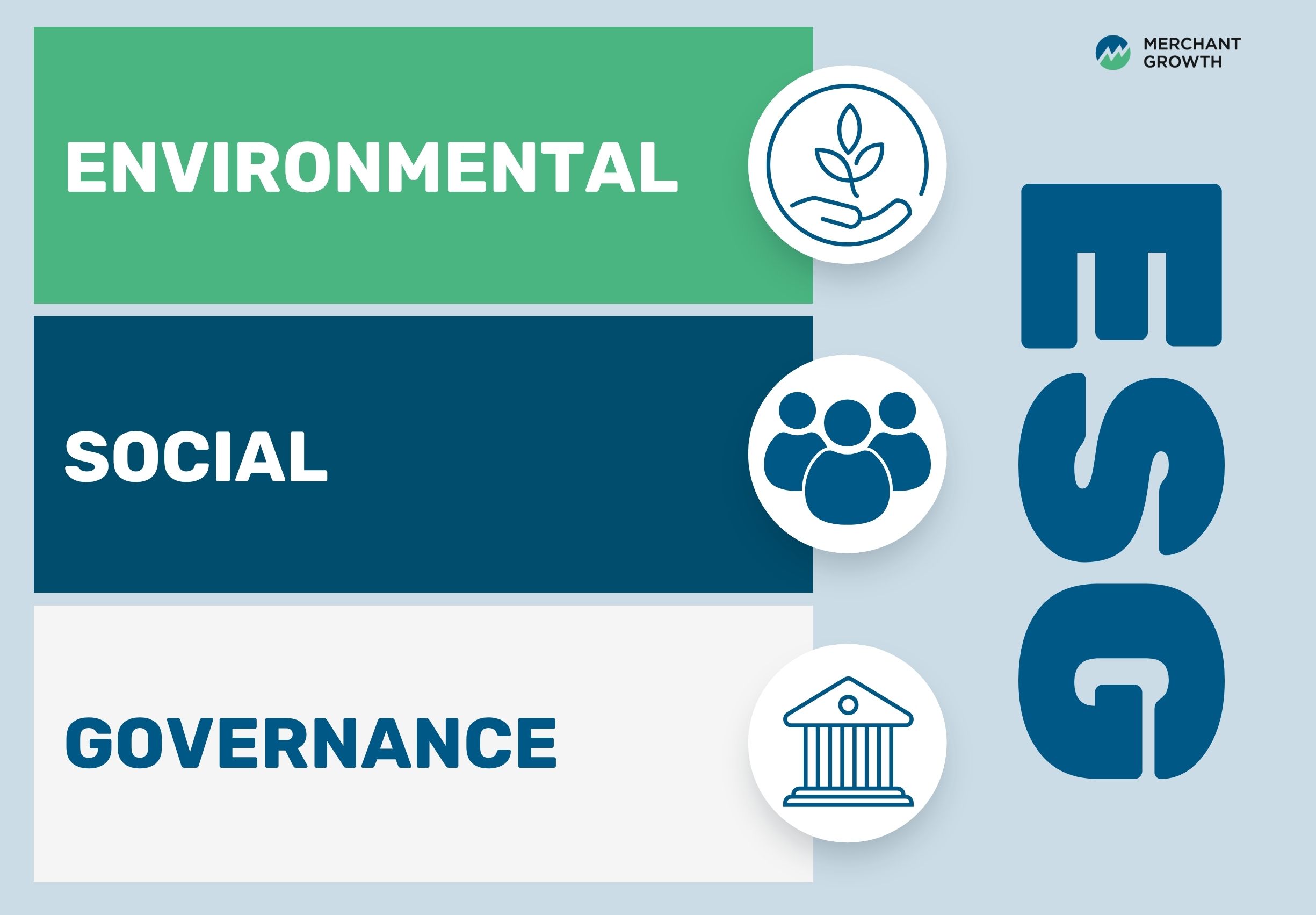
Sustainability is the overall strategy. It reflects a long-term commitment to balancing business performance with environmental responsibility and positive social impact. ESG, which stands for Environmental, Social, and Governance, is one of the frameworks organizations use to measure, evaluate, and communicate those efforts.
Think of it this way: sustainability is the destination, while ESG is one of the tools used to measure progress along the way. Larger organizations often use ESG reporting to provide transparency for investors, regulators, and other stakeholders. Many small businesses, however, naturally adopt sustainable business practices long before formal ESG reporting becomes necessary.
Do Small Businesses Need ESG?
For most small and medium-sized businesses, the answer is not necessarily. While ESG reporting is becoming increasingly important for larger corporations and publicly traded companies, many small businesses create significant value simply by embedding sustainability into their everyday operations.
That doesn't mean measurement isn't important. Tracking improvements such as energy consumption, waste reduction, employee retention, supplier performance, or community involvement can help businesses understand what's working and identify opportunities to improve. The key is to focus on meaningful metrics that support your business goals rather than creating reports simply for the sake of reporting.
As your business grows, your sustainability strategy will likely become more sophisticated as well. Starting with practical improvements today creates a strong foundation that can make future ESG reporting far more manageable if it becomes relevant to your business.
The Biggest Challenges of Building a Sustainable Business
Building a more sustainable business doesn't happen overnight, and it rarely follows a perfectly straight path. Every organization faces different operational realities, budgets, and priorities, which means sustainability often requires balancing long-term goals with the day-to-day demands of running a business.
Limited time and resources
For many small businesses, one of the biggest obstacles is finding the time and resources to implement new initiatives. When budgets are already tight, it can be difficult to prioritize improvements that may not deliver an immediate return.
Understanding the true impact
Measuring results can also feel challenging. Unlike financial performance, which is often tracked daily, sustainability improvements can take months or even years to fully materialize. Businesses may struggle to know which initiatives deserve their attention or how to determine whether their efforts are making a meaningful difference.
Navigating supply chain challenges
Supply chain limitations can create another hurdle. Even businesses that want to source more sustainable products or work with environmentally responsible suppliers may find that availability, pricing, or geographic location limits their options. Rather than striving for perfection, it's often more realistic to focus on making better decisions as opportunities arise.
The good news is that sustainability isn't about getting everything right from the beginning. Businesses that approach sustainability as a process of continuous improvement are often better positioned to make steady progress without overwhelming their teams or compromising day-to-day operations.

How Do You Measure Sustainability in Business?
Like any business objective, sustainability becomes more meaningful when progress can be measured. Tracking results helps businesses understand what's working, identify new opportunities for improvement, and demonstrate their commitment to employees, customers, and other stakeholders.
The metrics that matter most will vary depending on the type of business. For some organizations, reducing energy consumption or waste may be the priority. Others may focus on employee retention, workplace safety, supplier accountability, customer satisfaction, or community involvement. The goal isn't to measure everything; it's to identify a handful of meaningful indicators that align with your business objectives.
Some examples of sustainability metrics businesses may choose to monitor include:
- Energy and utility consumption
- Waste reduction and recycling rates
- Paper usage and digital adoption
- Employee engagement and retention
- Health and safety performance
- Supplier sustainability standards
- Community partnerships and volunteer initiatives
- Customer feedback and brand perception
As your business grows, your approach to measurement can evolve as well. What's most important is creating a consistent process that allows you to evaluate progress over time. Sustainability should become part of regular business planning rather than a separate initiative that's only reviewed occasionally.

How Merchant Growth Helps Businesses Invest in Sustainability
For many businesses, the desire to become more sustainable isn't the challenge; it's finding the resources to put those plans into action. Whether you're upgrading equipment, improving operational efficiency, modernizing technology, or strengthening your facilities, meaningful improvements often require investment before they begin generating returns.
That's where access to financing can make a real difference. Rather than delaying important improvements because of short-term cash flow constraints, businesses can move forward with projects that strengthen both their operations and their long-term resilience. Strategic investments made today can reduce costs, improve efficiency, enhance customer experiences, and create a stronger foundation for future growth.
Merchant Growth provides flexible financing solutions designed to help Canadian small businesses invest in opportunities that support sustainable growth. Whether you're purchasing more efficient equipment, adopting digital tools, renovating your workspace, expanding operations, or strengthening your supply chain, access to capital can help turn long-term plans into practical action.
Sustainability isn't about becoming the perfect business overnight. It's about making thoughtful decisions that strengthen your business year after year while creating positive outcomes for your employees, customers, community, and the environment. Merchant Growth is proud to support Canadian entrepreneurs as they invest in the future of their businesses with confidence.
Small Business BC Guide: How to Start and Grow a Business in British Columbia
Starting a business in British Columbia can feel both exciting and overwhelming at the same time. From choosing the right business idea to registering the company, finding funding, and attracting customers, there are countless moving pieces that entrepreneurs need to navigate in the early stages of building a business. For many first-time founders, it can be difficult knowing where to start or which steps matter most.
At the same time, British Columbia continues to be one of the strongest provinces in Canada for entrepreneurship and small business growth. BC has more small businesses per capita than any other province, and small businesses employed 41% of BC’s workforce in 2022. From Vancouver’s growing technology sector to tourism, trades, ecommerce, agriculture, wellness, and professional services, entrepreneurs across the province continue to create businesses that support both local communities and the broader economy.
This guide breaks down everything entrepreneurs need to know about starting and growing a small business in BC, including how to choose a business idea, register a business, access grants and funding, navigate common challenges, and build a stronger foundation for long-term growth.
Key Takeaways
- BC has one of the strongest small business ecosystems in Canada
- Choosing the right business idea starts with market demand, skills, and long-term sustainability
- Registering a business in BC involves business structure selection, licensing, and tax registration
- Small business grants, loans, and funding programs are available throughout British Columbia
- Networking, mentorship, and entrepreneur resources can help businesses grow faster
- Digital tools and operational flexibility are becoming increasingly important for long-term success
- Building a sustainable business requires planning, financial management, and adaptability over time

Why British Columbia Continues to Be a Strong Province for Small Businesses
British Columbia has long been recognized as one of Canada’s strongest provinces for entrepreneurship. The province supports a diverse economy that includes tourism, technology, natural resources, construction, professional services, retail, agriculture, health and wellness, and ecommerce. This diversity creates opportunities for entrepreneurs across a wide range of industries and business models.
One of BC’s biggest advantages is the variety of markets available to entrepreneurs. Large urban centres like Vancouver and Victoria provide access to larger customer bases, startup communities, and innovation networks, while smaller communities throughout the province continue to create opportunities for local service businesses, trades, tourism, and niche markets. Entrepreneurs are often able to tailor their business ideas around regional needs and local demand rather than competing solely in oversaturated national markets.
British Columbia also has a strong network of entrepreneur resources and support organizations. Business owners can access mentorship programs, educational workshops, funding resources, startup incubators, and networking communities designed specifically to support small business growth. These resources can make the startup process feel far less isolating, especially for first-time entrepreneurs navigating unfamiliar territory.
At the same time, entrepreneurship in BC still comes with challenges. Rising operating expenses, commercial rent costs, and staffing shortages can place pressure on growing businesses. However, entrepreneurs who build flexible business models and strong operational foundations are often better positioned to adapt and grow successfully over time.

Choosing the Right Business Idea in BC
One of the biggest mistakes entrepreneurs make is choosing a business idea based entirely on trends or short-term hype. While market trends can inspire, long-term business success usually depends on finding an idea that aligns with customer demand, personal strengths, operational sustainability, and realistic financial expectations.
The strongest business ideas often solve a clear problem or fulfill an ongoing need within a community or industry. Entrepreneurs should consider factors such as startup costs, competition levels, customer demand, lifestyle goals, and long-term scalability before committing to a business concept. In many cases, the most sustainable businesses are not necessarily the trendiest ones. They are the businesses that consistently provide value and can adapt as markets evolve.
BC’s economy creates opportunities across multiple industries, particularly for businesses tied to local services, tourism, digital work, health and wellness, trades, and online commerce. Entrepreneurs who understand regional demand and changing consumer behaviour are often better equipped to identify opportunities with long-term potential.
Small Business Ideas BC Entrepreneurs Are Exploring
Many entrepreneurs in BC are building businesses around industries that offer flexibility, recurring customer demand, and lower startup overhead. Service-based businesses remain especially popular because they often require lower upfront investment while allowing entrepreneurs to scale gradually over time.
At the same time, the best business idea is rarely about simply following trends. Long-term success usually depends on understanding market demand, operational costs, customer needs, and how sustainable the business will be over time. Entrepreneurs who choose business models aligned with both their skills and local opportunities are often better positioned for long-term growth.

Home Services and Skilled Trades
Home services and skilled trades continue to be some of the strongest small business opportunities in British Columbia. Population growth, housing demand, renovations, and ongoing infrastructure development continue creating demand for businesses tied to residential and commercial property maintenance.
Businesses like:
- Electrical work
- Plumbing
- HVAC services
- Landscaping
- Cleaning services
- Painting
- Handyman businesses
- Renovation companies
remain in high demand throughout many BC communities. These businesses often benefit from recurring customer needs and strong word-of-mouth referrals, especially when service quality and reliability are consistent.

Tourism and Hospitality Businesses
Tourism remains a major part of British Columbia’s economy, creating opportunities for entrepreneurs interested in hospitality, travel, food, and local experiences. BC’s natural landscapes, outdoor recreation, wineries, ski destinations, and coastal communities continue attracting both domestic and international visitors throughout the year.
Entrepreneurs are exploring opportunities such as:
- Boutique accommodations
- Guided tours
- Adventure tourism
- Cafes
- Food trucks
- Local experience businesses
- Event services
However, tourism businesses can also experience seasonal fluctuations, making strong planning and cash flow management especially important.
Ecommerce and Online Retail
Ecommerce businesses continue growing across BC as more consumers shop online and businesses expand beyond local markets. Online stores often allow entrepreneurs to start with lower overhead compared to traditional retail storefronts while providing flexibility to scale gradually over time.
Popular ecommerce opportunities include:
- Niche retail products
- Handmade goods
- Apparel
- Beauty products
- Wellness brands
- Subscription boxes
- Specialty food products
Many entrepreneurs are also combining ecommerce with social media marketing and content creation to build stronger direct-to-consumer brands.

Health and Wellness Services
Health and wellness businesses have become increasingly popular throughout British Columbia as consumers place greater focus on physical health, mental well-being, fitness, and preventative care. Entrepreneurs in this space are often able to build businesses around both recurring services and strong community relationships.
Examples include:
- Fitness studios
- Yoga instruction
- Counselling services
- Massage therapy
- Nutrition coaching
- Wellness clinics
- Skincare services
- Holistic health businesses
Many wellness entrepreneurs are also combining in-person services with online programs, memberships, or digital resources to create additional revenue streams.

Food and Beverage Businesses
Food and beverage businesses continue attracting entrepreneurs across BC, particularly in urban centres and tourism-driven communities. Popular start-up paths include:
- Restaurants
- Cafes
- Bakeries
- Meal prep companies
- Specialty food brands
- Breweries
- Mobile food businesses
At the same time, food businesses often face higher operational costs and tighter margins than many service-based industries. Entrepreneurs entering this space usually benefit from strong financial planning, operational efficiency, and a clearly defined customer experience from the beginning.

Professional Consulting and Freelance Services
Consulting and freelance businesses remain attractive because they often allow entrepreneurs to monetize existing skills with relatively low startup costs. Many professionals transition into self-employment after building experience in industries like marketing, finance, human resources, technology, or business operations.
Common consulting and freelance businesses include:
- Bookkeeping
- Business consulting
- Copywriting
- Graphic design
- Web development
- Photography
- Coaching
- Administrative support services
These businesses can often start part-time before scaling into full-time operations.
Digital Marketing and Creative Businesses
As businesses continue investing more heavily in digital visibility, demand for creative and digital marketing services continues growing across BC. Entrepreneurs with skills in:
- Branding
- Content creation
- Video production
- Advertising
- SEO
- Social media management
Find increasing opportunities to support local businesses.
Creative service businesses also offer flexibility because many can operate remotely or from home. This lower overhead structure allows entrepreneurs to scale gradually while building recurring client relationships over time.
Home-Based Businesses and Remote Work Opportunities
Home-based businesses continue growing in popularity throughout British Columbia, particularly as more people pursue flexible work arrangements and online business opportunities. Starting from home can help entrepreneurs reduce overhead costs while testing demand before committing to larger commercial expenses.
Popular home-based business ideas in BC include:
- Freelance writing
- Graphic design
- Consulting
- Coaching
- Virtual assistant services
- Online stores
- Content creation
- Bookkeeping
- Wellness-based businesses
Many entrepreneurs are also building successful ecommerce businesses that allow them to reach customers outside their local community.
However, entrepreneurs should still research local municipal requirements before operating from home. Some municipalities have zoning restrictions, licensing requirements, or operational limitations depending on the type of business activity taking place within residential areas.
Which Small Business Ideas Tend to Be the Most Sustainable?
The most profitable business idea is not always the one with the fastest growth potential. In many cases, businesses with manageable overhead, recurring customer demand, and strong retention strategies are often more sustainable long term.
Entrepreneurs who build businesses gradually, monitor expenses carefully, and focus on operational stability are often better equipped to navigate changing market conditions. While no business is completely risk-free, businesses that solve consistent customer problems and adapt over time usually create stronger long-term opportunities.
How to Start a Small Business in BC
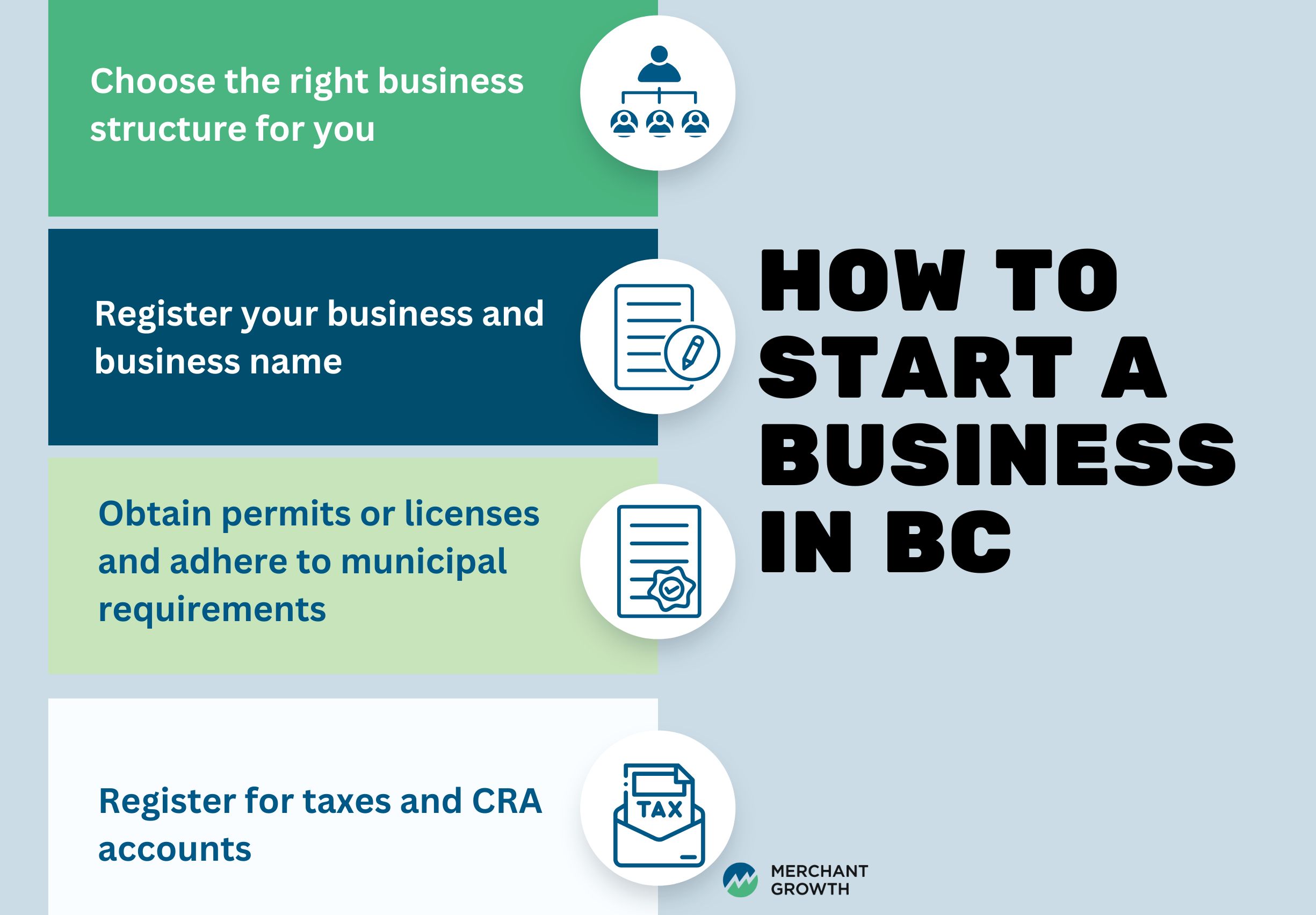
Starting a business in British Columbia involves several legal and administrative steps that help establish the business properly from the beginning. While the process can initially seem intimidating, breaking it down step by step makes it much more manageable.
Choosing the Right Business Structure
One of the first decisions entrepreneurs need to make is selecting a business structure. In BC, the most common options include sole proprietorships, partnerships, and corporations.
Sole proprietorships are often the simplest and least expensive structure for new entrepreneurs because the business and owner are legally considered the same entity. Partnerships involve two or more individuals sharing ownership responsibilities, while corporations create a separate legal entity that can provide liability protection and different tax considerations.
The right structure depends on factors like revenue expectations, liability concerns, operational complexity, and future growth plans. Many entrepreneurs consult accountants or legal professionals before making this decision, particularly if they expect significant growth or plan to hire employees later on.
Registering a Business in BC
Once a business structure has been selected, entrepreneurs may need to register their business name through BC Registry Services. Sole proprietors operating under their personal legal name may not always require registration, but businesses operating under a unique business name generally do.
The registration process typically involves submitting a business name approval request before completing registration officially. Entrepreneurs should also confirm that their desired business name is not already in use and aligns with trademark considerations where applicable.
For incorporated businesses, additional registration steps and corporate filings may be required depending on the structure selected.
Permits, Licences, and Municipal Requirements
Many businesses in BC also require municipal business licences or industry-specific permits before operating legally. Requirements vary depending on the city, municipality, and type of business involved.
Restaurants, wellness businesses, home-based operations, construction companies, and retail businesses may all face different licensing or zoning requirements. Entrepreneurs should research both provincial and municipal regulations early in the planning process to avoid delays later on.
Home-based businesses should pay particular attention to local zoning restrictions, parking considerations, and operational limitations that may apply within residential areas.
Registering for Taxes and CRA Accounts
Most businesses will also need to register for various Canada Revenue Agency accounts depending on their operations. This may include GST/HST accounts, payroll accounts, or corporate tax accounts.
Entrepreneurs should understand their tax responsibilities early, especially if they plan to hire employees or generate revenue above GST/HST thresholds. Maintaining organized bookkeeping and financial records from the beginning can help businesses avoid complications later as they grow.
The Real Challenges Small Businesses Face in BC
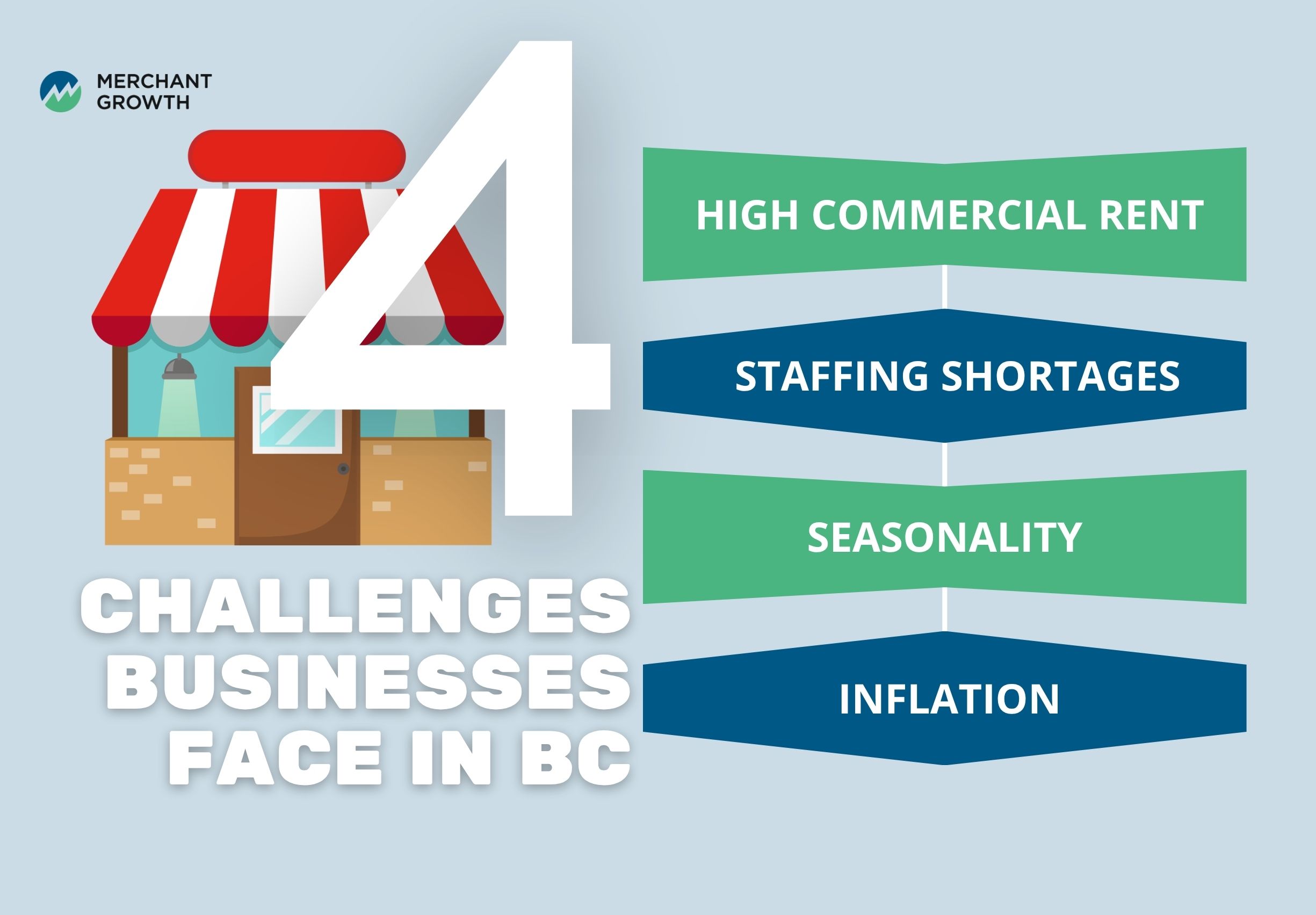
While entrepreneurship creates exciting opportunities, operating a business in British Columbia also comes with unique regional pressures. Understanding these challenges early can help entrepreneurs prepare more effectively instead of reacting to problems after they arise. Many of the most successful businesses in BC are not necessarily the ones that avoid challenges completely, but the ones that plan for uncertainty and remain flexible as conditions change.
High Commercial Rent Costs
Commercial rent remains one of the biggest financial pressures for businesses operating in larger urban centres like Vancouver and Victoria. Retail storefronts, restaurants, wellness studios, salons, and customer-facing service businesses often face especially high leasing costs, making location strategy a major part of long-term financial planning.
Lease pricing can vary significantly depending on the region, business type, and square footage requirements. In higher-demand urban areas, entrepreneurs may also face additional expenses beyond monthly rent, including property taxes, maintenance fees, utilities, parking costs, and tenant improvements. These added expenses can increase startup overhead far beyond what many first-time business owners initially budget for.
For many entrepreneurs, the challenge is not simply affording rent during strong sales periods. It is maintaining a stable cash flow during slower seasons or economic downturns when fixed lease costs remain unchanged. This is one reason many businesses in BC are exploring smaller footprints, hybrid business models, ecommerce integration, or home-based operations before committing to larger commercial spaces.
Staffing Shortages and Hiring Challenges
Staffing shortages continue to create operational pressure across many industries in British Columbia. Hospitality, retail, construction, healthcare, and skilled trades businesses throughout the province have all faced ongoing recruitment and retention difficulties in recent years.
The healthcare sector has experienced some of the most significant staffing pressures. In BC’s nursing sector, 51% of institutions reported vacancy rates exceeding 10% for Licensed Practical Nurses (LPNs), highlighting how widespread labour shortages have become across essential industries. These shortages not only impact healthcare organizations directly, but also place additional strain on surrounding industries competing for workers in already tight labour markets.
For small business owners, hiring challenges often extend beyond simply finding workers. Rising wage expectations, employee burnout, scheduling flexibility, and retention concerns have all become increasingly important operational considerations. Businesses that invest in workplace culture, flexibility, training, and long-term employee retention strategies are often better positioned to maintain operational stability.
The Instability of Seasonal Businesses
Seasonality can create additional uncertainty for businesses closely tied to the tourism, hospitality, agriculture, or outdoor recreation industries. Many businesses throughout BC experience significant fluctuations in customer demand depending on weather patterns, tourism trends, and seasonal travel activity.
For example, ski communities, coastal tourism businesses, wineries, and summer recreation companies may experience extremely busy peak seasons followed by much slower off-seasons. While strong seasonal revenue can create major growth opportunities, it can also create cash flow instability if businesses are not budgeting carefully throughout the year.
This seasonality often forces business owners to think differently about staffing, inventory management, and operational planning. Many entrepreneurs build additional revenue streams, diversify services, or rely on slower-season promotions in order to create more consistent year-round income.
Inflation and Rising Operational Expenses
Inflation and rising operating costs continue to place pressure on businesses across British Columbia. Fuel, insurance, utilities, inventory costs, transportation expenses, and supply chain disruptions have all increased operating expenses for many companies over the last several years.
At the same time, BC’s broader financial environment has created additional uncertainty for business owners. The province recently reported deteriorating finances alongside multiple new tax increases and a record-setting deficit of $13.3 billion. While these broader economic conditions do not affect every business equally, they contribute to ongoing concerns around affordability, operating costs, and long-term economic stability.
For entrepreneurs, rising expenses can quickly reduce profit margins if pricing, budgeting, and operational efficiency are not managed carefully. Businesses that regularly review expenses, improve operational systems, and maintain financial flexibility are often better equipped to adapt as economic conditions change.
The strongest businesses are usually the ones that build flexibility into their operations early. Entrepreneurs who monitor expenses carefully, maintain financial reserves, and adapt to changing market conditions are often better positioned to navigate uncertainty while continuing to grow sustainably over time.
Small Business Grants and Funding in BC
Access to funding remains one of the biggest challenges for many entrepreneurs, especially during the early stages of growth. While some businesses can launch with minimal startup costs, many eventually require additional capital for equipment, inventory, staffing, marketing, renovations, or operational expansion.

BC Small Business Grants and Government Programs
British Columbia offers a variety of grants and funding opportunities for entrepreneurs depending on the industry, location, and stage of business growth. Some programs focus specifically on innovation, technology adoption, hiring incentives, tourism, sustainability, export development, or regional economic growth initiatives designed to support local business expansion.
Entrepreneurs in BC also have access to support through organizations like Innovate BC, which helps businesses involved in technology, research, and innovation access funding programs, mentorship, commercialization support, and industry connections. Programs like these are designed to help BC businesses strengthen innovation, scale operations, and compete more effectively within growing industries.
The province has also continued investing heavily in artificial intelligence and technology development through initiatives tied to economic growth and productivity. One example is the Regional Artificial Intelligence Initiative (RAII), delivered through PacifiCan, which supports businesses commercializing or adopting AI technologies in British Columbia. The initiative can provide businesses with up to $3 million per project and up to $5 million for eligible non-profit organizations supporting AI ecosystem development and adoption.
Tourism businesses throughout BC may also qualify for specialized tourism funding and development programs. Through PacifiCan’s Tourism Growth Program, eligible tourism businesses can apply for interest-free repayable funding of up to $250,000 to support tourism operations, destination development, and long-term visitor economy growth. Destination BC and other provincial tourism initiatives also provide additional resources, destination development funding, marketing support, and event funding opportunities throughout the province.
BC businesses focused on sustainability and climate resilience may also benefit from programs like the Community Climate Funding Program, which supports projects tied to climate action, infrastructure improvements, energy efficiency, and community sustainability initiatives across the province.
Federal programs may also provide support for BC businesses through wage subsidies, export programs, training grants, and industry-specific funding initiatives. Women entrepreneurs, Indigenous entrepreneurs, newcomers, and underrepresented founders may also qualify for specialized funding and mentorship programs designed to improve access to business support and long-term growth opportunities.
However, entrepreneurs should understand that grants are often highly competitive and may not fully cover operational expenses. Strong applications, detailed business plans, realistic financial projections, and clearly defined growth strategies are often necessary when applying for funding programs. Many businesses also combine grants with financing or other funding sources in order to create more flexibility as they grow.
Exploring Small Business Financing Options
In addition to grants, many businesses rely on financing to support growth and operational stability. Traditional bank loans, lines of credit, startup financing, and alternative lending options can all provide businesses with additional flexibility depending on their needs.
Alternative financing solutions have become increasingly important for businesses that may not qualify easily for traditional lending or require faster access to working capital. Financing may help businesses manage inventory, hire staff, invest in marketing, purchase equipment, or improve cash flow during slower periods.
The right financing strategy depends heavily on the business model, revenue patterns, and long-term goals. Entrepreneurs who understand their financial position clearly are often better equipped to use financing strategically rather than reactively.
Entrepreneur Resources and Support Organizations Across BC
Starting a business can feel significantly less overwhelming when entrepreneurs actively use the support systems available to them. British Columbia has a large network of entrepreneur organizations, mentorship programs, educational resources, and startup communities designed to help businesses succeed.
Women’s Enterprise Centre (WeBC)
Women entrepreneurs throughout British Columbia can also access support through Women’s Enterprise Centre (WeBC). The organization provides mentorship opportunities, funding support, educational programs, and business resources designed specifically for women-owned businesses.
Programs like these can help entrepreneurs access not only funding but also valuable networking opportunities and long-term business support.
Local Entrepreneur Communities and Innovation Hubs
Many municipalities and regional economic development organizations throughout BC also offer entrepreneur support programs. Chambers of Commerce, startup incubators, coworking spaces, and local business groups can all help entrepreneurs build relationships and access community support.
Universities and innovation centres, including programs connected to UBC and other institutions, also provide mentorship, startup guidance, and skills development opportunities for entrepreneurs building scalable businesses.
Building a business becomes much easier when entrepreneurs stop trying to do everything entirely alone. Community support, networking, and mentorship can often help businesses grow faster while reducing some of the uncertainty that comes with entrepreneurship.

How to Build a Small Business That Lasts Long Term
Launching a business is exciting, but building something that remains stable and profitable over time is where the real challenge begins. Long-term success usually depends less on the initial launch and more on how effectively a business manages finances, builds customer trust, and adapts as markets evolve. The strongest businesses are rarely the ones growing the fastest overnight. They are often the ones building steady momentum while staying flexible through changing conditions.
Focus on Cash Flow and Operational Stability
Many businesses struggle not because customers disappear entirely, but because cash flow becomes difficult to manage consistently. Unexpected expenses, seasonal fluctuations, slower sales periods, or rising operating costs can all create pressure if businesses are not monitoring finances closely.
Entrepreneurs who actively budget, forecast revenue, monitor expenses, and maintain operational flexibility are often better equipped to handle uncertainty without making reactive decisions. Building financial reserves and planning ahead for slower periods can also help businesses remain more stable as economic conditions change.
Build Strong Customer Relationships Early
Customer relationships often become one of the most valuable assets a business can build over time. Loyal customers are more likely to return consistently, refer others, leave positive reviews, and support businesses even during more challenging economic periods.
Businesses that prioritize communication, customer experience, and long-term relationship-building are often more resilient than businesses focused only on attracting new customers constantly. In many industries, strong retention and reputation can become a major competitive advantage.
Invest in Digital Visibility and Online Presence
Today’s customers often research businesses online long before making purchasing decisions. Websites, social media presence, online reviews, SEO, and digital marketing all play a major role in helping businesses build visibility and credibility.
Digital tools can also help businesses operate more efficiently while expanding beyond local markets. Ecommerce platforms, automation tools, email marketing, and online booking systems can all help businesses improve customer experience while creating more operational flexibility over time.
Stay Adaptable as Markets Change
One of the biggest advantages small businesses have is the ability to adapt quickly. Customer expectations, technology, industry trends, and economic conditions are constantly evolving, and businesses that stay flexible are often better positioned to grow long term.
Adaptability may involve adjusting pricing, expanding services, diversifying revenue streams, improving operational systems, or responding to changing customer behaviour. Sustainable businesses are rarely built around staying exactly the same. They continue evolving alongside the markets they serve.

Buying a Business in BC vs Starting From Scratch
Not every entrepreneur starts by building a business entirely from the ground up. Buying an existing business can also provide a path into entrepreneurship with certain advantages already in place, including customers, operational systems, supplier relationships, staff, and recurring revenue.
For some entrepreneurs, purchasing an established business can reduce some of the uncertainty that comes with launching a completely new company. Existing businesses may already have brand recognition, proven demand, and operational processes that allow new owners to focus more on growth and improvements rather than building everything from zero.
At the same time, buying a business still requires careful planning and due diligence. Entrepreneurs should review financial statements, lease agreements, operational challenges, customer retention trends, and legal obligations carefully before moving forward with a purchase.
Whether starting from scratch or purchasing an existing company, long-term success still depends on strong leadership, financial management, adaptability, and the ability to build sustainable operations over time.
How Merchant Growth Supports Small Businesses in BC
Access to funding can play a major role in helping businesses remain stable and continue growing through changing market conditions. Whether entrepreneurs are managing seasonal fluctuations, investing in expansion, improving operations, or strengthening cash flow, financial flexibility can help businesses move forward more confidently.
Merchant Growth provides flexible financing solutions designed to support Canadian small businesses at different stages of growth. Funding may help businesses invest in staffing, inventory, marketing, renovations, digital tools, equipment, or operational improvements that support long-term sustainability.
Starting and growing a small business in BC comes with both opportunity and uncertainty. The strongest businesses are often built gradually through careful planning, adaptability, and consistent operational improvements over time. Merchant Growth helps entrepreneurs access financing solutions that support stability, flexibility, and long-term business growth in an increasingly competitive business environment.
Hustle Culture in Canada: Burnout, Work-Life Balance, and the Pressure to Always Be Productive
There was a time when being “busy” became a status symbol. Long workdays, side hustles, late-night emails, and nonstop productivity were often celebrated as proof of ambition and success. Phrases like “rise and grind” and “sleep when you’re dead” became deeply embedded in modern work culture, especially among entrepreneurs and professionals trying to get ahead.
Today, however, more people are beginning to question whether constant hustle is actually sustainable. Burnout rates are rising, work-life boundaries are disappearing, and many Canadians are feeling overwhelmed by the pressure to always be productive. According to Statistics Canada, 43% of Canadians report feeling under constant stress, while 36% say they do not have enough time for fun. These numbers reflect a growing reality that many people are working harder than ever while feeling increasingly exhausted in the process.
At the same time, conversations around work are starting to shift. Younger generations are placing more value on flexibility, wellbeing, and balance, while business owners are beginning to recognize that long-term success cannot depend entirely on nonstop overwork. Hustle culture may have normalized exhaustion, but more people are now realizing that sustainable success requires something very different.

What Is Hustle Culture and Why Is Everyone Always Working?
Hustle culture is the belief that success comes from constantly working, staying productive, and maximizing every available hour of the day. It promotes the idea that hard work alone determines success and that slowing down, resting, or disconnecting from work can be viewed as falling behind.
In many ways, hustle culture goes beyond simply having a strong work ethic. It often encourages people to tie their self-worth directly to productivity and achievement. Instead of viewing work as one part of life, hustle culture can make productivity feel like a measure of personal value.
Social media has played a major role in accelerating this mindset. Entrepreneurs, influencers, and professionals frequently share highly curated versions of nonstop productivity, showcasing packed schedules, side hustles, early mornings, and constant work as symbols of ambition. Over time, this messaging has made overworking feel normalized, particularly among younger professionals and business owners trying to keep up in increasingly competitive industries.
The challenge is that hustle culture rarely highlights the long-term consequences of operating this way. Constant productivity may create short bursts of momentum, but over time it can lead to exhaustion, stress, and a growing inability to disconnect from work entirely.

How Hustle Culture Became the New Normal
The rise of hustle culture did not happen overnight. Over the last decade, technology, social media, remote work, and entrepreneurial grind have all contributed to creating an environment where people feel expected to always be available and constantly productive. As digital tools have become more integrated into daily life, the boundaries between work, rest, and personal time have become increasingly blurred.
Smartphones and Digital Communication
Smartphones and digital communication tools have made it easier than ever to stay connected to work at all times. Emails, messages, and notifications now follow people everywhere, making it difficult to fully disconnect even outside traditional working hours. Remote work has also blurred the boundaries between personal and professional life, causing many people to feel like they are always partially “on the clock.”
This constant connectivity can significantly impact work-life balance over time. Research has shown that increased smartphone use for work outside regular working hours is strongly linked to higher levels of work-life conflict. In fact, 19 separate studies found a significant association between using smartphones for work during off-hours and increased work-life imbalance, highlighting how difficult it has become for many professionals to mentally separate from work.
While digital communication has improved flexibility and efficiency in many workplaces, it has also contributed to the expectation that people should always be reachable. Over time, this can make rest feel interrupted and create pressure to respond quickly, even during personal time.
AI, Automation, and the Pressure to Stay Productive
Artificial intelligence is becoming another major factor shaping modern work culture. AI tools can improve efficiency, automate repetitive tasks, and help businesses streamline operations, which is one reason adoption continues to grow across Canada. A recent KPMG survey found that 35% of Canadian businesses are already using AI in their operations.
At the same time, AI can also unintentionally reinforce hustle culture by increasing expectations around productivity and output. When tasks become faster to complete, many workers and business owners feel pressure to do even more within the same amount of time rather than using that extra capacity for balance or recovery. The constant availability of AI tools can also contribute to the feeling that work never fully stops.
There is also a social side to AI adoption that often gets overlooked. As more communication, brainstorming, and task management move through digital systems, some workers may feel increasingly isolated from coworkers and workplace collaboration. While AI can be an extremely helpful operational tool when used strategically, it can also contribute to the growing expectation that people should always be producing, optimizing, and staying connected.
Entrepreneurship Culture
Entrepreneurship culture has also helped normalize overworking. Startup culture often glorifies sacrifice, long hours, and relentless commitment, creating the impression that burnout is simply part of building something successful. Social media reinforces this mindset by constantly rewarding visibility, productivity, and performance.
Many entrepreneurs also carry significant emotional and financial pressure while trying to grow a business. In fact, 36% of entrepreneurs report that mental health challenges interfere with their ability to work at least once a week. Despite this, many founders still feel pressure to push through exhaustion because hustle culture often treats burnout as proof of ambition rather than a warning sign.
The reality is that entrepreneurship naturally involves hard work and uncertainty, especially during periods of growth. However, when constant stress and overworking become normalized, it becomes much harder for entrepreneurs to build businesses that are sustainable long-term.
Side Hustles and the Monetization of Hobbies
At the same time, many people feel increasing pressure to monetize hobbies, pursue side hustles, or turn every free moment into something productive. Instead of rest being viewed as necessary, it is often treated as something that needs to be “earned.” Over time, this mindset can make slowing down feel uncomfortable, even when people are mentally and physically exhausted.
Side hustles have become especially common in Canada as people look for additional income streams or more financial flexibility. According to Omnisend’s 2026 Side Hustle Economy Report, about 31% of Canadians currently have a side hustle. While side businesses can create opportunities and financial support, they can also contribute to longer working hours and reduced downtime when people struggle to fully disconnect from productivity.
The challenge is not necessarily having ambition or pursuing additional goals. The problem arises when every hobby, passion, or free evening starts feeling like something that should generate income or measurable output. Eventually, people may lose the ability to rest without feeling guilty for not being productive enough.
The Psychology Behind Hustle Culture Burnout
One of the reasons hustle culture becomes so difficult to escape is because it often operates on a psychological level rather than just a professional one. Many people begin connecting achievement with self-worth, which creates pressure to constantly accomplish more in order to feel successful, valuable, or secure.
Social Comparison, Social Media, and the Pressure to Keep Up
Social comparison also plays a major role in reinforcing hustle culture, particularly through social media. Every day, people are exposed to carefully curated versions of success that highlight promotions, business wins, productivity routines, luxury lifestyles, and constant achievement. Even when someone is already overwhelmed or exhausted, seeing others appear constantly productive can create pressure to work harder in order to avoid feeling left behind.
This behaviour is closely connected to what psychologists call Social Comparison Theory. The theory suggests that people naturally evaluate themselves by comparing their lives, achievements, and progress to those of others around them. Social media amplifies this instinct because people are no longer comparing themselves to just coworkers or friends. They are comparing themselves to entrepreneurs, influencers, executives, creators, and strangers online who are often only sharing highly polished highlights of their lives.
Over time, these constant comparisons can distort expectations around what productivity and success should look like. Many people begin feeling like they are never doing enough because there is always someone online appearing to accomplish more. Hustle culture thrives in these environments because social media often rewards visibility, busyness, and constant output rather than balance or recovery.

Guilt Around Rest and Why Slowing Down Feels So Difficult
Hustle culture can also create deep feelings of guilt around rest. Many people struggle to fully relax without feeling unproductive, causing downtime to feel stressful instead of restorative. Instead of viewing breaks as necessary for recovery, rest often becomes something people feel they need to “earn” after reaching a certain level of productivity.
This guilt has become increasingly common in modern work culture. In fact, one recent study found that 47% of workers feel guilty about taking a vacation. Even when people take time off physically, many still remain mentally connected to work through emails, notifications, or anxiety about falling behind while they are away.
Over time, this mindset can create a harmful cycle where people continue pushing themselves even when their energy, creativity, and mental wellbeing are declining. Hustle culture often teaches people to ignore exhaustion instead of recognizing it as a signal that recovery is necessary.
Breaking this cycle usually requires intentional habit changes and healthier boundaries around work. Strategies that can help reduce guilt around rest include:
- Setting clear work hours and communication boundaries
- Scheduling breaks and time off in advance
- Reducing after-hours notifications and work alerts
- Reframing rest as part of productivity rather than the opposite of it
- Prioritizing hobbies and activities that are not tied to achievement or income
- Taking smaller breaks consistently instead of waiting until burnout becomes severe
Learning how to rest without guilt can take time, especially for people who have spent years equating productivity with self-worth. However, sustainable success depends on recognizing that recovery is not laziness. It is an essential part of maintaining long-term creativity, focus, and overall well-being.

Signs You May Be Burned Out From Hustle Culture
Burnout rarely happens all at once. In many cases, it develops gradually after prolonged periods of stress, overwork, and mental exhaustion. Because hustle culture normalizes being overwhelmed, many people fail to recognize burnout until it starts affecting both their work and personal life significantly.
Emotional and psychological impact of burnout
One of the most common signs of burnout is emotional exhaustion. People may feel constantly drained regardless of how much rest they get, while everyday responsibilities begin feeling heavier and more difficult to manage. Motivation often declines as well, even toward projects or goals that once felt exciting.
Burnout can also affect focus, creativity, and decision-making. Many people experience brain fog, irritability, reduced concentration, or difficulty completing simple tasks efficiently. Others may struggle to disconnect from work mentally, even during evenings, weekends, or vacations.
Physical symptoms of burnout
Physical symptoms can appear too. Sleep problems, headaches, anxiety, fatigue, and increased stress levels are all commonly associated with chronic overwork. When stress becomes constant, the body eventually begins responding as though it is permanently operating in survival mode.
One of the biggest warning signs is feeling guilty for resting. When people begin viewing breaks, hobbies, or downtime as “unproductive,” it often reflects how deeply hustle culture has shaped their relationship with work and achievement.
Why Entrepreneurs and Business Owners Struggle to Slow Down
Entrepreneurs are often especially vulnerable to hustle culture because business ownership naturally involves high levels of responsibility and uncertainty. Many business owners feel personally responsible for every part of the business, making it difficult to disconnect or step away without worrying that something will fall apart.
Why Financial Stress Fuels Overworking
Financial pressure can make this even more intense. Cash flow challenges, rising operating costs, staffing shortages, and economic uncertainty often force entrepreneurs to take on additional responsibilities themselves rather than delegate or invest in support systems. In uncertain economic conditions, many founders feel pressure to work harder simply to maintain stability.
The Social Pressure to Always Be “Grinding”
There is also strong social pressure surrounding entrepreneurship. Hustle culture frequently portrays successful founders as people who sacrifice everything for their business, creating unrealistic expectations around what entrepreneurship should look like. Long hours and constant availability are often treated as proof of dedication, even when they come at the expense of health and well-being.
The reality is that entrepreneurship does require hard work, especially during periods of growth or uncertainty. However, there is a major difference between working hard with intention and operating in a constant state of exhaustion. Businesses built entirely around founder burnout are often much harder to sustain long-term.
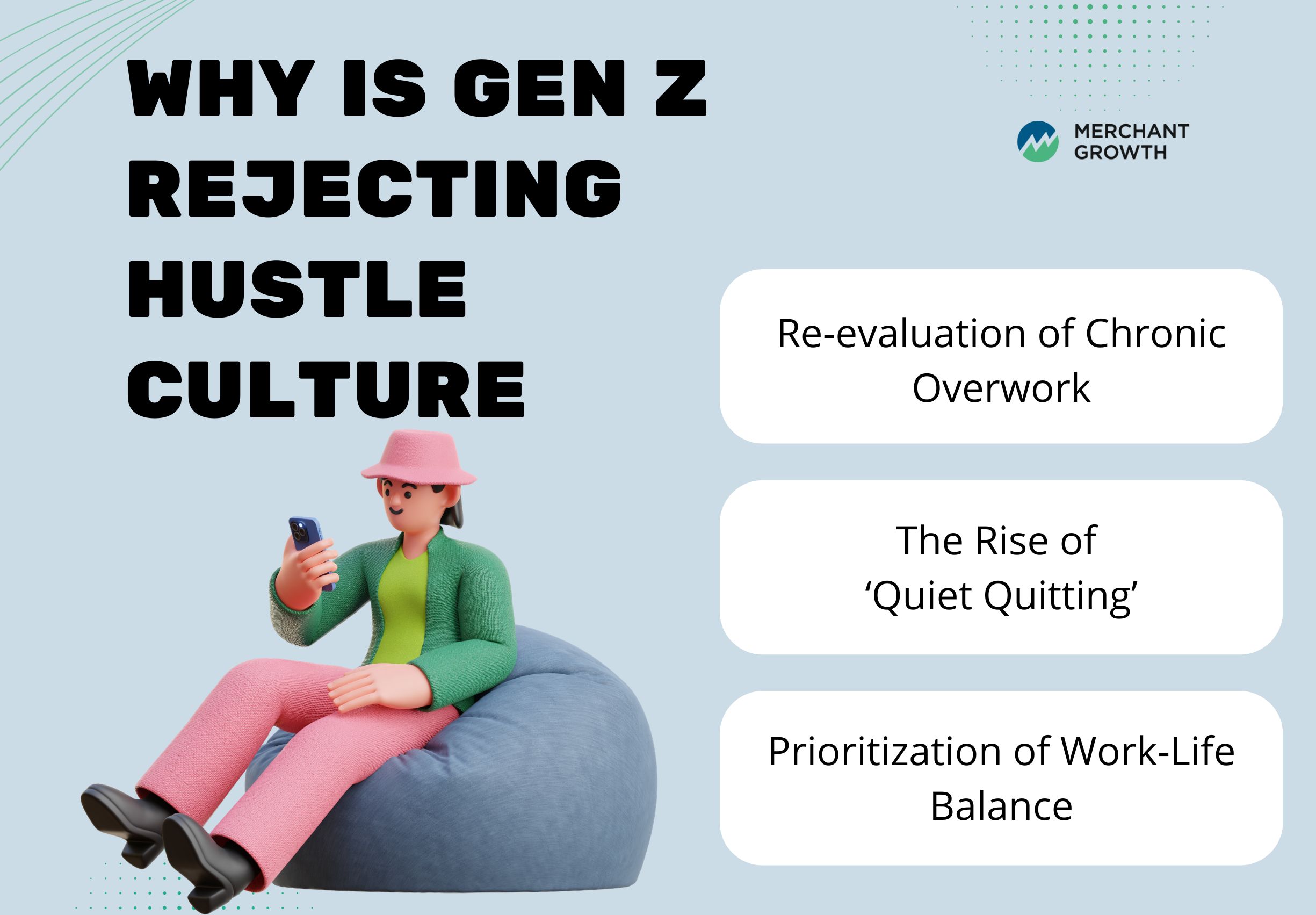
Is Gen Z Rejecting Hustle Culture?
One of the biggest shifts happening in modern work culture is the growing pushback against hustle culture, particularly among younger generations. Many Gen Z workers and entrepreneurs are rethinking what success looks like and placing greater importance on mental health, flexibility, and work-life balance. Instead of viewing nonstop productivity as the ultimate goal, many younger professionals are becoming more intentional about protecting their time, energy, and overall wellbeing.
Why Younger Generations Are Re-Evaluating Work
This shift is partly a response to watching previous generations experience chronic burnout, stress, and work-related exhaustion. Younger workers are increasingly questioning whether constant overworking actually leads to long-term happiness or fulfillment. As a result, conversations around boundaries, mental well-being, burnout prevention, and sustainable work habits have become far more mainstream in both workplace culture and social media discussions.
There is also growing interest in concepts like slow living, flexible work, and intentional productivity. Instead of maximizing every hour for output, many people are focusing more on creating balance and protecting their energy long term. This shift is increasingly influencing how younger professionals evaluate employers, career paths, and entrepreneurship itself.
The Rise of Quiet Quitting
The rise of trends like “quiet quitting” also reflects this changing mindset. Quiet quitting does not literally mean leaving a job. Instead, it refers to employees stepping back from the expectation that work should consume their entire identity or personal life.
Many young workers are becoming less willing to sacrifice their mental health, relationships, and personal time for workplaces that promote constant availability and overperformance without healthy boundaries. In many ways, quiet quitting became less about disengagement and more about pushing back against unrealistic expectations tied to hustle culture.
Work-Life Balance Is Becoming a Priority
Recent data supports this shift in priorities. According to a 2024 Gallup poll, 68% of Gen Z workers said they would take a pay cut for a job that offered better work-life balance. This highlights how strongly younger generations are beginning to value flexibility, wellbeing, and sustainability alongside financial success.
This does not mean ambition is disappearing. Many younger professionals still value career growth, entrepreneurship, and financial independence. However, there is a growing recognition that success should not require constant exhaustion in order to maintain it.
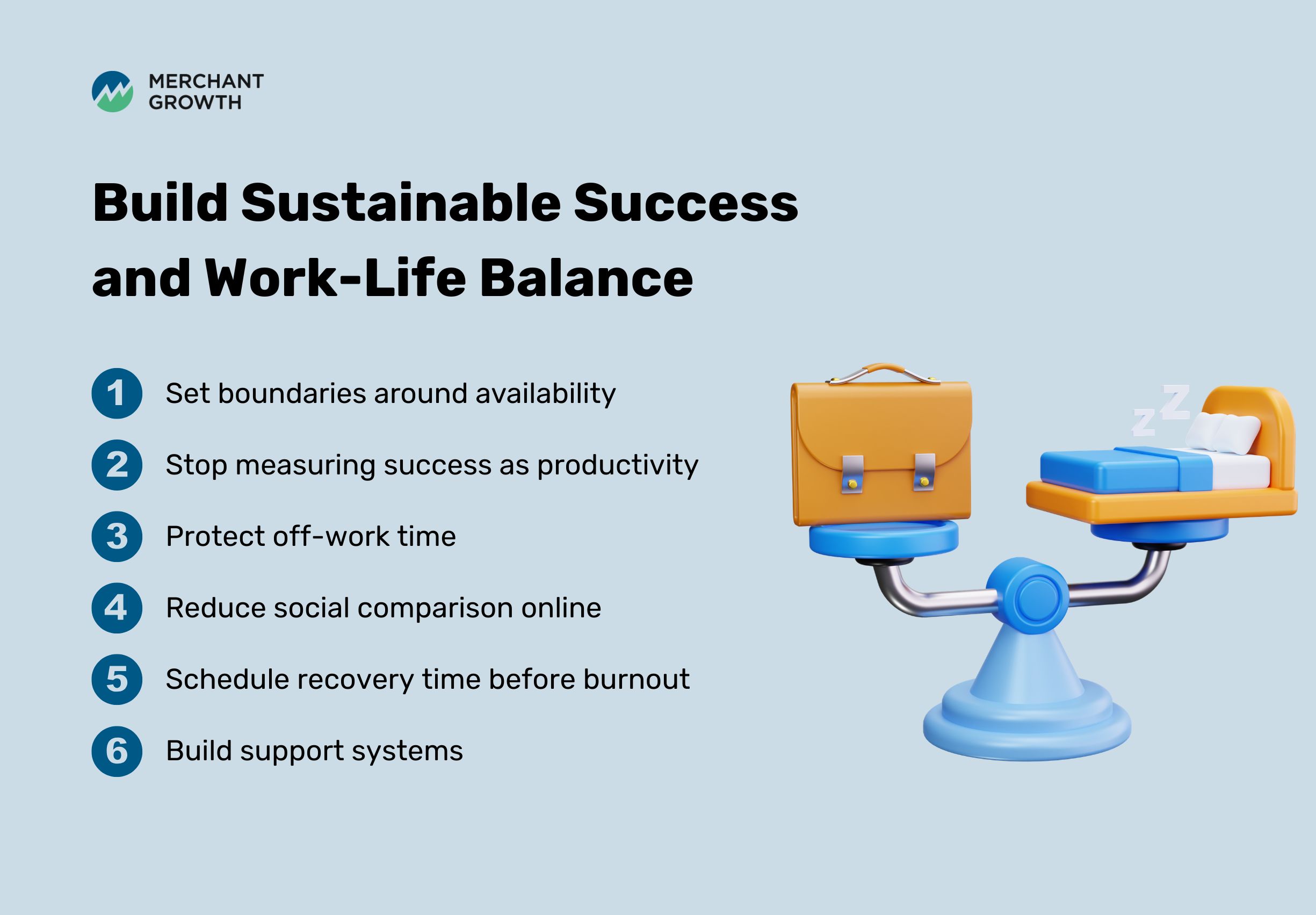
Hustle Culture vs Work-Life Balance: How to Build Sustainable Success
Building work-life balance is much easier to talk about than it is to actually practice, especially in a culture where productivity is constantly rewarded, and comparison is everywhere online. For entrepreneurs and professionals, stepping away from work can feel uncomfortable because there is often pressureto always be available, responsive, and moving forward.
The challenge is that long-term success becomes difficult to sustain when work consumes every part of life. Creating healthier work habits does not mean lowering ambition. It means building routines, systems, and boundaries that allow people to perform consistently without operating in a constant state of exhaustion.
Set Boundaries Around Availability
One of the biggest contributors to burnout is feeling constantly reachable. Emails, messages, and notifications can quickly create the expectation that work should continue long after the workday officially ends.
Creating clearer boundaries around communication can help reduce this pressure significantly. This may include setting work hours, limiting after-hours notifications, or creating designated times to respond to emails instead of remaining constantly connected throughout the day.
Growing concerns around burnout and constant accessibility have even influenced workplace policy in Canada. In Ontario, employers with 25 or more employees are now required to have written policies around disconnecting from work outside regular working hours. While the legislation does not completely prohibit after-hours communication, it reflects a broader shift toward recognizing the importance of healthier boundaries and work-life balance in modern workplaces.
For entrepreneurs and professionals alike, boundaries are becoming less about productivity and more about sustainability. Protecting personal time helps create healthier routines, improves focus, and reduces the long-term pressure that hustle culture often creates.
Stop Measuring Success Through Constant Productivity
Hustle culture often teaches people to measure their value based on how busy they are. Over time, this can make rest feel unproductive and create guilt around slowing down.
Shifting away from this mindset requires recognizing that productivity is not the same as well-being. Sustainable success depends more on consistency, focus, and long-term health than nonstop output every hour of the day.
Protect Time That Is Not Tied to Work
Many professionals struggle to fully disconnect because hobbies, downtime, and even vacations can start feeling like missed opportunities to work or stay productive. Creating intentional personal time that is completely separate from work can help restore healthier balance.
This may include prioritizing hobbies, exercise, family time, or social activities without turning them into side hustles or productivity goals. Rest becomes far more effective when it is not attached to performance or achievement.
Reduce Social Comparison Online
Social media can easily distort expectations around success because people are constantly exposed to curated highlights of other people’s careers and accomplishments. Comparing everyday reality to someone else’s highlight reel often creates unnecessary pressure to work harder or achieve more.
Reducing comparison may involve limiting exposure to productivity-focused content, unfollowing accounts that trigger stress, or spending less time consuming work-related content outside business hours. Creating healthier online habits can reduce some of the pressure that fuels hustle culture.
Schedule Recovery Time Before Burnout Happens
Many people wait until they are completely exhausted before taking breaks, vacations, or time away from work. By that point, recovery often takes much longer because burnout has already fully developed.
Building smaller forms of recovery into daily and weekly routines can help prevent chronic stress from escalating. Short breaks, evenings away from screens, vacations, and intentional downtime all play an important role in maintaining long-term energy and focus.
Build Support Systems Instead of Doing Everything Alone
Entrepreneurs and professionals often struggle with the belief that they need to handle everything themselves. Over time, this creates unnecessary pressure and increases the risk of burnout.
Delegation, operational support, mentorship, and stronger systems can help reduce workload while improving long-term sustainability. Asking for support is not a sign of weakness. In many cases, it is one of the most important steps toward creating healthier and more sustainable success.

Create a Work Culture That Supports Balance
Burnout prevention is not only an individual responsibility. Businesses and leadership teams also play a major role in shaping workplace culture and expectations around productivity.
One of the most effective ways businesses can reduce burnout culture is by encouraging healthier boundaries around communication and availability. When employees feel expected to respond to emails or messages at all hours, it becomes difficult to fully disconnect and recover outside work.
Realistic workloads also matter. Constant urgency and excessive workloads can quickly create chronic stress within teams, particularly when employees feel they cannot take breaks without falling behind. Businesses that prioritize sustainable workflows are often more successful at maintaining long-term employee engagement and retention.
Flexibility and autonomy can also improve workplace wellbeing significantly. Employees who feel trusted to manage their schedules and responsibilities often experience lower stress levels and stronger job satisfaction. Supporting time off, mental health, and work-life balance ultimately benefits both employees and overall business performance.
Creating healthier work culture does not mean reducing ambition or productivity. In many cases, businesses with healthier workplace expectations actually perform better long term because teams are more engaged, focused, and sustainable over time.
How Merchant Growth Supports Sustainable Business Growth
Financial pressure is one of the biggest reasons entrepreneurs struggle to slow down. When cash flow becomes tight or operational demands increase, many business owners feel forced to take on more responsibilities personally instead of investing in support systems that could reduce workload and improve efficiency.
Access to financing can help businesses create more flexibility during periods of growth or uncertainty. Funding may help businesses hire staff, invest in automation, improve operational systems, manage inventory, or strengthen overall cash flow stability. These investments can reduce some of the constant pressure founders carry while helping businesses operate more sustainably long term.
Merchant Growth helps Canadian small businesses access flexible financing solutions designed to support operational stability and sustainable growth. Whether businesses are investing in infrastructure, improving efficiency, or navigating financial challenges, additional flexibility can help entrepreneurs focus more strategically on long-term success instead of nonstop survival mode.
Hustle culture has made overworking feel normal, but sustainable success is built through balance, resilience, and healthier systems that support long-term growth. Businesses become stronger when founders are able to lead effectively without sacrificing their wellbeing in the process.
Recession-Resistant Businesses: How Small Businesses Can Navigate Economic Uncertainty
Economic uncertainty is becoming an increasing concern for Canadian small business owners. Inflation, tariffs, changing consumer spending habits, and ongoing recession discussions are creating pressure across many industries, causing businesses to rethink growth plans and focus more heavily on long-term stability.
At the same time, uncertainty does not mean businesses should panic. Economic slowdowns affect industries differently, and some business models tend to remain more stable because they provide essential services, practical value, or products that consumers continue prioritizing regardless of financial conditions.

Merchant Growth surveyed 129 small businesses to understand how entrepreneurs are feeling about the Canadian economy. Nearly half of business owners (47%) surveyed believe Canada is already in a recession, while another 23% expect one within the next year. Many businesses are already adjusting spending, expansion plans, and staffing strategies in response to changing economic conditions.
Understanding how recessions affect consumer behaviour, what industries tend to remain more resilient, and how businesses can prepare strategically can help entrepreneurs navigate uncertainty more confidently.
Key Takeaways
- Recession-resistant businesses often provide essential or value-driven products and services
- Customer affordability and loyalty become increasingly important during slower economies
- Strong cash flow management can help businesses remain stable during uncertainty
- Diversified revenue streams improve flexibility during economic slowdowns
- Ecommerce and digital tools can strengthen resilience and customer reach
- Businesses that prepare proactively are often better positioned than businesses that react emotionally
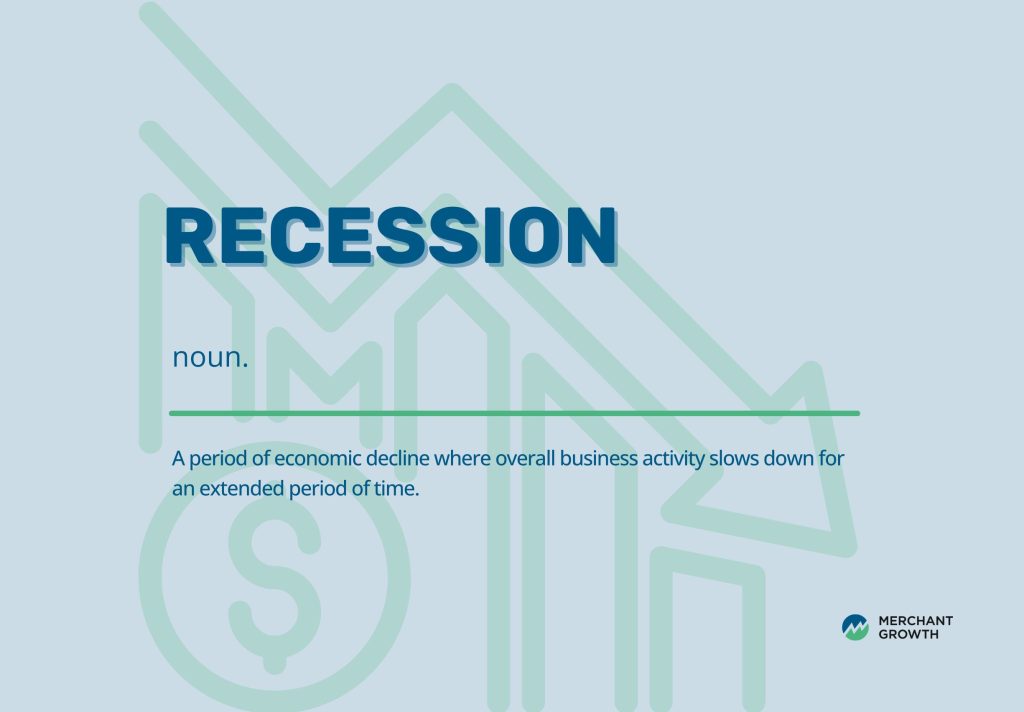
What Is a Recession?
A recession is a period of economic decline where overall business activity slows down for an extended period of time. During recessions, consumers and businesses often become more cautious with spending, which can lead to lower sales, reduced investment, layoffs, and slower economic growth.
For small business owners, recessions are usually felt through changes in customer behaviour. Consumers may delay large purchases, reduce discretionary spending, and prioritize affordability over convenience or luxury. Businesses may also become more cautious about expansion, inventory purchases, or hiring decisions.
Common signs of a recession often include:
- Reduced consumer confidence
- Slower spending habits
- Hiring slowdowns
- Reduced business investment
- Higher closure rates in vulnerable industries
Not every industry experiences recessions the same way. Some sectors see major declines in demand, while others remain relatively stable because they provide products or services consumers continue needing regardless of economic conditions.
What Is Economic Uncertainty?
Economic uncertainty refers to periods where businesses and consumers feel unsure about future financial conditions. This uncertainty often influences spending decisions, investment activity, and overall business confidence.
Several factors are currently contributing to uncertainty in Canada, including inflation, interest rates, tariffs, trade disruptions, and slowing consumer spending. As conditions become less predictable, many businesses begin making operational adjustments to reduce risk and protect stability.
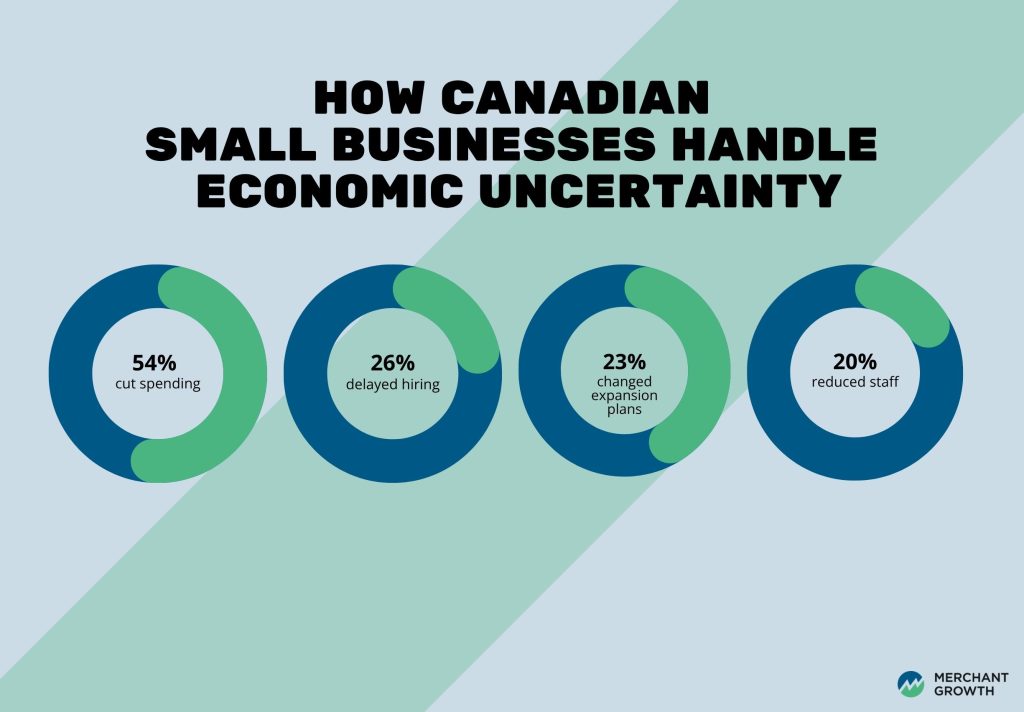
Merchant Growth survey findings show:
- 54% of businesses have cut spending
- 26% delayed hiring
- 23% paused or cancelled expansion plans
- 20% reduced staff
These adjustments often begin before a recession is officially confirmed because businesses are trying to prepare proactively for changing market conditions.
While uncertainty can create challenges, it also rewards businesses that stay adaptable, monitor financial performance closely, and respond strategically instead of reactively.
What Are Recession-Resistant Businesses?
Recession-resistant businesses are businesses that tend to maintain steadier demand during economic downturns. These companies are often connected to essential services, affordability, recurring customer needs, or practical products that consumers continue purchasing even during slower economies.
It is important to understand that recession-resistant does not mean completely recession-proof. Nearly every business can still experience challenges during economic slowdowns. However, some industries are generally more stable because the services they provide remain necessary regardless of broader market conditions.
Businesses that often perform more consistently during recessions typically focus on:
- Essential products or services
- Affordability and value
- Recurring customer demand
- Repair and maintenance services
- Operational flexibility
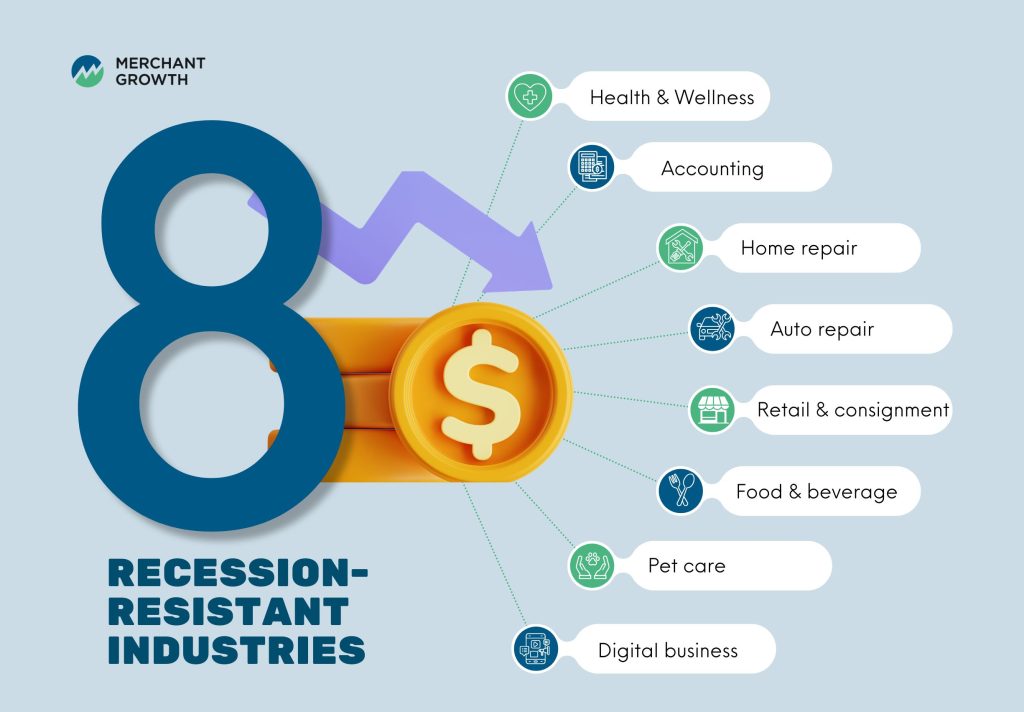
Recession-Resistant Businesses That Tend to Perform Better During Economic Slowdowns
While no business is completely immune to economic downturns, some industries tend to remain more stable because they provide essential services, practical value, or recurring customer demand. During recessions, consumers often prioritize affordability, maintenance, and necessity-based spending over luxury purchases.
Businesses that perform more consistently during uncertain periods are often those that solve everyday problems or help customers manage financial pressure more effectively.

Healthcare and Wellness Businesses
Healthcare and wellness businesses are often considered some of the most recession-resistant industries because medical and wellness needs continue regardless of economic conditions. While consumers may reduce discretionary spending in other areas, healthcare services are typically viewed as necessary expenses.
Examples of recession-resistant healthcare and wellness businesses include:
- Physiotherapy clinics
- Mental health counselling services
- Dental practices
- Chiropractic clinics
- Home healthcare providers
- Wellness and rehabilitation centres
Mental health and wellness services can also see increased demand during uncertain periods as financial stress and anxiety rise. Many healthcare businesses benefit from recurring appointments and long-term patient relationships, which can create more predictable revenue during downturns.
Accounting and Bookkeeping Services
Economic slowdowns often increase demand for accounting and bookkeeping services because businesses become more focused on budgeting, forecasting, tax planning, and financial visibility.
Examples of recession-resistant financial service businesses include:
- Bookkeeping firms
- Tax preparation services
- Payroll management companies
- Fractional CFO services
- Business accounting firms
- Financial consulting services
During periods of uncertainty, many businesses rely more heavily on financial professionals to help manage cash flow, reduce expenses, and make strategic operational decisions.

Home and Appliance Repair Businesses
Repair and maintenance businesses often remain stable during recessions because consumers delay expensive purchases and instead invest in maintaining what they already own.
Examples of recession-resistant home repair businesses include:
- Appliance repair companies
- HVAC services
- Plumbing businesses
- Electrical repair companies
- Handyman services
- Roofing and maintenance contractors
- Home cleaning and maintenance businesses
These businesses solve immediate household problems that consumers cannot easily postpone. Essential repairs related to heating, plumbing, appliances, or home safety typically remain necessary regardless of economic conditions.
Auto Repair and Maintenance Businesses
Vehicle maintenance is another industry that often performs consistently during economic downturns. When consumers postpone buying new vehicles, they usually invest more in maintaining their current cars to extend their lifespan.
Examples of recession-resistant automotive businesses include:
- Auto repair shops
- Tire and brake service providers
- Oil change and maintenance businesses
- Collision repair centres
- Mobile mechanic services
- Auto parts retailers
Reliable transportation remains essential for many Canadians, particularly in areas with limited public transit. This helps create ongoing demand for maintenance and repair services even during slower economic periods.
Discount Retail and Consignment Businesses
During recessions, consumers often become more price-conscious and focused on maximizing value. Discount retailers and consignment businesses can benefit as shoppers look for affordable alternatives to traditional retail purchases.
Examples of recession-resistant value-focused retail businesses include:
- Discount stores
- Dollar stores
- Thrift and consignment shops
- Used furniture retailers
- Liquidation businesses
- Discount grocery stores
- Online resale marketplaces
Second-hand shopping and discount purchasing often become more normalized during economic slowdowns, creating opportunities for businesses positioned around affordability and value.

Food and Beverage Businesses
Food spending remains essential during recessions, although consumer behaviour within the industry often shifts toward affordability and convenience. Customers may reduce luxury dining and prioritize budget-friendly options instead.
Examples of recession-resistant food and beverage businesses include:
- Grocery and convenience stores
- Budget-friendly restaurants
- Quick-service restaurants
- Meal prep and takeout businesses
- Coffee shops
- Wholesale food suppliers
- Catering companies focused on essential or corporate events
Food & Beverage and Foodservice businesses were also among the top industries represented in Merchant Growth’s survey findings, highlighting how closely operators are monitoring changing consumer spending patterns.
Businesses in this category often perform best during downturns when they focus on pricing strategy, customer loyalty, and operational efficiency.

Pet Care Businesses
Pet care businesses tend to remain relatively stable because many consumers continue prioritizing spending on pets even during periods of financial uncertainty. For many households, pet-related expenses are viewed as necessary rather than optional.
Examples of recession-resistant pet care businesses include:
- Veterinary clinics
- Pet grooming businesses
- Pet food retailers
- Dog walking services
- Pet daycare providers
- Mobile grooming companies
- Online pet supply stores
Recurring customer behaviour also supports stability within this industry because pet owners continue purchasing food, medications, and essential care products consistently.
Ecommerce and Digital Businesses
Ecommerce and digital businesses can offer advantages during economic slowdowns because they often operate with lower overhead costs and greater flexibility than traditional brick-and-mortar businesses.
Examples of recession-resistant ecommerce and digital businesses include:
- Ecommerce retailers
- Subscription box companies
- Digital marketing agencies
- Online education platforms
- SaaS businesses
- Freelance and digital service providers
- Content creation and media businesses
Digital businesses often benefit from:
- Lower physical operating costs
- Broader customer reach
- Flexible marketing opportunities
- Automation and scalability
- Faster adaptation to changing trends
Businesses with strong digital infrastructure are often better positioned to remain agile as customer behaviour evolves during uncertain economic periods.
How Recessions Affect Small Businesses
Even recession-resistant businesses still face challenges during economic downturns. Slower consumer spending, tighter budgets, and changing purchasing habits can create pressure across many industries.
Cash flow management often becomes one of the biggest concerns for small businesses during recessions. Revenue may become less predictable while expenses remain relatively fixed, forcing businesses to make difficult operational decisions.
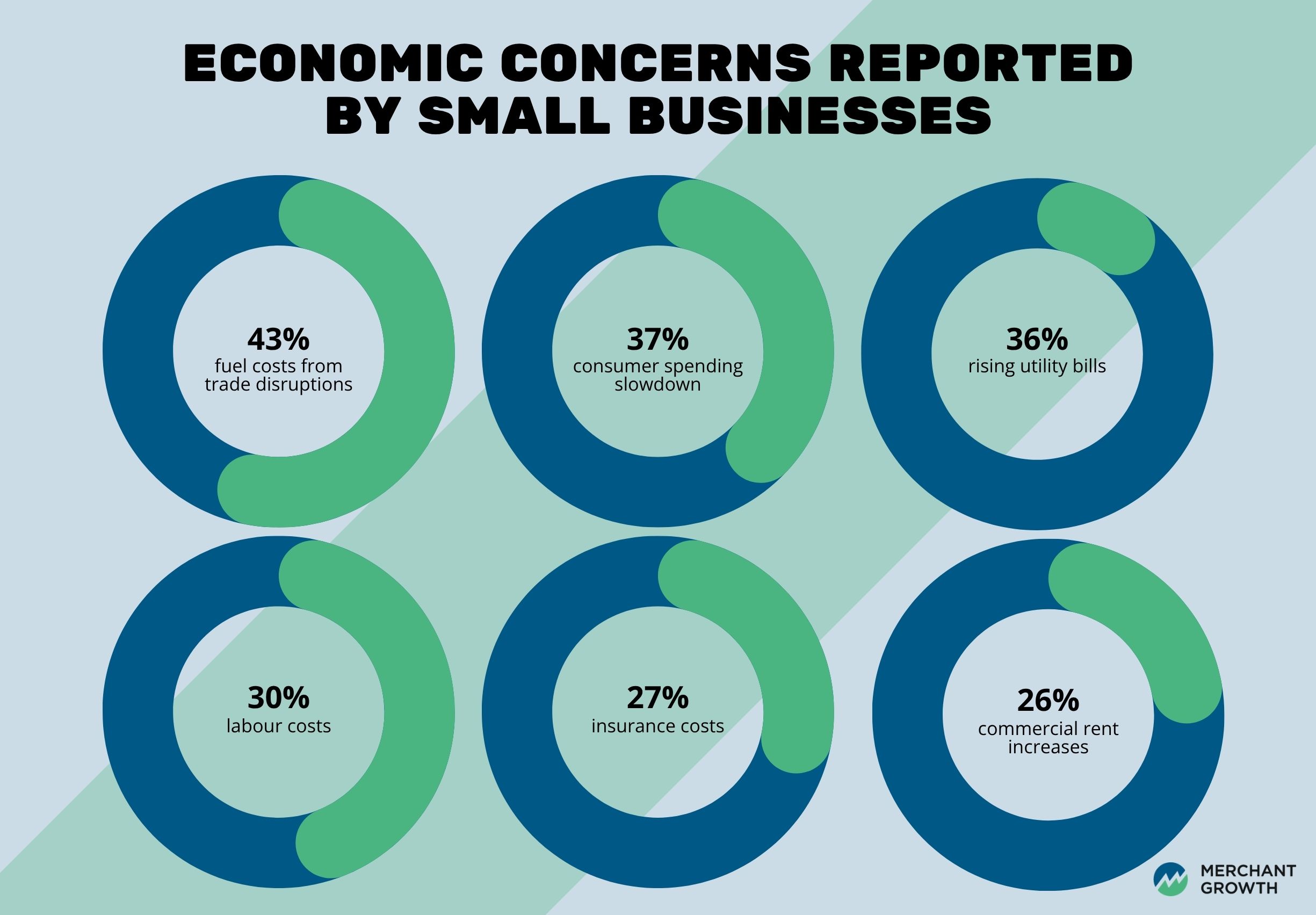
Merchant Growth survey findings identified several major concerns businesses are already experiencing:
- Fuel costs from trade disruptions — 43%
- Consumer spending slowdown — 37%
- Rising utility bills — 36%
- Labour costs — 30%
- Insurance costs — 27%
- Commercial rent increases — 26%
Inventory planning can also become more difficult during slower economies because businesses need to balance maintaining supply while avoiding unnecessary overhead costs.
Economic slowdowns can create pressure even for stable businesses, which is why preparation and strategic planning are so important.

How Small Businesses Can Prepare for a Recession
Preparing for a recession is not about panic-driven cost-cutting. It is about strengthening business resilience so operations remain stable even if economic conditions become more challenging.
Strengthen Cash Flow Management
Cash flow becomes increasingly important during economic slowdowns. Businesses should closely monitor expenses, improve budgeting practices, maintain financial visibility, and avoid unnecessary spending where possible.
Building stronger financial reserves and managing inventory strategically can also help businesses remain more flexible during uncertain periods.
Focus on Customer Retention
Retaining existing customers is often more cost-effective than constantly acquiring new ones during slower economies. Businesses that prioritize communication, customer experience, and value delivery are often better positioned to maintain stable revenue.
Strong customer relationships can also create more repeat business and referrals when consumers become more selective with spending.
Diversify Revenue Streams
Businesses relying too heavily on a single customer base, product category, or sales channel may be more vulnerable during recessions. Expanding services, adding ecommerce capabilities, or reaching new customer segments can improve stability and reduce financial risk.
Diversification also creates greater flexibility if customer behaviour shifts unexpectedly.
Improve Operational Efficiency
Businesses that streamline workflows, reduce unnecessary expenses, and invest in automation can often operate more effectively during uncertain periods.
Digital tools and operational improvements may also reduce administrative workload while improving scalability and customer experience long-term.
Stay Flexible and Adaptable
Economic conditions can change quickly during recessions. Businesses that monitor customer behaviour closely and remain willing to adjust pricing, offerings, or operational strategies are often more successful in adapting to change.
Flexibility is one of the biggest competitive advantages small businesses have during uncertain economic conditions.
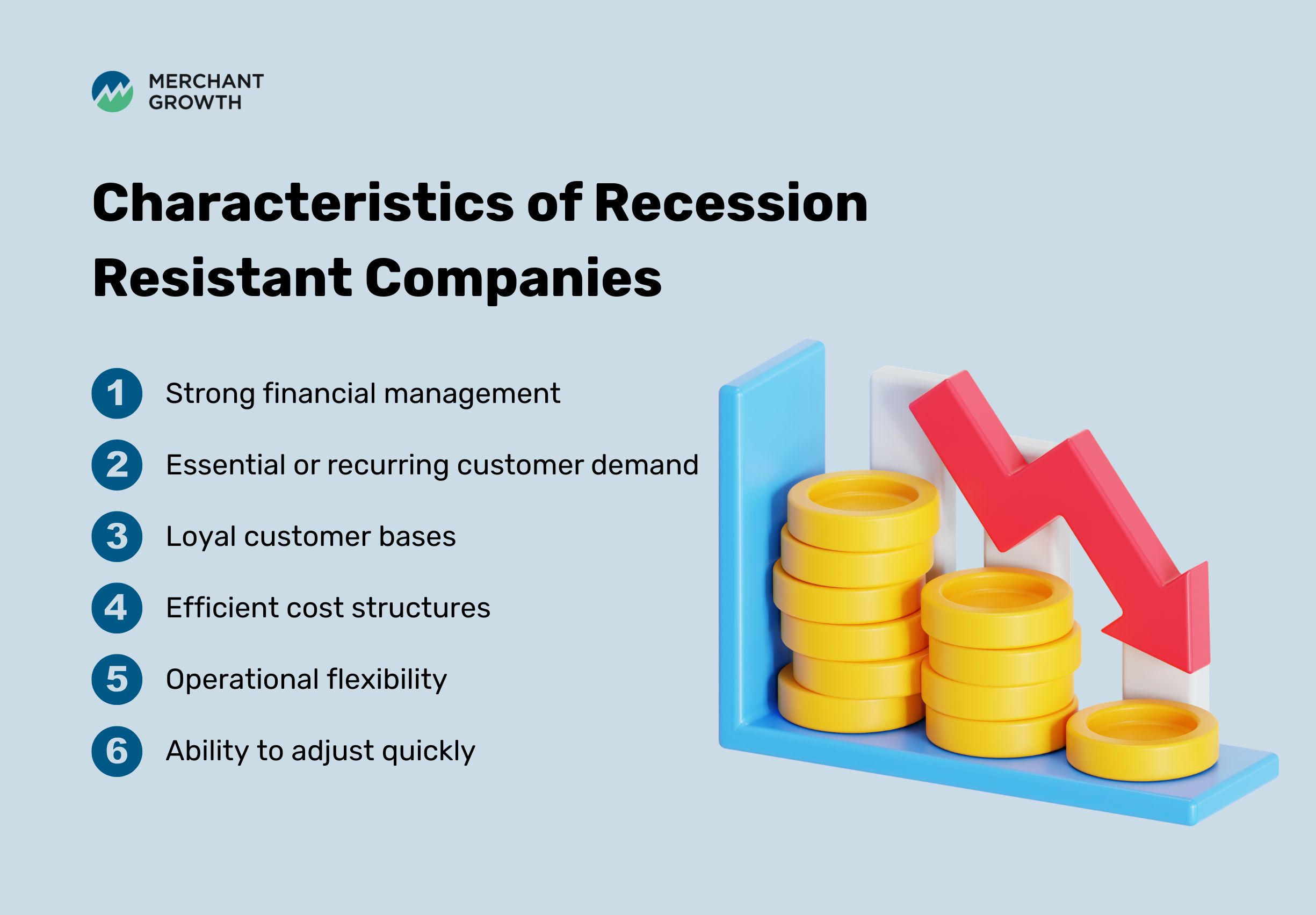
What Companies Can Withstand a Recession?
Businesses that withstand recessions successfully are not necessarily businesses that avoid challenges entirely. More often, they are businesses that adapt effectively when conditions change.
Companies that tend to remain more stable during recessions often share several characteristics:
- Strong financial management
- Essential or recurring customer demand
- Loyal customer bases
- Efficient cost structures
- Operational flexibility
- Ability to adjust quickly to changing market conditions
Businesses that balance operational efficiency with strong customer experience are often better positioned to maintain stability during uncertain economic periods.
Adaptability matters more than perfection during recessions. Companies that respond strategically to changing economic conditions usually perform better than businesses that resist change or delay adjustments too long.
How Merchant Growth Helps Businesses Navigate Economic Uncertainty
Economic uncertainty can place significant pressure on small business operations and growth plans. Many entrepreneurs are balancing rising costs, slower spending, and tighter margins while still trying to invest in the future of their business.
Financial flexibility can help businesses maintain stability while continuing to invest strategically in operations and growth opportunities.
Access to financing may help businesses:
- Strengthen cash flow
- Purchase inventory
- Invest in operational improvements
- Improve ecommerce and digital capabilities
- Support customer retention initiatives
- Expand into new revenue opportunities
Merchant Growth helps Canadian small businesses access flexible financing solutions designed to support long-term resilience and sustainable growth. Whether businesses are managing short-term challenges or preparing for future opportunities, proactive planning and financial flexibility can help entrepreneurs navigate uncertainty with greater confidence.
Why Entrepreneurs Need a Break: Avoiding Burnout During Canada’s Entrepreneurial Drought
For many entrepreneurs, taking a break feels impossible. There is always another email to answer, another problem to solve, or another late night spent trying to keep the business moving forward. The pressure to constantly work has become so normalized in entrepreneurship that many business owners feel guilty stepping away for even a few hours, let alone taking an actual vacation.
At the same time, Canadian entrepreneurs are facing growing economic pressure that is making burnout even harder to avoid. Rising operating costs, inflation, staffing challenges, and economic uncertainty are putting significant strain on small business owners across the country. Many entrepreneurs are working longer hours simply trying to maintain stability, which is contributing to a growing sense of exhaustion throughout Canada’s small business community.
Why Canada’s Entrepreneurial Drought Is Fueling Founder Burnout
This pressure is happening during what many experts are calling an entrepreneurial drought in Canada. Fewer people are starting businesses, more businesses are closing, and many entrepreneurs are struggling to sustain the pace required to keep operations running. In the second quarter of 2025, exit rates decreased slightly to 5.6%, while entry rates fell to 4.8% in the fourth quarter of 2025, marking some of the highest closure rates and weakest startup activity outside the pandemic.
While conversations around entrepreneurship often focus on growth and hustle, far less attention is given to the reality that businesses become far more vulnerable when founders are overwhelmed, exhausted, and unable to disconnect from work.
The truth is that taking breaks is not a sign of weakness or lack of ambition. In many cases, stepping away is one of the most important things entrepreneurs can do to protect both their personal well-being and the long-term health of their business. Sustainable entrepreneurship is not built through nonstop exhaustion. It is built through resilience, operational structure, and the ability to lead effectively over the long term.

What Is Entrepreneur Burnout?
Entrepreneur burnout is a state of physical, emotional, and mental exhaustion caused by prolonged stress and overwork. Unlike temporary stress during busy periods, burnout tends to build gradually over time until business owners begin feeling constantly overwhelmed, emotionally drained, and disconnected from their work.
For entrepreneurs, burnout often goes beyond simply feeling tired. Many business owners struggle to fully disconnect from work because the business depends heavily on them personally. This can create a cycle where entrepreneurs feel pressure to remain constantly available, even during evenings, weekends, or personal time.
Burnout can affect nearly every part of a business owner’s life. Decision-making becomes more difficult, creativity declines, and motivation often starts to disappear. Entrepreneurs may also notice:
- increased frustration
- difficulty focusing
- disrupted sleep
- strain on personal relationships
One of the biggest challenges with entrepreneur burnout is that it is often normalized. Many founders assume constant stress and exhaustion are simply part of running a business. While entrepreneurship naturally comes with pressure, operating in a constant state of burnout is not sustainable for either the entrepreneur or the business itself.
Why Entrepreneurs Struggle to Take Breaks
Many entrepreneurs know they need a break long before they actually take one. The problem is that stepping away from the business often feels emotionally and financially risky. For founders who built the business from the ground up, work can feel deeply personal, making it difficult to separate their identity from the company they run.
One of the biggest reasons entrepreneurs avoid taking breaks is fear. Some worry revenue will slow down if they step away, while others fear missing opportunities, losing clients, or falling behind competitors. When a business relies heavily on the owner for decision-making, communication, or operations, taking time off can feel less like a vacation and more like a threat to business stability.
There is also a strong cultural pressure within entrepreneurship that glorifies overwork. Many business owners feel guilty resting because hustle culture has positioned nonstop productivity as a sign of commitment and success. Social media often reinforces this mindset by celebrating long hours, constant grinding, and being perpetually busy.
Technology has also made disconnecting far more difficult. Notifications, emails, customer inquiries, and communication platforms create an expectation of constant accessibility. Even when entrepreneurs physically step away from work, many remain mentally connected to the business at all times.

How Economic Pressure Contributes to Entrepreneur Burnout
Economic pressure has intensified many of the challenges entrepreneurs already face. Rising costs and financial uncertainty often force business owners into survival mode, where the focus shifts from strategic growth to simply keeping the business operational month to month.
Inflation has increased the cost of inventory, utilities, wages, transportation, and commercial rent for many Canadian businesses. At the same time, consumers have become more cautious with spending, which can create inconsistent cash flow and additional financial stress for entrepreneurs already managing tight margins.
Many business owners respond to economic uncertainty by working longer hours in an attempt to maintain stability. Entrepreneurs may delay hiring, take on additional responsibilities themselves, or reduce operational support to cut costs. While this may create short-term savings, it often increases personal workload significantly and accelerates burnout over time.
Economic pressure also affects work-life balance directly. When financial stress increases, entrepreneurs often struggle to mentally disconnect from the business because every decision feels more urgent. Over time, this constant mental strain can impact motivation, creativity, leadership quality, and overall business performance.
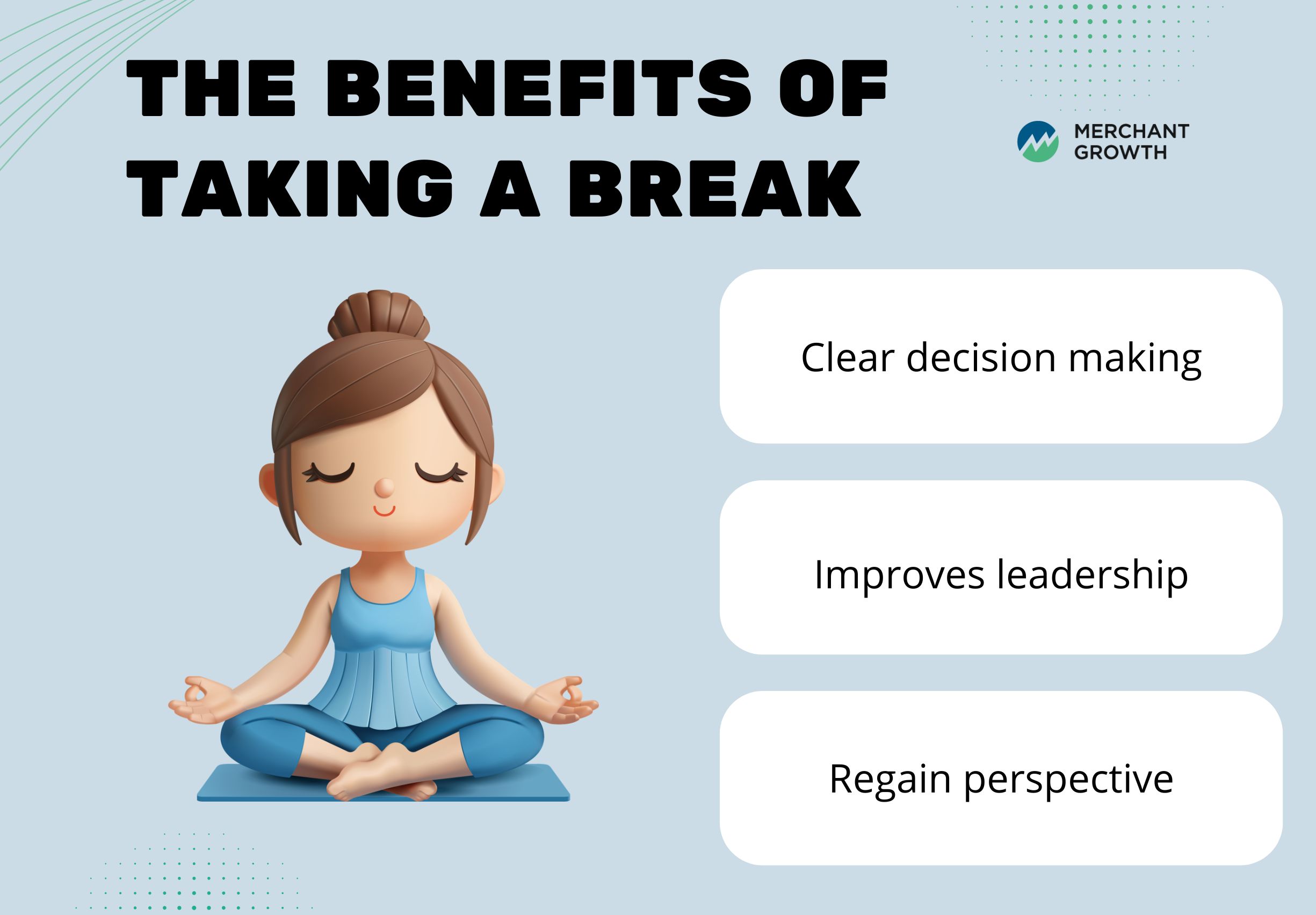
Why Taking Breaks Actually Makes Entrepreneurs More Effective
One of the biggest misconceptions in entrepreneurship is that working constantly automatically leads to better results. In reality, entrepreneurs operating in a constant state of stress often make poorer decisions, struggle creatively, and lose the ability to think strategically about the future of the business.
Clear-Decision Making
Breaks give entrepreneurs the opportunity to mentally reset and recover from prolonged pressure. Time away from daily operations can improve focus, reduce emotional exhaustion, and create space for clearer decision-making. Many entrepreneurs find that some of their best ideas and strategic insights happen when they finally step away from the constant demands of the business.
Improves Leadership
Rest also improves leadership. Entrepreneurs who are less overwhelmed tend to communicate more effectively, manage teams more confidently, and respond to challenges with greater patience and clarity. Burnout, on the other hand, often creates reactive leadership where decisions are driven by stress instead of long-term strategy.
Regain Perspective
Stepping away from work can also help entrepreneurs regain perspective. When founders are buried in day-to-day operations constantly, it becomes difficult to evaluate the broader direction of the business objectively. Taking breaks creates space for reflection, strategic planning, and long-term thinking that is difficult to achieve during nonstop operational pressure.
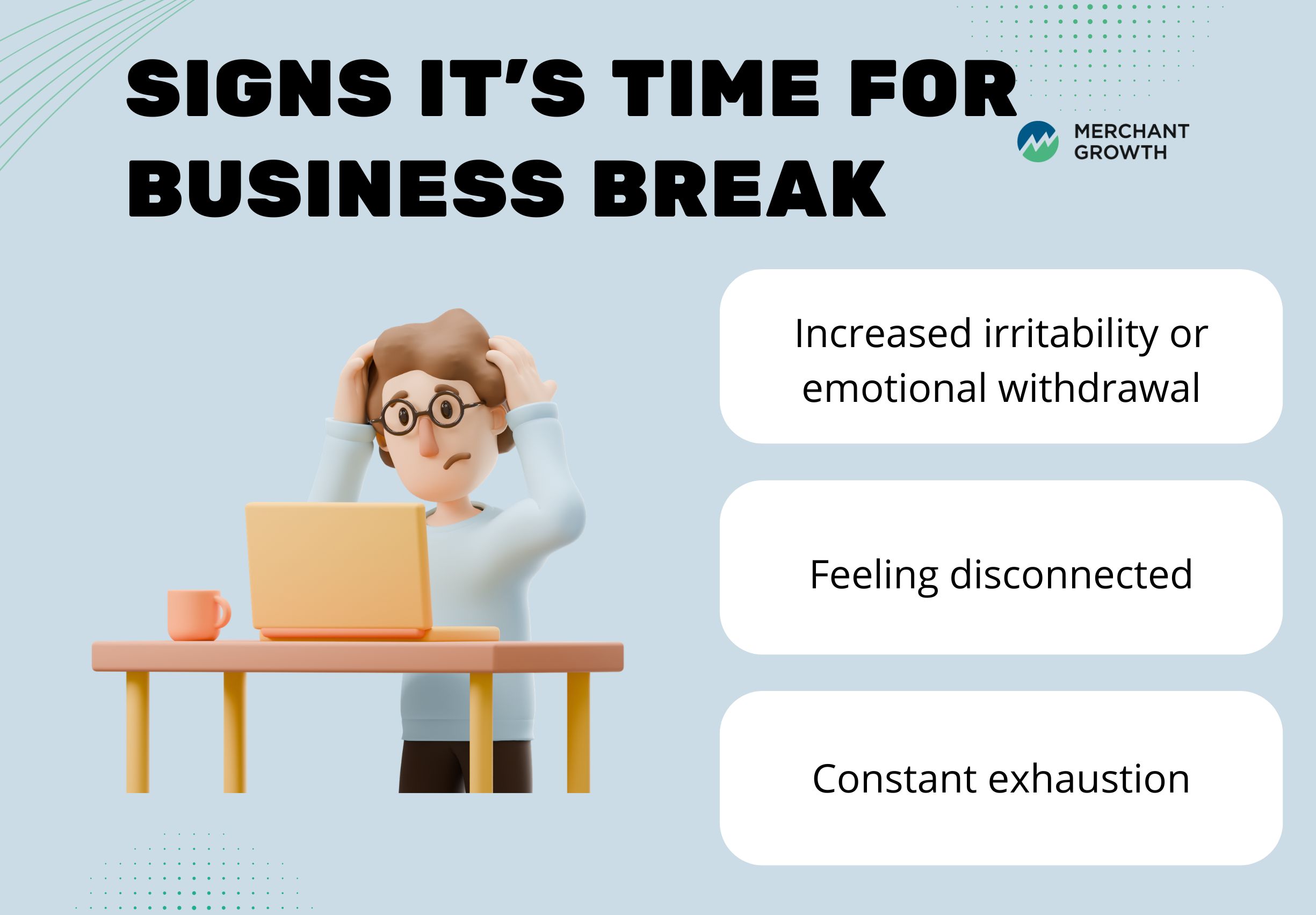
Signs It Might Be Time to Step Away From Your Business
Many entrepreneurs wait until they are completely overwhelmed before recognizing they need a break. The problem with this approach is that burnout becomes much harder to recover from once exhaustion has fully taken over.
Constant Exhaustion
One of the clearest warning signs is constant exhaustion that does not improve with normal rest. Entrepreneurs may feel physically tired, mentally drained, or emotionally detached even after sleeping or taking short periods away from work. Difficulty concentrating, increased frustration, and declining motivation are also common indicators that burnout may be developing.
Feeling Disconnected
Some entrepreneurs begin feeling disconnected from the business itself. Work that once felt exciting starts feeling heavy, repetitive, or emotionally exhausting. Others notice they are working constantly but accomplishing less because stress is affecting focus and productivity.
Increased Irritability or Emotional Withdrawal
Burnout can also impact relationships outside the business. Increased irritability, emotional withdrawal, or difficulty being present during personal time are often signs that work stress is beginning to affect overall wellbeing. Recognizing these warning signs early allows entrepreneurs to take proactive steps before burnout becomes significantly more severe.
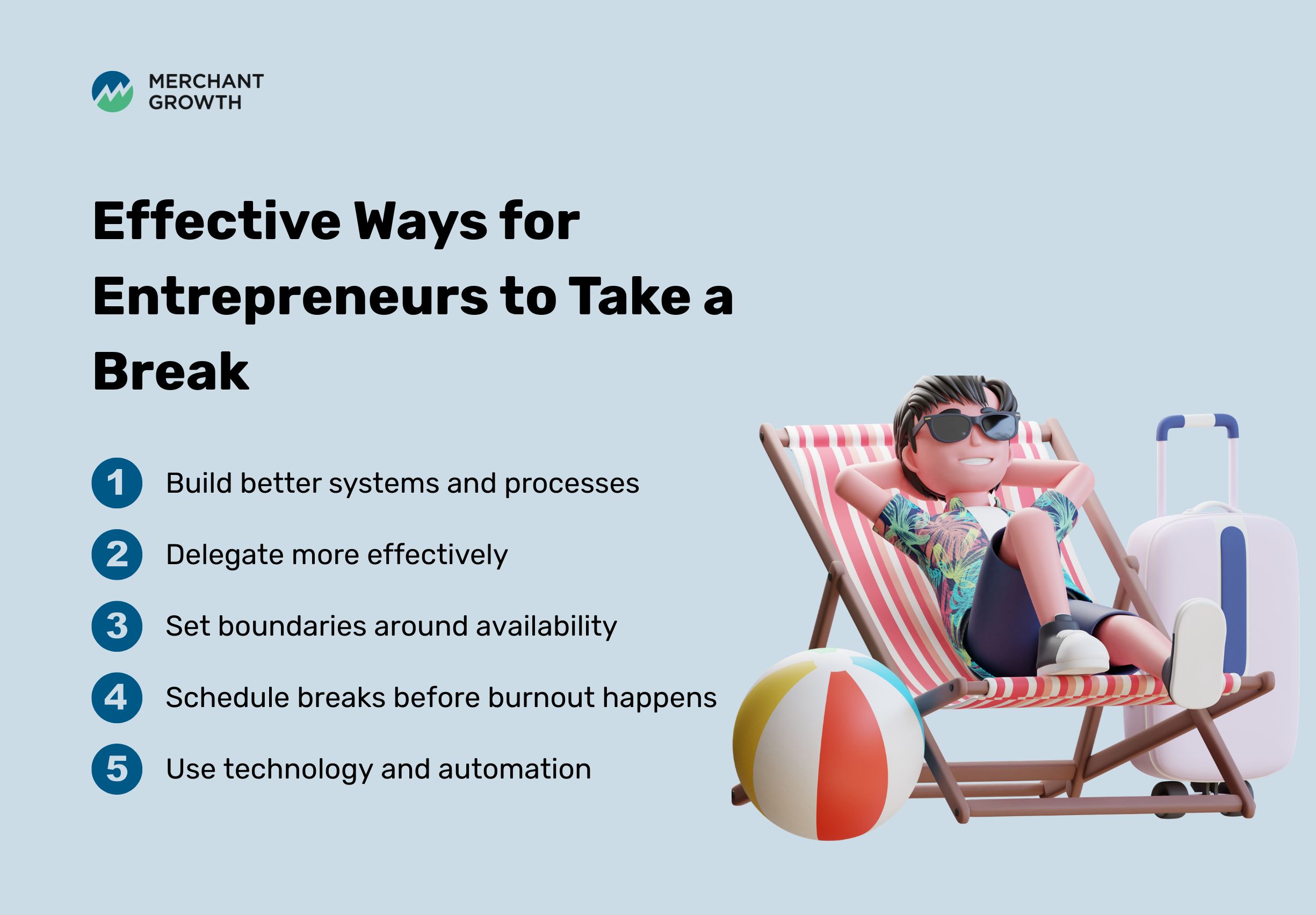
How Entrepreneurs Can Take a Break Without Everything Falling Apart
For many business owners, the idea of stepping away feels unrealistic because the business depends heavily on them personally. The key to taking breaks successfully is not abandoning responsibilities entirely, but building systems and structure that allow the business to operate more independently.
Build Better Systems and Processes
Businesses that rely entirely on the founder for every decision are far more vulnerable to burnout. Creating documented processes, repeatable workflows, and operational systems helps reduce daily chaos while making delegation easier over time.
When responsibilities are clearly organized, entrepreneurs can step away more confidently knowing the business is not dependent on constant oversight. Strong systems also improve consistency and scalability as the business grows.
Delegate More Effectively
Many entrepreneurs struggle with delegation because they fear losing control or believe tasks will not be completed properly. While delegation can feel uncomfortable initially, trying to handle every responsibility personally often creates long-term operational strain.
Delegating operational tasks, outsourcing administrative work, or empowering employees with greater responsibility can significantly reduce workload. This creates more space for entrepreneurs to focus on high-level leadership and strategic decision-making instead of constant day-to-day firefighting.
Set Boundaries Around Availability
Constant accessibility is one of the fastest paths to burnout. Entrepreneurs who answer emails late at night, respond to messages during vacations, or remain permanently connected to notifications rarely experience true mental recovery.
Setting boundaries around communication helps create healthier separation between work and personal time. This may include limiting after-hours communication, establishing response time expectations, or creating dedicated offline periods during evenings or weekends.
Schedule Breaks Before Burnout Happens
Many entrepreneurs only take breaks after reaching a breaking point. A healthier approach is treating recovery as part of long-term business planning rather than an emergency response to exhaustion.
Scheduling vacations, mental health days, or regular time away from operations proactively helps prevent stress from building continuously. Even shorter breaks throughout the year can improve energy, creativity, and overall resilience significantly.
Use Technology and Automation
Technology can help reduce repetitive manual tasks that contribute to entrepreneur overload. Scheduling software, automated email responses, CRM systems, invoicing tools, and workflow automation can all improve operational efficiency while reducing daily mental strain.
Automation does not replace human connection, but it can help entrepreneurs spend less time managing repetitive administrative work. This creates more capacity for leadership, strategic thinking, and recovery.
Work-Life Balance for Entrepreneurs: Why It Matters
Work-life balance is often misunderstood in entrepreneurship. Many business owners assume balance means working less or lacking ambition, when in reality it is about creating a sustainable way to operate long term without sacrificing personal well-being entirely.
Entrepreneurs who maintain healthier boundaries often experience better mental clarity, stronger communication, and more consistent leadership. They are also more likely to maintain long-term motivation because they are not operating in a constant state of exhaustion.
Burnout does not just affect the entrepreneur personally. It often affects the business itself through slower decision-making, reduced creativity, poor communication, and declining operational effectiveness. Businesses become more sustainable when founders have the energy and clarity needed to lead effectively over time.
Healthy work-life balance also improves relationships outside the business. Entrepreneurs who create time for rest, family, and personal recovery are often better equipped to handle the pressures of business ownership without becoming emotionally overwhelmed.

What Businesses Can Learn From the Entrepreneurial Drought
Canada’s entrepreneurial drought highlights how difficult it has become for many business owners to sustain long-term growth under ongoing economic pressure. Inflation, rising operating costs, recession concerns, trade uncertainty, and changing consumer spending habits are forcing many entrepreneurs to operate with tighter margins and greater financial stress than ever before. For some businesses, survival has required owners to work longer hours, absorb more responsibilities personally, and delay hiring or expansion plans just to maintain stability.
At the same time, the entrepreneurial slowdown also exposes the risks of building businesses entirely around nonstop hustle and founder dependency. Businesses that rely too heavily on the owner for every decision, customer interaction, or operational task often become far more vulnerable during periods of economic uncertainty. When entrepreneurs are exhausted or overwhelmed, the business itself can struggle to adapt effectively.
One of the biggest lessons from the current business climate is the importance of operational resilience. Businesses with stronger systems, healthier cash flow management, delegation structures, and operational flexibility are often better positioned to navigate economic challenges without placing unsustainable pressure on the founder personally. Resilience is not just about working harder during difficult periods. It is about creating a business that can continue operating effectively even during uncertainty.
The entrepreneurial drought also reinforces that sustainable growth matters more than constant growth at all costs. Businesses built entirely around overwork may create short-term momentum, but long-term sustainability requires adaptability, support systems, and realistic operational expectations. Entrepreneur wellbeing should not be treated as separate from business performance because healthy, supported founders are often better equipped to make strategic decisions, lead teams effectively, and guide businesses through economic change over time.
How Merchant Growth Supports Entrepreneurs During Challenging Economic Conditions
Financial pressure is one of the biggest drivers of entrepreneur stress and burnout. When cash flow becomes tight, many business owners feel forced to take on more responsibilities themselves, delay hiring, or put operational improvements on hold just to keep the business moving forward. Over time, that constant pressure can make stepping away from work feel impossible.
Access to financing can help relieve some of that strain by giving businesses more flexibility to invest in support systems, staffing, technology, inventory, or operational improvements that reduce day-to-day pressure on the founder. Rather than operating entirely in survival mode, businesses can focus more strategically on stability and long-term growth.
Merchant Growth helps Canadian entrepreneurs access flexible financing solutions designed to support sustainable business growth. Whether businesses are managing cash flow challenges or investing in operational improvements, financial flexibility can help create stronger, more resilient businesses without relying entirely on nonstop hustle.
1. Contest PeriodThe Merchant Growth Survey Prize Draw (“Contest”) begins on August 6, 2026 at 12:00 a.m. ET and ends on August 14, 2026 at 11:59 p.m. ET (“Contest Period”).
2. PrizeThere are three (3) prizes available to be won: Consisting of a $100 CAD Amazon gift card (or a comparable prepaid gift card of equivalent value). Each prize must be accepted as awarded and is not transferable, assignable, or redeemable for cash.
3. Winner Selection and NotificationThree (3) winners will be selected by random draw from all eligible entries received during the Contest Period. The draw will take place on or around August 17, 2026. Selected entrants will be contacted via the email address provided and will need to confirm their eligibility in order to be declared a winner. If a selected entrant does not respond within three (3) business days or fails to meet any contest requirements, an alternate winner may be selected.
What Are Capital Gains? A Guide for Canadian Small Business Owners
For many Canadian small business owners, the biggest tax bill they ever face does not come from day-to-day operations; it comes from growth. The moment you sell a commercial property, cash out a profitable investment, or begin planning the eventual sale of your business, conversations around capital gains suddenly become impossible to ignore. What once felt like a distant tax concept quickly turns into a major financial decision that can affect how much of your hard-earned profit you actually keep.
The challenge is that many entrepreneurs do not think about capital gains until they are already facing them. After years spent building a business, growing assets, and reinvesting into expansion, it can be surprising to learn how much taxes may impact the final outcome of a sale. That is why understanding capital gains is not just about tax compliance; it is about protecting the value you worked years to create.
What Is a Capital Gain?
A capital gain is the profit earned from selling an asset that has increased in value. For small business owners, these assets can include
- investments
- commercial real estate
- equipment
- business shares
- even an entire company.
If the selling price exceeds the original purchase price, the difference is generally considered a capital gain.
For example, imagine a business owner purchases a warehouse for $500,000 and later sells it for $750,000 after several years of appreciation. The increase in value creates a capital gain. The same concept applies if an entrepreneur invests excess business cash into stocks or ETFs and later sells those investments for a profit.
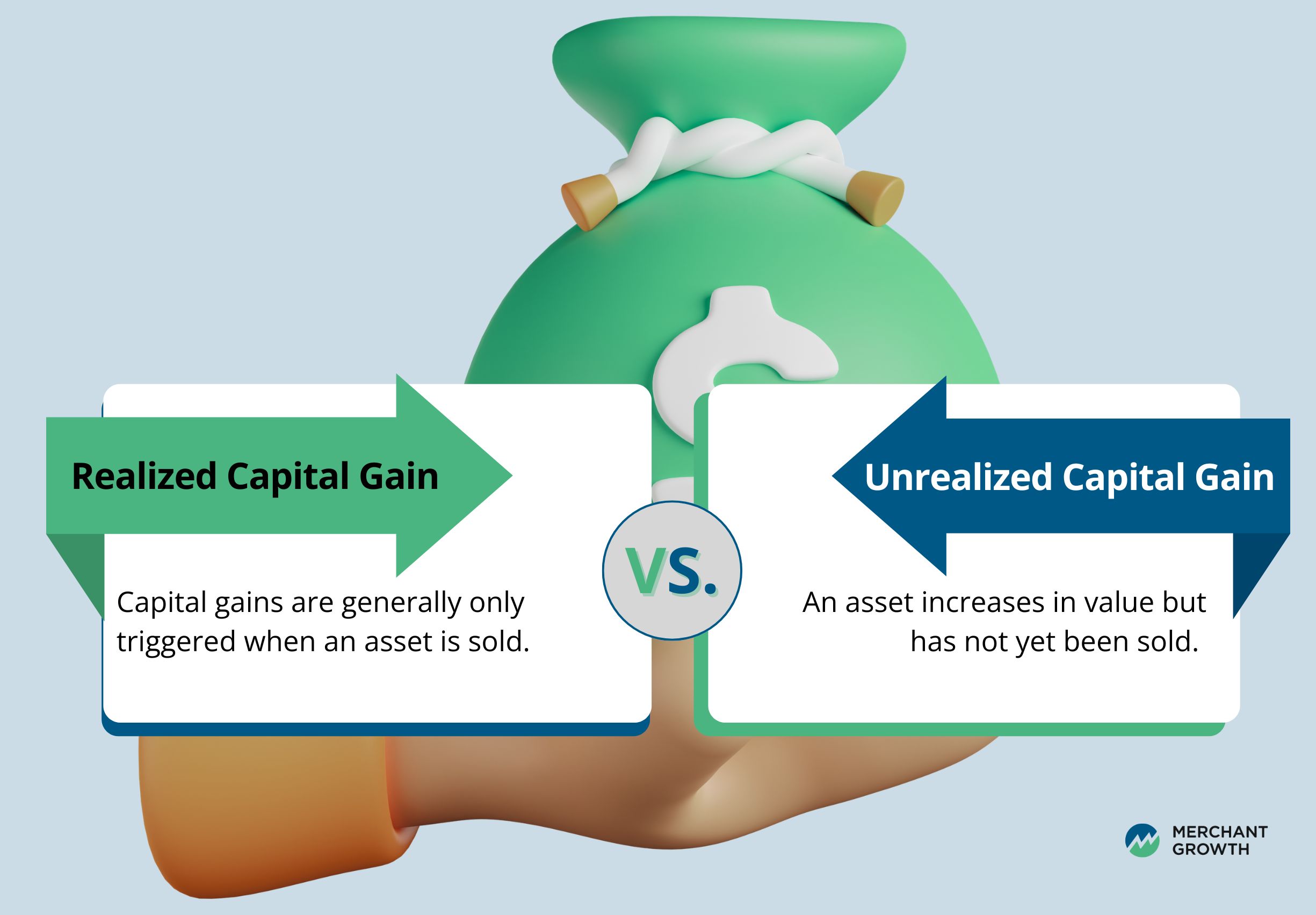
Realized vs Unrealized Capital Gains
One of the most important things for business owners to understand is that capital gains are generally only triggered when an asset is sold. This is known as a realized capital gain. While an investment, commercial property, or business asset may increase in value over time, the gain itself is not typically taxable until the sale actually happens.
An unrealized capital gain, on the other hand, happens when an asset increases in value but has not yet been sold. This distinction is important because it gives entrepreneurs more flexibility around timing, financial planning, and long-term wealth management.
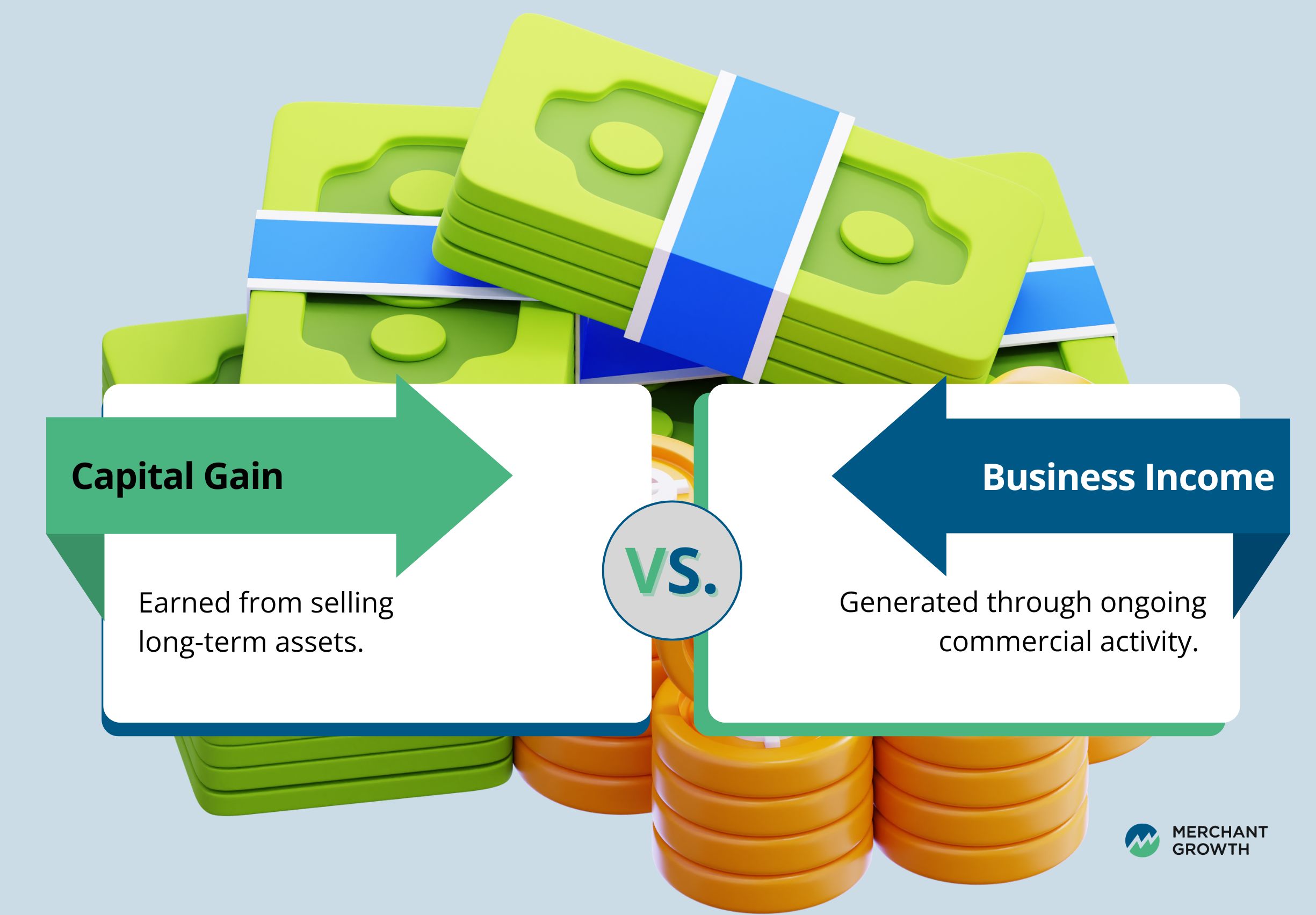
Capital Gains vs Business Income
Many business owners confuse capital gains with business income, but the two are taxed very differently in Canada. How the CRA classifies your earnings can have a major impact on how much tax you ultimately pay.
Capital gains are typically earned from selling long-term assets like investments, commercial property, or business shares for a profit. In Canada, only 50% of a capital gain is considered taxable income. For example, if you earn a $100,000 capital gain, generally only $50,000 is added to your taxable income.
Business income, on the other hand, is generated through ongoing commercial activity, such as selling products or services or actively trading investments. Unlike capital gains, 100% of business income is taxable.
How business income is taxed also depends on your business structure. Sole proprietors report income on their personal tax return, while incorporated businesses pay corporate tax rates on active business income. Many Canadian-controlled private corporations (CCPCs) qualify for lower small business tax rates on eligible income, although provincial taxes also apply.
The distinction becomes especially important with investment activity. A business owner making occasional long-term investments may generate capital gains, while someone frequently trading stocks or cryptocurrency for short-term profit could have earnings classified as fully taxable business income instead.
What Assets Can Create Capital Gains for Business Owners?
Capital gains are not limited to stock market investing. For many Canadian entrepreneurs, capital gains are triggered during major business or financial milestones, such as selling property, restructuring ownership, or investing retained earnings outside the business.
Some capital gains are directly connected to business operations, while others come from personal or corporate investments used to build long-term wealth. Understanding the difference can help business owners plan more effectively and avoid unexpected tax obligations later on.
Business Assets and Commercial Property
Commercial real estate is one of the most common sources of capital gains for business owners. If a company-owned office, warehouse, retail space, or investment property increases in value and is later sold, the profit may create a capital gain.
Many entrepreneurs purchase property as part of long-term growth planning, especially when expanding operations or building additional income streams. Over time, rising property values can create significant gains that affect taxes owed during the year of sale.
Selling Shares in a Business
For many entrepreneurs, their business itself is their largest capital asset. If a business owner eventually sells shares in their company, the sale may trigger capital gains taxes depending on how the transaction is structured.
This becomes especially important during succession planning, acquisitions, or retirement planning. In some cases, qualifying business owners may also be eligible for the Lifetime Capital Gains Exemption (LCGE), which can help reduce taxes on the sale of qualifying small business shares.
Stocks, ETFs, and Corporate Investments
Some business owners invest retained earnings into stocks, ETFs, or other long-term investments to grow excess cash outside daily operations. These investments can generate capital gains when sold for more than their adjusted purchase price.
However, gains are generally only triggered once the investments are sold and profits become realized. This is why many entrepreneurs carefully time investment sales as part of broader tax planning strategies.
Rental and Investment Properties
Many entrepreneurs invest in rental properties outside their primary business as a way to diversify income and build long-term wealth. While these properties can appreciate significantly over time, selling them may create substantial capital gains taxes.
Unlike a primary residence, rental and investment properties are generally taxable when sold at a profit. This often catches business owners off guard, especially if the property has appreciated over many years.
Cryptocurrency and Alternative Investments
Cryptocurrency has become increasingly popular among entrepreneurs and investors, but many business owners still misunderstand how crypto profits are taxed. Selling cryptocurrency for profit can create capital gains, even if the transactions occur entirely online.
The CRA may also classify frequent crypto trading as business income instead of capital gains if the activity resembles active trading. This distinction can significantly affect how profits are taxed.

How Capital Gains Tax Works in Canada
One of the biggest misconceptions about capital gains taxes is that the entire profit from a sale is taxed directly. In Canada, only 50% of a capital gain is currently considered taxable income. This taxable portion is known as a taxable capital gain and is added to the business owner’s total income for the year.
Why Capital Gains Are More Tax-Efficient Than Business Income
Capital gains are generally considered more tax-efficient than regular business income because only half of the gain is taxable. By comparison, 100% of active business income is subject to taxation.
This distinction can significantly affect long-term financial planning for business owners. Entrepreneurs often use investments, commercial real estate, or retained earnings strategies to build wealth over time, and capital gains treatment can help preserve more of those returns.
Why Timing Matters When Selling Assets
The timing of a sale can also have a major impact on taxes owed. Because taxable capital gains are added to annual income, selling multiple appreciating assets in the same year can increase taxable income substantially and potentially push a business owner into a higher tax bracket.
For incorporated businesses, the rules can become even more complex. Corporate investment income, passive income thresholds, shareholder structures, and the type of asset being sold can all affect how gains are taxed. In some cases, qualifying business owners may also be eligible for the Lifetime Capital Gains Exemption (LCGE), which can significantly reduce taxes on the sale of qualifying small business shares.
Because of these variables, many entrepreneurs work closely with accountants or tax advisors before selling major assets or restructuring ownership. Proactive planning often plays a major role in preserving long-term business wealth and reducing unexpected tax consequences.

How to Calculate Capital Gains
Calculating capital gains can feel intimidating at first, especially for entrepreneurs managing multiple investments or business assets. But once the process is broken into steps, it becomes much easier to understand. The key is maintaining organized records and understanding which numbers affect the final calculation.
Selling Price
The selling price refers to the total amount received when the asset is sold. This includes the proceeds earned from selling investments, real estate, or business shares. For larger business transactions, the selling price may include multiple components depending on how the deal is structured.
Accurately documenting the final sale amount is important because it serves as the starting point for calculating the capital gain. Without clear records, business owners may struggle to report gains properly during tax season.
Purchase Price
The purchase price is the original amount paid to acquire the asset. This figure establishes the baseline used to determine whether a profit was earned when the asset is eventually sold.
For long-term business owners, this can become more complicated over time. Assets may have been purchased years earlier, inherited, transferred between owners, or improved significantly since the original purchase date. Keeping accurate records from the beginning helps simplify future calculations.
Adjusted Cost Base (ACB)
Adjusted Cost Base, often referred to as ACB, is one of the most misunderstood parts of capital gains calculations. ACB represents the adjusted value of the asset after accounting for additional purchases, reinvestments, improvements, or certain eligible costs.
For example, if a business owner purchases additional shares of the same investment over time, the adjusted cost base changes. Similarly, major improvements to a property may affect the adjusted value used for tax calculations later. Understanding ACB is essential because inaccurate calculations can lead to overpaying or underreporting taxes.
Fees and Commissions
Certain expenses related to buying or selling an asset may reduce the taxable capital gain. Realtor commissions, legal fees, brokerage fees, and transaction costs can often be factored into the calculation.
For business owners selling commercial property or shares in a company, these expenses can become significant. Maintaining documentation for all transaction-related costs helps ensure gains are calculated accurately and efficiently.
The Capital Gains Formula
At its simplest level, the capital gains formula looks like this:
Selling Price – Adjusted Cost Base – Eligible Expenses = Capital Gain
For example, imagine an entrepreneur sells commercial property for $800,000. The adjusted cost base is $600,000, and eligible selling expenses total $25,000. In this scenario, the capital gain would be $175,000.
Once the gain is calculated, only a portion becomes taxable income under Canadian tax rules. That taxable amount is then added to the owner’s overall income for the year.
How Canadians Reduce Capital Gains Tax Legally
For business owners, reducing taxes legally is usually less about avoidance and more about strategic planning. Entrepreneurs who understand capital gains early often have more flexibility when managing investments, succession planning, and long-term wealth creation.
Proactive tax planning helps business owners preserve more of their returns while avoiding unnecessary surprises later. The goal is not to avoid taxes entirely, but to structure financial decisions in a way that improves long-term efficiency.
Using a TFSA
Tax-Free Savings Accounts (TFSAs) are one of the most effective tools available for growing investments without triggering capital gains taxes. Investments held inside a TFSA can generally grow tax-free, meaning gains earned within the account are not taxed when investments are sold.
For entrepreneurs investing outside their business, TFSAs can provide valuable flexibility. They allow business owners to build personal wealth more efficiently while reducing future tax exposure on investment growth.
Offsetting Gains with Capital Losses
Capital losses can help reduce taxes by offsetting taxable capital gains earned elsewhere. If an entrepreneur sells one investment at a profit and another at a loss, the loss may help reduce the taxable portion of the gain.
Some business owners intentionally review underperforming investments near year-end as part of tax planning strategies. This approach, often referred to as tax-loss harvesting, can help improve overall after-tax returns over time.
Timing Asset Sales Strategically
Timing plays a major role in how much tax a business owner ultimately pays. Selling multiple appreciating assets in the same year can create large spikes in taxable income, potentially increasing the total tax burden.
Many entrepreneurs strategically spread major sales across multiple years or plan transactions during lower-income periods. This type of proactive planning often creates more flexibility and better long-term financial outcomes.
Holding Investments Long Term
Long-term investing is often more tax-efficient than frequent buying and selling. Constant trading can create repeated taxable events that increase complexity and tax exposure over time.
For business owners focused on long-term growth, holding investments longer may help reduce unnecessary taxes while supporting more stable wealth accumulation. This approach also aligns with broader business planning and retirement goals.
The Primary Residence Exemption
In many cases, Canadians do not pay capital gains tax when selling their primary residence because of the principal residence exemption. However, this exemption does not automatically apply to rental properties, cottages, or investment real estate.
Business owners who own multiple properties should understand how these rules apply to different types of real estate. Misunderstanding the exemption can lead to unexpected tax obligations during future property sales.
Small Business Capital Gains Exemptions
The Lifetime Capital Gains Exemption (LCGE) can provide substantial tax savings for qualifying business owners. Eligible entrepreneurs may be able to shelter a significant portion of gains earned from selling qualifying small business corporation shares.
For many business owners, this exemption becomes especially important during succession planning or eventual business exits. Proper planning ahead of a sale can significantly improve the long-term financial outcome of selling a business.
Why Understanding Capital Gains Matters for Business Owners
Many entrepreneurs spend years focused on growth, operations, and revenue without thinking deeply about how taxes will affect their long-term wealth. But eventually, most business owners reach financial milestones where capital gains become highly relevant. Selling investments, transitioning ownership, or preparing for retirement can all create major taxable events.
Understanding capital gains allows business owners to make smarter decisions long before those moments happen. Instead of treating taxes as a last-minute issue, entrepreneurs can integrate tax efficiency into broader business and financial planning strategies.
There is also a mindset shift that happens when business owners fully understand how capital gains work. Taxes become less intimidating and more manageable. That confidence often leads to clearer decisions around investing, expansion, acquisitions, and long-term growth planning.
For Canadian small business owners, capital gains are not just a tax concept. They are closely connected to business value, financial growth, succession planning, and long-term wealth preservation. The sooner entrepreneurs understand how they work, the better positioned they are to protect the value they have spent years building.
Customer Retention: Why Keeping Customers Matters More Than Ever
For many businesses, growth is often measured by how many new customers come through the door. Marketing campaigns, paid ads, and social media strategies are usually focused on attracting attention and generating new sales. While acquisition is important, many businesses overlook one of the most profitable growth opportunities already sitting in front of them: existing customers.
Customer retention is what keeps customers coming back after the first purchase. It reflects how well a business builds trust, delivers consistent value, and creates experiences that make customers want to stay loyal over time. In competitive industries where customers have endless options, retention can become the difference between businesses that struggle to maintain momentum and businesses that grow sustainably.
The numbers reinforce just how valuable existing customers can be. Businesses typically have a 60–70% chance of selling to an existing customer, compared to a much lower likelihood of converting a brand-new prospect. Loyal customers also tend to purchase more frequently, spend more over time, and recommend businesses to others, making retention one of the most cost-effective ways to support long-term growth.
At the same time, retention is not something that happens automatically. Customers leave when experiences feel inconsistent, communication breaks down, or businesses fail to continue delivering value after the initial sale. Understanding why customers stay, and why they leave, is essential for businesses looking to improve loyalty, strengthen customer relationships, and build more sustainable growth over time.
What Is Meant by Customer Retention?
Customer retention refers to a business’s ability to keep customers engaged and returning over time. Rather than focusing only on attracting new buyers, retention measures how successfully a company builds ongoing relationships that encourage repeat purchases and continued loyalty.
For ecommerce businesses, retention may look like customers returning regularly to purchase products. For service-based businesses, it could involve clients renewing contracts, booking repeat appointments, or maintaining long-term partnerships. Regardless of the industry, retention reflects how well a business continues meeting customer expectations after the first interaction.
Customer retention is also closely tied to customer loyalty. A loyal customer is more likely to continue choosing the same business even when competitors offer similar pricing or promotions. That loyalty is usually built through positive experiences, consistent communication, and trust developed over time.
Many businesses focus heavily on acquisition because new customers feel like immediate growth. However, acquisition without retention can become expensive and unsustainable. If customers only purchase once and never return, businesses are forced to continuously spend time and money replacing lost revenue.
Why Customer Retention Matters for Business Growth
Customer retention plays a major role in long-term profitability because existing customers are often more valuable than first-time buyers. Returning customers are already familiar with the business, which usually means they require less marketing effort and are more likely to purchase again with confidence.
Over time, loyal customers tend to spend more and contribute higher customer lifetime value. They are also more likely to recommend businesses to friends, family, and colleagues, creating organic referrals that can reduce customer acquisition costs. In many cases, strong retention creates a cycle where satisfied customers help generate additional business growth naturally.
Retention also creates more predictable revenue. Businesses with strong repeat customer behaviour often have steadier cash flow and better long-term forecasting ability than businesses relying entirely on new customer acquisition. This stability becomes especially important during slower economic periods or highly competitive market conditions.
Perhaps most importantly, customer retention strengthens brand trust. Customers who consistently receive positive experiences are more likely to remain loyal even when competitors attempt to win them over with discounts or promotions. In crowded industries, that trust becomes a powerful competitive advantage.
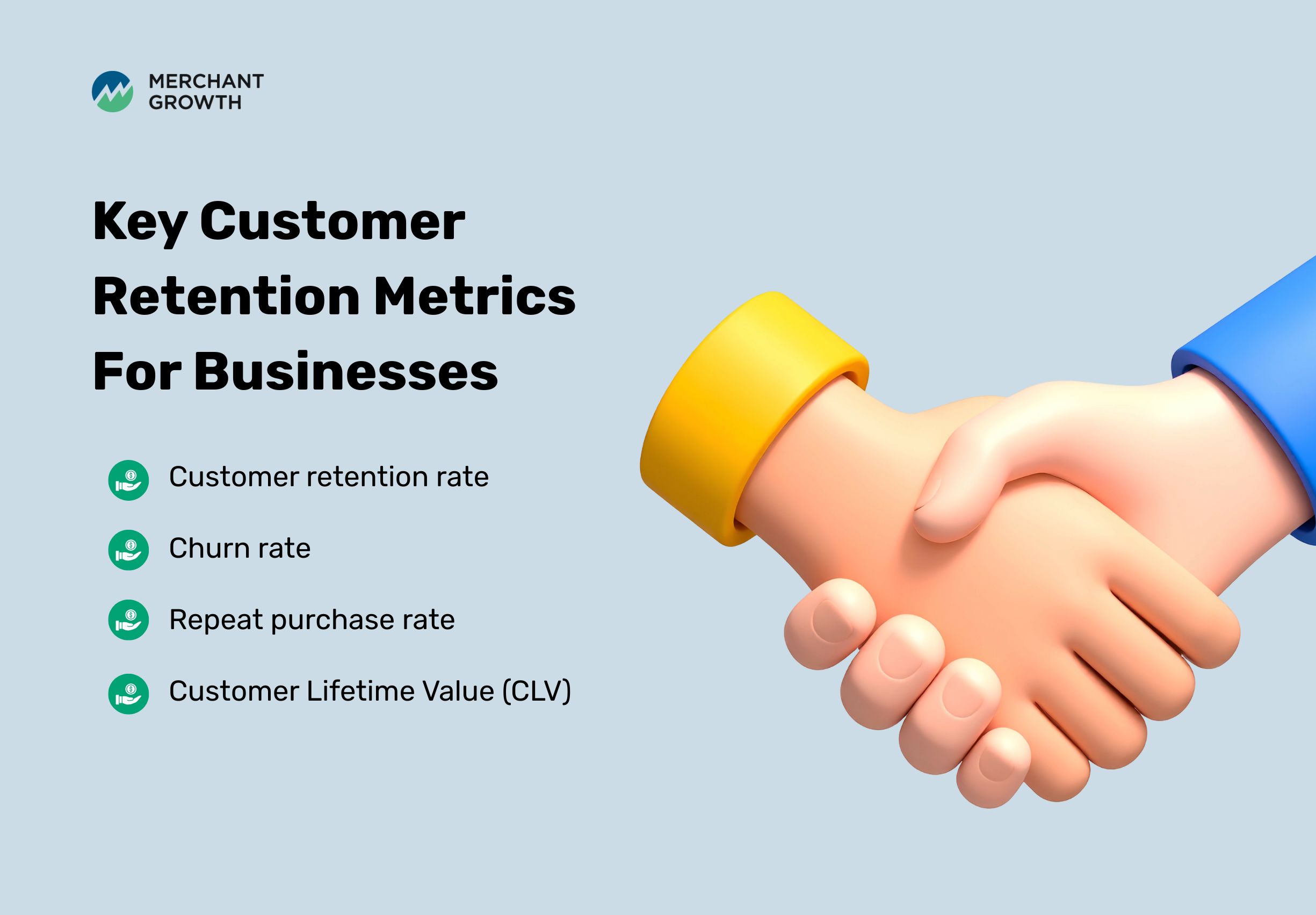
Key Customer Retention Metrics Businesses Should Track
Retention strategies become much more effective when businesses understand how customers are actually behaving. Tracking customer retention metrics helps companies identify strengths, uncover problems early, and make more informed decisions about customer experience improvements.
Customer Retention Rate
Customer retention rate measures the percentage of customers a business keeps over a specific period of time. A high retention rate generally indicates that customers are satisfied, engaged, and continuing to return after their initial purchase. For many businesses, retention rate is one of the clearest indicators of long-term customer loyalty and overall customer experience.
Businesses typically calculate retention rate by comparing the number of customers at the beginning and end of a time period while accounting for newly acquired customers. Despite how important this metric is, many companies still fail to track it consistently. In fact, as many as 44% of businesses do not actively measure their customer retention rate, which can make it much harder to identify churn risks or understand long-term customer behaviour.
Retention benchmarks can also vary significantly depending on the industry. Businesses operating in sectors with recurring customer relationships or subscription models often see much higher retention rates than industries with less frequent customer engagement. Average retention rates by industry include:
- Insurance: 84%
- Banking: 75%
- Retail: 63%
- Hospitality: 55%
- Fintech: 37%
- SaaS: 35%
- Media: 25%
- Edtech: 4%
Rather than focusing only on industry averages, businesses should pay close attention to whether their retention rate is improving over time. Even small improvements in retention can have a meaningful impact on customer lifetime value, repeat revenue, and long-term profitability.
Churn Rate
Churn rate measures how many customers stop doing business with a company over a given period. While retention focuses on customers staying, churn focuses on customers leaving. High churn rates can signal problems with customer experience, communication, onboarding, or overall satisfaction.
For subscription-based businesses in particular, churn is one of the most important metrics to monitor. Even small increases in customer churn can have a major impact on recurring revenue and long-term profitability.
Repeat Purchase Rate
Repeat purchase rate measures how often customers come back to buy again after their first transaction. This metric is especially important for ecommerce businesses where long-term profitability often depends on repeat buying behaviour rather than one-time purchases.
A strong repeat purchase rate usually indicates that customers trust the brand, enjoy the product experience, and continue seeing value over time. Businesses with higher repeat purchase rates often rely less heavily on aggressive acquisition campaigns to maintain growth.
Customer Lifetime Value (CLV)
Customer lifetime value estimates how much revenue a customer is expected to generate throughout their relationship with a business. Retention has a direct impact on CLV because customers who stay longer and purchase more frequently contribute significantly more long-term value.
Businesses focused on improving retention often see customer lifetime value increase naturally over time. This is one reason many companies now prioritize relationship-building and post-purchase engagement as part of their overall growth strategy.
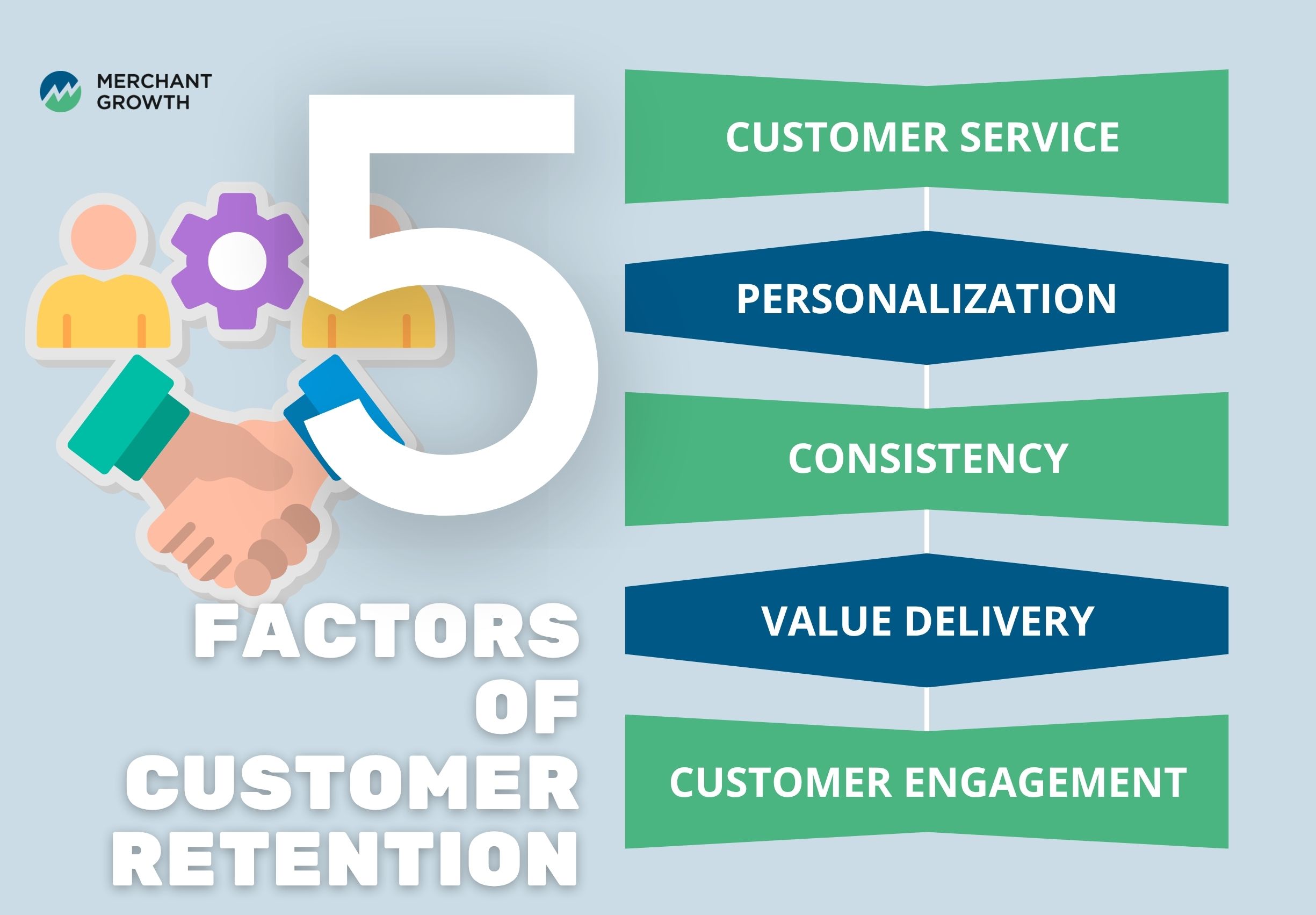
What Are 5 Key Factors of Customer Retention?
Customer retention is rarely driven by one single factor. Instead, long-term loyalty is usually built through a combination of consistent experiences, strong communication, and ongoing value delivery.
Customer Service
Customer service plays a major role in retention because customers remember how businesses respond when issues arise. Fast response times, helpful support, and clear communication all contribute to stronger trust and satisfaction. Even small service interactions can shape whether a customer chooses to continue doing business with a company.
Poor customer service, on the other hand, can quickly damage loyalty even if the original product or service was strong. Customers who feel ignored or undervalued are far more likely to leave and explore other options. Businesses that prioritize responsive and proactive support are often more successful at building long-term customer trust.
Enhance customer service and try out these strategies:
- Offer multiple customer support channels such as live chat, email, and phone support
- Create post-purchase follow-up emails to check customer satisfaction after delivery or service completion
- Set internal response time goals to ensure customer inquiries are answered quickly and consistently
Personalization
Customers increasingly expect experiences that feel tailored to their needs and preferences. Personalized recommendations, targeted communication, and relevant offers help businesses create stronger emotional connections with customers. Businesses that use customer behaviour and purchase history effectively are often better positioned to increase repeat purchases and engagement.
Personalization also helps customers feel recognized instead of treated like just another transaction. Even simple personalized experiences can make interactions feel more relevant and valuable to customers over time.
Work personalization into your processes with these tactics:
- Send personalized product or service recommendations based on previous purchases
- Segment email campaigns by customer interests, buying behaviour, or engagement history
- Use customer names and tailored messaging in marketing emails and loyalty communications
Consistency
Consistency builds confidence. Customers are far more likely to stay loyal when businesses deliver reliable experiences across communication, fulfillment, support, and product quality. A consistent experience helps customers know what to expect every time they interact with a business.
Inconsistent experiences create uncertainty, which can weaken trust over time. Businesses that consistently meet expectations are often better positioned to retain customers, especially in highly competitive industries where alternatives are easy to find.
Stay consistent and implement these techniques:
- Create standardized customer service processes and brand messaging guidelines
- Maintain consistent delivery timelines and communication updates for customers
- Regularly review customer feedback to identify gaps in the customer experience
Value Delivery
Retention depends on customers continuing to feel they are receiving value after the initial purchase. This can include product quality, educational resources, ongoing service improvements, or post-purchase support. Businesses that consistently reinforce value are more likely to maintain long-term customer relationships.
Customers who feel businesses continue investing in their experience are more likely to stay engaged long term. Value delivery is often what separates transactional businesses from relationship-driven brands.
Try out these strategies to deliver more value to your customers:
- Share educational content, tutorials, or product usage tips after purchase
- Introduce loyalty perks or exclusive offers for repeat customers
- Regularly improve products or services based on customer feedback and industry trends
Customer Engagement
Strong customer relationships require ongoing communication and interaction. Follow-up emails, feedback requests, loyalty programs, and community-building efforts all help businesses stay connected with customers after the sale.
Engagement also creates opportunities to identify concerns before customers disengage completely. Businesses that communicate proactively are often better equipped to reduce churn and strengthen loyalty over time.
Ideas to build customer engagement in your business:
- Launch a loyalty or rewards program that encourages repeat purchases
- Send customer surveys or feedback requests to identify improvement opportunities
- Create exclusive promotions, events, or early-access offers for returning customers
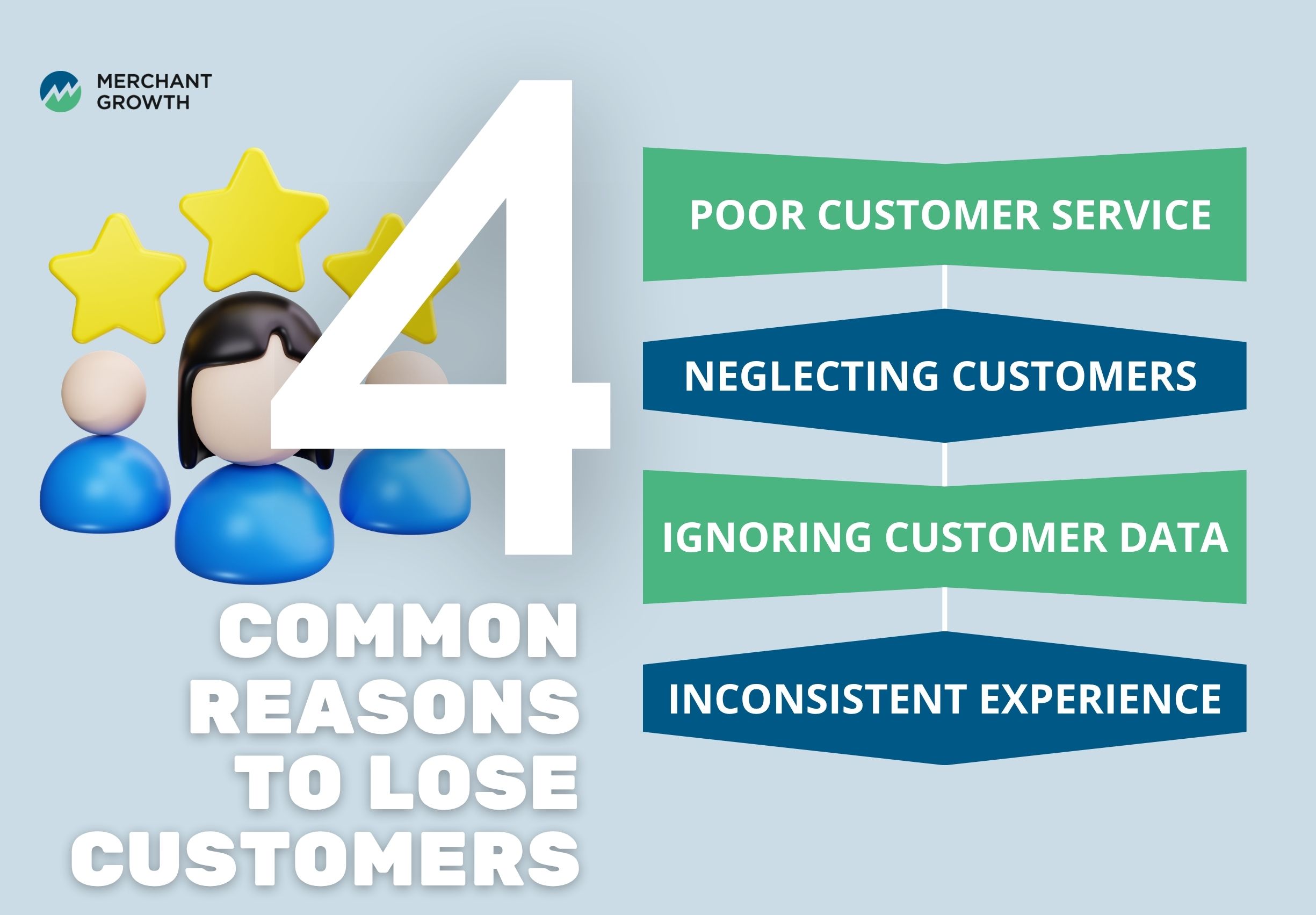
Common Reasons Businesses Lose Customers
Most customers do not leave because of one negative experience. More often, businesses lose customers through a series of small frustrations that slowly weaken trust over time. A delayed response, inconsistent communication, lack of follow-up, or feeling overlooked can gradually push customers toward competitors offering a better overall experience.
The challenge is that many retention problems are not immediately obvious. Customers rarely announce they are becoming disengaged before they leave. Instead, they may stop opening emails, purchase less frequently, or quietly move on after a poor experience. Understanding the most common reasons customers leave allows businesses to strengthen relationships before churn becomes a larger issue.
Poor Customer Service
Slow response times, unresolved problems, and inconsistent support experiences are some of the most common reasons customers leave. Even businesses with strong products or competitive pricing can struggle to retain customers if service quality does not meet expectations.
Customers want to feel supported and valued when issues arise. Businesses that fail to respond quickly, communicate clearly, or resolve concerns efficiently often damage trust faster than they realize. In highly competitive industries, poor service experiences can quickly send customers searching for alternatives.
Pro Tip: Create a customer response standard for your business, such as replying to all customer inquiries within a set timeframe. Fast, consistent communication alone can significantly improve customer trust and retention.
Neglecting Existing Customers
Some businesses focus so heavily on attracting new customers that they unintentionally ignore the customers they already have. Existing customers may receive little follow-up communication, limited engagement, or no incentives to continue purchasing after the initial sale.
Over time, this lack of attention can make customers feel undervalued. Businesses that consistently nurture existing relationships are often more successful at building long-term loyalty and repeat revenue. Retention requires ongoing effort, not just strong acquisition campaigns.
Pro Tip: Build a simple post-purchase follow-up strategy that keeps customers engaged after the sale through check-ins, loyalty offers, or personalized recommendations.
Ignoring Customer Data
Customer feedback, purchase behaviour, and engagement patterns provide valuable insight into retention risks. Businesses that ignore this data often miss early warning signs that customers are becoming disengaged or dissatisfied.
Tracking customer behaviour helps businesses identify opportunities for improvement before churn becomes a larger problem. Even simple feedback surveys or monitoring repeat purchase trends can help businesses better understand what customers want and where experiences may be falling short.
Pro Tip: Pay close attention to repeat purchase behaviour and customer feedback trends. Small shifts in engagement often reveal retention problems before customers stop buying altogether.
Inconsistent Customer Experience
Customers expect consistency across every interaction with a business. Problems with fulfillment, communication, onboarding, or product quality can quickly create frustration when experiences vary too much from one interaction to the next.
Consistency matters because customers associate reliability with trust. Businesses that create predictable positive experiences are often more successful at maintaining customer loyalty over time. Even small inconsistencies can weaken confidence if they happen repeatedly.
Pro Tip: Document your ideal customer experience from first interaction to post-purchase follow-up so every customer receives a consistent experience regardless of who they interact with.
What Are the 4 Pillars of Retention?
Strong customer retention rarely happens by accident. Businesses that keep customers coming back usually focus on a few core areas that shape how customers feel throughout the entire relationship. These pillars help businesses build trust and loyalty over time instead of relying only on discounts or constant promotions to keep customers interested.
1. Onboarding
The customer experience starts immediately after the first purchase or sign-up. A strong onboarding experience helps customers understand the product or service quickly while making them feel confident that they made the right decision.
When onboarding feels confusing, overwhelming, or unsupported, customers are far more likely to lose interest before fully experiencing the value of what the business offers. Businesses that simplify the early stages of the customer journey often create stronger long-term relationships from the beginning.
2. Communication
Customers want to hear from businesses beyond the initial transaction, but that communication needs to feel useful and relevant. Follow-up emails, proactive updates, educational content, and personalized messaging all help businesses stay connected without feeling overly promotional.
Consistent communication also reassures customers that the business remains invested in their experience. When customers feel informed and supported, they are more likely to stay engaged and continue building trust with the brand over time.
3. Customer Experience
Every interaction shapes how customers view a business. From website usability and delivery timelines to customer support and product quality, each touchpoint contributes to the overall impression customers associate with the brand.
Businesses that consistently deliver smooth, reliable experiences are more likely to retain customers even in highly competitive industries. Customers may forget individual marketing campaigns, but they rarely forget how a business made them feel.
4. Loyalty and Value
Customers stay loyal when they continue receiving value long after the first purchase. Loyalty programs, personalized experiences, exclusive perks, and ongoing product improvements all help reinforce the relationship and encourage repeat engagement.
Retention becomes much stronger when customers feel appreciated rather than constantly sold to. Businesses that consistently deliver value are more likely to turn one-time buyers into long-term loyal customers.
Customer Retention Strategies That Build Long-Term Loyalty
Customer retention should be treated as an ongoing business strategy rather than a one-time marketing campaign. Businesses that build strong customer loyalty usually do so through consistent experiences, proactive communication, and long-term value delivery. The goal is not just to encourage repeat purchases, but to create relationships that customers genuinely want to continue.
Improve Customer Onboarding
First impressions matter more than many businesses realize. A strong onboarding experience helps customers understand the value of a product or service quickly while reducing confusion during the early stages of the relationship.
When customers feel supported immediately after purchase, they are more likely to stay engaged long enough to build trust with the brand. Businesses that create clear and helpful onboarding experiences often see stronger retention because customers feel confident from the beginning.
This can include welcome emails, onboarding calls, tutorials, educational resources, or proactive follow-ups designed to help customers get started successfully.
Deliver Proactive Customer Support
Customers appreciate businesses that address concerns before they become major frustrations. Proactive support means staying ahead of customer needs through regular check-ins, accessible communication channels, and fast problem resolution.
Businesses that treat support as a relationship-building tool instead of simply reacting to complaints are often more successful at strengthening long-term loyalty. Customers are far more likely to stay loyal when they feel supported consistently, not just when something goes wrong.
Even simple actions like following up after a purchase or notifying customers about delays before they ask can improve trust significantly.
Create Loyalty and Rewards Programs
Loyalty programs give customers an extra reason to continue choosing the same business over competitors. Reward points, referral incentives, VIP perks, and repeat purchase discounts all help encourage ongoing engagement and repeat buying behaviour.
The strongest loyalty programs go beyond discounts alone. Customers are more likely to stay engaged when rewards feel personalized, exclusive, or tied to appreciation rather than constant sales messaging.
Businesses that make customers feel valued instead of simply marketed to often create stronger emotional loyalty over time.
Use Personalized Retention Campaigns
Customers are more likely to engage with communication that feels relevant to their interests and behaviour. Personalized retention campaigns help businesses build stronger connections through targeted messaging, product recommendations, and customized offers.
Generic marketing emails are easy to ignore, especially when customers feel businesses do not understand their preferences or needs. Personalized communication creates a more tailored experience that helps customers feel recognized instead of treated like just another sale.
Even small personalization efforts, such as recommending products based on past purchases or sending birthday offers, can improve engagement and repeat business.
Continuously Improve Based on Feedback
Customer expectations constantly evolve, which means retention strategies should evolve too. Businesses that actively collect feedback and make improvements based on customer input are often better positioned to maintain loyalty over time.
Customers appreciate when businesses listen and respond to concerns instead of ignoring them. This responsiveness helps strengthen trust while also improving the overall customer experience.
Simple actions like sending customer surveys, reviewing online feedback, or monitoring recurring complaints can help businesses identify retention issues before they lead to higher churn.
What Are the 8 C’s of Customer Retention?
The 8 C’s of customer retention are commonly used as a framework for building stronger customer relationships. While businesses may apply the framework differently, the core idea is that retention is shaped by multiple interconnected experiences.
The 8 C’s typically include:
- Consistency
- Communication
- Convenience
- Competence
- Customization
- Care
- Credibility
- Connection
Together, these elements help businesses create experiences that feel reliable, personalized, and trustworthy. Companies that consistently deliver across these areas are often more successful at reducing churn and maintaining customer loyalty over time.
Customer Acquisition vs Customer Retention
Customer acquisition and customer retention are both important growth strategies, but they serve very different purposes. Acquisition focuses on bringing new customers into the business, while retention focuses on keeping existing customers engaged over time.
Many businesses invest heavily in acquisition because it creates immediate growth opportunities. However, relying too heavily on acquisition without improving retention can create long-term profitability challenges. Constantly replacing lost customers is often far more expensive than maintaining strong relationships with existing ones.
Retention typically delivers stronger long-term returns because repeat customers are already familiar with the business and more likely to purchase again. Sustainable growth usually depends on balancing both strategies rather than prioritizing one at the expense of the other.
How Technology Supports Customer Retention
Technology plays an important role in helping businesses improve retention at scale. CRM systems, automation tools, and customer data platforms allow businesses to better understand customer behaviour and create more personalized experiences.
CRM platforms help businesses track customer interactions, segment audiences, and manage ongoing relationships more effectively. This information allows businesses to communicate more strategically and identify retention opportunities earlier.
Automation also helps businesses stay connected with customers consistently. Follow-up emails, abandoned cart reminders, loyalty campaigns, and re-engagement sequences all help maintain customer engagement without requiring entirely manual processes.
Customer feedback tools and behaviour tracking also provide valuable insight into customer satisfaction trends. Businesses that actively monitor feedback and engagement patterns are often better positioned to improve experiences before customers disengage completely.
Building a Sustainable Customer Retention Strategy
Customer retention is not built overnight. Strong retention usually develops through consistent experiences, proactive communication, and long-term relationship management across every stage of the customer journey.
Businesses that succeed with retention tend to approach it as an ongoing operational priority rather than a short-term campaign. They monitor customer satisfaction regularly, adjust strategies based on feedback, and continue investing in experiences that strengthen trust over time.
As customer expectations continue evolving, retention strategies must evolve as well. Businesses that remain adaptable while continuing to deliver value are often best positioned to maintain customer loyalty and long-term growth.
How Merchant Growth Can Help Businesses Improve Customer Retention
Improving customer retention often requires investment. Whether a business is upgrading customer support systems, improving fulfillment operations, launching loyalty programs, or investing in personalized marketing tools, retention initiatives usually require both time and capital.
For many small businesses, balancing growth investments with day-to-day cash flow can be challenging. This is especially true when businesses are trying to improve customer experience while also managing inventory, staffing, operations, and expansion.
Merchant Growth helps Canadian small businesses access flexible financing solutions that support long-term growth initiatives. Businesses can use funding to invest in customer experience improvements, marketing campaigns, onboarding processes, operational upgrades, or technology that strengthens customer relationships over time.
Strong customer retention does not happen by accident. It is built through consistent investment in customer experience, communication, and value delivery. With the right financial support and strategy in place, businesses can create stronger customer loyalty, improve repeat revenue, and build a more sustainable foundation for long-term growth.
Buying a Business in Canada: What You Need to Know Before You Take Over
What if you could skip the early uncertainty of starting from scratch and step directly into something that’s already running? Taking over an existing business gives you access to customers, revenue, and operations from day one.
That said, this isn’t a shortcut to success. It still requires careful planning, financial investment, and a strong understanding of what you’re taking on. You’re not just acquiring assets; you’re taking responsibility for how the business performs moving forward.
At its core, this path is less about building something new and more about stepping in, understanding what works, and improving it over time. In this guide, we’ll walk through how to buy a business in Canada, from finding the right opportunity to financing, regional considerations, and what it takes to make the transition successful.

Is Buying a Business Right for You?
Choosing between buying a business and starting one from scratch is an important decision, and the right option depends on your goals, experience, and risk tolerance. Buying an existing business can offer advantages that are difficult to replicate in a startup environment, particularly when it comes to stability and predictability.
One of the biggest benefits is the presence of an established foundation. You may be acquiring an existing customer base, trained employees, supplier relationships, and proven processes. This can reduce some of the uncertainty that typically comes with launching a new business, especially in the early stages.
However, there are trade-offs to consider. Buying a business often requires a larger upfront investment, and you may inherit challenges such as outdated systems, inefficiencies, or operational issues. It’s important to think about whether you’re comfortable stepping into an existing structure and making improvements over time. The best fit is one that aligns with your skills, your interests, and how you want to operate as an owner.
How to Buy a Business in Canada (Step-by-Step)
Buying a business can feel like a big process at first, but when you break it down into clear steps, it becomes much more manageable. While every deal is different, most acquisitions follow a similar path, from defining what you want to closing the transaction. Taking the time to move through each stage thoughtfully can help you avoid costly mistakes and feel more confident in your decisions.
1. Define Your Goals and Budget
Before you start looking at businesses, it’s important to get clear on what you actually want. This goes beyond just choosing an industry; it includes thinking about how involved you want to be, what kind of schedule you’re comfortable with, and what success looks like for you in the long term.
For example, some buyers are looking for a hands-on role where they’re involved in daily operations, while others prefer a business that can run more independently. You may also want to consider whether you’re focused on growth, stability, or lifestyle. These factors will shape the type of business that makes sense for you.
Your budget is just as important as your goals. Understanding how much you can invest upfront, how much financing you’ll need, and what level of risk you’re comfortable with will help narrow your options. Being realistic at this stage makes the rest of the process more focused and helps prevent you from pursuing businesses that aren’t a good financial fit.
2. Find a Business to Buy
Once you know what you’re looking for, the next step is finding the right opportunity. There are a few different ways to approach this, and each method has its place depending on your situation.
Working with a business broker can be especially helpful if you’re new to the process. Brokers often have access to established businesses with verified financials and can guide you through the early stages of evaluating opportunities. This route tends to be more structured and can save time, particularly if you want support with negotiations later on.
Online marketplaces are useful if you’re still exploring and want to get a sense of what’s available. They allow you to compare businesses across industries, price ranges, and locations, which can help you refine your criteria. However, not every listing will be detailed or accurate, so it’s important to treat this as a starting point rather than a final decision tool.
Your network can also be a valuable source of opportunities. Some business owners prefer to sell privately, and these deals may never be publicly listed. Talking to industry contacts, advisors, or even letting people know you’re looking can sometimes lead to opportunities that others don’t see.
In many cases, the best approach is to use a combination of these methods. This increases your chances of finding a business that not only fits your budget but also aligns with your experience and long-term goals.
3. Conduct Due Diligence
Once you’ve identified a business that interests you, the next step is to take a much closer look. Due diligence is where you move beyond initial impressions and verify the details of the business. This includes reviewing financial statements, contracts, leases, employee agreements, and any outstanding liabilities.
It’s also an opportunity to understand how the business operates day to day.
- How dependent is it on the current owner?
- Are there key employees who play a critical role?
- How stable are customer relationships?
These are the kinds of questions that don’t always show up in financial reports but can have a big impact on your decision.
Working with professionals such as accountants and lawyers is especially valuable at this stage. They can help identify risks, interpret financial data, and ensure that nothing important is overlooked. While this step can take time, it’s one of the most important parts of the entire process and should never be rushed.
4. Value the Business
Once you understand the business in detail, the next step is determining what it’s worth. Valuation is about assessing whether the asking price makes sense based on the business’s financial performance, assets, and future potential.
There are several ways to approach valuation. Some businesses are valued based on a multiple of earnings, while others rely more heavily on asset value or cash flow. The right method often depends on the industry and the type of business you’re looking at.
It’s also important to consider what is driving the value. For example, a business with strong recurring revenue may be more valuable than one with inconsistent sales, even if the total revenue looks similar. Understanding these nuances can help you make a more informed offer and avoid overpaying.
5. Secure Financing
For most buyers, financing plays a key role in completing the purchase. This often involves combining personal funds with external financing to cover the total cost. The way you structure this financing can have a direct impact on how manageable the business is after you take over.
Some buyers rely on traditional loans, while others incorporate seller financing or bring in partners. The right approach depends on the size of the deal, the financial health of the business, and your own financial position.
It’s important to think beyond just securing the funds needed to close the deal. You also want to ensure that the business can comfortably support repayment while still allowing room for growth and unexpected expenses. A well-structured financing plan sets you up for stability after the purchase.
6. Negotiate and Close the Deal
Once financing is in place and due diligence is complete, the final step is negotiating the terms of the purchase and closing the deal. This includes agreeing on price, payment structure, transition support, and any conditions tied to the sale.
This stage is about more than just the purchase price. Details like how long the current owner will stay involved, how inventory is handled, and how liabilities are transferred can all have a significant impact on your experience as the new owner.
Having legal support during this phase is essential to ensure that all agreements are clearly documented and that your interests are protected. Once everything is finalized, the transaction is completed, and ownership officially transfers.
Stepping back, the process of buying a business is less about rushing to the finish line and more about making informed decisions at each stage. Taking a thoughtful approach helps reduce risk and gives you a much stronger foundation as you move into ownership.
How to Finance Buying a Business
Financing is often one of the most important and complex parts of buying a business. The right structure can support your success, while the wrong one can create unnecessary pressure on cash flow. Understanding the different options available helps you choose an approach that aligns with your situation and the type of business you’re acquiring.
Traditional Bank Loans
Bank loans are one of the most common financing options, particularly for established businesses with consistent revenue and strong financial records. Lenders will typically assess the business’s performance, your personal financial position, and the overall risk of the transaction.
This option is often best suited for businesses with predictable cash flow and clear financial history, such as established retail operations or service-based businesses. While interest rates may be competitive, approval requirements can be strict, and the process may take longer.
Seller (Vendor) Financing
Seller financing occurs when the current owner agrees to finance part of the purchase price. This can reduce the amount of upfront capital required and create more flexibility in structuring the deal.
This approach is particularly useful when a seller wants to ensure the business continues to succeed after the transition. It is often seen in smaller or privately owned businesses where the seller is open to supporting the buyer through the transition period.
Equity Partners
Bringing in equity partners involves raising capital in exchange for a share of ownership in the business. This can reduce the amount of debt required and provide additional expertise or resources.
This option may be more suitable for larger acquisitions or businesses with strong growth potential. However, it also means sharing control and decision-making, which is an important consideration for many buyers.
Alternative Lenders
Alternative lenders can provide more flexible financing options, particularly for businesses that may not meet traditional bank requirements. These lenders often have faster approval processes and may focus more on cash flow than strict financial history.
This option can be helpful for businesses in transition, industries with less predictable revenue, or situations where timing is critical. While costs may be higher than traditional loans, the flexibility can be valuable depending on your needs.
There is no single “right” way to finance a business purchase. The best approach often involves a combination of options that balance affordability, flexibility, and risk. Taking the time to structure financing carefully can make a significant difference in how manageable the business is after the purchase.
What to Look for Before You Buy a Business
Once you’ve found a business that looks promising, it’s important to take a step back and evaluate it from a few different angles. Strong revenue or a good location can make a business seem like a great opportunity at first glance, but those surface-level details don’t always tell the full story. Understanding how the business operates, where its value comes from, and what risks may be present will give you a much clearer picture of what you’re stepping into.
Taking the time to look closely at a few key areas can help you move from interest to informed decision-making. These factors not only influence the price you’re willing to pay, but also how smoothly the transition into ownership will go.
Financial Performance & Cash Flow
Consistent revenue and reliable cash flow are some of the strongest indicators of a stable business. Reviewing historical financial statements allows you to identify trends, understand seasonality, and see how the business performs over time. It also helps you assess whether the business can realistically support financing and ongoing operational costs.
Beyond the numbers themselves, it’s worth looking at how predictable that performance is. A business with steady, recurring income may offer more stability than one that relies heavily on seasonal spikes or one-time projects.
Customer Base
A strong and diversified customer base can significantly reduce risk. Businesses that rely on a small number of clients or contracts may be more vulnerable if those relationships change after the transition. Understanding who the customers are, how long they’ve been with the business, and how frequently they engage can provide valuable insight into stability.
It’s also helpful to consider customer loyalty and how the business attracts new customers. A well-established brand or strong referral network can make a meaningful difference in long-term performance.
Role of the Current Owner
In many small businesses, the owner plays a central role in daily operations, sales, or key relationships. If that’s the case, it’s important to understand how those responsibilities will transfer once the business changes hands.
For example, if the owner is heavily involved in customer relationships or business development, you may need to plan for a more gradual transition. Businesses with clearly defined systems and responsibilities that don’t rely on one individual are often easier to step into and manage effectively.
Competitive Landscape
Looking at the broader market helps you understand where the business stands and what its future might look like. This includes evaluating competitors, identifying industry trends, and considering any barriers to entry that protect the business from new competition.
A business with a clear position in its market, whether through pricing, service, or specialization, is often better positioned for stability and growth. Understanding these dynamics can help you assess not just where the business is today, but where it could go over time.
Common Risks When Buying a Business
While many risks can be managed, it’s important to recognize them early in the process. Some of Buying a business comes with a certain level of risk, even when everything looks solid on the surface. While many of these risks can be managed or reduced, the key is recognizing them early and understanding how they might impact your decision. In many cases, issues that seem small at first can become more significant after the transition if they aren’t properly addressed.
Being aware of the most common risks helps you ask better questions, focus your due diligence, and negotiate more effectively. Some of the most common include:
- Hidden liabilities such as unpaid debts, legal issues, or outstanding obligations
- Overpaying based on optimistic projections rather than verified performance
- Poor transition planning leading to operational disruptions
- Loss of key employees or customers after the ownership change
- Outdated systems or inefficient processes that require additional investment
Understanding these risks allows you to address them during due diligence and negotiations rather than after the purchase is complete.

Transitioning Ownership Successfully
The transition period is where many acquisitions either succeed or struggle. Even a strong business can face challenges if the handover is not handled carefully. Maintaining stability during this phase is essential for preserving the value you’ve acquired.
A successful transition often begins before the deal is finalized. This can include developing a clear plan with the current owner, identifying key employees, and understanding how daily operations are managed. Having the previous owner available for a defined transition period can also help ensure continuity.
In the early stages of ownership, it’s often beneficial to observe before making major changes. This allows you to understand what is working well and where improvements can be made. Gradual adjustments, rather than immediate overhauls, tend to be more effective and less disruptive.
Over time, as you become more familiar with the business, you can begin to implement changes that align with your vision. A thoughtful transition helps build trust with employees and customers while setting a strong foundation for future growth.
Buying a Business Across Different Regions in Canada
Opportunities to buy a business can vary significantly depending on where you’re looking. Each region has its own economic drivers, customer expectations, and regulatory considerations, all of which can influence how a business operates and what it’s worth. Understanding these regional differences can help you focus your search and make more informed decisions.
Ontario
Ontario offers one of the largest and most diverse business markets in Canada, with strong opportunities across retail, services, manufacturing, and professional sectors. The volume of available businesses gives buyers more choice, but it also creates a more competitive environment, particularly in major cities like Toronto and Ottawa.
Because of this competition, valuations tend to be higher, and desirable businesses can move quickly. Buyers in Ontario often need to be well-prepared with financing and ready to act once they find the right opportunity. At the same time, the size and diversity of the market can make it easier to find a business that aligns closely with your experience and long-term goals.
British Columbia
British Columbia is known for its strong service economy, with many opportunities in hospitality, tourism, health and wellness, and lifestyle-oriented businesses. In areas like Vancouver and Victoria, businesses often benefit from steady demand and strong consumer spending, but this can come with a higher cost of entry.
Buyers should pay close attention to location-based factors, as performance can vary significantly between urban centres and smaller communities. In some cases, businesses may be heavily influenced by seasonal trends, particularly in tourism-driven regions. Understanding these patterns is important when evaluating cash flow and long-term sustainability.
Alberta
Alberta’s business landscape is often influenced by industries such as energy, construction, and trades. This can create strong opportunities for buyers interested in operational or service-based businesses that support these sectors. Compared to more competitive markets, there may be greater flexibility in pricing and deal structure.
However, economic cycles can have a more noticeable impact in Alberta, particularly when tied to resource markets. Buyers should consider how changes in the broader economy could affect demand and plan accordingly. Businesses with diversified revenue streams or strong local demand may offer more stability in this environment.
Quebec
Buying a business in Quebec involves a few unique considerations, particularly around language and regulatory requirements. Many businesses operate primarily in French, and understanding the local market is essential for building relationships with employees, customers, and suppliers.
Quebec also has a strong presence of small, independently owned businesses with deep community ties. This can create valuable opportunities, but it also means that reputation and relationships play a significant role in long-term success. Buyers may benefit from working with local advisors who understand the nuances of the market.
Atlantic Canada (Nova Scotia, New Brunswick, PEI, Newfoundland & Labrador)
Atlantic Canada often offers lower entry costs compared to larger provinces, making it an attractive option for buyers looking to enter the market with less upfront capital. Businesses in these regions tend to be more community-focused, with strong emphasis on relationships and local reputation.
While the market size may be smaller, many businesses benefit from consistent, stable demand. Buyers should consider factors such as population size, economic drivers, and customer loyalty when evaluating opportunities. For those looking for a more balanced lifestyle or long-term ownership, Atlantic Canada can present compelling options.
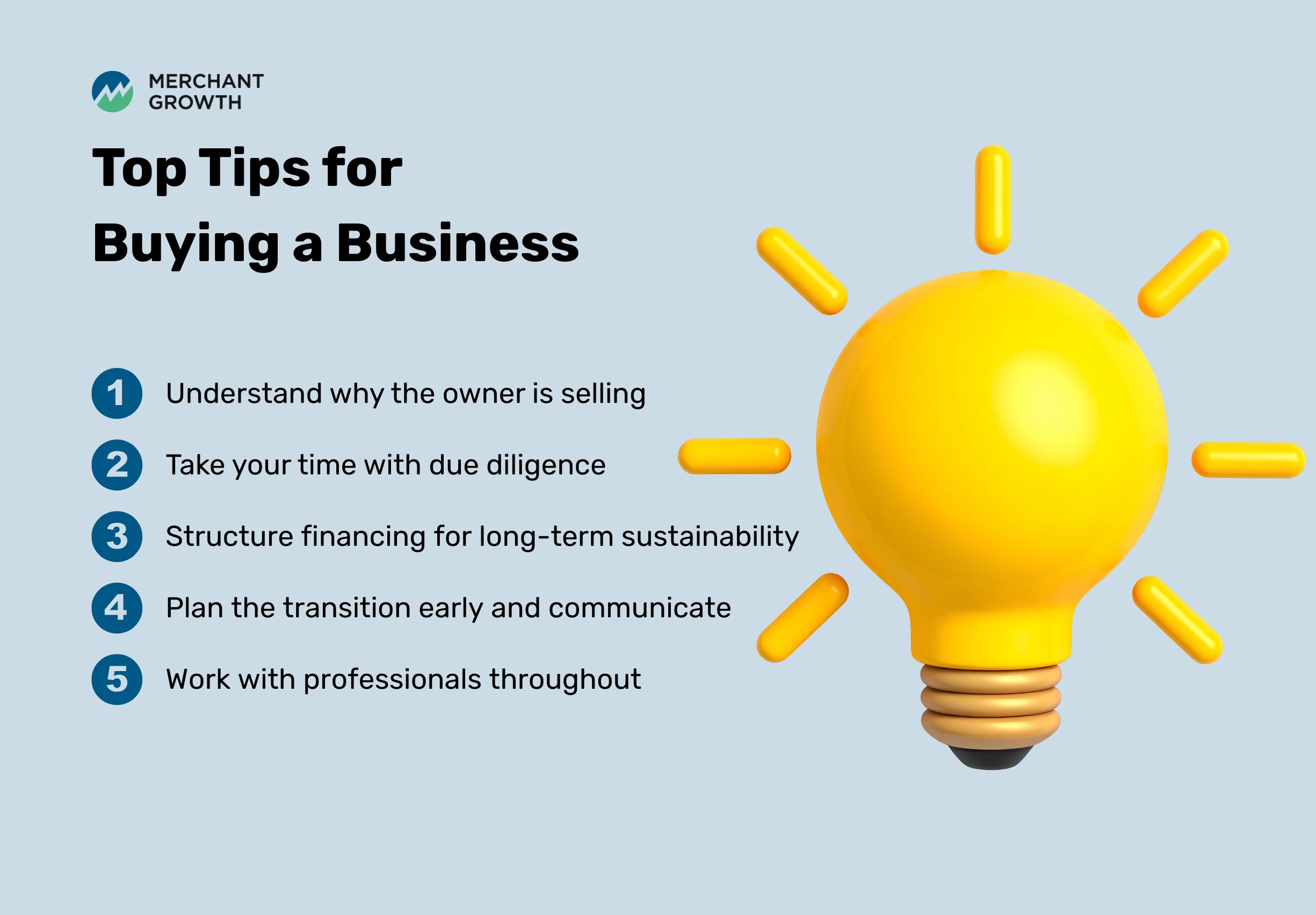
Tips for Buying a Business Successfully
Approaching the process with the right mindset can make a meaningful difference in the outcome. While every deal is unique, there are a few principles that consistently help guide successful acquisitions:
- Understand why the owner is selling and what it may indicate about the business
- Take your time with due diligence and avoid rushing key decisions
- Structure financing in a way that supports long-term sustainability
- Plan the transition early and communicate clearly with employees and customers
- Work with professionals such as accountants and lawyers to guide the process
Buying a business is both a financial and operational decision. Taking a thoughtful and disciplined approach helps reduce risk and creates a stronger foundation for success once you step into ownership.
How Merchant Growth Can Support Your Next Step
Buying a business is only one part of the journey. Successfully operating and growing it is what determines long-term success, and that often requires access to working capital after the transition.
Merchant Growth provides flexible funding solutions for Canadian businesses that have been in operation. While this means financing isn’t available at the initial purchase stage, it can become a valuable resource once the business is up and running under your ownership.
Whether you’re managing cash flow, investing in improvements, or supporting growth, having access to funding at the right time can help you move forward with greater confidence.