

Sustainability in Business: Why It Matters and How to Get Started
Businesses today are expected to do more than simply deliver quality products and services. Customers are paying closer attention to how companies operate, employees want to work for organizations that share their values, and investors increasingly view responsible business practices as a sign of long-term stability. At the same time, rising operating costs, supply chain disruptions, and growing environmental concerns are encouraging businesses of every size to think differently about how they grow.
Sustainability is no longer just a conversation happening in large corporations. According to the Canadian Survey on Business Conditions, 68.4% of Canadian businesses had at least one environmental or green practice in place during the third quarter of 2023. That growing adoption reflects a broader shift in how businesses view sustainability, not simply as an environmental initiative, but as a practical way to improve efficiency, strengthen resilience, and create long-term value.
The good news is that becoming a more sustainable business doesn't require a complete transformation overnight. Many small and medium-sized businesses are already making decisions that support sustainability without even realizing it. Whether it's reducing waste, investing in employees, sourcing products locally, or improving operational efficiency, small improvements can add up to meaningful long-term benefits.
In this guide, we'll explain what sustainability in business really means, why it has become an essential part of modern business strategy, and how organizations of every size can implement sustainable business practices. We'll also explore the three pillars of sustainability, the role of ESG, practical ways to improve your operations, and how investing in sustainability today can help build a stronger, more resilient business for the future.
Key Takeaways
- Sustainability in business balances profitability with environmental and social responsibility.
- Sustainable businesses often improve efficiency, reduce waste, and strengthen long-term resilience.
- The three pillars of sustainability are environmental, social, and economic responsibility.
- ESG provides a framework for measuring sustainability efforts.
- Sustainable business practices can strengthen customer trust, attract employees, and reduce operational risk.
- Small operational improvements can create meaningful long-term results.
- Sustainability is an ongoing business strategy, not a one-time initiative.
What Does Sustainability in Business Really Mean?
If you asked ten business owners to define sustainability, you'd probably receive ten different answers. Some might immediately think about reducing plastic waste or lowering carbon emissions, while others might associate it with corporate social responsibility or environmental regulations. Although those ideas all contribute to sustainability, none of them tells the whole story.
Sustainability in business is the practice of making decisions that support long-term success while balancing financial performance with environmental stewardship and social responsibility. Rather than focusing only on short-term profits, sustainable businesses consider how today's decisions will affect future growth, operational resilience, customer trust, and the communities they serve. In other words, sustainability is about creating a business that can continue to thrive without placing unnecessary strain on people, resources, or the environment.
It's also important to recognize that sustainability looks different for every business. A manufacturing company may focus on reducing energy consumption and sourcing recycled materials, while a consulting firm might prioritize flexible work arrangements, digital workflows, and employee wellbeing. The goal isn't for every organization to follow the same checklist. It's to make thoughtful decisions that create lasting value while minimizing negative impacts wherever possible.
Why Sustainability in Business Matters More Than Ever
Not long ago, sustainability was often viewed as a "nice-to-have" initiative or a marketing advantage for larger organizations. Today, it's increasingly becoming a business expectation. Customers, employees, investors, and business partners are paying closer attention to how companies operate, making sustainability an important consideration for businesses of every size.
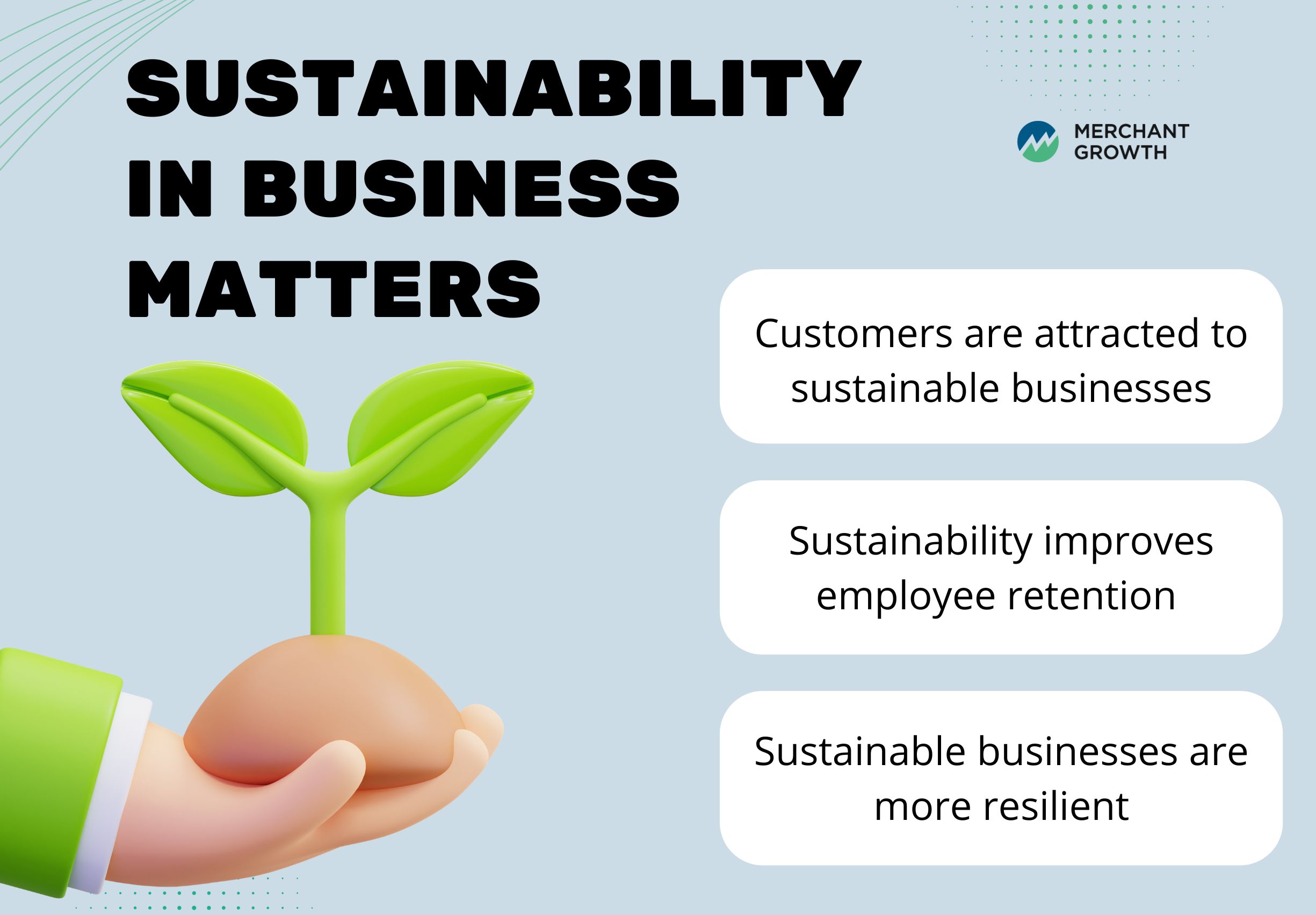
Consumers are attracted to sustainable businesses
Consumer expectations have evolved significantly over the past decade. People are increasingly interested in supporting businesses that demonstrate responsible practices, whether that's reducing waste, sourcing products ethically, supporting local communities, or treating employees fairly. In fact, 48% of Canadians surveyed by Canada Post reported they pay attention when businesses talk about investments in sustainable practices. While price and quality remain important purchasing factors, trust and shared values are becoming increasingly influential when customers decide where to spend their money.
Going green can help businesses retain and acquire employees
Sustainability also plays an important role in attracting and retaining talented employees. Deloitte found that 70% of young workers will stay longer in a role if they feel their values align with the environmental practices of the company. People want to feel proud of the organizations they work for, and businesses that prioritize employee wellbeing, inclusion, professional development, and ethical leadership often create stronger workplace cultures. Those investments not only improve recruitment and retention but also contribute to higher engagement and productivity over time.
Changes made today can change the future of the business
Beyond reputation, sustainability helps businesses become more resilient. Improving energy efficiency, reducing waste, diversifying suppliers, and strengthening operational processes can lower costs while reducing exposure to future risks. As markets, regulations, and customer expectations continue evolving, businesses that think strategically about sustainability are often better prepared to adapt than those focused solely on short-term results.
Perhaps most importantly, sustainability encourages businesses to think beyond immediate gains. Rather than asking, "How can we increase profits this quarter?" sustainable organizations also ask, "How can we build a business that continues creating value five, ten, or twenty years from now?" That shift in perspective often leads to stronger decision-making, greater resilience, and more sustainable long-term growth.
Is Your Business Already More Sustainable Than You Think?
When people hear the phrase sustainability in business, they often picture solar panels, electric vehicle fleets, or large-scale environmental initiatives. While those investments certainly contribute to sustainability, they're far from the only ways businesses can operate more responsibly. In fact, many organizations are already making meaningful progress without formally describing their efforts as sustainability initiatives.
Think about some of the everyday decisions your business already makes. Perhaps you've switched to digital invoicing to reduce paper waste, partnered with local suppliers to shorten transportation distances, invested in energy-efficient equipment, or introduced flexible work arrangements for your team. Individually, these changes may seem small, but together they contribute to a business that is more efficient, resilient, and responsible.
Many businesses are also improving sustainability simply by focusing on better operations. Preventative maintenance helps equipment last longer, reducing unnecessary replacements. Careful inventory management minimizes waste, while employee training creates safer workplaces and improves retention. These initiatives often lower costs while supporting broader sustainability goals, demonstrating that responsible business practices and strong financial performance frequently go hand in hand.
The biggest misconception about sustainability is that businesses need to make dramatic changes before they can call themselves "sustainable." In reality, sustainability isn't an all-or-nothing goal. It's an ongoing process of making thoughtful decisions that strengthen your business while reducing unnecessary environmental and social impacts over time.
Every business starts from a different place and faces different challenges. A manufacturer will naturally approach sustainability differently from a retail store or marketing agency, but each can identify practical improvements that fit their operations and long-term goals. Rather than trying to tackle everything at once, focus on building on the positive practices already in place. Small improvements implemented consistently over time often create a much greater impact than ambitious plans that never move beyond the planning stage.
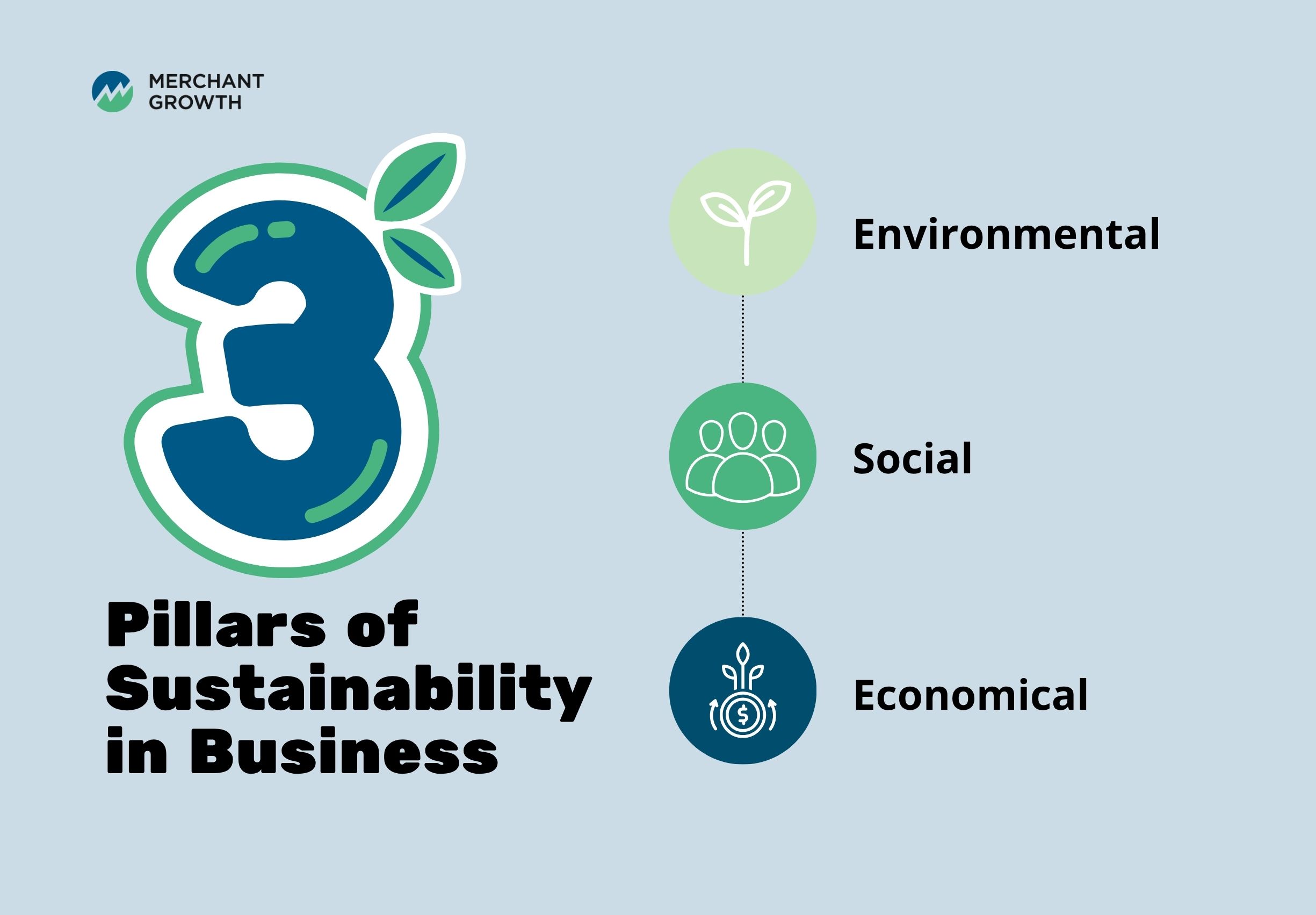
The Three Pillars That Make a Business Sustainable
If sustainability looks different for every business, how do you know where to focus your efforts? While there isn't a single roadmap that works for every organization, most successful sustainability strategies are built around the same three core pillars:
- Environmental sustainability
- Social sustainability
- Economic sustainability
Together, they provide a practical framework for making decisions that support long-term business success without sacrificing profitability, people, or the planet.
Rather than thinking of these pillars as separate initiatives, it's helpful to see them as different perspectives on the same goal. Every business decision can influence more than one pillar at the same time. Understanding how each pillar contributes to a healthier business makes it easier to identify practical improvements that align with your goals and resources.
Environmental Sustainability: Reducing Your Impact While Improving Efficiency
Environmental sustainability focuses on reducing the impact a business has on natural resources while finding more efficient ways to operate. Although this is often the aspect people associate most closely with sustainability, it isn't limited to large environmental initiatives or expensive technology investments.
Many businesses begin by identifying opportunities to reduce waste, lower energy consumption, conserve water, or improve resource management. Simple operational changes like switching to LED lighting, maintaining equipment regularly, digitizing paperwork, or reducing unnecessary packaging can lower operating costs while also reducing environmental impact.
Supply chain decisions also play an important role. Choosing local suppliers where possible, sourcing sustainable materials, and minimizing transportation requirements can improve both environmental performance and operational resilience. In many cases, these decisions help businesses become more efficient while strengthening relationships with customers who increasingly value responsible business practices.
Social Sustainability: Putting People at the Centre of Your Business
Successful businesses are built by people, which is why social sustainability focuses on creating positive outcomes for employees, customers, suppliers, and the communities a business serves. Organizations that invest in people often build stronger workplace cultures, improve customer loyalty, and create lasting relationships that support long-term success.
For employees, social sustainability may involve providing safe working conditions, opportunities for professional development, flexible work arrangements, or initiatives that support mental health and wellbeing. These investments can improve engagement, strengthen retention, and make it easier to attract talented employees in competitive labour markets.
Social sustainability also extends beyond your own team. Supporting local organizations, partnering with community groups, maintaining ethical labour practices throughout your supply chain, and delivering honest, transparent customer service all contribute to building trust. Businesses that consistently demonstrate integrity often strengthen their reputation while creating meaningful value beyond their products or services.
Economic Sustainability: Building a Business That Lasts
Without financial stability, it's difficult for any business to invest in sustainability over the long term. Economic sustainability focuses on building a company that remains profitable, resilient, and adaptable while continuing to create value for customers, employees, and stakeholders.
This includes maintaining healthy cash flow, managing expenses responsibly, planning for future growth, and making strategic investments that improve operational performance. Businesses with strong financial foundations are often better equipped to navigate economic uncertainty, respond to changing customer expectations, and invest in innovation when new opportunities arise.
Economic sustainability also encourages businesses to think beyond short-term profits. Decisions that strengthen customer relationships, improve operational efficiency, and reduce unnecessary risk may require investment today, but they often contribute to greater stability and stronger financial performance in the years ahead. Rather than chasing quick wins, sustainable businesses focus on creating long-term value that supports continued growth.
Sustainable Business Practices That Make a Real Difference
Understanding sustainability is one thing, but putting it into practice is where businesses begin to see real benefits. Sustainable business practices don't have to involve expensive technology or sweeping organizational change. Many of the best improvements begin with everyday operational decisions that reduce waste, improve efficiency, and create a better experience for employees and customers alike.
Rather than trying to implement dozens of initiatives at once, focus on the areas where your business can create the greatest impact. The best sustainability strategies are practical, realistic, and aligned with the way your business already operates. Over time, these smaller improvements become part of your company culture, helping your business grow stronger while creating positive environmental and social outcomes.
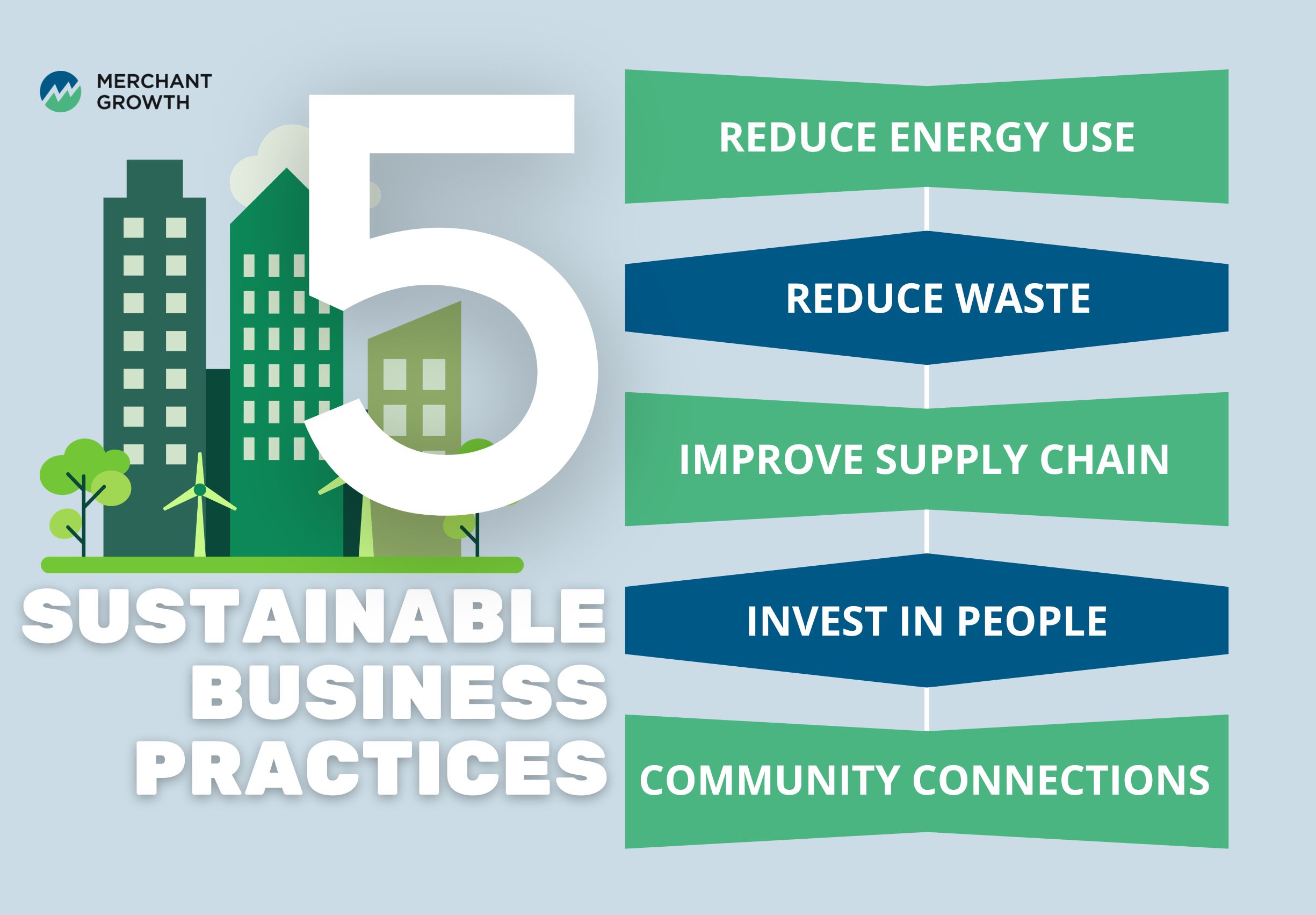
1. Reduce Energy Use Without Reducing Productivity
Energy efficiency is often one of the easiest places for businesses to begin. Lowering energy consumption doesn't just reduce environmental impact; it can also lower operating expenses and free up resources to invest elsewhere in the business.
Simple improvements such as switching to LED lighting, maintaining heating and cooling systems, upgrading aging equipment, installing programmable thermostats, or encouraging employees to power down unused devices can all make a noticeable difference. Businesses don't need to invest in major renewable energy projects to see results. Consistent operational improvements often deliver meaningful savings while reducing resource consumption.
2. Find Smarter Ways to Reduce Waste
Reducing waste goes beyond recycling bins. It starts by evaluating how materials, products, and resources move through your business and identifying opportunities to eliminate unnecessary waste before it's created.
For some businesses, that may mean replacing paper-based processes with digital workflows. Others may reduce packaging, improve inventory management to minimize expired stock, or introduce reusable materials into daily operations. These improvements often reduce purchasing costs while creating more efficient and sustainable operations.
3. Build a More Sustainable Supply Chain
A business's sustainability efforts don't stop at its front door. The suppliers you work with, the products you purchase, and the way materials move through your supply chain all influence your overall environmental and social impact.
Whenever practical, consider partnering with suppliers that prioritize responsible sourcing, ethical labour practices, or sustainable materials. Working with local suppliers where possible can also shorten transportation distances, improve supply chain reliability, and strengthen local economies. These decisions often benefit both your business and your customers by creating a more resilient and transparent supply chain.
4. Invest in Your People
Employees are one of the most valuable assets any business has, making investment in people an essential part of sustainability. Businesses that support their employees often experience stronger engagement, lower turnover, and healthier workplace cultures.
Supporting your team may include providing professional development opportunities, flexible work arrangements, competitive benefits, mental health resources, or creating a workplace where employees feel safe, respected, and included. Investing in people not only strengthens your business internally but also improves the experience customers receive through a more engaged and motivated workforce.
5. Strengthen Your Community Connections
Businesses don't operate in isolation. They rely on customers, suppliers, employees, and the communities around them to succeed. Building strong community relationships helps businesses establish trust while creating a positive impact beyond their products or services.
Supporting local charities, sponsoring community events, volunteering, purchasing from nearby businesses, or creating partnerships with local organizations are all meaningful ways to give back. These initiatives demonstrate that sustainability isn't only about environmental responsibility; it's also about strengthening the communities that help businesses grow.
What Does Sustainability Look Like in a Real Business?
One reason sustainability can feel overwhelming is because it's often discussed in broad, theoretical terms. In reality, sustainability looks different for every business depending on its industry, size, customers, and goals. The most effective sustainability strategy isn't about copying another organization—it's about identifying improvements that make sense for your own operations and the value you provide.
Take Construction LCE Inc., a Merchant Growth client, as an example. Founded in 2013, the construction company has built its reputation by delivering turnkey renovation and construction projects that are not only dynamic and high quality, but also environmentally conscious. Rather than treating sustainability as a separate initiative, Construction LCE incorporates responsible design and environmentally friendly practices into the work they deliver for their clients, demonstrating that sustainability can become part of a company's everyday operations and long-term vision.
Like many growing businesses, Construction LCE also faced a challenge when an opportunity to take on larger projects arose. Traditional lenders were hesitant to finance the business because of the construction industry, despite its strong track record. With financing from Merchant Growth, Construction LCE was able to secure the working capital needed to take on the project, grow its client base, and create a steady stream of future work. It's a reminder that sustainability isn't only about environmental initiatives; it's also about building a financially resilient business that has the resources to invest in responsible growth.
ESG vs. Sustainability: What's the Difference?
As businesses become more focused on sustainability, another term often enters the conversation: ESG. While the two are closely related, they aren't interchangeable. Understanding the distinction can help businesses decide which approach makes the most sense as their sustainability efforts continue to mature.
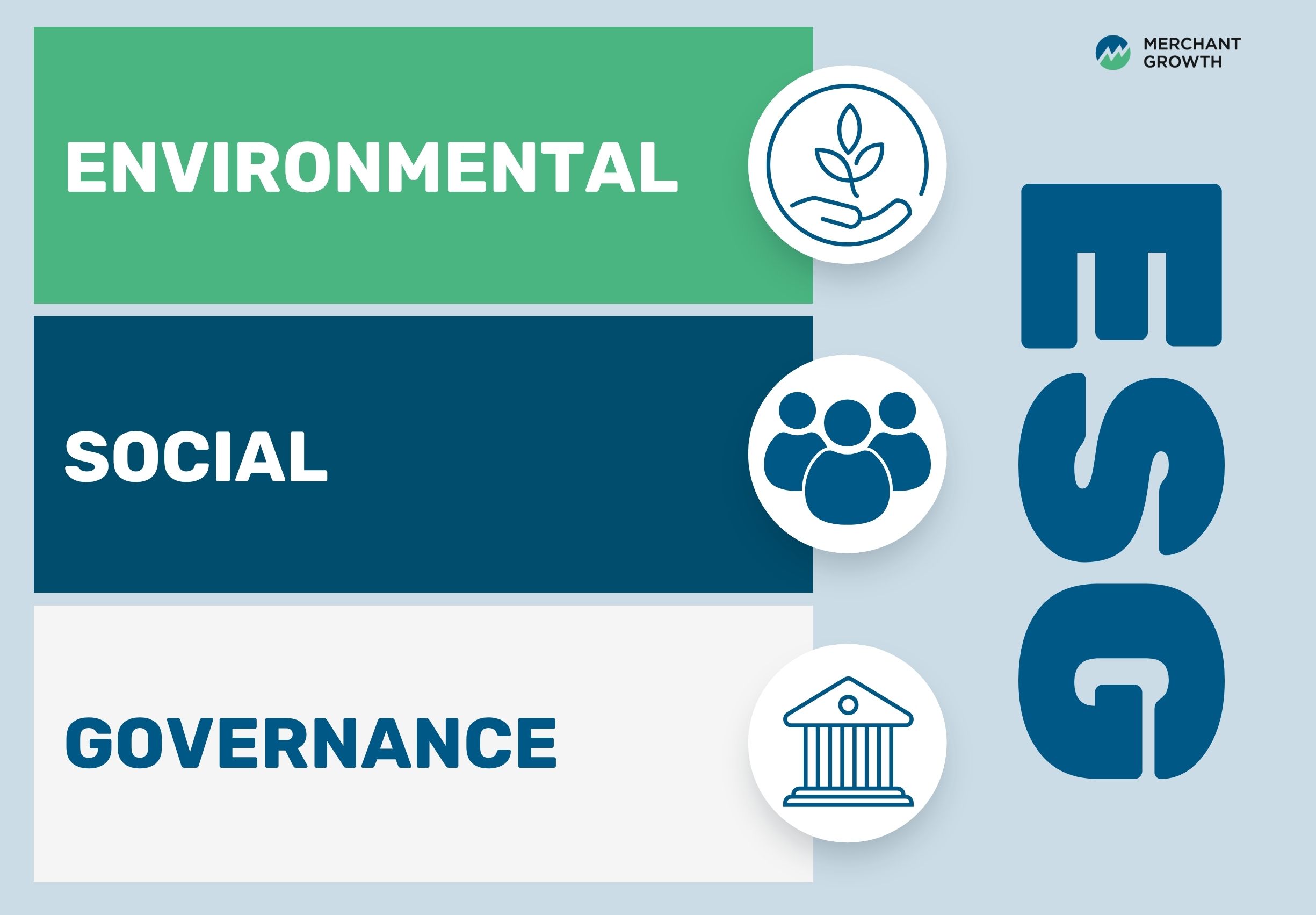
Sustainability is the overall strategy. It reflects a long-term commitment to balancing business performance with environmental responsibility and positive social impact. ESG, which stands for Environmental, Social, and Governance, is one of the frameworks organizations use to measure, evaluate, and communicate those efforts.
Think of it this way: sustainability is the destination, while ESG is one of the tools used to measure progress along the way. Larger organizations often use ESG reporting to provide transparency for investors, regulators, and other stakeholders. Many small businesses, however, naturally adopt sustainable business practices long before formal ESG reporting becomes necessary.
Do Small Businesses Need ESG?
For most small and medium-sized businesses, the answer is not necessarily. While ESG reporting is becoming increasingly important for larger corporations and publicly traded companies, many small businesses create significant value simply by embedding sustainability into their everyday operations.
That doesn't mean measurement isn't important. Tracking improvements such as energy consumption, waste reduction, employee retention, supplier performance, or community involvement can help businesses understand what's working and identify opportunities to improve. The key is to focus on meaningful metrics that support your business goals rather than creating reports simply for the sake of reporting.
As your business grows, your sustainability strategy will likely become more sophisticated as well. Starting with practical improvements today creates a strong foundation that can make future ESG reporting far more manageable if it becomes relevant to your business.
The Biggest Challenges of Building a Sustainable Business
Building a more sustainable business doesn't happen overnight, and it rarely follows a perfectly straight path. Every organization faces different operational realities, budgets, and priorities, which means sustainability often requires balancing long-term goals with the day-to-day demands of running a business.
Limited time and resources
For many small businesses, one of the biggest obstacles is finding the time and resources to implement new initiatives. When budgets are already tight, it can be difficult to prioritize improvements that may not deliver an immediate return.
Understanding the true impact
Measuring results can also feel challenging. Unlike financial performance, which is often tracked daily, sustainability improvements can take months or even years to fully materialize. Businesses may struggle to know which initiatives deserve their attention or how to determine whether their efforts are making a meaningful difference.
Navigating supply chain challenges
Supply chain limitations can create another hurdle. Even businesses that want to source more sustainable products or work with environmentally responsible suppliers may find that availability, pricing, or geographic location limits their options. Rather than striving for perfection, it's often more realistic to focus on making better decisions as opportunities arise.
The good news is that sustainability isn't about getting everything right from the beginning. Businesses that approach sustainability as a process of continuous improvement are often better positioned to make steady progress without overwhelming their teams or compromising day-to-day operations.
How Do You Measure Sustainability in Business?
Like any business objective, sustainability becomes more meaningful when progress can be measured. Tracking results helps businesses understand what's working, identify new opportunities for improvement, and demonstrate their commitment to employees, customers, and other stakeholders.
The metrics that matter most will vary depending on the type of business. For some organizations, reducing energy consumption or waste may be the priority. Others may focus on employee retention, workplace safety, supplier accountability, customer satisfaction, or community involvement. The goal isn't to measure everything; it's to identify a handful of meaningful indicators that align with your business objectives.
Some examples of sustainability metrics businesses may choose to monitor include:
- Energy and utility consumption
- Waste reduction and recycling rates
- Paper usage and digital adoption
- Employee engagement and retention
- Health and safety performance
- Supplier sustainability standards
- Community partnerships and volunteer initiatives
- Customer feedback and brand perception
As your business grows, your approach to measurement can evolve as well. What's most important is creating a consistent process that allows you to evaluate progress over time. Sustainability should become part of regular business planning rather than a separate initiative that's only reviewed occasionally.
How Merchant Growth Helps Businesses Invest in Sustainability
For many businesses, the desire to become more sustainable isn't the challenge; it's finding the resources to put those plans into action. Whether you're upgrading equipment, improving operational efficiency, modernizing technology, or strengthening your facilities, meaningful improvements often require investment before they begin generating returns.
That's where access to financing can make a real difference. Rather than delaying important improvements because of short-term cash flow constraints, businesses can move forward with projects that strengthen both their operations and their long-term resilience. Strategic investments made today can reduce costs, improve efficiency, enhance customer experiences, and create a stronger foundation for future growth.
Merchant Growth provides flexible financing solutions designed to help Canadian small businesses invest in opportunities that support sustainable growth. Whether you're purchasing more efficient equipment, adopting digital tools, renovating your workspace, expanding operations, or strengthening your supply chain, access to capital can help turn long-term plans into practical action.
Sustainability isn't about becoming the perfect business overnight. It's about making thoughtful decisions that strengthen your business year after year while creating positive outcomes for your employees, customers, community, and the environment. Merchant Growth is proud to support Canadian entrepreneurs as they invest in the future of their businesses with confidence.