

10 Best Payment Processors for Small Businesses in Canada
From cafés to contractors, every small business depends on smooth payments. But with so many options and fee structures, finding the right system can be a challenge. The good news is that choosing the right payment processor can simplify your operations, protect your profits, and give customers the fast, secure checkout they expect.
Whether you’re a retailer, restaurant owner, or e-commerce seller, the right system helps you collect payments quickly, reduce errors, and prevent fraud while offering a seamless experience that keeps customers coming back. In today’s competitive market, payment processing isn’t just about transactions; it’s about building trust and ensuring healthy cash flow.
It’s no surprise that Canadian business owners see payment innovation as a key to success. In fact, twenty-four percent of businesses in Canada say it’s extremely important to support their company’s health and growth.
Key Takeaways
- Payment processing is the backbone of smooth, secure transactions for any small business.
- Understanding how payments move — from authorization to payout — helps owners manage costs and avoid delays.
- Comparing processors by fees, features, and security ensures you pick the best fit for your operations.
- The right system can streamline checkout, improve cash flow, and enhance customer trust.
- Canada offers a range of trusted options — from Square and Shopify to Moneris and Helcim.
Why Payment Processing Matters for Small Businesses
That focus on innovation starts with how you handle payments. Beyond simply processing a transaction, an effective system keeps your operations organized and your customers confident that their money is in good hands. A dependable setup ensures funds move smoothly, records stay accurate, and cash flow remains steady.
The scale of digital payments in Canada shows just how vital these systems have become. In 2022, a total of 20.5 billion transactions valued at $11.7 trillion were conducted, reflecting how deeply electronic payments are woven into the country’s business landscape.
For small business owners, every delay or error in getting paid can create ripple effects across daily operations. A reliable payment process helps you manage inventory, pay suppliers on time, and plan confidently for future growth.
It also shapes how customers perceive your business. People expect simple, secure, and flexible ways to pay whether they’re shopping online, in person, or on their phones. Meeting those expectations reinforces trust and leaves a lasting impression.
In essence, effective payment processing supports every part of your business, from back-office efficiency to front-end customer experience.
What Is Payment Processing and Why It’s Essential
As digital payments become the norm, understanding how money moves from your customer to your business has never been more important. In 2022, 40% of Canadians increased their use of digital payment methods, showing just how quickly habits are changing and how vital modern payment systems have become.
Payment processing is the system that makes these transactions possible. It’s the technology that enables your business to accept and settle electronic payments, including credit cards, debit cards, and digital wallets. Every time a customer pays, a network of services works together behind the scenes to transfer funds securely and accurately.
Here’s a quick look at the key players involved:
- Merchant: Your business, which accepts the payment for goods or services.
- Payment Processor: The service that routes transaction information between your customer’s bank and your own.
- Payment Gateway: The secure software that encrypts and transmits payment data for authorization.
- Issuing Bank: The customer’s bank, which provides their credit or debit card and approves the payment.
- Acquiring Bank: Your financial institution, which receives the funds on your behalf.
Together, these players form the backbone of every digital transaction. Understanding their roles helps small business owners make better decisions about which systems to use and how to keep payments running smoothly.
Step-by-Step: How Payment Processing Works
Now that you know who is involved in a transaction, let’s look at what actually happens when a customer makes a payment. Each sale triggers a quick series of steps that work together to move money safely and efficiently from your customer’s account to yours.
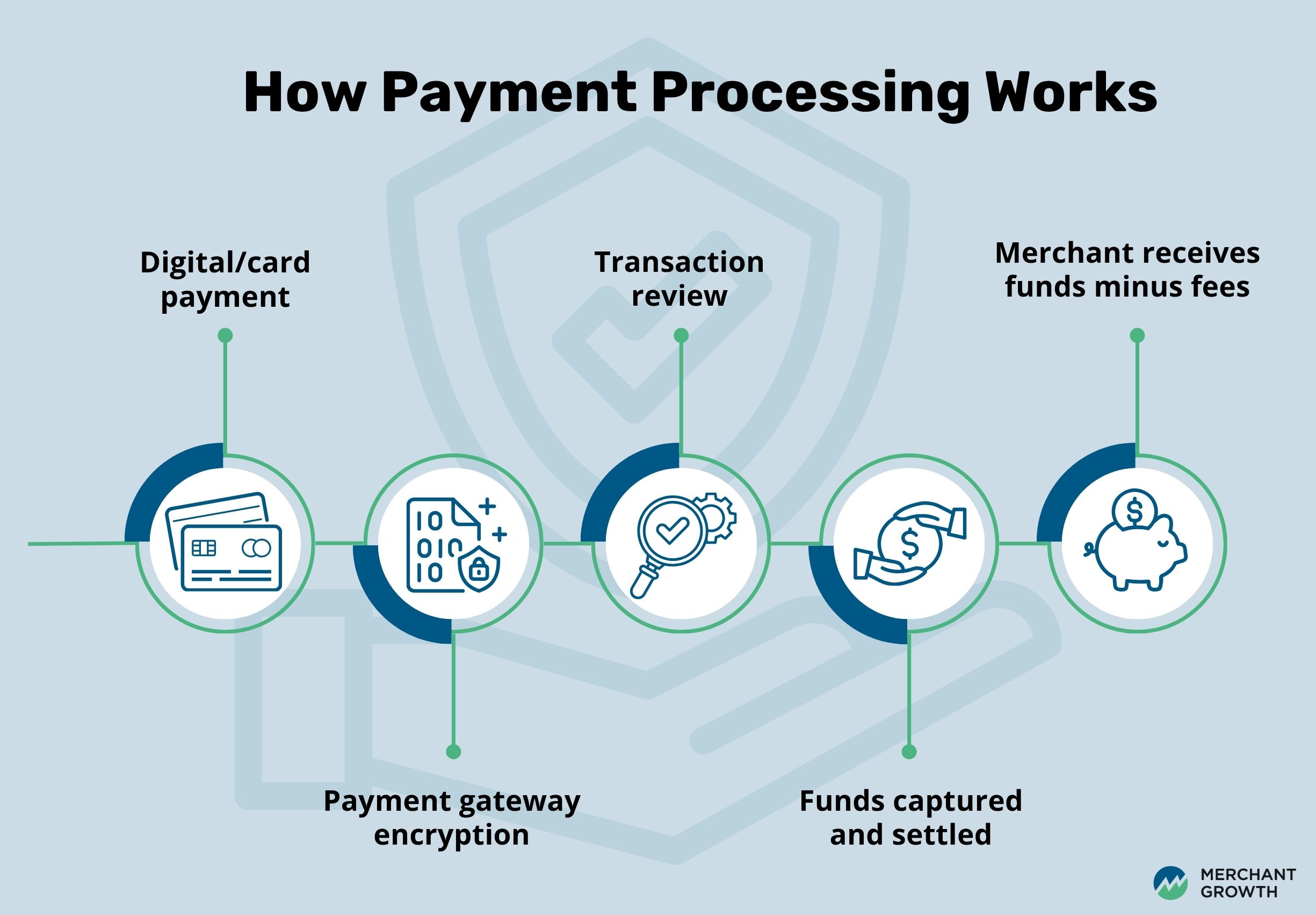
- Customer pays using a credit card, debit card, or digital wallet.
- The payment gateway encrypts the information and sends it for authorization.
- The bank or card network reviews the transaction and either approves or declines it.
- Once approved, the funds are captured and settled into the merchant’s account.
- The business receives payment, minus transaction fees and processing costs.
These steps happen in just a few seconds, but having a dependable payment processor ensures everything runs smoothly from start to finish. Knowing how the process works also makes it easier to decide which type of payment system best fits your business needs.
The Different Types of Payment Processing Systems
Now that we’ve walked through how payment processing works, it’s time to look at the different systems that make it happen. The right setup depends on where and how you sell, the kind of experience you want to offer customers, and the tools you already use to manage your business. From in-store point-of-sale systems to online gateways and mobile apps, there’s a solution for every business model.
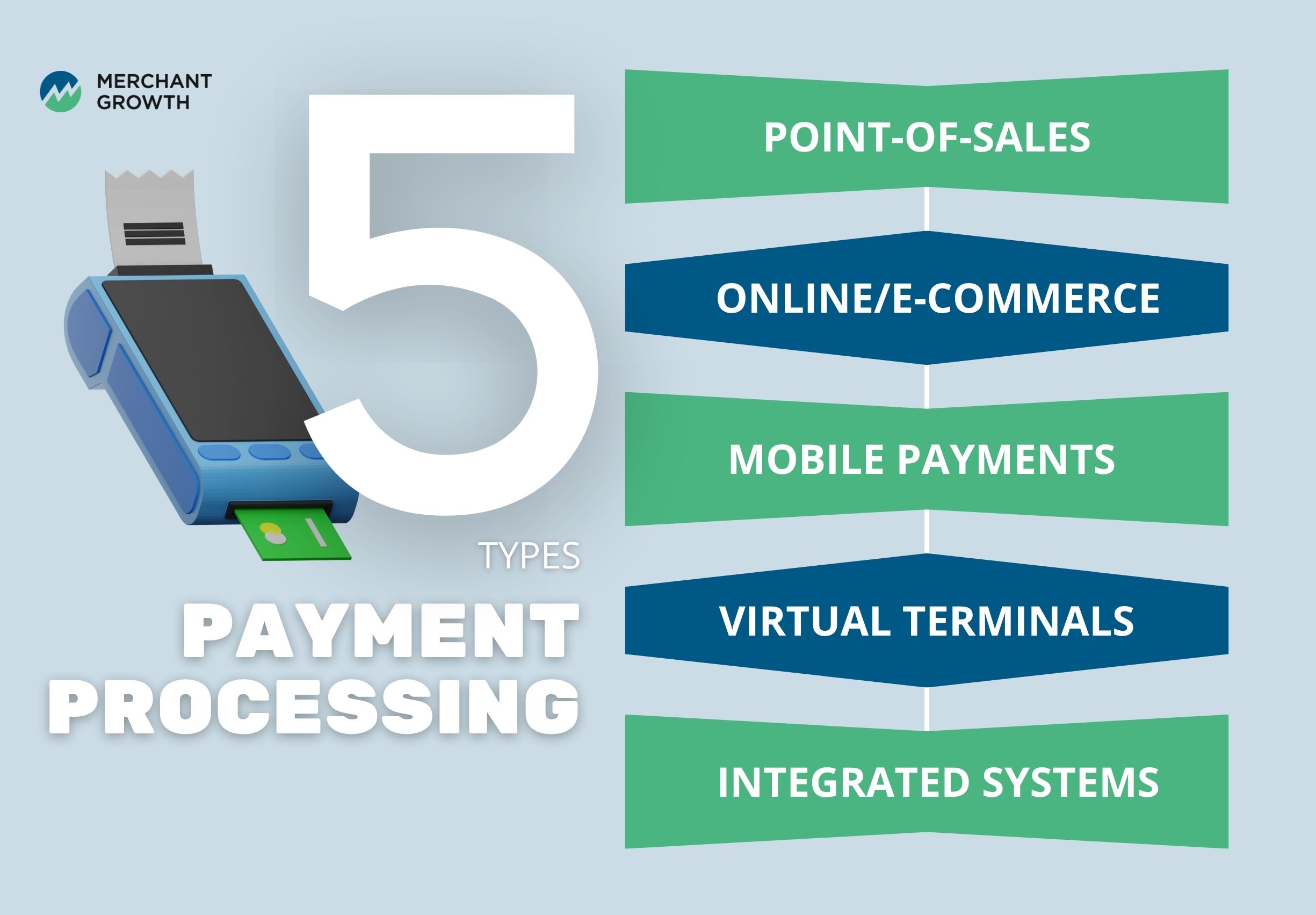
1. Point-of-Sale (POS) Systems
POS systems are the backbone of in-person transactions. Commonly used in retail stores, cafés, and restaurants, they combine hardware such as card readers and terminals with software that tracks sales, manages inventory, and produces detailed reports. Modern POS systems often integrate with accounting tools and loyalty programs, helping you manage more than just payments. For small business owners, the benefit is having everything in one place, from daily sales to end-of-day reconciliation, without extra manual work.
2. Online and E-Commerce Payment Gateways
For businesses that sell online, payment gateways make digital transactions possible. These systems securely process payments made through your website or app, handling everything from encryption to approval. As online shopping continues to grow, so does consumer comfort with digital transactions. In 2022, 88% of Canadians said they were likely to use a digital payment method in the next year, showing just how critical these systems have become for reaching modern customers. Popular examples include Shopify Payments, Stripe, and PayPal, each offering tools that integrate checkout, subscriptions, and fraud prevention. For e-commerce sellers, choosing a reliable gateway means faster payments, fewer abandoned carts, and stronger customer trust.
3. Mobile Payments
Mobile payments give small businesses the flexibility to accept payments anywhere, whether it’s at a market, a client’s home, or on the job site. Using a smartphone or tablet, you can take payments through tap, chip, or QR code, perfect for service providers, delivery businesses, or mobile vendors. For small businesses, mobile processing is an affordable way to expand where and how you sell while offering customers the convenience they expect.
4. Virtual Terminals
Virtual terminals are ideal for businesses that take payments over the phone or by email. Instead of using a physical card reader, you enter payment details manually into a secure online form. These systems are common among professional service providers, repair companies, or B2B businesses that invoice clients. While virtual terminals may not suit high-volume retail, they provide a simple, secure way to handle remote payments without needing a full e-commerce platform.
5. Integrated Systems
Integrated payment systems bring all your channels together. They connect your in-store POS, online sales, and mobile transactions into a single dashboard so you can track everything in one place. This type of system is especially useful for hybrid or omnichannel businesses that sell both online and offline. By syncing sales, inventory, and reporting automatically, integrated solutions save time, reduce errors, and provide a clear picture of your overall business performance.
Each payment system offers unique advantages, and the best choice depends on your business model, sales channels, and customer preferences. Whether you’re setting up a new online store or upgrading your in-person checkout, understanding these options helps you find a system that fits how you work.

Understanding Payment Processing Fees
For small business owners, every percentage point matters. The fees charged by payment processors may seem small at first glance, but over hundreds or thousands of transactions, those costs can quickly add up. Understanding where each fee comes from helps you compare providers more effectively and avoid surprises on your monthly statements.
Most processors use a combination of different charges, depending on the types of cards you accept, your sales volume, and whether payments happen online or in person. Here’s a closer look at the most common ones.
Interchange Fees
Interchange fees are set by major card networks such as Visa and Mastercard. They’re paid to the cardholder’s bank each time a customer makes a purchase with a credit or debit card. These fees usually represent the largest portion of your overall processing costs and can vary depending on the type of card and how the transaction is made (tap, chip, or online).
Transaction Fees
Transaction fees are the small costs applied to each individual sale. They typically combine a flat amount per transaction, often between 10 and 30 cents, with a percentage of the total sale, such as 2.6 percent. While that might not sound like much, it can add up fast, so it’s important to calculate how these fees will affect your margins over time.
Monthly Fees
Some providers charge a monthly fee for account maintenance or access to advanced features. These might cover customer support, reporting tools, or integrations with accounting software. For smaller businesses with lower transaction volumes, it’s worth comparing whether a provider without monthly fees might be more cost-effective.
Hardware Costs
If you accept in-person payments, you may need equipment such as terminals, card readers, or POS systems. Some providers offer these at a one-time purchase price, while others include them as part of a monthly rental or lease. It’s worth comparing the long-term costs of each option before you commit.
Chargeback Fees
A chargeback occurs when a customer disputes a transaction, and the funds are returned to them while the issue is investigated. Processors typically charge a fee for handling these disputes, which can add up if they happen frequently. Clear refund policies, accurate records, and strong fraud protection can help reduce this risk.
PCI Compliance Fees
Payment Card Industry (PCI) compliance ensures your business meets security standards for handling sensitive customer data. Some processors include compliance in their pricing, while others charge a separate fee to help you maintain it. Even if it’s an extra cost, staying compliant protects your business from much larger losses due to fraud or data breaches.
Tip: Always read the fine print. Some providers bundle fees, while others charge separately for add-ons like currency conversion or cross-border transactions. Comparing total cost of ownership is key.

How to Choose the Right Payment Processor
With so many payment processors available, choosing the right one can feel overwhelming. The best option for your business depends on your budget, your sales channels, and how much support or flexibility you need. Once you understand the different fees involved, it’s time to look at the bigger picture and how well each provider fits into your daily operations and long-term goals.
Here’s a simple framework to guide your decision.

Costs
Start by looking closely at all the fees, not just the advertised rate. Review transaction fees, setup costs, monthly charges, and any additional expenses for features like hardware or international payments. Even small differences in rates can add up quickly, so it’s worth calculating your potential monthly total based on your average transaction volume.
Integration
Your payment system should work seamlessly with the tools you already use, such as your POS system, e-commerce platform, or accounting software. Integration saves time, reduces manual data entry, and helps you track sales and revenue more accurately. The more connected your systems are, the easier it is to manage everything from one place.
Security
Security should always be a top priority. Look for processors that are PCI compliant and use strong encryption and fraud detection tools. Protecting your customers’ payment data builds trust and helps safeguard your business from chargebacks and potential breaches.
Customer Experience
A smooth checkout process can make all the difference. Choose a payment system that offers fast, flexible options whether customers are paying in person, online, or through mobile devices. The easier it is for customers to complete their purchase, the more likely they are to come back.
Support
Good customer service can save you time and frustration when things go wrong. Look for providers with reliable, around-the-clock support and clear communication channels. Quick help when you need it most can make all the difference in keeping your business running smoothly.
Pro Tip: Before committing to a contract, try testing the system with a trial or demo account. This gives you a feel for how the platform works and whether it meets your business needs before you make a long-term decision.
The Top 10 Payment Processors for Small Businesses in Canada

Deep Dive: Which Processor Is Right for You?
Choosing a payment processor isn’t one-size-fits-all; it’s about finding the right match for how your business runs. The best option depends on where and how you sell, the size of your business, and the kind of experience you want to offer your customers. Here’s what you should know about the leading choices available to Canadian small businesses.
Square
Square is one of the most popular choices for small businesses because it’s easy to set up and even easier to use. It’s especially well-suited for mobile sellers, pop-up shops, and cafés that need quick, reliable transactions without complex contracts. The company offers transparent pricing, free POS software, and affordable hardware like card readers that connect to your phone or tablet. Square also includes simple analytics and inventory tools, making it an all-in-one option for entrepreneurs who want to start accepting payments right away.
Although Square’s POS software is free to use, it is important to consider the transaction fees associated with each type of payment. As of 2025, Square’s pricing structure is as follows:
Processing Fees for In-Person Transactions
- Credit cards: 2.5% per transaction
- Debit cards: 0.75% plus 7 cents per transaction
Processing Fees for Online Transactions
- Between 2.8% plus 30 cents and 3.3% plus 15 cents per transaction, depending on the payment method
Processing Fees for Remote Transactions
- 3.3% plus 15 cents per transaction
Businesses processing more than $250,000 in annual credit card sales may be eligible for custom pricing. Square also offers advanced features such as detailed reporting, marketing tools, and management integrations, available for an additional monthly fee.
Shopify Payments
If you sell online through Shopify, Shopify Payments is a natural fit. It integrates directly into your store’s checkout, allowing customers to pay seamlessly without leaving your site. This integration also helps lower transaction costs compared to using third-party gateways. For Canadian e-commerce businesses, Shopify’s strong analytics, reporting features, and bilingual support make it an excellent choice for managing both online and in-person sales.
For businesses using Shopify Payments on the Basic plan, processing fees remain competitive and easy to understand. As of 2025, Shopify charges 2.6% per transaction for in-person sales, 2.8% plus 30¢ CAD for online transactions, and a 2% fee when using third-party payment providers. These transparent rates make it simple for small business owners to estimate costs and choose the payment setup that best fits their operations.
Stripe
Stripe is a favourite among online-first businesses and tech-savvy entrepreneurs. Known for its flexibility, it offers a wide range of developer tools and APIs that allow you to customize your checkout experience. Stripe supports recurring billing, subscriptions, and global payments in multiple currencies, making it ideal for digital products, SaaS companies, and international e-commerce stores. While setup may be more technical, the platform’s scalability and automation features make it worth the effort for growing online businesses.
Stripe’s pricing is straightforward and designed to suit a wide range of small businesses. For domestic cards, the standard rate is 2.9% plus 30¢ CAD per successful transaction. Manually entered card payments include an additional 0.5% fee, while international cards incur an extra 0.8% charge. If a currency conversion is required, Stripe applies an additional 2% fee. Businesses with high volumes or unique processing needs can also access custom pricing to better align with their transaction mix and sales model.
PayPal
PayPal remains one of the most trusted names in online payments. It’s simple to set up and easy for customers to use, which helps boost checkout conversions. Many freelancers, service providers, and small online shops prefer PayPal because it doesn’t require a full e-commerce setup. While its transaction fees can be slightly higher than competitors’, the brand recognition and built-in buyer protection add value that many customers appreciate.
As of 2025, PayPal’s domestic transaction fees vary depending on how customers choose to pay. For standard commercial transactions, the rate is 2.9% plus a fixed fee. Payments made using PayPal Pay Later options are charged 4.9% plus a fixed fee. For QR code transactions, the rate is 1.9% plus a fixed fee for payments of $10.01 CAD or more, and 2.4% plus a fixed fee for payments of $10.00 CAD or less. These options give small business owners flexibility in how they accept payments while maintaining transparency around processing costs.
Moneris
Moneris is one of Canada’s largest payment processors, jointly owned by RBC and BMO. It offers dependable service and a wide range of hardware options for in-person payments, including terminals and POS systems. Moneris is a great choice for established brick-and-mortar businesses that value local support and the credibility of a bank-backed provider. However, it often requires a term contract and may have higher fees than more flexible options.
Moneris provides flat rate pricing options designed to keep transaction costs simple and predictable for fast-growing startups and small Canadian businesses. For in-person payments via a POS terminal or card reader, Moneris offers a rate of 2.65% plus $0.10 per successful credit-card transaction, and $0.10 for successful Interac® debit payments. For online or card-not-present transactions (such as payments made via a website or phone), the rate sits at 2.85% plus $0.30 per credit-card transaction, with Interac debit set at $1.00 per transaction.
Helcim
Helcim is a proudly Canadian company known for its transparent, interchange-plus pricing and excellent customer service. It’s an especially strong choice for cost-conscious businesses that want clear, predictable rates. Helcim supports both online and in-person payments, with built-in invoicing, recurring billing, and reporting tools. It’s a trusted option for small and midsize businesses that want fair pricing without hidden fees.
Helcim takes a unique and transparent approach to payment processing by adjusting fees based on the amount of credit card sales a business processes each month. This tiered pricing model rewards growth by lowering rates as transaction volumes increase. For in-person payments, rates start at interchange plus 0.40 percent and 8 cents per transaction for businesses processing up to $50,000 per month. As sales grow, fees gradually decrease to 0.35 percent plus 7 cents $50,000 and $100,000, 0.25 percent plus 7 cents for amounts between $100,000 and $500,000, 0.20 percent plus 6 cents for amounts between $500,000 and $1 million, and 0.15 percent plus 6 cents for businesses processing over $1 million monthly. This structure makes Helcim especially attractive for small businesses that expect to scale, since costs naturally become more competitive as sales increase.
Clover
Clover stands out for its sleek POS hardware and robust management features. It’s ideal for restaurants, cafés, and retail stores that need an all-in-one system for processing payments, tracking sales, and managing staff. Clover’s terminals come with user-friendly software that syncs easily with accounting and inventory systems, helping streamline day-to-day operations.
Clover offers straightforward pricing for its basic payment package, making it easy for small business owners to estimate costs. For in-person transactions where a card is tapped, swiped, or inserted, the rate is 2.5 percent plus 10 cents per transaction. For payments where card details are manually entered, the fee increases to 3.5 percent plus 10 cents per transaction. This simple structure allows businesses to manage costs effectively while taking advantage of Clover’s intuitive hardware and built-in business management tools.
Scotiabank’s Chase Payment Solutions
Scotiabank’s Merchant Services program, powered by Chase Payment Solutions, offers Canadian businesses a seamless, full-service solution for accepting payments in-store, online, or on the go. With this partnership, businesses get access to Scotiabank’s trusted banking services combined with Chase’s payment-processing infrastructure. The service supports next-business-day deposits into a Scotiabank account, advanced reporting through the Chase Commerce Centre, and 24-hour bilingual support. This makes it an excellent choice for businesses looking for a reliable, integrated banking and merchant services solution in Canada.
When it comes to pricing, Chase Payment Solutions offers transparent and competitive rates for Canadian merchants. The terminal fee is $34.95 per month for each terminal with a charging base. For credit card transactions, businesses pay 2.45 percent per transaction on contactless, swiped, or card-inserted payments, and 2.75 percent per transaction for manually keyed-in transactions. Interac Debit card fees are set at 8 cents per sale transaction and 11.5 cents per contactless transaction. These straightforward rates make it easier for small business owners to anticipate costs while benefiting from fast deposits, reliable hardware, and the backing of two trusted financial institutions, Scotiabank and Chase.
Lightspeed
Founded in Canada, Lightspeed is a strong option for retail and hospitality businesses that want a fully integrated system. It combines POS functionality with inventory management, staff scheduling, and customer insights. Because it’s cloud-based, you can access your data anytime and from anywhere, which is particularly helpful for multi-location operations. Lightspeed’s local roots and strong customer support make it a reliable choice for Canadian businesses.
Lightspeed Payments offers a competitive rate for card-present transactions at 2.6 percent plus 10 cents per transaction on its basic plan. While its pricing information can be a little harder to locate compared to other providers, Lightspeed remains a popular choice for businesses that want advanced POS functionality. The platform’s monthly software costs are on the higher end, but the system’s powerful tools for inventory tracking, reporting, and employee management make it a strong option for retailers and restaurants looking for an all-in-one solution that integrates payments with everyday operations.
Global Payments
Global Payments specializes in supporting larger or high-volume businesses that operate internationally. It provides multi-currency processing and advanced reporting tools, helping businesses manage cross-border transactions with ease. While it’s typically used by bigger companies, some small businesses choose Global Payments for its reliability and wide range of services.
Each processor has its own strengths, and the right one will depend on your sales model, budget, and customer needs. Whether you value transparency, flexibility, or advanced integrations, understanding your options helps you choose with confidence.
Overcoming Common Payment Processing Challenges
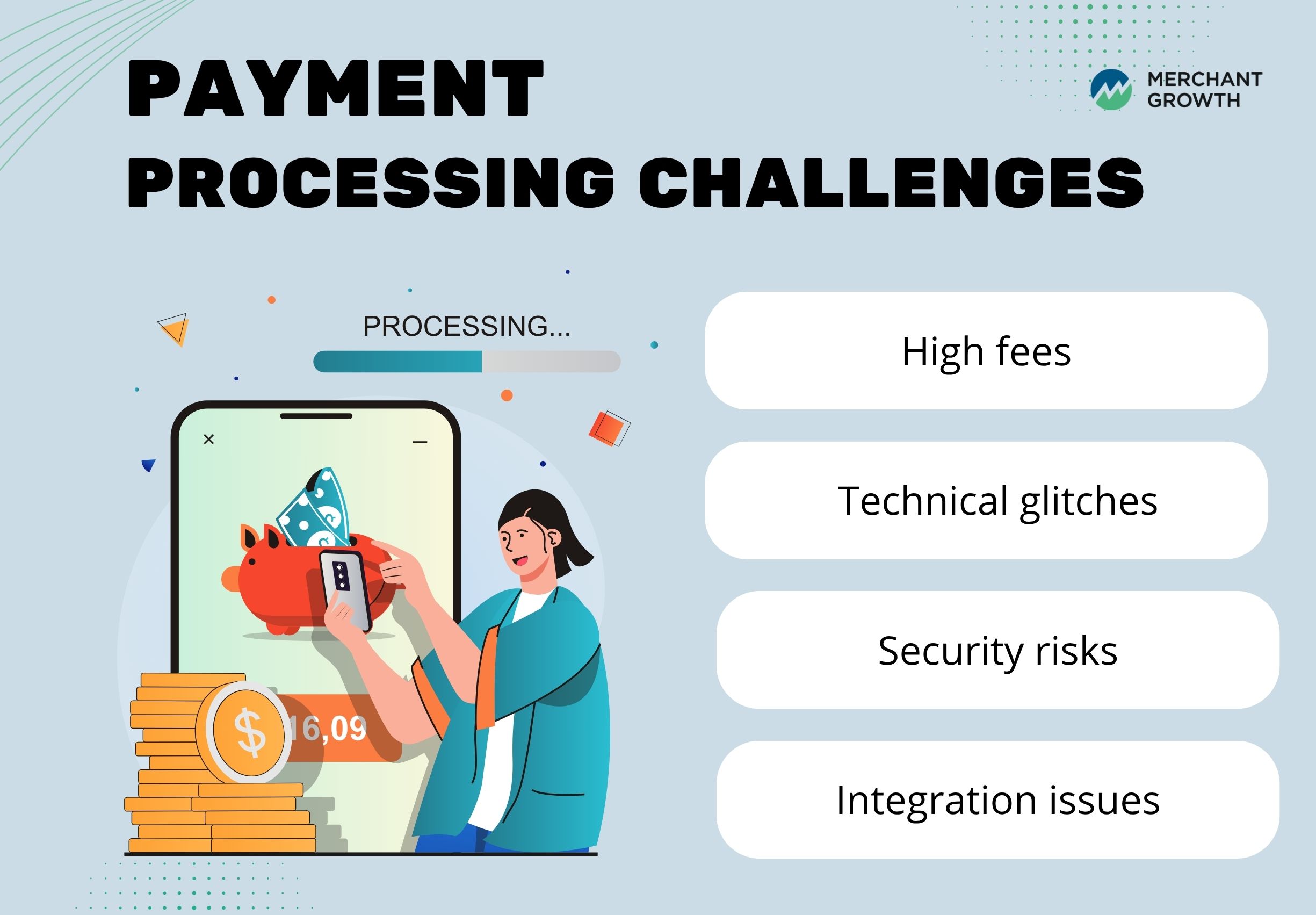
Even with the right payment system in place, small businesses often run into a few common roadblocks. From unexpected fees to technical hiccups, these challenges can slow down operations and affect cash flow. The good news is that most issues can be solved or even prevented with a bit of planning and the right partner.
High Fees
Processing costs are one of the biggest frustrations for small business owners. Fees can vary widely between providers, so it pays to compare your options carefully. Look at the full picture, including interchange, transaction, and monthly fees. Do not hesitate to negotiate, especially if your business has a steady sales volume. Many providers are willing to offer lower rates to keep a reliable client.
A smart strategy is to look for interchange plus pricing, which breaks down exactly what portion of each fee goes to the card network versus the processor. This model is often more transparent and can help you save money over time.
Technical Glitches
Few things are more stressful than a system outage when customers are ready to pay. Choose a processor known for reliable uptime and responsive customer support. It is also wise to have a backup payment option, such as a mobile reader or virtual terminal, so you can continue serving customers even if your main system experiences an issue.
Regularly updating your software and hardware can also help prevent technical problems before they start.
Security Risks
Protecting customer data is critical. A single security breach can damage trust and cost a business thousands of dollars. Always use processors that are PCI compliant and offer tools for encryption, tokenization, and fraud detection. Encourage your staff to follow best practices for handling card data, such as never writing down customer information or storing it unencrypted.
Staying vigilant and compliant not only protects your customers but also builds confidence in your brand.
Integration Issues
Many small businesses use several different systems for accounting, inventory, and sales. When these tools do not communicate with each other, it can lead to extra manual work and errors. Choosing a processor that integrates with your existing POS or e-commerce platform makes life much easier.
If you are expanding your business, look for payment systems that scale with you and can add new integrations as your operations grow. Seamless connections between your tools save time and keep your financial data accurate.

FAQs About Payment Processing
What’s the difference between a payment gateway and a processor?
A gateway securely transmits card data; the processor actually handles the transaction and funds transfer.
How long does it take to receive funds after a sale?
Usually within 1–3 business days, depending on your provider and bank.
Are there hidden fees I should watch for?
Yes, look for PCI, batch, or early termination fees in contracts.
What’s PCI compliance, and why does it matter?
It’s a security standard protecting customer payment data — essential for preventing fraud.
Can I use more than one payment processor?
Yes. Many businesses use different systems for in-person and online sales.
How Merchant Growth Supports Canadian Businesses
Choosing the right payment processor is just one piece of building a successful business. The next step? Making sure you have the capital to grow.
Merchant Growth helps Canadian small businesses fund essential upgrades, from new POS systems to expanded inventory and marketing. Whether you’re opening a second location or modernizing your checkout, Merchant Growth can help finance the next stage of your success.
Talk to Merchant Growth today to learn how easy, flexible financing can keep your business and your payments running smoothly.
Accounting Tips for Small Businesses: A Complete Guide to Smarter Bookkeeping in Canada
Every successful small business is built on strong financial foundations. Whether you run a cozy café, a busy online store, or a growing service company, keeping your books in order is one of the best ways to understand your business and plan for the future.
For many entrepreneurs, bookkeeping can seem complicated or time-consuming, especially when you are also managing sales, marketing, and customers. The truth is, with the right habits and tools, accounting becomes much more manageable. It can even give you a sense of control and clarity that makes running your business less stressful and more rewarding.
According to the Canadian Federation of Independent Business, over a third of small business owners spend 32 business days a year stuck up in financial red tape. With a clear system and a little consistency, much of that time can be reclaimed and invested where it matters most: growing your business.
Key Takeaways
- Simple, consistent accounting habits help small businesses stay profitable and tax-ready.
- Choosing the right bookkeeping system saves time and reduces costly errors.
- Tracking deductible expenses ensures compliance and maximizes returns.
- Modern accounting tools automate reporting and make CRA filing easier.
- Even basic accounting knowledge empowers small business owners to make smarter financial decisions.

Should You Do Your Own Accounting?
Once your business is up and running, one of the first big questions is whether to manage your accounting yourself or hire a professional. The answer depends on how comfortable you are with finances and how much time you can realistically spare.
If your business is small and your transactions are straightforward, doing your own accounting can work well. It helps you stay closely connected to your numbers, understand how money moves through your business, and make more informed decisions. Managing your own books also gives you a clear picture of your cash flow, which is essential for planning and growth.
However, as your business expands, your financial responsibilities become more complex. Payroll, GST or HST filings, and detailed reporting take time and precision. At this stage, bringing in a professional accountant can save hours, reduce errors, and ensure compliance with CRA requirements. It is often an investment that pays off by giving you peace of mind and freeing you to focus on running your business.
Many small business owners find a comfortable balance by handling their day-to-day bookkeeping while relying on an accountant for reviews or year-end reporting. This approach keeps you informed and in control without adding unnecessary stress.

The Real Cost of Ignoring Small Business Accounting
When bookkeeping slips through the cracks, problems can grow quietly in the background. Without accurate records, it is difficult to see where your money is going or whether your business is actually turning a profit. Poor accounting can lead to missed deductions, delayed payments, and unnecessary CRA penalties.
Consider a small boutique that moved from tracking expenses on paper to using a simple cloud-based system. Within months, they discovered hundreds of dollars in forgotten deductions and gained a clearer picture of their seasonal sales patterns. Better bookkeeping didn’t just save them money. It helped them plan ahead.
Accounting is not just about meeting compliance requirements. It is about staying in control of your finances, avoiding surprises, and making better business decisions. When your books are accurate, your business is stronger.
Essential Accounting Tips for Small Business Owners
Bookkeeping might not be the most exciting part of running a small business, but it’s one of the most important. Good accounting habits don’t just keep you organized; they help you understand where your money is going, make smarter decisions, and feel more in control of your business. The good news is that with a few simple routines and the right tools, managing your books can be easier than you think.

Tip 1: Separate Business and Personal Finances
Think of your business and personal finances as two completely different worlds. Mixing them makes bookkeeping messy and can create problems come tax time. Open a dedicated business bank account and credit card right from the start. This small step makes tracking expenses so much easier, keeps your records clean, and gives your business a more professional edge when applying for loans or working with clients. It also helps you see your business’s true financial picture without personal spending clouding the numbers.
Tip 2: Track Income and Expenses Consistently
Staying on top of your transactions is one of the simplest ways to keep your books in good shape. Set aside time every week to record income, expenses, and payments; even 20 minutes can make a big difference. Regular tracking means you’ll always know how your business is performing and won’t have to dig through piles of receipts later. Plus, consistent updates help you spot trends early, like which products are most profitable or where you might be overspending.
Tip 3: Use Reliable Accounting Software
Gone are the days of sorting through spreadsheets or paper receipts. Modern accounting tools like QuickBooks, Wave, and Xero can do the heavy lifting for you. These programs automatically import transactions from your bank, categorize expenses, and generate reports in seconds. Automation reduces human error and saves hours every month, freeing you up to focus on growing your business instead of crunching numbers. Most platforms even come with mobile apps, so you can manage your books from anywhere, whether you’re at your desk or on the go.
Tip 4: Review Financial Reports Regularly
Financial reports aren’t just for accountants; they’re powerful tools for understanding your business. Make it a habit to review your income statement, balance sheet, and cash flow report every month. These reports show where your money is coming from, where it’s going, and how much is left over. By paying attention to them regularly, you can spot problems early, adjust your spending, and plan more confidently for the future. Think of them as your business’s health check-up, quick to review, but incredibly valuable.
Tip 5: Save and Organize Receipts
Receipts are the paper trail that keeps your business compliant and tax-ready. The CRA requires documentation for every deduction you claim, so staying organized throughout the year is key. Digital storage apps like Dext and Hubdoc let you snap a photo of your receipts, automatically categorize them, and store them safely in the cloud. No more shoeboxes or last-minute panic at tax time. Having everything neatly organized also helps your accountant work faster, which often means lower fees and fewer headaches.
Tip 6: Plan Ahead for Taxes
Taxes can sneak up on even the most diligent business owner, but with a little planning, they don’t have to be stressful. Set aside a percentage of your income in a separate savings account for income tax, GST, or HST as you go. That way, when tax deadlines arrive, you’re already prepared. It’s also smart to mark CRA filing dates on your calendar and use accounting software reminders to stay on schedule. Planning ahead keeps your cash flow steady and your mind at ease.
Tip 7: Work with a Professional
Even if you handle day-to-day bookkeeping yourself, having a professional accountant in your corner can make a big difference. They can help set up your accounting system, review your books for accuracy, and identify ways to save on taxes. A good accountant is also a valuable advisor, someone who can translate your numbers into actionable insights. Think of them as a partner in your financial success, helping you build a stronger, more resilient business.
By building these habits into your weekly and monthly routines, bookkeeping becomes part of how you run your business instead of something you scramble to do at the end of the year.

Which Bookkeeping System Should You Use?
Choosing the right bookkeeping system can make all the difference in how smoothly your business runs. The best option depends on your comfort level with technology and how complex your financial tracking needs are. Some business owners prefer the hands-on simplicity of spreadsheets, while others lean toward modern, cloud-based tools that handle most of the work automatically. The good news is there’s no one-size-fits-all answer; it’s about finding the system that fits your workflow, budget, and confidence level.
Manual Systems
If your business is still small or you’re just getting started, manual bookkeeping might be enough to keep things organized. Using spreadsheets gives you full control over how you track income and expenses, and it’s completely free aside from your time. You can customize your own templates, colour-code expenses, and learn the basics of financial management as you go.
However, manual systems require consistency and attention to detail. You’ll need to update them regularly, double-check formulas, and back up your files often. As your business grows, this approach can quickly become time-consuming and prone to mistakes. Many owners eventually outgrow spreadsheets once transactions start coming in daily or they need more advanced reports.
Cloud-Based Software
For most small businesses, cloud-based accounting software is the smarter long-term choice. They connect directly to your bank and credit card accounts, categorize transactions automatically, and generate financial reports in seconds.
Another major advantage is accessibility. Because your data is stored securely online, you and your accountant can log in anytime, from anywhere, whether you’re working from your office, a coffee shop, or on vacation. Cloud-based tools also make tax time much less stressful, since all your records are organized and ready to go.
While these platforms come with a monthly fee, many business owners find that the time and accuracy they gain more than make up for the cost. You’ll spend less time doing math and more time understanding what those numbers actually mean for your business.
| Software | Best For | Key Features |
|---|---|---|
| QuickBooks Online | Growing businesses | Bank syncing, payroll, detailed reporting |
| Wave | Freelancers and startups | Free invoicing, expense tracking, receipt scanning |
| FreshBooks | Service-based businesses | Time tracking, client billing, project management |
| Xero | Multi-user teams | Inventory management, real-time dashboards |
When choosing software, look for something that fits your business size and integrates with the other tools you already use. A good system should make bookkeeping easier, not more complicated.
Understanding Bookkeeping Categories
Once you have your bookkeeping system in place, the next step is to make sense of where your money is going. Categorizing transactions may sound tedious, but it’s one of the most powerful ways to understand your business finances. Clear categories turn your books from a list of numbers into a meaningful story, one that reveals where you’re spending wisely and where you can save. Plus, when tax season rolls around, organized categories make reporting quick and stress-free.

Revenue
Revenue represents every dollar your business earns, whether from product sales, services, commissions, or other income streams. Recording each transaction accurately and promptly gives you a real-time view of your business’s performance. Over time, you’ll start to spot seasonal trends, identify your most profitable products or services, and make better forecasting decisions.
Operating Expenses
Operating expenses are the heartbeat of your business — the everyday costs that keep everything running. These include rent, utilities, office supplies, internet, and software subscriptions. Tracking them closely not only helps you stick to your budget but also highlights opportunities to reduce costs. Even small adjustments, like negotiating supplier contracts or switching to energy-efficient options, can make a noticeable difference over the year.
Cost of Goods Sold
If your business sells physical products, the cost of goods sold (COGS) is a key category to watch. This includes expenses for inventory, raw materials, packaging, and shipping. Understanding your COGS helps you calculate gross profit margins and ensure your pricing covers both costs and profit. Regularly reviewing this category can also reveal inefficiencies in sourcing or production, giving you a clearer path to improving profitability.
Payroll
For businesses with employees, payroll is one of the largest and most important expenses. It includes salaries, wages, bonuses, and employer contributions to CPP and EI. Keeping payroll accurate is essential not only for compliance with CRA requirements but also for maintaining staff trust. Good payroll tracking helps you understand your true labour costs and make smarter staffing and scheduling decisions.
Marketing and Advertising
Your marketing budget is an investment in your growth. This category covers spending on online ads, website hosting, social media promotions, printed materials, and any other outreach efforts. Tracking these expenses helps you see which campaigns deliver the best return on investment, so you can spend more on what works and cut back on what doesn’t.
Professional Fees
Most small businesses rely on outside experts at some point, whether for legal advice, consulting, or accounting support. These costs belong in the professional fees category. Tracking them separately helps you plan for recurring services, compare providers, and evaluate how professional expertise contributes to your business’s success.
Taxes and Licenses
This category covers all payments made to meet government requirements, including GST or HST remittances, municipal permits, and annual license renewals. Recording these transactions accurately helps you stay compliant and prevents surprises during tax filing. Staying organized with taxes also builds trust with financial institutions and partners, showing that your business runs responsibly.
By categorizing your transactions properly, you transform your bookkeeping from simple recordkeeping into a strategic tool. Well-organized financial data tells you exactly where your money goes, empowering you to make smarter decisions and prepare confidently for tax season.
Accounting Tasks and Planning
Even the best system won’t help much without consistency. A regular accounting routine keeps your finances organized and prevents small mistakes from snowballing into bigger problems later. Breaking tasks into weekly, monthly, quarterly, and annual steps makes everything manageable and ensures you’re always on top of your books.
Each week, set aside time to record income and expenses, send invoices, and pay bills. Reconciling receipts regularly helps you catch errors early and ensures your records stay accurate. Treat this time like a business appointment, non-negotiable and important. Staying consistent saves hours of stress when tax season rolls around.

Monthly Tasks
At the end of each month, take a closer look at your financial picture. Reconcile your bank accounts, review categorized expenses, and check your cash flow. This monthly review gives you a clear sense of how your business is performing and helps you identify areas to improve profitability. You might notice that expenses have crept up in one category or that revenue has grown faster than expected, both are valuable insights.
Quarterly Tasks
Every quarter, it’s time to zoom out and look at the bigger picture. Prepare and file your GST or HST returns, review your profit and loss statements, and adjust your budget for the next quarter. This rhythm keeps your business financially healthy and prevents surprises when year-end arrives. Quarterly reviews also provide a great opportunity to plan, maybe setting new sales goals or investing in growth based on your performance.
Annual Tasks
At year-end, your focus should shift to closing your books, finalizing reports, and preparing tax filings. This is also the perfect time to reflect on the past year. What worked well? What needs improvement? Reviewing your systems annually helps you make changes that will streamline your operations for the year ahead.
Using calendar reminders or accounting software notifications makes it easy to maintain this routine. Once accounting becomes a regular part of your week or month, it stops feeling like a chore and starts becoming one of your most valuable business habits.
Deductible Expenses for Small Businesses
Every dollar counts in a small business, and understanding what you can deduct is one of the easiest ways to save money and stay compliant with the CRA. The key is accurate tracking and organized documentation, two habits that pay off at tax time.
Common Deductible Expenses
Most everyday business expenses are deductible, including rent, utilities, office supplies, wages, professional services, marketing, insurance, and travel. Technology and software costs, along with certain equipment purchases, also typically qualify. Keeping clear records of payments and receipts ensures these deductions hold up if reviewed by the CRA and helps you confidently claim every expense you’re entitled to.
Partial Deductions
Some costs are only partly deductible, and it’s important to understand those limits. Meals and entertainment, for example, are usually claimable at fifty percent, while home office expenses are calculated based on the portion of your space used for business. Vehicle expenses can also be split between business and personal use. Keeping detailed notes about the business purpose of each expense makes these deductions easy to justify and manage.
Hold onto all digital copies of receipts for at least six years, not just because the CRA requires it, but because it protects your business. Being organized shows professionalism and saves time if questions ever arise. When you understand what can be deducted and track it properly, you not only stay compliant but also keep more profit where it belongs, in your business.
Common Accounting Challenges and How to Overcome Them
Even the most organized business owners run into accounting hiccups from time to time. Whether it’s falling behind on bookkeeping or struggling to make sense of reports, the good news is that most of these challenges are easy to fix once you know what to look for.

Falling Behind
When business picks up, bookkeeping is often the first task to fall off the list. The best solution is consistency. Schedule a regular time each week to review your books, even if it’s just 30 minutes. Staying on top of it weekly is far easier than spending days catching up later.
Mixing Personal and Business Spending
Combining personal and business transactions can quickly turn your records into a mess. The fix is simple: open separate accounts for business use only. It keeps your books cleaner, simplifies tax filing, and helps you see how your business is truly performing without personal expenses clouding the data.
Data Entry Errors
Manual data entry is one of the easiest ways for errors to creep in. Automating this process through accounting software that links to your bank accounts helps eliminate mistakes and saves time. When your data flows in automatically, you can focus more on reviewing reports instead of worrying about typos.
Tax Time Stress
If tax season always feels overwhelming, disorganization is usually to blame. Keep your records updated year-round, store receipts digitally, and set reminders for key CRA deadlines. By spreading the work out over time, tax filing becomes just another task instead of a mad rush in April.
Unclear Financial Reports
If your reports feel confusing, don’t be afraid to dive in and learn the basics. Most accounting software offers built-in tutorials that explain terms and metrics in plain language. Once you understand what your income statements and cash flow reports are telling you, you can make more confident, data-driven business decisions.
Accounting challenges are inevitable, but they don’t have to be overwhelming. With consistent habits, the right tools, and a little organization, you can turn bookkeeping from a burden into one of your biggest business strengths.
From Good Books to Great Growth: Fueling Your Next Stage
Solid bookkeeping keeps your business steady, but real growth often requires the right financial support. Having clear records makes it easier to qualify for funding and plan ahead with confidence.
Merchant Growth partners with Canadian small businesses to provide flexible financing options that complement your existing operations. Whether you are upgrading equipment, expanding your team, or investing in marketing, having access to the right capital can make your goals achievable.
Accurate accounting builds the foundation. Smart financing helps you take the next step. Connect with Merchant Growth today to learn how both can work together to strengthen your business and prepare it for the future.
Can AI Really Help You Start and Grow a Small Business in Canada? (We Put It to the Test)
Artificial intelligence (AI) is everywhere, from your email’s auto-suggestions to your Spotify playlists, and now, it’s reshaping how small businesses operate. But can AI actually help Canadian entrepreneurs start and grow their businesses?
At Merchant Growth, we wanted to find out for ourselves. So, we created a fictional persona, Jane Doe, a creative, family-focused foodie in British Columbia, and put AI to the test. Could it help her build a business idea from scratch, name it, design it, and plan it?
The short answer: yes… and no.
AI proved to be an incredible brainstorming partner, offering structure, ideas, and time-saving shortcuts. But it also showed real limitations — making up financial projections, misjudging what’s actually allowed in Canada, and confidently suggesting business names that were already taken.
Our experiment revealed the truth: AI is a helpful co-pilot, not an autopilot. When used thoughtfully, it can give Canadian small businesses an edge. But it works best when paired with your expertise, judgment, and a healthy dose of fact-checking.
Key Takeaways
- AI for small business can boost efficiency, creativity, and organization — but accuracy depends on your input.
- Treat AI like a collaborative assistant, not a replacement for real expertise.
- Always verify Canadian-specific details — CRA rules, PIPEDA compliance, and business name availability.
- Feed AI detailed, localized information for the best results.
- Merchant Growth can help you fund your AI adoption, from tools to training, responsibly.
Why Canadian Small Businesses Are Testing AI
Think AI is just for big corporations with deep pockets? Think again. Small businesses across Canada are embracing it to stay competitive.
According to Statistics Canada, AI adoption among small businesses jumped from 32% in 2020 to 54% in 2024, with many planning to invest more in 2025. For time-strapped entrepreneurs juggling multiple roles, that kind of efficiency can make a real difference.
But the reality is more nuanced. Most AI tools are designed for a global audience, not a specifically Canadian one. They may not fully account for things like CRA deduction rules, PIPEDA privacy laws, or bilingual content needs. That’s why we ran our own field test to see where AI shines and where it still needs a human hand.
What Is AI (and Why It’s Changing the Way Small Businesses Start and Grow)
At its core, artificial intelligence (AI) is technology that helps computers do things we usually associate with people — like learning from experience, spotting patterns, and making decisions. The big difference? It can do those things faster, around the clock, and without ever needing a coffee break.
Unlike traditional software that follows preset rules, AI can adapt and improve as it receives new information.
Think of AI as a digital assistant that never gets tired. It can organize ideas, summarize information, and automate simple workflows, freeing up your time for the bigger-picture work that really matters.
Here’s the catch: AI only becomes genuinely helpful after it learns from you. It needs context, examples, and ongoing feedback to produce results that are accurate and useful. The first few attempts may feel generic or off base. As you correct it, add details about your market, share samples of your brand voice, and upload real figures, it “picks up” your preferences and gets closer to what you need. In other words, with most LLM models, you’re not just prompting the tool, you’re training it. That takes time, much like onboarding a human assistant, with one key difference: AI can’t infer nuance or judgment on its own, and it won’t catch Canadian specifics unless you provide them.
That’s exactly what we discovered in our experiment. When we fed AI clear instructions and iterative feedback, it became a creative partner for brainstorming, planning, and branding. Without that training loop, it struggled to fill in real-world details or validate Canadian-specific information.
With that in mind, let’s see how it performed, starting with the earliest stage of any new business: turning an idea into a plan.
Step 1 – Using AI to Plan and Brand Your Business in Canada
When we asked AI to help Jane brainstorm business ideas, it came back with dozens ranging from healthy meal kits to farmers’ market catering to cookie decorating. The speed and variety were impressive, but it was clear the tool didn’t know the local market or what ideas were truly viable.
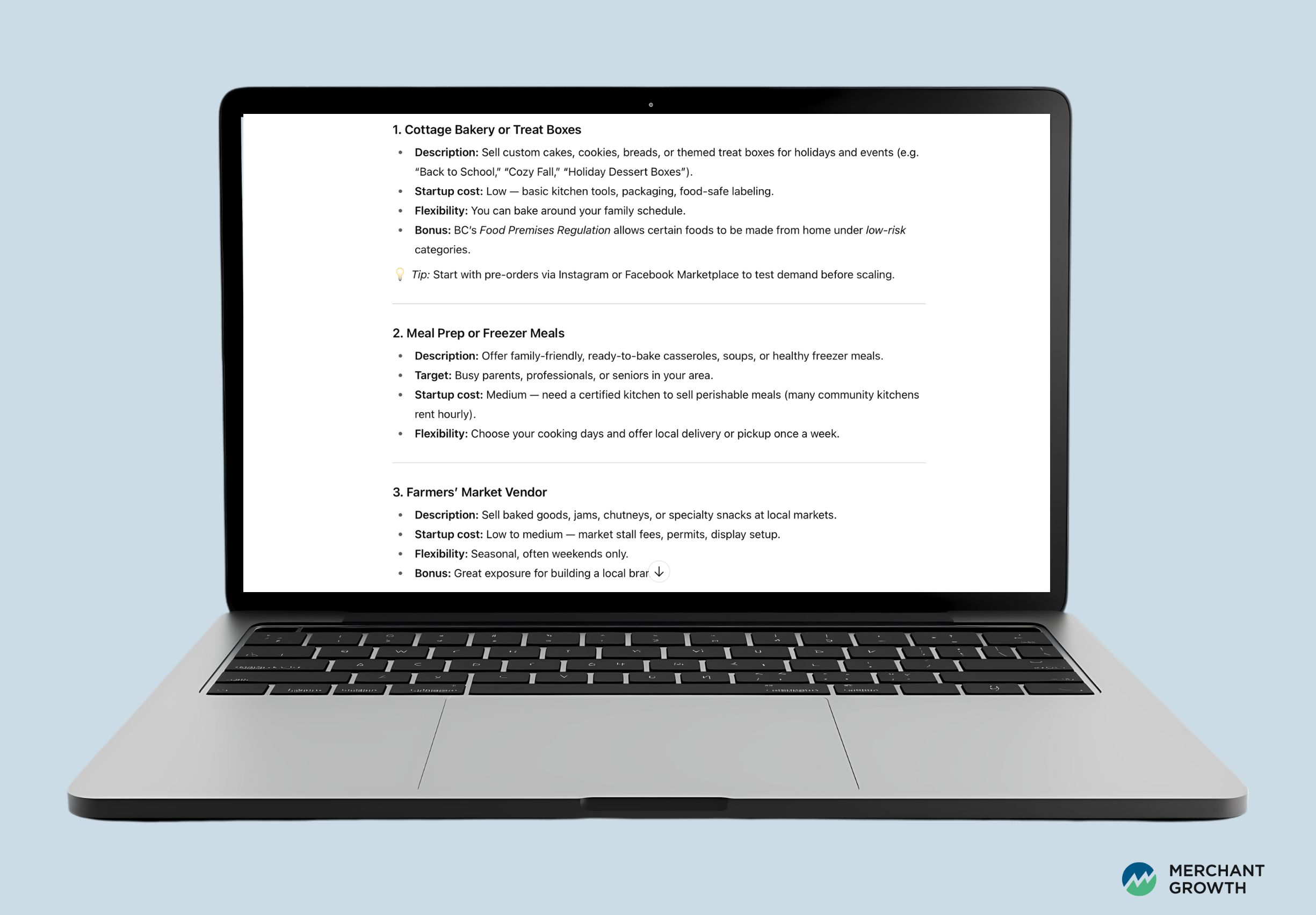
We decided to move forward with the concept of a healthy homemade meal kit business to see how far AI could take the idea, from branding to marketing and planning.
Business Name Generation
AI tools can generate names in seconds, but they don’t confirm availability or legality. When we asked ChatGPT for ideas, it came up with “Prep & Peace,” “The Family Table,” and “Made by Hand Meals.” Creative? Absolutely. But it couldn’t tell us which names were already registered or which domains were for sale.
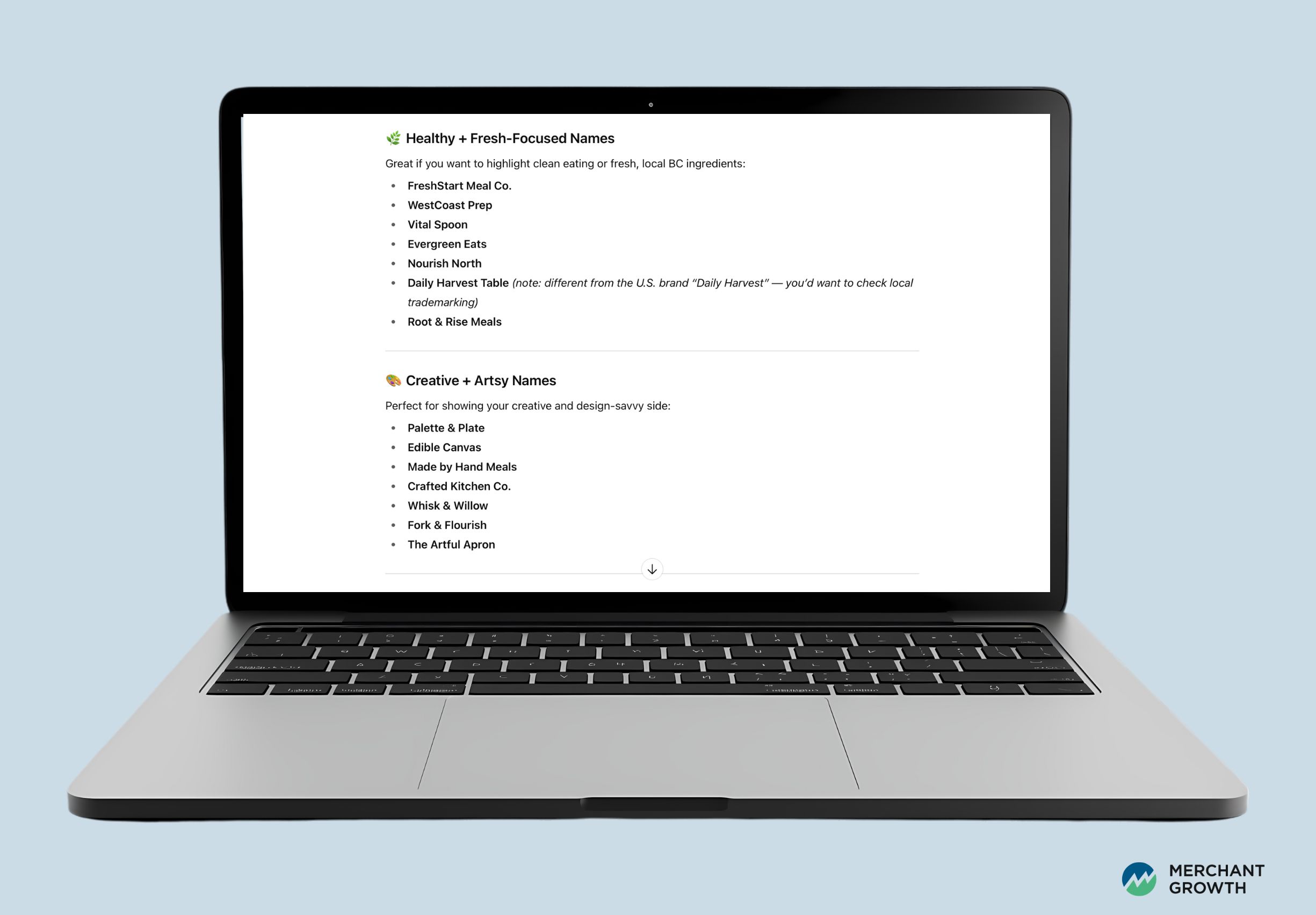
In the end, Made by Hand Meals stood out as the perfect fit for our test. A quick search showed the name appeared available, so we ran with it to see just how far AI could take the branding process
Reality check: Always verify name availability through Nuans for business registration and CIPO for trademarks. AI can spark ideas, but it can’t confirm ownership or protect your brand.
Logo and Branding
Next, we asked AI to create a brand identity. It produced logo variations, colour palettes, and taglines in seconds. While helpful for inspiration, the designs felt generic and raised copyright concerns.

Tools like Canva, Looka, and LogoAI can simplify the early design process, but they can’t replicate a designer’s originality or ensure compliance with trademark law.
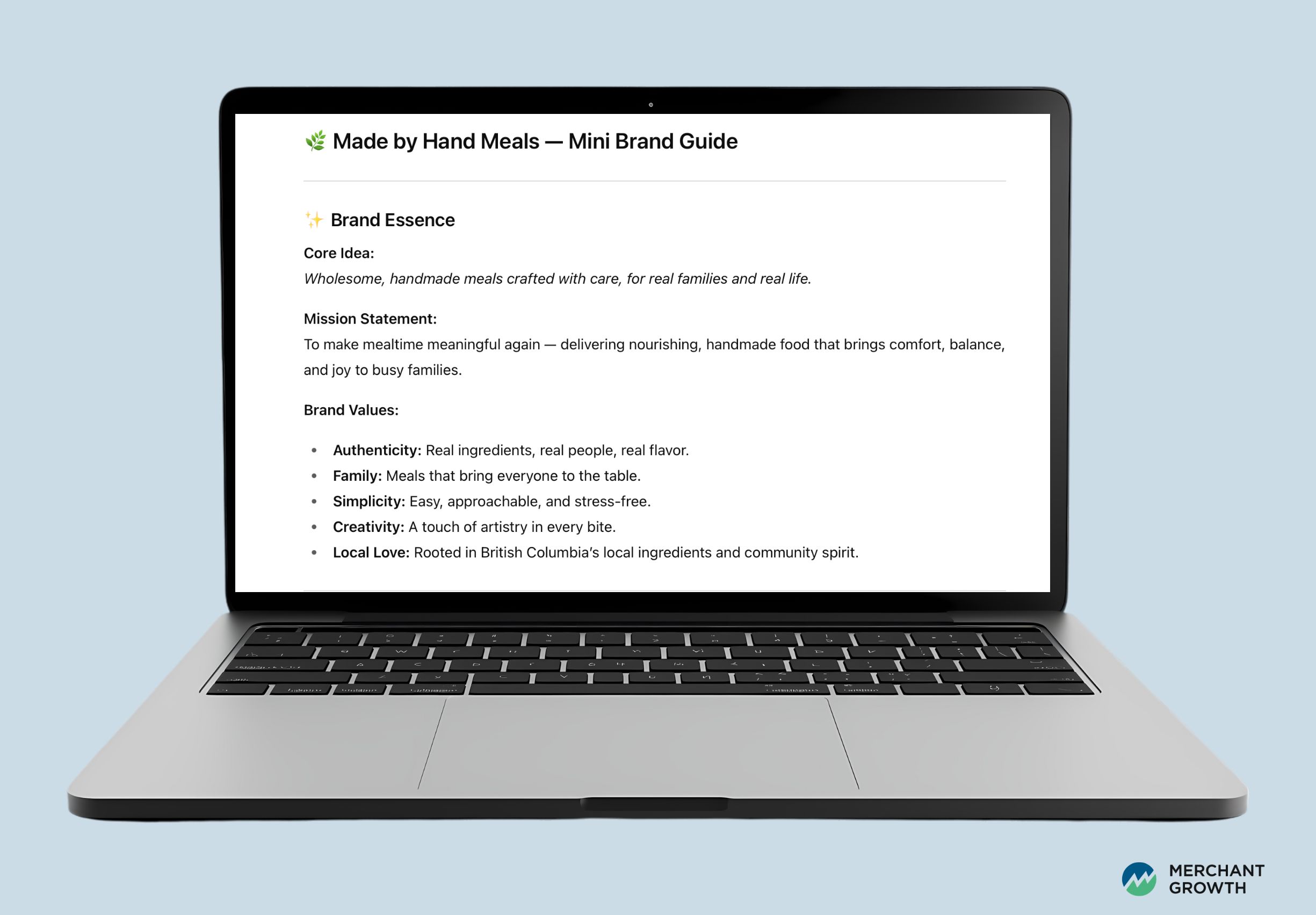
Tip: Use AI branding ideas as a starting point, then collaborate with a professional to make them truly yours.
Slogan Creation
AI can draft dozens of creative slogans. But some options felt generic or overly polished (“Real Food. Made by Hand.” was the one that was selected by AI for our business). It’s important to remember an algorithm doesn’t know your backstory of why you started your business or the passion behind taking the leap to being your own boss. If you are using AI for slogan or tagline generation, be sure to provide it with some of the reasons you are getting into the industry and what you hope to provide customers. Keep in mind that AI does not check for copyrighted material so be sure to always take it with a grain of salt.
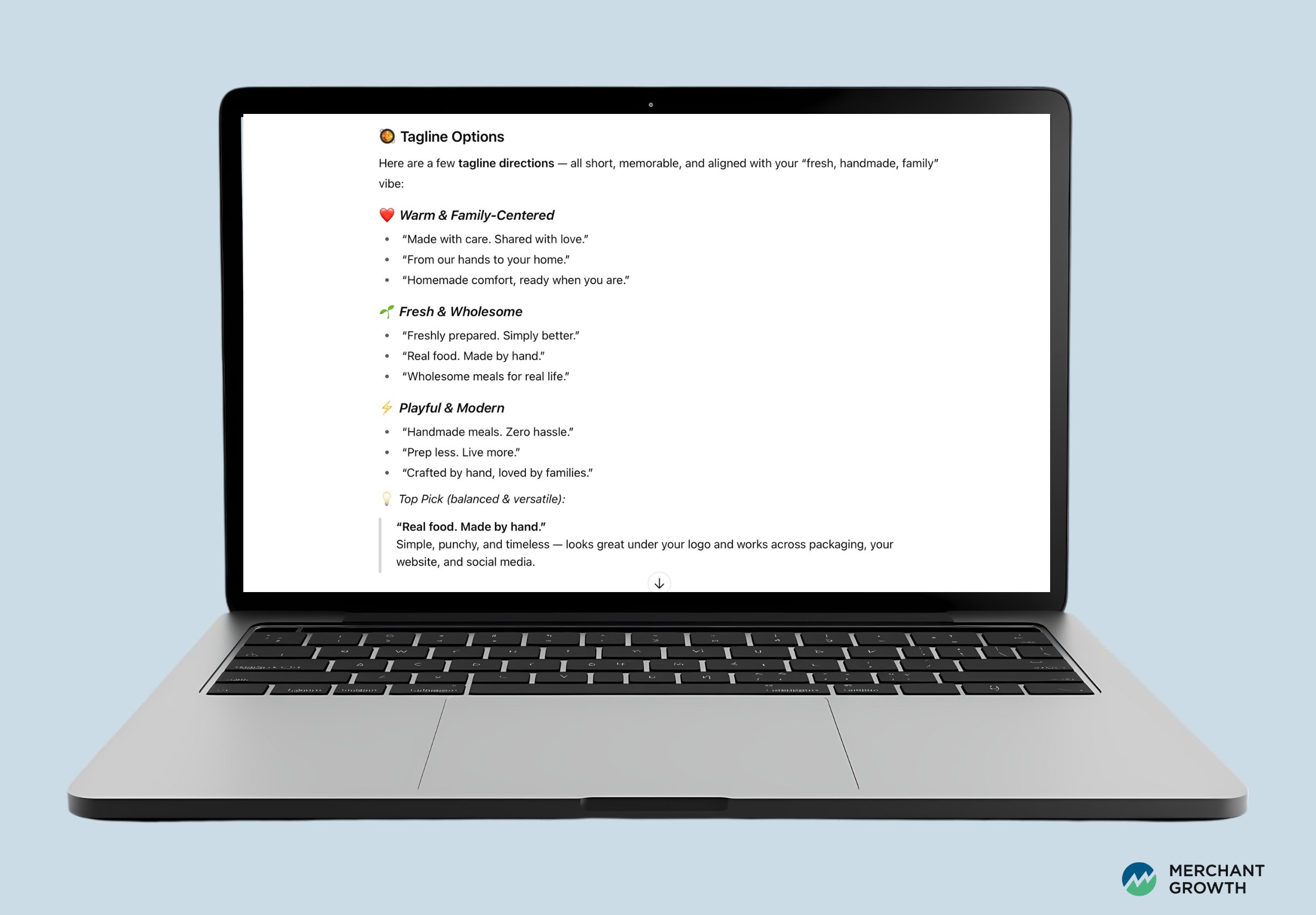
Best approach: Let AI get you 80% there, then add your own story — your why, your local flavour, your authenticity.
Step 2 – Business Planning and Strategy with AI
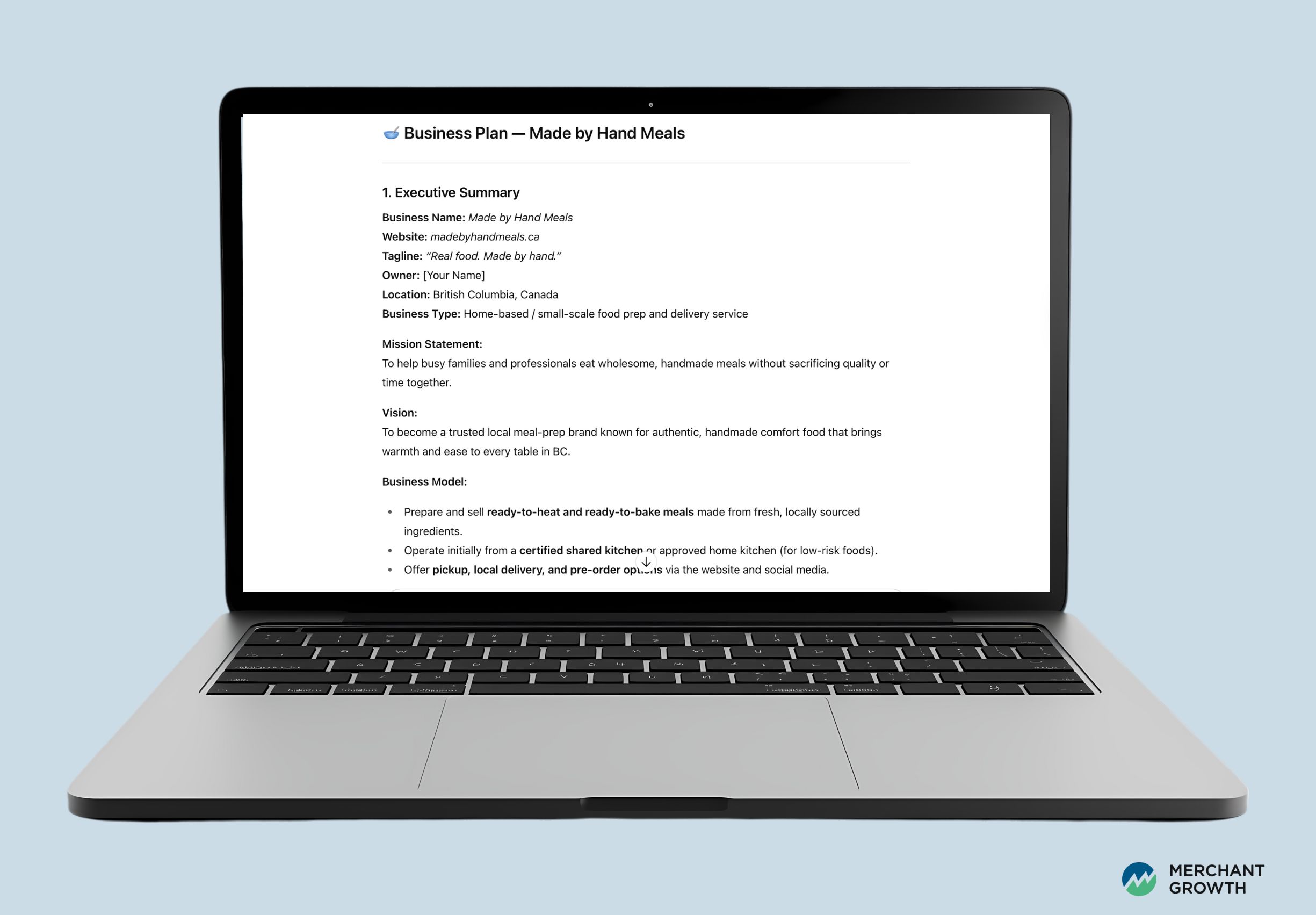
When we asked AI to create a business plan for Made by Hand Meals, it produced a full report: mission, market analysis, financial projections, and estimated costs. It looked polished at first glance, but the deeper we dug, the clearer its limits became.
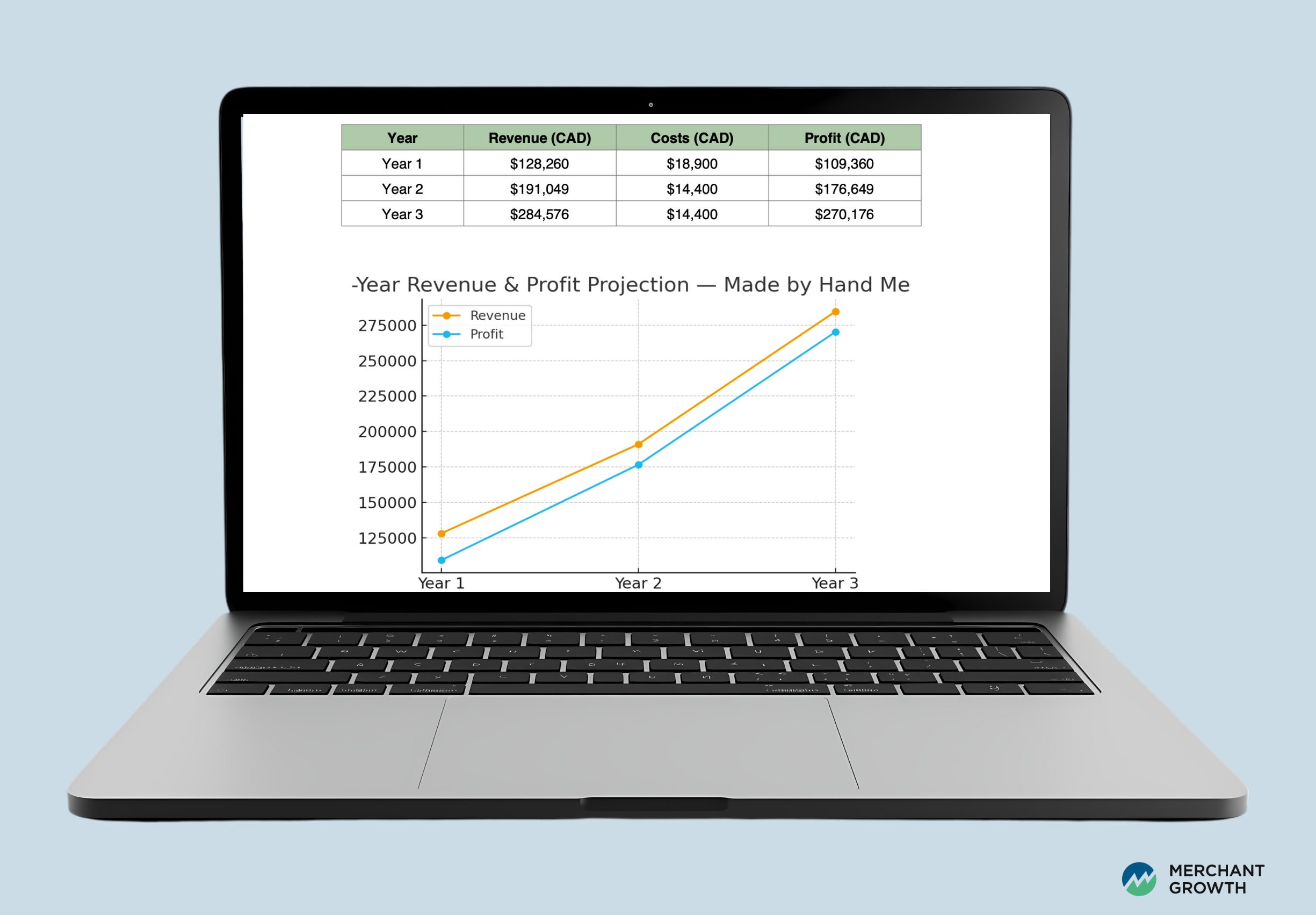
The numbers were fictional, based on generic assumptions about the food industry. It estimated ingredient costs, rent, and profit margins without referencing Canadian pricing or tax rules.
Here’s the rule: AI can write your first draft, but never your final version.
Use AI to:
- Outline your plan structure (executive summary, goals, marketing strategy).
- Draft your operations or staffing plan.
- Generate “what-if” financial templates.
Then refine it by:
- Plug in real numbers from BDC, CRA, and your local suppliers.
- Verify cost estimates with real quotes or Canadian data.
- Have an accountant review your projections before presenting them to investors.
Once your foundation is clear, AI can help you take the next big step: bringing your business to life through marketing. From branding to social media to personalized content, AI offers powerful ways to reach the right customers, if you know how to use it wisely.
Step 3 – Marketing with AI in Canada
Marketing is where AI truly proves its value, and where business owners must stay hands-on. When we asked ChatGPT to create a marketing strategy for Made by Hand Meals, it produced a detailed, well-structured plan within seconds. It outlined goals, platforms, content pillars, and captions that fit the brand’s tone and audience.
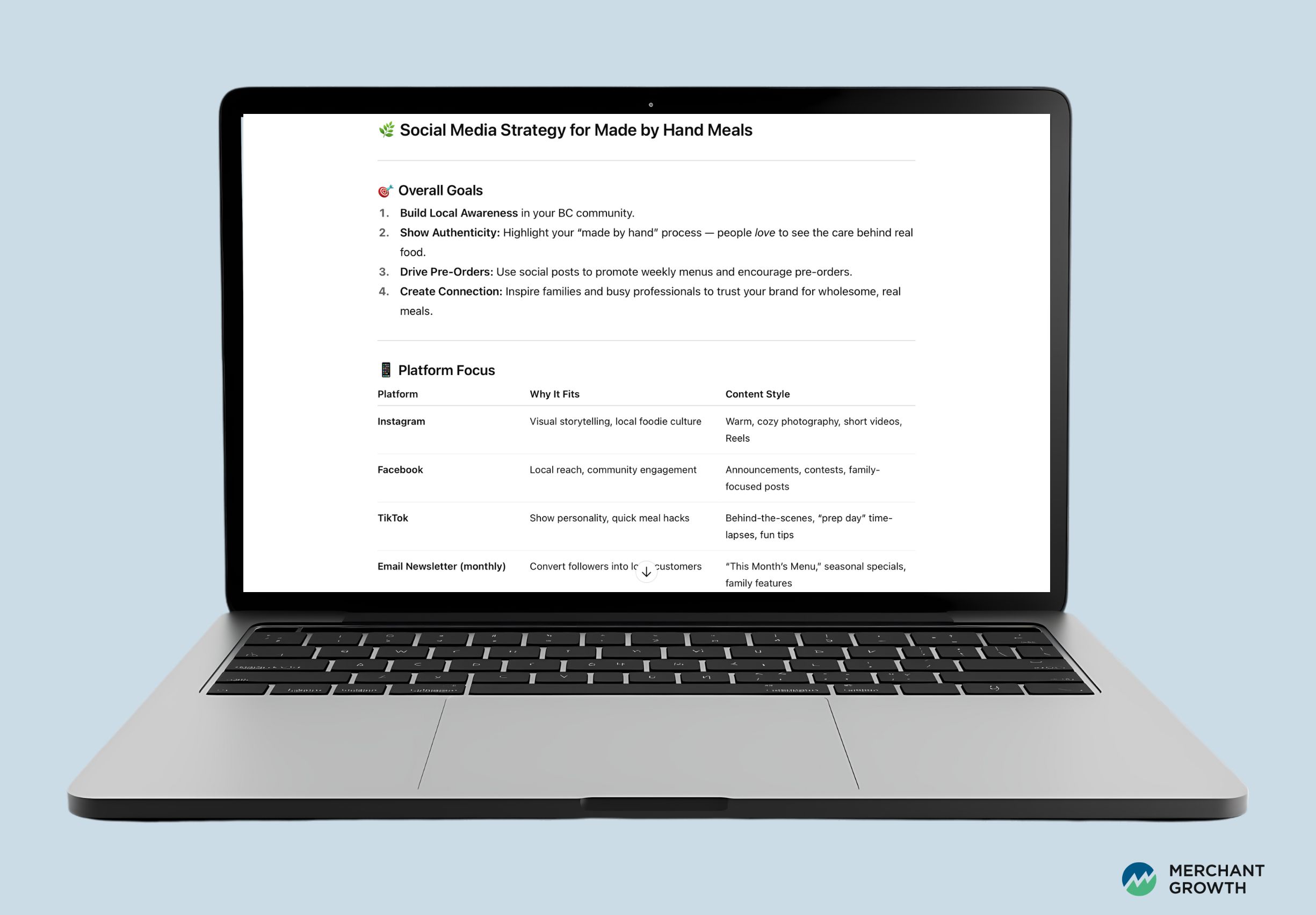
Here’s a condensed version of what AI produced 👇
AI-Generated Marketing Strategy: Made by Hand Meals
Goals:
- Build brand awareness in British Columbia.
- Show authenticity through behind-the-scenes storytelling.
- Drive pre-orders via social content.
- Connect emotionally with families and busy professionals.
Platform Focus:
- Instagram: Warm, cozy visuals and Reels.
- Facebook: Community updates and family-focused stories.
- TikTok: Fun “prep day” time-lapses and quick hacks.
Content Ideas:
- “This Week’s Menu” — simple, shareable posts showcasing signature dishes.
- Behind-the-Scenes Reels — dough kneading, chopping, plating, and local sourcing.
- Family Moments — encourage customers to share their dinner stories with #MadeByHandMoments.
- Local Love — feature BC-grown ingredients or community partnerships.
Example AI-Generated Caption:
“Busy week? We’ve got dinner handled. Our handmade Chicken & Spinach Lasagna is layered with love and local goodness. Pre-orders open now 🥣 #MadeByHandMeals”
Aesthetic & Tone:
Friendly, caring, and artisanal — with a colour palette of warm terracotta, sage green, and soft neutrals.
It was impressive, but not perfect. The strategy missed Canadian context (like BC holidays) and overlooked compliance with CASL, Canada’s Anti-Spam Legislation.
What AI Did Well
- Structured the plan clearly with actionable ideas
- Mirrored the warm, handmade brand personality
- Saved time by providing a ready-to-edit draft
Where AI Fell Short
- Missed Canadian localization and cultural nuance
- Lacked compliance awareness for Canadian marketing laws
- Made assumptions about copyright-safe content without verification
Applying AI to Your Own Marketing — The Smart Way
After testing AI with Made by Hand Meals, one thing became clear: AI can be an incredible creative assistant, but only if you guide it. The best results come when you feed it specific details , your brand tone, target audience, and marketing goals, and then refine what it gives back.
Social Media
AI tools like Jasper, Canva Magic Write, and Copy.ai can generate social posts, hashtags, and even captions that sound like your brand. But AI doesn’t always catch Canadian context. It might write “color” instead of “colour,” or reference U.S. holidays that don’t apply to your audience.
Pro Tip: Localize everything. Mention regional events, bilingual campaigns (English & French), or highlight Canadian holidays to build trust with your audience.
Content Marketing
AI can help draft blogs, newsletters, and ad copy quickly — a huge win for lean teams. But while AI is fast, you’re still responsible for ensuring accuracy, compliance, and brand tone.
Edit everything. AI is great for a first draft, but your human perspective brings authenticity, emotion, and compliance with CASL and other Canadian marketing regulations.
Advertising
Platforms like Meta Ads Manager and Google Ads aren’t technically “AI tools,” but they do use machine learning to optimize campaigns behind the scenes. Features such as automated targeting, predictive bidding, and responsive creative testing are powered by AI, even if the interface looks familiar. These functions can help small businesses improve ad performance, but the final review still depends on you. Always check that copy, claims, and calls to action meet Canadian advertising standards before publishing.
Pro Tip: Use AI to brainstorm and A/B test ad variations — but always review final copy and calls-to-action yourself (or with a marketing expert).

Step 4 – Automating Operations with AI
AI isn’t just changing how businesses market themselves. It’s also transforming how they operate behind the scenes. From payroll and customer support to bookkeeping and scheduling, automation tools are helping small teams save time and reduce manual errors, freeing up hours that can be reinvested into growth.
When we explored operational AI for Made by Hand Meals, we didn’t test every available tool, but the potential was obvious. Some platforms we looked into, like QuickBooks Canada, Wagepoint, and Wave, offered built-in AI features that simplified bookkeeping and forecasting. Meanwhile, Canadian-developed Ada and Cohere showed how AI chat capabilities can support customers around the clock in a friendly, professional way.
It’s important to note that many of these tools aren’t “AI-first” systems. Instead, they’re traditional business software enhanced with AI-powered features that make them more intuitive, automate repetitive steps, and reduce manual oversight. Think of them as smart assistants that help streamline workflows, not full replacements for human decision-making.
Caution: Always ensure your AI-enabled tools comply with PIPEDA and store customer data securely, ideally within Canada. Even with automation, it’s critical to review reports and settings regularly — you’re still the pilot, even if AI handles some of the controls.
When AI Falls Short for Canadian Small Businesses
After putting AI through its paces, one thing became clear: while automation can make life easier, it can also lead you astray if you treat it as infallible. AI is great at speed, structure, and pattern recognition — but it’s not great at judgment, empathy, or context. It can’t see the nuances of a small Canadian business, and it doesn’t understand your community or customers the way you do.
Many entrepreneurs assume AI-generated content or data is accurate simply because it sounds confident — but that’s where the danger lies. AI doesn’t know when it’s wrong, and it doesn’t apologize for being misleading. That’s why human oversight isn’t optional; it’s essential.
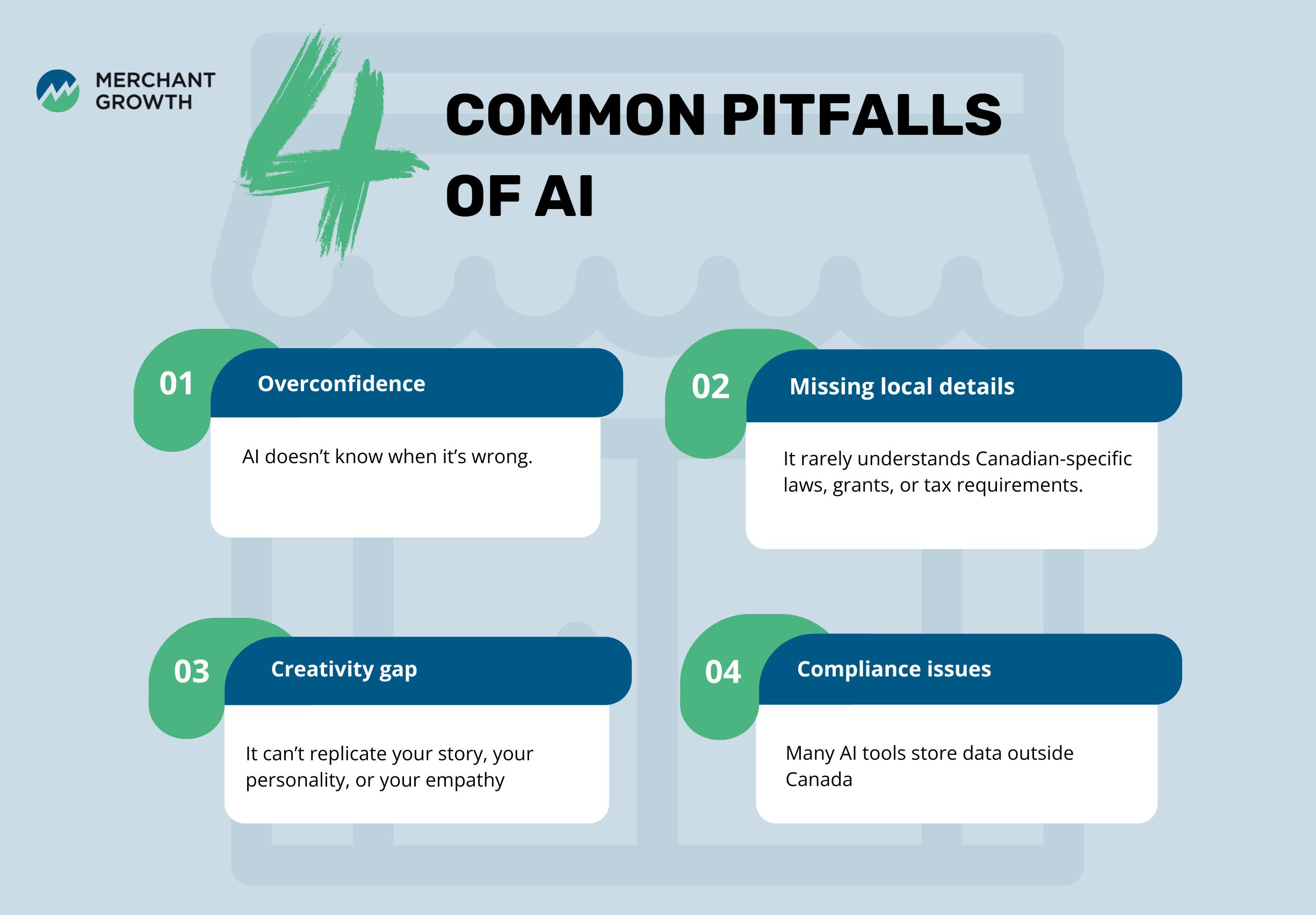
Common Pitfalls
- Overconfidence: AI doesn’t know when it’s wrong. It’ll write false facts with confidence.
- Missing local details: It rarely understands Canadian-specific laws, grants, or tax requirements.
- Creativity gap: It can’t replicate your story, your personality, or your empathy — the things that make your business human.
- Compliance issues: Many AI tools store data outside Canada, creating risks under PIPEDA and provincial privacy laws.
Bottom line: Use AI to assist, not replace. The most successful small businesses will be those that blend human creativity and intuition with the efficiency of technology. Your insight, instincts, and authenticity are — and always will be — your best competitive advantage.

Common Myths About AI (and What We Learned Testing It)
After running our own AI experiment with Jane Doe and her fictional business, we quickly realized that some of the biggest assumptions about AI simply don’t match reality. AI has potential — but also real limits — and both business owners and employees often misunderstand what it can and can’t do.
Myth 1: AI will replace people
This concern comes up for both business owners and employees. In reality, AI is designed to support, not replace. It can take care of repetitive or time-consuming tasks like scheduling, sorting data, or writing drafts, so people can focus on the parts of work that need creativity, empathy, and strategic thinking.
Myth 2: AI is too expensive for small business
While some enterprise tools can be costly, most small-business-ready platforms now include AI features that are either free or low-cost. You can experiment with small automations, like invoice reminders or customer responses, before investing in more advanced options.
Myth 3: You need to be tech-savvy to use it
Today’s AI tools are built for accessibility. You don’t need a technical background to use them effectively. If you can navigate your email inbox, update social media, or manage a spreadsheet, you can start experimenting with AI.
Myth 4: AI makes business less personal
There’s a misconception that automation removes the human touch. In reality, AI can actually make your business feel more personal by giving you time back to focus on real customer relationships. When customized, tools like chatbots or content assistants can reflect your brand voice and values — keeping your communication warm, not robotic.
Try This / Skip That (Canada Edition):
| Try This | Skip That |
|---|---|
| Use AI to brainstorm and automate admin tasks | Let AI write your business plan without review |
| Verify names with Nuans & CIPO | Assume AI knows what’s legally available |
| Combine AI with your personal story | Over-automate your customer touchpoints |
| Check data storage for PIPEDA compliance | Upload sensitive info without reading terms |

How AI Helps Small Businesses
Our experiment also showed that while AI isn’t perfect, it’s practical. The same kinds of tools we used to help Jane Doe shape her fictional business can also help real Canadian entrepreneurs save time, simplify operations, and make more informed decisions.
AI isn’t just for large companies with big budgets. It’s becoming one of the most accessible ways for small businesses to manage workloads and stay competitive. Whether you run a bakery, a boutique agency, or a trades business, AI can act like an extra set of hands that helps lighten the load — not take over the job.
1. Save Time on Repetitive Tasks
AI thrives on structure and repetition. It can take on time-consuming tasks such as scheduling, sending reminders, or organizing information, freeing business owners and employees to focus on strategic, creative, or customer-facing work.
2. Improve Customer Experience
AI can help personalize how you connect with your customers. It can respond instantly to common questions, automate follow-ups, and identify patterns in feedback so you can adapt your service based on what customers actually value. The key is maintaining oversight to ensure every interaction still reflects your brand’s voice and standards.
3. Make Smarter, More Informed Decisions
AI can analyze past data and detect trends to help guide your decisions — but it works best when combined with your own insight and experience. Think of it as a tool for perspective rather than prediction: it can highlight opportunities or risks you might not notice right away, but it still needs your judgment to interpret them.
4. Supercharge Your Marketing
AI can help generate ideas, organize content, and test different approaches quickly. From drafting first versions of marketing materials to identifying engagement patterns, it’s a useful creative partner that saves time and keeps campaigns consistent. Just remember: your voice and story bring the authenticity that AI alone can’t replicate.
Used thoughtfully, AI can make small businesses more efficient, creative, and resilient. But it isn’t a shortcut or a replacement for human expertise, it’s a partner that learns from your input and amplifies the work you already do well.
How Merchant Growth Can Help Canadian Businesses Adopt AI Responsibly
At Merchant Growth, we’ve seen firsthand that AI can unlock huge efficiency gains — but implementing it still takes time, training, and investment. From software subscriptions and marketing tools to equipment and onboarding, adopting AI responsibly often requires upfront funding.
That’s where we come in.
Our flexible financing options help Canadian small businesses adopt AI confidently — whether you’re automating payroll, launching a digital storefront, or integrating new systems. We’ll help you bridge the gap between big ideas and real-world execution.
Talk to Merchant Growth today to fund your AI adoption and build a smarter, stronger, more competitive business in Canada.
Business Expenses in Canada: How to Keep More of What You Earn
You can’t control the economy, inflation, or supplier costs—but you can control how every dollar moves through your business. For Canadian entrepreneurs, mastering business expenses isn’t just bookkeeping—it’s a mindset shift.
For many entrepreneurs, expenses aren’t the fun part of business ownership. They’re the late-night spreadsheet sessions, the endless receipts, and the “where did that money go?” moments. But managing expenses isn’t just about staying organized—it’s about giving your business room to grow.
When you understand where your money is going (and which of those costs can actually work for you come tax time), expense management turns from a headache into a strategic advantage. With the right systems and a clear understanding of what the CRA considers deductible, Canadian small business owners can save money, reduce stress, and build a stronger foundation for long-term success.
Key Takeaways
- Managing business expenses strategically improves profitability and reduces tax risk.
- CRA recognizes specific deductible categories—know them well.
- Separate personal and business finances to stay compliant.
- Use Canadian tools like CRA checklists and accounting software to streamline management.
- Merchant Growth can help you cover necessary costs and maintain steady cash flow.
Why Smart Expense Management Is Every Canadian Business’s Secret Weapon
Every receipt, invoice, and transaction tells part of your business’s financial story. Learning how to read that story—and manage it effectively—is one of the most powerful skills a small business owner can develop.
In simple terms, the Canada Revenue Agency (CRA) defines a business expense as a cost you incur to earn income. That might sound straightforward, but for entrepreneurs, these expenses shape everything from profitability to tax liability. When tracked and categorized correctly, they can lead to meaningful tax deductions and better decision-making throughout the year.
Poor expense management, however, can quickly derail progress. You might find yourself:
- Missing out on legitimate deductions that could lower your tax bill
- Overspending on areas that don’t drive revenue
- Facing unnecessary scrutiny or even penalties during a CRA audit
When you understand your spending, you can make smarter choices, set better prices, and invest more strategically in growth.
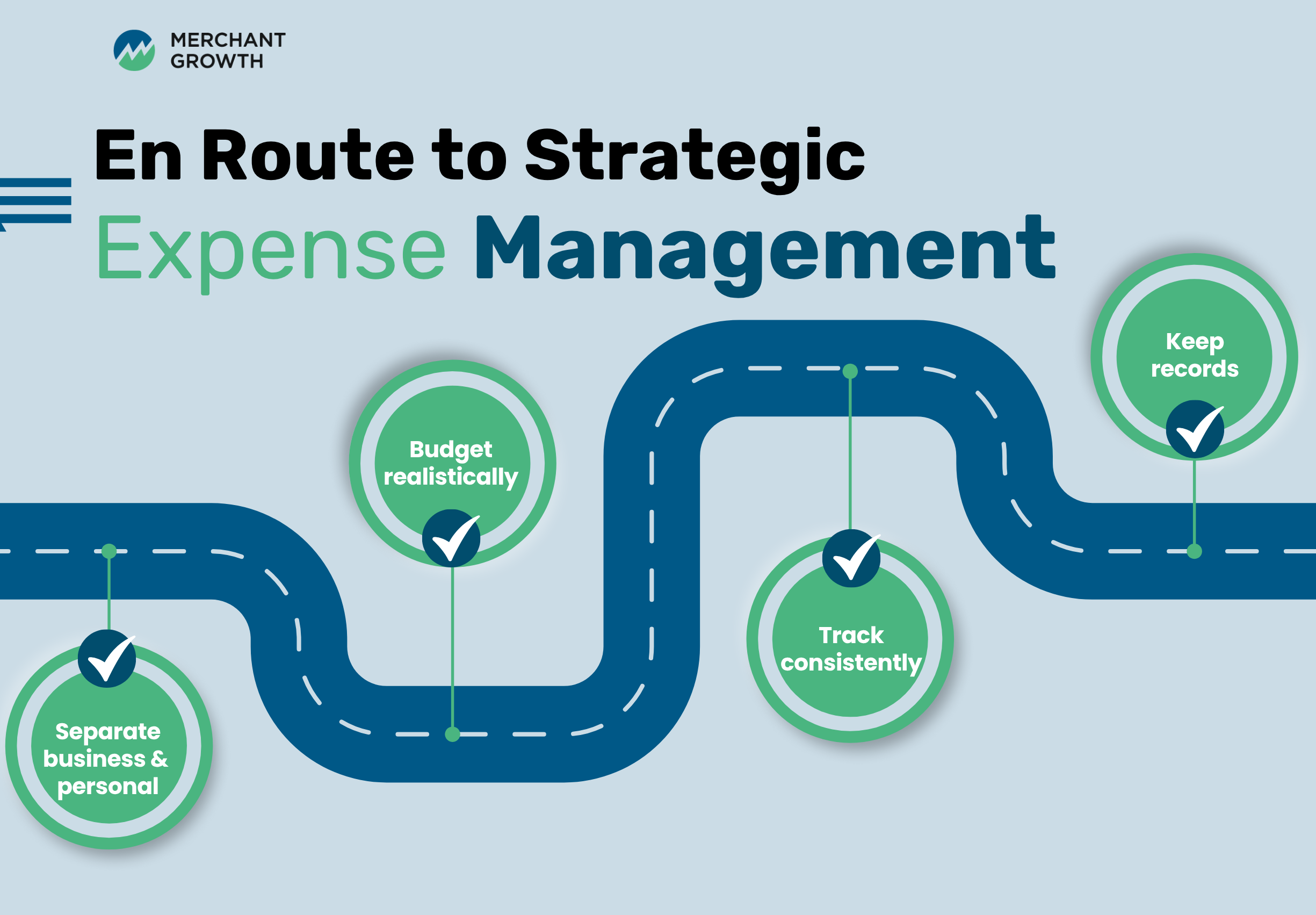
Building a Smart Expense Management Strategy
Every great business has systems behind the scenes. A solid expense management strategy helps you stay organized, avoid surprises, and feel more in control of your financial picture year-round.
Here’s how to build one that works for your business:
1. Keep Business and Personal Finances Separate
It’s tempting to swipe one card for everything—especially in the early days—but mixing business and personal spending is one of the fastest ways to create confusion (and headaches at tax time).
Open a dedicated business bank account and credit card right from the start. This separation makes bookkeeping much cleaner, helps you track cash flow accurately, and shows the CRA that you’re running a legitimate operation.
It also saves you from the dreaded “receipt hunt” later. When all your business transactions live in one place, you’ll spend less time sorting through statements and more time focusing on what matters—your customers.
2. Budget Like a Realist, Not an Optimist
Every business owner starts with optimism—but the best financial plans are grounded in reality. A smart budget isn’t just a list of costs; it’s a living plan that incorporates startup expenses, recurring operating costs, and unexpected curveballs.
Start by identifying your fixed expenses (like rent, insurance, and salaries) and variable ones (like marketing, travel, or seasonal inventory). Then, build in an emergency buffer for the surprises that always seem to pop up—because they will.
A simple rule of thumb: expect your first-year costs to exceed expectations. Whether it’s a delayed payment or a higher supplier quote, flexibility in your budget can be the difference between stress and stability.
Regularly reviewing your spending also helps you spot trends early—so you can trim what’s not working and double down where you see results.
3. Track Consistently, Not Just at Tax Time
If you only look at your expenses when your accountant asks for them, you’re missing valuable insights all year long. Tracking consistently means you always know where your money is going—and how it’s performing for you.
Manual spreadsheets can work in a pinch, but tools like QuickBooks, Wave, and FreshBooks take it to the next level. They automatically sync with your accounts, categorize spending, and generate reports that show your cash flow in real time.
The benefit? Fewer mistakes, no guessing games, and much less time spent hunting down missing invoices.
Plus, automation makes tax season smoother. When your expenses are organized throughout the year, your deductions practically file themselves.
4. Keep Records Like a Pro
It might not be glamorous, but good recordkeeping is one of the most important parts of managing your business expenses.
The CRA requires you to keep all supporting documents—receipts, invoices, contracts, and statements—for at least six years. That’s your paper trail if the agency ever asks for proof of a claim.
Digital organization makes this easier than ever. Store copies in cloud-based accounting software, create folders by month or category, and label them clearly. Think of it like building a financial safety net—future you will thank you.
When your records are organized and accessible, expense management stops being a constant scramble and starts feeling like a system that actually supports your growth.
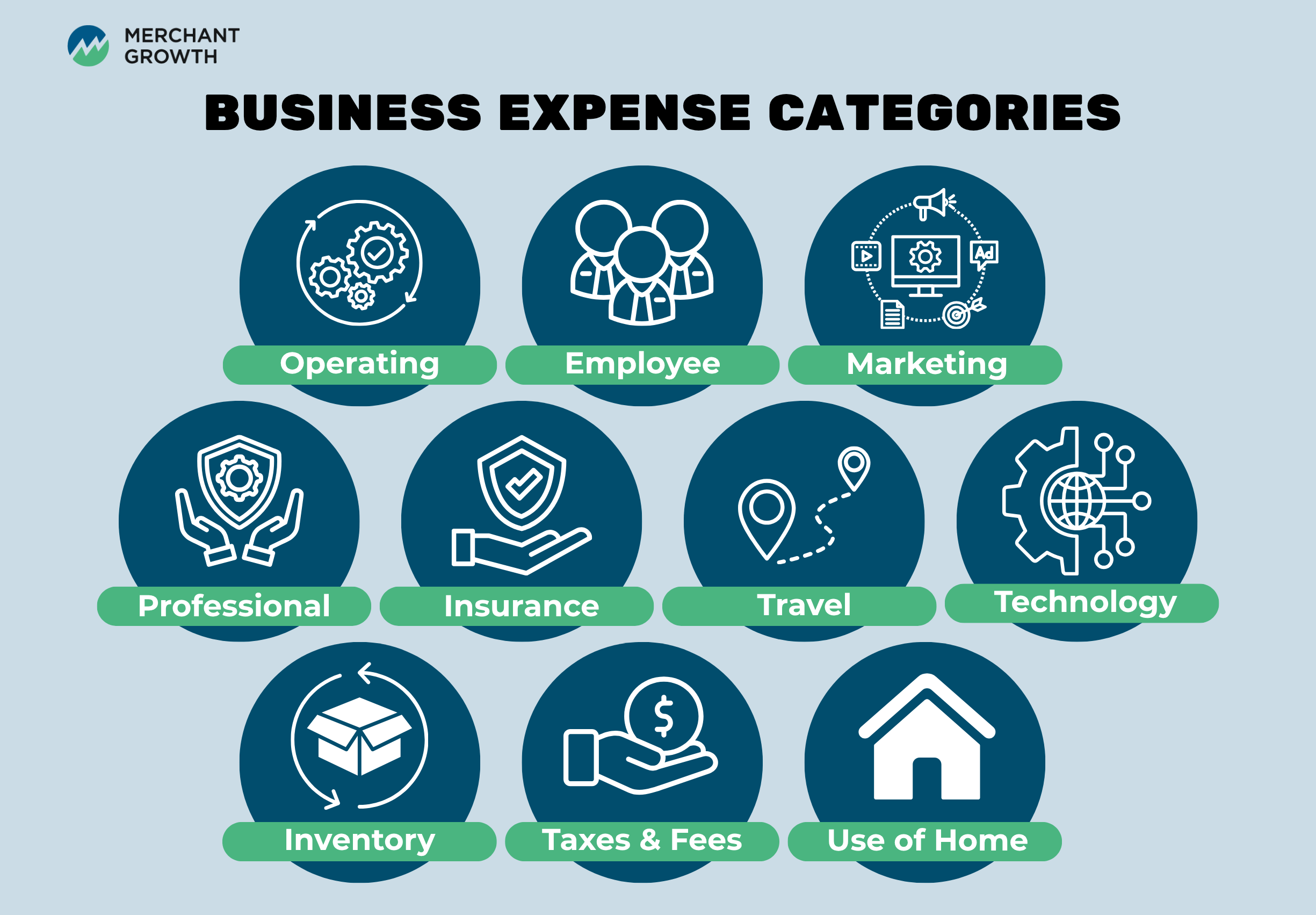
Common Business Expense Categories Every Canadian Business Should Know
Every small business has its own mix of costs—what a restaurant spends on ingredients will look very different from what a consultant spends on software. But no matter your industry, most of your spending fits into a few key categories recognized by the Canada Revenue Agency (CRA).
Understanding these categories helps you file accurately, claim the right deductions, and get a clearer picture of where your money really goes.
Operating Costs
These are the day-to-day expenses that keep your business running—rent, utilities, phone, internet, and office supplies. They might not be the exciting stuff, but they’re the backbone of operations.
For many Canadian entrepreneurs, these costs are also one of the biggest barriers to growth. In fact, over one in four businesses (26%) identify high operational costs as the primary factor holding them back. When overhead eats up too much of your budget, there’s less room to invest in hiring, marketing, or innovation.
That’s why it’s crucial to review your fixed expenses regularly—shop around for service providers, renegotiate leases, or look for shared workspaces that can help you cut costs without compromising productivity.
Employee Wages & Benefits
Whether you have two employees or twenty, labour is almost always your biggest line item—and your most important one. According to Forbes, wages and benefits account for roughly 70% of total business expenses.
This category covers salaries, contractor payments, CPP/EI contributions, bonuses, and benefits like health or dental coverage. While these costs can be significant, investing in people pays dividends through productivity, customer satisfaction, and retention.
Accurate payroll management also keeps you compliant with CRA requirements—ensuring deductions are calculated properly and employees are paid on time. A good payroll system or accounting software can take the guesswork out of this process and help you forecast more accurately for future growth.
Marketing & Advertising
Marketing isn’t just an expense—it’s how you stay visible, relevant, and competitive. Whether you’re running Google Ads, designing packaging, or hosting community events, every marketing dollar has the potential to drive new customers and build your brand.
According to BDC, the average Canadian small business spends around $30,000 per year on marketing. That might sound steep, but consistent, well-targeted campaigns can turn those costs into long-term loyalty.
The key is to track return on investment. Digital tools like analytics dashboards or CRM systems can help you measure what’s working and cut back on what isn’t—so every dollar you spend contributes directly to your bottom line.
Professional Fees
No entrepreneur does it all alone—and that’s where professionals come in. Accountants, bookkeepers, lawyers, consultants, and advisors provide specialized knowledge that can save you time, reduce risk, and even uncover new opportunities.
While professional services come with a price tag, they’re fully deductible under CRA rules and often pay for themselves in accuracy and peace of mind. Think of it this way: hiring a good accountant might cost you today, but it could save you thousands come tax season.
Insurance
Business insurance protects against risks you can’t afford to face alone—like property damage, liability claims, or data breaches. But those protections are getting more expensive.
According to the Canadian Federation of Independent Business (CFIB), 68% of small businesses say insurance costs are now a top concern, and half have seen premiums rise by 10% or more in the past year.
Those numbers highlight a growing challenge for Canadian entrepreneurs who already face tight margins. Still, skipping or reducing coverage isn’t the answer. Instead, review your policies annually, compare quotes, and speak with brokers who specialize in small business insurance. Sometimes, bundling coverage or raising deductibles can keep costs manageable without sacrificing protection.
Travel & Vehicle
If your business requires travel—whether it’s visiting clients, attending trade shows, or making deliveries—you can deduct mileage, fuel, accommodation, and meals related to those trips.
The CRA typically allows only 50% of meal expenses to be deducted, and vehicle costs must reflect business use. Keeping a mileage log or using a tracking app can make this easier and protect you during audits.
For many small business owners, travel is an investment in relationships and reputation. Managing these expenses carefully helps you maintain professionalism without letting travel eat into your profits.
Technology & Equipment
From laptops and software subscriptions to machinery and specialized tools, technology powers productivity—but it doesn’t come cheap.
According to recent data, about 20% of Canadian businesses cite high implementation costs as their biggest barrier to adopting new digital infrastructure. For small firms, that can mean delaying upgrades that could improve efficiency or security.
Remember that many of these expenses are deductible. For bigger purchases, you may claim them gradually through Capital Cost Allowance (CCA), which spreads out the deduction over several years. Investing strategically in tech keeps your operations modern and scalable without overwhelming your budget.
Inventory & Supplies
If you sell products, inventory and supplies represent a major portion of your working capital. This includes everything from raw materials and packaging to resale goods and replenishment stock.
Accurate tracking helps you manage cash flow and avoid overstocking, which can tie up funds unnecessarily. Inventory management systems or integrated POS software can help you keep this category efficient and transparent.
Taxes, Licenses & Fees
These are the administrative costs that come with running a legitimate business—GST/HST, municipal business licenses, industry permits, and registration fees.
They might not drive revenue directly, but staying compliant keeps your doors open and your reputation solid. Keep a dedicated folder (digital or physical) for these documents—they’re easy to overlook but essential at tax time.
Business Use of Home Expenses
More Canadians are working from home than ever before—and the CRA allows you to deduct a portion of your household expenses if your home doubles as your office.
You can claim a percentage of rent, utilities, internet, maintenance, and even property taxes, based on how much of your home is used for business. The CRA provides detailed formulas for calculating this proportion accurately, helping you turn a part of your living space into a legitimate tax benefit.
Knowing which expenses qualify—and how to record them—gives you power. When you understand your business’s cost structure, you can see which areas deserve more investment and where to trim back.
These categories aren’t just for accountants—they’re tools for better decision-making. And when you use them strategically, they don’t just describe your spending—they help shape your success.
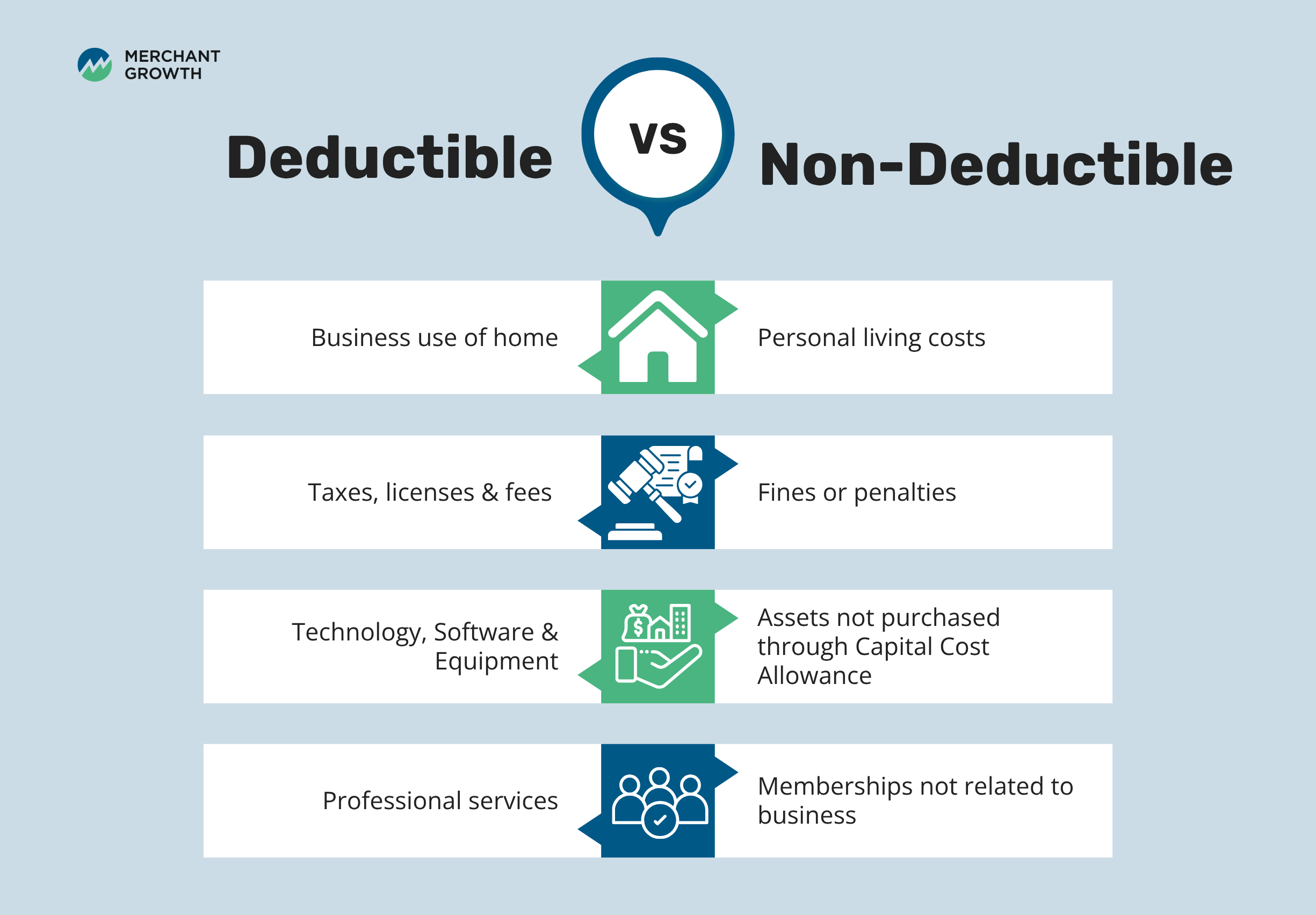
Deductible vs. Non-Deductible Expenses: What You Can (and Can’t) Write Off
Understanding what counts as a deductible business expense is one of the most powerful ways to protect your profits. Every dollar you can legitimately deduct reduces your taxable income — which means more money stays in your business, where it belongs.
But not every expense qualifies, and misunderstanding the difference between deductible and non-deductible costs is one of the most common mistakes small business owners make at tax time. The good news? Once you know the rules, you can plan smarter and avoid surprises.
What the CRA Considers a Deductible Expense
The Canada Revenue Agency (CRA) defines a deductible expense as a reasonable cost incurred to earn business income.
That means if you spend money on something that directly supports your operations — running, promoting, or maintaining your business — you can usually deduct it.
Common examples include:
- Wages and salaries
- Rent and utilities for your business premises
- Office supplies and equipment
- Professional services such as accounting or legal advice
- Advertising and marketing
- Insurance premiums for business coverage
- Travel costs for business trips
- Maintenance and repairs for business assets
These are the kinds of expenses that keep your business operating and generating revenue, and they’re generally fully deductible — as long as they’re well-documented and reasonable in amount.
Partially Deductible Expenses: The “In-Between” Category
Some expenses fall into a middle ground — they’re legitimate, but only partially deductible.
The CRA sets clear limits here to prevent overlap between business and personal use.
For example:
- Meals and entertainment: Only 50% of eligible costs can be deducted, even if it’s a client meeting or networking event.
- Vehicle expenses: You can only claim the percentage of mileage used for business (keeping a logbook helps).
- Home-office expenses: If you use part of your home for business, you can claim a proportional share of rent, utilities, and maintenance — based on square footage or time used for business activities.
- Cell phones and internet: You can deduct the portion used for business, but not personal browsing or calls.
These deductions can add up, but accuracy is everything. If your usage estimates seem inflated, the CRA may ask for proof — so keep clear records and, when possible, use separate accounts or lines to make the split obvious.
Non-Deductible Expenses: Where Many Owners Slip Up
It’s easy to assume that anything you pay for “because of” your business is deductible — but that’s not always the case.
Some expenses simply don’t qualify under CRA rules, even if they feel business-related.
Examples include:
- Personal living costs (your groceries, clothing, or rent outside of home-office use)
- Fines or penalties (parking tickets, late fees, or CRA interest charges)
- Capital asset costs not claimed through Capital Cost Allowance (like buying a new vehicle outright)
- Certain memberships or club dues not directly related to your business operations
Keeping these off your deduction list helps you stay compliant and avoid issues during an audit. When in doubt, always ask your accountant — it’s better to confirm than to risk a costly reassessment later.
How Writing Off Business Expenses Works
Here’s the short version:
When you claim a deductible expense, you’re reducing your taxable income. So if your business earns $100,000 and you have $30,000 in eligible expenses, you only pay tax on $70,000 of profit.
That’s why it’s so important to categorize and track everything correctly — every legitimate deduction directly improves your bottom line.
Most accounting software can automate this process by tagging expenses as deductible, partially deductible, or non-deductible. Still, make sure you review these categories periodically, especially when CRA rules or your business structure changes.
Pro Tip: Plan Ahead, Don’t Scramble Later
Expense management shouldn’t start at tax time. By tracking and classifying costs throughout the year, you can make better spending decisions — and avoid the dreaded last-minute receipt hunt.
Set aside an hour each month to review your expenses, verify categories, and make sure your deductions align with CRA rules. Not only will you save time during tax season, but you’ll also gain a clearer picture of your business’s real profitability.
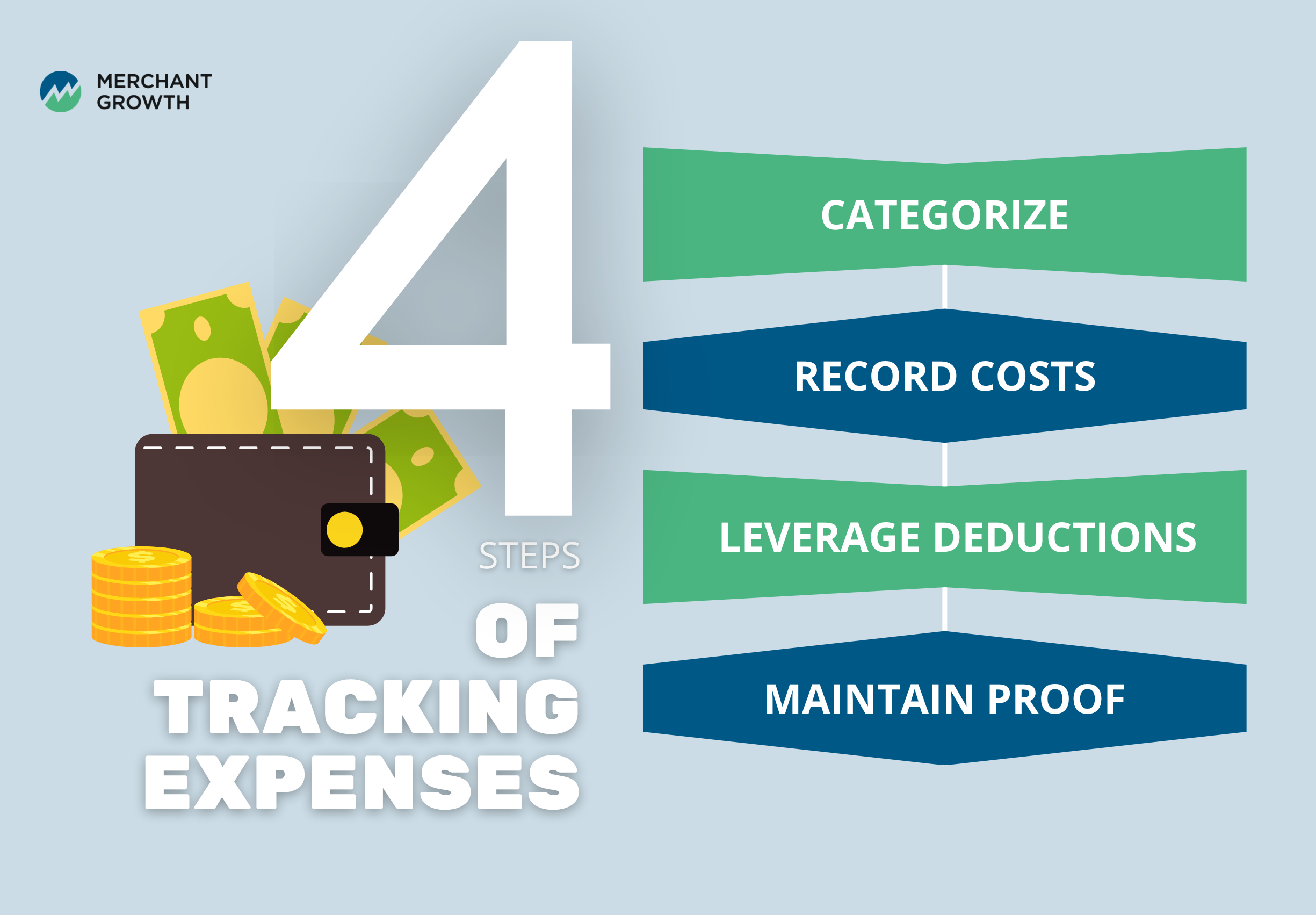
Tracking and Deducting Expenses in Canada
Once your business is up and running, the next step is turning your expense data into insight. Tracking isn’t just about logging receipts—it’s about building a system that gives you clarity and control over where every dollar goes.
When your records are well-organized, you can spot spending trends, forecast your cash flow more accurately, and confidently make decisions about hiring, investing, or scaling. A strong tracking system also helps you plan for deductions year-round instead of scrambling to find them at tax time.
To make this process easier, download the Merchant Growth Business Expense Tracking Spreadsheet—a ready-to-use tool designed for Canadian entrepreneurs. It includes pre-built CRA-aligned categories, automatic summaries, and space to log startup, recurring, and seasonal costs in one simple view.
- Categorize consistently using CRA-approved labels for accuracy at tax time.
- Record startup costs—like incorporation fees, equipment, or marketing—as these may be deductible over several years.
- Leverage available deductions and credits to lower your taxable income.
- Maintain proof of every transaction—including bank statements and digital receipts.
Using an expense tracker or income-and-expense spreadsheet ensures nothing slips through the cracks. Automation also means fewer missed deductions and faster preparation when you file your return.
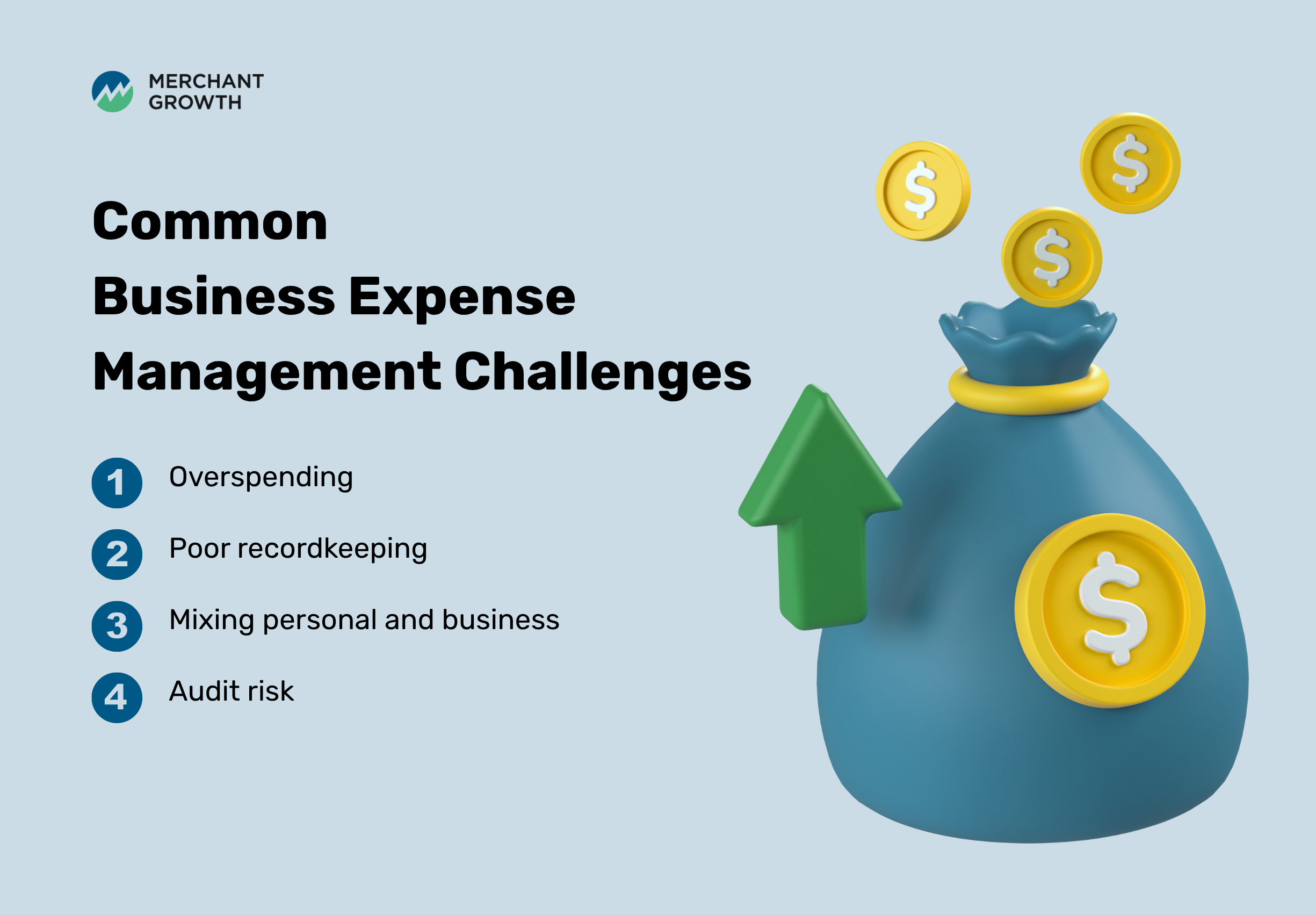
Overcoming Expense Management Challenges
Even the best systems face roadblocks. Managing business expenses isn’t just about having a plan—it’s about staying flexible when real-world challenges hit. Whether it’s surprise costs, a messy inbox of receipts, or confusion about what’s actually deductible, small business owners across Canada share many of the same pain points.
The good news? Each obstacle has a fix—and usually, it starts with a small, consistent habit that keeps your finances on track.
Overspending
It’s easy for costs to creep up when you’re focused on growth. Maybe it’s a marketing campaign that ran longer than planned or software subscriptions that quietly renew in the background. Overspending often isn’t intentional—it’s a by-product of momentum.
The solution is awareness: review your expenses monthly, look for trends, and flag anything that no longer delivers value. Tracking tools or an expense spreadsheet can help visualize where your money’s going before it becomes a problem.
Poor Recordkeeping
Missing receipts or incomplete notes might not seem like a big deal until tax season—or worse, an audit—arrives. Disorganization is one of the biggest culprits behind missed deductions and CRA stress.
Digital storage tools and cloud-based accounting systems can make a world of difference. Snap photos of receipts, store PDFs in folders by category, and reconcile accounts weekly. It doesn’t take much time, but it saves endless frustration later.
Mixing Personal and Business Finances
It’s a mistake that’s easy to make—especially for sole proprietors. Swiping the same card for groceries and office supplies may feel harmless in the moment, but it creates confusion when separating deductible expenses from personal ones.
Keep things clean with a dedicated business bank account and credit card. You’ll gain a clearer view of your cash flow and make your year-end filings far more straightforward.
Audit Risk
Many business owners worry about audits, but most CRA reviews are straightforward if your documentation is strong. The real risk comes from claiming non-deductible expenses or not having the proof to back up legitimate ones.
The best defence is preparation: keep digital copies of receipts, ensure expenses are categorized correctly, and avoid inflating deductions. A good rule of thumb? If an expense benefits you personally as much as it does your business, check CRA guidance before claiming it.
Finding Balance
The hardest part of expense management isn’t the math—it’s consistency. Reviewing numbers once a year isn’t enough. The strongest businesses treat expense tracking as an ongoing part of operations, not an afterthought.
Schedule time each month to check your books, compare against your budget, and forecast upcoming costs. This steady rhythm builds awareness and confidence, and it prevents the kind of financial surprises that derail momentum.
Tools and Resources for Canadian Small Business Expenses
You don’t have to manage expenses alone. These Canadian-focused tools and resources make it easier:
- CRA Resources: Official business expense categories and compliance guides.
- BDC Tools: Articles on tax-deductible expenses, cost planning, and SME budgeting.
- Accounting Software: QuickBooks, Wave, and FreshBooks—each built for Canadian tax systems.
- Expense Calculators & Checklists: Use NetSuite’s expense lists or the SBA’s startup calculators (adapted for Canadian business planning).
- Professional Guidance: Accountants and bookkeepers familiar with CRA rules can help maximize deductions and reduce errors.
Consistent use of these tools can save time, prevent costly mistakes, and improve your visibility into cash flow.
How Merchant Growth Can Help Canadian Businesses Manage Expenses
Even the best-managed business will face times when expenses outpace cash flow. Maybe it’s covering seasonal inventory, hiring staff, or upgrading equipment. That’s where Merchant Growth can help.
With flexible financing designed specifically for Canadian small businesses, Merchant Growth helps you fund everyday expenses and invest in long-term stability.
Whether you need a short-term cash flow boost or capital to expand, our financing options support your goals without adding complexity.
Talk to Merchant Growth today to explore funding solutions that keep your business moving forward—so you can focus on growth, not just expenses.
How to Master Small Business Shipping in Canada
Shipping isn’t just about getting packages from A to B—it’s often one of the trickiest (and priciest) parts of running a small business in Canada. With our vast geography, rural delivery routes, and cross-border regulations, finding a system that’s both affordable and reliable can feel overwhelming. But here’s the good news: with the right strategy, shipping can become a competitive advantage—boosting customer satisfaction, improving loyalty, and even reducing abandoned carts at checkout.
This guide is designed to help Canadian small business owners—from new eCommerce shops to established brick-and-mortar retailers—simplify their shipping strategy. We’ll cover everything from choosing carriers to packaging and pricing policies, plus how to save on costs without sacrificing service.
Key Takeaways
- A strong shipping strategy can make or break profitability for Canadian small businesses.
- Choosing the right carriers (Canada Post, couriers, discount brokers, or fulfillment partners) is essential.
- Building transparent shipping policies—free, flat-rate, or weight-based—improves conversions and trust.
- Costs can be reduced by leveraging bulk discounts, hybrid carriers, and eCommerce integrations.
- Using Canadian tools and resources simplifies operations and keeps your business competitive.
Why Canadian Small Businesses Need a Shipping Strategy
For Canadian shoppers, shipping isn’t just about getting a package delivered—it’s a key part of the buying experience. Slow delivery or unexpected costs at checkout can quickly turn an excited shopper into a lost sale. In fact, nearly 48% of shoppers abandon their carts because of surprise charges like shipping, taxes, and fees. Setting clear shipping policies and offering free-shipping thresholds can help reduce that number.
The challenge is amplified by Canada’s size and how spread out customers can be. Shipping across provinces or to remote areas often takes longer and costs more than local deliveries. Combine that with a competitive retail landscape—Canada is home to more than 144,000 retailers, with Ontario leading at over 52,800 establishments as of June 2023—and it’s easy to see why a smooth shipping process can make or break a sale.
A strong shipping strategy isn’t just about lowering carrier bills; it’s about building trust. When businesses deliver quickly, reliably, and with transparent pricing, they stand out, win repeat customers, and earn positive reviews. Without that strategy, small businesses risk high shipping costs, late deliveries, and lost customer confidence—challenges no small business can afford in such a competitive market.
Preparing Your Shipping Strategy
Before you compare carriers or decide whether to offer free shipping, it’s worth stepping back to map out your needs and limitations. A thoughtful plan can save you time, money, and customer frustration down the line.
Step 1: Assess Your Needs
Start by looking at the size, weight, and fragility of your products—these factors often determine which carriers and packaging options make the most sense. Also consider your shipping volume and where your customers live. A small shop selling handmade candles locally in Ottawa will have very different shipping requirements from a boutique sending outdoor gear across provinces or even internationally. Knowing these details up front helps you avoid overpaying for unnecessary services or scrambling to accommodate heavier or bulkier items later.
Step 2: Budget Realistically
Many new business owners underestimate how many costs are tied to shipping. Postage is only part of the equation—you’ll also need to factor in packaging materials, labels, insurance for high-value items, and the cost of handling returns. If you plan to ship across the border, don’t forget about customs fees and duties. By budgeting for the full picture early on, you avoid unpleasant surprises that can cut into profits or force you to raise prices unexpectedly.
Step 3: Decide Your Model
How you manage shipping is just as important as who delivers it. Smaller businesses often start by handling shipping in-house because it keeps costs lower and offers more control over packaging and branding. As orders grow, though, fulfilling everything yourself can quickly become overwhelming. That’s when opening accounts with carriers for better rates or outsourcing to a third-party fulfillment provider can save time and keep service levels consistent. The right choice depends on your order volume, storage capacity, and how much of the process you’re comfortable managing yourself.
Step 4: Factor Shipping Into Pricing
Shipping fees can be a sticking point for customers—especially when they’re surprised at checkout. Canadian shoppers value transparency, so aim to either build at least part of the shipping cost into your product pricing or clearly explain how you calculate rates. This not only reduces cart abandonment but also helps you compete with larger retailers who often set customer expectations for “free” or low-cost shipping.
A strong strategy starts with understanding your own needs—what you ship, where you ship it, how much you can spend, and what your customers expect. Once you have that foundation, you can confidently compare the different shipping options available to Canadian small businesses, from Canada Post to courier services and fulfillment partners. The next step is figuring out which mix of carriers and solutions will give you the best balance of cost, speed, and reliability.
Shipping Options for Canadian Small Businesses
Choosing the right mix of carriers can do more than save you money—it can also improve customer satisfaction, boost repeat sales, and reduce the stress that often comes with managing logistics. Each option available to Canadian small businesses comes with its own strengths and trade-offs. Here’s a closer look at the most common choices:
Canada Post
For many Canadian small businesses, Canada Post is the natural first choice. Its extensive network reaches virtually every address in the country, including rural and remote areas where private couriers may charge extra or not deliver at all.
Canada Post offers several services tailored to businesses, such as Small Business Solutions, which provides discounted rates once your monthly spending hits certain thresholds. For lightweight domestic parcels (typically under 5 kg), Canada Post is often the most cost-effective option, especially when you use flat-rate boxes or standard ground shipping.
Another advantage is that Canada Post integrates smoothly with many Canadian eCommerce platforms—like Shopify and WooCommerce—making it easy to print labels and track shipments in real time. While it may not be the fastest option for cross-country deliveries, its affordability and reach make it a reliable backbone for many growing businesses.
Best For: Handmade shops, local eCommerce sellers, subscription boxes, and businesses that ship lightweight domestic parcels or deliver to rural addresses.
Courier Services: FedEx, UPS, Purolator, DHL
Couriers are the go-to when speed and reliability are non-negotiable. Services like FedEx, UPS, Purolator, and DHL offer guaranteed delivery times, detailed tracking, and robust customer support—ideal for businesses shipping heavier items or time-sensitive orders.
Couriers shine when you’re dealing with:
- Express shipments: next-day or 2-day delivery.
- Heavier parcels: often more cost-effective than Canada Post above certain weights.
- Fragile or high-value items: their handling and tracking systems are generally more advanced.
The main downside is cost. For small businesses operating on tight margins, courier services can be too expensive for every order. A common solution is to reserve courier use for rush shipments, heavier parcels, or premium customers willing to pay for faster delivery, while relying on Canada Post for standard orders.
Best For: Boutiques selling high-value goods (like electronics or fragile items), subscription services with strict delivery deadlines, and businesses promising guaranteed 1–2 day delivery.
Discount Brokers & Platforms: Chit Chats, FlagShip
If you frequently ship across the border—especially to the United States—discount brokers like Chit Chats or FlagShip can be game-changers. These platforms allow Canadian businesses to access lower courier rates that are often unavailable when shipping directly through the carrier.
For example, Chit Chats partners with US carriers such as USPS to provide more affordable shipping into the US. This is especially useful for smaller parcels and eCommerce businesses selling to American customers on platforms like Etsy or eBay.
The key benefits of using a broker include:
- Lower international rates: often significant savings compared to retail courier prices.
- Seamless label creation and tracking: many platforms integrate with Shopify and other eCommerce tools.
- Access to hybrid carriers: blending Canadian and US services to cut costs without sacrificing reliability.
While brokers add an extra step to your logistics process, the cost savings—particularly for cross-border shipping—often outweigh the minor inconvenience.
Best For: Canadian eCommerce brands shipping small to mid-sized parcels to the US, Etsy and Shopify sellers with frequent cross-border orders, and businesses expanding into international markets on a budget.
Fulfillment Centres
For businesses that are scaling up and finding that packing boxes is eating into valuable time, a fulfillment centre (also called a 3PL—third-party logistics provider) can be a smart investment. Companies like ShipBob, and Shopify Fulfillment Network offer services that include storing your products, packing orders as they come in, and arranging delivery with the most efficient carriers.
The pros of using a fulfillment centre include:
- Time savings: no more late nights packing orders yourself.
- Consistency: professional packaging and faster processing times improve the customer experience.
- Scalability: easily handle spikes in demand, such as during holiday seasons or big promotions.
The downside is the added cost, which includes storage fees and service charges. Fulfillment centres make the most sense once your order volume reaches a level where your time is better spent growing the business rather than managing daily logistics.
Best For: Fast-growing eCommerce brands, subscription box companies, and retailers preparing for high seasonal order volumes like holiday or summer peaks.
Finding the Right Mix
For most Canadian small businesses, the ideal solution isn’t one-size-fits-all. A blended approach is often the most cost-effective and efficient. For example:
- Use Canada Post for lightweight, standard domestic shipments.
- Choose couriers for urgent or heavy packages.
- Work with discount brokers to save on cross-border parcels.
- Consider a fulfillment centre as your business scales.
Taking the time to experiment and track costs for each method can help you build a shipping strategy that’s both affordable and customer-friendly.
Building a Shipping Process That Works
Behind every successful delivery is a well-oiled system. Streamlining each step of your shipping process not only cuts down on mistakes but also saves you time and money in the long run. By focusing on efficiency, you’ll create a smoother experience for customers and reduce the headaches that often come with growing order volumes.
Packaging
Choose packaging that protects your products without adding unnecessary weight or bulk. Eco-friendly materials are increasingly popular and can enhance your brand image, showing customers you care about sustainability. The right packaging can also save on shipping costs by avoiding extra weight charges.
Carrier Selection
Offer service levels that align with your customers’ expectations—like standard versus express—without overcomplicating checkout. Too many options can create confusion, while too few can frustrate customers who need flexibility.
Shipping Policies
Clear shipping policies set the tone for a positive experience. Whether you offer free shipping or flat rates, make sure customers know exactly what to expect before they reach the checkout page. In fact, 68% of Canadian online shoppers will abandon their cart if these fees aren’t disclosed upfront. Setting transparent policies can mean the difference between a sale and a lost customer.
Integrations
Connecting your eCommerce platform—such as Shopify or WooCommerce—to shipping tools or carrier plugins is a simple way to save time. Automation helps with label printing, real-time rate calculation, and tracking, which reduces human error and keeps orders moving smoothly.
Tracking & Communication
Customers want to know where their packages are and when they’ll arrive. Providing real-time updates and estimated delivery dates builds trust and reduces those “where’s my package?” messages that can overwhelm support teams. In fact, 44% of shoppers say they avoid retailers that don’t provide a delivery date.
Handling Returns
Returns don’t have to be a pain point—when handled well, they can build customer loyalty. A clear, simple return policy reassures shoppers that they’re making a low-risk purchase and often encourages them to buy more.
A strong shipping process is more than logistics—it’s a key part of your brand’s reputation. When packaging, communication, and policies work together seamlessly, you create an experience that keeps customers coming back. Up next, we’ll explore the most common challenges Canadian businesses face with shipping and how to overcome them.
Overcoming Shipping Challenges in Canada
For many Canadian small businesses, shipping can feel like a constant balancing act—juggling costs, customer expectations, and logistical barriers that come with operating in a large, diverse country. These challenges aren’t unique to your business, but the way you handle them can set you apart from the competition. The key is to be proactive: identify the hurdles early, then build systems and partnerships to work around them before they cut into your profits or customer experience.
Canadian small businesses often face a few common hurdles:
- High Costs: Shipping across provinces or to rural areas is expensive—compare rates often and look for bulk discounts or flat-rate packaging.
- Cross-Border Complexities: If you ship internationally, learn about customs paperwork, duties, and taxes to avoid delays.
- Customer Expectations: Shoppers increasingly expect fast, low-cost (or free) delivery. Be upfront about timelines and use realistic service standards.
- Pricing Mistakes: Undercharging for shipping eats into profits; overcharging can drive customers away.
The good news? None of these challenges are insurmountable. With the right mix of planning, transparency, and partnerships, you can turn shipping from a stressor into a competitive advantage.
Tools and Resources for Canadian Small Business Shipping
The right tools don’t just make shipping easier—they can transform it from a manual, time-consuming chore into a smooth, automated part of your business. Many small business owners underestimate the impact of the right software or partnerships, but these resources often save hours of admin time and hundreds of dollars in unnecessary costs every month.
The right tools can save time and money:
- Cost Calculators: Use Canada Post’s or FlagShip’s calculators to compare rates.
- Software & Integrations: Platforms like Shopify Shipping, ShipStation, and Chit Chats APIs help streamline fulfillment.
- Checklists: Keep packaging, tracking, and returns consistent ➡️ Download our shipping checklist to stay on track.
- Canadian Resources: The Canada Post Small Business Hub, Chit Chats blog, and BDC logistics guides are excellent sources for tips and updates.
Many Canadian businesses have lowered costs and improved efficiency by combining these tools with hybrid shipping solutions tailored to their markets. Whether it’s automating label creation, finding the best cross-border rates, or creating a reliable returns process, these tools free you up to focus on growing your business—not wrestling with logistics.
When you approach shipping as a system supported by the right resources, you spend less time reacting to problems and more time building trust with customers.
How Merchant Growth Can Help Fund Your Shipping Strategy
While smart planning reduces costs, upfront investment is often needed—whether for bulk packaging, software integrations, or expanding into cross-border markets. That’s where Merchant Growth can help. Our flexible term financing can support your logistics upgrades, so you can deliver a better customer experience across Canada.
Talk to Merchant Growth today to explore funding options that help you scale your shipping strategy without straining cash flow.
How Tariffs and Cross-Border Changes Are Hitting Canadian Small Businesses in 2025
Canadian small businesses are feeling the squeeze. Between higher U.S. tariffs on imported goods, increased shipping costs, and the loss of the U.S. De Minimis exemption, owners are facing thinner margins and tougher choices.
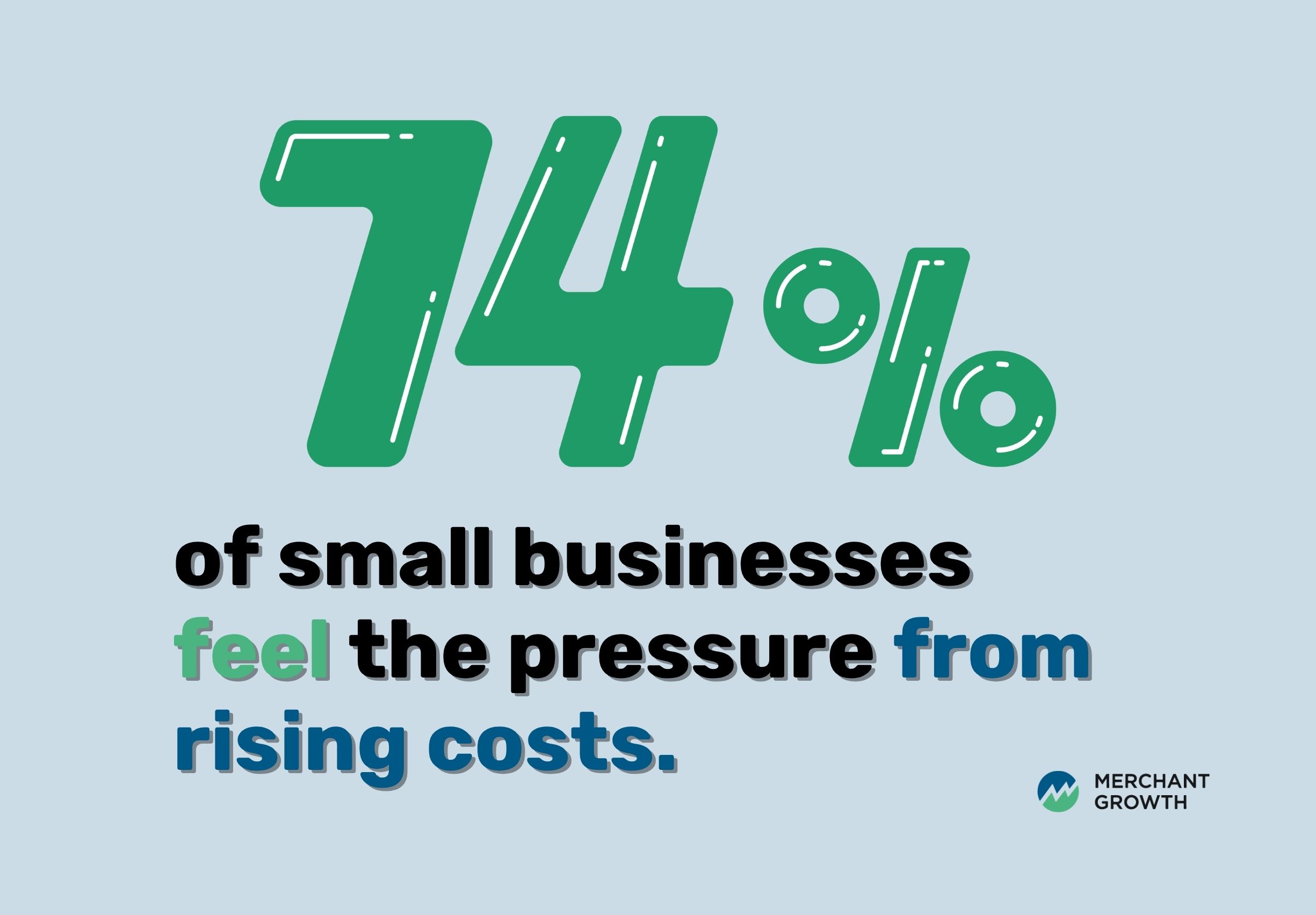
Merchant Growth’s 2025 SME Impact Survey shows just how serious the pressure has become: 74% of Canadian small business owners surveyed say they are feeling the pressures on their business due to inflation and rising costs. Some noted that the constant changes in tariff policies have caused customers to slow down their purchasing behaviour, which is impacting their revenue.
If you import materials, rely on U.S. suppliers, or sell online across the border, these changes likely feel personal. The good news? You’re not alone. Across the country, entrepreneurs are finding creative ways to adapt, from sourcing locally to renegotiating contracts and leaning on financing to bridge cash-flow gaps.
Key Takeaways
- Tariffs and new shipping rules are driving up costs for importers, retailers, and e-commerce sellers.
- Many SMEs are responding with salary cuts, price increases, and delayed growth plans.
- The Buy Canadian movement is helping some local producers but hasn’t yet offset the spike in imported-input costs.
- Businesses that diversify suppliers, control expenses, and leverage government tools and financing are weathering the storm more effectively.
Why Tariffs Matter for Canadian Small Businesses in 2025
In late 2024, the Trump administration announced steeper tariffs on a broad range of imports. While these tariffs technically target goods entering the U.S., they ripple into Canadian supply chains. Many Canadian retailers, manufacturers, and distributors source components or finished products through U.S. intermediaries — so the higher the tariff at the U.S. border, the higher the price Canadians pay upstream.
On top of rising tariffs, Canadian small businesses were dealt another blow with the loss of the U.S. de minimis exemption under CUSMA. Until recently, Canadian retailers shipping low-value goods to U.S. customers could benefit from a higher threshold that allowed many parcels to cross the border without duties or added paperwork. Now, that break is gone — meaning even modest-value shipments face new customs requirements, brokerage fees, and extra costs at the border.
The combined effect: Canadian SMEs are absorbing higher input costs and then competing with U.S. sellers who can offer lower prices and faster delivery. It’s a one-two punch that’s hard to ignore.
Canadian Small Businesses Speak Out: How Tariffs Are Hitting Home
To understand how these trade shifts are affecting real people behind the numbers, Merchant Growth surveyed 131 small business owners across Canada. Most respondents ran lean teams of 2–9 employees — the kind of businesses where every dollar counts and every cost increase is felt immediately.
These businesses represented a broad mix of industries — auto, construction, food and beverage, healthcare, manufacturing, professional services, and transport and logistics — with the largest group coming from retail (19%).
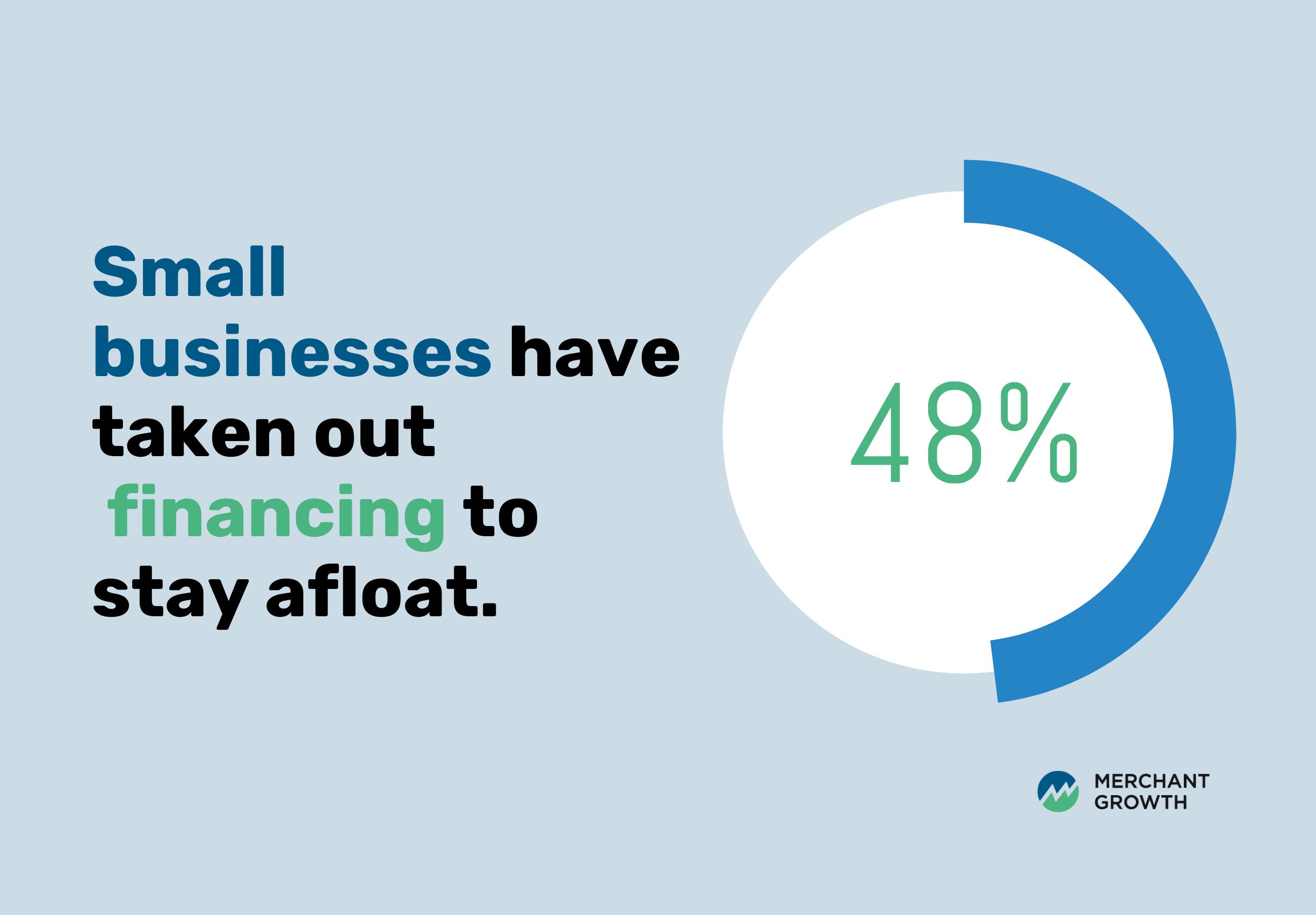
The findings reveal just how challenging 2025 has been:
- 21% of owners reported that U.S. tariffs had a significant impact on their business this year.
- 50% said weak customer spending added even more strain to their bottom line.
- 29% shared that their business is doing somewhat worse compared to last year.
- 71% said they do not feel adequately supported by the government, with some calling for new loan programs to help them weather the storm.
- 48% have taken on additional funding or debt to cope with rising costs.
- On a positive note, 41% said they feel at least somewhat more resilient after learning to navigate these challenges.
The survey underscores what the headlines often miss: tariffs and shifting cross-border rules aren’t abstract policies — they’re reshaping hiring decisions, delaying investments, and testing the resilience of Canada’s small-business community.
Financial Pressures Canadian SMEs Are Facing
Tariffs and rising trade costs don’t affect businesses in isolation — they influence everything from inventory purchases to payroll decisions. In our survey, the financial impact was clear across industries and regions. The data shows that Canadian small businesses are facing a perfect storm of higher input prices, escalating shipping fees, tighter cash flow, and difficult staffing choices — all of which can slow growth and put extra stress on owners.

Rising Input Costs
For many small business owners, the challenge begins before a product even reaches the shelf. 74% of Canadian small businesses we surveyed said rising costs and inflation are having the largest impact on their operations, and 56% reported that increased costs of goods and supplies have been the most noticeable effect of tariffs.
Higher Shipping & Customs Fees
Beyond materials, higher shipping and customs fees are chipping away at already-thin margins. Cross-border e-commerce sellers in particular say they’re spending more on brokerage, courier charges, and paperwork than ever before. These costs often feel unavoidable — they show up in every box shipped, no matter how careful the planning.
Shrinking Margins & Cash-Flow Strain
Trying to stay competitive with U.S. sellers, many Canadian SMEs are absorbing as much of these increases as they can rather than passing them fully onto customers. That loyalty-driven choice comes at a steep cost: 87% of small business owners told us they’ve made personal sacrifices to keep their businesses running smoothly amid rising expenses.
Those sacrifices include 69% who have stopped paying themselves or reduced their own salaries, and 55% who said they’ve delayed major life milestones — such as starting a family or buying a home — to reinvest money back into their businesses. These are not just balance-sheet adjustments; they’re deeply personal trade-offs that show the strain of trying to keep Canadian businesses afloat.
Salary Cuts & Budget Freezes
Even after these personal sacrifices, many businesses have had to make difficult staffing decisions. 35% of surveyed owners said they’ve reduced staff hours or cut positions entirely in response to economic pressures. These decisions are often described as “heartbreaking” by owners who worry about the impact on employee morale and their ability to hire again when things improve.

BC Small Businesses Weather the Storm: Adapting Under Pressure
Across British Columbia, small business owners are facing a perfect storm of rising costs and operational hurdles. A striking 82% of BC business owners in our survey said inflation and higher expenses are having the biggest impact on their operations in 2025.
While 35% reported that their businesses are performing about the same as in 2024, the majority are still feeling the pinch. Nearly two-thirds (64%) have seen a rise in the cost of goods and supplies due to tariffs, and 35% reported supply chain disruptions that make it harder—and more expensive—to keep shelves stocked.
Many owners feel they’ve been left to navigate these challenges without enough guidance. 64% said they feel unsupported by government policies, and for many, this lack of direction has meant tough decisions and a sense of going it alone.

To stay afloat, 42% of BC business owners turned to additional funding or debt to help cover rising costs, while 39% raised prices—a move that’s necessary for survival but risks discouraging already cautious customers. Others took a different approach: 35% diversified their products or services to create new revenue streams and reduce their vulnerability to tariffs.
The personal toll is unmistakable. An overwhelming 86% said they’ve had to make personal sacrifices to keep their businesses running, and of that group, 66% reported they reduced their pay or stopped paying themselves a salary. These sacrifices highlight the resilience and dedication of BC’s entrepreneurs—committed to keeping their businesses alive even when it means putting their own financial security on hold.
Despite the challenges, BC’s small businesses continue to show ingenuity. By seeking new markets, renegotiating supplier contracts, and leaning on financing to bridge the toughest months, they’re proving that adaptability is just as vital as grit in today’s economic climate.

Ontario’s Small Business Reality Check: Resilience Amid Rising Costs
Ontario’s small business community is grappling with some of the toughest conditions it has faced in years. Inflation and tariffs are hitting from all sides, with 72% of Ontario business owners in our survey citing rising costs as their biggest challenge in 2025.
The pressure is being felt across industries—from manufacturing hubs near Windsor to independent retailers in Toronto. Over one-third (37%) said their business is performing worse than it did in 2024, with 60% reporting noticeable cost increases in goods and supplies directly linked to tariffs. To make matters more complicated, 34% said they’ve experienced lower customer demand, a double hit that forces tough decisions about pricing and operations.
The financial strain has left many feeling they’re navigating these challenges alone: 72% believe the government has not provided enough guidance or support. In response, more than half (53%) have turned to additional funding or debt to keep their doors open, while 39% have raised prices to protect their margins—a move that comes with the risk of further dampening customer spending.
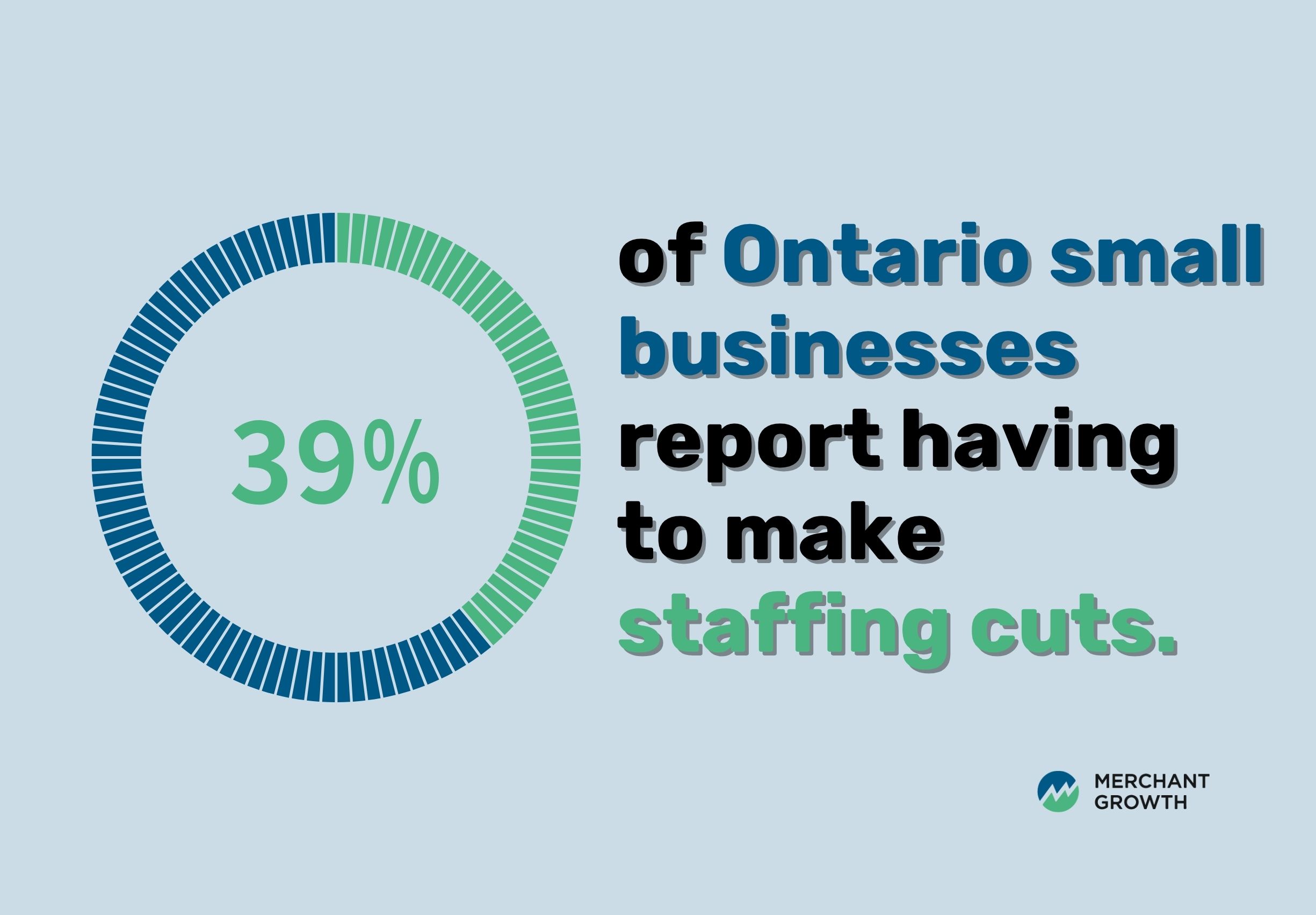
Staffing has been another casualty. Nearly 39% of Ontario small businesses reported reducing staff or cutting hours to manage rising expenses. But perhaps the most sobering figure is that 83% of owners have made personal sacrifices to stay afloat, with 72% saying they’ve reduced or stopped paying themselves a salary.
Despite the strain, Ontario’s small business owners are finding ways to adapt—streamlining operations, seeking local suppliers, and leaning on financing options to bridge cash-flow gaps. This determination reflects the grit and resourcefulness that has long defined Ontario’s entrepreneurial backbone, even in the face of economic uncertainty.
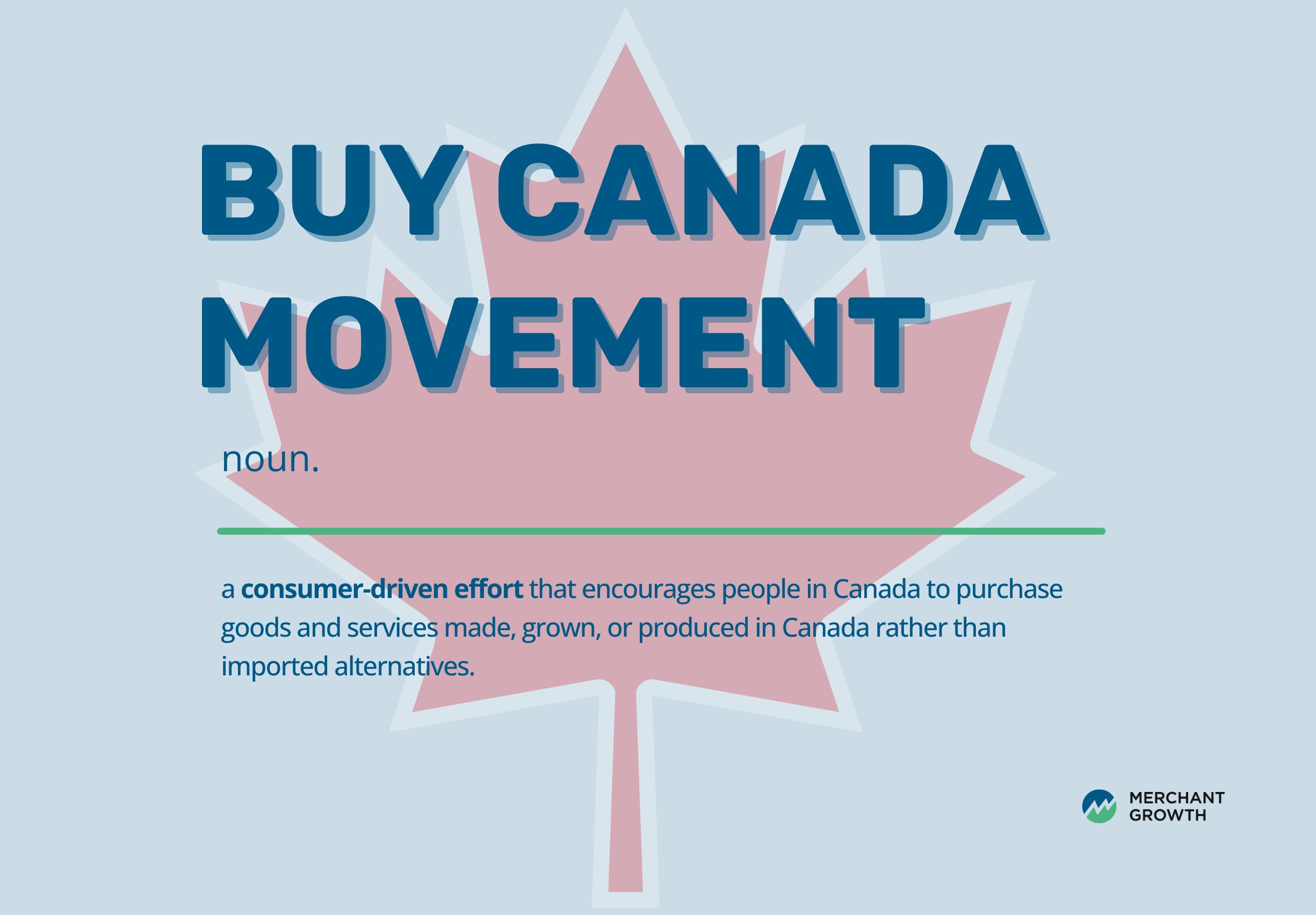
The Buy Canadian Movement – Opportunity With Limits
Rising tariffs and supply chain disruptions have renewed interest in buying locally produced goods. The Buy Canadian movement encourages consumers to support domestic producers, keeping more money in local communities and reducing reliance on unpredictable international shipping routes.
For some businesses, this shift has been a welcome boost. Food producers, home-goods makers, and niche apparel brands reported stronger domestic sales and deeper customer loyalty as Canadians look for locally made alternatives.
However, the impact isn’t universal. In our survey, 57% of small business owners said the Buy Canadian movement has had no noticeable effect on their sales, while 25% reported only a minor positive impact. Many industries — especially those in electronics, automotive parts, and textiles — still rely heavily on imported components.
For these businesses, the Buy Canadian sentiment may help generate goodwill at the checkout counter but does little to offset the higher costs of imported materials. The movement is a bright spot for some Canadian-made brands, but for many others, it’s not enough to counter the financial strain caused by tariffs and rising input costs.

Ongoing Challenges for Canadian SMEs
Even as small businesses adjust pricing, diversify suppliers, and find creative ways to cut costs, some challenges are harder to solve alone. These barriers are baked into the current trade environment and continue to shape how Canadian SMEs compete and plan for the future.
- Competitive Disadvantage: Canadian sellers often face higher landed costs than U.S. rivals due to the De Minimis gap.
- Customer Pushback: Higher retail prices risk driving shoppers to cheaper alternatives south of the border.
- Administrative Complexity: Added customs paperwork slows delivery and increases admin overhead.
- Economic Uncertainty: With future U.S. tariff policy unclear, long-term planning is risky.
While resilience is a defining trait of Canadian entrepreneurs, these structural hurdles demand more than individual effort. Addressing them will require coordinated solutions — from policy clarity to better cross-border logistics — so that small businesses can focus less on reacting to trade shifts and more on growing their companies.
Practical Strategies to Adapt and Build Resilience
Canadian small businesses have always been known for their determination and creativity — qualities that are being tested more than ever. Across industries, SMEs are proving that with the right adjustments, it’s possible not only to survive but to stay competitive.
Below are some of the most effective strategies businesses are using right now to adapt:
1. Cost-Control Measures
When every dollar counts, controlling expenses can have an immediate impact on the bottom line. Many businesses are renegotiating contracts with their suppliers to lock in better rates or payment terms. Others are consolidating shipments to reduce per-unit courier fees, a particularly useful tactic for e-commerce sellers with frequent small orders. Some have even turned to alternative ports of entry to avoid the highest surcharges on busy trade routes. These changes may seem small individually, but collectively they help preserve margins in a time of rising costs.
2. Supply-Chain Diversification
One lesson of the last few years is that over-reliance on a single supplier or country can leave businesses vulnerable. By exploring Canadian or non-U.S. suppliers for certain inputs, small businesses can reduce exposure to U.S. tariffs and cross-border paperwork. This shift often requires research and relationship-building, but even partial diversification can help stabilize costs and delivery timelines.
3. Shipping Efficiencies
Shipping remains one of the largest and most unpredictable expenses for many SMEs. Some businesses are experimenting with hybrid carriers — combining the cost-effectiveness of Canada Post for standard routes with the speed of couriers for urgent or cross-border orders. Others are using bulk-shipping models to cut per-unit costs, especially for seasonal or high-volume products. These logistical tweaks can free up cash flow that might otherwise be eaten up by surcharges and last-mile fees.
4. Leveraging Government & Trade Resources
There are tools available to help, though many businesses don’t always know where to start. The Canada Border Services Agency (CBSA) provides duty and tariff calculators to predict landed costs more accurately — a key advantage for budgeting and pricing decisions. Meanwhile, provincial export-assistance programs can help SMEs find new markets at home and abroad. Learning to tap these resources can take pressure off owners who have been navigating challenges largely on their own.
5. Financial Planning Tools
In volatile times, visibility is everything. Businesses are increasingly turning to expense-tracking apps, cash-flow forecasting software, and tariff-impact calculators to get a clearer picture of future costs. Having this information upfront allows owners to make proactive decisions — from adjusting pricing to timing their inventory purchases — rather than reacting to surprises after the fact.
These strategies won’t eliminate the challenges overnight, but they can help small businesses regain a sense of control in an unpredictable trade climate. Step by step—through smarter cost management, diversified supply chains, and better financial planning—Canadian entrepreneurs can create the breathing room they need to keep serving their customers and move forward with confidence.
How Merchant Growth Can Help Canadian Businesses Weather Tariff-Driven Costs
Tariffs and shipping surcharges often hit suddenly — and so do the cash-flow gaps they create. Whether it’s covering a larger-than-expected inventory bill, paying higher courier fees, or investing in new local supplier relationships, access to capital can be the bridge that keeps operations moving.
That’s where flexible financing can help — allowing you to manage rising costs today while protecting your growth plans for tomorrow.
Talk to Merchant Growth to explore funding options that help your Canadian small business stay competitive and resilient amid ongoing trade-policy shifts.
Expanding Your Business: How to Successfully Open a Second Location in Canada
Opening a second location is an exciting milestone for any small business. It’s a sign that your brand has found traction, loyal customers, and a model that works. But expansion is more than a celebratory step—it comes with operational, financial, and strategic challenges. Canadian small businesses that plan carefully before opening a second site are far more likely to see sustained growth and profitability. In this guide, we’ll walk you through the essential steps—from assessing readiness to managing multiple sites—so you can expand confidently and sustainably.
Key Takeaways
- Expansion increases revenue, brand presence, and customer reach.
- Conduct market research to validate demand for a new location.
- Develop a detailed business plan and budget for operations.
- Hire and train staff to maintain culture and service quality.
- Track performance, gather feedback, and adjust strategy regularly.
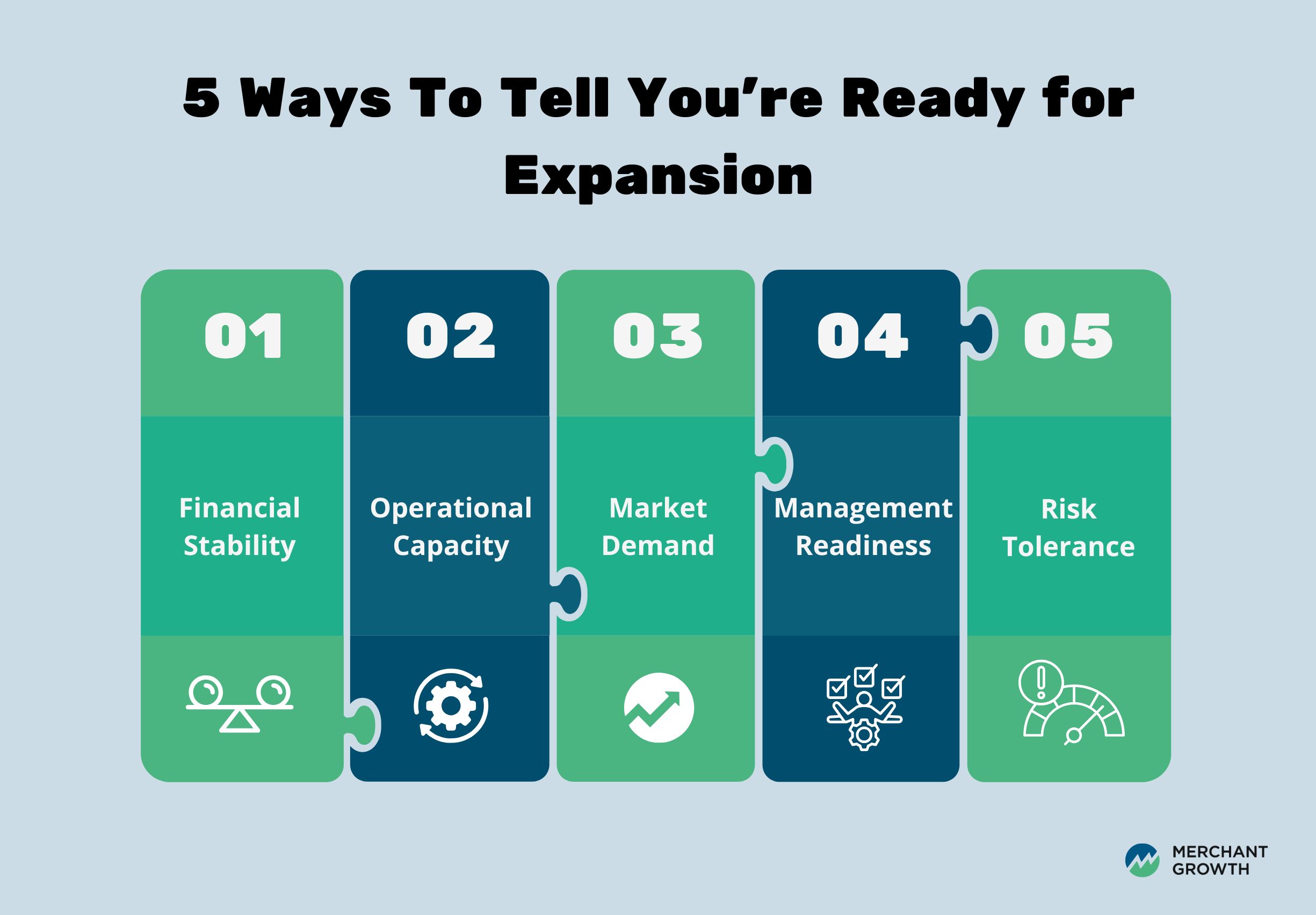
How to Know If You’re Ready for a Second Location
Opening a second location is an exciting growth opportunity, but it’s not a step to take lightly. Expanding too soon or without proper preparation can put your entire business at risk. Before moving forward, it’s essential to carefully assess your readiness across several critical areas. Evaluating financial health, operational systems, market demand, leadership capacity, and risk tolerance will help you determine if your business is truly prepared for the challenges and opportunities of a second location.
Financial Stability
Your first location should demonstrate consistent profitability and healthy cash flow before considering expansion. A strong financial foundation ensures your business can absorb the additional costs associated with a new location, from renovations and inventory to staffing and marketing. Evaluating your financial statements, projecting cash flow, and building a contingency fund are crucial steps to prevent unexpected setbacks during expansion.
Operational Capacity
Operational readiness goes beyond having enough employees—it requires reliable systems, processes, and workflows that can scale. Your current team and operational infrastructure should be able to handle the increased workload without compromising service quality or efficiency. Consider whether your supply chain, technology, and management processes can support an additional location smoothly.
Market Demand
Even if your business is financially and operationally ready, the market itself must be supportive. Strong brand recognition, a loyal customer base, and evidence of untapped demand in your target area are key indicators that a second location could succeed. Conducting thorough market research, including competitor analysis and demographic studies, can validate whether expansion is a smart move.
Leadership and Management Readiness
Running multiple locations requires strong leadership. You—or your management team—must have the skills, bandwidth, and organizational capacity to oversee operations across multiple sites. Effective delegation, clear communication, and oversight mechanisms are essential to ensure consistent quality and performance at both locations.
Assessing Risk Tolerance
Every business expansion carries inherent risks; assessing your risk tolerance honestly helps you make informed decisions and prepare mitigation strategies. Expanding too quickly without fully understanding potential pitfalls can jeopardize the stability of both locations.
By carefully evaluating these factors, you can determine whether your business is truly ready to take the next step. If your business meets these criteria, you can move forward with confidence and develop a strategic plan for opening a second location, setting the stage for sustainable growth and long-term success.
Different Types of Expansion Strategies
Expanding to a second location doesn’t have to follow a single path. Choosing the right approach depends on your resources, goals, and appetite for risk. Understanding the different strategies available allows you to scale your business in a way that aligns with your vision while maintaining control, quality, and brand consistency.
Independent Ownership
Independent ownership means opening and managing your second location yourself, maintaining full control over operations, staffing, and day-to-day decisions. This approach allows you to implement your business model exactly as intended and ensures that every aspect of the new location reflects your standards and brand values. While this strategy offers maximum control, it also requires significant investment of time, money, and management attention.
Franchising Model
A franchising model allows you to scale by permitting others to invest in and operate new locations under your brand, following standardized guidelines. This approach can accelerate growth and reduce the financial burden of opening additional sites. In fact, 45% of Canadian retail sales came from franchised businesses. On the other hand, franchising requires careful planning to develop training programs, operational manuals, and support systems to maintain consistency and protect your brand reputation.
Partnerships or Joint Ventures
Expanding through partnerships or joint ventures involves teaming up with another business or investor to share the costs, expertise, and risks of opening a new location. This strategy can provide access to additional resources, knowledge, and networks, making expansion more manageable. Clear agreements on responsibilities, profit sharing, and operational oversight are critical to ensure a smooth collaboration.
Digital or Operational Extensions
Before committing to a full-scale second location, some businesses explore digital or operational extensions such as pop-up shops, kiosks, or online-only services. This allows you to test new markets, evaluate customer demand, and fine-tune operations with lower risk. Digital-first expansion can also complement physical growth, creating multiple revenue streams while increasing brand visibility.
Hybrid Approaches
60% of Canadian small businesses have admitted to using more than one sales channel. Hybrid strategies combine elements of traditional brick-and-mortar expansion with digital or operational extensions. For example, opening a smaller storefront while simultaneously investing in e-commerce or delivery services can diversify revenue streams, reach new customers, and reduce the risk associated with a single location. Hybrid approaches offer flexibility and adaptability, particularly for small businesses navigating competitive markets.
Choosing the right expansion strategy is a crucial step in your growth journey. By weighing control, investment, risk, and operational complexity, you can select the approach that aligns with your business goals and resources. Once you’ve decided on a strategy, you’re ready to move into the practical steps of planning, funding, and launching your second location—laying the groundwork for a smooth, successful expansion.

Step-by-Step Guide to Opening Your Second Location
Opening a second location is an exciting milestone, but it requires careful planning, organization, and attention to detail. A structured approach ensures your expansion is sustainable, minimizes risk, and positions your business for long-term success. The following steps outline how Canadian small business owners can move from ambition to action while maintaining operational quality and customer satisfaction.

Step 1: Planning and Research
Successful expansion begins with clarity of purpose. Start by defining why you want a second location—is it to increase revenue, capture new markets, or diversify income streams? Once your objectives are clear, conduct thorough market research to assess local demographics, study competitors, and evaluate customer demand. A detailed business plan should follow, incorporating financial projections, operational workflows, staffing requirements, and marketing strategies.
Location scouting is also critical; consider factors such as accessibility, visibility, neighbourhood growth trends, and favourable lease terms. Finally, financial planning ensures you’re prepared for both anticipated and unexpected costs, including renovations, inventory, staffing, and operational expenses, creating a strong foundation for your new location.

Step 2: Operational Setup
The operational setup of your second location sets the stage for delivering the same quality and experience as your first site. Hire and train staff who embody your company culture, ensuring they understand service standards and operational expectations. Implement inventory management systems capable of tracking products across multiple locations and integrate technology tools such as POS systems, accounting software, and internal communication platforms to coordinate operations efficiently. Preserving your brand culture and operational consistency across locations is essential for maintaining customer loyalty and ensuring employees feel connected to your business values.

Step 3: Launching Your Second Location
Launching a second location successfully requires careful pacing. Begin with a soft launch to test operations, uncover any issues, and collect feedback from both staff and early customers. Coordinate marketing efforts to generate excitement, using social media, email campaigns, local advertising, and in-store promotions to attract attention. During the first few months, closely monitor key performance indicators (KPIs) such as sales, customer satisfaction, and operational efficiency. Regularly gather feedback and make small, iterative improvements to prevent costly mistakes and establish a strong operational rhythm.

Step 4: Growth and Long-Term Success
Once your second location is running smoothly and generating consistent results, focus on long-term growth. Continue investing in employee training, refining operational systems, and implementing marketing initiatives to maintain high-quality service standards. Analyze data from both locations to optimize processes, improve efficiency, and identify new opportunities for growth. Gradual, controlled scaling ensures your expansion remains sustainable while protecting your brand reputation and operational integrity.
Following a structured step-by-step approach allows your business to expand confidently and efficiently. By carefully planning, setting up operations, managing the launch, and focusing on long-term growth, you create a blueprint for success that balances ambition with practicality. With these foundations in place, it’s easier to understand the strategic benefits of opening a second location and why expansion can be a game-changer for your business.

Why Expand to a Second Location?
Expanding to a second location offers a range of significant benefits beyond simply increasing sales. It allows your business to reach new markets, boost brand visibility, and diversify revenue streams, making your company more resilient to changes in customer demand or market fluctuations. By tapping into new demographics, you can attract a broader customer base while reinforcing your brand presence in existing markets.
At the same time, expansion introduces challenges, including financial pressures, operational complexity, and the need to maintain consistent service and brand standards across locations. These risks can be mitigated through careful planning, realistic goal-setting, and structured operational management. Understanding both the opportunities and responsibilities of running multiple locations is key.

How to Run Multiple Locations Smoothly
Managing multiple locations requires more than duplicating what works at your original site—it demands a thoughtful approach to consistency, communication, and leadership. Without clear systems and oversight, differences between locations can quickly erode customer experience and operational efficiency. By implementing structured processes, leveraging technology, tracking performance, and balancing leadership oversight with local autonomy, your business can maintain quality across all sites while empowering managers to respond to their unique market needs.
Emphasize Systems and Structure
Consistency starts with standardized processes. Developing playbooks, standard operating procedures (SOPs), and detailed workflows ensures that every location delivers the same high-quality customer experience. Clear guidelines reduce confusion, streamline training, and make it easier to scale operations without sacrificing service or efficiency.
Leverage Technology
Technology is a cornerstone of multi-location management. Point-of-sale (POS) systems, scheduling software, inventory tracking tools, and internal communication platforms help managers coordinate tasks, monitor operations, and share information in real time. When systems are integrated, they allow leadership to oversee multiple locations efficiently while keeping staff informed and aligned.
Performance Management
Tracking key performance indicators (KPIs) for each location is essential. Monitoring metrics such as revenue, customer satisfaction, employee productivity, and operational efficiency allows you to identify trends, address challenges quickly, and replicate successful strategies across all sites. Regular reporting ensures each location is contributing to your overall business goals.
Leadership Balance
Effective multi-location management requires balancing centralized oversight with local autonomy. While leadership ensures that company goals, culture, and standards are maintained, local managers must have the freedom to respond to their specific market’s needs. This balance allows for consistency without stifling innovation or the ability to adapt to unique customer preferences.
In short, running multiple locations smoothly depends on establishing strong systems, integrating the right technology, closely monitoring performance, and maintaining an appropriate balance of oversight and autonomy. With these practices in place, your business is better positioned to scale successfully, setting the stage for understanding common mistakes to avoid when expanding.

Common Mistakes to Avoid When Expanding
Expansion is exciting, but moving too quickly or overlooking key details can undermine growth and strain resources. Understanding common pitfalls allows you to plan carefully, protect your existing operations, and give your new location the best chance of success. By focusing on financial readiness, operational consistency, and people management, you can avoid the mistakes that often derail small business expansions.
Growing Too Quickly
Opening a second location before your first is fully stabilized is a common mistake. Rapid expansion can stretch staff, systems, and finances too thin, leading to operational errors, poor customer experiences, and burnout. It’s crucial to prove that your original location operates efficiently and profitably before committing to a new site.
Underestimating Costs
Expansion often comes with unexpected expenses, from renovations and permits to additional inventory and staff. Overly optimistic revenue projections or insufficient capital reserves can jeopardize both your new and existing locations. Careful budgeting, realistic forecasts, and contingency planning help ensure that financial surprises don’t derail your growth.
Neglecting the Original Business
While focusing on a second location, it’s easy to unintentionally let the first site slip. Declining service quality, inventory issues, or employee dissatisfaction at your original location can damage your brand and affect overall profitability. Maintaining oversight, supporting your staff, and upholding standards at all locations is essential.
Overlooking People and Culture
Staff are the backbone of every business, and neglecting training, retention, or company culture can have serious consequences. A new location staffed with untrained employees or disconnected from your brand values risks creating inconsistent customer experiences. Investing in team development and cultural alignment ensures every location reflects your business standards.
By recognizing and proactively addressing these common mistakes, you can expand more confidently and sustainably. Avoiding these pitfalls not only protects your existing business but also positions your second location for long-term success, leading naturally into the tools and resources that can support effective expansion.
Helpful Tools & Resources for Growing Your Business
Expanding to a second location requires careful planning, organization, and reliable systems. Fortunately, Canadian small business owners have access to a variety of tools and resources that can simplify multi-location management and reduce the risk of costly mistakes. From planning aids to technology platforms, the right resources make it easier to stay on top of operations and make informed decisions.
Key tools and resources include:
- Planning aids: Checklists for site selection, lease negotiations, and operational readiness help guide each stage of expansion.
- Budgeting support: Templates and calculators for startup costs, cash flow projections, and breakeven analysis allow for more accurate financial planning.
- Operational guides: SOP examples, training manuals, and process documentation ensure consistency across multiple locations.
- Technology solutions: Inventory management systems, payroll platforms, scheduling software, and communication tools streamline coordination and improve efficiency.
- Learning examples: Case studies and success stories from other businesses provide insight, practical strategies, and inspiration for your growth journey.
By leveraging these tools and resources, you can reduce the guesswork, maintain operational consistency, and set your second location up for success. Combining these resources with careful planning and effective management creates a strong foundation for sustainable business growth.
How Merchant Growth Can Support Your Expansion
Financing a second location can be one of the biggest hurdles in business expansion. Merchant Growth provides tailored term financing solutions to cover lease costs, inventory, equipment, and staffing for your new location. Beyond term financing, Merchant Growth offers tools, templates, and guidance to help Canadian small businesses track goals, maintain operational consistency, and grow strategically. By partnering with Merchant Growth, you gain both the capital and confidence to take the next step—apply for financing to fund your second location and expand your business with a plan for long-term success.
How to Hire the Right Employees for Your Canadian Small Business
Hiring employees can be one of the most exciting—and nerve-wracking—steps in growing a business. For small business owners and sole proprietors, adding your first team member or expanding your staff often comes with big questions. How do you know when it’s the right time? What rules and requirements do you need to follow in Canada? And most importantly, how do you make sure you’re choosing the right people to help your business succeed?
The truth is, hiring doesn’t have to be overwhelming. With the right preparation and structure, it can become a smooth, empowering process that transforms your business and frees you to focus on what you do best. This guide will walk you through everything you need to know—from planning your first hire, to meeting Canadian legal requirements, to building strong onboarding systems.
Key Takeaways
- Hiring requires planning, compliance, and organization.
- Choose the right employee type for your business needs.
- Use checklists, templates, and HR tools to stay on track.
- Avoid mistakes by being thorough in screening and onboarding.
- With the right hires, your business can grow stronger and more resilient.
Why is Hiring the Right Employees So Important?
It’s easy to assume hiring is just about filling an empty role, but in reality, it affects every part of your business. Each new employee brings their own energy, ideas, and way of working—and that can have a big impact on your productivity, culture, and bottom line. The right hire can take tasks off your plate, boost efficiency, and even spark innovation. But the wrong hire? That can cost you time, money, and morale.
For Canadian small business owners, hiring also comes with legal responsibilities. Once you bring someone onto your team, you’re required to comply with both federal and provincial standards, which means things like:
- Registering with the Canada Revenue Agency (CRA) for payroll deductions
- Offering mandatory benefits such as Employment Insurance (EI)
- Keeping accurate and detailed employment records
These requirements aren’t optional and ignoring them can lead to costly penalties.
When you put care into your hiring process, you’re not just finding someone to fill a seat—you’re building the foundation for long-term success. The employees you choose today will help shape your business for tomorrow.
Steps to Prepare Before Hiring
Because hiring is such an important decision for your business, the work really starts before you ever share a job posting. Preparation is what sets you up for success—it ensures you know exactly what you’re looking for, what you can realistically offer, and how you’ll measure whether a candidate is the right fit. Skipping this step often leads to rushed decisions and costly mistakes, while taking the time to prepare makes the entire hiring journey smoother and far more effective.
With that in mind, let’s break down the key steps you’ll want to take before you begin the hiring process. These steps will help you stay organized, focused, and confident as you move forward.
Step 1 - Examine Your Business Needs
Begin your preparation by taking a step back and an honest look at your business as it stands today. Ask yourself:
- What tasks are falling behind because I don’t have enough time?
- Which parts of the business could grow faster if I had more support?
By identifying the gaps in your operations, you can better define the role you need to fill. This step ensures you’re hiring strategically—not just reacting to the day-to-day stress of being short-handed.
For example, if customer inquiries are going unanswered, perhaps you need an administrative assistant. If your sales are steady but marketing is lagging, a marketing coordinator may be a better first hire.
Step 2 – Budget for Hiring
Secondly, once you’ve identified the role you need, it’s time to ask: Can I afford this hire, and in what capacity? Hiring costs go beyond salary. You must also factor in obligations like:
- Employment Insurance (EI)
- Canada Pension Plan (CPP) contributions
- Paid vacation
- Training time
- Technology or tools
For many small businesses, this step is also where you weigh whether to bring someone on full-time, part-time, or on a contract basis. Building a realistic budget upfront gives you a financial roadmap for the hiring process and prevents surprises down the line.
Step 3 - Create Detailed Job Descriptions
Next comes one of the most overlooked but critical steps: writing a clear, detailed job description. Think of this as both your recruiting tool and your performance guide later on. A vague posting like “looking for help with admin” won’t attract the right candidates. Instead, outline the day-to-day responsibilities, required skills, and the outcomes you expect from the role.
For example, “answering customer inquiries within 24 hours” is more specific than “managing emails.” A strong job description helps candidates self-select, saving you time and ensuring you attract people who are genuinely qualified.
Step 4 - Decide on Employment Type
After you’ve defined the role and budget, you’ll need to decide on the type of employee that makes the most sense for your situation. Not every business needs a full-time worker right away. Perhaps you need seasonal staff to handle a busy holiday season, a contractor for a short-term project, or even a remote employee who brings specialized expertise from outside your local area. Choosing the right type of employee allows you to stay flexible while still meeting your goals.
For example, if you’re testing a new service offering, a contract hire may be safer than committing to a permanent salary
Step 5 - Using Checklists and Templates
Finally, before you start recruiting, it’s wise to set up systems that will keep you organized throughout the process. Hiring involves many moving parts: creating job postings, scheduling interviews, conducting reference checks, drafting contracts, and onboarding. Using checklists and templates—whether downloaded from government resources, HR software, or created in-house—ensures no step gets missed. This also saves you time and reduces stress, because instead of reinventing the wheel for each hire, you have a repeatable, structured process to follow.
To make this stage even easier, we’ve created a New Employee Hiring Checklist that walks you through each step—from identifying your needs to preparing contracts and onboarding. It’s a simple, practical tool designed to keep you organized and confident throughout the hiring process. Download the checklist here ➡️ Download: New Employee Checklist
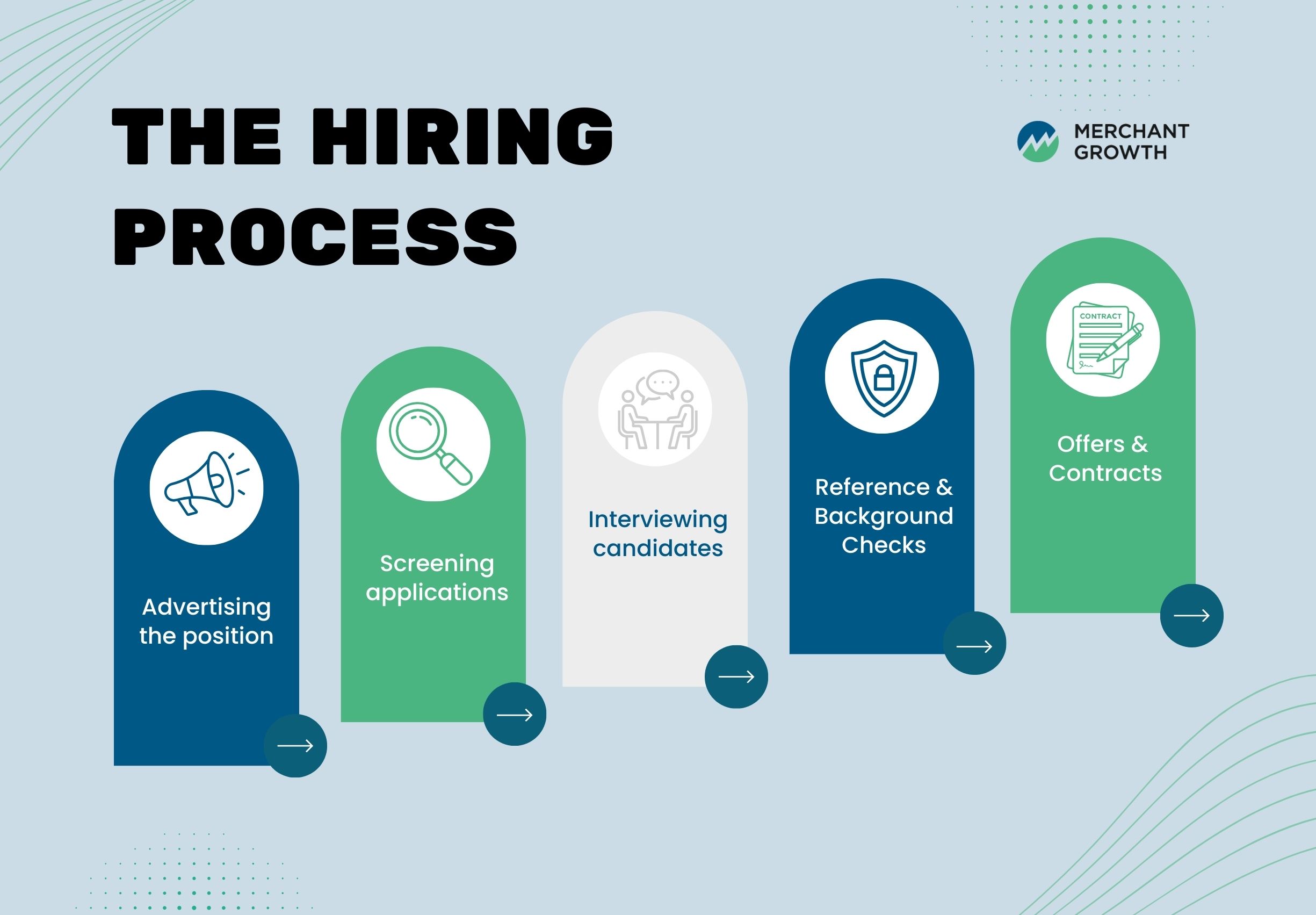
The Hiring Process in Canada
Once you’ve laid the groundwork and defined your needs, it’s time to move into the hiring process itself. In Canada, hiring isn’t just about finding someone who can do the job—it’s also about following a structured process that protects your business and sets the tone for your new employee’s success. By breaking it down into clear steps, you’ll avoid common pitfalls and make the experience smoother for both you and your candidates.
Step 1 - Advertising the Position
The first step is to let people know you’re hiring. Posting on Job Bank, Canada’s national employment platform, is a great starting point since it connects you with thousands of job seekers for free. You can also use platforms like Indeed or Workopolis for a broader reach. But don’t stop there—think about where your ideal candidate spends their time. If you’re in a trade or professional industry, associations or LinkedIn groups may be more effective. For local businesses, word-of-mouth referrals or community postings can sometimes attract stronger candidates than a generic online posting.
Pro Tip: Don’t just post and wait—share your job posting on your business’s social media, newsletter, or even at your store, restaurant, salon or office. Candidates who are already connected to your brand are often a better cultural fit.
Step 2 - Screening Applications
Once applications start rolling in, it’s easy to feel overwhelmed. That’s why setting clear criteria in advance is essential. Look for alignment with your job description: do the candidate’s skills and experiences match what you need? At the same time, don’t overlook potential. A candidate who shows enthusiasm, adaptability, and willingness to learn may ultimately be more valuable than someone who checks every technical box but lacks drive.
Pro Tip: Use a simple scoring system when reviewing resumes—for example, rate candidates on skills, experience, and attitude. This makes comparisons more objective and reduces the chance of bias.
Step 3 - Interviewing Candidates
Interviews give you the chance to go deeper and evaluate whether a candidate will thrive in your workplace. Structured interviews—where every candidate answers the same core set of questions—are the most effective way to ensure fairness. Focus on both technical skills and cultural fit. For instance, you might ask about how a candidate handled a challenging situation in the past to gauge problem-solving ability and teamwork.
As for format, in-person interviews often give you a better sense of personality and presence, while virtual interviews can save time and expand your candidate pool. For early screenings, video calls can be efficient, but for final interviews—especially for roles that require close collaboration—meeting face-to-face is usually worth it.
Pro Tip: Always include at least one practical or scenario-based question (“How would you handle X situation?”). It reveals how a candidate thinks on their feet, which is often more telling than rehearsed answers.
Step 4 - Reference and Background Checks
Checking references and performing background checks is about verifying what you’ve been told. Calling a former employer can give insight into a candidate’s work ethic, reliability, and strengths. Be sure to ask open-ended questions like, “What was it like working with this person?” or “Would you rehire them?”
For certain roles—especially those involving finances, sensitive information, or work with vulnerable groups—a background check is essential. In Canada, you can use services like Certn, MyBackCheck, or Sterling Backcheck, which provide criminal record checks, employment verifications, and credit history when relevant.
Pro Tip: Always ask for the candidate’s consent in writing before performing any background checks—this protects you legally and builds trust with the applicant.
Step 5 - Extending Offers and Finalizing Employment Contracts
When you’ve chosen your candidate, the next step is extending an offer. This isn’t just a handshake agreement—employment contracts are legally binding documents that outline responsibilities, compensation, benefits, and conditions of employment. They protect both you and your employee by setting clear expectations from the start.
Many small businesses use contract templates as a starting point, but it’s often wise to have a lawyer review your contract—especially for your first hires. This ensures you’re compliant with Canadian employment law and reduces the risk of disputes later.
Pro Tip: Don’t delay once you’ve made a decision. Top candidates are often interviewing with multiple employers. Make the offer quickly and be clear about next steps—such as signing the contract, providing documentation, and start dates.
Legal Requirements and Documentation
Let’s dive deeper into one of the most important (and often most confusing) parts of hiring in Canada: the legal requirements and documentation. While this may not be the flashiest stage of bringing on a new team member, it’s absolutely essential. Getting it right keeps your business compliant, protects you from costly mistakes, and shows your employees that you’re running a professional, trustworthy operation.
Employment Standards
Each province and territory has its own employment standards covering minimum wage, overtime pay, vacation, and working hours. These are not optional guidelines—they’re legal requirements. Even if an employee verbally agrees to something different, you as the employer must still comply with the law. Knowing the rules up front helps you avoid disputes, fines, or reputational damage later. Let’s break them down in more detail.
Minimum Wage Across Canada (2025)
One of the most important standards to understand is minimum wage. Rates vary depending on where your business operates, and in some provinces, they increase annually. Below is a snapshot of the minimum wage rates across Canada for 2025:
| Province/Territory | Minimum Wage (2025) |
|---|---|
| Alberta | $15.00 |
| British Columbia | $17.85 (Increase June 1 annually) |
| Manitoba | $15.80 (Increase to $16.00 October 1, 2025) |
| New Brunswick | $15.65 |
| Newfoundland & Labrador | $16.00 |
| Nova Scotia | $15.70 (Increase to $16.50 October 1, 2025) |
| Ontario | $17.20 (Increase to $17.60 October 1, 2025) |
| Prince Edward Island | $16.00 (Increase to $16.50 October 1, 2025) |
| Quebec | $16.10 |
| Saskatchewan | $15.00 (Increase to $15.35 October 1, 2025) |
| Northwest Territories | $16.95 |
| Nunavut | $19.75 |
| Yukon | $17.94 |
Minimum wage as of September 1, 2025. Source: Wagepoint
Overtime Pay in Canada
Overtime rules are another area where each province and territory sets its own standards. In most cases, employees are entitled to time-and-a-half (1.5x their regular wage) once they’ve worked beyond the daily or weekly threshold. These thresholds aren’t the same everywhere, so it’s important to check the rules where your business operates.
Here’s a simplified overview of overtime rules across Canada for 2025:
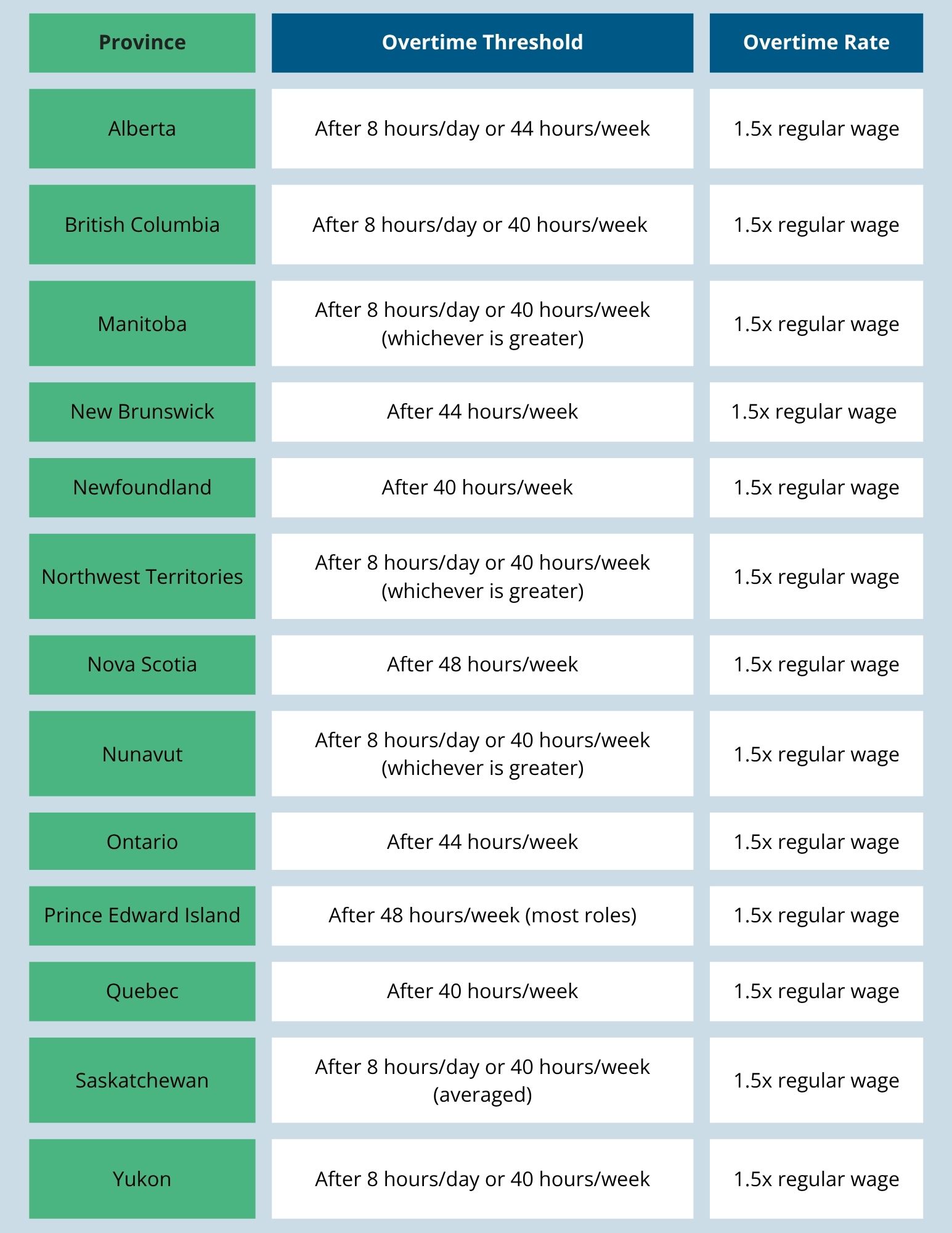
Pro Tip: Not every employee is covered by overtime laws. Management roles, some sales positions, and certain industries (like agriculture or trucking) often have exemptions. Always double-check provincial legislation if you’re unsure
Vacation Policies & Pay
Vacation rules ensure employees get the rest they’re entitled to while still being compensated. Each province and territory has its own standards, but most follow a pattern of 2 weeks of vacation after the first year of employment, and 3 weeks once an employee has been with you longer (usually after 5 years).
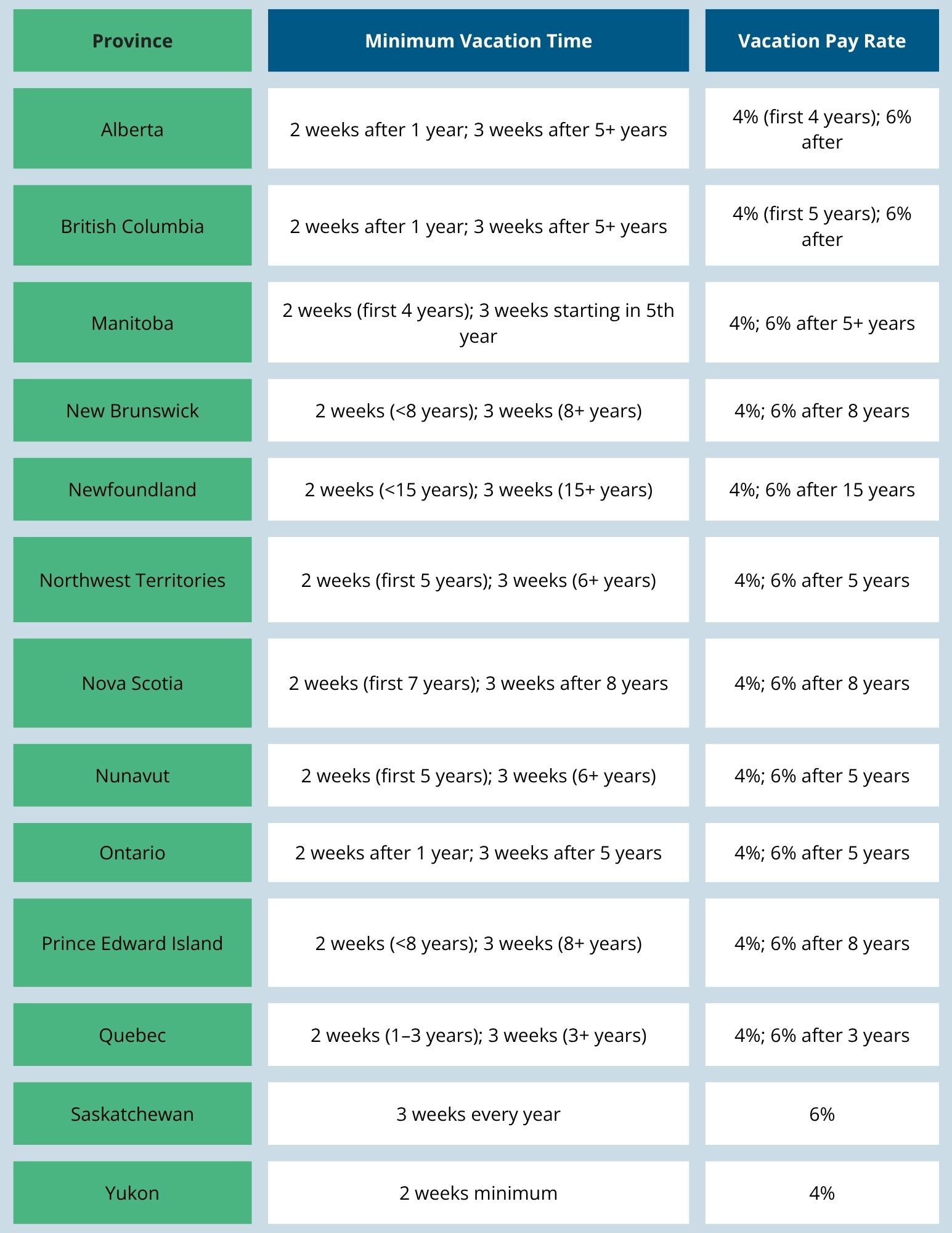
Pro Tip: Vacation pay must be paid out even if an employee doesn’t take their vacation. You cannot “skip” vacation entitlements, even if an employee agrees to it.
Standard Working Hours
In most provinces and territories across Canada, the standard workweek is set at 40 hours, with a daily maximum of 8 hours. Once an employee exceeds these limits, overtime rules typically kick in.
It’s also worth noting that standard hours don’t always apply equally across every industry. Sectors like construction, trucking, agriculture, or healthcare often have unique rules that account for the nature of the work. Some provinces also allow “averaging agreements,” which let employers and employees’ average hours over a set period (like two or four weeks). This can help smooth out schedules in industries where workloads fluctuate seasonally or weekly.
Employers are also responsible for providing rest periods and breaks. For example, most provinces require at least one 30-minute break after 5 consecutive hours of work, though the specifics can vary. These requirements are in place to ensure employees are not only compensated fairly but also able to work safely and sustainably.
Pro Tip: Always confirm the rules that apply in your province or territory—and remember that federally regulated businesses (like airlines, banks, and telecoms) follow federal labour standards instead of provincial ones. If your industry is covered by special regulations, be extra careful to stay compliant.
Contracts and Offer Letters
While a verbal agreement may technically be binding, relying on one is risky. A written employment contract or offer letter protects both you and your employee by clearly setting out the terms of the relationship. It creates a shared understanding from the very beginning and helps avoid misunderstandings later.
At a minimum, your contract should cover:
- Job title and role expectations – a clear outline of duties, responsibilities, and reporting structure.
- Start date and work schedule – including standard hours, days of work, and any probationary period.
- Compensation details – base pay, hourly rate or salary, overtime eligibility, commission structure (if applicable), and pay schedule.
- Benefits – statutory benefits (like CPP, EI, vacation pay) as well as any additional perks you provide (health insurance, retirement plans, bonuses, etc.).
- Vacation and leave entitlements – in line with provincial standards, plus any company policies that go beyond the minimum.
- Termination conditions – notice requirements, severance (if applicable), and grounds for termination.
- Confidentiality and non-compete clauses – if relevant, to protect sensitive business information.
- Other terms – such as probationary periods, remote work arrangements, or expectations around company equipment and technology use.
When drafting your employment contract, avoid overly complicated legal jargon. A contract should be clear and easy for both you and your employee to understand—it’s about building trust as much as protecting your business.
Payroll Registration and Deductions
Once you hire an employee, one of your first responsibilities is to set up a payroll account with the CRA. Through this account, you’ll deduct and send in contributions for income tax, Employment Insurance (EI), and the Canada Pension Plan (CPP). You’ll also need to keep accurate payroll records, including hours worked, wages paid, and all deductions made.
Here’s a simple breakdown of what that looks like:
Canada Pension Plan (CPP)
The CPP helps employees save for retirement and also provides disability and survivor benefits. Both you and your employee contribute equally.
- Employees and employers each contribute 5.95% of pensionable earnings (earnings above $3,500 per year).
- In 2025, contributions are capped once the employee earns about $71,300.
- That means the maximum annual contribution is about $4,034.10 each (for both employee and employer).
Employment Insurance (EI)
EI provides temporary income support if an employee loses their job, takes parental leave, or faces other eligible situations.
- Employees contribute 1.64% of insurable earnings.
- Employers pay 1.4 times that amount on top.
- In 2025, the maximum an employee will contribute is about $1,077.48, while the employer maximum is about $1,508.47.
Making Payroll Simple
When you run payroll, you’ll:
- Deduct the employee’s share of CPP and EI from their wages.
- Add your share of CPP and EI as the employer.
- Remit the total amounts to the CRA on your required schedule.
To make things easier, the CRA offers a Payroll Deductions Online Calculator that lets you quickly estimate how much to deduct for CPP, EI, and income tax.
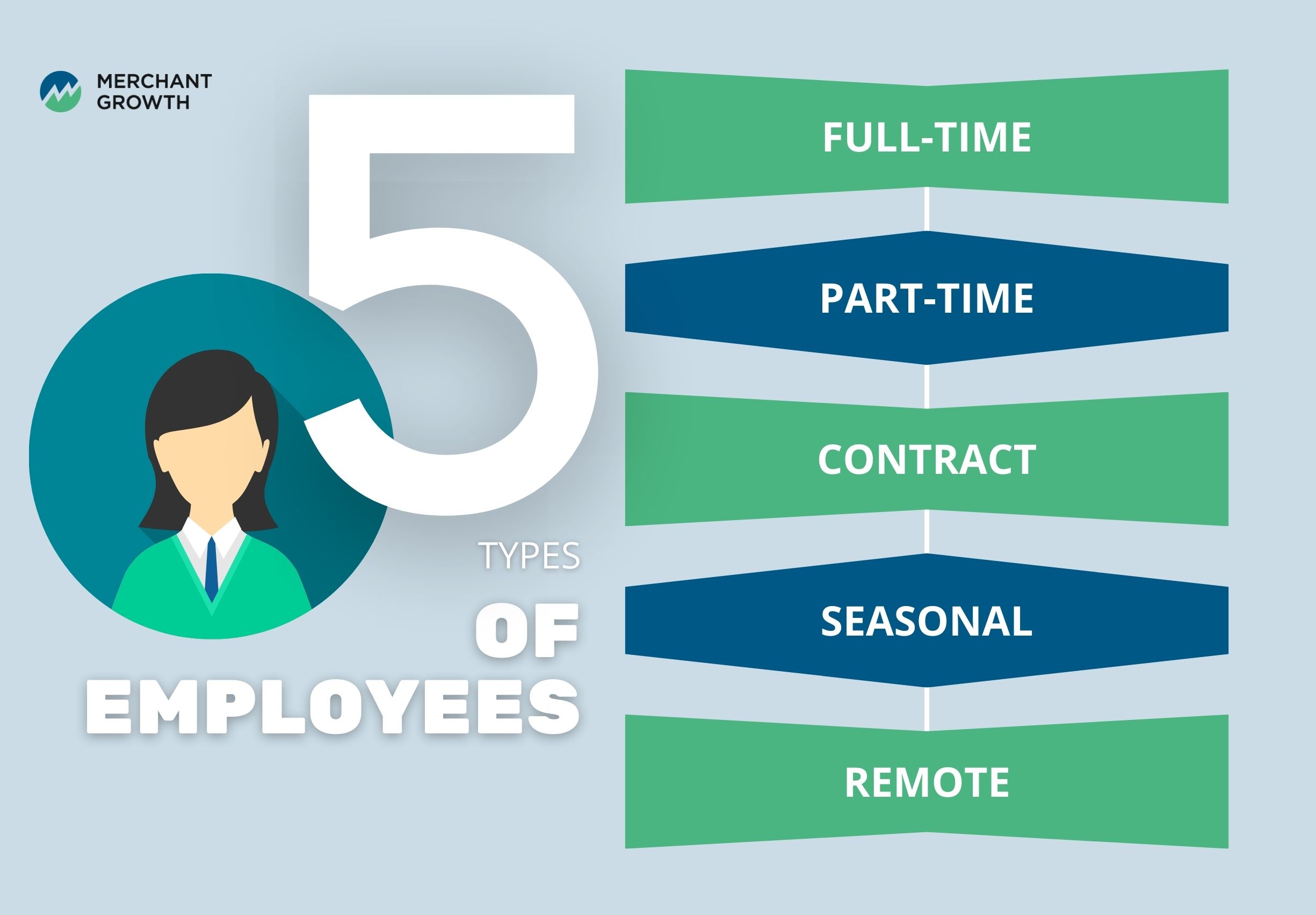
Types of Employees and Hiring Strategies
There’s no one-size-fits-all approach to hiring. The type of employee you choose should reflect your business needs, financial capacity, and long-term goals. The good news? You have options—and each comes with its own advantages.
Full-Time Employees
Think of full-time employees as the backbone of your team. They typically work around 30–40 hours per week and bring stability, commitment, and the potential to grow with your business over the long term. Of course, they also represent the biggest investment, since you’ll need to budget for wages, benefits, and ongoing development.
Part-Time Employees
Part-time staff usually work under 30 hours per week and are a great choice when you don’t quite have enough work (or budget) for a full-time hire. They give you flexibility—plus, many part-time employees grow into larger roles as your business expands.
Seasonal Employees
If your business has peak busy times—like retail during the holidays or tourism in the summer—seasonal workers can be a lifesaver. Their schedules vary but often fall in the 20–40 hour per week range for a defined period. Just be sure your contracts clearly spell out start and end dates to avoid confusion.
Contractors
Independent contractors aren’t technically employees—they’re self-employed individuals you bring on for specific projects. Their hours depend on the project scope, but you’re not responsible for payroll deductions or benefits. They’re great for specialized tasks but be cautious: misclassifying an employee as a contractor can create tax and legal headaches.
Remote or International Employees
Remote workers, whether in Canada or abroad, give you access to talent outside your local market. Remote hours vary (often full-time or part-time schedules), while international hires may require extra steps like work permits or immigration compliance. With the rise of remote work, many Canadian small businesses are thriving with distributed teams.
Choosing the right type of worker is all about aligning your current needs with your long-term goals. But no matter who you hire—whether it’s a part-time assistant, a full-time manager, or a seasonal team—success depends on making smart hiring decisions. That’s why the next step is so critical: understanding how to avoid the most common hiring mistakes that can cost your business time, money, and momentum.
How to Avoid Hiring Mistakes
Even with the best intentions, hiring can go sideways if you’re not careful. Small missteps—like overlooking warning signs on a resume or rushing through interviews—can add up to costly problems down the road. The good news? Most hiring mistakes are preventable if you know what to watch for and build a process that helps you make clear, confident decisions.
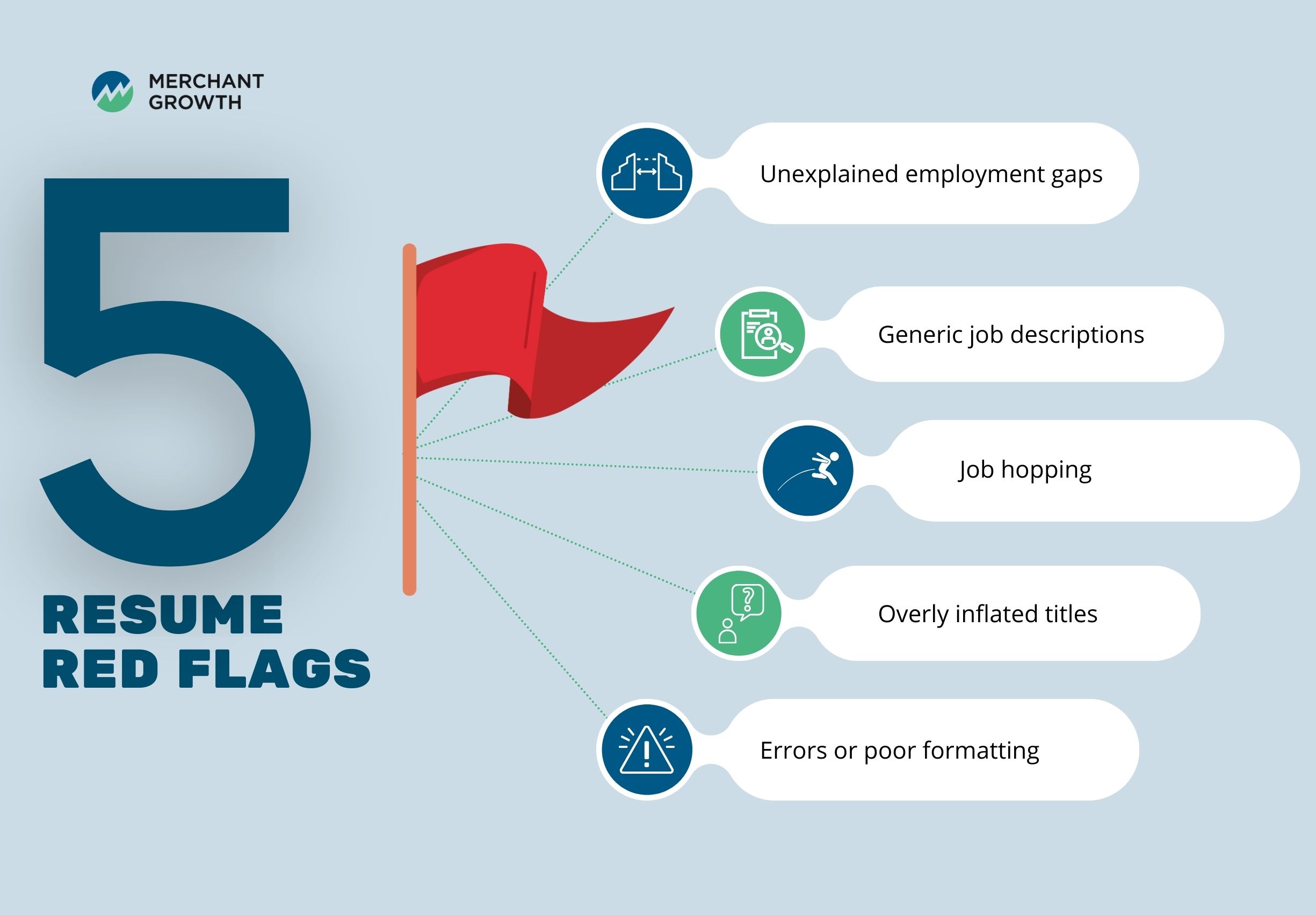
Common Resume Red Flags
When reviewing applications, be mindful of potential warning signs. These don’t always mean you should eliminate a candidate, but they do warrant further investigation during the interview:
- Unexplained employment gaps – Time off isn’t always bad, but candidates should be able to explain it clearly (e.g., education, caregiving, travel).
- Vague or generic job descriptions – Watch out for resumes that list duties without accomplishments, which can signal lack of impact.
- Job hopping – Frequent short stints may suggest reliability issues, unless there’s a clear reason (contract work, industry norms).
- Overly inflated titles or responsibilities – If the claims seem too good to be true, verify them during reference checks.
- Errors or poor formatting – Typos, inconsistent formatting, or sloppy presentation can indicate a lack of attention to detail.
A resume is your first glimpse of a candidate’s professionalism. Treat it as a preview of the quality of work you might expect.
Structured Interviews and Assessments
Resumes only tell part of the story. Structured interviews—where each candidate is asked the same set of questions—help ensure fairness and make it easier to compare responses. Adding a simple skills assessment (like a writing test for an admin role or a problem-solving exercise for a manager) can give you a clearer picture of actual ability.
The Role of Probation Periods
Even with careful screening, it’s impossible to know for sure if someone is the right fit until they’re actually on the job. That’s why probation periods are so important.
In Canada, probation periods typically range from 3 to 6 months, depending on the role and provincial employment standards. During this time, you and your employee have the chance to evaluate the fit in real working conditions.
Use probation wisely by:
- Setting clear expectations from day one
- Checking in regularly (weekly or monthly) to provide feedback
- Documenting progress and areas for improvement
At the end of the probation, you should have a clear sense of whether to confirm the hire, extend the probation, or part ways.
Why Patience Pays Off
Avoiding hiring mistakes is all about discipline. Don’t let urgency cloud your judgment—filling a seat quickly can backfire if the person isn’t right for the job. A thoughtful process, combined with careful evaluation during probation, protects your business and sets new hires up for long-term success.
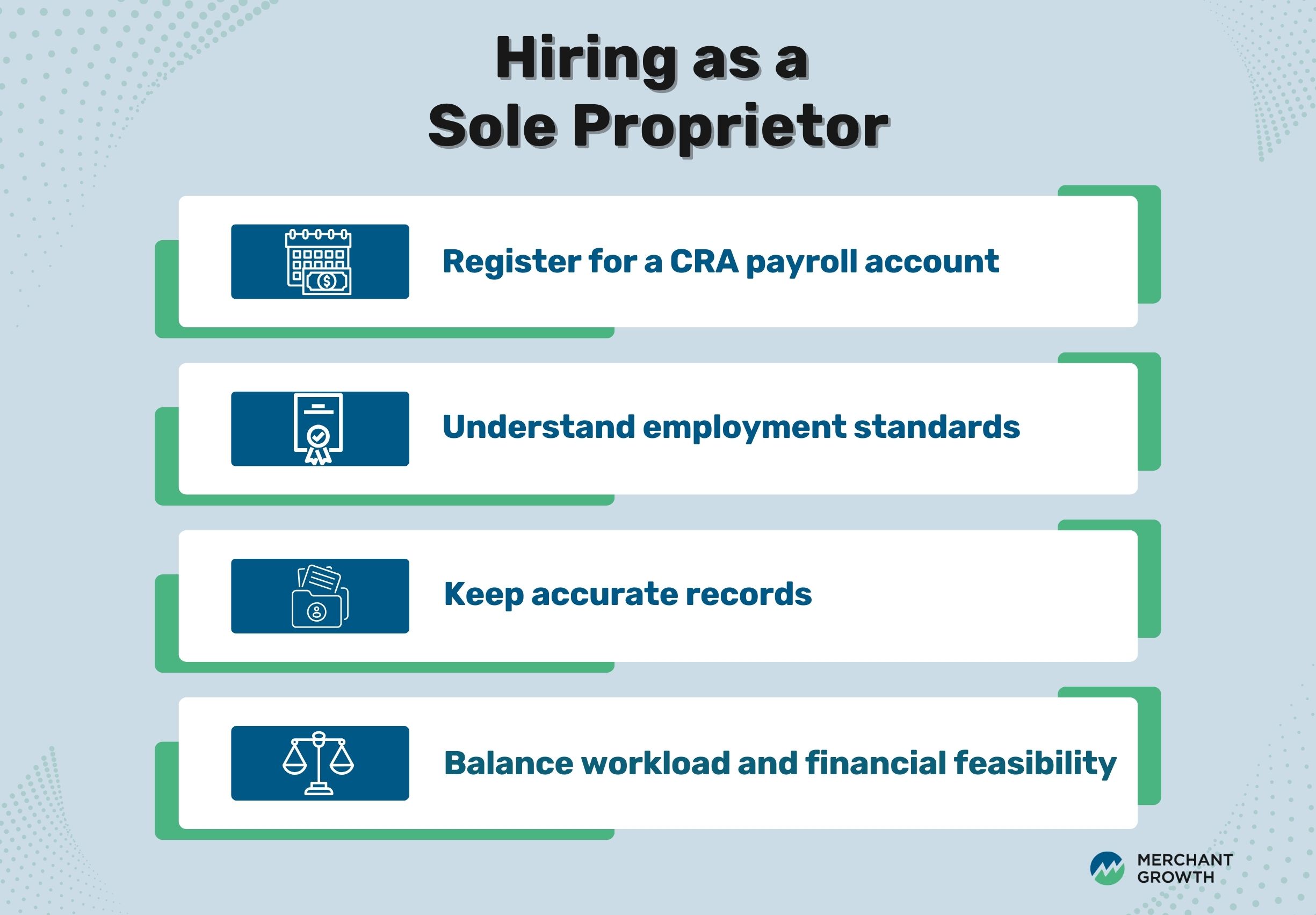
Hiring Employees as a Sole Proprietor
If you run your business as a sole proprietor, it’s natural to wonder whether you’re even allowed to hire employees. The answer is yes—you absolutely can. But just like larger businesses, you’ll need to follow the rules and take on the responsibilities that come with being an employer.
Step 1 - Register for a CRA Payroll Account
The first step is registering for a payroll account with the Canada Revenue Agency (CRA). This account allows you to deduct and remit income tax, CPP, and EI contributions on behalf of your employees. Even if you only hire one person, you’re required to set this up before paying them.
Step 2 - Understand Employment Standards
Employment standards don’t change based on the size of your business. As a sole proprietor, you’re still responsible for meeting provincial requirements, which include:
- Paying at least the minimum wage in your province or territory
- Providing statutory holiday pay
- Offering vacation time and vacation pay
- Following overtime rules where applicable
These standards are non-negotiable—you can’t contract out of them, even if both you and the employee agree to different terms.
Step 3 - Keep Accurate Records
Good record-keeping is essential. You’ll need to track hours worked, wages paid, and all payroll deductions. Proper records not only help you stay organized but also protect you if the CRA audits your business or if disputes arise.
Step 4 - Balance Workload and Financial Feasibility
Hiring can feel like a leap, especially for sole proprietors. Start by asking: Do I have enough steady work to justify bringing someone on? If you’re not sure, consider hiring part-time staff, a contractor, or even seasonal help to ease the transition. As your revenue grows, you’ll have more room to expand your team.
Hiring as a sole proprietor is both possible and powerful. The right employee can free up your time, reduce your stress, and give you space to focus on growth. The key is approaching the process with a plan: understand the rules, budget realistically, and take it one step at a time.
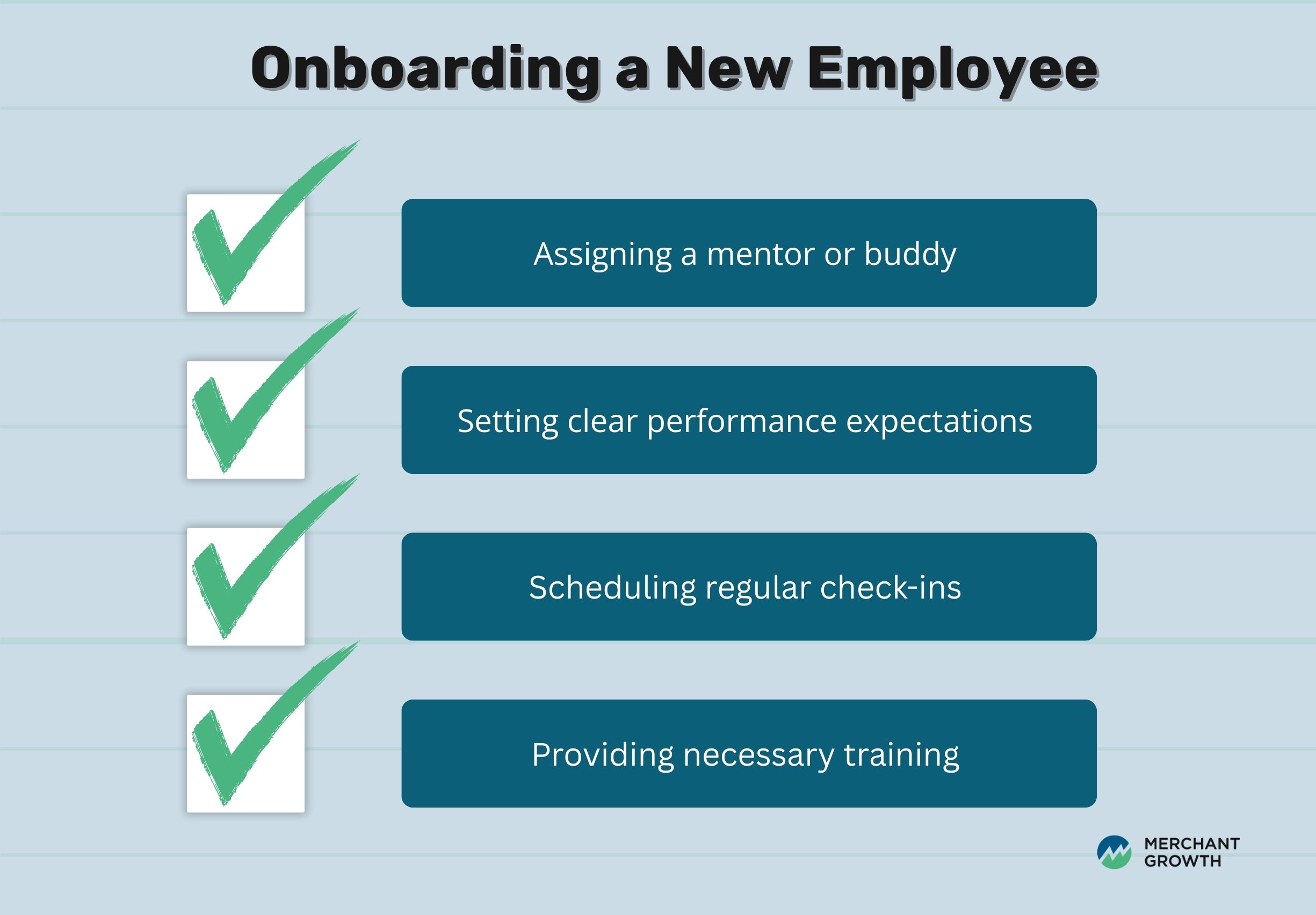
Onboarding and Employee Integration
Bringing an employee on board doesn’t end once they’ve signed their contract. The onboarding process is your chance to set the tone for their entire experience with your business. A thoughtful, well-structured onboarding helps employees feel supported, engaged, and confident in their new role.
Onboarding should go beyond paperwork and training—it’s about introducing new hires to your company’s culture, values, and vision. Assigning a mentor or buddy early on can make employees feel more connected and less isolated. Setting clear expectations from day one helps eliminate confusion, while regular check-ins provide opportunities for feedback and adjustment.
Integration is equally important. Employees thrive when they understand how their work fits into the bigger picture. Celebrating early achievements, whether it’s completing their first project or reaching the end of their probationary period, reinforces a sense of progress and belonging.
Key onboarding and integration steps include:
- Assigning a mentor or buddy to provide guidance
- Setting clear performance expectations and short-term goals
- Scheduling regular check-ins and feedback sessions
- Providing necessary training and resources right away
- Celebrating milestones such as 30, 60, and 90 days on the job
Tools and Resources for Hiring Employees
Hiring and managing staff becomes far more manageable when you have the right tools on hand. For Canadian small businesses, a variety of resources exist to simplify everything from finding candidates to handling payroll. These tools not only save time but also reduce stress by helping you stay organized and compliant.
Helpful tools and resources for Canadian employers include:
- Job Bank – Canada’s free government-run hiring platform with access to a wide pool of candidates
- Indeed, and Workopolis – Popular private job posting platforms to reach an even larger audience
- Templates – Ready-to-use employment contracts, onboarding checklists, and interview guides that keep your process consistent
- HR Software – Tools like BambooHR or ADP to manage employee records, track performance, and handle benefits
- Payroll Software – Programs such as QuickBooks Payroll or Wagepoint to automate CRA deductions and streamline payroll
By combining these resources, you’ll make your hiring process more professional, efficient, and less overwhelming giving you more time to focus on actually running and growing your business.
Let’s Help You Hire the Right Team
Hiring is one of the biggest investments a small business can make. But sometimes the challenge isn’t finding great people—it’s having the cash flow to bring them on board.
That’s where Merchant Growth can support you. Whether you need financing to cover training, payroll, or expansion costs, we offer funding solutions tailored to Canadian small businesses. Hiring the right people is an investment in your future, and we can help you make it happen.
If you’re ready to build a stronger team, talk to Merchant Growth today about how we can help fund your hiring needs.
Managing a Seasonal Business: What to Know
Running a seasonal business can be both exciting and challenging. On one hand, peak periods bring a rush of customers and the chance to generate strong profits. On the other hand, the off-season can mean unpredictable cash flow and pressure to plan carefully. The truth is, seasonal businesses can be highly profitable when managed strategically—success depends on smart preparation, strong financial discipline, and the ability to adapt.
That’s exactly what this guide is here to help with. Whether you’re just exploring seasonal business ideas or already running one and looking to refine your approach, we’ll walk through everything you need to know—from understanding the seasonal business model to managing cash flow, staffing, and off-season planning. With the right strategy, your business can thrive not only during peak months but all year long.
Key Takeaways
- Seasonal businesses can be highly profitable when managed strategically.
- Careful planning ensures smooth operations during peak times and stability in the off-season.
- Cash flow management, smart staffing, and strong marketing are critical to long-term success.
- Off-season strategies can extend revenue and strengthen customer loyalty.
- Tools and templates help business owners budget, hire, and manage inventory more effectively.
What Is a Seasonal Business?
A seasonal business is one that generates most of its revenue during specific months or periods of the year. Think of a snow removal company in winter, a lawn care service in summer, or a Halloween pop-up store that thrives only in October.
Key characteristics include:
- Activity cycles – Businesses revolve around busy peaks and slower off-seasons.
- Financial dependence on peak windows – Profitability hinges on maximizing short operating periods.
- Operating models – Some are summer- or winter-focused, while others are holiday-based.
- Heavy reliance on cash flow planning – Off-season months require careful budgeting to keep the business afloat.
Examples of seasonal businesses range from tourism operators (like summer camps, outdoor adventure companies, and ski lodges) to agriculture and food businesses (such as farmers’ markets or wineries with harvest seasons), and retailers that capitalize on key holidays. Some service-based businesses, like moving companies or tax preparation firms, also follow strong seasonal cycles even though they operate year-round. What they all share in common is the need to maximize earnings during peak times while planning ahead to bridge the quieter months.
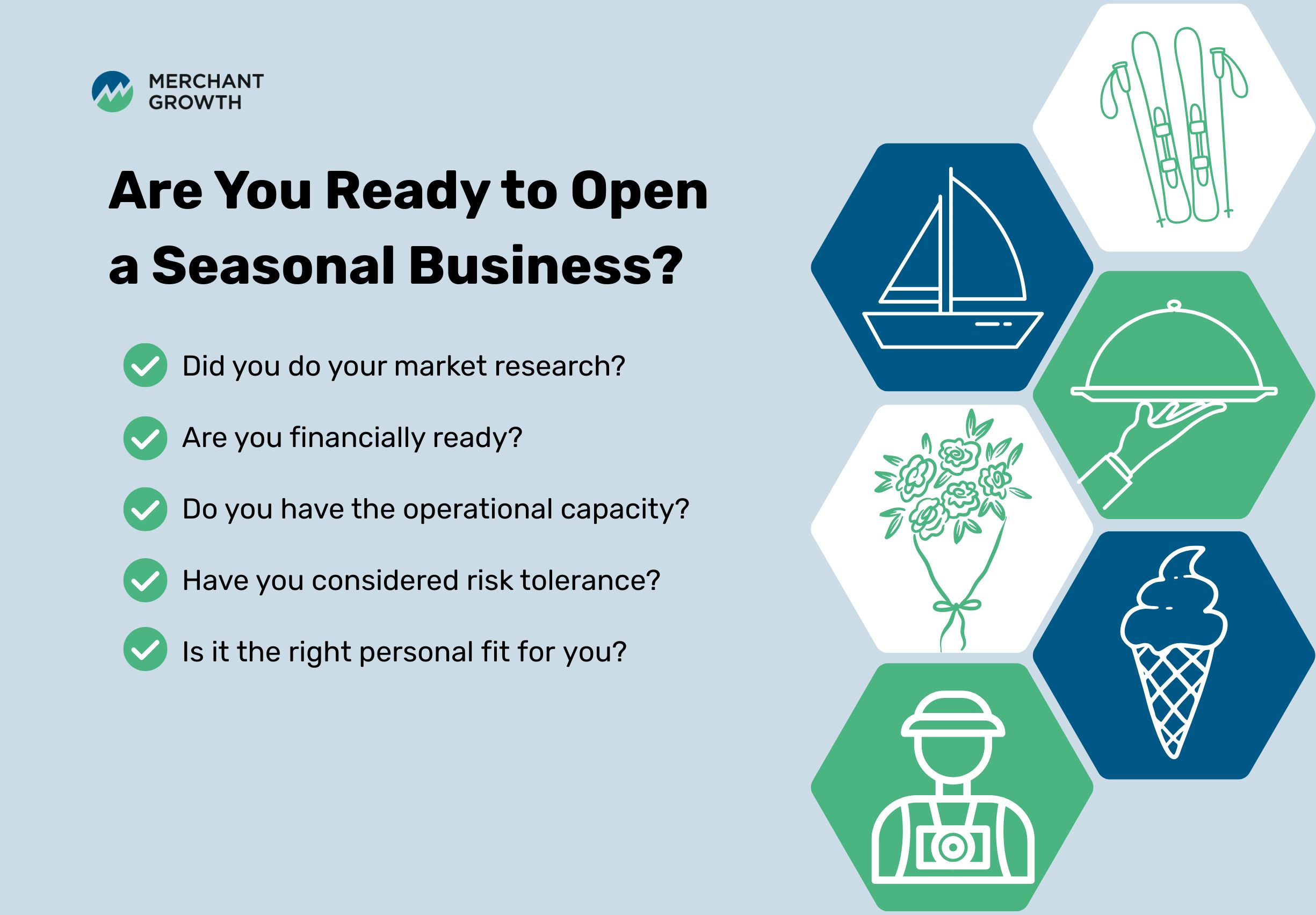
How to Know If You’re Ready to Start a Seasonal Business
Running a seasonal business isn’t for everyone. It comes with unique pressures—especially during peak months—when demand spikes and you may need to deliver at a high volume in a short amount of time. At the same time, the off-season brings its own challenges: managing limited revenue, holding onto customer loyalty, and planning for the next busy cycle. Before you dive in, it’s worth taking a step back and asking yourself if you’re truly ready.
Market Research
The first step is to understand whether there’s genuine demand for your idea. A ski lodge might thrive in Alberta but struggle in southern Ontario. A summer tourism company might do well in a cottage region but falter in a city without that seasonal draw. Look at who your competitors are, how much they charge, and whether the market feels saturated—or if there’s room for someone offering something unique. Talking directly with potential customers and observing local demand patterns will give you clearer insights than assumptions alone.
Financial Readiness
Seasonal businesses often face “feast or famine” cycles. You might earn the bulk of your revenue in just a few months, which means you’ll need enough financial cushion to cover both startup costs and the off-season lull. This could mean setting aside reserves from your peak season or arranging flexible financing to keep cash flow steady. For example, many agricultural businesses rely on lines of credit to cover expenses until harvest. Ask yourself: can your finances handle several lean months while you wait for the next peak?
Operational Capacity
Even if the market is strong, you’ll need the infrastructure to meet demand. Can your suppliers deliver when you need them? Will seasonal or part-time workers be available, and can you train them quickly enough? A great example is holiday retail, where inventory needs to be ordered months in advance, or tourism companies that must hire and train staff before the summer crowds arrive. Operational readiness can make or break your season.
Risk Tolerance
Every business carries risk, but seasonal businesses are especially vulnerable to outside factors. Weather events, economic downturns, or shifts in consumer behaviour can all throw off a carefully planned season. If you’re running a ski hill, one warm winter can wipe out a large portion of revenue. Think carefully about your comfort level with unpredictability—and whether you have backup plans in place.
Personal Fit
Finally, it’s important to consider whether you personally are cut out for seasonal entrepreneurship. Do you enjoy fast-paced, high-intensity work environments where you’re “all in” for a few months? Can you handle fluctuating income without feeling stressed? Many successful seasonal entrepreneurs thrive on the rhythm of busy and quiet periods, using downtime to recharge, plan, or even pursue other ventures. If that balance appeals to you, it could be a strong fit.
Seasonal Business Ideas for Every Season
The viability of a seasonal business often comes down to where you operate, when you operate, and the market you serve. What thrives in one season—or one province—might struggle in another. To help you think strategically, let’s break down seasonal opportunities across Canada and explore the pros and cons of running them.

Summer Businesses
Summer is the busiest season for many entrepreneurs, with long days, warm weather, and communities buzzing with activity. The pros of summer businesses are obvious: demand is high, customers are eager to spend time outdoors, and cash flow can surge quickly. The challenge, however, is competition—many entrepreneurs jump into the same markets, and you need a way to stand out.
Where They Thrive: Summer businesses do particularly well in provinces with cottage country and tourism hubs, such as Ontario’s Muskoka region, British Columbia’s Okanagan, or Alberta’s mountain towns. Coastal provinces like Nova Scotia and PEI also see big boosts in summer thanks to tourism.
Examples:
- Boat rentals and water sports instruction (jet skis, paddleboards, sailing lessons)
- Ice cream parlours or frozen treat trucks in high-foot-traffic tourist areas
- Outdoor event planning for weddings, festivals, or community markets
- Eco-tourism businesses like guided nature walks, cycling tours, or birdwatching excursions

Winter Businesses
Winter can be just as profitable, especially in Canada, where snow and cold weather create unique needs. The pros? Demand is reliable, and often, urgent customers can’t “wait out” icy sidewalks or heating issues. The downside is unpredictability: milder winters or early thaws can cut into your peak season.
Where They Thrive: Winter businesses shine in provinces with heavy snowfall and long, cold seasons, such as Quebec, Manitoba, Saskatchewan, and much of Atlantic Canada. Alberta and British Columbia also offer opportunities tied to mountain tourism.
Examples:
- Heating system installation and repair services for furnaces and wood stoves
- Hot chocolate or coffee kiosks at outdoor rinks and festivals
- Winter apparel pop-ups specializing in coats, boots, or accessories
- Indoor recreation centres catering to families looking for cold-weather entertainment

Holiday-Based Businesses
Some businesses revolve almost entirely around specific holidays. The advantage here is predictability—Christmas always happens in December, and Halloween always brings demand for costumes and decorations. The challenge is the short window: you have to maximize revenue in just a few weeks.
Where They Thrive: Holiday-based businesses are strongest in urban centres across Canada, where population density ensures steady demand. They’re also effective in suburban communities with families who celebrate traditions in a big way.
Examples:
- Gift basket and corporate holiday hamper companies
- Pop-up décor shops for holidays like Valentine’s Day or Easter, not just Christmas and Halloween
- Specialty catering services for Thanksgiving or New Year’s events
- Holiday photography studios offering seasonal family portraits

Year-Round with Seasonal Peaks
Some businesses operate year-round but see predictable spikes during certain times of the year. The pros are stability and flexibility—you’ll earn income throughout the year but can also capitalize on busy seasons. The challenge is managing resources so you’re not stretched thin during peaks.
Where They Thrive: These businesses can succeed in almost any province, but the key is aligning with local rhythms. For example, a moving company in Toronto might peak in summer, while a tutoring business in Quebec might peak before exam season.
Examples:
- Landscaping companies that focus on gardens and patios in spring/summer and offer maintenance contracts year-round
- Photography businesses that peak during wedding season but also do corporate headshots in the off-season
- Catering companies that see demand for weddings in summer and holiday parties in winter
- Home renovation services that pick up in spring and fall when weather is favourable
As you can see, seasonal opportunities come in many forms—from tourism and retail to services that thrive in specific weather conditions. The key isn’t just picking an idea that excites you, but one that aligns with your local market, financial goals, and lifestyle. Once you’ve identified the right fit, the next step is figuring out how to bring it to life in a way that maximizes your peak season while setting you up for off-season stability. That’s where a structured plan comes in.
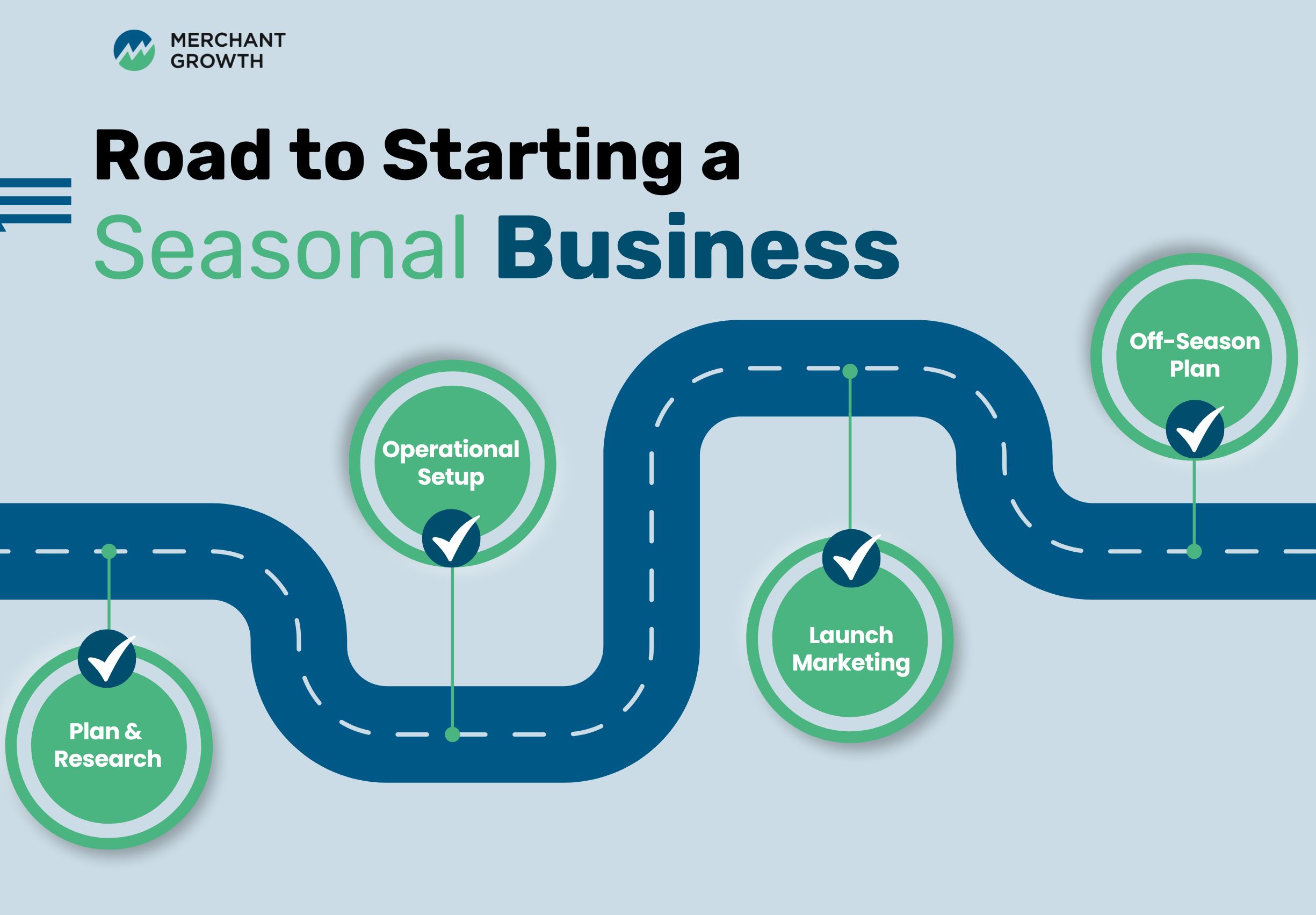
Step-by-Step Guide to Starting a Seasonal Business
Launching a seasonal business takes more than just passion and timing—it requires thoughtful planning and careful execution. Because your revenue window may be short, every step matters: from research and setup to marketing and off-season preparation. By following a structured approach, you’ll reduce risks, make smarter decisions, and increase your chances of turning a seasonal opportunity into a sustainable business.
Step 1: Planning and Research
Every strong business starts with a plan, and seasonal businesses are no exception. Begin by clarifying your business model: will you only operate during peak months, or will you offer off-season services to create year-round income? Draft a seasonal business plan that includes revenue forecasts, projected expenses, and a detailed cash flow strategy to carry you through slower months.
Competitor research is also critical. Take a close look at similar businesses in your area—what do they do well, and where do they fall short? Learning from their successes and mistakes helps you position yourself more effectively.
Pro Tip: Use historical data like tourism statistics, weather patterns, or local event calendars to anticipate demand spikes and avoid being caught off guard.
Step 2: Operational Setup
Once you’ve planned, it’s time to set up the nuts and bolts of your business. Seasonal industries often require specific licenses, permits, and insurance—for example, food service certifications or liability coverage for outdoor activities. Handle these early to avoid last-minute delays.
Securing suppliers well in advance is another must. Because demand can spike quickly, vendors often run into shortages during peak times. Establish strong relationships and consider backup suppliers to protect against disruptions.
Staffing is equally important. Seasonal businesses often rely on part-time or temporary employees, so plan for recruitment and training ahead of the rush. A well-prepared team can make all the difference when things get busy.
Pro Tip: Create onboarding checklists and training guides to speed up the process of bringing seasonal staff up to speed.
Step 3: Launch and Marketing
Don’t wait until your busy season is underway to start spreading the word. Seasonal businesses perform best when marketing starts early—sometimes months in advance. Use social media campaigns, local advertising, and partnerships with community organizations to build awareness before customers are ready to buy.
Loyalty programs and repeat-customer promotions are especially effective for seasonal businesses, where your window for revenue is limited. Consider offering “early bird” discounts or bundling services to encourage customers to commit before the season begins.
Pro Tip: Collect customer emails or phone numbers during your peak season so you can remarket to them when the next season approaches.
Step 4: Off-Season Planning
The end of the busy season isn’t the end of your business—it’s an opportunity to regroup and prepare for the next cycle. Start by evaluating what worked and what didn’t. Review financial results, customer feedback, and operational challenges.
Then, think about ways to generate off-season income. Some businesses add complementary services, offer online products, or pivot temporarily into another market. Even if you don’t operate year-round, keeping customer relationships alive during downtime (through email, social media, or community events) helps ensure they come back next season.
Pro Tip: Use the off-season to negotiate better supplier contracts or invest in training and equipment upgrades—you’ll hit the ground running when demand returns.
A seasonal business is only as strong as the planning and execution behind it. By taking the time to research your market, secure operations, launch strategically, and plan for the off-season, you create a cycle of improvement year after year. With a strong foundation in place, the next challenge is managing your business effectively during the busiest times—and that’s exactly what we’ll cover next.

Managing Seasonal Operations Effectively
Running a seasonal business doesn’t stop at launching successfully—what truly determines your long-term success is how you manage day-to-day operations during those intense peak months. Because your revenue window is limited, every decision carries extra weight. From cash flow to staffing, inventory to customer relationships, effective management is what separates thriving seasonal businesses from those that struggle year after year. Let’s take a closer look at the key areas to focus on
Cash Flow Control
Your income may come in bursts, so it’s essential to smooth out the highs and lows. Instead of spending freely during peak season, reserve a portion of profits to cover off-season expenses. Creating a 12-month forecast helps you stay on track and avoid surprises. Think of cash flow like a lifeline—if you manage it carefully, it keeps your business steady even when customer demand drops.
Staffing and Hiring
Seasonal staff are in high demand, so waiting until the last minute to recruit can leave you scrambling. Hire early and set up clear, efficient training so your team is ready to hit the ground running. While turnover is common, retaining reliable seasonal employees year after year can give you a real advantage. Familiar staff require less training, build stronger customer relationships, and can even help train new hires.
Inventory Management
Managing inventory in a seasonal business is a balancing act. Overstocking ties up cash in products that may sit unsold until next year, while understocking means losing sales during your busiest months. Review your past seasons’ data, track demand patterns, and order strategically. Smart inventory management ensures you can meet customer demand without stretching your finances too thin.
Leveraging Technology
Technology can take a lot of the stress out of seasonal operations. Scheduling apps keep staff organized, payroll tools simplify compliance, and POS systems help track sales in real time. Beyond saving time, these tools also generate valuable insights that can guide decisions for future seasons—whether it’s adjusting staffing levels or forecasting inventory needs.
Customer Retention
Seasonal businesses often focus heavily on peak periods, but long-term success comes from staying connected even when you’re not operating at full capacity. Simple efforts—like loyalty rewards, off-season specials, or periodic updates about your next launch—help you maintain visibility. Customers are far more likely to return when you remind them of your value year-round.
Managing a seasonal business effectively is about more than just surviving the busy months—it’s about using them to build momentum that carries through the year. By controlling cash flow, building a reliable team, ordering smartly, embracing technology, and keeping customer relationships alive, you create a system that supports both peak-season success and off-season stability. With these pieces in place, you’ll be well prepared to handle the unique challenges of seasonal cycles while steadily growing your business year after year.
Common Pitfalls to Avoid in Seasonal Businesses
Even with the best intentions, seasonal businesses can easily stumble if owners aren’t careful. Many of the most common mistakes stem from underestimating how different the rhythm of a seasonal business is compared to a year-round operation. By being aware of these pitfalls, you can avoid costly missteps and set yourself up for smoother operations.
- Starting without enough financial reserves
- Overspending during peak months and leaving too little for the off-season
- Hiring staff too late and struggling to train them in time
- Ignoring off-season opportunities for customer engagement
- Overestimating demand without proper market research
These challenges are avoidable, but only if you recognize them early. Staying disciplined with your finances, planning your staffing ahead of time, and grounding your decisions in solid research will give your business the resilience it needs to thrive from one season to the next.
Budgeting & Cash Flow Management for Seasonal Businesses
If pitfalls are what to avoid, then cash flow management is what to master. Because seasonal businesses rely heavily on short windows of revenue, financial discipline becomes the backbone of long-term success. Proper planning ensures that your business can not only survive the off-season but also position itself for growth when demand returns.
To keep your cash flow steady:
- Create a 12-month cash flow forecast to anticipate lean months
- Save a portion of peak-season profits as an operating reserve
- Consider short-term financing options to bridge gaps
- Keep a close eye on expenses, cutting unnecessary off-season costs
When you manage your cash flow with intention, you replace uncertainty with confidence. Instead of stressing about when the next paycheck will come in, you’ll know you have reserves, plans, and tools in place to ride out the slower months.

Key Questions Every Seasonal Business Owner Should Ask
Sometimes the best way to prepare isn’t just about strategies or forecasts—it’s about asking yourself the tough questions. These questions help you take a step back, evaluate your readiness, and anticipate challenges before they happen.
- Do I have enough reserves to survive the off-season?
- Is my business model resilient to economic or weather changes?
- Can I diversify with off-season products or services?
- How will I recruit and train seasonal staff efficiently?
- What systems will help me measure performance year over year?
Reflecting on these questions keeps you grounded and proactive. The answers won’t just guide your decisions—they’ll also highlight where you may need to strengthen your operations, finances, or strategy before your next busy season.
Helpful Tools & Resources for Seasonal Business Owners
Fortunately, you don’t have to navigate seasonal business challenges on your own. A wide range of tools and resources are available to make planning, staffing, and cash flow management easier. Whether you’re looking for practical templates or advanced technology solutions, the right resources can save you time and reduce stress.
- Financial Tools: Budget templates, cash flow spreadsheets, calculators
- Staffing Resources: Seasonal hiring checklists, scheduling apps
- Inventory Planning: Forecasting and storage guides
- Technology Solutions: POS systems, payroll tools, marketing automation
- Case Studies: Examples of successful seasonal businesses to learn from
By leveraging these resources, you can focus less on administrative headaches and more on running your business. They help ensure that your seasonal operations are not only efficient but also scalable—allowing you to grow steadily year after year.
Let Us Support Your Seasonal Business
Running a seasonal business is all about timing—and financing can play a big role in keeping things running smoothly. Whether you need capital for startup costs, inventory purchases, or bridging off-season expenses, Merchant Growth offers flexible term financing solutions tailored to small businesses.
Talk to Merchant Growth today to learn how you can stabilize cash flow and fuel seasonal growth.