

How to Start a Small Business in Canada: A Step-by-Step Guide for Entrepreneurs
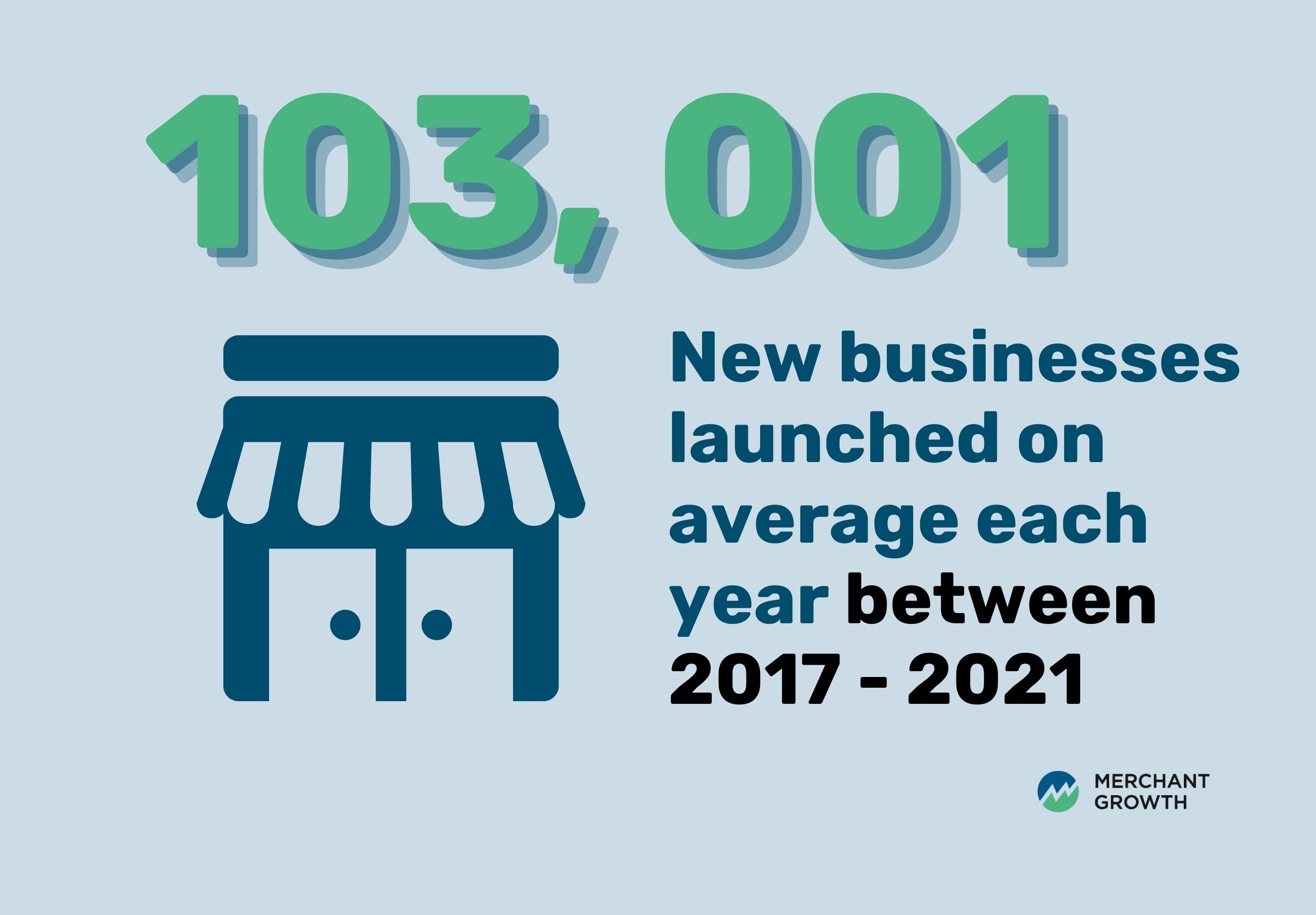
Thinking about starting a small business in Canada? You’re in good company. Between 2017 and 2021, an average of 103,001 new small businesses were launched each year, showing that Canadians are constantly turning ideas into reality.
Of course, starting a business comes with its challenges—figuring out the right idea, understanding your customers, navigating regulations, and finding the funding to get off the ground. That’s exactly what this guide is here for. Step by step, we’ll walk you through everything you need to know to start your small business, from shaping your idea and planning your budget to registering your business, securing funding, and launching with confidence. With practical tips and real Canadian resources along the way, you’ll have the roadmap you need to turn your vision into a thriving business.
Key Takeaways
- Business Planning: A detailed plan maps your goals, strategy, and finances, and serves as a guide for decision-making.
- Business Registration: Choosing a name and registering your business legally is crucial for compliance and credibility.
- Licensing & Permits: Ensure you have all the required licenses to operate without interruptions.
- Funding Options: Grants, loans, and alternative financing options can provide the capital you need to start strong.
- Growth Strategy: Budgeting for future growth ensures you can scale without financial stress.
How to Start a Small Business in Canada
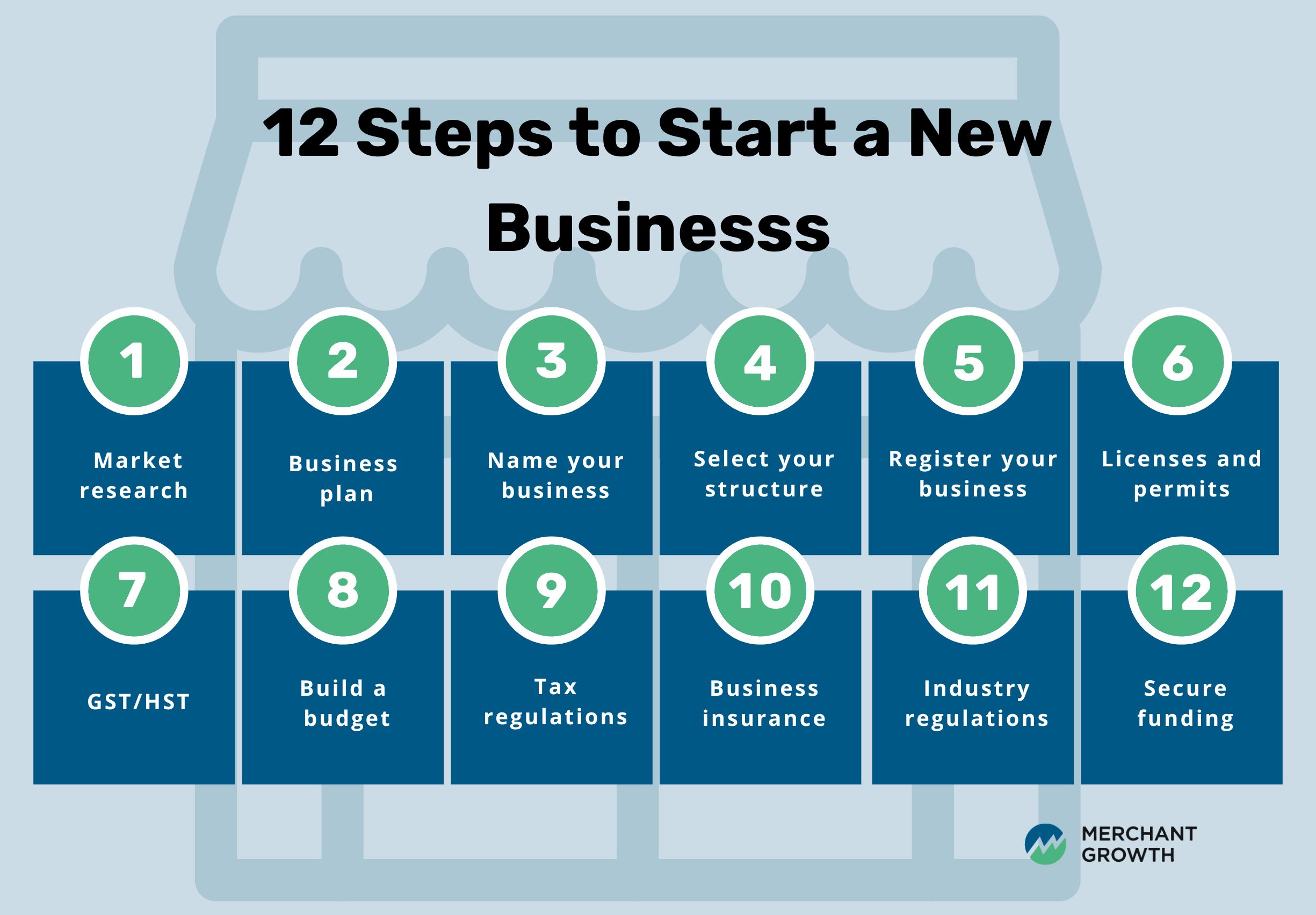
Turning your business idea into a reality takes more than passion—it takes planning, smart decisions, and a clear roadmap. Canada offers plenty of resources to help new entrepreneurs, but you’ll still need to navigate things like choosing the right business structure, understanding regulations, managing taxes, and securing funding. Let’s break down each step in a practical, easy-to-follow way, starting with understanding your market and finding the right audience for your product or service.

Conduct Market Research
Before investing time and money, understanding your market is critical. Market research helps identify who your ideal customers are, what they need, and how your business can meet those needs better than competitors. Let’s look at four simple ways you can dig into the market and gather the insights you need to make smart decisions.
Understand Your Target Audience:
Start by getting clear on who you’re trying to serve. Think beyond just age and gender—consider lifestyle, habits, motivations, and pain points. Create a simple customer profile or persona:
- Who are they?
- What problems do they face that your business can solve?
- Where do they spend their time online and offline?
Once you have this profile, you can tailor your marketing, product development, and even pricing to match their expectations. Tools like surveys, social media polls, or even casual conversations with potential customers can give you real insight into what they want.
Analyze Competitors:
Understanding your competition is more than knowing their prices—it’s about uncovering their strengths and weaknesses. Look at local businesses and online competitors offering similar products or services. Check their websites, read customer reviews, follow them on social media, and see what people like or dislike about them. Take notes on their marketing approach, customer experience, and product offerings. The goal isn’t to copy them, but to find ways to differentiate your business and offer something uniquely valuable.
Identify a Gap in the Market
Once you understand your target audience and your competitors, the next step is spotting opportunities where your business can stand out. Look for areas where competitors’ products or services don’t fully meet customer needs—maybe they’re inconvenient, outdated, or missing features that your audience wants.
Ask yourself:
- What are customers frustrated with in current offerings?
- Is there a way to make a product or service simpler, faster, or more enjoyable?
- Are there groups of people whose needs aren’t being addressed at all?
Pinpointing these gaps gives your business a competitive edge and increases the chances of success. By offering something unique that solves real problems, you’re not just entering the market—you’re filling a space that customers have been waiting for.
Stay Updated on Industry Trends:
Markets are always changing, and staying ahead of trends can give your business an edge. Subscribe to industry newsletters, follow key influencers, and check government or trade association reports for insights. For example, the Government of Canada offers industry-specific data and reports that can help you spot opportunities or potential challenges in your sector. By understanding trends, you can anticipate customer needs, adapt your offerings, and make more informed strategic decisions
Use Reliable Data:
There’s nothing like hearing straight from your potential customers. Try informal methods like chatting with people in your target market, conducting interviews, or sending out short surveys. Online platforms like Google Forms, Typeform, or social media polls make it easy to gather feedback quickly. Pay attention to recurring themes or concerns—these can guide everything from product design to pricing and marketing. The more you understand your audience from their own perspective, the better positioned your business will be to serve them effectively.
Conducting thorough market research ensures your business idea is viable and gives you the insights needed to make informed decisions. With a clear understanding of your customers, competitors, and industry trends, you’re ready to take the next step: planning your business and turning those insights into a concrete strategy for success.
Plan for Your Business
A solid business plan isn’t just a document—it’s your roadmap for turning an idea into a thriving business. It helps you clarify your vision, map out financial projections, and plan operational strategies. Most importantly, it gives you the confidence to make informed decisions and shows potential investors or lenders that you’ve thought things through. Let’s break down the first steps to building your business plan and shaping your idea into something real.
Coming Up with a Business Idea:
Every successful business starts with a strong idea, but not every idea is ready to become a business. Start by thinking about your skills, passions, and the needs you see in the market. Ask yourself:
- What problems can I solve?
- What gaps exist that my business could fill?
Once you have a few ideas, test them by talking to potential customers, getting feedback, and refining your concept. The goal is to land on an idea that excites you and has a clear market demand.
Choosing a Location vs. Working from Home:
Where your business operates can have a big impact on costs, accessibility, and customer reach. If you need foot traffic or local visibility, a physical storefront might make sense—but it comes with higher overhead. Running a business from home can reduce costs, but you’ll need to think creatively about reaching customers online or delivering your services. Consider a hybrid model or co-working spaces if you want flexibility while keeping some professional presence.
Deciding Between Employment Models
Before hiring anyone or setting your own role, think about how you want your business to operate. Do you plan to hire full-time staff, rely on contractors, or manage everything as a solo entrepreneur? Each option has implications for taxes, benefits, and operational workload. Map out the responsibilities and decide which model makes sense now—and how it might evolve as your business grows.
Set Goals:
Before you dive into writing your business plan, it’s important to get clear on your goals. Short-term goals—like landing your first customers or launching your website—help you focus on immediate priorities, while long-term goals—like reaching revenue milestones or expanding your offerings—give your business direction and purpose.
Make your goals SMART: Specific, Measurable, Achievable, Relevant, and Time-bound. For example, instead of “I want more customers,” try “I want 50 new customers in the first six months through social media and local events.” Clear goals make your plan actionable and give you a roadmap for measuring progress as your business grows.
Writing Your Business Plan
Now it’s time to pull everything together into a cohesive plan. Your business plan should outline:
- Your business concept and goals
- Market research and target audience
- Marketing and sales strategies
- Operational plan and staffing
- Financial projections and budget
Be as detailed as possible, but keep it clear and readable. Remember, your plan is meant to guide you, not overwhelm you.
Pro Tip: To make this process easier, you can use our own business plan template—designed specifically for Canadian entrepreneurs—to structure your ideas and build a plan that’s ready for funding, growth, and long-term success.
Choosing Your Business’s Name
Your business name is often the first thing customers notice, so it’s worth taking the time to get it right. A great name captures what your business stands for, is easy to remember, and sets you apart from the competition. Let’s break down how to choose a name that works for your brand.
Brainstorm Meaningful Names:
Start by thinking about what your business represents and what makes it unique. Consider your products, services, target audience, and brand personality. Don’t be afraid to get creative—sometimes the best names come from wordplay, metaphors, or combining ideas. Write down everything that comes to mind, then narrow the list based on which names are memorable, clear, and resonate with your customers.
Check for Availability:
Once you have a shortlist, it’s crucial to make sure your name isn’t already taken. In Canada, you can use the NUANS database to check if your desired business name is registered or too similar to existing businesses. If your name is already in use, try slight variations or add a descriptive term that highlights what your business does. This step protects you from legal headaches and ensures your brand can stand out.
Consider Online Presence:
A business name is only as good as your ability to promote it. Check if the domain name is available for a website and whether social media handles match your name. Even if you’re starting small, securing your online identity early can save you headaches later and make marketing easier as your business grows.
Choosing the right name takes time, but it’s an investment that pays off in brand recognition and credibility. With a strong name in place, you’re ready to move on to picking the right business structure, which sets the foundation for your legal, tax, and operational decisions.

Select the Appropriate Business Structure
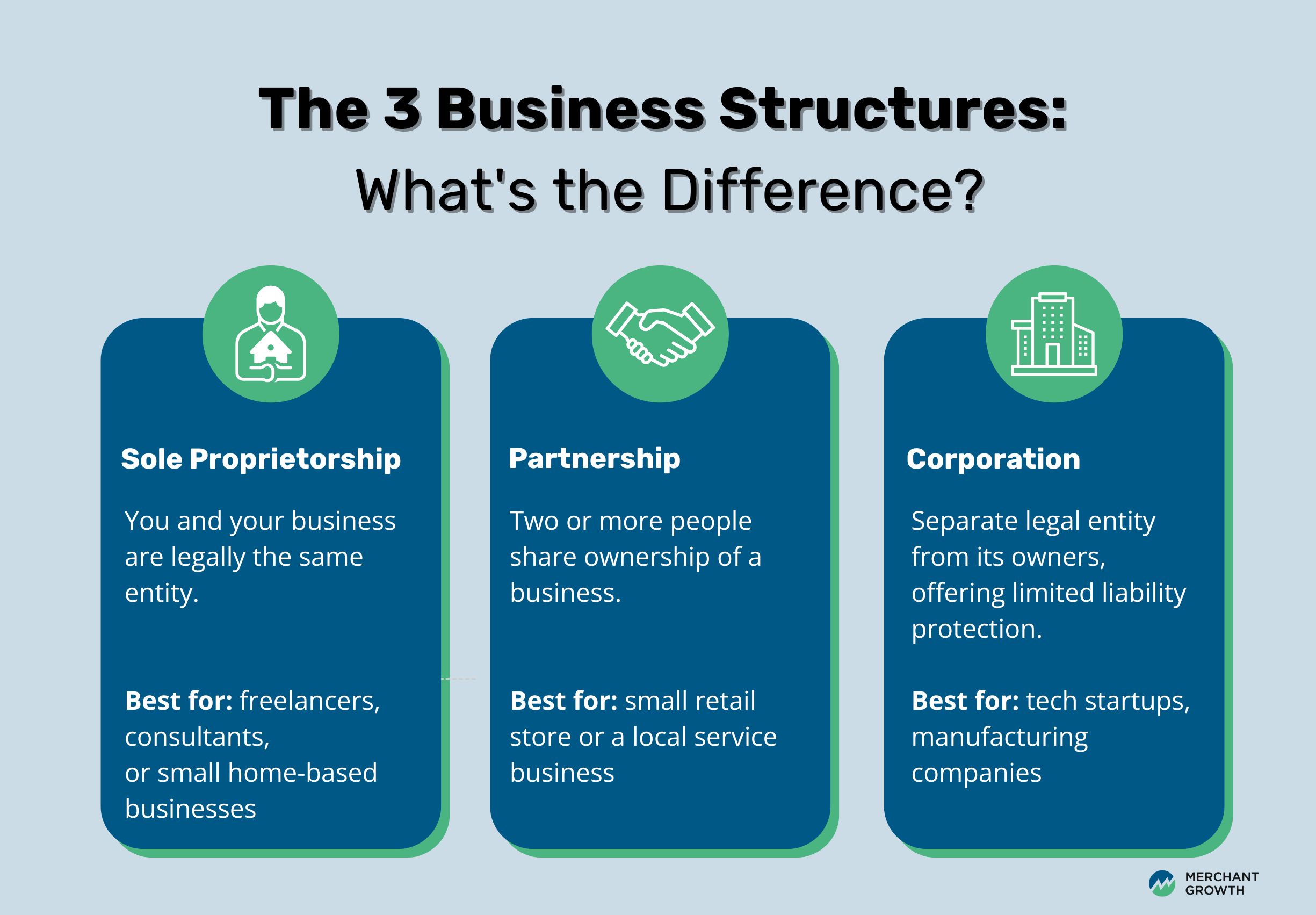
Choosing the right business structure is more than a formality—it shapes your taxes, liability, and day-to-day responsibilities. Picking the right model from the start can save you money, simplify operations, and protect you legally. In Canada, there are three main options:
Sole Proprietorship:
A sole proprietorship is the simplest and most common structure for small businesses. You and your business are legally the same entity, which means you report income on your personal tax return and have full control over decisions. The main trade-off is personal liability: if your business runs into debt or legal trouble, your personal assets are on the line.
This model works best for freelancers, consultants, or small home-based businesses just getting started. It’s easy to set up, low-cost, and gives you full control, making it perfect for solo entrepreneurs who want to test their ideas with minimal risk.
Partnership:
A partnership is when two or more people share ownership of a business. Partners share responsibility for decisions, profits, and debts. Partnerships can be general (where everyone is equally responsible) or limited (where some partners have limited liability).
This structure works well when you have trusted business partners and complementary skills. For example, a small retail store or a local service business might benefit from pooling expertise and resources. Clear agreements are essential to outline roles, responsibilities, and how profits are shared.
Corporation:
A corporation is a separate legal entity from its owners, offering limited liability protection. This means personal assets are generally safe if the business faces legal or financial challenges. Corporations also have potential tax advantages and can make it easier to raise investment capital.
Corporations are ideal for businesses with growth ambitions, like tech startups, manufacturing companies, or businesses looking to attract investors. Keep in mind that corporations involve more paperwork, legal compliance, and ongoing reporting requirements than other structures, so they’re best for those ready to commit to the extra effort.
Each structure has different tax and legal implications, so it’s worth reviewing your options carefully. The Canada Business Network offers detailed guidance to help you decide which structure fits your business goals.

Registering Your Business
Now that you’ve picked a business name and chosen your structure, you’re ready to make it official. Legal registration is a critical step—it ensures your business is recognized by the government, can open bank accounts, enter into contracts, and access funding. Thankfully, you’ve already completed some of the groundwork with the decisions you made in the previous steps, which makes the registration process much smoother.
- Decide on your business name
- Choose your structure (sole proprietorship, partnership, corporation)
- Register your business federally or provincially using the Canada Business Registrations Portal
- Keep copies of registration documents for tax and legal purposes
Once you start the online registration, you’ll notice the process is fairly straightforward but still requires careful attention. You’ll enter details about your business, confirm your structure, and submit your chosen business name for approval. Depending on your location and the type of registration, the process can take anywhere from a few hours to a few days, especially if you need name approval or additional permits. Most of the time, you can complete everything online through the Canada Business Registrations Portal, but having all your information ready in advance—like your structure, business address, and ownership details—will make the process much smoother.
Registering your business officially is a milestone: it turns your idea into a legal entity, sets the stage for growth, and opens the door to funding, banking, and other essential services.
Business Licenses and Permits
Once your business is legally registered, the next step is ensuring it meets all the rules and regulations that apply. Depending on your industry, location, and the services you provide, you may need one or more licenses or permits to operate legally. These aren’t just bureaucratic hurdles—they protect your business, your customers, and your employees, while keeping you compliant with the law. Let’s break down the main types of permits and licenses you might need in Canada, and where to obtain them.
Municipal or City Licenses
Municipal licenses are issued by your city or town and are required to operate within a specific municipality. They ensure that your business meets local zoning and safety regulations.
Examples: A retail shop, daycare, or hair salon typically needs a municipal business license.
Obtaining a municipal license: Visit your city or town’s business licensing office or website to review requirements and submit applications. Many municipalities allow online applications, which can simplify the process.
Health and Safety Permits
If your business involves handling food, providing healthcare services, or offering personal care services, you’ll need health-related permits to ensure your operations meet provincial or federal health regulations.
Examples: Restaurants, food trucks, tattoo studios, and physiotherapy clinics all require specific health permits.
Obtaining health permits: Contact your provincial health authority or local public health office for guidance on the necessary inspections, certifications, and compliance steps.
Specialized Industry Permits
Certain industries are more heavily regulated and require additional specialized permits to operate. These can include environmental, construction, retail, or childcare permits, depending on the business type.
Examples: Construction companies may need building permits, retail stores may need alcohol or tobacco licenses, and childcare centers require provincial approvals.
Obtaining specialized permits: Check with the relevant provincial or federal department overseeing your industry. Tools like BizPaL can help identify exactly which permits are required for your business.
Federal Permits and Licenses
Some businesses require federal-level permits, especially if they involve transportation, broadcasting, banking, or interprovincial operations.
Examples: Import/export companies, financial services, or national delivery services.
Obtaining federal permits: These are issued by specific federal departments. Start with the Canada Business Network or BizPaL to determine which federal agency administers the required permits for your business.
Navigating licenses and permits might feel overwhelming at first, but having them in place is essential for smooth operations and avoiding fines or shutdowns. With your business registration complete, you now have the foundation to identify exactly what you need and apply efficiently.

GST/HST Registration
When you start a small business in Canada, understanding taxes early is crucial. If your business generates more than $30,000 in annual revenue, you’re required to register for GST (Goods and Services Tax) or HST (Harmonized Sales Tax). Registering ensures you comply with federal and provincial tax laws and can claim input tax credits on business expenses.
Understanding GST and HST
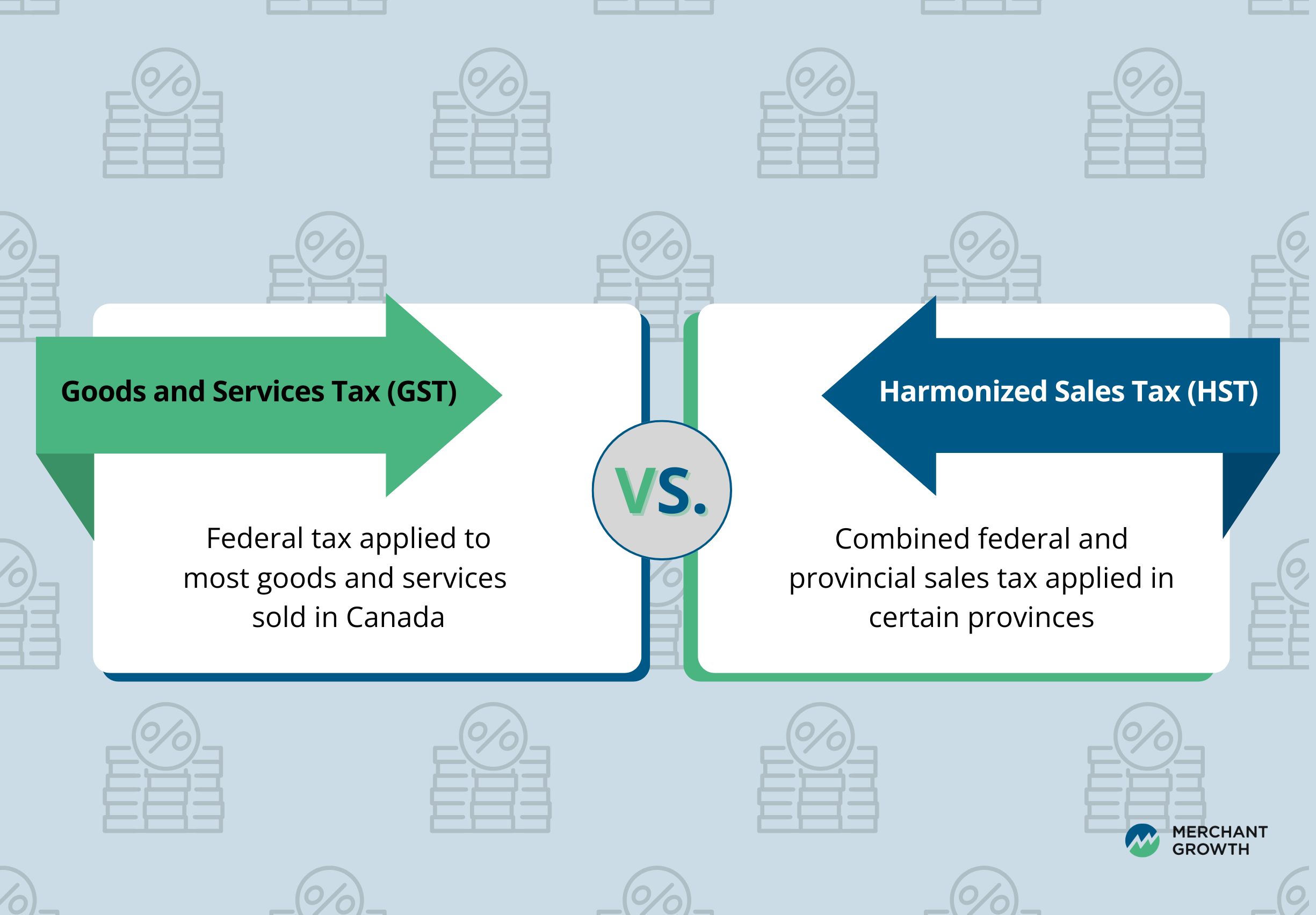
GST (Goods and Services Tax): A 5% federal tax applied to most goods and services sold in Canada.
HST (Harmonized Sales Tax): A combined federal and provincial sales tax applied in certain provinces, replacing the separate GST and provincial sales tax. The HST rate varies depending on the province:
| Province | HST Rate |
|---|---|
| Ontario | 13% |
| New Brunswick | 15% |
| Newfoundland and Labrador | 15% |
| Nova Scotia | 14% |
| Prince Edward Island | 15% |
Provinces not listed above (e.g., British Columbia, Manitoba, Saskatchewan, Quebec) charge GST at 5% plus separate provincial sales tax (PST) where applicable. Here is a breakdown of PST for the applicable provinces:
| Province | PST Rate |
|---|---|
| British Columbia | 7% |
| Manitoba | 7% |
| Quebec | 9.975% |
| Saskatchewan | 6% |
Alberta, Northwest Territories, Nunavut and the Yukon all simply charge GST for a sales tax rate of 5% total. Understanding the right tax rate for your location ensures you charge customers correctly and remain compliant.
How to Register and File Your GST/HST
Getting started with registration: The easiest way to register for GST/HST is through the Canada Revenue Agency’s Business Registration Online portal. You’ll need your business number, legal business name, and contact information. Registration is straightforward and usually completed within a few minutes online.
Filing your returns:
Once registered, you’ll need to collect GST/HST from customers and submit periodic returns to the CRA. Most small businesses file either quarterly or annually, depending on revenue and preference. Filing can be done through CRA’s online services, by mail, or through your accounting software if it supports GST/HST reporting. Keeping accurate records of all sales and expenses will make filing much easier and help ensure you claim eligible input tax credits to reduce your net tax payable.
Registering for GST/HST might feel like a big step, but once in place, it’s simply a part of your ongoing financial routine—and one less worry as you focus on growing your business.
Budgeting for Your Business & Future Growth
A budget is more than just numbers on a spreadsheet—it’s a tool that keeps your business financially healthy and helps you make smart decisions. Without a clear picture of your income and expenses, it’s easy to overspend, miss opportunities, or struggle when unexpected costs pop up.
Start with Startup and Operating Costs
Begin by outlining all your startup costs (equipment, inventory, marketing, website development, and any professional fees. Then, factor in ongoing expenses like rent, utilities, payroll, insurance, and supplies. Being thorough here helps you understand exactly how much you need to get your business off the ground and keep it running smoothly.
Plan for Growth and Unexpected Expenses
Budgeting isn’t just about today—it’s about tomorrow. Set aside funds for unexpected expenses, like equipment repairs or temporary drops in revenue, and think ahead to future growth. Whether you plan to expand your product line, hire additional staff, or open a new location, incorporating these plans into your budget ensures you’re ready when opportunities arise. For more guidance, check out our business budgeting template and article on planning for expansion—they’ll help you map out both short-term and long-term goals.
Staying on Top of Your Budget
A budget is only useful if it’s actively managed. Track your income and expenses regularly using tools like QuickBooks Canada or Wave Accounting, and review your budget at least monthly. Compare your projections to actual spending to spot trends, adjust your forecasts, and make informed decisions. Small adjustments now can prevent bigger problems later.
Budgeting might sound tedious, but it gives you confidence. When you know where your money is going and how to plan for growth, you can focus on what matters most: building a business that thrives.

Be Aware of Tax Requirements
Budgeting and managing cash flow go hand in hand with understanding your tax obligations. Taxes can feel complicated, but getting a handle on them from the start will save you time, stress, and potential penalties. Knowing what you owe, when to pay, and what deductions you can claim helps keep your business financially healthy and compliant.
Filing Obligations
How often you file your taxes depends on both your business structure and your annual revenue:
- Sole Proprietorships and Partnerships: Generally file once a year along with your personal income tax, but GST/HST filings depend on revenue. Small businesses under $30,000 annual revenue can usually file annually, while those above may need to file quarterly or monthly.
- Corporations: Must file a corporate tax return every year, regardless of income. Larger corporations may have additional installment payments throughout the year.
Regularly reviewing your filing schedule ensures you’re never caught off guard and helps you plan your cash flow accordingly.
Payroll Taxes
If you have employees, you’re responsible for deducting and remitting several payroll taxes at both the federal and provincial levels:
- Canada Pension Plan (CPP) Contributions: Deducted from employee pay and matched by the employer.
- Employment Insurance (EI) Premiums: Deducted from employee wages and matched by the employer, with rates varying slightly by province.
- Income Tax Withholding: Deducted based on the employee’s income and province of residence.
These contributions must be remitted to the CRA on a regular schedule—monthly or quarterly, depending on your payroll size. Missing deadlines can result in penalties, so setting up reliable payroll software or consulting an accountant is highly recommended.
Incentives and Deductions
The Canadian government offers several programs and deductions designed to support small businesses:
- Small Business Deduction (SBD): Lowers the corporate tax rate for Canadian-controlled private corporations.
- Provincial Tax Credits: Programs like Ontario’s Innovation Tax Credit or British Columbia’s Small Business Venture Capital Tax Credit can help offset expenses related to research, development, or investment.
- Other Deductions: You can also deduct legitimate business expenses such as home office costs, vehicle expenses, and professional fees.
Exploring these programs early can reduce your overall tax burden and free up cash to reinvest in growth. The CRA’s Small Business section provides comprehensive guidance to help you identify eligible programs and ensure compliance.

Confirm if You Will Need Insurance
Almost every business faces some level of risk—whether it’s property damage, an accident involving a client, or an error in the services you provide. That’s why understanding your insurance needs early is essential. While not all types of coverage are mandatory, having the right insurance can protect your business, your finances, and your peace of mind. Let’s break down the main types of insurance you may need.
- General Liability: Covers third-party injuries or property damage.
- Property Insurance: Protects your assets and equipment.
- Professional Liability: Important for consultants, designers, and advisors.
- Workers’ Compensation: Mandatory if hiring employees.
Not every business requires all of these coverages, and some industries have specialized insurance requirements. The Insurance Bureau of Canada provides guidance and tools to help identify which types of insurance apply to your business. Consulting with a licensed insurance broker can also help ensure you have adequate protection without paying for unnecessary coverage.

Identify Industry Regulations
Running a business in Canada comes with responsibilities beyond making sales or providing services. Depending on your industry and location, you’ll need to comply with a range of laws and regulations designed to protect employees, customers, and the public. Understanding these rules early can save you time, money, and legal headaches. Below are the key areas most small businesses need to consider:
Health and Safety Laws
Health and safety regulations are essential for protecting employees and customers. Any business with a physical workspace—offices, stores, restaurants, or manufacturing facilities—must follow provincial and federal workplace safety standards. This includes providing proper training, safety equipment, emergency procedures, and reporting any workplace incidents. For example, a construction company must follow strict occupational health guidelines, while a restaurant must maintain hygiene and food safety protocols.
Zoning Laws
Before choosing your business location, it’s important to verify that your intended operations are allowed in that area. Zoning laws dictate where certain types of businesses can operate, such as retail stores, manufacturing facilities, or home-based offices. Checking with your municipal zoning office can prevent costly relocations or fines later on. For instance, a small café may not be allowed to operate in a strictly residential zone without a special permit.
Employment Standards
Employment laws govern minimum wage, working hours, overtime, and other labor requirements. These standards ensure fair treatment of employees and vary by province. If you hire staff, you must comply with these rules and provide things like vacation pay, breaks, and termination notice. Here’s a snapshot of the current minimum wages across Canada:
| Province/Territory | Minimum Wage (2025) |
|---|---|
| Alberta | $15.00 |
| British Columbia | $17.85 (Increase June 1 annually) |
| Manitoba | $15.80 (Increase to $16.00 October 1, 2025) |
| New Brunswick | $15.65 |
| Newfoundland & Labrador | $16.00 |
| Nova Scotia | $15.70 (Increase to $16.50 October 1, 2025) |
| Ontario | $17.20 (Increase to $17.60 October 1, 2025) |
| Prince Edward Island | $16.00 (Increase to $16.50 October 1, 2025) |
| Quebec | $16.10 |
| Saskatchewan | $15.00 (Increase to $15.35 October 1, 2025) |
| Northwest Territories | $16.95 |
| Nunavut | $19.75 |
| Yukon | $17.94 |
Minimum wage as of September 1, 2025, Source: Wagepoint
Intellectual Property (IP)
Protecting your business ideas, brand, and creative work is critical. IP laws cover trademarks, patents, copyrights, and trade secrets. For example, if you’ve developed a unique product, applying for a patent can prevent competitors from copying it. A distinctive brand name or logo can be protected as a trademark, and original content, like websites or marketing materials, is automatically protected by copyright. Understanding IP rules helps maintain your competitive advantage.
The Canadian Government offers detailed guidance on industry regulations, ensuring your business stays compliant with federal, provincial, and municipal laws. Taking the time to understand these requirements now makes future growth smoother and avoids costly legal issues.

Secure Funding for Your Small Business
Turning your business idea into reality usually requires some capital. Whether it’s covering startup costs, purchasing inventory, or marketing your new venture, having access to the right funding can make all the difference. Fortunately, Canada has a variety of financing options for entrepreneurs, ranging from traditional loans to government-backed programs and alternative lenders. Understanding your options early helps you choose the best path for your business and ensures you can grow sustainably.
- Small Business Loans: Traditional banks and credit unions offer loans designed specifically for startups. These loans often come with structured repayment plans and competitive interest rates, making them a reliable option for businesses that need larger upfront capital.
- Grants: Government programs, like the Canada Small Business Financing Program or provincial-level grants, provide non-repayable funding for eligible businesses. Grants are typically aimed at specific sectors, growth initiatives, or innovation projects.
- Alternative Lenders: Online lenders, peer-to-peer platforms, and microloan programs offer more flexible financing options, often with faster approval times. These can be a good solution if you don’t meet traditional lending criteria.
Having a clear business plan is critical when seeking funding—it demonstrates to lenders or grant providers that you’ve carefully considered your expenses, revenue projections, and growth strategy. Later, we’ll dive deeper into each funding type, including tips for applying, eligibility criteria, and strategies to improve your chances of approval. With the right funding in place, you’ll be better positioned to bring your business vision to life and tackle the challenges that come with growth.
How Much Does it Cost to Open a Small Business?
The costs of starting a business in Canada can vary significantly depending on your industry, location, and the scale of your operations. While some businesses can start with just a few thousand dollars, others may require substantial upfront investment. Understanding the different types of expenses and planning for them carefully is key to keeping your business financially healthy.
Business Registration
Registering your business is one of the first legal steps to operating in Canada. It officially recognizes your business, allows you to open a business bank account, and is required if you want to access funding, grants, or government programs.
The cost of registration varies depending on your business structure and whether you register provincially or federally. For example, sole proprietorships typically have lower registration fees, while corporations involve higher costs due to more complex filings and compliance requirements. Provincial registration fees usually range from $60 to $500, depending on the province and the type of business. Keep in mind that these are base fees—additional costs may apply for extra filings, name searches, or specialized business licenses.
Equipment and Inventory
Equipment and inventory costs depend heavily on the type of business you’re launching. A home-based online store may only need a computer, printer, and initial stock, while a café or retail shop will require commercial-grade equipment, furniture, and larger inventory.
Examples of startup equipment and inventory:
- Retail: Shelving, point-of-sale systems, initial stock
- Food services: Kitchen appliances, utensils, refrigeration units
- Office-based services: Computers, software, desks, office supplies
Startup costs can range widely—from a few hundred dollars for home-based operations to tens of thousands for brick-and-mortar businesses. Planning carefully helps ensure you don’t overspend while still investing in what’s essential.
Marketing and Website
Marketing is an essential cost to attract and retain customers. Initial expenses can include branding, logo design, website setup, social media advertising, and printed materials. While small businesses can sometimes start with lower-cost marketing strategies, investing in a professional online presence and brand identity can make a significant difference.
Examples of marketing activities and materials:
- Website domain and hosting
- Social media campaigns and content creation
- Flyers, business cards, and signage
- Email marketing platforms and customer relationship management (CRM) tools
Expect marketing costs to vary depending on your approach—some businesses may spend a few hundred dollars initially, while others may invest thousands to create a polished brand presence.
Operational Expenses
Ongoing operational expenses are essential to keep your business running smoothly. These include:
- Rent or lease for physical locations
- Salaries and wages for employees
- Utilities such as electricity, water, internet, and phone
- Software subscriptions, insurance, and supplies
- Maintenance or shipping costs
Even small businesses need to budget for at least several months of operational expenses before they start turning a profit. Factoring in unexpected costs or growth plans ensures your business remains resilient in the early stages.
Careful budgeting across all these areas—registration, equipment, marketing, and operations—sets a strong foundation for your business and helps you invest strategically in growth.
Small Business Grants in Canada
Grants are one of the most attractive ways to fund a startup because they don’t need to be repaid. However, they often come with specific eligibility requirements, including your business sector, location, and ownership structure. Many grants also require a detailed business plan, financial projections, and clearly defined objectives to demonstrate how the funds will be used effectively.
Canada offers a variety of grants at both the federal and provincial levels. Federal programs, such as those listed on Innovation Canada, provide support for research, technology adoption, and growth initiatives. Provinces often have their own programs, incubators, and industry associations that provide targeted funding for local businesses. Taking the time to research and apply for the grants relevant to your business can give you a financial boost without adding debt to your balance sheet.
Small Business Loans in Canada
While grants are ideal, loans are often the backbone of small business funding, providing the capital you need to get started or expand. Banks and traditional lenders require documentation such as a solid business plan, financial statements, and a good credit history. To improve your chances of approval, show realistic financial projections, demonstrate your ability to repay, and highlight any early signs of profitability.
Canada has several options for small business loans, including government-backed loans like the BDC Start-Up Loan and financial institutions offering small business products. These loans are generally more structured than alternative funding and often offer lower interest rates, making them a reliable option for businesses that meet the lender’s requirements.
Alternative Lenders to Support Your Small Business
For entrepreneurs who need faster, more flexible access to capital, alternative lenders have become a popular choice. These include online lenders, peer-to-peer lending platforms, and microloans offered through local development agencies. These funding sources often approve applications more quickly and offer flexible repayment terms, but they may come with higher interest rates than traditional loans.
Alternative financing is particularly useful for businesses with a proven track record but less access to traditional credit. If your business has been operating for at least six months and generates revenue above $10,000, you may be eligible for Merchant Growth term financing, which offers a streamlined application process tailored for small businesses ready to scale. Applying for funding through Merchant Growth can help you invest in growth initiatives, hire staff, or expand your operations with confidence.
Starting a small business in Canada requires more than just a great idea—it takes careful planning, compliance, and smart financial decisions. By exploring grants, traditional loans, and alternative financing options, you can find the funding that fits your business needs. Combining these resources with a clear plan, organized budgeting, and the right support can set you on the path to building a thriving business.
Ready to get started? Check out our free How to Start a Business Checklist ➡️ Download Here today.
How to Set Business Goals: A Step-by-Step Guide for Canadian Small Businesses
Running a small business in Canada comes with big opportunities—but without clear goals, it’s easy for your team to lose direction and momentum. Setting clear business goals is essential for keeping everyone aligned, motivated, and working toward the same objectives. Yet research shows that only 20% of businesses complete 80% of their strategic goals, and many employees and managers don’t even know what the primary goals of the business are. Without alignment, it’s easy to lose focus, slow progress, and miss opportunities for growth.
This guide will help you fix that. Step by step, we’ll show you how to define and categorize your business goals, apply the SMART framework to make them actionable, and track progress so your team stays on the same page. You’ll also learn practical tools, templates, and strategies to celebrate wins along the way—helping your business stay focused, your team motivated, and your growth sustainable.
Key Takeaways
- Goals give your business focus and measurable benchmarks
- Use the SMART framework: Specific, Measurable, Achievable, Relevant, Time-bound
- Align goals with your business mission and vision
- Track, adapt, and celebrate progress
- Tools like worksheets, software, and templates make goal-setting easier
What Are Business Goals?
Business goals are the specific outcomes your company wants to achieve within a set timeframe. They act as a roadmap for growth, helping you allocate resources efficiently, measure success, and stay motivated. Without clear goals, your business risks stagnation, missed opportunities, and inconsistent results.
Think of goals as signposts—they guide decisions, prioritize actions, and give your team something concrete to work toward. When everyone knows what the business is aiming for, it becomes easier to align efforts, set priorities, and celebrate progress. Goals also give employees a sense of purpose and clarity, helping them see how their day-to-day work contributes to the bigger picture. In fact, employees with clear goals are 8.1 times more likely to take initiative and independently seek ways to improve their work.
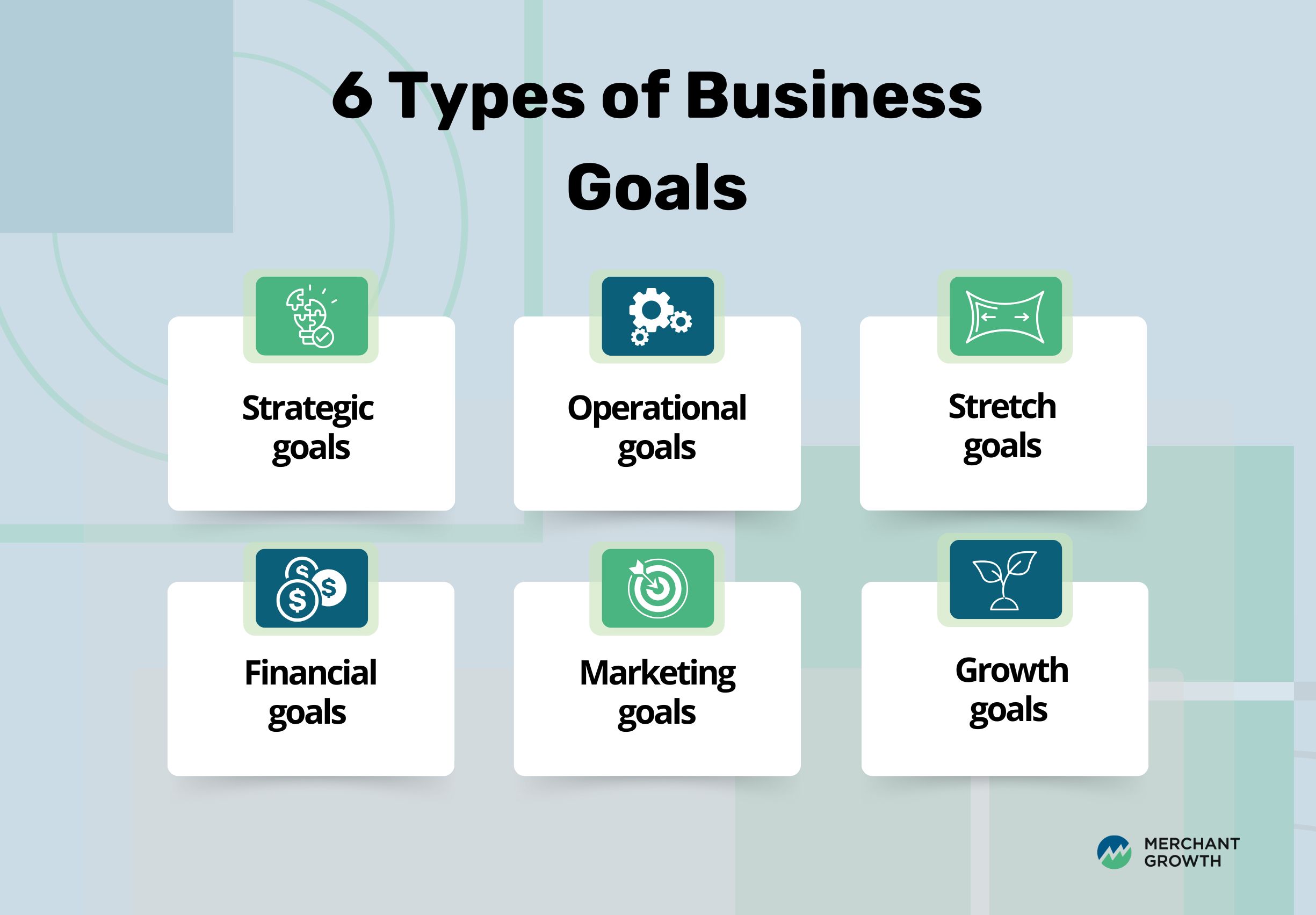
Now that you know why goals are so important, it helps to look at the different types of business goals. Each type focuses on a specific area—whether it’s day-to-day operations, long-term growth, or strategic priorities—and understanding them makes it easier to set goals that actually move your business forward.
What Are the Different Types of Business Goals?
Not all goals are meant to be measured in the same way or achieved on the same timeline. By breaking goals into different types, you can make sure your business is tackling both the day-to-day tasks that keep operations running smoothly and the bigger, long-term objectives that drive growth. Understanding these categories gives you a clearer picture of where to focus your energy and how to involve your team in meaningful ways.

Strategic Goals
Strategic goals are your long-term targets that define the overall direction of your business. They’re big-picture objectives that shape decisions, guide resource allocation, and help set priorities across teams. Having well-defined strategic goals ensures that every action taken in your business moves you closer to your vision.
Examples:
- Expand into new Canadian provinces
- Launch a new product line
- Increase market share in your niche

Operational Goals
Operational goals focus on the day-to-day processes that keep your business running efficiently. They are practical targets designed to improve workflows, reduce bottlenecks, and make your operations more predictable and consistent. Meeting these goals helps your team work smarter, not harder, and sets the foundation for achieving bigger ambitions.
Examples:
- Reduce order processing time by 20%
- Automate monthly reporting tasks
- Streamline customer service response times

Stretch Goals
Stretch goals are ambitious objectives that push your team beyond their comfort zone. These targets may feel challenging or even audacious, but they inspire innovation, motivate high performance, and encourage creative problem-solving. While not every stretch goal will be fully achieved, the pursuit itself often drives significant growth.
Examples:
- Triple revenue in one year
- Acquire 10,000 new customers in 12 months

Financial Goals
Financial goals center on the numbers that keep your business sustainable and profitable. They provide a measurable way to track growth, manage costs, and make informed investment decisions. Clear financial goals help your team understand how their work directly contributes to the company’s bottom line.
Examples:
- Achieve $250,000 in annual sales
- Reduce operational costs by 15%
- Increase profit margins by 10%

Marketing Goals
Marketing goals focus on connecting with your customers and building your brand presence. They help drive awareness, engagement, and loyalty, which in turn fuels revenue growth. With measurable marketing targets, your team can track campaigns, refine messaging, and identify the strategies that deliver results.
Examples:
- Grow Instagram followers by 5,000 in six months
- Increase repeat purchase rate by 20%
- Launch a referral program for new clients

Growth Goals
Growth goals are about expanding your business—whether through new products, markets, or service offerings. These goals often overlap with strategic objectives, but they specifically highlight areas of opportunity for scaling operations, increasing revenue, or reaching more customers. Setting clear growth goals keeps your team focused on sustainable expansion rather than short-term gains.
Examples:
- Open a new storefront in Toronto
- Launch an e-commerce platform for national sales
- Expand service offerings to new industries
Now that you know the different types of business goals, you can see how each one shapes the way your business operates and grows. From day-to-day tasks to big-picture ambitions, clear goal categories help your team stay focused and motivated. The next step is ensuring these goals are realistic and achievable—because well-defined, attainable goals are what truly drive progress and keep your business moving forward.
Why Setting Realistic Goals Matters
Setting realistic goals isn’t just about targets—it’s about giving your team clarity and confidence. When goals are achievable, employees know what’s expected, can focus their efforts, and feel motivated to contribute. Unrealistic or poorly defined goals, on the other hand, can cause stress, reduce productivity, and lead to burnout.
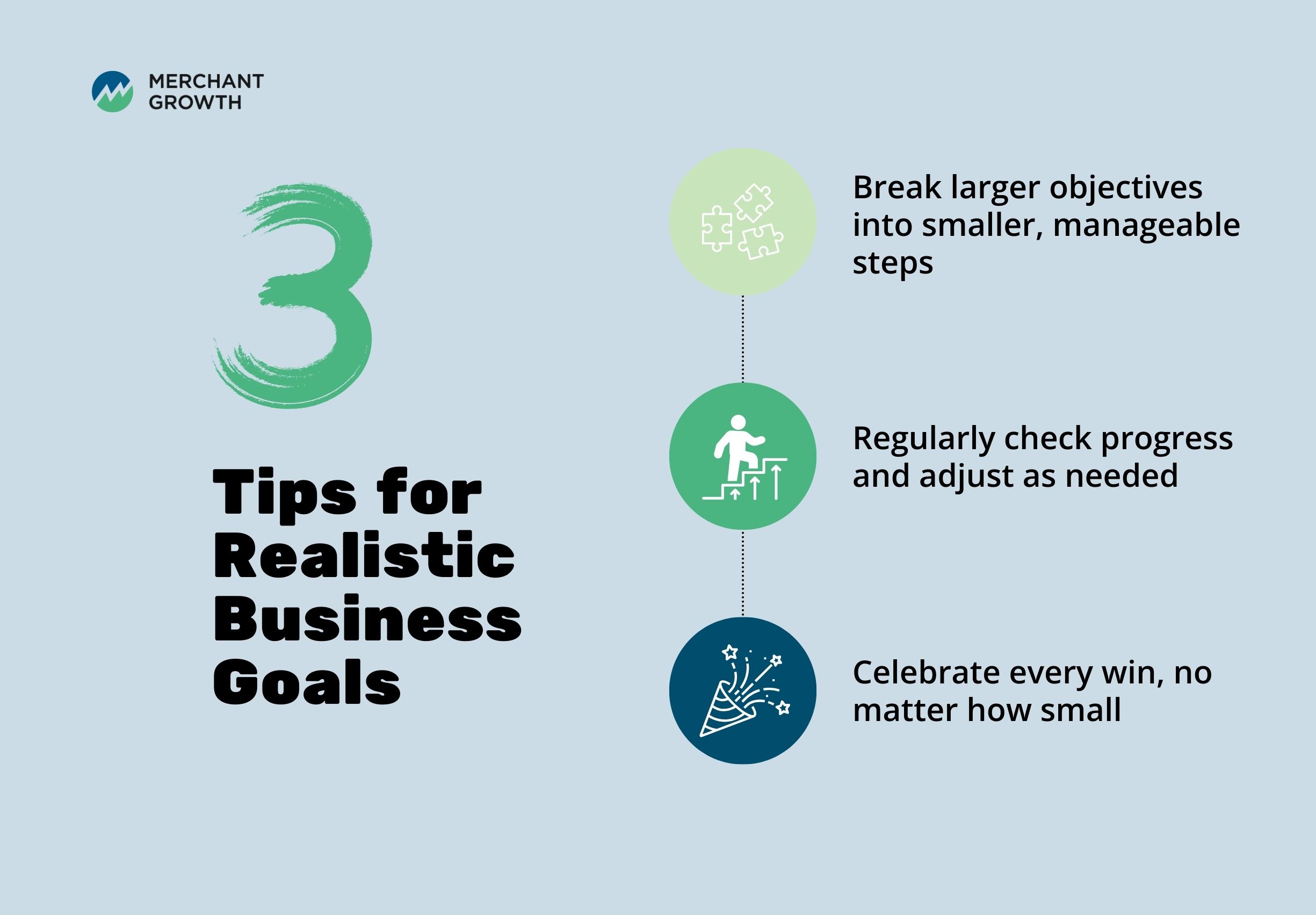
Tips for realistic goal-setting:
- Break larger objectives into smaller, manageable steps
- Regularly check progress and adjust as needed
- Celebrate every win, no matter how small
Achievable goals help maintain morale, strengthen teamwork, and create momentum for steady growth. Teams that understand what success looks like are more engaged and proactive, taking ownership of their work and driving results. That’s why structured frameworks like SMART goals are so valuable—they provide a clear, practical approach to setting objectives, ensuring your business stays on track.
The SMART Framework for Business Goals
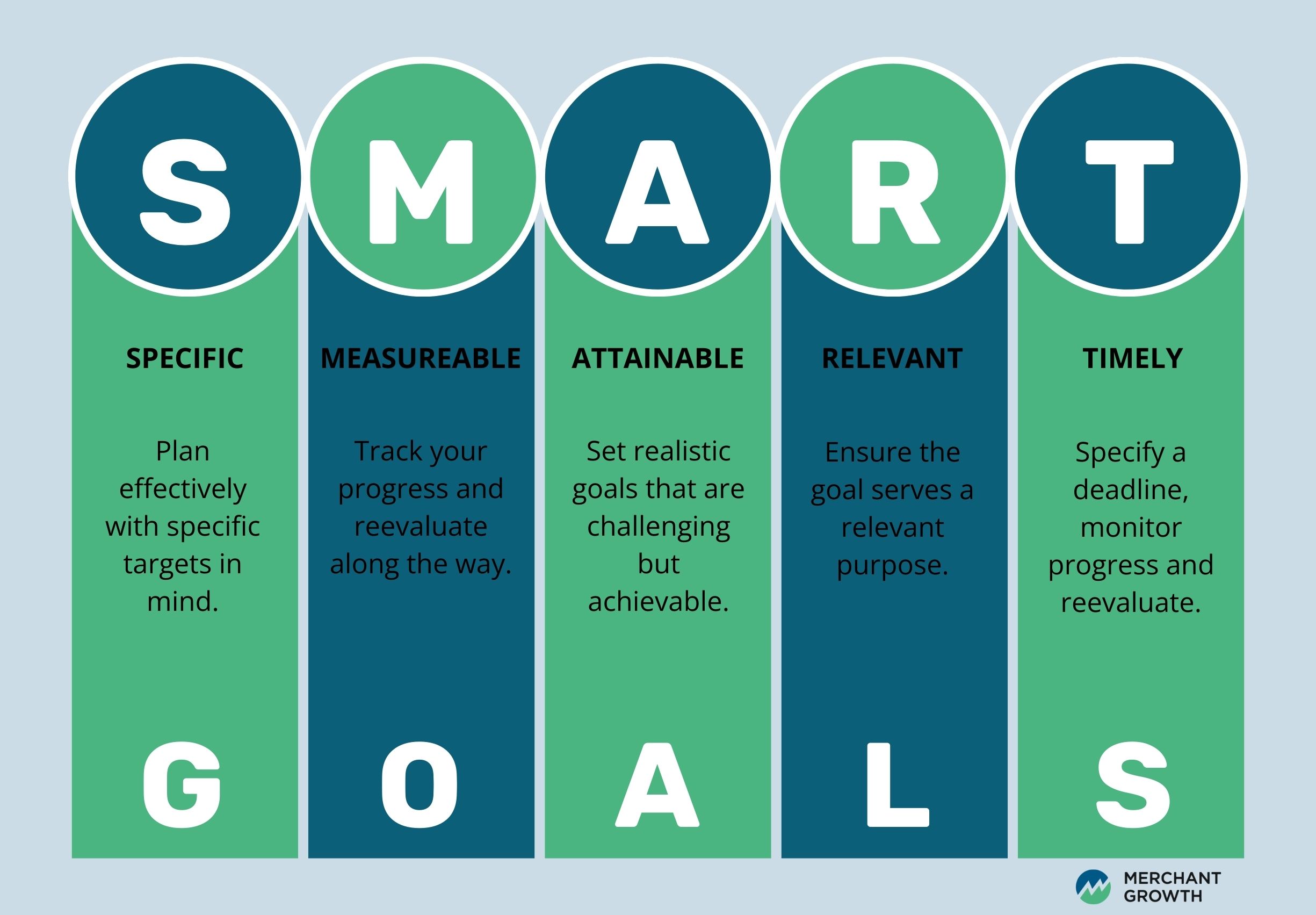
Setting goals is one thing—achieving them is another. The SMART framework provides a simple, practical structure to turn ambitions into actionable, measurable outcomes. By making your goals Specific, Measurable, Achievable, Relevant, and Time-bound, you ensure every objective is clear, realistic, and aligned with your business priorities. This approach helps Canadian small business owners focus their efforts, track progress, and keep their teams motivated along the way. However, even with SMART goals, urgency can be lacking—research from Leadership IQ found that only 30% of 12,801 participants felt a strong drive to achieve their objectives, showing that well-structured goals still need thoughtful application to be effective
Specific
A specific goal clearly defines what you want to accomplish, leaving no room for confusion. Vague goals like “grow my business” can be difficult to act on because the target isn’t clear. Specific goals provide direction and clarity, helping your team understand exactly what’s expected.
Example: Instead of saying, “Increase online sales,” set a goal like, “Increase online sales of product X by 15% in Q3.”
Measurable
Measurable goals allow you to track progress using data and key performance indicators (KPIs). When success is quantifiable, it’s easier to see how your actions are contributing to the goal, celebrate milestones along the way, and adjust strategies if needed.
Example: Monitor weekly revenue, new leads, or customer engagement rates to see whether your marketing efforts are driving results.
Achievable
Achievable goals are realistic and consider your current resources, team capacity, and timeframe. Goals that are too ambitious can demotivate employees, while attainable goals inspire confidence and encourage action. Assess your capabilities before setting targets to ensure they’re challenging but realistic.
Example: Don’t aim to double revenue in a month if your infrastructure can’t support it. Instead, plan incremental growth that your team can realistically achieve.
Relevant
Relevant goals align with your overall business vision and strategic priorities. This ensures your team is focusing on what matters most, rather than being pulled in multiple directions. Every goal should contribute to the bigger picture of your company’s growth.
Example: Focus on increasing sales in your core market rather than launching side projects that don’t support your long-term objectives.
Time-Bound
Time-bound goals include a clear deadline, creating urgency and helping maintain focus. Without a timeframe, it’s easy for projects to lose momentum or priorities to shift. Setting deadlines also provides a way to evaluate progress and celebrate achievements on schedule.
Example: Complete the marketing campaign by October 31st to ensure you hit seasonal sales targets.
Pro Tip: Use the SMART framework to evaluate every goal and avoid vague objectives that aren’t actionable. This small step can make a big difference in keeping your team aligned and accountable.
When your goals are structured using SMART principles, it becomes easier to prioritize and plan the work that will get you there. Clear, actionable goals create a roadmap for both immediate actions and bigger-picture objectives. In the next section, we’ll break down short-term and long-term goals, showing how to balance daily progress with your strategic vision for growth.
Short-Term vs Long-Term Goals
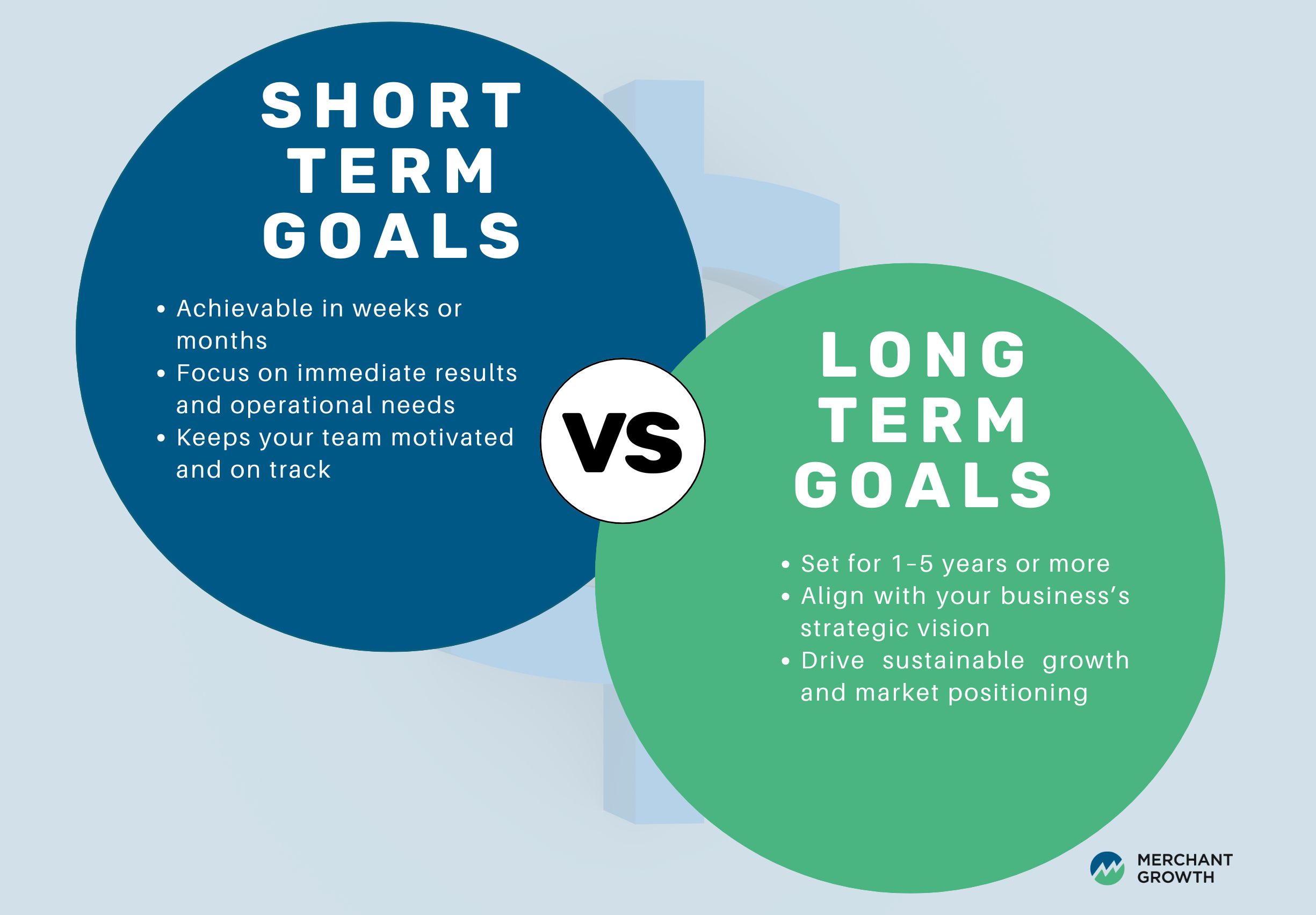
Goals come in different timeframes, and understanding the difference between short-term and long-term objectives helps you prioritize daily actions while keeping an eye on your bigger vision. Both types of goals are essential: short-term goals create momentum and quick wins, while long-term goals guide the overall direction of your business. Balancing the two ensures your team stays productive and aligned, without losing sight of the bigger picture.
Short-Term Goals
Short-term goals are immediate, actionable targets you can achieve in weeks or months. They help keep your team motivated by providing tangible milestones and a sense of accomplishment along the way. Short-term goals are ideal for tracking progress on specific projects, testing new strategies, or addressing areas of improvement.
Example: Increase website traffic by 20% in Q2 by publishing two blog posts per week and running a targeted social media campaign.
Long-Term Goals
Long-term goals are strategic objectives aligned with your vision for growth, often spanning one to five years or more. They provide direction and focus for your business, helping ensure that daily operations and short-term projects contribute to bigger-picture success. Long-term goals often require careful planning, resources, and patience, but they are key to sustained growth and competitive advantage.
Example: Become the top e-commerce retailer in your niche within three years by expanding product offerings, enhancing customer experience, and growing your digital marketing presence.
By linking short-term goals to your long-term vision, you create a roadmap that guides daily decisions and ensures every action contributes to the future of your business. Next, we’ll walk through practical steps to set business goals, so you can turn these ideas into a clear, actionable plan that drives results.
Steps to Set Business Goals
Now that you understand the difference between short-term and long-term goals, it’s time to translate that knowledge into actionable steps. Setting business goals isn’t just about writing down what you want to achieve—it’s about taking a structured approach that ensures your goals are realistic, aligned with your vision, and achievable. The following steps provide a roadmap to help you define, organize, and track your business objectives, so your team can stay focused and make measurable progress.
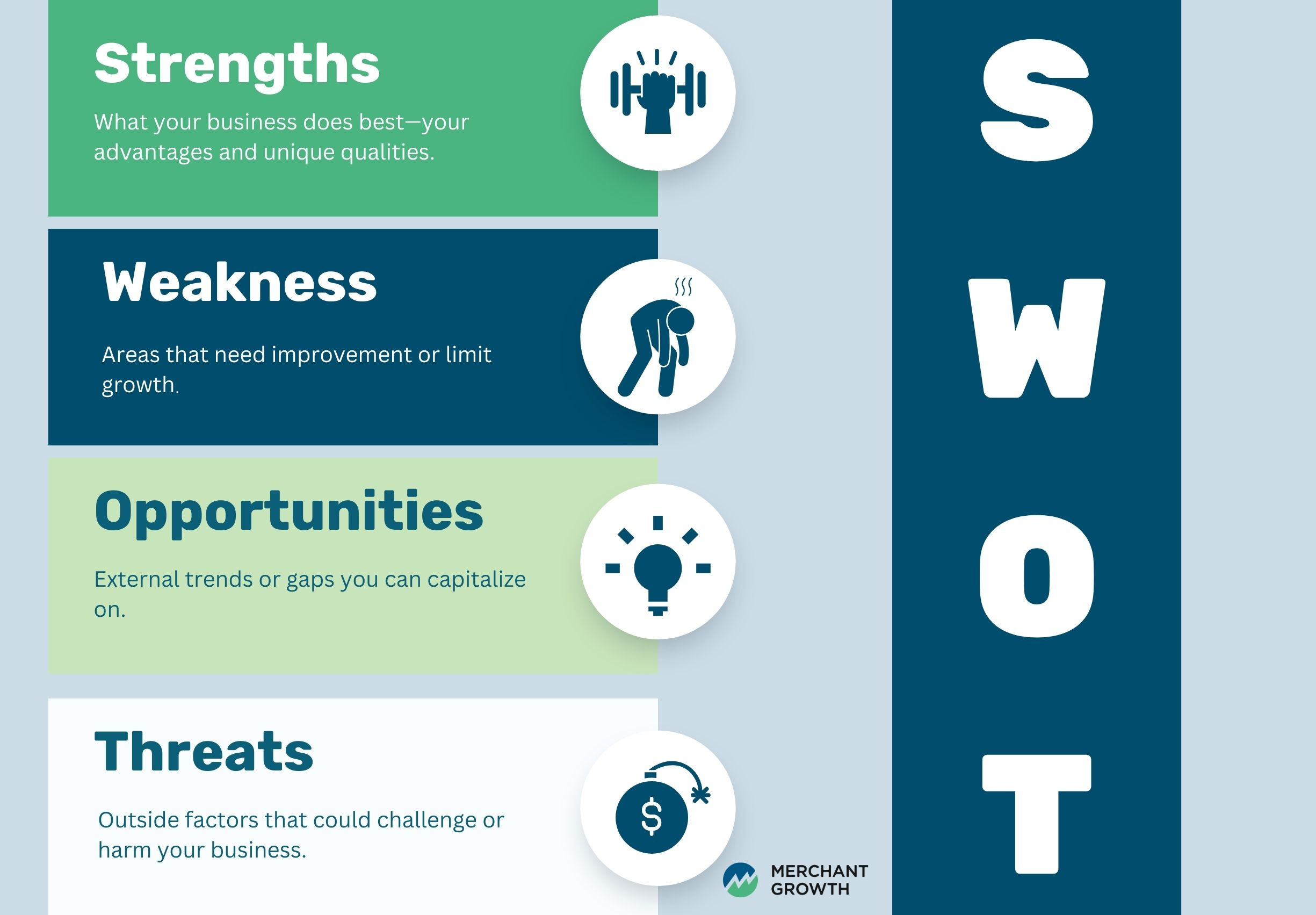
Step 1: Examine Your Business with a SWOT Analysis
Before setting goals, it’s important to understand your starting point. A SWOT analysis—assessing your Strengths, Weaknesses, Opportunities, and Threats—provides a clear picture of where your business excels, where improvements are needed, and where potential opportunities lie. By taking a close look at internal capabilities and external market conditions, you can identify areas where your efforts will have the greatest impact and anticipate challenges that could slow progress.
- Strengths: What you do better than competitors
- Weaknesses: Areas needing improvement
- Opportunities: Market gaps or emerging trends
- Threats: Challenges from competitors or industry changes
Step 2: Identify a Market Gap
A critical part of goal-setting is understanding the market you operate in. Spotting opportunities that competitors have overlooked can give your business a real edge. Consider whether customers are asking for a product or service that isn’t currently available, or if there are inefficiencies in existing offerings that you could solve. By identifying and targeting these gaps, you can develop goals that not only drive growth but also position your business as a solution provider, increasing customer loyalty and long-term success.
Examples to explore:
- Are customers requesting services that competitors don’t provide?
- Is there a process or experience you could make easier or more efficient?
Step 3: Brainstorm and Prioritize Goals
Once you’ve examined your business and the market, it’s time to brainstorm potential goals. Include everything that could make a meaningful impact, but don’t worry about feasibility yet. After compiling a list, prioritize your goals based on three key factors: the potential impact on revenue or growth, the feasibility with current resources, and alignment with your strategic vision. This ensures your team focuses on goals that matter most and avoids spreading effort too thin.
Step 4: Assign Tasks, Responsibilities, and Deadlines
Clear ownership is essential for turning goals into action. For each goal, assign tasks to team members, define responsibilities, and set measurable milestones. Deadlines create urgency and accountability, helping ensure that progress is consistent and visible. When everyone knows who is responsible for what and by when, it reduces confusion, encourages collaboration, and keeps your business on track.
Step 5: Track Progress and Adjust
Goal-setting doesn’t end once targets are written down. Regularly reviewing your goals, measuring results, and making adjustments is key to staying on course. Use dashboards, spreadsheets, or project management tools to track performance, identify areas that need attention, and celebrate successes along the way. Being flexible and responsive allows your business to adapt to changes, learn from setbacks, and keep your team motivated.
By following these steps, you’re not just setting goals—you’re creating a clear, actionable roadmap for growth. The next step is making sure every goal you set is structured to be achievable and measurable, which is where the SMART framework comes in.
Tools and Resources for Managing Goals
Setting clear goals is only part of the process—tracking progress and staying organized is equally important. Fortunately, there are a variety of tools and resources that can help you keep your goals on track, whether you prefer spreadsheets, apps, or project management platforms. The right tools make it easier to assign responsibilities, monitor milestones, and adjust plans as needed, saving time and keeping your team aligned.
- Worksheets: Google Sheets or customizable templates allow you to create simple, visual tracking systems for your business goals. They’re flexible, easy to share, and ideal for smaller teams. Check out our free business goals worksheet here. ➡️ Download Here - Merchant Growth - Business Goal Setting Worksheet
- Project Management Software: Platforms like Trello, Asana, and Monday.com help organize tasks, assign responsibilities, and monitor progress. These tools provide a clear overview of who is working on what and when, reducing confusion and improving accountability.
- Goal-Tracking Apps: Apps like GoalsOnTrack and Strides provide reminders, progress tracking, and analytics to ensure goals stay on course. They’re particularly useful for individual or team objectives that need regular monitoring.
- Canadian-Specific Resources: Business owners in Canada can take advantage of government and industry resources, such as BDC Planning Tools, to guide strategic planning and goal-setting. These resources provide templates, guides, and advice tailored to the Canadian business environment.
Using the right combination of tools ensures that your goals don’t just live on paper—they become actionable, trackable, and achievable. With systems in place to organize, measure, and celebrate progress, you’re ready to take the next step.
How Merchant Growth Can Help You Achieve Your Goals
Achieving your business goals often requires more than planning and tracking—it sometimes comes down to having the financial resources to bring your strategies to life. Merchant Growth offers tailored financing solutions for Canadian small businesses, helping you fund expansion, hire key team members, or invest in operational improvements that directly support your strategic objectives. With flexible term financing, you can implement initiatives that align with your goals, whether it’s launching a new product, expanding into new markets, or upgrading technology to improve efficiency. Take the next step in growing your business and apply for financing today.
GST/HST for Business: Simplifying Your Tax Obligations in Canada
Understanding GST and HST is a must for every Canadian small business owner. These taxes don’t just affect how you price your products or services—they also impact your cash flow, your accounting, and ultimately, the growth of your business. Ignore them, and you could face penalties, interest, or even audits.

In 2022 alone, over 3 million Canadian businesses filed GST/HST, with Ontario accounting for 1.5 million of those filings. If you’re running a small business, there’s a very real chance you’ll need to charge, collect, and remit GST or HST. Knowing how these taxes work isn’t just about compliance—it’s about keeping your business running smoothly and avoiding surprises that could hurt your bottom line.
This guide is designed to cut through the confusion. From registering for a GST/HST number, to filing returns, to paying taxes online, you’ll learn everything you need to manage your obligations confidently—and keep your focus on growing your business.
Key Takeaways
- GST/HST Registration: Know when and how to register for a GST/HST number to stay compliant.
- Tax Filing: Learn how to file GST/HST returns on time and avoid penalties.
- HST vs. GST: Understand the difference between GST and HST and when each applies to your business.
- Payment Methods: Familiarize yourself with the various methods of paying HST online and using Netfile for businesses.
- Avoid Common Mistakes: Learn about common GST/HST mistakes businesses make and how to avoid them.
What is GST/HST?
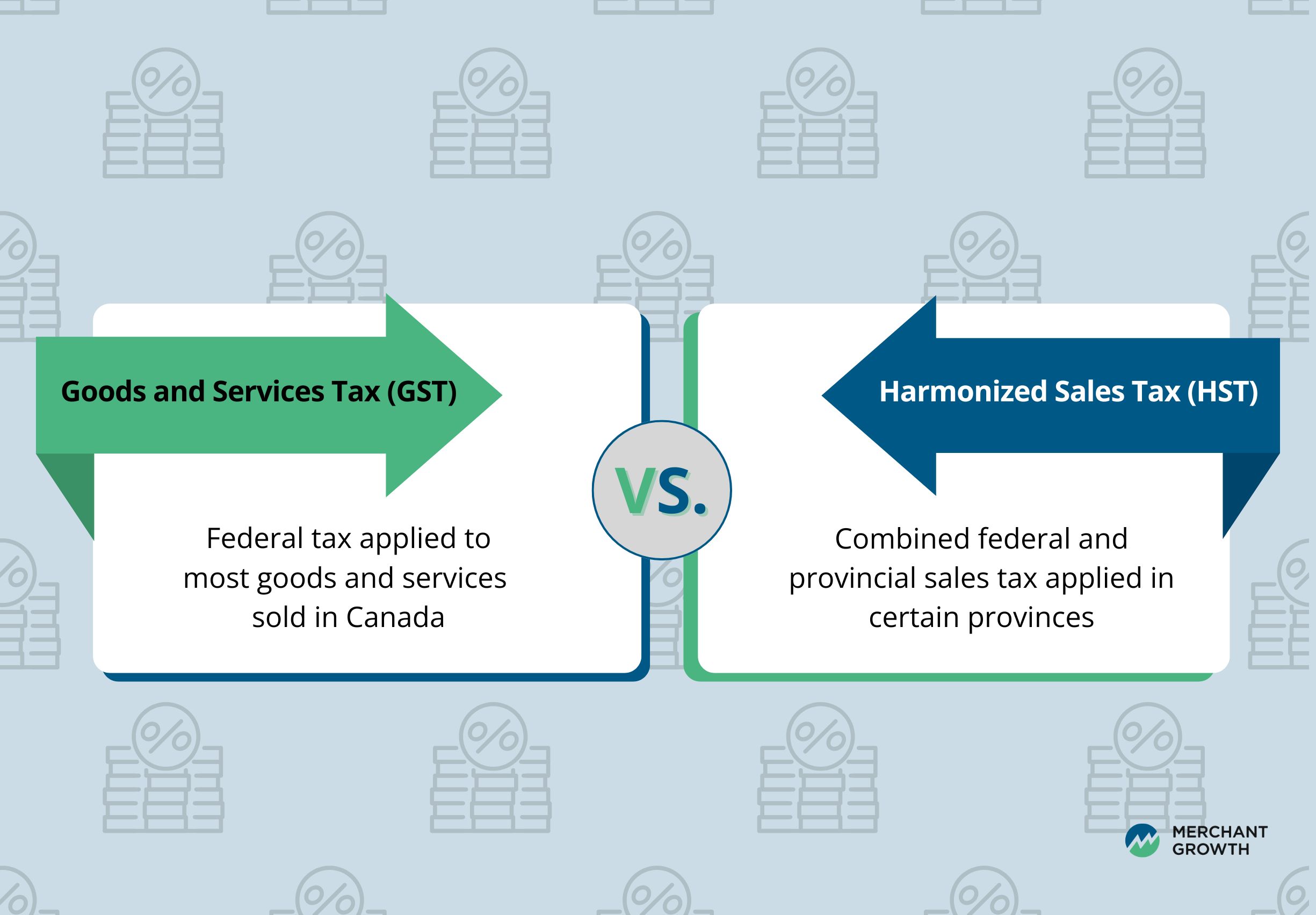
Once you understand why GST and HST matter, the next step is knowing exactly what they are. The Goods and Services Tax (GST) is a federal tax of 5% applied to most goods and services sold in Canada. Some provinces, however, have chosen to combine their provincial sales tax with GST, creating the Harmonized Sales Tax (HST).
- GST applies across Canada at 5% in provinces that don’t participate in HST.
- HST applies in provinces like Ontario (13%), Nova Scotia (14%), and New Brunswick (15%), combining the federal and provincial portions into a single, simplified tax.
The key difference is that HST streamlines tax collection for businesses operating in provinces that harmonize their sales tax with GST. Which tax you charge depends on where your business is located and where your customers are based—so getting this right from the start keeps your pricing, invoicing, and reporting smooth and compliant.
How to Register for a GST/HST Number
Now that you understand what GST and HST are, the next step is knowing if and how your business should register. In Canada, businesses with annual revenues over $30,000 are required to register for a GST/HST number. This registration gives you the legal ability to charge, collect, and remit GST/HST, ensuring your business stays compliant with federal and provincial tax laws.
Even if your revenue is below the $30,000 threshold, registering voluntarily can provide benefits, such as the ability to claim input tax credits (ITCs) for GST/HST paid on business expenses—a smart move for many growing businesses.
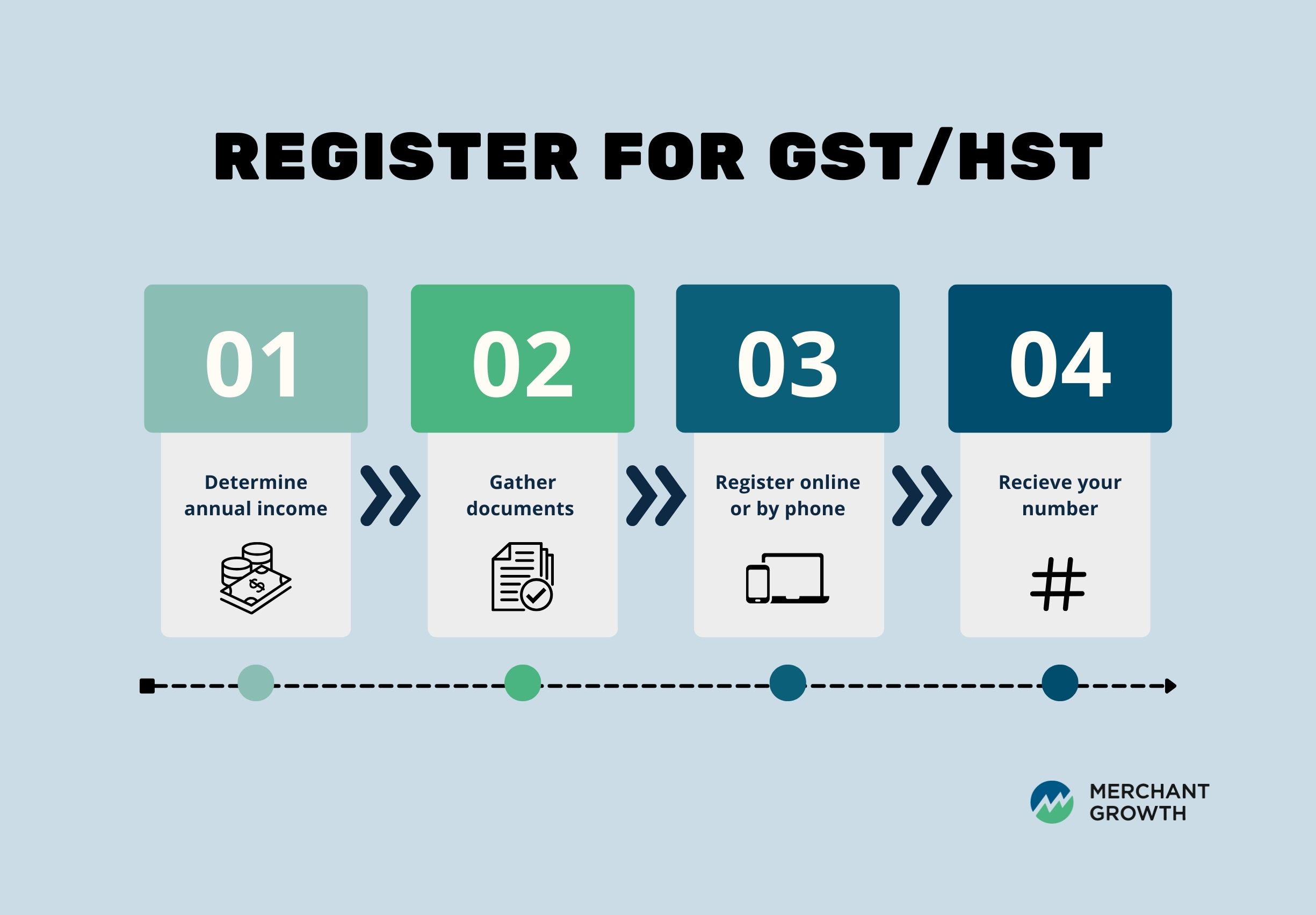
Here’s a step-by-step guide to get registered:
Step 1: Determine if Your Business Exceeds the $30,000 Threshold
The $30,000 limit applies to your gross revenue over the last four consecutive calendar quarters or in a single calendar quarter. Include revenue from all related businesses under your ownership. If your business earns above this amount, GST/HST registration is mandatory.
Tip: Even if you’re under the threshold, consider registering voluntarily if you have significant business expenses, as this allows you to recover GST/HST through input tax credits.
Step 2: Gather Required Documents
Before registering, ensure you have the necessary information ready:
- Your business number (BN) issued by the CRA (if you don’t have one, you can request it during registration).
- Legal business name as registered federally or provincially.
- Contact information including mailing address, phone number, and email.
- Business structure details (sole proprietorship, partnership, or corporation), since this affects registration options and tax obligations.
Step 3: Register Online or by Phone
You can register for your GST/HST number online via the CRA’s Business Registration Online (BRO) portal or by calling the CRA directly. Online registration is generally faster and allows you to get your GST/HST number immediately.
During registration, you’ll also provide information on your business activities, fiscal year-end, and intended filing frequency (monthly, quarterly, or annually), which depends on your revenue and business type.
Step 4: Receive and Use Your GST/HST Number
Once registration is complete, you will receive a unique GST/HST number, which identifies your business to the CRA. Use this number on:
- Invoices and receipts for sales or services charged
- GST/HST filings and remittances
- Claiming input tax credits for business expenses
Properly using your GST/HST number ensures smooth compliance and helps avoid potential audits or penalties.
Once you have your GST/HST number, you’re officially set up to charge, collect, and remit taxes—but registration is just the first step. The next crucial part of staying compliant is filing your GST/HST returns on time, which ensures your business avoids penalties and keeps your finances in order. Let’s walk through how to handle filing, what forms you’ll need, and tips for making the process as simple as possible.
Filing GST/HST Returns
Once you’ve registered for a GST/HST number, the next step is filing your returns. How often you need to file depends largely on your annual revenue, and knowing your filing schedule helps you stay compliant, manage cash flow, and avoid penalties. Let’s walk through the typical filing frequencies and what they look like in practice.
Annual Filing
For smaller businesses with annual revenue under $1.5 million, filing is usually done once a year. This is common for local boutiques, freelance consultants, or independent service providers who have a manageable volume of transactions. Your return is typically due within three months of your fiscal year-end, so while you only file once, it’s important to keep accurate records throughout the year. Tracking sales, invoices, and receipts will make your annual filing smoother and ensure you claim all eligible input tax credits (ITCs).
Quarterly Filing
As your business grows and your revenue reaches between $1.5 million and $6 million, you’ll likely move to quarterly filings. This applies to mid-sized operations such as established retail stores, regional service providers, or small distribution companies. Filing every three months helps businesses avoid a large lump-sum payment at the end of the year and allows for more regular cash flow planning. Deadlines typically fall one month after the end of each quarter, so consistent bookkeeping is essential. Staying organized ensures you correctly report the GST/HST you’ve collected and claim ITCs without errors.
Monthly Filing
For larger businesses earning over $6 million annually, monthly filing is the standard. High-volume operations like large e-commerce businesses, franchise chains, or manufacturing companies fall into this category. Filing every month might seem like extra work, but it prevents large tax liabilities from building up and keeps your accounts aligned with CRA requirements. Returns and payments are usually due by the end of the following month, and frequent, organized record-keeping is key to avoiding mistakes. Accounting software or a dedicated accountant can save time and reduce the risk of errors.
Once you’ve determined your filing frequency—annual, quarterly, or monthly—you’ll report the GST/HST you’ve collected and subtract any input tax credits. Filing can be done easily online using CRA’s Netfile for businesses, making the process straightforward and efficient. With your returns ready, the next step is paying HST online, ensuring your remittances reach the CRA securely and on time.
Paying HST Online

Paying your HST online is the next step after filing, and the CRA has made the process simple and secure. Once your return is ready, you can quickly remit the taxes you owe without leaving your office, helping you stay compliant and avoid late fees.
- Online banking:Pay directly through your bank’s website.
- Credit card payments: Available via third-party providers.
- Pre-authorized debit: Set up automatic payments for recurring filings.
Pro Tip: Schedule reminders before payment due dates to avoid penalties and interest. Late payments can result in charges starting from 1% per month.
With your HST collected, reported, and remitted, it’s also important to understand how rates differ across provinces and which businesses are required to charge GST/HST, ensuring you remain compliant wherever you operate in Canada.
How Much is GST/HST Across Canada?
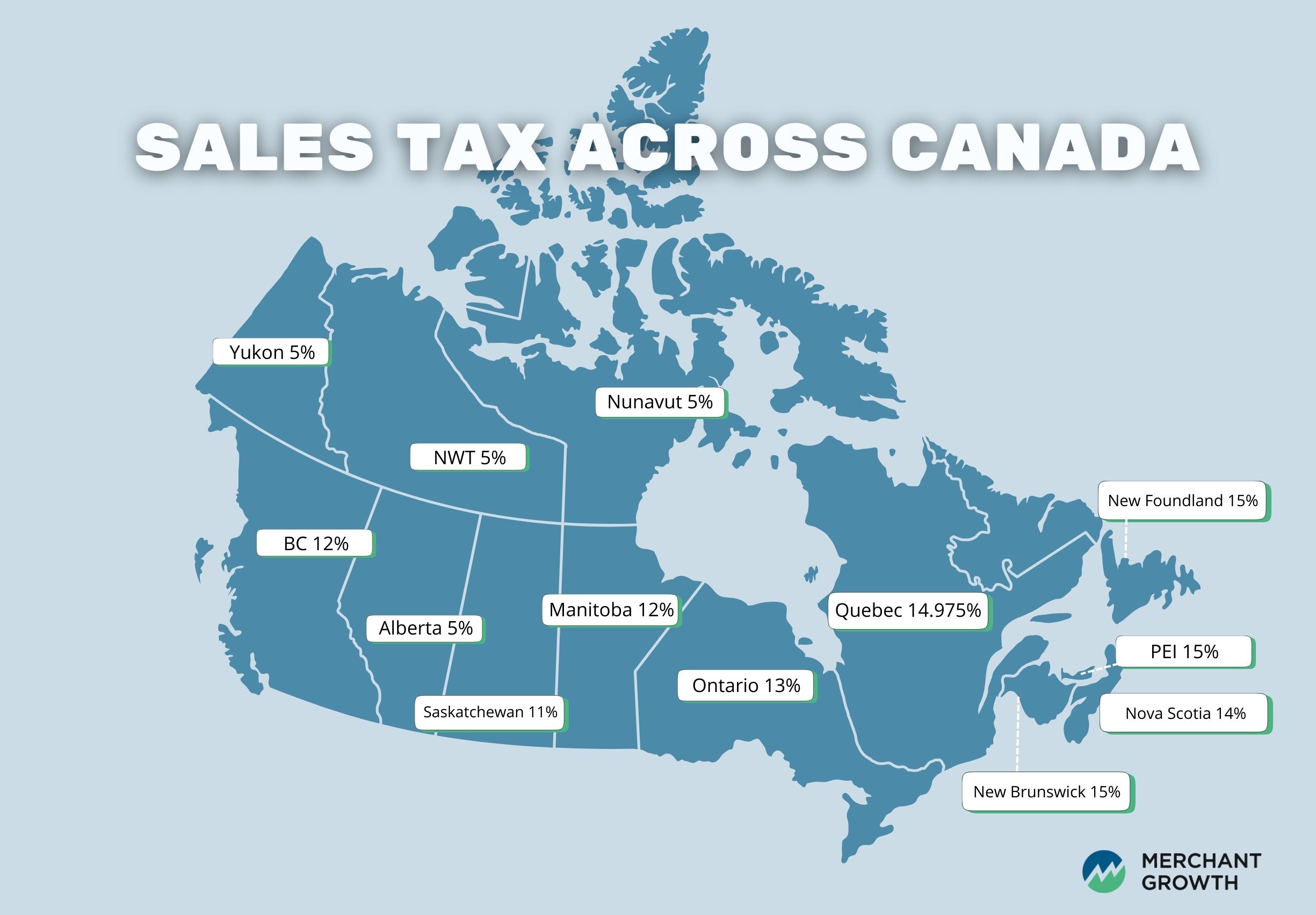
Understanding the GST and HST rates in your province is key to charging the correct amount and keeping your business compliant. While the federal GST is consistent at 5%, provinces that participate in the Harmonized Sales Tax combine this with their provincial portion, resulting in different HST rates across the country. Knowing which rate applies to your business location—and where your customers are—ensures accurate pricing and helps you avoid costly mistakes. Below is a breakdown of the current GST and HST rates across Canada:
| Province/Territory | GST/HST Rate |
|---|---|
| Alberta | 5% GST |
| British Columbia | 5% GST + 7% PST |
| Manitoba | 5% GST + 7% PST |
| Ontario | 13% HST |
| Nova Scotia | 14% HST |
| New Brunswick | 15% HST |
| Newfoundland & Labrador | 15% HST |
| Prince Edward Island | 15% HST |
| Quebec | 5% GST + 9.975% QST |
| Saskatchewan | 5% GST + 6% PST |
| Northwest Territories | 5% GST |
| Nunavut | 5% GST |
| Yukon | 5% GST |
By understanding the GST and HST rates that apply to your business, you can ensure you’re charging the correct amount and claiming any input tax credits you’re eligible for. Staying on top of these rates helps prevent errors and keeps your business compliant. Next, we’ll look at some of the most common GST/HST mistakes small businesses make—and how you can avoid them—to protect your business from penalties and audits.
Common GST/HST Mistakes to Avoid
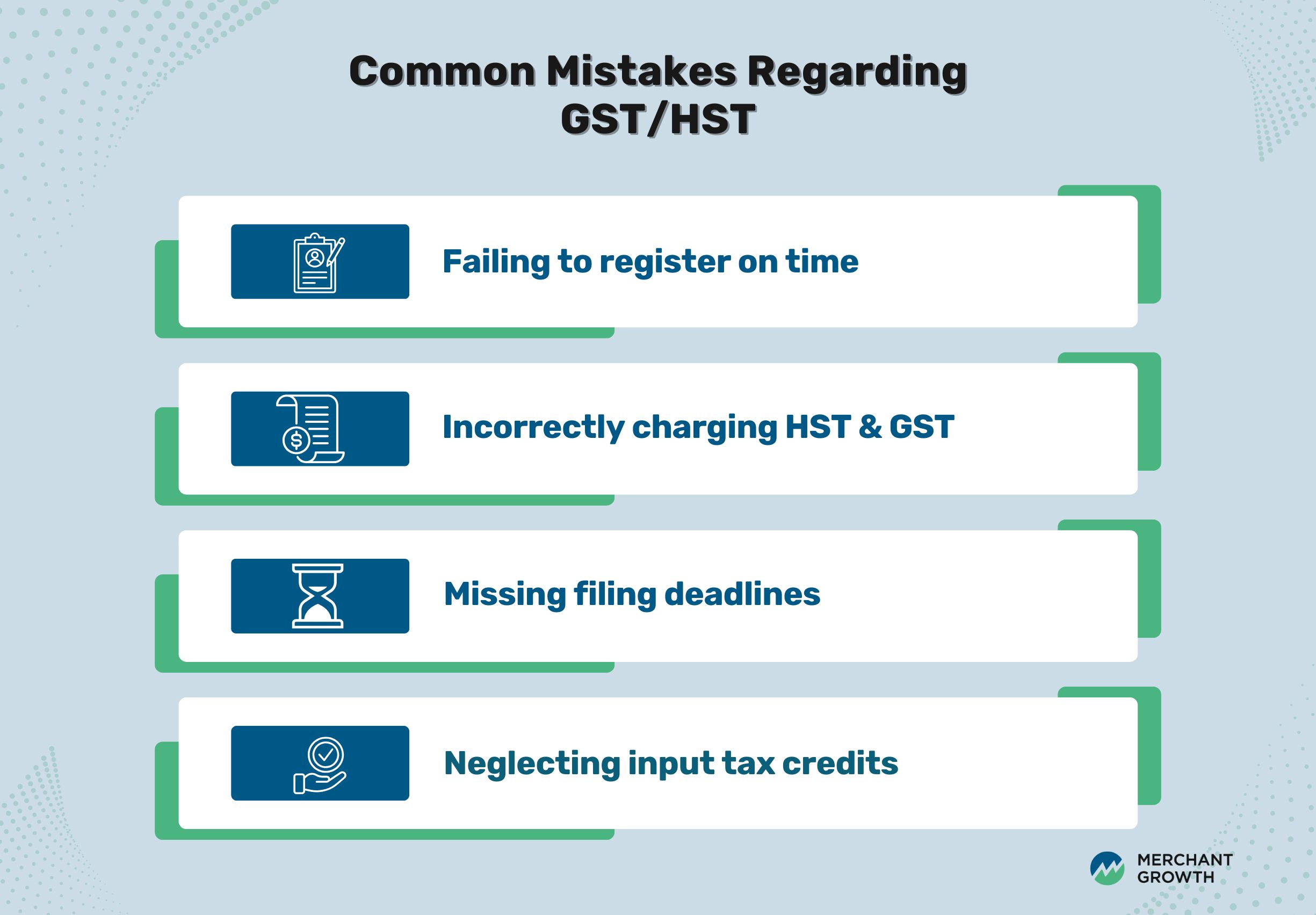
Even small oversights with GST/HST can lead to penalties, interest, or even audits. Many small business owners struggle with compliance simply because these tasks can feel complex or easy to forget. Understanding the most common mistakes and taking steps to prevent them will save time, money, and stress in the long run.
Failing to Register on Time
Not registering for a GST/HST number when your business exceeds the $30,000 threshold is a common mistake. Late registration can lead to owing back taxes and potential penalties. To avoid this, monitor your revenue closely and register promptly once you meet the requirement.
Incorrectly Charging GST or HST
Charging the wrong tax rate—whether GST instead of HST, or an incorrect provincial HST rate—can create compliance issues and upset customers. Always check your customers’ location and confirm the correct rate before invoicing. Keep updated with CRA resources or provincial guidelines to ensure accuracy.
Missing Filing Deadlines
Even if you’re registered correctly, filing late can trigger interest charges and penalties. Filing deadlines vary depending on your revenue (monthly, quarterly, or annually), so make sure you know your schedule and set reminders to avoid missing due dates.
Neglecting Input Tax Credits (ITCs)
Many businesses fail to claim the GST/HST they’ve paid on business expenses. Input tax credits can significantly reduce your net tax payable. Keep clear records of all business-related purchases and ensure you’re claiming eligible ITCs on each filing.
By understanding these common GST/HST mistakes, you can proactively prevent errors that lead to penalties, interest, or audits. Awareness of the pitfalls—from late registration to misapplied tax rates—lays the foundation for strong tax practices. With these lessons in mind, the next step is learning practical tips and strategies to stay fully compliant with GST/HST regulations while keeping your business running smoothly.
Tips to stay compliant:

Staying on top of GST/HST obligations doesn’t have to be overwhelming. With the right habits and tools, you can simplify tax management, avoid costly mistakes, and ensure your business stays in good standing with the CRA. Here are some practical tips to help you remain compliant:
Maintain Detailed Records of All Sales and Purchases
Accurate and thorough record-keeping is the backbone of GST/HST compliance. Keep track of all invoices, receipts, and financial transactions. This ensures you can correctly report taxes collected, claim input tax credits, and provide evidence in the event of an audit. Well-organized records save time and reduce stress when filing returns.
Use Accounting Software That Tracks GST/HST Automatically
Modern accounting tools can automatically calculate and track GST/HST on sales and purchases. Software like QuickBooks or Wave Accounting can help you generate reports, monitor tax obligations, and ensure your filings are accurate. This reduces human error and frees up time to focus on growing your business.
Consider Consulting a Tax Professional, Especially During the First Year
A tax professional can guide you through the complexities of GST/HST registration, filings, and payments. They can help you avoid mistakes, optimize your tax strategy, and provide peace of mind, particularly when you’re just starting. Even occasional consultations can prevent costly errors and ensure compliance.
By maintaining organized records, leveraging accounting software, and seeking professional advice when needed, you can confidently manage your GST/HST obligations. These practices make it easier to stay compliant while focusing on growing your business, reducing the risk of penalties, and keeping your finances in order.
Do I need to charge GST if I earn under $30,000?
No. If your business earns less than $30,000 per year, you’re considered a “small supplier,” which means you’re not required to register for or charge GST/HST. That said, you can choose to register voluntarily. Doing so can be beneficial because it allows you to claim input tax credits (ITCs) to recover the GST/HST paid on business-related expenses—helpful for reducing costs as your business grows. Voluntary registration is often a smart move for new businesses planning to expand or make significant purchases early on.
Managing Your GST/HST with Confidence
Understanding GST/HST is crucial for Canadian entrepreneurs. While it may seem complex at first, following a structured approach—registering properly, filing on time, and paying accurately—ensures smooth operations and avoids penalties.
Beyond understanding your GST/HST obligations, managing cash flow is key. Merchant Growth provides flexible financing to help cover tax payments, manage business operations, and support expansion.
If your business has over $10,000 in revenue and has been operational for at least six months, you may qualify for term financing to help with cash flow or tax obligations.
Focus on running your business while Merchant Growth supports your financial needs. Apply today to secure funding and keep your business on a path to growth with confidence.
How to Write a Business Plan
Starting and growing a small business requires more than just a great idea—it requires a well-thought-out plan. A solid business plan is one of the most important tools you can have when launching or scaling your business. Not only does it serve as a blueprint for your business’s success, but it’s also essential for securing funding and attracting investors. In fact, businesses with a formal plan are 2.5 times more likely to secure funding compared to those without one.
A business plan outlines your company’s mission, vision, and goals, while providing a clear path for reaching them. It serves as a roadmap for your business and a tool for communicating your vision to investors, banks, and other stakeholders. Whether you're looking for funding or simply mapping out your business strategy, a business plan is crucial for turning your ideas into action and growing your business successfully.
In this post, we’ll guide you through the steps of creating a compelling business plan and provide a basic template to help you get started.
Key Takeaways
- Business Plan Structure: A comprehensive business plan includes key sections such as the executive summary, company description, market analysis, and financial projections.
- Customization: Tailor your business plan to reflect the unique aspects of your business, industry, and goals to make it relevant and specific.
- Clarity & Focus: Write your business plan clearly and concisely, avoiding jargon, to ensure it’s easily understood by stakeholders and investors.
- Use of Templates: Templates and samples can be helpful as a starting point, but be sure to personalize the content to fit your business’s needs.
- Strategic Goal Setting: Incorporate short-term and long-term goals into your business plan to align with your business’s growth strategy and provide clear milestones for success.
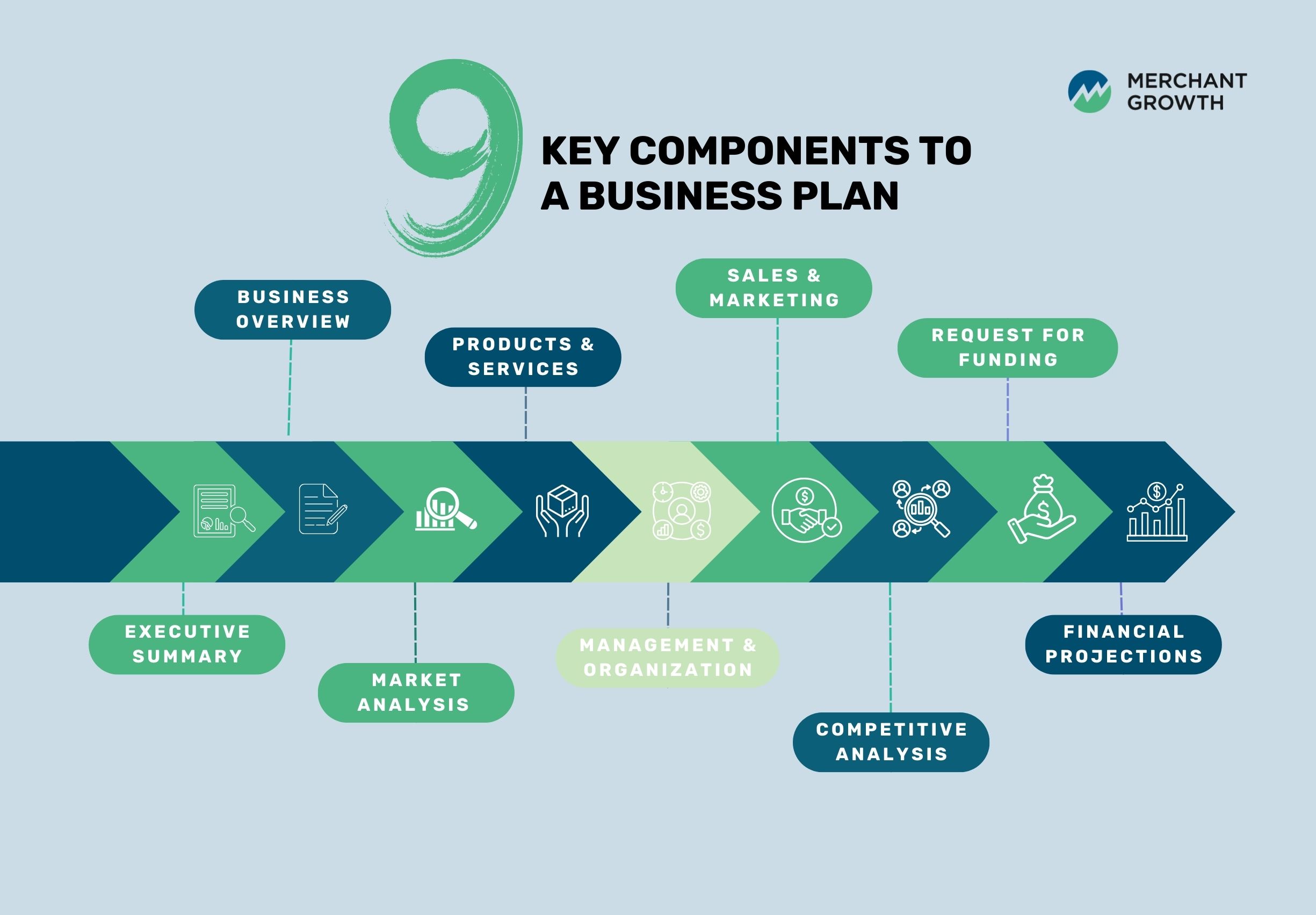
9 Key Components of a Business Plan
Creating a business plan can seem overwhelming, but breaking it down into key components makes the process more manageable. Each section of your business plan plays a crucial role in telling the story of your business, from your goals and strategies to the financial projections that back them up. Here are the nine essential components every business plan should include:
1. Executive Summary
The executive summary is the first and most important section of your business plan. While it’s typically only 1-2 pages long, it provides a concise and clear overview of your entire business plan. This section is your opportunity to grab the reader’s attention, highlighting what makes your business unique and why it has the potential to succeed.
An effective executive summary should cover key aspects of your business, such as your mission, values, and competitive advantages. While this section may come first, it’s often best to complete it last. Doing so ensures that you can confidently present your plan, knowing exactly how each part supports your overall strategy.
Here’s a helpful checklist to guide you as you write your executive summary:
Executive Summary Checklist
- Company Name and Address: Clearly state the name of your company and where it’s located.
- Product or Service Offering: Briefly describe what your business offers and what makes it stand out in the market. For example, "XYZ Bakery will offer premium organic pastries, catering to health-conscious consumers in downtown Toronto."
- Company’s Core Values: What principles guide your business decisions? This could be sustainability, innovation, or customer-centricity.
- Mission Statement: Define your company’s purpose. A great mission statement could be, "To provide high-quality, eco-friendly products that support sustainable living."
- Marketing Strategy Overview: Summarize how you plan to reach your target audience, such as through digital marketing or community partnerships.
- Objectives: Clearly define what you want to achieve in the next 1-3 years (e.g., expanding to a second location, reaching $500,000 in revenue, etc.).
By using this checklist, you’ll ensure that your executive summary covers all the essential elements in a clear and impactful way, helping to set the tone for the rest of your business plan.
2. Business Overview
The business overview section is a foundational part of your business plan. It provides a clear snapshot of your business, outlining key elements like your mission, vision, and what you offer to your target market. This section is designed to give readers an understanding of your business operations, goals, and long-term potential, setting the stage for the rest of your plan.
In this section, you’ll want to describe the market you’re entering, explain what makes your business stand out from competitors, and highlight any important achievements that demonstrate your capacity for success. By focusing on these aspects, you’ll help readers see both your current position and the growth opportunities that lie ahead.
Business Overview Checklist
- Business Description: Outline your company’s mission, vision, and values.
- Products and Services: Clearly explain what your business offers and how it serves your target audience.
- Target Market: Define your target market, including key trends, demographics, and opportunities.
- Competitive Landscape: Identify your competitors, both direct and indirect, and discuss how your business stands out in the market.
- Differentiators: Highlight what makes your business unique—whether through innovative products, customer service, or industry expertise.
- Key Achievements: Include any significant milestones or successes that showcase your business’s potential for growth.
3. Industry or Market Analysis and Strategies
In this section, you'll dive deep into the market in which your business will operate, compete, and grow. It’s your opportunity to show you fully understand the ins and outs of the industry and market you’re targeting. This isn’t just about knowing your competitors; it’s about understanding the overall landscape, identifying opportunities, and backing up your insights with real, verifiable data.
Your goal is to outline the market trends and competitive landscape you’ve previously touched on in the executive summary, using facts and statistics to paint a clear picture of the potential and demand for your product or service. This section will also highlight the pain points your target market is experiencing and how your business will address them, setting the stage for how your solution fits into the larger market.
Market Analysis Checklist
- Define Your Market and Location: Identify where your business will operate and what geographical areas you'll target. For example, will you be focusing on local customers or a broader regional/national market?
- Identify a Market Opportunity: What gap exists in the market that your business will fill? Show why this opportunity is ripe for exploration.
- Address Client Pain Points: What specific challenges or frustrations are your potential clients facing that your product or service can solve?
- Highlight Market Demand: Describe the current demand in your target market and how your business will meet these needs. What problem does your product or service solve, and why is it important now?
- Understand Your Market Demographics: Outline the age, income level, education, and other key factors of your target audience.
- Market Behaviour Insights: Provide more detailed information about your audience’s behaviour, such as their favourite social media platforms, where they live, and their buying habits.
4. Overview of Your Products and Services
This section provides a comprehensive breakdown of the products and services your business offers and how they solve the challenges your target market faces. Here, you’ll want to explain the value each product or service brings to your customers, addressing any existing needs or gaps in the market.
Focus on how your offerings will meet customer demand and contribute to solving key issues within your target market. For example, you might highlight how your product helps clients save time, reduce costs, or enhance efficiency. It's important to detail how durable and long-lasting your products are, and whether they are built to scale as demand grows.
Including visual aids like charts, diagrams, or pricing models can help communicate your products’ value more effectively and capture your audience's attention. Additionally, sharing your product’s potential in terms of sales projections and cost breakdowns will help potential investors understand the business opportunity and return on investment.
Products and Services Overview Checklist
- Product/Service Description: Clearly describe each product or service your business offers and how it addresses market needs.
- Market Demand: Explain how your products meet the demand in your target market, and why they’re relevant.
- Longevity and Quality: Discuss the expected lifespan of your products and how they maintain value over time.
- Competitive Advantage: Highlight what makes your products or services stand out from competitors.
- Sales Projections: Provide estimates of future sales and explain how you expect growth over time.
- Pricing Strategy: Outline your pricing model and how it aligns with the value you're providing.
- Visual Aids: Consider including charts or diagrams to illustrate product details, costs, or sales projections.
5. Management and Organization
In this section, you'll provide a detailed overview of your business's management and organizational structure. This is where you introduce key team members to potential investors or stakeholders, showcasing the leadership behind your business. A strong management team can significantly boost investor confidence, so it’s essential to highlight the skills, experience, and key responsibilities of each leader.
Start by outlining the legal structure of your business, whether it's a sole proprietorship, limited partnership, or corporation. This provides clarity about your ownership model and legal responsibilities. If your business has a board of directors, this is also the section to introduce them.
A helpful addition is to create an organizational chart that visually represents your business hierarchy, making it clear how decisions are made and who reports to whom. This chart not only improves readability but also demonstrates the structure of your business to potential investors or stakeholders.
Management and Organization Checklist
- Business Ownership and Legal Structure: Describe your ownership structure (sole proprietorship, limited partnership, corporation) and explain the legal implications.
- Management Team: List key members of your management team, their roles, skills, experience, and primary responsibilities.
- Organizational Chart: Include a chart that visually displays the chain of command and team structure.
- Board of Directors: If applicable, introduce your board of directors and provide a brief overview of their expertise and involvement in the company.
- Management Experience: Highlight any unique skills or experience that make your management team well-suited to drive the business toward success.
6. Sales and Marketing Plan
Your sales and marketing plan is crucial for explaining how you will attract customers and generate revenue. This section outlines the strategies you'll use to effectively position your business in the market, promote your products or services, and drive sales. It serves as a roadmap for reaching your target audience and ensuring they not only discover your offerings but also see the value in purchasing from you.
In this section, provide a detailed breakdown of your marketing strategies, including how you plan to create awareness and engage potential customers. It’s also important to cover how you’ll price your products and services, as well as the sales tactics you’ll implement to convert leads into loyal customers.
A key focus should be on competitive advantage and what makes your business stand out in a crowded marketplace. By clearly articulating your unique selling points (USPs) and what differentiates you from competitors, you’ll give investors and stakeholders confidence in your ability to succeed.
Sales and Marketing Plan Checklist
- Marketing Strategies: Outline the key marketing tactics you plan to employ, such as digital marketing, social media campaigns, or partnerships.
- Promotion Plan: Describe how you plan to promote your business and attract customers, including any specific promotional activities or events.
- Sales Tactics: Explain the strategies you’ll use to convert leads into customers and generate sales, including your sales funnel or outreach strategies.
- Pricing Strategy: Provide an overview of your pricing model and how it aligns with your target market.
- Competitive Advantage: Detail the unique aspects of your product or service that give you an edge over competitors.
- Unique Selling Points (USPs): Identify what sets your business apart, whether it's customer service, product quality, or innovation.
7. Competitive Analysis
A well-crafted competitive analysis is essential for demonstrating your understanding of the market and positioning your business effectively. This section highlights your awareness of the strengths and weaknesses of your direct competitors, offering insights into how your business compares and what sets you apart. By carefully analyzing your competitors, you can show where your business stands about others and how you plan to leverage your strengths for success.
In this section, you’ll outline your key competitors, analyze their offerings, and identify their market positions. Additionally, you’ll assess the opportunities your business can capitalize on and the threats that may arise. This analysis will also help you refine your unique value proposition and business strategy, ensuring that you can differentiate your brand and attract your target customers.
Competitive Analysis Checklist
- Identify Direct Competitors: List your main competitors and provide a brief overview of their business models and offerings.
- Strengths and Weaknesses: Analyze the strengths and weaknesses of each competitor. Consider factors such as product quality, customer service, brand recognition, and pricing.
- Market Position: Discuss how your competitors are positioned in the market. Are they leaders, challengers, or niche players?
- Opportunities for Differentiation: Identify gaps in the market that your business can fill or areas where your competitors are lacking.
- Threats: Recognize potential threats from competitors that could impact your market share, such as new entrants or changing consumer preferences.
- Your Unique Selling Proposition (USP): Explain how your product or service offers unique value to customers that competitors do not provide.
8. Request for Funding
The Request for Funding section of your business plan is where you clearly outline how much capital you need to launch and grow your business. This is a critical part of your plan, as it demonstrates to potential investors or lenders exactly how their money will be used and what kind of return they can expect.
Start by specifying the total amount of funding required and detailing how you intend to allocate these funds. Whether it’s for equipment, marketing, hiring staff, or operational expenses, providing a clear breakdown will instill confidence in your financial management. Additionally, including a timeline for when you might need additional funding to reach specific milestones is key to showing that you have a clear financial roadmap.
Request for Funding Checklist
- Total Funding Needed: Clearly state the total amount of funding you’re requesting. Include a brief explanation of how you arrived at that figure.
- Breakdown of Fund Allocation: List how the funds will be used (e.g., marketing, equipment, salaries, inventory). This helps potential investors see exactly where their money will go.
- Funding Timeline: Provide a timeline for when you anticipate needing additional funding, highlighting key phases of your business growth and funding needs.
- Expected Outcomes: Explain the expected return on investment (ROI) or how the funding will directly contribute to reaching your business objectives.
- Repayment Plan (if applicable): If you’re requesting a loan, outline your plan for repaying the funds, including repayment terms and schedule.
9. Financial Projections
The Financial Projections section is one of the most important parts of your business plan. This section outlines your expected financial performance and helps potential investors or lenders gauge your business's financial health. It's a critical tool for demonstrating the viability and growth potential of your business.
Start by detailing your cash flow forecast, ideally every month, to show how money will flow in and out of your business. This allows you to project future income, expenses, and any gaps that may require funding. Be sure to include key financial statements such as income statements, balance sheets, and cash flow statements. These documents give a clear picture of your business’s current financial situation and its trajectory.
Well-organized financial projections are essential for securing financing, whether you're looking for a business line of credit or other funding options to keep your business running smoothly.
Financial Projections Checklist
- Cash Flow Forecast: Break down your projected cash inflows and outflows every month. Highlight how these projections align with your business's growth and expenses.
- Income Statement: Include a forecast of your revenues and expenses, showing your expected profitability over time.
- Balance Sheet: Provide a snapshot of your assets, liabilities, and equity, detailing how your business’s financial position will evolve.
- Retained Earnings Statement: Show how profits will be retained and reinvested back into the business.
- Funding Needs: Clearly outline when you may need additional funding based on your projections.
- Assumptions: Specify any assumptions you’ve made in your financial projections, such as sales growth or market conditions, to provide clarity.
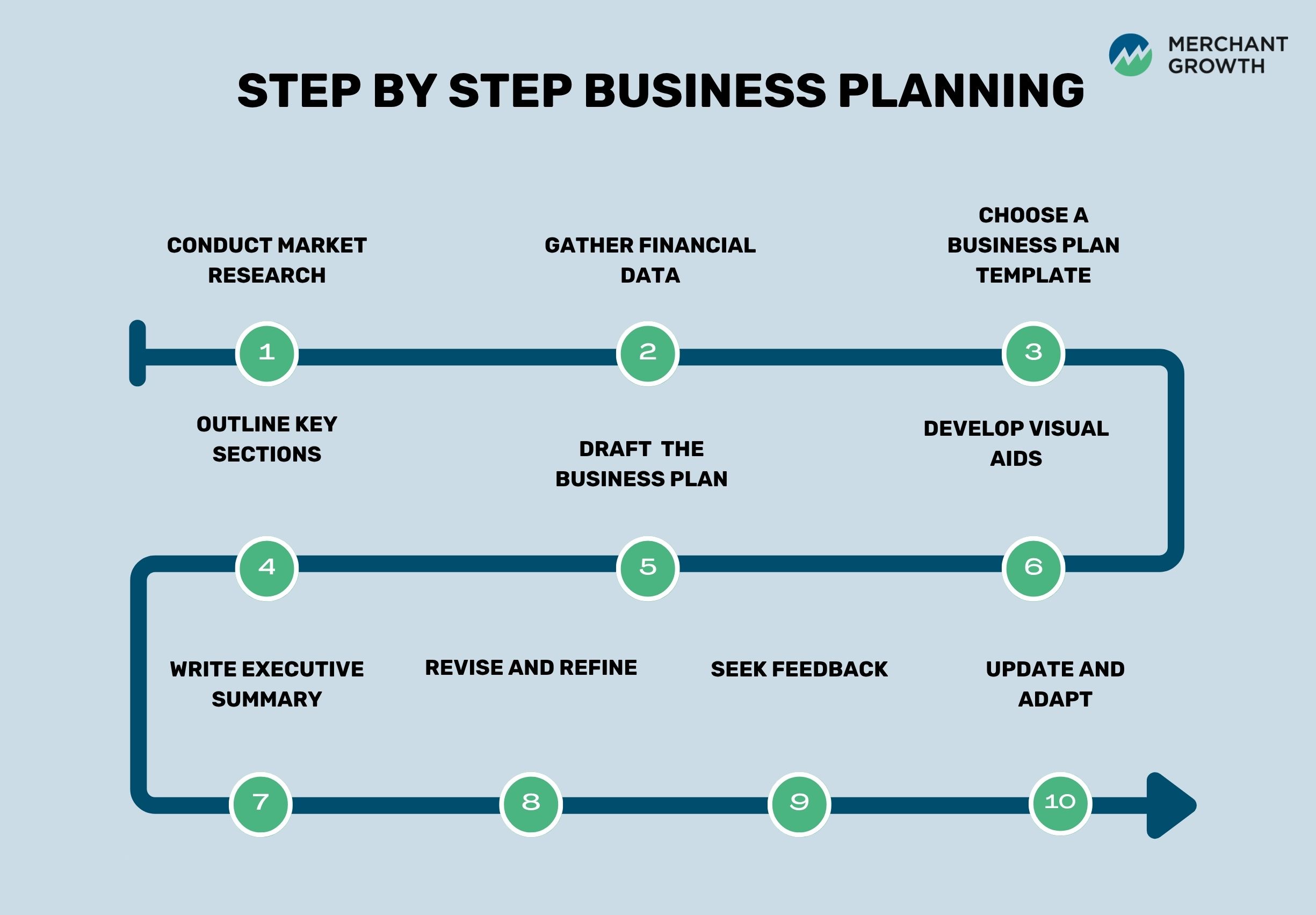
How to Write a Business Plan: Step-by-Step Guide
Writing a business plan involves more than just filling out a template. It’s about strategic thinking, research, and presenting a clear vision for your business. Follow these actionable steps to create a comprehensive and compelling business plan:
Conduct Thorough Market Research
Before you begin drafting, spend time researching your industry, target market, and competitors. Gather relevant data such as market size, customer demographics, trends, and potential gaps your business can fill. Use reliable sources, such as industry reports, government data, and customer surveys.
Gather Financial Data
Collect the necessary financial data, including historical financial performance (if applicable), expected revenues, expenses, and cash flow projections. Ensure that you have reliable figures for your financial statements, such as balance sheets, income statements, and cash flow forecasts. You can use accounting software or hire a professional to ensure the accuracy of these numbers.
Choose a Business Plan Template
Start with a business plan template to help structure your plan. There are many free templates available online, or you can use paid options that offer more customization. Choose a template that aligns with your goals—whether you need a simple outline or a more detailed document for investors. We offer an easy to use template here.
Outline Key Sections
Use your research and data to create an outline for your business plan. Focus on the main sections: Executive Summary, Market Analysis, Products and Services, Marketing and Sales Strategy, Management Team, Financial Projections, and Funding Request.
Write the Executive Summary Last
Although it’s the first section of your plan, write the Executive Summary last. Once you’ve developed the rest of your plan, you’ll be able to summarize your business’s vision, goals, and financial needs more effectively.
Draft Each Section Concisely
Start drafting the sections of your business plan one by one. Focus on clarity and brevity—keep each section concise, and avoid jargon. Focus on making the language easy to understand for anyone reading the plan, especially investors or banks who may not be familiar with your business.
Use Visual Aids
Incorporate visuals such as charts, graphs, or tables, especially in sections like financial projections and market analysis. These can help simplify complex information and make your plan more visually appealing.
Revise and Refine
Once you’ve completed your first draft, take time to revise and refine your plan. Look for areas where you can clarify or add more detail. Make sure the plan flows logically, and each section supports your overall business vision.
Seek Feedback
Share your business plan with trusted advisors—mentors, accountants, or business partners—to get feedback. They can provide valuable insights and point out areas you might have missed or need to elaborate on.
Update and Adapt as Needed
Your business plan is a living document. Update it regularly to reflect any changes in the market, your business operations, or financial goals. Keep it flexible to adapt to new challenges and opportunities as your business grows.
Tips and Best Practices to Make Your Business Plan Stand Out
A great business plan doesn’t just cover the basics; it needs to engage and impress. Follow these best practices to create a business plan that stands out:
- Write Clearly and Compellingly: Keep your writing simple and direct. Avoid jargon and unnecessary complexity. Your business plan should be easy to read and tell a cohesive story about your business.
- Highlight Your Unique Value Proposition (UVP): Make sure to emphasize what makes your business different. Whether it’s a unique product, exceptional customer service, or an untapped market opportunity, clearly state what sets you apart from competitors.
- Support Your Claims with Data: Strengthen your business plan by backing up your assertions with reliable data. Use market research, customer feedback, or financial projections to support your claims and add credibility to your plan.
- Be Specific About Your Goals: Clearly outline both short-term and long-term goals, providing specific metrics and milestones that will demonstrate your path to success.
- Keep the Plan Flexible: Treat your business plan as a living document. Your business and the market will evolve, and your plan should too. Regularly revise and update it to reflect changes in your business, goals, and market conditions.
- Focus on the Audience: Tailor the plan to your audience. If it’s for investors, emphasize growth potential and return on investment. If it’s for internal use, focus on operational strategies and goals.
By following these tips, you’ll create a business plan that grabs attention, builds credibility, and stays relevant as your business evolves.
Creating a Business Plan for a Small Business
When writing a business plan for a small business, simplicity and practicality should be your focus. While large corporations may require extensive and detailed business plans, small businesses can often benefit from keeping their plans straightforward and concise. Focus on the essentials—your mission, products, market, and financial projections—and make sure the plan is tailored to your specific goals.
Be realistic with your financial projections and growth expectations. Make sure your goals are achievable given your available resources, market conditions, and the size of your business. Small businesses should also avoid using generic templates that don’t capture the unique aspects of their business. Instead, customize the plan to reflect the challenges, opportunities, and aspirations of your specific company.
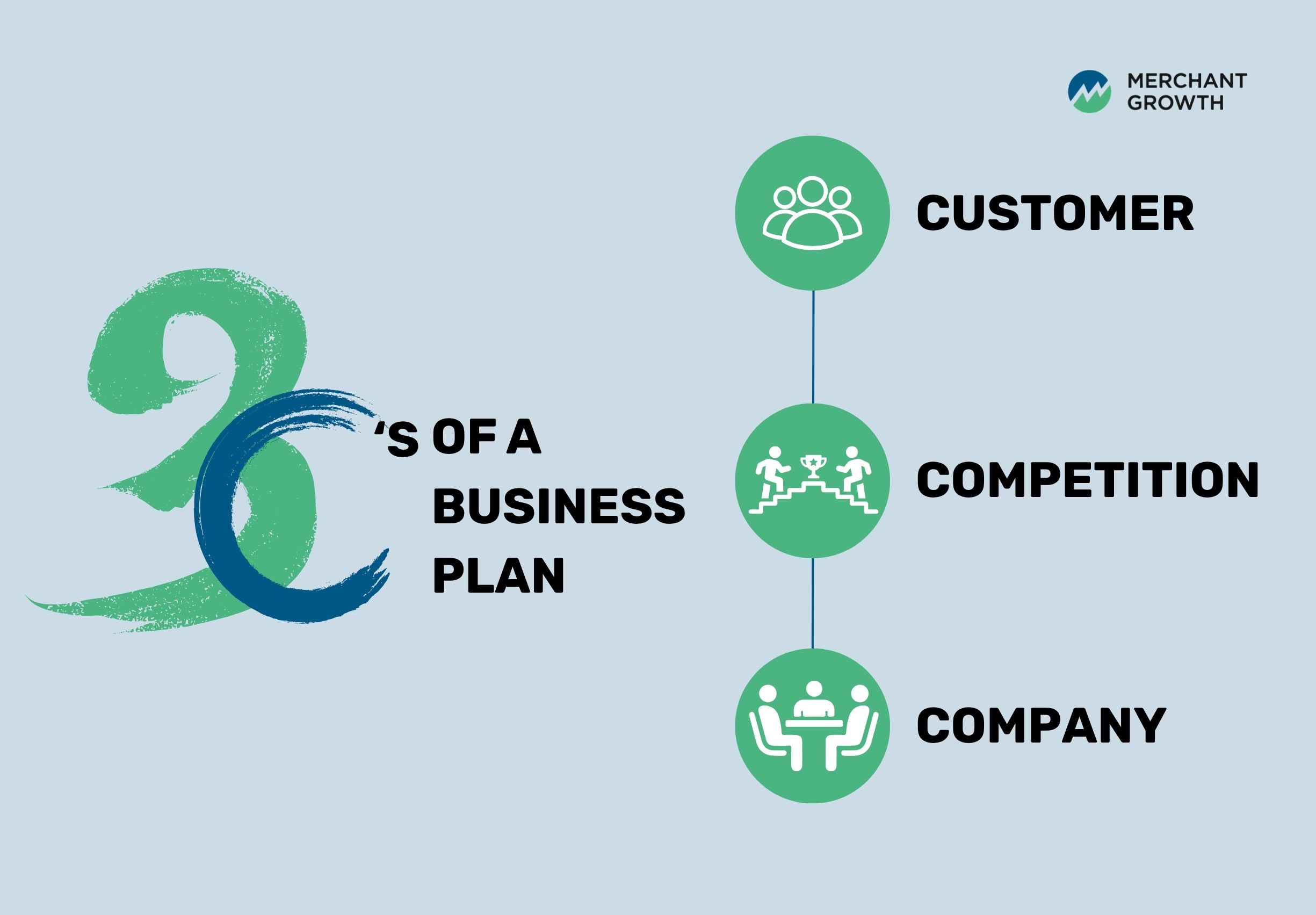
What are the 3 C’s of a Business Plan?
The 3 C’s framework—Customer, Competition, and Company—is a helpful model for understanding your business’s position in the market. By focusing on these three areas, you can create a business plan that is both comprehensive and insightful.
- Customer: Understand your customers’ needs, preferences, and pain points. Knowing what motivates them to purchase, how they make decisions, and what they value most will help you tailor your business strategies.
- Competition: Analyze your competitors. What are their strengths and weaknesses? How do they position themselves in the market, and where are the gaps you can exploit? Understanding the competitive landscape is crucial for differentiation.
- Company: Evaluate your own company’s strengths, capabilities, and resources. What makes your business uniquely suited to meet customer needs? How can you leverage your internal strengths to achieve your goals and outperform competitors?
By considering the 3 C’s, you'll create a strategic plan that’s both customer-focused and competition-aware.
Business Plan Format: What Works Best For Your Business
There are several formats for business plans, and the right one for your business depends on your needs and goals. A traditional business plan is more detailed and is ideal for securing funding or attracting investors. A lean business plan is a shorter, more concise document that focuses on key business elements and is perfect for startups or internal use. Lastly, a strategic business plan focuses on long-term goals and how your business will achieve them.
It’s essential to choose the format that best aligns with your business’s current stage and what you’re seeking from your plan. If you’re applying for a loan, for example, a traditional plan with a detailed financial section will be necessary. If your business is in the early stages, a lean plan may be more appropriate. The key is to ensure that the format you choose serves your goals and audience.
Utilizing Business Plan Templates and Samples
Business plan templates can be an invaluable tool, especially if you're unsure where to start. They provide structure and ensure that you cover all the important sections. Templates can help you avoid missing essential elements, such as financial projections or market analysis, but they’re not one-size-fits-all.
Customization is key—while templates offer a helpful starting point, you should modify them to reflect your unique business model, vision, and market. Tailor the plan to address your specific industry, target customers, and long-term objectives.
You can find reliable templates and sample plans from reputable sources such as BDC or SCORE. These resources will give you a solid foundation for drafting your business plan.
Download the Business Plan Template
If you’re ready to get started on your business plan, we offer a downloadable template that can help streamline the process. This template is designed to guide you through each section, ensuring you don’t miss any crucial details.
Once you have the template, make sure to tailor it to your specific business—don’t just fill in the blanks. Update the sections with information that accurately reflects your market, product, and goals. Your business plan is a dynamic document, so as your business evolves, be sure to refine and update the plan regularly to keep it aligned with your growth trajectory.

Business Plan for Investors: What They Want to See
When preparing a business plan for investors, it’s essential to focus on what matters most to them: growth potential, scalability, and return on investment. Investors want to know that your business has the potential to grow, generate profits, and provide them with a solid return.
Include clear and realistic financial projections in your plan, showing how you plan to achieve profitability and scale over time. Revenue forecasts, expense breakdowns, and cash flow analysis are essential elements that investors will scrutinize. Keep the plan concise and to the point—investors want a quick, yet thorough overview of your business, particularly in the executive summary.
Strategic Business Planning: Building a Long-Term Relationship
Strategic business planning is not just about short-term success—it’s about building a long-term roadmap for your business. Focus on creating a plan that aligns with your broader business goals, such as market expansion, product development, or brand positioning.
It’s important to stay adaptable—the market, customer preferences, and competitive landscape can change quickly, so your strategic plan should allow for flexibility. Your business plan should be a living document, reflecting both your short-term actions and your long-term vision.
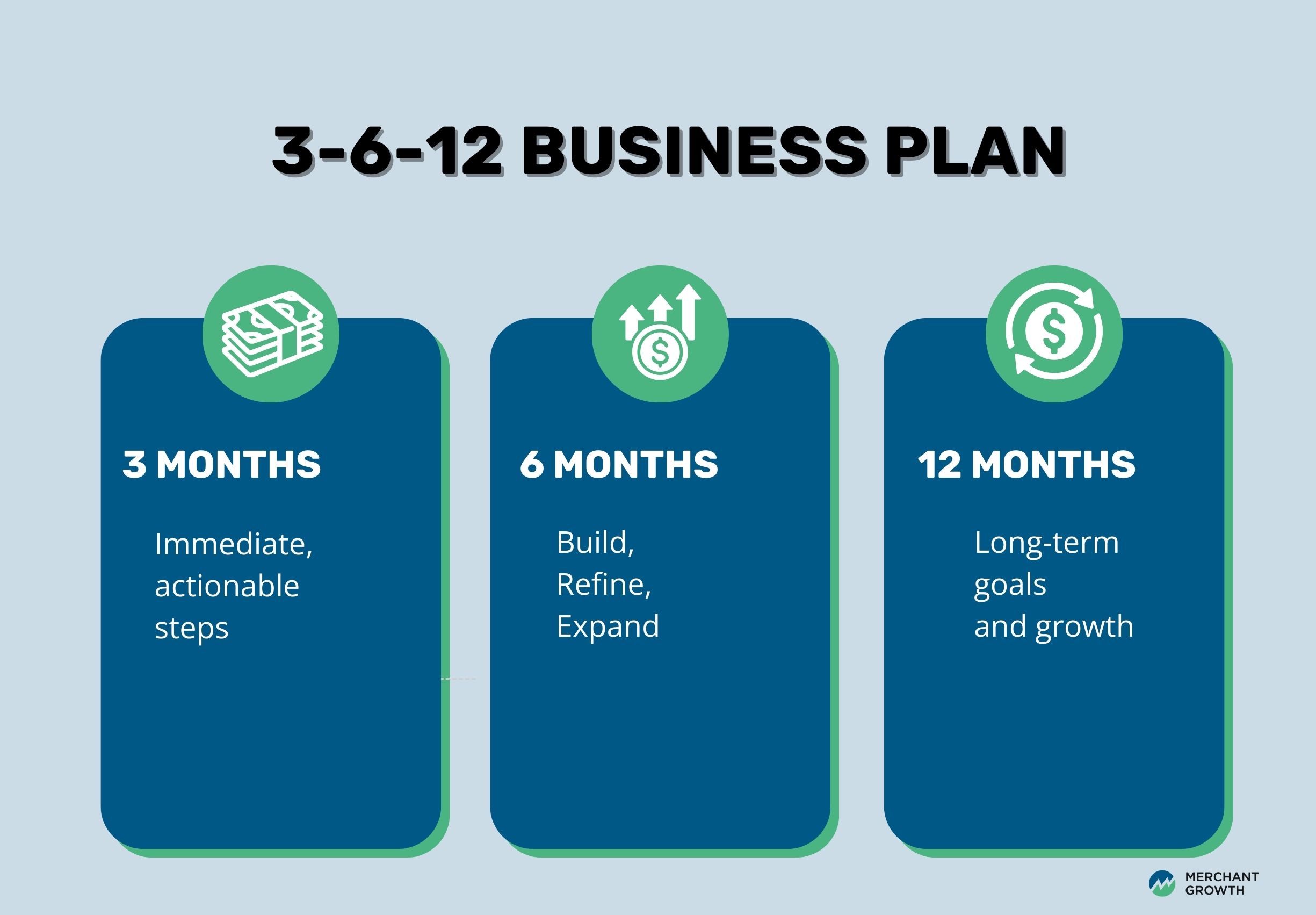
What is a 3-6-12 Business Plan?
The 3-6-12 business plan is a simple yet powerful framework that helps you set actionable goals. This approach divides your business objectives into three timeframes:
- 3 months: Focus on immediate, actionable steps to kick-start your business and gain momentum.
- 6 months: Build on your progress, refining processes and expanding your reach.
- 12 months: Set long-term goals and lay the foundation for sustainable growth.
This method is a great way to set both short-term and long-term objectives, ensuring that your business stays on track while adapting to evolving conditions.
Achieving Business Success with the Right Financing Support
The 3-6-12 business plan framework is an excellent way to break down your goals into manageable timeframes and stay focused on both short-term wins and long-term growth. However, turning those goals into reality often requires the right financial backing. At Merchant Growth, we understand the importance of having the right financing to achieve your business objectives.
Whether you're just getting started or looking to expand, our flexible financing solutions—such as our business line of credit, term financing, or e-commerce financing—are designed to meet your specific needs. We aim to offer fast, convenient access to capital, with approval and funding in as little as 24 hours.
If you're a Canadian small business with at least six months in operation and a monthly revenue of $10K, take the next step by filling out our simple application. You can receive a no-obligation quote today to get the financial support you need to drive your business forward.
Starting a small business in Canada? Securing a small business loan is often one of the first steps to getting your business off the ground. Whether you’re opening a shop in Calgary or launching a startup in Vancouver, there are several loan options available to entrepreneurs, including government-backed loans like the Canada Small Business Financing Program (CSBFP), private lending, and alternative financing solutions. Each option offers different benefits and qualifications, so it's important to understand which is right for your business needs. This article will guide you through the various small business loan options available in Canada and provide clear steps on how to apply for the funding you need.
Key Takeaways
- Loan Options: Small business loans in Canada include government-backed options, private lending, and alternative financing.
- Eligibility: Requirements vary by loan type; government-backed loans are typically easier to qualify for, but private lending might be faster.
- Application Process: Each type of loan has a different application process, and understanding the paperwork and approval times is key.
- Financial Planning: Consider future cash flow and business needs before applying to ensure you choose the best loan option for your situation.

Business Loan Options
When seeking traditional financing for your small business, you’ll need to decide between secured and unsecured loans. Secured loans require collateral—such as equipment or property—which the lender can claim if you're unable to repay. Because these loans are less risky for lenders, they typically come with lower interest rates. Unsecured loans, on the other hand, don’t require collateral, making them a good option if you don’t have assets to pledge. However, they often come with higher interest rates due to the added risk for lenders.
In Canada, you have several loan options, depending on what works best for your business. Whether you’re working with a bank, an alternative lender, or considering a government-backed loan, each option has its own benefits. If you need quick access to cash without offering collateral, you might explore unsecured options like a business line of credit or business credit cards. If you have collateral to secure the loan and want lower interest rates, secured loans like term loans or equipment financing might be more suitable.
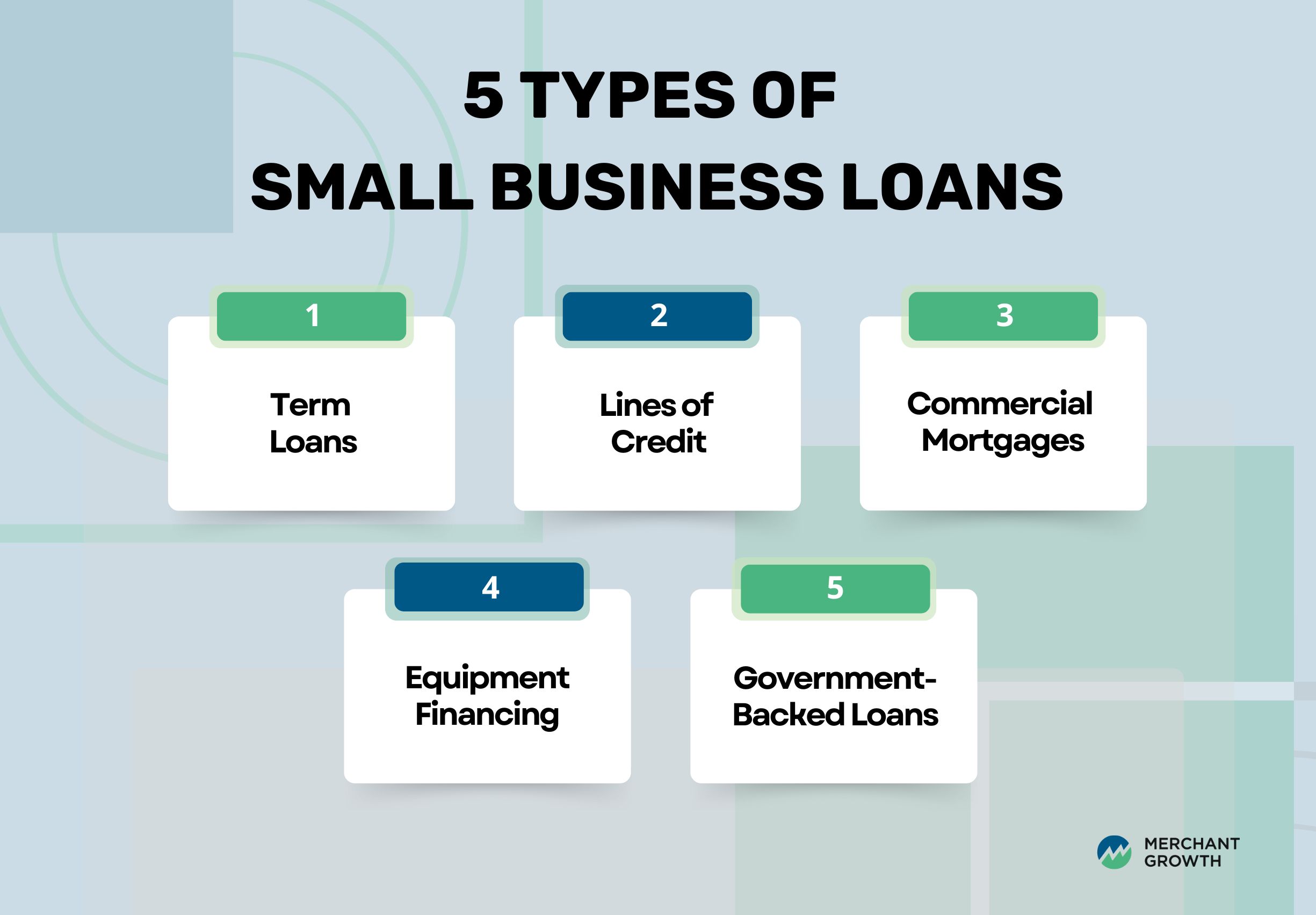
Here are some common types of loans available:
- Term Loans: These loans provide a lump sum of money upfront, which is repaid over a fixed period with interest. They’re often used for long-term investments, such as purchasing equipment or expanding your business.
- Lines of Credit: This revolving credit allows you to borrow as needed to cover short-term expenses like inventory or cash flow gaps, with interest only charged on the amount you use.
- Commercial Mortgages: These loans are used to purchase or refinance commercial real estate, secured by the property itself. They typically come with long-term repayment terms, either fixed or variable.
- Equipment Financing: Designed specifically to help businesses purchase machinery or equipment, these loans often use the equipment as collateral.
- Government-Backed Loans: These loans offer easier qualification criteria and lower interest rates for businesses looking to finance capital expenditures like real estate, equipment, or leasehold improvements.
Each of these options has unique terms and conditions, so it’s important to consider what works best for your business’s needs.
How the Canada Small Business Financing Program Works
Starting a small business can be tough, but getting financing shouldn’t have to be. That’s where the Canada Small Business Financing Program (CSBFP) comes in. It’s designed to make securing a loan a little easier for businesses that might not have all the assets banks typically require. If your business meets a few key criteria, you could be eligible for some much-needed funding.
To qualify for the CSBFP, your business must:
- Have annual revenue of less than $10 million.
- Be a for-profit business based in Canada.
The program offers a great way to access financing for capital expenditures, such as purchasing new equipment, acquiring real estate, or making improvements to your commercial space. Through the CSBFP, businesses can access up to $1 million for real estate and leasehold improvements or up to $350,000 for equipment.
How to Apply for a CSBFP Loan
Applying for a CSBFP loan is simple but does require you to go through participating financial institutions (like banks). You’ll need a few key documents, such as your business plan and financial statements, to show that your business has the potential to succeed and can repay the loan. It’s all about showing you’ve got a solid plan in place and are ready to take your business to the next level.

Government-Backed Small Business Loans: Benefits and Requirements
Government-backed loans, especially through the CSBFP, come with some seriously attractive perks. Because the government guarantees part of the loan, it reduces the risk for lenders, which makes it easier for you to qualify. Let’s break down what makes these loans so appealing:
First, you’ll benefit from lower interest rates—a big plus when it comes to saving money over time. Additionally, the repayment terms are often longer than traditional loans, which can be a relief for small business owners trying to balance growth with financial stability. Most importantly, the government guarantee reduces risk for lenders, so they’re more likely to say “yes” to your loan.
So, what do you need to qualify for a government-backed loan?
- Your business must be for-profit and based in Canada.
- Your annual revenue needs to be under $10 million—so this isn’t for the big corporations but rather small businesses just like yours.
These loans are typically meant for capital expenditures, such as:
- Purchasing equipment or machinery to help your business grow.
- Real estate purchases, whether it’s for buying new property or upgrading your current space.
- Leasehold improvements, so you can make those upgrades to a rented space without breaking the bank.
While these loans don’t cover operating expenses like payroll or inventory, they’re a great option if you need to make significant investments to support your business’s long-term growth.
Exploring Private Lending and Alternative Lenders in Canada
While government-backed loans are an excellent option for many small businesses, some entrepreneurs may find they need faster or more flexible solutions. That’s where alternative lending comes in. Unlike traditional bank loans, alternative lending offers non-traditional financing options that provide businesses with access to capital quickly and with less stringent requirements.
Alternative lending includes options like peer-to-peer (P2P) lending, online business loans, crowdfunding, merchant cash advances, and invoice financing. This type of financing began gaining traction in 2005 with the first peer-to-peer online loan, and in Canada, it has continued to grow in popularity over the past decade. As more businesses face challenges in securing funding from traditional banks, alternative lending has become a go-to solution for many, providing greater flexibility and faster access to funds.
At Merchant Growth, we’ve been part of this shift since 2009, helping Canadian businesses access quick, reliable funding when they need it most.
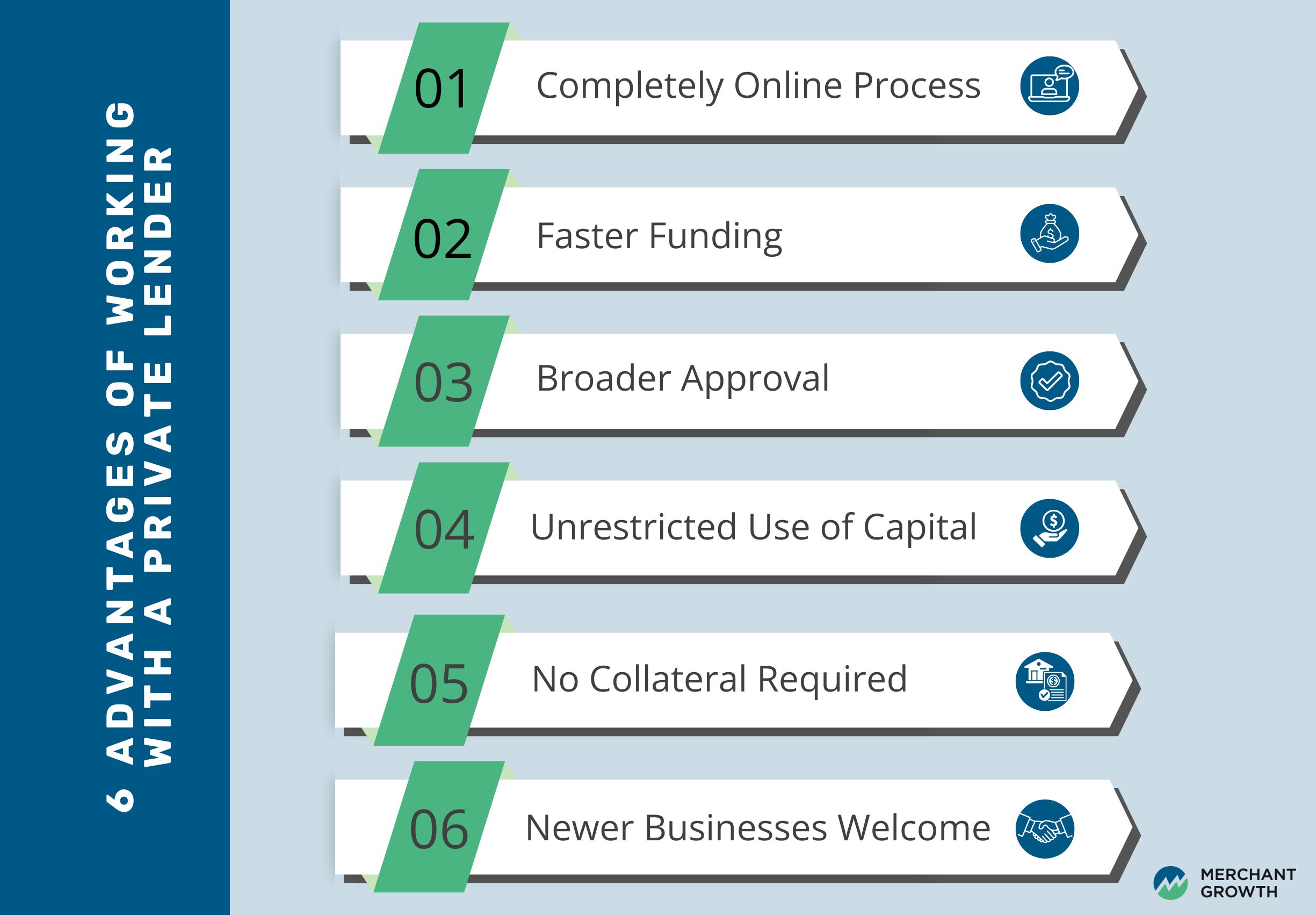
Advantages of Working with a Private Lender
If you’re looking for a financing solution that’s fast, flexible, and tailored to your business needs, alternative lending could be the perfect fit. Here’s a look at the key benefits of working with alternative lenders:
- Completely Online Process: No more taking time away from your business, scheduling appointments, or waiting in line. With alternative lenders, you can apply whenever and wherever suits you—whether from the comfort of home or on the go via your mobile device.
- Faster Funding: Traditional banks can take weeks or even months to approve and disburse funds. In contrast, alternative lenders like Merchant Growth can provide funding in as little as 24 hours, with most businesses completing the entire process within a week.
- Broader Approval for Diverse Businesses: Banks often have stricter policies on the types of businesses they fund and may reject applications based on credit scores or industry risks. Private lenders work with a wider variety of industries, including those often overlooked by banks, offering greater flexibility in approval.
- Unrestricted Use of Capital: With no formal plan required, you have the freedom to use the funds however you need—whether it’s for inventory, hiring staff, expanding to a new location, or simply managing cash flow.
- No Collateral Required: Many private lenders, including Merchant Growth, offer unsecured loans, meaning you don’t need to provide collateral to secure funding.
- Newer Businesses Welcome: Unlike banks and government programs that often have stricter time-in-operation requirements, alternative lenders are more flexible. Merchant Growth, for example, requires just six months in business, making it accessible even for startups.
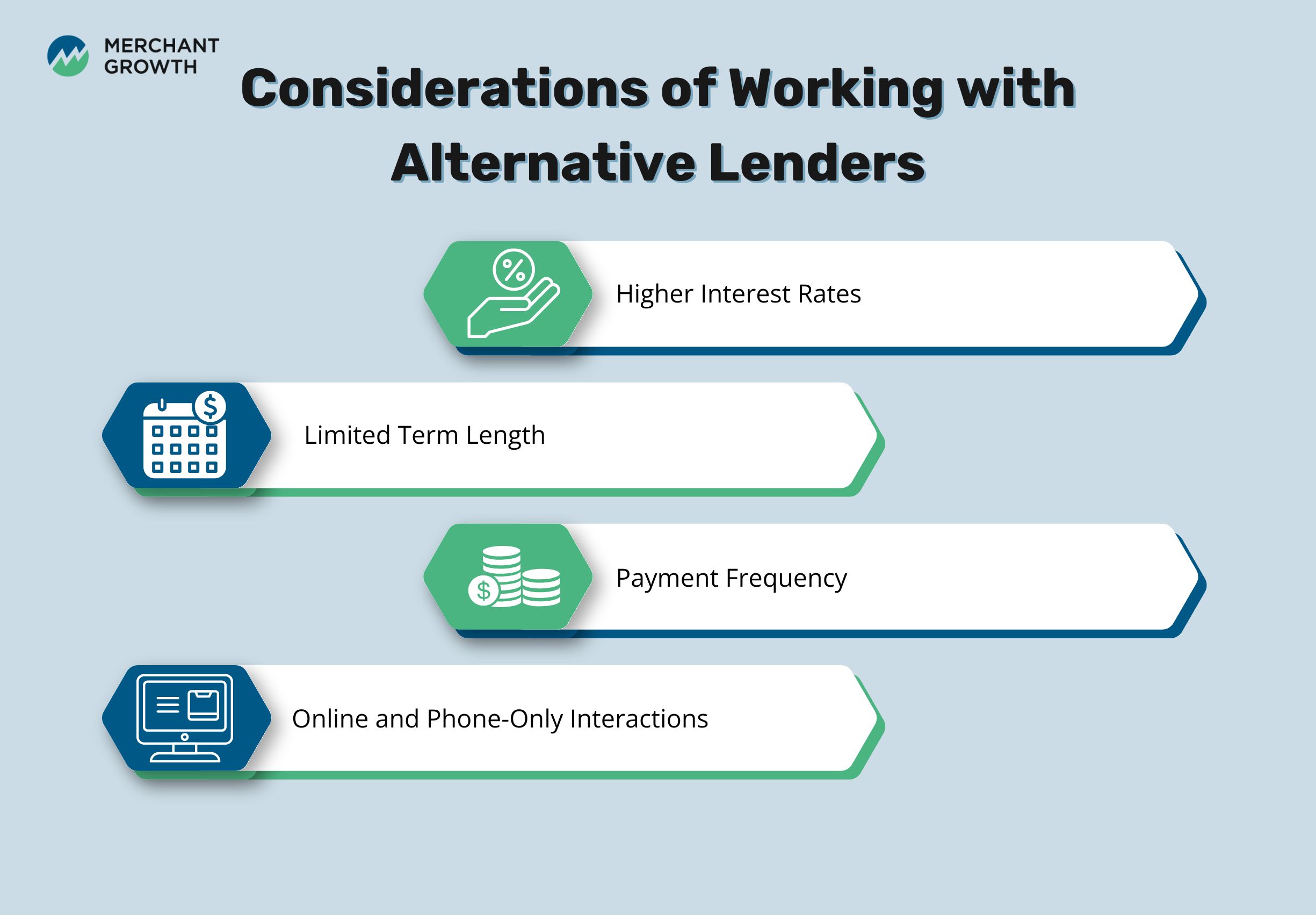
Key Considerations When Working with an Alternative Lender
When exploring alternative lending, there are a few key factors that can impact your decision. While these options offer flexibility and speed, it's important to understand how different terms may affect your business. Here's what you need to know:
- Interest Rates: Private lenders often work with a wider variety of businesses and offer fast, convenient financing. However, this can mean higher interest rates compared to traditional banks.
- Term Length: Private lenders may not always offer the same loan term lengths as banks, which could limit your repayment options depending on the type of financing.
- Payment Frequency: Payment schedules may differ from those offered by banks. While some businesses find more frequent payments—like daily or weekly—manageable and beneficial, others may prefer a single, larger monthly payment, which may not always be available.
- Online-Only Interactions: For many, the convenience of an entirely online financing process is a major advantage. However, if face-to-face interactions are important to you, this may be a drawback. Although private lenders like Merchant Growth operate fully online or by phone, providing excellent customer service throughout the entire process remains a priority, ensuring that any questions or concerns are addressed promptly.
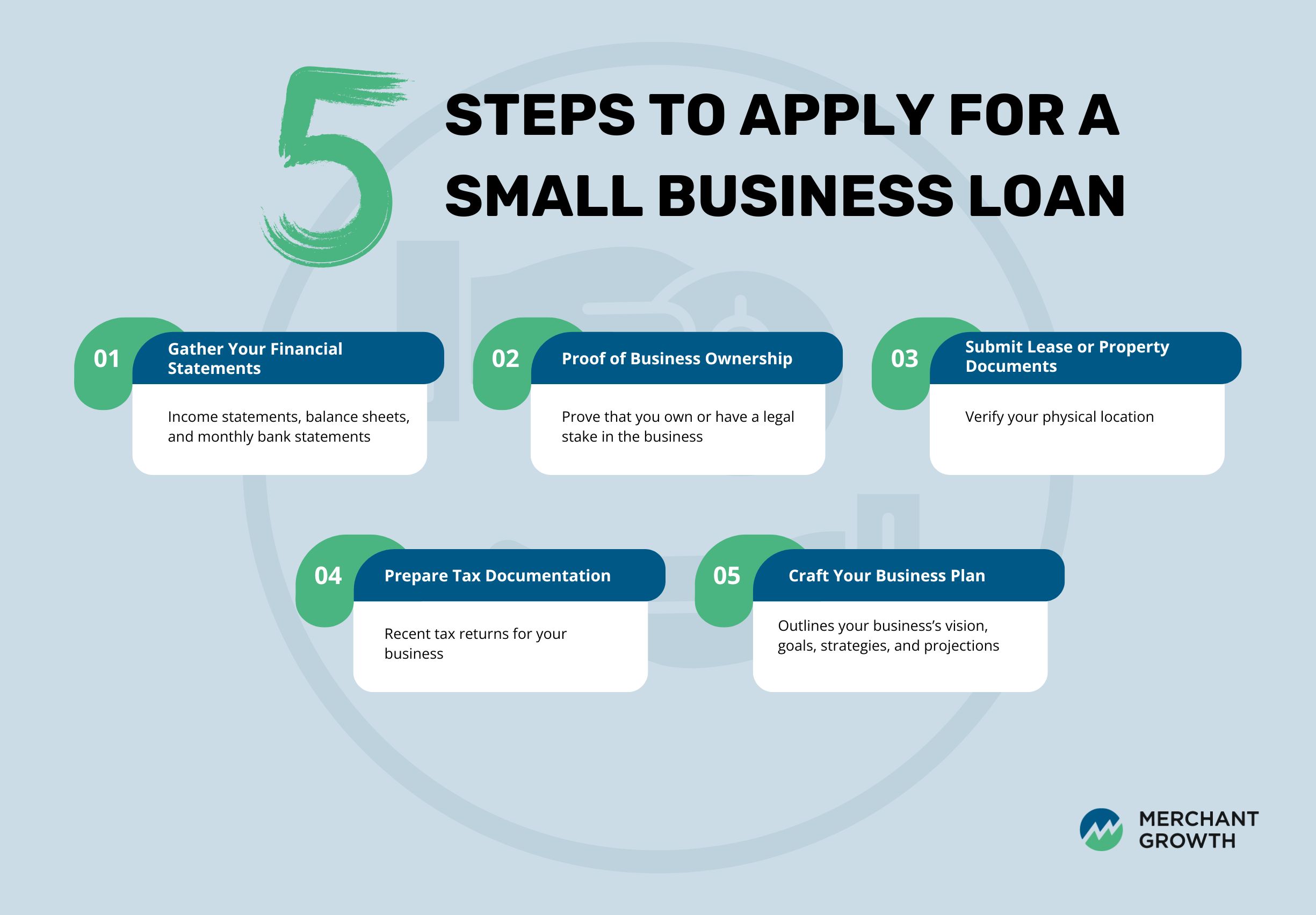
How to Apply for a Small Business Loan in Canada
Applying for a small business loan requires careful preparation to ensure your application stands out. While the process can vary depending on the type of loan and lender, following these steps will help increase your chances of success. Here’s a step-by-step guide on how to apply for a small business loan in Canada:
- Gather Your Financial Statements
Lenders want to understand your business's financial health, so you’ll need to provide recent financial statements, including income statements, balance sheets, and monthly bank statements. These documents demonstrate your business’s ability to repay the loan and offer insights into cash flow, profits, and expenses. Be prepared to explain any financial trends that may raise questions. - Provide Proof of Business Ownership
You’ll need to prove that you own or have a legal stake in the business. This can be done by providing proof of business ownership, such as incorporation documents or partnership agreements. If you are a sole proprietor, a business registration certificate will suffice. - Submit Lease or Property Documents
Lenders will likely want to verify your physical location. This means you will need to provide documentation like a lease agreement for rented spaces or property deeds for owned spaces. This helps lenders understand the security of your business operations. - Prepare Tax Documentation
Tax returns offer a snapshot of your business’s financial status over the past few years. Be ready to submit tax documentation, including recent returns for your business. If you are a new business, you may be asked to provide personal tax returns to give a clearer picture of your financial history. - Craft Your Business Plan
A business plan is a key document that outlines your business’s vision, goals, strategies, and projections. A solid business plan helps lenders understand how you plan to grow your business and how the loan will help. It should include financial forecasts, marketing plans, and any other pertinent details that show your business’s potential for success.
Additional Tips for Increasing Your Chances of Approval
Once you’ve gathered all the necessary documents, there are a few more steps you can take to improve your chances of securing a loan. These tips can help you present a strong application and increase your likelihood of approval:
- Know the Lender’s Requirements: Different lenders may have varying requirements, so make sure to research and tailor your application to the specific lender you are applying to. Some lenders may focus more on cash flow, while others may prioritize your credit history or collateral.
- Be Transparent: If there are any issues in your financial history or projections, be transparent with the lender. They will appreciate your honesty and may work with you to find a solution.
- Check Provincial Variations: Keep in mind that loan requirements and the application process can vary by province. For example, some provinces may offer local grants or subsidies that can help with loan approval. Always check with local business development offices to see if there are specific programs that can assist your application.
By gathering the necessary documents, preparing your business plan, and understanding lender requirements, you’ll be in a stronger position to secure the financing you need.
Loan Rates for Small Businesses: What You Need to Know
When applying for a small business loan, understanding how loan rates are determined is crucial. Several factors impact the interest rate you'll be offered, and knowing what to expect can help you plan your finances effectively. Here’s a breakdown of the key elements that influence loan rates for small businesses:
Factors That Impact Loan Rates
- Business Size: Generally, the larger and more established your business, the lower your interest rate may be. Lenders tend to see larger businesses as lower risk because they have more resources and a proven track record.
- Credit History: Your personal and business credit history plays a significant role in determining your loan rate. A strong credit score demonstrates to lenders that you’re reliable, which can help secure better terms. Conversely, poor credit may lead to higher rates due to increased risk.
- Type of Loan: The type of loan you choose will also affect the interest rate. Government-backed loans like the Canada Small Business Financing Program (CSBFP) typically come with lower rates because they’re guaranteed by the government. In contrast, loans from private lenders or alternative financing options may come with higher rates due to the increased risk they take on.
Typical Interest Rate Ranges
The interest rates you’ll face can vary significantly depending on the type of loan and the lender you work with. For government-backed loans, interest rates are typically lower, making them a more affordable option for businesses looking to borrow. On the other hand, private lenders and alternative financing options generally carry higher interest rates. The higher rates reflect the increased risk these lenders take on, especially if your business doesn’t have an established track record or solid collateral.
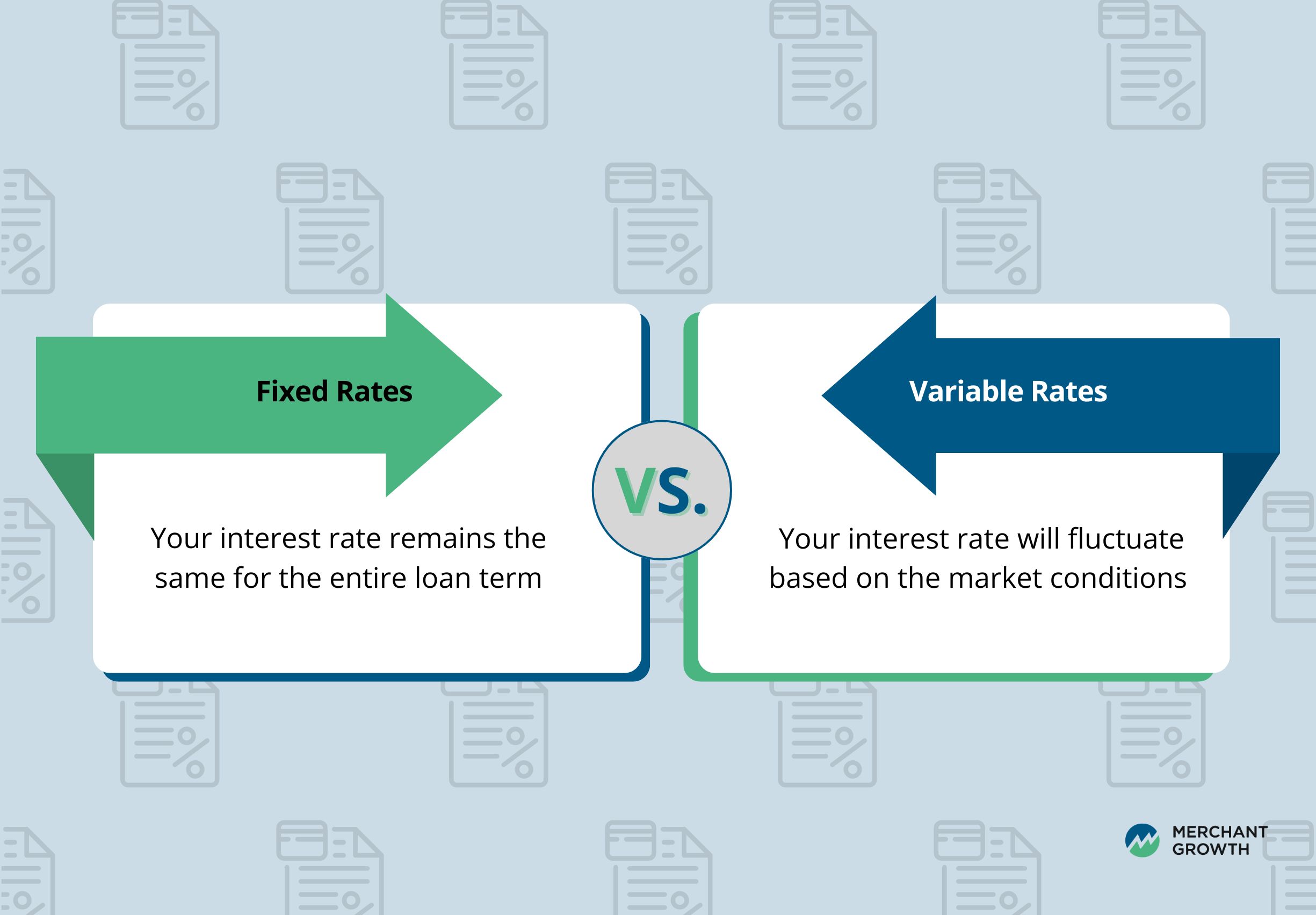
Fixed vs. Variable Rates
Loan interest rates can either be fixed or variable, and each comes with its own set of benefits. Understanding these factors and choosing the right loan type and rate structure for your business is key to maintaining healthy cash flow and avoiding financial stress.
Fixed Rates:
With a fixed-rate loan, your interest rate remains the same for the entire loan term, ensuring your payments are predictable. This is ideal for businesses that prefer stable monthly payments and want to avoid surprises. The downside is that fixed rates can sometimes be higher than variable rates, especially if market rates decrease over time.
Variable Rates:
A variable rate loan means your interest rate will fluctuate based on the market conditions or an index rate, such as the prime rate. While variable rates can start lower than fixed rates, they carry the risk of increasing if the market conditions change, leading to higher payments over time. This type of loan may be beneficial if you expect interest rates to decrease or if your business has the flexibility to handle occasional rate changes.
Understanding Loan Terms and Repayment: Avoiding Common Pitfalls
When taking out a loan for your small business, understanding the terms and repayment schedule is essential for avoiding financial stress down the road. Here’s what you need to know about loan terms and repayment:
Typical Loan Repayment Terms
Loan repayment terms can vary depending on whether you’re opting for a government-backed loan, a bank loan, or a private loan. For government-backed loans, repayment periods typically range from 5 to 10 years, depending on the type of loan and the purpose of the funds. Private loans, however, may have shorter terms, often between 1 to 5 years, especially for smaller loan amounts or working capital needs.
Repayment Schedules
Most loans follow a monthly repayment schedule, with fixed amounts due on the same day each month. However, some lenders may offer flexible repayment terms designed to accommodate seasonal cash flow fluctuations. For example, loans for businesses with irregular income, like those in retail or agriculture, may offer quarterly or annual payments to help ease financial pressure during off-seasons. Be sure to discuss these options with your lender when applying for a loan.
Common Pitfalls to Avoid
While taking out a loan can help your business grow, it’s important to be aware of common pitfalls that could strain your finances:
- Hidden Fees: Some loans come with additional fees such as origination fees, servicing fees, or penalties for early repayment. Always read the fine print to ensure you fully understand any fees associated with the loan.
- Prepayment Penalties: Some lenders charge a penalty for repaying your loan early, which can limit your flexibility. Make sure to ask about prepayment penalties and factor this into your decision-making.
- Strained Cash Flow: Ensure that the loan terms won’t create cash flow issues. Long repayment periods or high monthly payments may seem manageable at first but could become a burden if your business hits a slow patch. Always evaluate your ability to make the payments without affecting your day-to-day operations.
By thoroughly understanding your loan terms and being mindful of potential pitfalls, you’ll be better positioned to manage the loan effectively and avoid unnecessary stress.

When and How to Refinance Your Small Business Loan
Refinancing your small business loan can be a smart way to improve your financial situation, especially if your business’s needs have changed or interest rates have dropped. Here’s when and how to approach refinancing:
When Refinancing Might Be Beneficial
Refinancing can be a good option in the following situations:
- Interest Rates Decrease: If interest rates have dropped since you initially took out your loan, refinancing could help you lock in a lower rate and reduce monthly payments.
- Improved Credit: If your business’s credit has improved since you took out the original loan, you may qualify for better terms or lower interest rates.
- Shortening Loan Terms: If you want to pay off your loan faster and reduce the total interest paid over the life of the loan, refinancing to a shorter term with the same or lower interest rate may be beneficial.
The Refinancing Process
Refinancing a loan involves taking out a new loan to pay off your existing loan, ideally at better terms. Here’s how to go about it:
- Assess Current Loan Terms: Review your existing loan to understand the remaining balance, interest rate, and repayment schedule.
- Compare New Offers: Shop around and compare offers from different lenders. Look for lower interest rates, better repayment terms, or more flexible options that align with your current business needs.
- Prepare Your Documents: Just like applying for your original loan, you’ll need to provide financial documents such as recent financial statements, tax returns, and a business plan to demonstrate your business’s financial health and repayment ability.
Refinancing Costs to Watch Out For
Some loans come with refinancing fees or penalties for early repayment. These can add to the cost of refinancing, so it’s important to carefully review your current loan agreement to ensure these costs are factored into your decision. Always calculate whether the potential savings outweigh the refinancing costs before moving forward.
Making the Right Financing Choice for Your Business’s Future
Navigating small business financing involves understanding your loan options, rates, and terms to make the best choice for your company’s growth. From government-backed loans to private lending and alternative financing, each option has its own advantages and requirements. Loan repayment schedules, interest rates, and the structure of your loan play a significant role in how manageable your payments will be.
If you're looking for financing solutions that work for your business, it's essential to evaluate your specific needs and long-term goals carefully. By understanding the loan options available and their implications, you can make informed decisions that help set your business up for success.
At Merchant Growth, we understand that finding the right financing can be overwhelming. If traditional loans aren’t a good fit, we offer flexible funding solutions designed to meet your unique needs. Whether you need quick access to capital or a longer repayment term, we’re here to help you grow your business. Contact us today to explore how we can support your financing needs.
How Do You Pay Yourself from Your Business? A Guide for Canadian Entrepreneurs
Running a business comes with plenty of challenges—but one of the trickiest questions for Canadian entrepreneurs is surprisingly simple:
How do I pay myself?
If you’re like many business owners, you’re great at serving customers, managing expenses, and building your brand—but when it comes to paying yourself, things get murky. Should you take a salary? Pay yourself dividends? What about taxes?
We are here to help. Let’s break down how to pay yourself from your business legally, confidently, and in a way that supports both your own personal income and your company’s success.
Key Takeaways
- How you pay yourself depends on your business structure. Sole proprietors usually take draws, while incorporated owners often choose between salary, dividends, or both.
- Salary provides steady income and CPP contributions. Dividends may offer tax advantages but aren’t considered earned income for RRSPs or CPP.
- It’s important to balance personal pay with business cash flow and tax obligations.
- The smartest approach often involves working with an accountant to build a compensation plan that supports growth—and avoids surprises at tax time.
Do Business Owners Get a Paycheque? An Overview
Short answer: sometimes—but it depends on how your business is set up.
In Canada, there’s no one-size-fits-all approach to paying yourself as a business owner. The right method depends on your business structure—whether you’re a sole proprietor, part of a partnership, or run an incorporated company. Most Canadian entrepreneurs pay themselves in one (or a combination) of three ways: an owner’s draw, a salary, or dividends. Each option comes with its own tax rules, paperwork requirements, and long-term financial considerations. Here’s how they work:
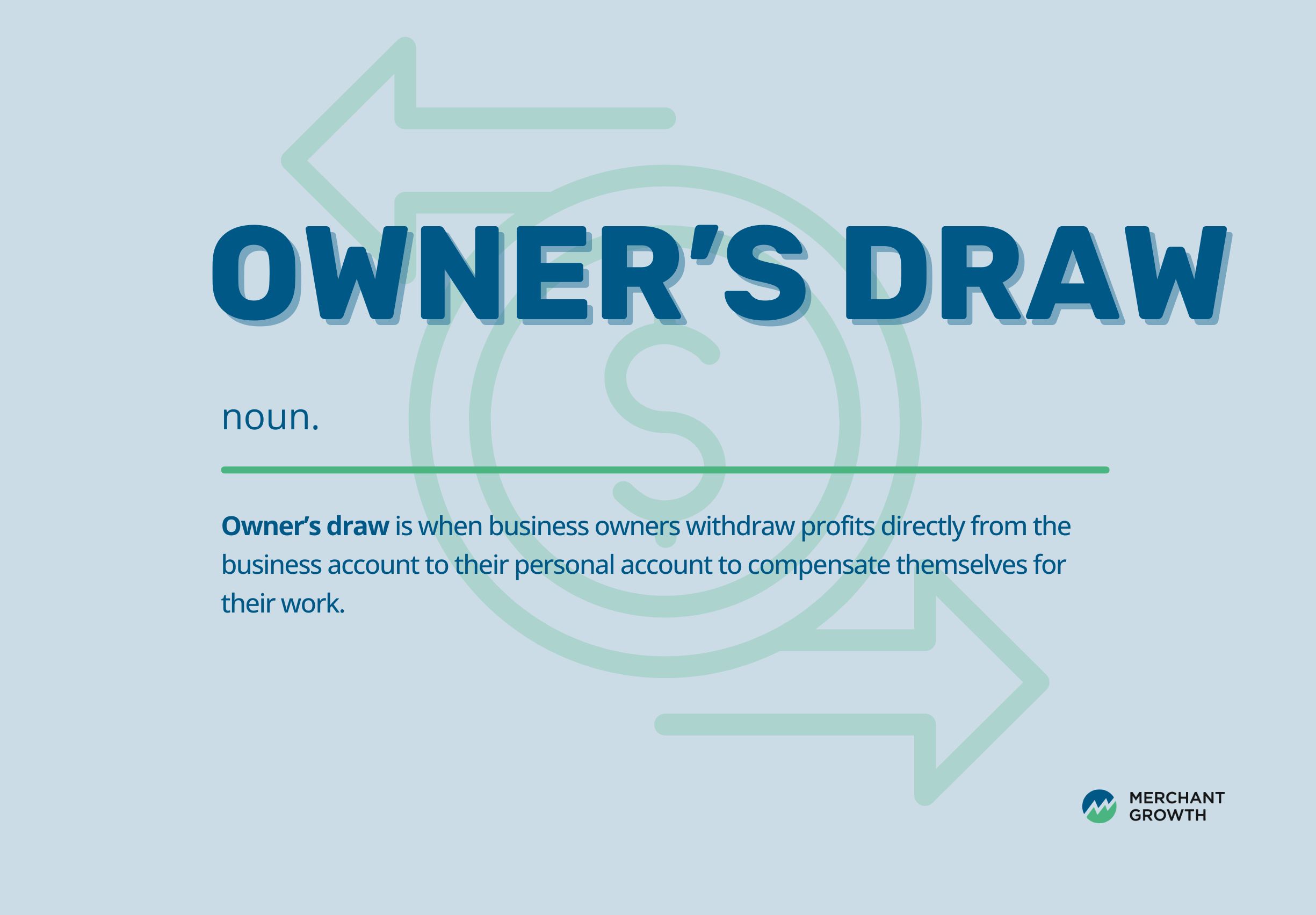
Owner’s Draw
- Common for: Sole proprietors or partnerships
- How it works: You withdraw profits directly from the business account to your personal account.
- Tax note: No payroll deductions or T4s required, but you still pay personal income tax on the business’s net profit.
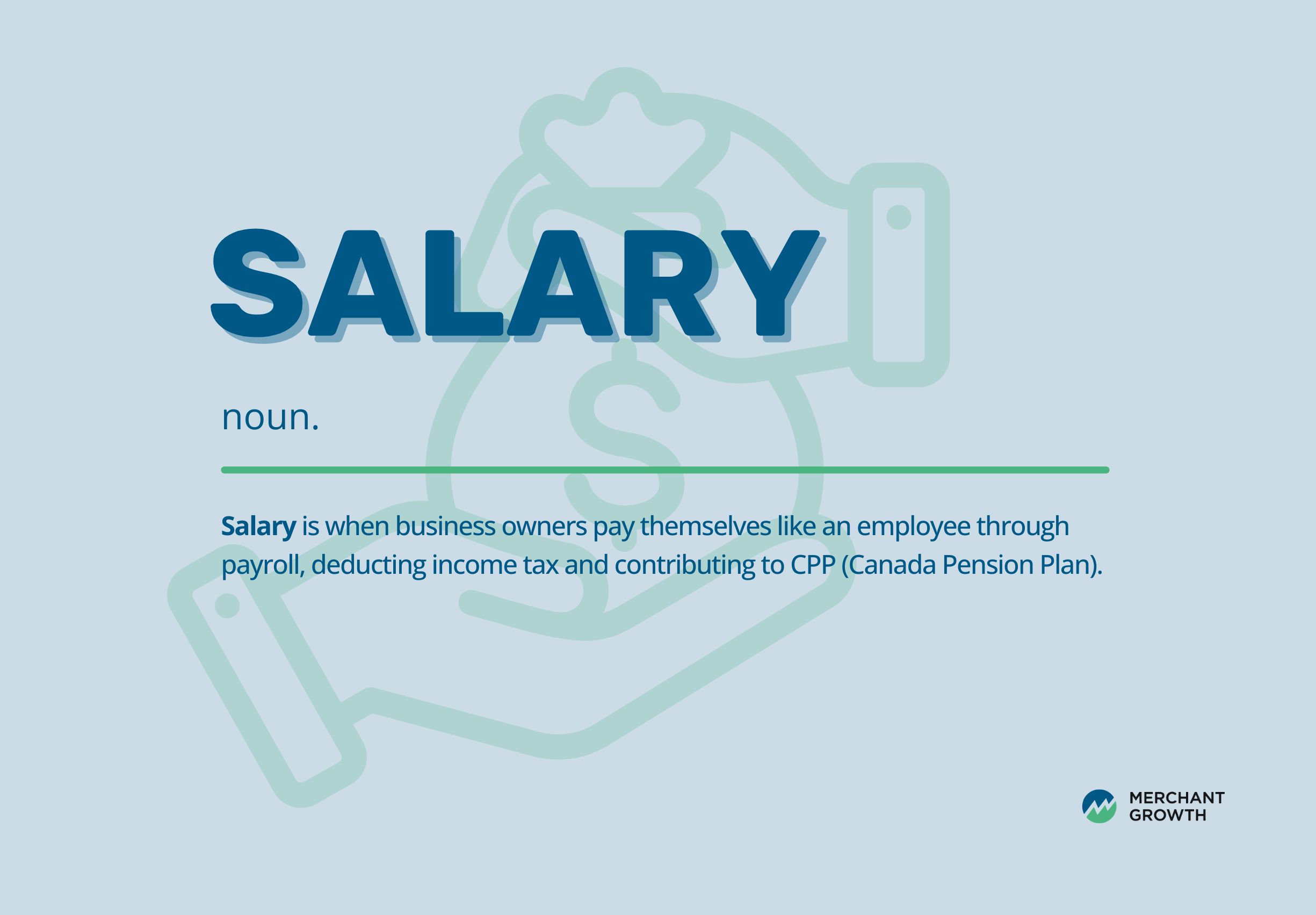
Salary
- Common for: Incorporated business owners
- How it works: You pay yourself like an employee through payroll, deducting income tax and contributing to CPP (Canada Pension Plan).
- Tax note: The business deducts your salary as an expense, and you receive a T4 slip at year-end. Creates RRSP room and contributes to CPP.
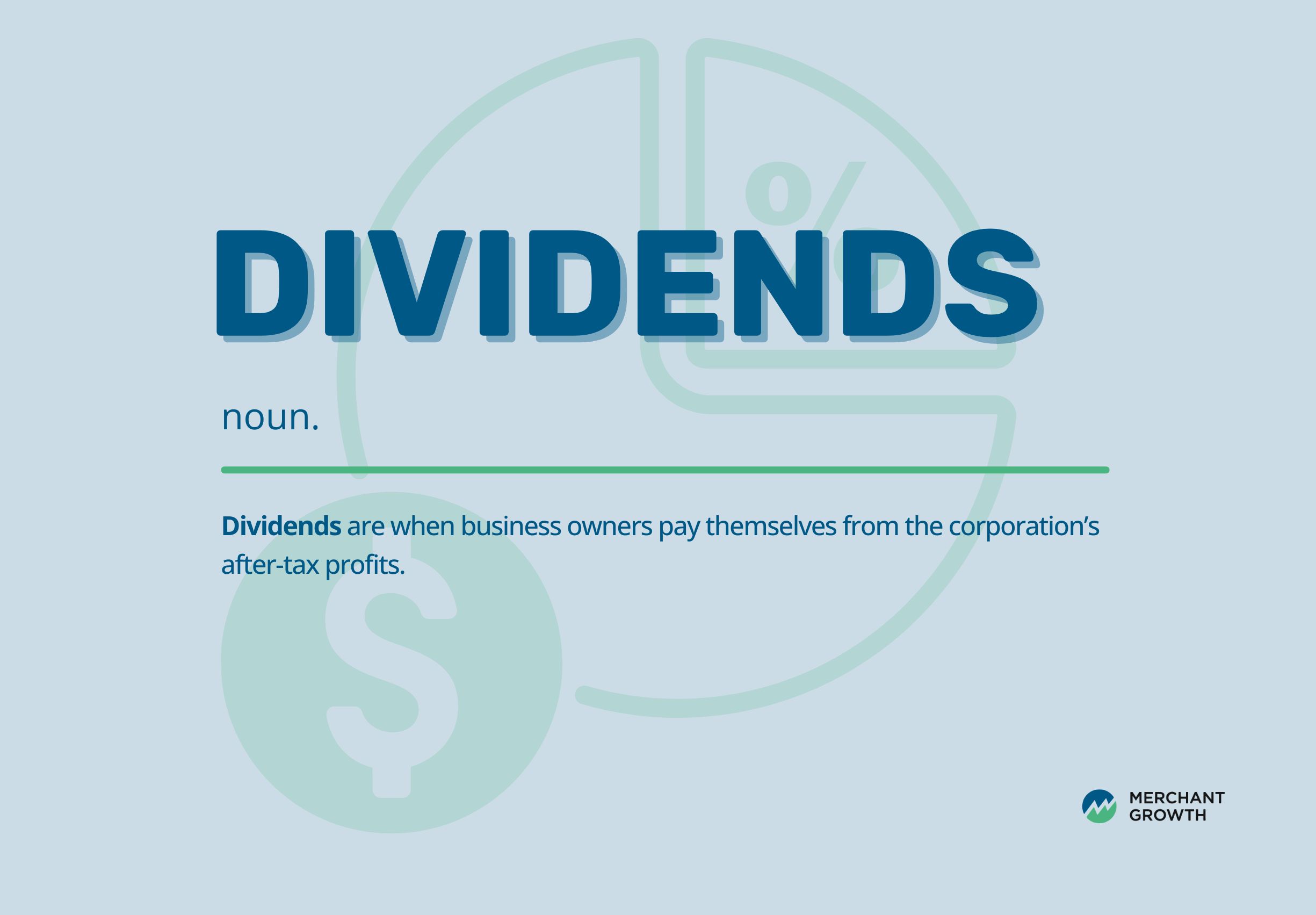
Dividends
- Common for: Incorporated business owners with retained earnings
- How it works: You pay yourself from the corporation’s after-tax profits.
- Tax note: Dividends don’t require payroll setup, don’t contribute to CPP, and are taxed at a different (often lower) rate than salary.
Each method has its own benefits and drawbacks. Let’s break it down a bit further based on business structure.
How to Pay Yourself as a Sole Proprietor in Canada
If you’re a sole proprietor, you don’t pay yourself a salary—you pay yourself by taking an owner’s draw. This means transferring money from your business account to your personal account when needed.
What You Need to Know:
- You pay personal income tax on your business’s net profit (not just what you draw).
- There are no payroll deductions (like CPP or EI) at the time of payment, but you’re still responsible for taxes at year-end.
- It’s crucial to keep clear records of all withdrawals.
Pro Tip:
Consider setting aside at least 25-30% of your profits for taxes and Canada Pension Plan (CPP) contributions. Using separate accounts for business and personal expenses makes this easier.
How to Pay Yourself from a Corporation: Salary vs. Dividends
If you’ve incorporated your business in Canada, you have more flexibility in how you pay yourself—but that also means more decisions to make. The two main options are salary and dividends, and many business owners use a combination of both to balance personal income needs with tax efficiency.
Choosing between salary and dividends isn’t just about how you receive money—it affects your taxes, retirement savings, CPP contributions, and even how lenders view your income. Each method has advantages and trade-offs, depending on your goals, cash flow, and the stage your business is in.
Paying Yourself a Salary
Paying yourself a salary means you become an employee of your own corporation. Your business issues regular paycheques, deducts income tax, and handles Canada Pension Plan (CPP) contributions—just like it would for any other employee.
What You Need to Know:
- Requires setting up payroll and remitting taxes to the CRA.
- Salary payments are a tax-deductible expense for the corporation, reducing its taxable income.
- Creates RRSP contribution room based on your earned income.
- Contributes to CPP, helping you build retirement income.
- You’ll receive a T4 slip at year-end.
Paying Yourself Dividends
Dividends are a way to pay yourself a share of the company’s after-tax profits. Instead of running through payroll, you transfer funds from the corporation to yourself as a shareholder distribution.
What You Need to Know:
- No payroll setup is needed dividends are recorded in corporate records and reported via T5 slips.
- Dividends are taxed personally at a different (often lower) rate than salary, depending on your province and income level.
- They don’t generate RRSP room or contribute to CPP.
- Because no CPP is paid, you may need to plan for your retirement savings separately.
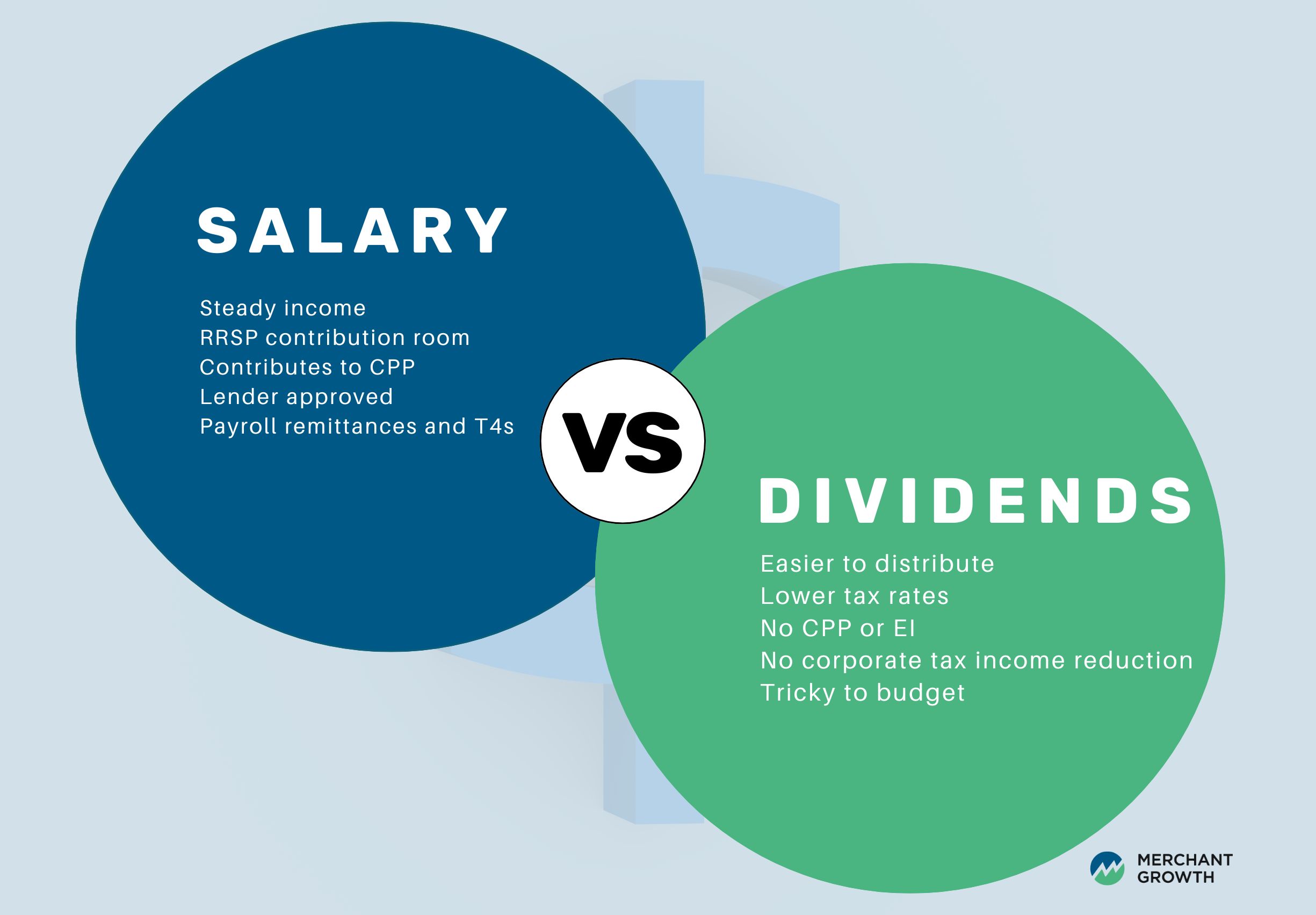
Pros and Cons of Salary vs. Dividends
Not sure whether to take a salary, dividends, or both? Each option comes with trade-offs. Here’s a quick comparison to help you weigh the benefits and drawbacks:
| Salary | Dividends |
|---|---|
| Creates steady, predictable income | Easier to distribute—no payroll setup |
| Builds RRSP contribution room | Often taxed at a lower rate |
| Contributes to CPP (future retirement benefits) | No CPP or EI required |
| Requires payroll remittances and T4s | Doesn’t reduce corporate taxable income |
| Better for loan/mortgage applications | May make personal budgeting trickier |
The best choice depends on your business goals, cash flow, and personal financial situation. It’s not about picking one method forever—it’s about finding the right mix for where you are now.

What Percentage Should You Pay Yourself?
There’s no one-size-fits-all answer—but asking the right questions can help you land on a number that’s sustainable for both your business and your personal life. Start with these:
- Can your business afford it?
Review your monthly cash flow. Are you consistently bringing in more than you’re spending? If not, consider holding off on large self-payments or starting with a small salary until you stabilize your business finances. - What do you need to cover your personal expenses?
Calculate your baseline living costs—housing, groceries, savings, debt payments—so you know what you need to take home. This gives you a target number. - Are you setting aside enough for taxes?
Whether you’re paying yourself through draws, salary, or dividends, taxes will apply. Work with your accountant to estimate how much to set aside for CRA payments so you’re not caught off guard. - What about growth?
Are you reserving funds to reinvest in your business—like hiring, new equipment, or marketing? Paying yourself should be part of the plan, but not at the expense of long-term growth.
Once you’ve answered these questions, set a reasonable pay target and revisit it regularly. Your goal is to strike a balance: pay yourself enough to live (and save), while keeping the business healthy and positioned to grow.
How Much to Pay Yourself (Without Hurting the Business)
Once you understand there is no concrete percentage of profit you should take away from your business, the next step is figuring out how much is reasonable to pay yourself, without putting your company at risk.
Here are some practical guidelines to help:
- Pay yourself a portion of monthly profits, leaving room for taxes and reinvestment.
- Compare your pay to industry norms or consider what you’d pay someone else to do your job.
- Build in room for business expenses and savings before determining your take-home amount.

When Should You Start Paying Yourself?
Many new business owners wait too long to pay themselves. While it’s smart to be cautious in the early days, you should aim to start paying yourself when:
- The business generates consistent profit (even modest amounts).
- You have at least a few months of operating expenses saved.
- You’ve stabilized customer acquisition and operating costs.
Paying yourself isn’t just a reward—it’s a sign your business model is working.
Working with an Accountant or Bookkeeper
When it comes to paying yourself, taxes are where things often get tricky—especially if you’re juggling salary, dividends, or both. The last thing you want is to make a mistake that costs you time, money, or penalties from the CRA.
That’s where a trusted accountant or bookkeeper comes in. They can help you:
- Set up payroll the right way (if you’re taking a salary)
- Stay on top of your personal and business tax obligations
- Avoid costly mistakes or CRA penalties
- Build a plan for retirement, savings, and future growth
Even better? You don’t have to do it all manually. Cloud-based tools like Wagepoint, QuickBooks Payroll, and Wave make automating payroll and remittances simple—so you can focus on running your business, not stressing over spreadsheets.
What Does "Pay Yourself First" Really Mean?
You’ve probably heard the phrase “pay yourself first”—but what does that actually mean for small business owners?
At its core, paying yourself first is about making your personal financial health a priority, not an afterthought. It means setting aside a portion of your income for yourself before spending on other expenses, just like you would with personal savings. For business owners, that can feel counterintuitive—especially when you’re used to pouring every dollar back into the business. But if you never prioritize your own paycheck, it’s easy to burn out or fall into financial stress.
How to Apply “Pay Yourself First” in Your Business:
- Set a baseline salary or draw—even if it’s small at first.
- Build your pay into your budget as a non-negotiable monthly expense.
- Separate personal and business finances so you can see clearly what’s coming in and what’s going out.
- Don’t wait for “leftover” cash to pay yourself—plan for it upfront.
This approach isn’t about being selfish—it’s about sustainability. Your business exists to support your life, not the other way around. When you pay yourself first, you’re creating a healthier balance between business growth and personal well-being.
How Merchant Growth Can Help You Build a Sustainable Business Income
Building a consistent paycheque as a business owner often requires investing in your systems—whether that’s hiring a bookkeeper, setting up payroll, or planning for growth.
At Merchant Growth, we understand that balancing your income with your business’s needs isn’t always easy. That’s why we offer flexible term financing and lines of credit to help Canadian entrepreneurs:
- Cover upfront costs like accounting software or payroll services
- Create cash flow cushions for lean months
- Reinvest in growth while maintaining personal income
With the right support, you can pay yourself fairly—without jeopardizing your business’s future.
Talk to Merchant Growth today about financing solutions that support your business—and your paycheck.
What Is Inventory Turnover? A Guide for Canadian Small Business Owners
One of the most difficult parts of running a product-based Canadian business is managing inventory. Buy too much, and your cash gets tied up in stock that gathers dust. Buy too little, and you risk running out of your bestsellers when demand picks up. Managing inventory is a constant balancing act between keeping your customers happy and your products moving off the shelves. In fact, in 2024, 18% of inventory holding businesses reported holding higher levels of inventory than they would have hoped.
That’s why understanding of inventory turnover is important.
Inventory turnover is more than just a financial metric; it’s a window into how efficiently your business is operating. Done right, it helps you avoid cash flow crunches, reduce waste, and stay ahead of customer demand.
This guide breaks down exactly what inventory turnover is, how to calculate it, and how to use the results to make smarter decisions for your small business.
Key Takeaways
- Inventory turnover measures how many times you sell and replace your stock in a given period.
- A high turnover usually signals strong sales or efficient inventory management, while low turnover may suggest overstocking or weak demand.
- Use this formula: Inventory Turnover = Cost of Goods Sold ÷ Average Inventory.
- Improving turnover can reduce holding costs, improve cash flow, and boost long-term profitability.
What Is Inventory Turnover?
It’s a key financial metric used by accountants, lenders, and business owners alike to assess business health. Inventory turnover tells you how much product you sell and restock over a given period—usually monthly, quarterly, or annually. In other words, it helps you track whether your inventory is generating revenue or tying up cash.
To fully understand how inventory turnover fits into your business, it’s helpful to know a few related terms. These concepts give you a clearer view of how your stock moves and when it’s time to take action. Here’s a quick rundown:
- Inventory on Hand: How much stock you’re currently holding.
- Reorder Point: The inventory level at which you need to order more to avoid stockouts.
- Obsolete Inventory (Dead Stock): Products that are no longer sellable due to expiration, seasonality, or lack of demand. This ties up cash and reduces profitability if not addressed.
- Inventory Turnover Ratio: Another term for the same concept—how many times you sell your inventory in a given period.
Why Inventory Turnover Matters for Small Businesses
If you run your own business, you’ve likely heard it before—success is all about balancing supply and demand. You need to keep your products moving, but also keep enough in stock to meet customer needs. The last thing you want is to run out of a popular product or get stuck with items that sit untouched for months. That’s where understanding inventory turnover comes in. It helps you spot potential problems early, so you can adjust your ordering, pricing, or promotions before your cash flow or profits take a hit.
Here’s what different turnover rates can tell you:
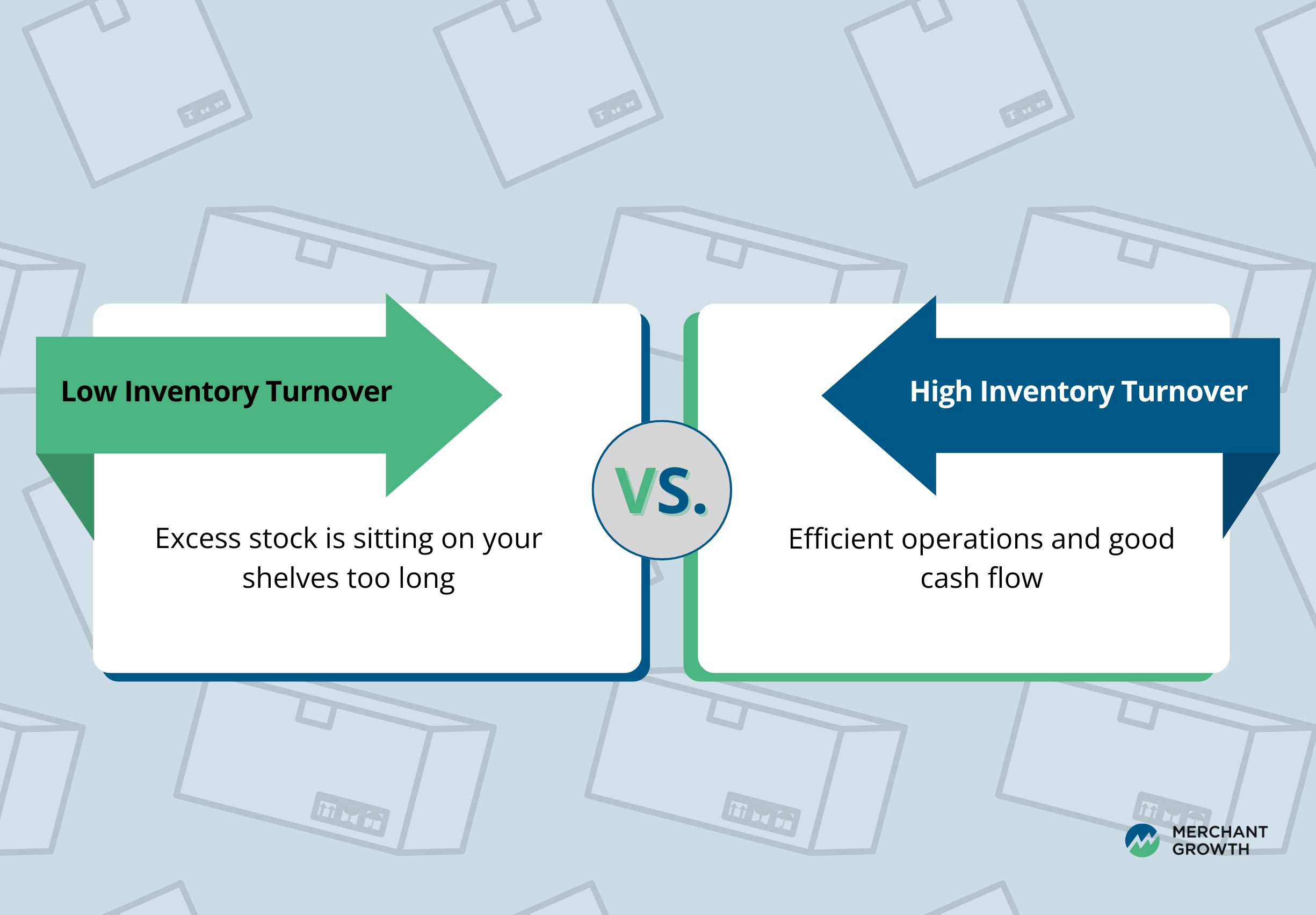
Low Turnover
This usually means excess stock is sitting on your shelves too long. That ties up your cash, increases storage costs, and raises the risk of spoilage or obsolescence—especially in food, fashion, or tech.
However, low turnover isn’t always a red flag. In certain situations, it can be a strategic move:
- Inflation: Holding extra inventory can protect you from rising supplier costs. Buying ahead of price hikes helps preserve your margins.
- Supply Chain Disruptions: Stockpiling inventory may be smart if you anticipate shortages or shipping delays.
The key is knowing why your turnover is low. If it’s intentional—due to forward planning—it could benefit your business. But if it’s accidental, it might be time to review your purchasing or sales strategies.
High Turnover
High turnover generally means efficient operations and good cash flow. But if it’s too high, you might be under-ordering or missing sales opportunities because you’re constantly out of stock.
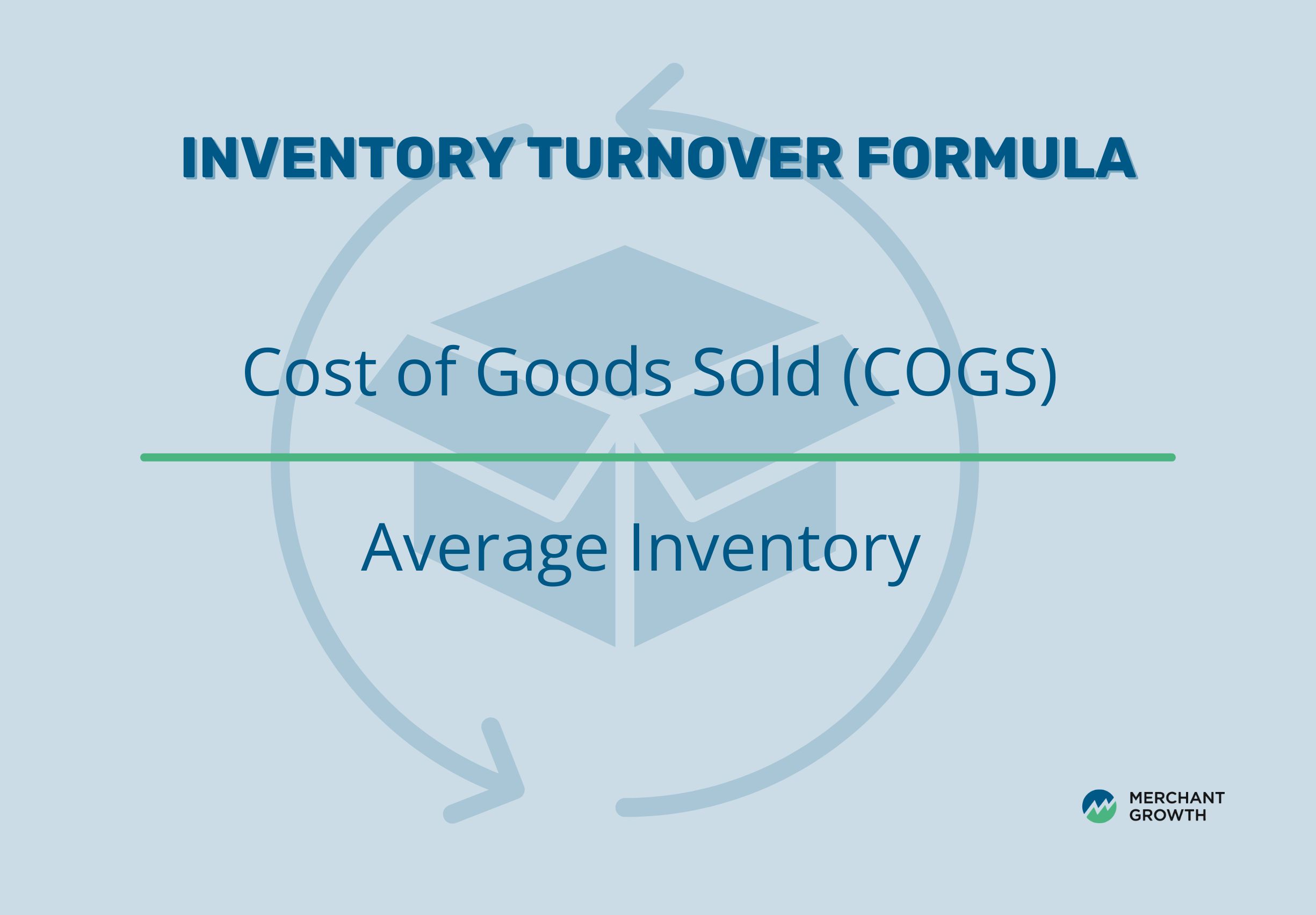
How to Calculate Inventory Turnover (Formula + Example)
Knowing your inventory turnover is one thing—calculating it is another. The good news? It’s easier than you might think. By tracking just a few key numbers, you can quickly understand how often you’re selling and replenishing stock. This isn’t just a bookkeeping exercise—it’s a powerful way to spot trends, prevent overstocking, and fine-tune your purchasing strategy. Here’s how to do it:
Inventory Turnover = Cost of Goods Sold (COGS) / Average Inventory
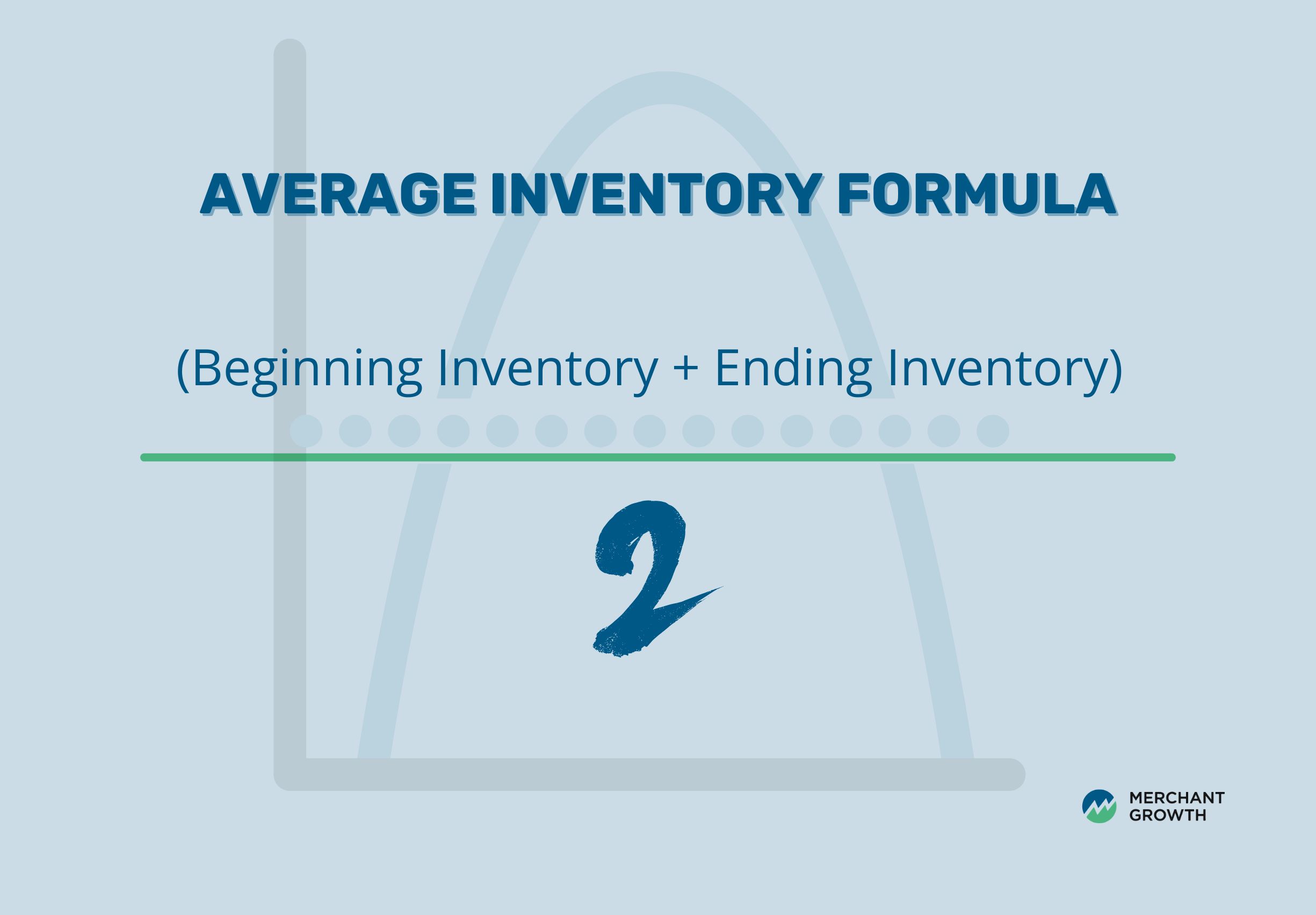
How to find Average Inventory:
To calculate inventory turnover accurately, you’ll need to know your average inventory for the period you’re measuring. This is especially helpful for seasonal businesses as it smooths out fluctuations or one-off stock changes, giving a clear picture of your typical inventory levels. The formula is straightforward:
(Beginning Inventory + Ending Inventory) / 2
Example: Calculating Inventory Turnover for a Small Retail Business
Let’s imagine you run a small clothing boutique that sells apparel and accessories. You want to know how efficiently your shop is managing its inventory, so you decide to calculate your inventory turnover for the year.
Step 1: Gather Your Numbers
- Cost of Goods Sold (COGS) for the year: $150,000
- Beginning Inventory (January 1): $25,000
- Ending Inventory (December 31): $35,000
Step 2: Calculate Average Inventory
Use the average inventory formula to smooth out seasonal ups and downs:
Average Inventory = (Beginning Inventory+Ending Inventory) / 2
Average Inventory = (25,000+35,000)/2 = 30,000
Step 3: Calculate Inventory Turnover
Now apply the inventory turnover formula:
Inventory Turnover = Cost of Goods Sold (COGS) / Average Inventory
Inventory Turnover = 150,000 /30,000 = 5
What This Means
In this example, your boutique turned its inventory over 5 times during the year. That means, on average, you sold and replenished your stock five times over the course of 12 months.
A turnover of 5 is typically healthy for a retail apparel business, but it’s important to compare this number to your own goals or industry benchmarks. If your target is 6 or 7, you may want to look for ways to speed up sales or reduce how much you’re ordering at once.
Average Inventory Turnover by Industry: What’s Normal?
Inventory turnover benchmarks can vary widely depending on the type of business you run. For example, a grocery store or fast-fashion retailer will naturally have a much higher turnover rate than a furniture shop or manufacturing business that holds specialized equipment parts.
While Canadian-specific data is limited, recent Q1 2024 data from CSI Market (which reflects U.S. businesses) gives us a helpful snapshot of average inventory turnover rates across industries:
| Industry | Average Turnover (Q1 2024, U.S.) |
|---|---|
| Financial | 227.47 |
| Services | 23.84 |
| Retail | 13.79 |
| Energy | 9.97 |
| Transportation | 9.05 |
| Technology | 7.82 |
| Utilities | 7.02 |
| Consumer Discretionary | 5.94 |
| Consumer Non-Cyclical | 5.73 |
| Basic Materials | 5.02 |
| Conglomerates | 3.71 |
| Healthcare | 3.00 |
| Capital Goods | 2.44 |
A Note for Canadian Business Owners:
While this data offers a useful reference point, keep in mind that it reflects U.S. companies and may not align exactly with Canadian benchmarks. Differences in market size, consumer behaviour, and supply chain logistics can all affect turnover rates between countries.
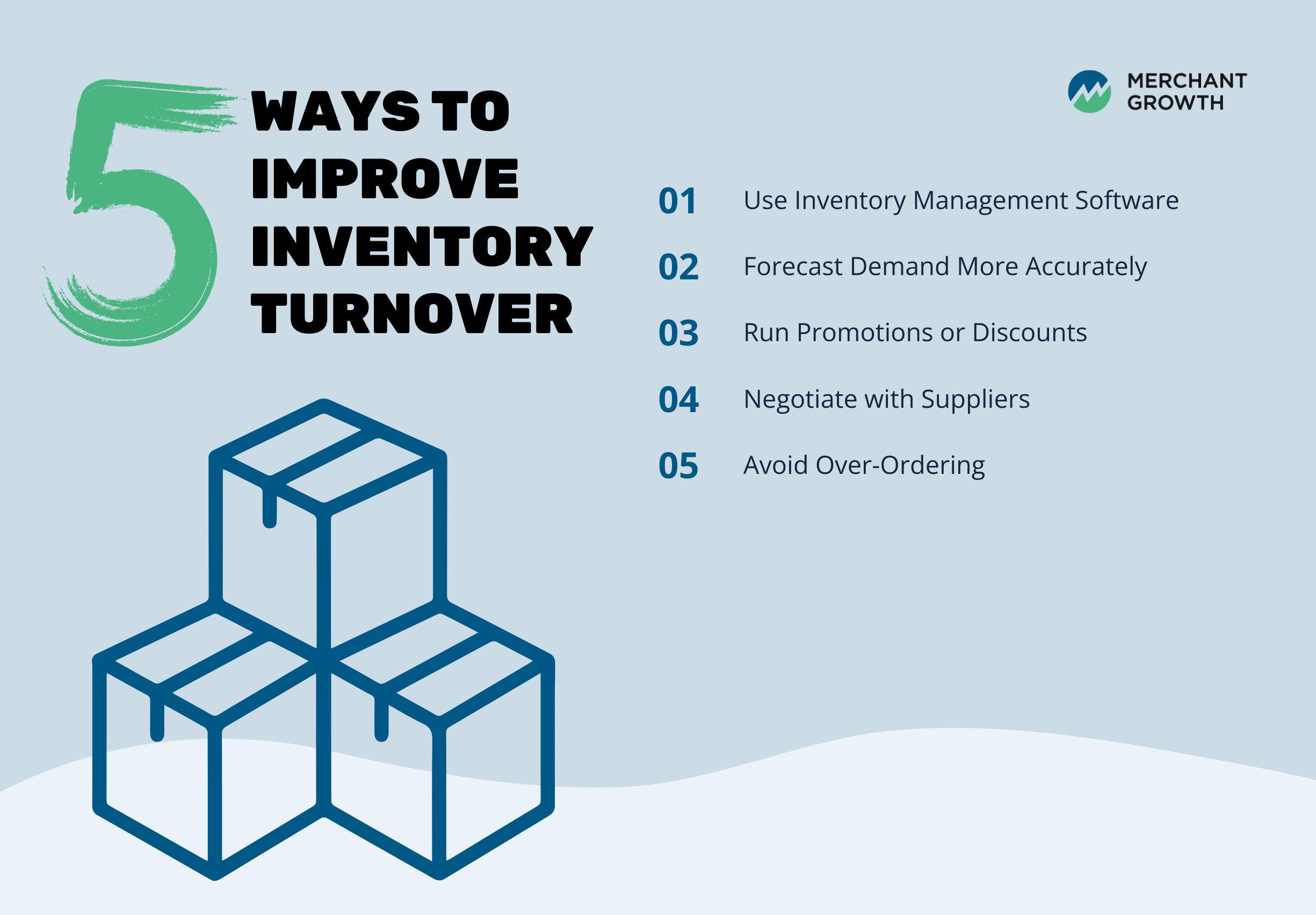
How to Improve Your Inventory Turnover Ratio
If your inventory turnover is too low—or you’re constantly dealing with slow-moving stock—it can drain your cash flow and take up valuable space. The good news? There are several proactive steps you can take to improve your turnover rate, free up capital, and keep your business running more efficiently. Here’s how:
1. Use Inventory Management Software
Modern inventory management tools help you track what’s selling (and what’s not) in real time. Software like QuickBooks Commerce, Shopify POS, or TradeGecko can automatically update your stock levels, generate reorder alerts, and give you insights into your best and worst performers—making it easier to avoid overstocking or running out of key items.
2. Forecast Demand More Accurately
Look at your historical sales data to identify trends. Are there seasonal peaks or predictable slow periods? Do certain products always sell better at specific times of the year? Accurate demand forecasting helps you order the right amount of inventory—reducing the risk of stockouts or excess stock.
3. Run Promotions or Discounts for Slow-Moving Items
If you have products that just aren’t moving, consider offering limited-time discounts or bundling them with popular items. This clears shelf space, recovers some of your investment, and prevents losses from spoilage or obsolescence—especially in industries like food, fashion, or tech.
4. Negotiate with Suppliers for Smaller or Faster Orders
Talk to your suppliers about adjusting your order sizes or delivery timelines. Instead of buying in large bulk just for a discount, see if you can negotiate smaller shipments more frequently. This reduces storage needs, limits the risk of excess stock, and keeps your inventory fresher and more aligned with customer demand.
5. Avoid Over-Ordering for the Sake of Bulk Discounts
Bulk buying might seem like a cost-saver, but it’s only smart if the volume matches your sales patterns. Otherwise, you’re tying up cash in products that take months (or longer) to sell. Focus on just-in-time inventory strategies where possible—buy what you need, when you need it.
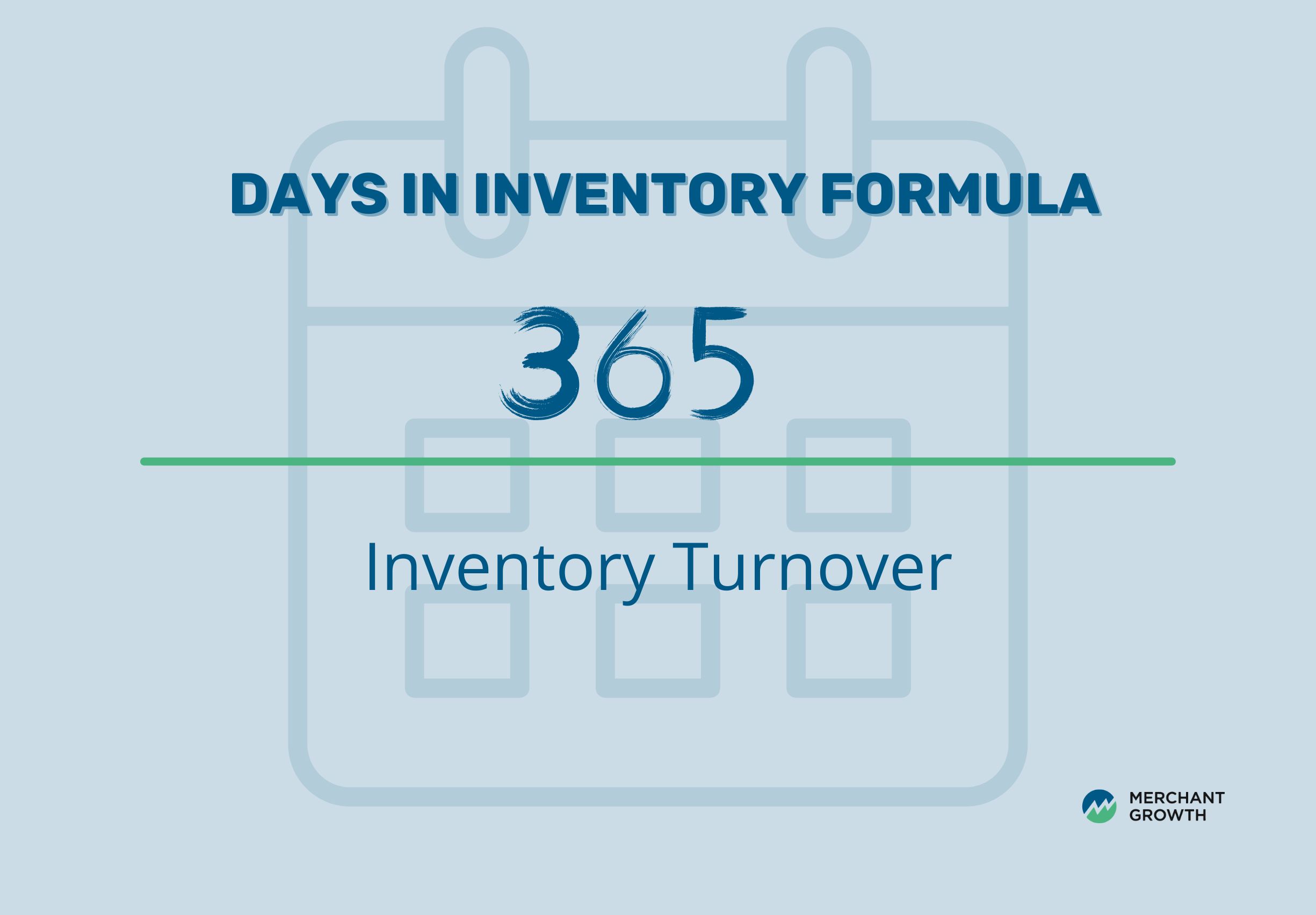
Inventory Turnover vs. Days in Inventory
Inventory turnover ratio is important to understand, but sometimes it’s easier to think in terms of time rather than ratios. That’s where Days in Inventory can be useful. This metric tells you the average number of days a product sits on your shelves before a sale. It transforms the turnover ratio into something more tangible and day-to-day.
The Formula:
Days in Inventory = 365 ÷ Inventory Turnover
For example, if your inventory turnover is 5, here’s the calculation:
365 ÷ 5 = 73 days
This means your average product sits in stock for 73 days before it sells.
Why Days in Inventory Matters:
- Easier visualization: Many business owners find it simpler to think in days, especially when managing perishable goods, fashion items, or seasonal stock.
- Cash flow planning: If you know how long your products typically sit before selling, you can better plan for reorders, sales cycles, and cash flow needs.
- Spotting bottlenecks: Days in Inventory can highlight where things are getting stuck—so you can adjust marketing, pricing, or purchasing strategies accordingly.
Whether you’re running a retail shop, a cafe, or an e-commerce business, knowing both your turnover ratio and your Days in Inventory gives you a clearer, more actionable picture of how your inventory is performing.

The Full Picture: Why Inventory Turnover Isn’t the Only Number That Matters
As mentioned previously, inventory turnover is a powerful metric, but it isn’t the only powerful metric. It’s important to consider the full context before making decisions that can impact the success of your business. Here are a few things Canadian small business owners should keep in mind:
Industry Differences
Not all businesses should aim for the same turnover rates. A bakery, for example, will naturally move through inventory faster than a furniture retailer or specialty boutique. Comparing turnover ratios across different industries, or even different product lines, can be misleading. The key is to benchmark against businesses in your sector or review your own past performance for trends.
Seasonal Business Cycles
Many Canadian businesses experience seasonal swings. Whether you run a landscaping service, ski shop, or retail store, your busiest months will naturally produce higher turnover rates. If you only look at annual averages, seasonal highs and lows can skew your numbers. It’s helpful to calculate turnover for different periods (quarterly, seasonally, or even monthly) to get a clearer picture.
Fluctuating Costs
Inventory turnover calculations rely on cost of goods sold (COGS), but COGS can change due to fluctuating supplier prices, fuel costs, or currency shifts, especially for businesses importing goods. If your COGS rises or falls sharply, it may distort your turnover ratio and make year-over-year comparisons tricky.
Overlooking Carrying Costs
While high turnover often signals efficiency, keeping minimal stock on hand isn’t always the cheapest approach. Running too lean can result in:
- Stockouts and missed sales
- Rush shipping costs for emergency restocking
- Lower customer satisfaction due to frequent "out of stock" notices
Balancing turnover with customer expectations and inventory carrying costs is key to long-term success.
Lead Times and Replenishment Delays
Turnover ratios don’t reflect how long it takes to restock. If you rely on long lead times from suppliers, common in industries like manufacturing, apparel, or imported goods, you could end up with empty shelves even if your turnover rate looks healthy. This makes it important to pair turnover analysis with careful supply chain planning.
Bottom line: Inventory turnover is a useful indicator, but it shouldn’t be your only metric. Pair it with cash flow analysis, supplier lead time reviews, and customer satisfaction tracking to make well-rounded decisions for your Canadian business.
How Merchant Growth Can Help You Optimize Inventory and Cash Flow
Improving inventory turnover often means investing in better tools, smarter purchasing, or even bulk buys to secure better pricing. But that takes capital—and tying up too much of it in stock can strain your cash flow.
That’s where Merchant Growth comes in.
Our flexible term financing and lines of credit are designed for small businesses that need help smoothing out cash flow gaps while managing inventory cycles. Whether you need funds to:
- Purchase inventory at a discount
- Invest in inventory management software
- Launch marketing campaigns to move products faster
We’re here to help you grow, not get stuck.
Better inventory turnover = stronger cash flow = more opportunities for growth.
Let’s Talk.
Contact Merchant Growth today about financing solutions that help your inventory work smarter—not harder.
How to Create a Business Invoice in Canada: A Guide for Small Business Owners
“Do I really need to send an invoice?”
It’s a question many Canadian small business owners, freelancers, and entrepreneurs ask—especially when they’re just starting out. But invoicing isn’t just a formality. It’s a vital part of running a professional business. Whether you're managing a side hustle or scaling your operations, a well-crafted invoice does more than request payment—it supports your cash flow, builds client trust, and keeps you compliant with the CRA.
Yet, many entrepreneurs aren’t sure how to create one, or whether they even need a registered business to issue it. The good news? It’s easier than you think. This guide walks you through what a business invoice is, how to build one from scratch, the tools you can use, and how to stay compliant in Canada.
Key Takeaways
- A business invoice is a formal document requesting payment that includes key information like services, costs, and payment terms.
- You can issue invoices even if you’re not incorporated—but tax rules still apply.
- Good invoices are clear, consistent, and include all necessary identifiers for you and your clients.
- Free templates and invoicing tools can help you streamline the process and get paid faster.
- Invoices must be stored for at least 6 years under CRA rules.

What Is a Business Invoice?
A business invoice is a formal document that requests payment for goods delivered, or services provided. It isn’t the same as a receipt (which confirms payment) or a quote (which outlines an estimate). Instead, it outlines the actual amount a client owes after a sale has been completed or a service has been performed. A well-crafted invoice also helps keep your records organized, making it easier to track outstanding payments and stay on top of your financial responsibilities.

Why Invoicing Matters for Small Business Owners
Invoicing isn’t just about getting paid—it’s about running a professional, credible business. A good invoice helps you:
- Track your income and expenses
- Manage your taxes with proper records
- Protect yourself in case of payment disputes
- Keep cash flow steady and predictable
Inconsistent or unclear invoicing often leads to delays, confusion, and missed payments. A little structure goes a long way.
Can You Send an Invoice Without a Registered Business?
Yes—many freelancers, sole proprietors, or part-time business owners can invoice clients without being formally incorporated. However, it’s important to:
- Use your legal name or registered trade name
- Clearly list your services and payment details
- Report your income properly to the CRA
- Include your GST/HST number if you’re registered for tax
You only need to register your business federally or provincially if your operations reach a certain revenue threshold or if you're collecting sales tax.
What to Include in a Business Invoice
An invoice isn’t just a bill—it’s a reflection of your business. A clear, well-structured invoice helps you get paid faster, avoid misunderstandings, and stay on track with CRA requirements. From tax breakdowns to payment terms, every detail matters. Here’s what to include to make sure your invoice is both professional and effective.

1. Your Name or Business Name and Contact Information
Start strong by clearly stating who the invoice is coming from. If you're a sole proprietor, include your full name; otherwise, use your registered business name. Add your phone number, email, and mailing address, and if you’ve got a CRA-issued business number (BN), be sure to include that too. It builds trust and keeps things professional.
2. Client’s Name and Billing Address
Make sure your client’s legal name and billing address are accurate. It helps avoid confusion on their end, especially if they’re reconciling with a purchase order or internal records.
3. Invoice Number and Issue Date
Give your invoice a unique number and date. Sequential numbering keeps your records neat, and the issue date sets the clock for your payment terms. It’s the little details that keep everything running smoothly.
4. Description of Goods or Services Provided
This is where clarity matters. Outline exactly what you delivered—whether it’s a set of design revisions or five boxes of inventory. Include hours, tasks, or milestones for services, and item names and quantities for products.
5. Unit Prices, Hours, or Quantities
Break it down for transparency. Instead of lump sums, show the math: “5 hours of consulting at $100/hour” or “10 units at $15 each.” It helps clients understand the value and reduces back-and-forth.
6. Subtotal, Applicable Taxes, and Total Amount Due
Start with your subtotal, then add the appropriate taxes:
- GST: 5% across Canada.
- HST: Combines GST and PST in provinces like Ontario (13%) and Nova Scotia (15%).
- PST/QST: Charged separately in places like BC, Saskatchewan, and Quebec.
Make sure the final total includes everything and is clearly labelled so there's no guesswork.
7. Payment Terms
Start by listing the subtotal—this is the total cost of all goods or services before any taxes are added. It’s the sum of your line items (like hours worked or products sold).
Then, calculate and add the appropriate taxes:
- GST: 5% applied federally across Canada.
- HST: A combined tax (GST + PST) used in provinces like Ontario (13%) and Nova Scotia (15%).
- PST/QST: Separate provincial taxes charged in BC, Saskatchewan, and Quebec.
Make sure the final total (including taxes) is clearly displayed, so your client knows exactly what they owe—no surprises.
8. Preferred Payment Method
Make it as easy as possible for your clients to pay you—everyone appreciates a smooth process. E-transfers are a popular choice in Canada, but you can also offer options like:
- Bank transfers
- Cheques
- Credit cards
- PayPal
- Invoicing platforms like Wave or Square
Be sure to include any necessary account details or links so they don’t have to go searching. A little clarity here goes a long way in getting paid on time.

How to Create a Business Invoice (With and Without Software)
You don’t need to be an accountant—or even particularly tech-savvy—to create a professional invoice. Whether you prefer to do things manually or use software to streamline the process, there are plenty of tools out there to help Canadian small business owners get paid efficiently and look polished doing it.
DIY Tools:
If you're sending just a handful of invoices each month, creating them manually can be a simple and cost-effective option. These tools give you full control over formatting and customization without requiring a subscription or app download.
Some easy-to-use options include:
Just make sure to save your invoices as PDFs and keep copies for your records.
Invoicing Software:
As your business grows—or if you want to save time and avoid calculation errors—it might be worth upgrading to invoicing software. These platforms can automate tax calculations, recurring invoices, payment reminders, and even integrate with accounting systems.
Popular invoicing platforms in Canada include:
Most offer free trials, so you can test a few before committing.

Download a Free Canadian Business Invoice Template
Need a quick, professional way to bill clients? Our free Merchant Growth invoice template for Word is built specifically for Canadian small businesses—CRA-compliant, easy to use, and fully customizable.
Your template includes:
- A section for your logo and business contact info
- GST/HST tax fields
- Editable line items and total calculations
- Clear space for payment due dates and instructions
Download your free invoice template and simplify your invoicing today ➡️ Download Here
Benefits of Using Invoice Templates and Tools
Templates and tools don’t just save you time—they create consistency. From automatically calculating taxes to keeping your branding sharp, they reduce the chance of errors and help you send polished, professional invoices every time. They also make life easier behind the scenes, with features that simplify follow-ups, track outstanding payments, and keep your records organized when tax season rolls around.
Helpful features to look for:
- Built-in GST/HST/PST fields
- Custom branding options
- Automatic reminders and invoice tracking
- Multiple payment method integrations
- Easy exports for accounting or CRA audits
The right invoicing tools make it easier to stay organized and maintain clear records—something that really matters when it comes to staying compliant with CRA requirements.
How Long to Keep Business Invoices in Canada
According to the CRA, Canadian businesses must keep all invoices and receipts for at least 6 years from the end of the tax year they relate to. Digital copies are acceptable—just make sure they’re backed up and clearly organized.
Tip: Name your files by year and invoice number (e.g., 2024_INV001) and store them in folders sorted by month or client.

Tips for Streamlining Invoicing
Invoicing can feel like one of those tasks you keep pushing down your to-do list—but it doesn’t have to be a source of stress. With a few small changes to how you manage and send invoices, you can reduce hassle, avoid awkward payment delays, and keep your finances in check with less effort.
Send Invoices Immediately After Completing Work
Get in the habit of invoicing right after a job is done. It’s a simple way to stay organized and set clear expectations with your clients while the work is still top of mind.
Automate Follow-Ups for Overdue Payments
No one enjoys chasing unpaid invoices. Automating your reminders helps you stay on top of collections without constant check-ins or uncomfortable conversations.
Offer Multiple Payment Methods
Give your clients choices—e-transfer, credit card, PayPal, or Stripe. It reduces friction and makes it easier for them to pay you promptly.
Use Recurring Invoices for Retainer Clients
Working with the same client each month? Recurring invoices mean less manual effort and fewer things slipping through the cracks.
Reconcile Your Invoices Monthly
Make it a habit to review your invoices and payments regularly. It helps catch any missing funds, ensures your records are accurate, and keeps you financially grounded.
Building good invoicing habits improves your financial clarity and strengthens client relationships.

How to Handle Overdue Payments Professionally
Even with great clients, late payments happen. Whether it’s an oversight or a cash flow issue on their end, it’s important to approach overdue invoices with professionalism and clarity. Here’s how to handle the situation without damaging the relationship:
1. Double-Check the Invoice Details
Before reaching out, review your invoice to ensure everything is correct—due date, amounts, contact info, and payment instructions. A quick check can prevent an awkward conversation if the error is on your end.
2. Send a Friendly Reminder
If the invoice is just a few days overdue, send a polite follow-up email. Keep it light but clear:
Subject: Friendly Reminder: Invoice #1023
Hi [Client Name], I hope all is well! Just a quick note that Invoice #1023 was due on [date]. Please let me know if you need me to resend it or if there are any questions. Thanks so much!
3. Follow Up More Firmly (If needed)
If there’s still no response, follow up again—this time with a more direct tone. Reattach the invoice and restate the payment terms and the new expected due date.
4. Offer Payment Options
Sometimes clients delay because they’re struggling with cash flow. Offering installment options or extended deadlines may help them settle the balance and preserve the working relationship.
5. Charge Late Fees (If You’ve Stated Them)
If your invoice terms included a late fee policy, now’s the time to apply it. Be transparent and fair and always reference the original agreement.
6. Know When to Escalate
If repeated attempts go unanswered, you may need to escalate—either by pausing services, involving a collections agency, or pursuing legal advice. Hopefully, it won’t come to this, but knowing your rights can help you feel more confident.
How Merchant Growth Can Help You Invest in the Right Tools
Need help affording the software or tools that streamline your invoicing and admin? Merchant Growth offers flexible term financing that can help you invest in your business infrastructure without putting pressure on your cash flow.
Whether you need funds to cover upfront costs, improve operations, or scale your services, our financing solutions are built with Canadian small businesses in mind.
How Much Is Business Insurance? A Guide for Canadian Small Business Owners
Running a small business in Canada means juggling a lot—inventory, customers, payroll, and day-to-day operations. But even with the best planning, things like weather-related damage, equipment breakdowns, or a client dispute can quickly throw things off track. That’s where business insurance comes in
Still, for many entrepreneurs, insurance can feel like just another line item on an already tight budget. According to a 2024 report from the Canadian Federation of Independent Business, 62% of small business owners consider insurance costs to be among the most harmful expenses to their operations. The report also found that half of Canadian business owners experienced a 10% increase in insurance premiums within the last year, adding up to as much as $1,500 in additional costs for some. While the price tag can sting, the cost of not having coverage when something goes wrong can be far higher.
So, how much does business insurance actually cost? And what kind of coverage does your business need? In this guide, we’ll break it all down.
Key Takeaways
- Business insurance in Canada can cost as little as $25 to as much as $250/month, depending on your business type, location, and industry risk level.
- Common policies include general liability, property insurance, and business interruption coverage.
- Online tools and brokers make it easier than ever to compare quotes and tailor your coverage.
- Not having insurance can leave your business vulnerable to legal and financial setbacks.
What Is Business Insurance (and Do You Really Need It)?
Business insurance protects your company from financial losses tied to accidents, lawsuits, damage, or other unexpected events. It’s not always legally required, but it’s often necessary.
Although business insurance isn’t federally mandated in Canada, it often becomes essential depending on where and how you operate. Certain provinces prescribe coverage for specific industries, particularly those involving commercial vehicles or higher-risk fields like construction and transportation. Even if it's not legally required, many landlords and clients won’t move forward without proof of insurance. Whether you're a consultant, tradesperson, retailer, or freelancer, having the right policy in place adds professionalism and helps you operate with confidence.

What Does Business Insurance Cover?
Business insurance isn’t one-size-fits-all. It can—and should—be tailored to match the nature of your operations, your risks, and your industry. Whether you run a storefront, consult from home, or manage a growing team across multiple locations, having the right types of coverage helps protect your bottom line. Below are some of the most common policies Canadian small business owners should consider.
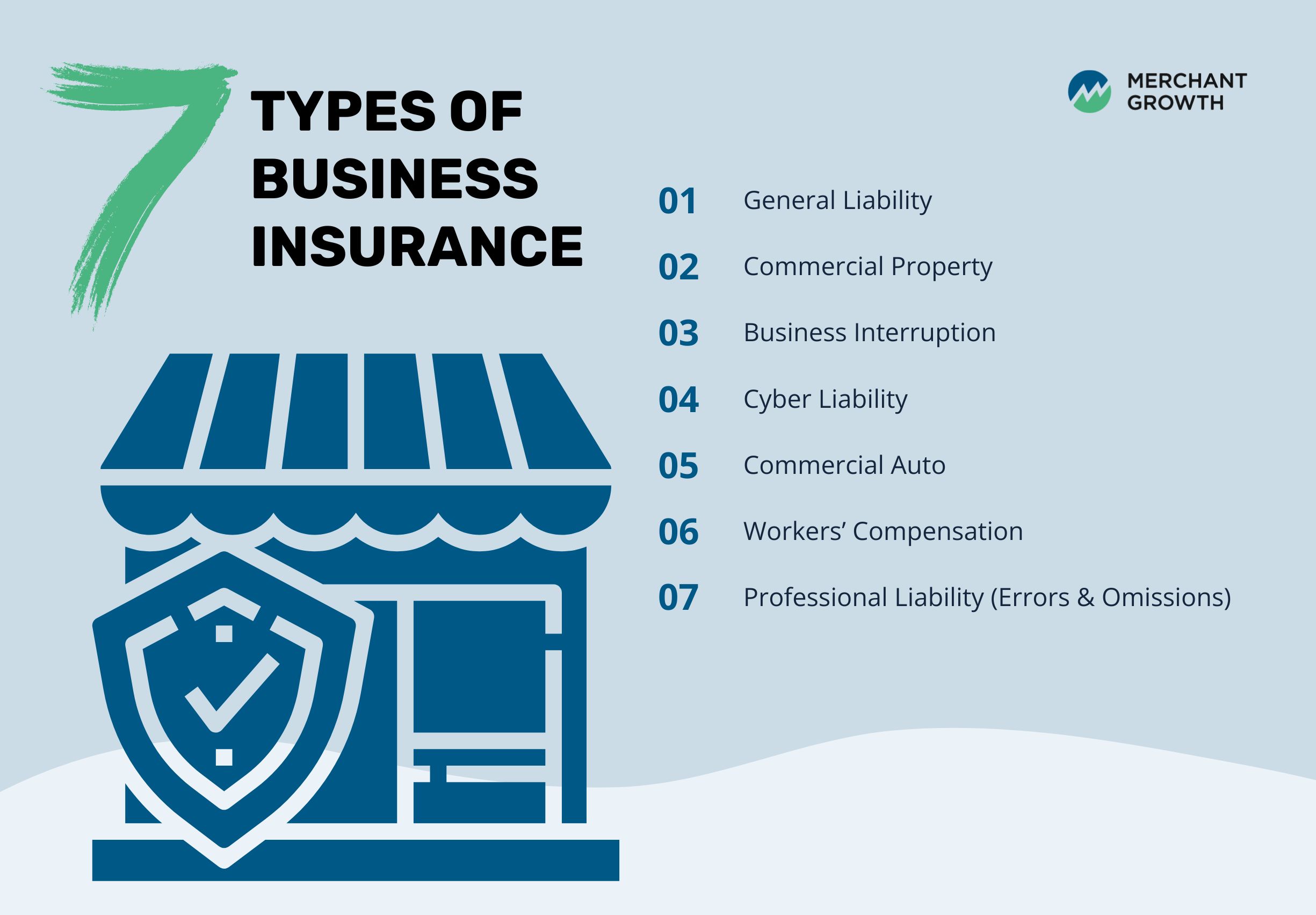
General Liability
General liability insurance covers third-party claims for bodily injury, property damage, or personal injury (like libel or slander) that arise from your business operations. It’s not legally required, but it’s strongly recommended for nearly all businesses, especially those that interact with customers, operate a physical location, or provide hands-on services. In fact, 92% of insured Canadian small businesses carry this type of coverage, according to the CFIB in 2024.
Example: A customer trips over a display at a local flower shop and suffers a sprained ankle. The shop’s general liability insurance covers their medical expenses and legal costs if the customer decides to sue.
Commercial Property
This coverage protects your business’s physical assets—like equipment, inventory, furniture, or buildings—from risks such as fire, theft, vandalism, or weather-related damage. While it’s not legally mandatory, it’s often required by lenders or landlords if you lease a commercial space. It’s especially valuable for retail stores, warehouses, restaurants, and manufacturers. 84% of insured Canadian small businesses have this type of coverage in place.
Example: A burst pipe damages inventory at a clothing boutique. Commercial property insurance helps cover repair costs and product losses.
Business Interruption
Also known as income interruption coverage, this insurance helps replace lost income and cover ongoing expenses if your business is forced to shut down temporarily due to a covered event (like fire or flooding). It’s usually added as part of a commercial property policy.
Example: A bakery is forced to close for two weeks after a kitchen fire. Business interruption insurance helps cover payroll, rent, and lost revenue during the downtime.
Professional Liability (Errors & Omissions)
Professional liability insurance protects businesses that provide services or advice. It covers legal costs and damages if a client claims your work caused them financial harm due to a mistake, oversight, or failure to deliver. This coverage is essential—and sometimes required—for consultants, marketing firms, real estate agents, financial advisors, and similar professions.
Example: A freelance web designer misses a key deadline, causing their client to lose a major launch opportunity. Professional liability insurance covers legal fees and any settlements.
Cyber Liability
This policy protects against losses related to data breaches, hacking, or other cybersecurity threats. It’s becoming increasingly vital for any business that stores sensitive customer or payment information online. While not mandatory, it’s highly recommended in industries like e-commerce, healthcare, finance, and IT.
Example: A physiotherapy clinic’s patient database is compromised in a cyberattack. Cyber liability insurance covers the cost of notifying clients, legal defence, and reputation management.
Commercial Auto
If you use a vehicle for business—whether for deliveries, job site visits, or transporting tools—commercial auto insurance is legally required. This applies even if you're using a personal vehicle for work-related tasks. It’s a must-have for tradespeople, mobile service providers, and delivery-based businesses. In fact, 69% of insured Canadian small businesses carry this type of coverage.
Example: An electrician uses their van to transport tools to job sites. If they’re involved in an accident while on a call, commercial auto insurance covers the damage and liability costs.
Workers’ Compensation
In most provinces, workers’ compensation is mandatory if you have employees. It covers medical expenses and lost wages if a worker is injured on the job. Requirements vary by province, but it’s typically managed through a provincial board (like WorkSafeBC or WSIB in Ontario).
Example: A warehouse employee injures their back while lifting heavy stock. Workers’ compensation helps cover their medical treatment and time off work.

How Much Does Business Insurance Cost in Canada?
Business insurance costs in Canada can vary significantly depending on your industry, size, and risk level. According to Ratehub, some small businesses may pay as little as $400 to $2,500 annually, but premiums can climb much higher in industries with more complex operations or greater exposure to liability.
CFIB data states that commercial auto insurance is typically the most expensive coverage for SMEs, averaging around $6,000 per year. Commercial property insurance follows at $5,000, and general liability insurance comes in close behind at about $4,850.
Certain industries tend to carry higher premiums across the board. For example:
- Transportation businesses often face $16,000+ annually in commercial auto premiums.
- Construction firms pay roughly $9,850 for auto and up to $10,000 for liability insurance.
- Manufacturing and hospitality businesses see average costs of around $8,000 for property coverage and $7,800 for liability.
- Agricultural businesses top the property insurance category at $9,000 per year.
While these averages help give a general sense of what to expect, business insurance premiums can also vary significantly by province. For example, businesses in Ontario and British Columbia often face higher rates due to greater population density, higher claim volumes, and more complex regulatory environments. In contrast, provinces like Alberta or Manitoba may offer more competitive premiums, though factors like extreme weather or local industry risks (e.g., oil and gas) can drive up costs. Wherever you operate, it's important to compare quotes within your province and industry to ensure you're getting the right coverage at a fair price.
Other Factors That Affect Cost
In addition to your industry and coverage type, several other variables can influence how much you pay for business insurance in Canada. Insurers evaluate your risk profile based on both operational details and your history, which can cause rates to vary widely between businesses, even within the same sector.
1. Business Size and Revenue
Larger businesses or those with higher revenue typically face greater risks, which can lead to higher premiums. Insurers may assume you have more assets to protect or a larger customer base to be liable for.
2. Number of Employees
The more employees you have, the more likely you are to need workers’ compensation coverage or face risks related to human error, injury, or employment practices liability.
3. Type of Industry and Services Offered
High-risk industries like construction or manufacturing usually pay more for insurance than low-risk sectors like consulting or online retail due to the potential for injury, property damage, or equipment failure.
4. Previous Claims History
If your business has made frequent or high-value claims in the past, insurers may see you as a higher risk and charge more. A clean claims record can help reduce your premiums.
5. Where Your Business Operates (Urban vs. Rural)
Your location affects both the likelihood and cost of potential claims. Urban areas often have higher rates due to the increased risk of theft, property damage, or lawsuits compared to rural locations.
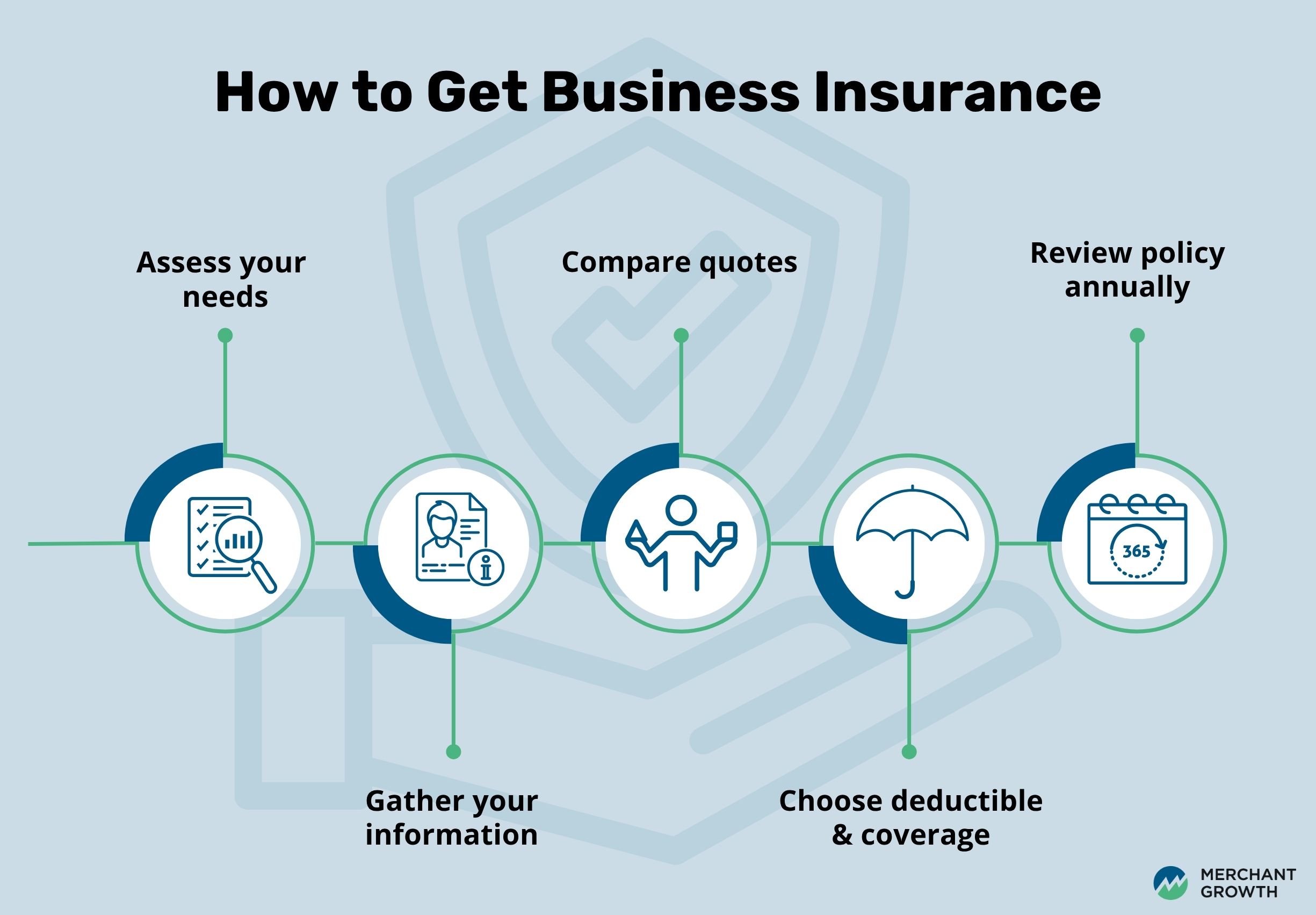
How to Get Business Insurance in Canada
Getting insured doesn’t have to be overwhelming. In fact, a well-chosen policy can bring peace of mind and allow you to focus on what really matters—running your business. Whether you’re just starting out or revisiting your current coverage, here’s a step-by-step guide to help you navigate the process with confidence.
1. Assess Your Needs
Start by identifying the specific risks your business faces. Do you rely on expensive equipment? Interact with clients in person? Store sensitive customer data? Every business has unique vulnerabilities, so this step helps determine which coverage types are essential—whether it’s general liability, cyber protection, or commercial auto insurance.
2. Gather Your Business Information
To get accurate quotes, you’ll need to share basic business details such as your annual revenue, number of employees, business structure, years in operation, and physical location. Insurers use this information to evaluate your risk and determine your premium.
3. Compare Quotes
It’s a good idea to shop around. Use online platforms like TruShield or Mitch Insurance to compare multiple options based on your needs. According to CFIB, 8 in 10 Canadian small business owners used an insurance broker to help them secure the best rate—proof that expert guidance can go a long way in simplifying the process.
4. Choose Your Deductible and Coverage Limits
Your deductible is the amount you agree to pay out-of-pocket before your insurance coverage kicks in. Your coverage limit is the maximum amount your insurer will pay for a claim. A higher deductible typically lowers your premium but be sure it’s an amount you could realistically pay if something goes wrong. At the same time, ensure your coverage limits are high enough to protect your business assets and liabilities.
5. Review Your Policy Annually
Your insurance needs may evolve as your business grows, expands into new markets, or adds new services. Make it a habit to review your policy at least once a year. This ensures you’re not underinsured—and that you're not paying for coverage you no longer need.
Tips to Save on Business Insurance
Business insurance is essential, but that doesn’t mean it has to break the bank. There are several smart ways to keep your premiums manageable without sacrificing coverage. By understanding how insurance pricing works and making strategic decisions, you can reduce your costs while still protecting your business.
- Bundle your policies with one provider
- Choose a higher deductible to lower premiums
- Improve your safety protocols to avoid claims
- Avoid filing small claims that may increase future premiums
- Pay annually rather than monthly if cash flow allows
As your business evolves, so should your coverage. Make it a habit to review your policy regularly—especially after major growth, changes in services, or operational shifts—to ensure you’re properly protected without overspending.
What Happens If You Don’t Have Insurance?
No insurance = big risks.
A single lawsuit, fire, or unexpected closure can cost thousands or shut down your business entirely. Beyond financial risk, not having insurance can also limit your ability to sign contracts, lease office space, or hire employees.

What Type of Insurance Does a Small Business Need?
Every business faces unique risks—and that means insurance needs will look different depending on what you do and how you operate. Whether you’re running a café, working as an independent consultant, or selling products online, tailoring your insurance coverage to your business model is key. The right combination of policies can protect you from the most common threats in your industry while keeping your premiums cost-effective.
Here’s a starting point for typical coverage needs by business type:
• Retailers & Restaurants: General liability + property + interruption
• Consultants & Freelancers: Professional liability + cyber
• Trades & Contractors: Liability + tools coverage + commercial auto
• Online Businesses: Cyber insurance + product liability + interruption
Don’t Let the Unexpected Catch You Off Guard
Business insurance isn’t just a safety net—it’s peace of mind that protects everything you’ve worked hard to build. And with some plans starting at just a few dollars a day, the right policy can be one of the smartest investments you make in your business’s future. But costs can add up, especially when premiums rise unexpectedly or cash flow gets tight.
That’s where Merchant Growth can help. Our flexible term financing options are designed to give Canadian small businesses access to fast, reliable funding, without the long approval process or rigid repayment terms of traditional banks. Whether you need extra funds to cover insurance premiums, purchase new equipment, or manage a seasonal dip, our financing solutions are built to support you when it matters most.
Need help managing customer payments, too? Consider offering flexible financing at checkout. With Tabit, our Buy Now, Pay Later solution, you can let customers pay over time, without the hassle of chasing invoices or worrying about late payments. It’s a simple way to improve your cash flow while helping your clients get what they need.
Ready to make your business more resilient? Learn more about how Merchant Growth can help.