

Contract vs Full-Time Work in Canada: Which Career Path Is Right for You?
The way Canadians work is changing quickly. Remote and hybrid work are now mainstream, digital tools make it easier to work independently, and the gig economy continues to grow across nearly every industry. Today, more Canadians are actively weighing the pros and cons of flexible contract work versus the stability of full-time roles, and for many, the answer is no longer obvious.
According to Statistics Canada, nearly 2.7 million Canadians were self-employed as of early 2025, reflecting a steady shift toward contract, freelance, and independent work. Some professionals are drawn to the autonomy, earning potential, and variety that contract work can offer. Others still value the predictability, benefits, and structure of traditional full-time employment. As inflation, cost-of-living pressures, and workplace expectations evolve, choosing the right work model has become an important financial and lifestyle decision.
This choice matters more than ever because it affects far more than your paycheque. Your employment structure influences job security, taxes, benefits, work-life balance, and long-term financial planning. Whether you are early in your career, transitioning out of a corporate role, returning to the workforce, or considering self-employment, understanding how contract, freelance, and full-time work differ can help you make a decision that aligns with your goals.
Choosing how you work is not just about employment status. It is about designing a career that supports the way you want to live, grow, and build financial confidence over time.
Key Takeaways
- Contract work offers flexibility, higher short-term pay, and project variety, but may lack long-term stability.
- Freelance and contract work are not the same; freelancers are typically self-employed with multiple clients.
- Career planning helps you get the best of any path; understanding the trade-offs is key.
- Industries like tech, healthcare, and marketing are especially lucrative for contractors.
Understanding Today’s Work Models in Canada
Before weighing the pros and cons, it helps to clearly understand how full-time employment, contract work, and freelancing differ. These terms are often used interchangeably, but they represent very different working arrangements with distinct expectations around pay, security, taxes, and independence.
Full-Time employment
Full-time employment is the most traditional path. You work for one employer on an ongoing basis, receive a consistent paycheck, and usually have access to benefits such as extended health coverage, paid vacation, and sometimes retirement plans. This option appeals to people who value stability, predictable income, and clear career progression within an organization.
Contract work
Contract work sits between full-time employment and freelancing. Contractors are typically hired for a specific role, project, or time period. While you may work similar hours to full-time employees, you are paid a higher hourly or project rate instead of receiving benefits. Contract work is common in industries like technology, healthcare, engineering, and marketing, and it often appeals to professionals who want flexibility while still working with established organizations.
Freelancing
Freelancers operate as independent businesses. You work with multiple clients, set your own rates, and control when and how you work. This model offers the greatest flexibility and variety, but also comes with more responsibility. Freelancers handle their own marketing, invoicing, taxes, and expenses, and income can fluctuate from month to month. Many Canadians choose freelancing for the autonomy it provides, especially in creative, digital, and professional service industries.
Full-Time, Contract, and Freelance Work Compared
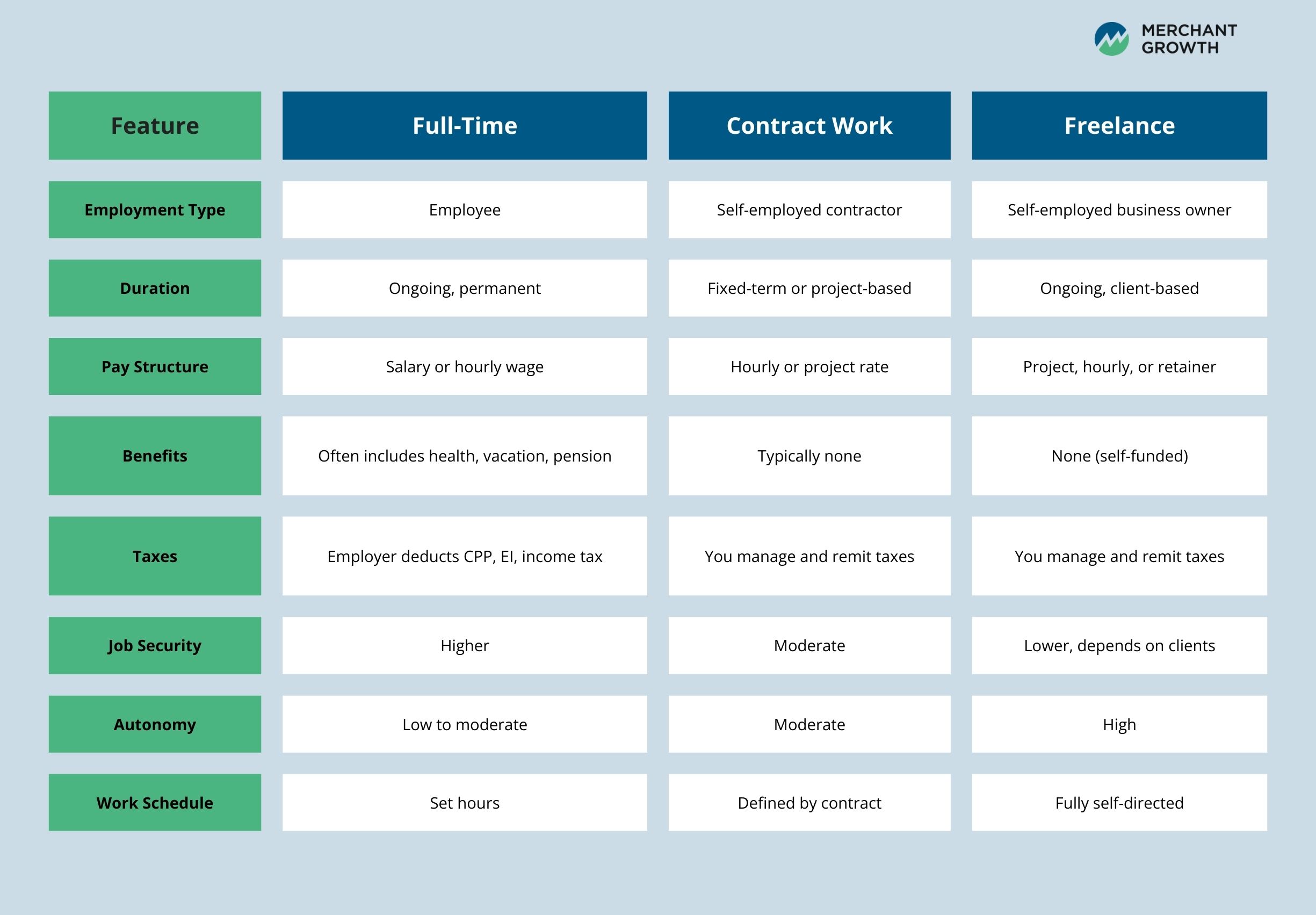
How the CRA Defines Employees vs. Contractors
In Canada, the Canada Revenue Agency (CRA) determines whether someone is an employee or a contractor based on the actual working relationship, not the job title. The CRA looks at factors such as control (who decides how the work is done), ownership of tools, chance of profit and risk of loss, and how integrated the worker is into the business. Understanding this distinction matters because it affects taxes, deductions, and eligibility for benefits.
If you are considering contract or freelance work, reviewing the CRA’s guidance on employment classification can help you avoid misclassification issues and plan properly for taxes and financial obligations.
The Pros and Cons of Contract, Freelance, and Full-Time Employment
There is no single “right” way to work. The best option depends on what you value most at this stage of your career, whether that is stability, flexibility, income potential, or independence. Understanding the trade-offs of each work style can help you choose a path that supports both your professional goals and your personal priorities.
Below is a side-by-side comparison of the most common advantages and challenges associated with full-time employment, contract work, and freelancing in Canada.
| Work Type | Pros | Cons |
|---|---|---|
| Full-Time | – Reliable, steady income – May include employer-covered benefits (health, vacation, retirement) – Job security and career path opportunities | – Less flexibility in schedule and location – Limited control over workload or projects |
| Contract Work | – Higher hourly or project pay – More control over work environment and schedule – Exposure to varied industries and roles | – Typically no benefits or paid leave – Income depends on contract availability – Responsible for own taxes |
| Freelance | – Maximum flexibility and independence – Ability to choose clients and projects – Opportunity to build a personal brand | – Irregular income – Must self-manage taxes, insurance, and retirement – Requires constant self-promotion |
When reviewing these options, it helps to think beyond just income. Consider how much flexibility you want, how comfortable you are with financial uncertainty, and whether you prefer structure or autonomy in your day-to-day work. Many Canadians move between these models over time, starting in full-time roles, transitioning into contract work, and eventually freelancing or running a business of their own. The goal is not to pick a permanent label, but to choose the model that best fits your current needs and long-term plans.
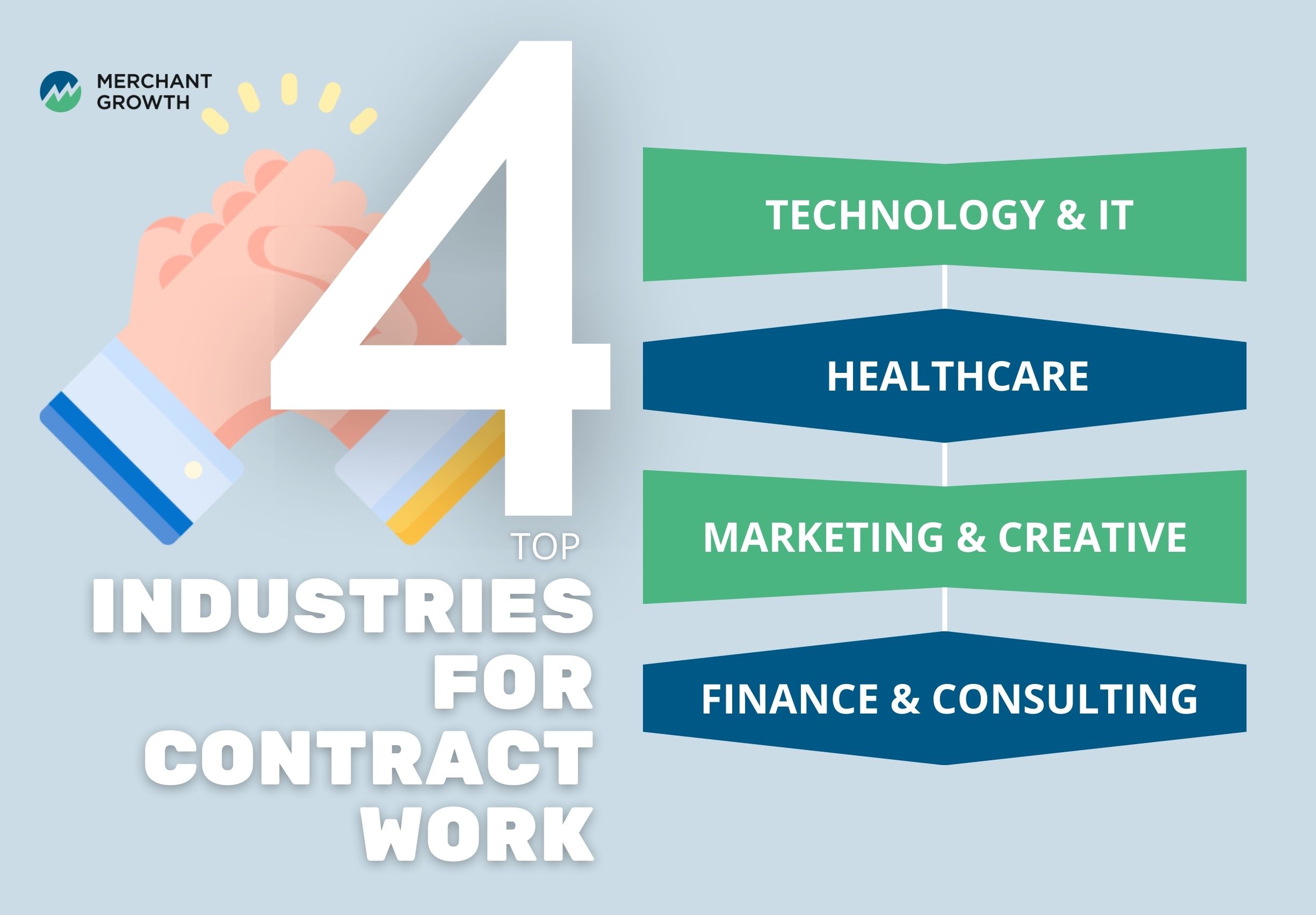
Top Industries for Contract Work in Canada
Contract work has become a core part of the Canadian labour market, particularly in industries where demand fluctuates, projects are time-bound, or specialized skills are required. In fact, 70% of employers report plans to increase their use of contract workers and freelancers, reflecting a long-term shift toward more flexible workforce models. While contract opportunities exist across most sectors, some industries consistently rely on independent talent to stay agile and competitive.
Technology and IT
Technology continues to lead when it comes to contract work. Companies often bring in contract professionals to support software development, cybersecurity initiatives, system migrations, or short-term product launches. The fast pace of innovation makes flexible talent especially valuable, allowing businesses to scale expertise without long-term commitments. Roles such as software developers, UI and UX designers, and cybersecurity analysts remain in steady demand, particularly in areas related to cloud infrastructure, artificial intelligence, and data security.
Healthcare
Contract work plays a critical role in healthcare, especially where staffing shortages or regional demand create gaps. Travel nurses, locum physicians, and medical coders are frequently engaged to ensure continuity of care in hospitals, clinics, and long-term care facilities. These roles often require specific licensing and certifications, but they offer professionals the ability to work across locations while maintaining a flexible schedule.
Marketing and creative services
Marketing and creative fields have long embraced contract and freelance models. Businesses often hire specialists for campaign launches, rebrands, website projects, or content creation rather than building permanent in-house teams. Writers, graphic designers, video producers, and digital marketers are commonly engaged on a project basis, with demand particularly strong for professionals who understand digital channels and brand storytelling.
Finance and consulting
In finance and consulting, contract roles are frequently tied to audits, budgeting cycles, system implementations, or strategic initiatives. Accountants, financial analysts, and business consultants may be brought in to provide targeted expertise during peak periods or times of change. These roles are often well-compensated but require strong credentials and the ability to deliver results within defined timelines.
Together, these industries highlight why contract work continues to grow. Businesses gain flexibility and specialized expertise, while professionals gain access to varied projects, income opportunities, and career mobility.
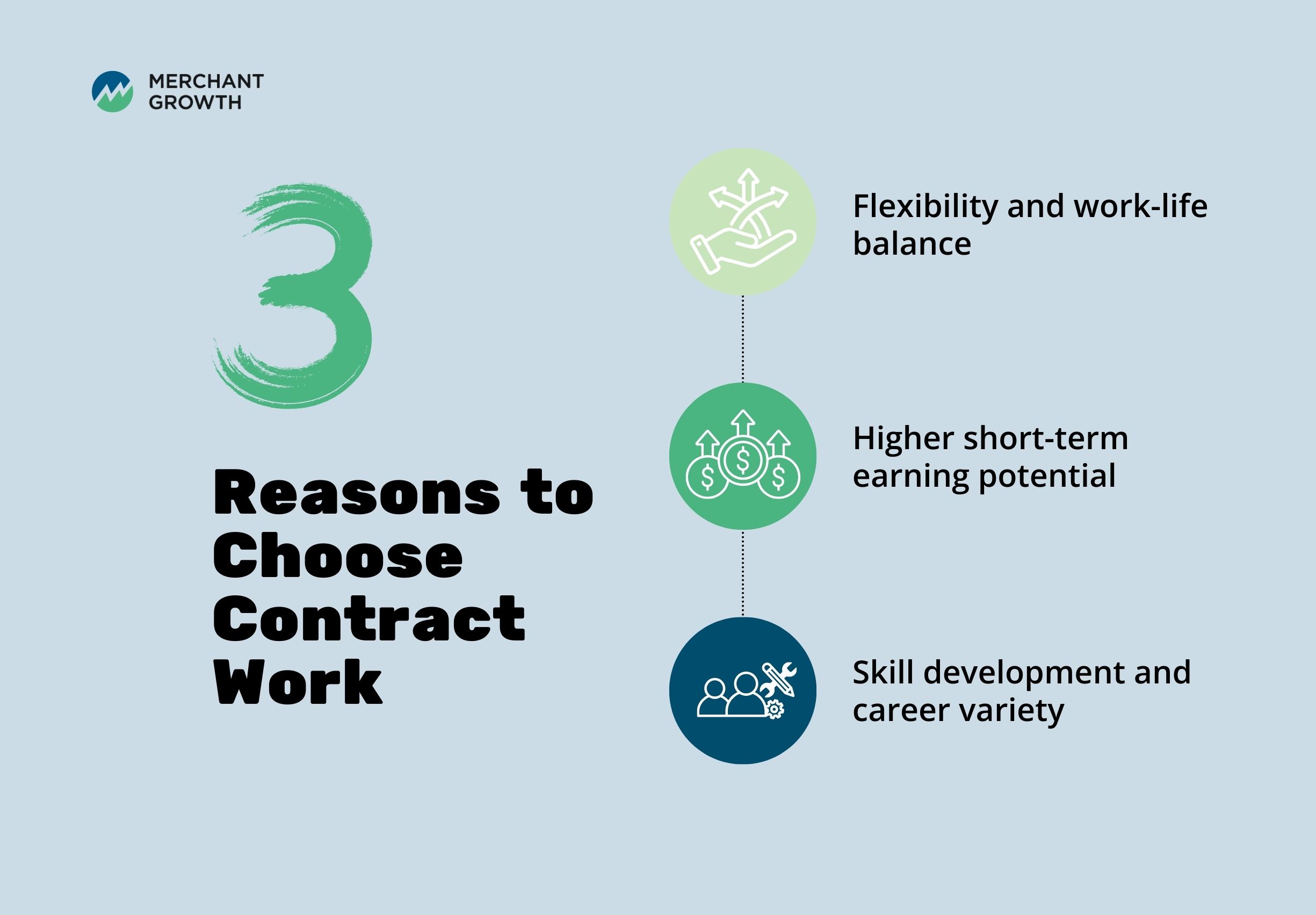
Why Many Canadians Choose Contract Work Over Full-Time Roles
Contract work is not simply an alternative to full-time employment. For many Canadians, it is a deliberate choice shaped by lifestyle goals, career priorities, and changing expectations about work. While it is not the right fit for everyone, contract roles offer advantages that traditional employment may not provide at certain stages of life.
Flexibility and work-life balance
One of the most common reasons people move into contract work is flexibility. Contractors often have greater control over their schedules, locations, and workloads. This can be especially valuable for parents, caregivers, or individuals seeking better balance between personal and professional responsibilities. Remote and hybrid contract roles also reduce commute time, giving people back hours each week.
Higher short-term earning potential
In many industries, contract professionals earn higher hourly or project-based rates than salaried employees performing similar work. For individuals focused on accelerating savings, paying down debt, or building a financial cushion, contract work can provide a faster path toward those goals. This model works particularly well for people whose benefits are covered elsewhere or who prefer to manage them independently.
Skill development and career variety
Contract work exposes professionals to different teams, tools, and challenges in a shorter time frame. This variety accelerates learning and builds a diverse skill set that can increase long-term career value. For example, a marketing consultant may work with a startup on brand positioning, then support an established company with digital campaigns, gaining insights that would take years to acquire in a single role.
Ultimately, many people choose contract work because it aligns more closely with how they want to live and grow. Whether the goal is flexibility, income growth, or professional variety, contract roles offer an alternative path that can evolve alongside changing personal and career priorities.
Flexible Work Models: Contract vs. Freelance Explained
Contract and freelance work are often grouped together because both offer more flexibility than traditional employment. However, the day-to-day realities, responsibilities, and risks are quite different. Understanding these differences is especially important if you are considering independent work for the first time.
Compensation and pay structure
Contract workers are typically hired for a defined role or project and are paid an agreed hourly or project rate. That rate is often higher than a salaried position because it accounts for the lack of long-term security. Freelancers also set their own rates, but income can vary significantly month to month depending on how many clients they secure and how consistently work flows in.
Benefits and expenses
Contractors usually do not receive benefits like health coverage, paid vacation, or retirement contributions. Freelancers face the same reality, but with added responsibility. Freelancers must also cover business expenses such as software, equipment, insurance, and marketing costs. In both cases, planning ahead for benefits and time off is essential.
Flexibility and control
Freelancers have the highest level of control. They choose their clients, set their schedules, and decide which projects to accept. Contractors typically have more structure. While contracts are temporary, contractors often work set hours and follow company processes during the contract period. This can feel closer to full-time work, just without permanence.
Job security and stability
Full-time roles offer predictability, while flexible work trades stability for opportunity. Contracts can end when projects wrap up or budgets change. Freelancers face even more variability, as they are responsible for continuously finding new work. The upside is freedom and growth potential, but it requires strong financial planning and comfort with uncertainty.
Choosing between contract and freelance work is less about titles and more about how much responsibility you want to carry. Contract work can be a stepping stone into flexible employment, offering independence without fully running a business. Freelancing suits those ready to manage income swings, taxes, and client relationships in exchange for maximum autonomy.

Taxes, Deductions, and Legal Responsibilities in Canada
How you work doesn’t just affect your schedule and income. It also changes how you’re taxed, what you’re responsible for legally, and how much planning you need to do throughout the year. Understanding these differences upfront can help you avoid surprises and stay onside with the Canada Revenue Agency.
How taxes work for full-time employees
If you are a full-time employee, taxes are relatively straightforward. Your employer automatically deducts income tax, Canada Pension Plan contributions, and Employment Insurance premiums from each paycheque. At year end, you receive a T4 summarizing your earnings and deductions, which you use to file your personal tax return. Most employees do not need to worry about setting money aside or making installment payments because those obligations are handled at the payroll level.
How taxes work for contractors and freelancers
Contractors and freelancers are treated as self-employed individuals in most cases. This means taxes are not deducted at source. You are responsible for calculating and remitting your own income tax, Canada Pension Plan contributions, and, in some situations, Employment Insurance if you opt in voluntarily.
If your annual revenue exceeds the small supplier threshold, you must also register for and charge GST or HST, collect it from clients, and remit it to the CRA on schedule. Because nothing is withheld automatically, many independent workers set aside a portion of every payment to avoid cash flow strain at tax time.
One advantage of self-employment is the ability to deduct legitimate business expenses. Common deductions include home office costs, software subscriptions, professional fees, equipment, marketing, and a portion of phone or internet expenses used for work. Keeping detailed records and receipts is essential.
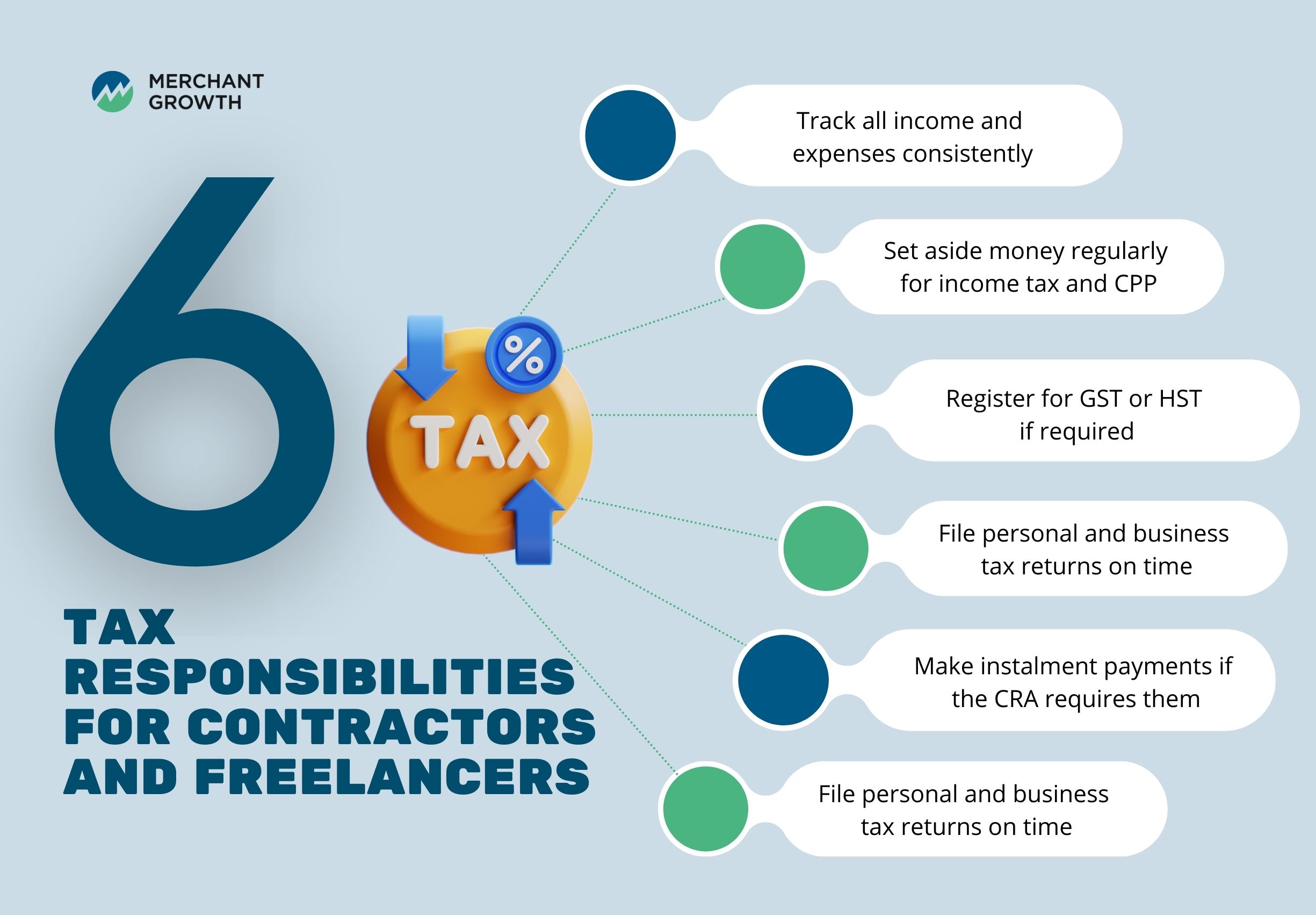
Tax responsibilities for contractors and freelancers
If you are working independently, this checklist can help you stay organized:
- Track all income and expenses consistently
- Set aside money regularly for income tax and CPP
- Register for GST or HST if required
- File personal and business tax returns on time
- Make instalment payments if the CRA requires them
- Keep records and receipts for at least six years
CRA classification and misclassification risks
The CRA distinguishes between employees and independent contractors based on factors such as control over work, ownership of tools, financial risk, and integration into the business. Misclassification can create serious issues. If a worker is treated as a contractor but should be considered an employee, the hiring company may be liable for unpaid payroll taxes, penalties, and interest.
For workers, misclassification can affect eligibility for benefits, tax deductions, and legal protections. If your work arrangement feels unclear, it is worth reviewing CRA guidance or speaking with a tax professional to confirm your status.
Understanding your tax and legal obligations early allows you to plan with confidence, protect your income, and choose the work structure that best supports your long-term goals.

Career Growth and Lifestyle Considerations
Beyond pay and taxes, the way you work has a real impact on how your career develops and how your day-to-day life feels. Full-time, contract, and freelance roles each offer different paths for growth, learning, and work-life balance. Understanding these differences can help you choose an option that supports both your professional goals and your personal priorities.
Career growth and skill development
Full-time roles often provide a more structured approach to career development. Employees typically have access to formal training programs, mentorship, performance reviews, and clearly defined promotion paths. Working within a single organization also makes it easier to build long-term relationships, gain institutional knowledge, and move into leadership roles over time. For people who value stability and a clear trajectory, this structure can be a major advantage.
Contractors, by contrast, tend to build their skills through variety rather than hierarchy. Working across multiple projects, teams, or industries can accelerate learning and broaden expertise quickly. However, professional development is largely self-directed. Contractors need to actively pursue certifications, networking opportunities, and new challenges if they want to continue advancing.
Freelancers experience growth differently again. Because they are effectively running their own businesses, skill development often includes both technical expertise and business skills like pricing, negotiation, marketing, and client management. This can be incredibly empowering, but it requires initiative and ongoing investment in learning.
Lifestyle and work-life balance
Lifestyle considerations are often the deciding factor for many professionals. Full-time employment offers predictability. Set hours, steady income, and defined time off make it easier to plan family commitments, vacations, and long-term financial goals. For some, this consistency reduces stress and supports a healthier work-life balance.
Contract and freelance work provide greater flexibility but come with trade-offs. Independent workers often have more control over when and where they work, which can be ideal for parents, caregivers, or people who value autonomy. At the same time, they must manage administrative tasks like invoicing, contracts, taxes, and client communication.
For example, a freelance developer may enjoy choosing projects that align with their interests and working remotely, but they are also responsible for finding clients, negotiating rates, and ensuring they get paid on time. That freedom can be rewarding, but it requires discipline and strong organizational habits.
Ultimately, there is no universally “better” option. The right choice depends on how you want to grow, how much structure you prefer, and how you want work to fit into your life.

Risks and Financial Management for Contractors
Contract and freelance work offer flexibility and income potential, but they also come with financial realities that full-time employees rarely have to manage on their own. Without a guaranteed paycheck or employer-provided safety net, independent workers need to be more intentional about planning, cash flow, and risk management.
One of the biggest challenges contractors face is income variability. Some months may be highly profitable, while others are slower or unexpectedly quiet. Contracts can end with little notice, clients may delay payments, and work can be seasonal depending on your industry. This unpredictability makes financial discipline especially important, not just for covering day-to-day expenses, but for maintaining peace of mind.
Managing Irregular Income Like a Pro
Successfully navigating irregular income starts with building strong financial habits. Setting aside money for taxes is critical, as contractors are responsible for remitting income tax, CPP, and potentially GST or HST themselves. A separate savings account for tax obligations can prevent unpleasant surprises at filing time.
An emergency fund is equally important. Many independent professionals aim to save three to six months of essential expenses to cover gaps between contracts or slower periods. This buffer gives you flexibility to choose better opportunities instead of feeling pressured to accept any work that comes along.
Using accounting and budgeting tools can also make a significant difference. Tracking income, expenses, and upcoming invoices helps you understand cash flow patterns and plan ahead. When you can clearly see which months tend to be slower or which clients take longer to pay, it becomes easier to adjust spending or prepare in advance.
Even with careful planning, there may be times when cash flow gaps arise. This is where financing can play a strategic role. Term financing, such as the options offered by Merchant Growth, can help contractors smooth income between contracts, cover short-term expenses, or invest in tools and training that support long-term earning potential. Used thoughtfully, financing provides breathing room without disrupting your momentum or forcing you to pause your work.
Independent work rewards flexibility and initiative, but it also requires a proactive approach to financial management. By planning for variability and using the right tools and resources, contractors can reduce risk and create a more stable, sustainable way of working.
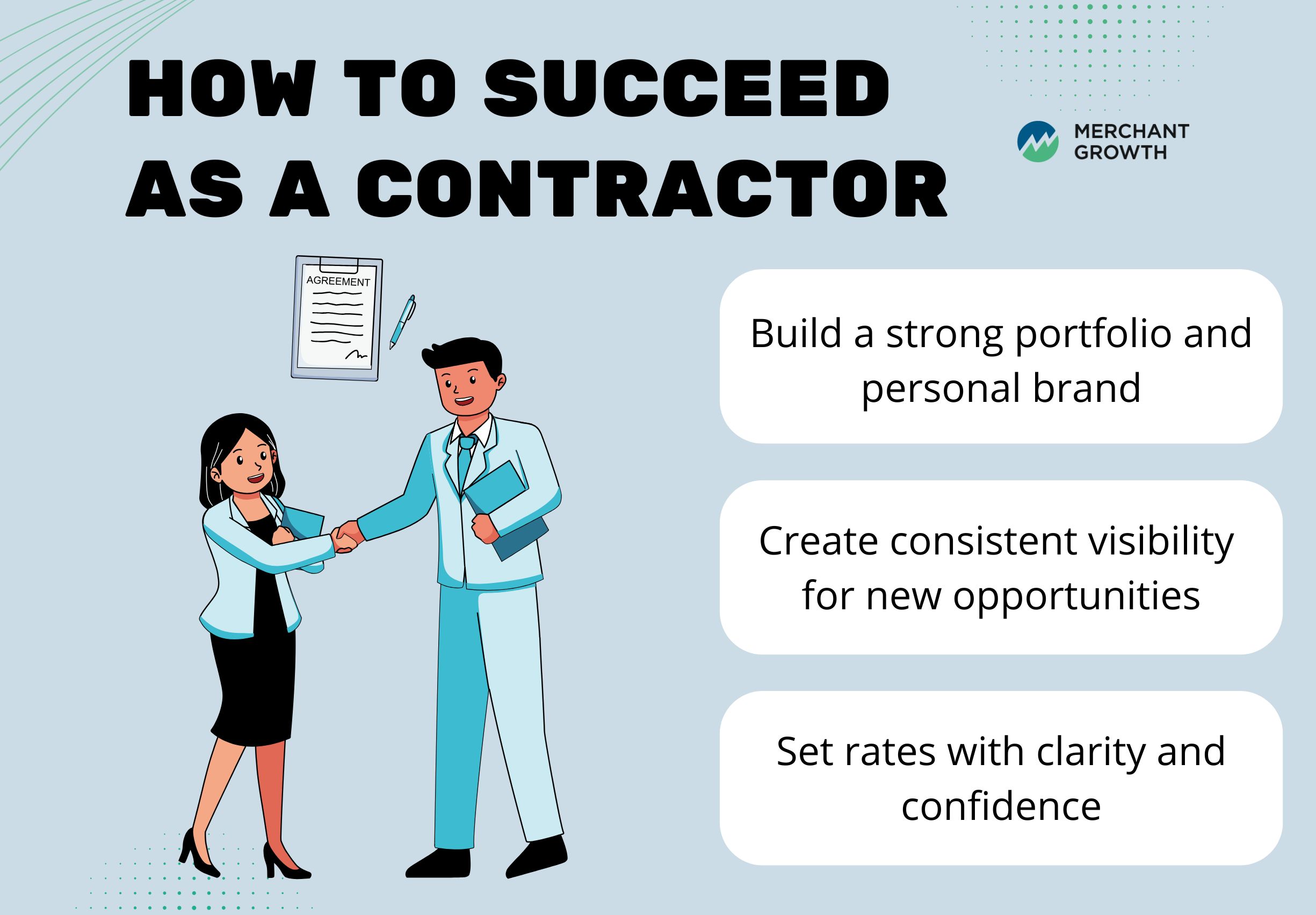
How to Succeed as a Contractor or Freelancer
Choosing contract or freelance work is only the first step. Long-term success depends on how well you position yourself, manage your workload, and plan for growth. Independent work rewards initiative, but it also requires structure. Contractors and freelancers who treat their work like a business, even when they are just starting out, tend to be more resilient, confident, and financially stable over time.
Build a strong portfolio and personal brand
Your portfolio is often your first impression, and in many cases, it replaces a traditional resume. A simple website that highlights your services, past projects, and client results helps establish credibility. Keeping your LinkedIn profile up to date, sharing insights related to your field, and collecting testimonials from satisfied clients all reinforce your expertise. Even early in your journey, documenting real work, side projects, or pilot contracts can make a meaningful difference.
Create consistent visibility for new opportunities
Contract work rarely comes from a single source. Many professionals combine online platforms, referrals, networking, and direct outreach to keep their pipeline active. Staying visible means regularly letting people know what you do and what problems you solve. This could be as simple as posting updates on LinkedIn, attending industry events, or reconnecting with former colleagues. Over time, this consistency reduces the stress of finding your next contract.
Set rates with clarity and confidence
Pricing is one of the most common challenges for independent workers. Strong rates are based on market research, experience, and the value you deliver, not just hours worked. Whether you charge hourly or per project, clear pricing sets expectations and builds trust. As demand for your skills grows, revisiting your rates ensures your income keeps pace with your expertise and workload.
Success as a contractor or freelancer does not come from doing everything at once. It comes from building solid habits, refining your positioning, and making thoughtful decisions that support sustainable growth.

Hybrid Models and Modern Work Trends
Work is no longer a simple choice between full-time employment and independent contracting. Many businesses and professionals are now meeting in the middle through hybrid work models that offer flexibility without fully committing to one structure. These arrangements are becoming increasingly common across Canada as companies adapt to remote work, talent shortages, and project-based demands.
One popular option is the contract-to-hire model. In this setup, a professional is brought on as a contractor for a defined period, with the possibility of transitioning into a full-time role if the fit is right. This allows both the worker and the employer to assess skills, culture fit, and long-term needs before making a permanent commitment.
Part-time contracting is another growing trend. Professionals may work on a reduced schedule for one or more companies, balancing steady income with flexibility. This model is common in roles like marketing, IT support, finance, and HR, where businesses need ongoing expertise but not a full-time presence.
Many Canadian employers are also adopting mixed workforce structures. These teams combine full-time employees with contractors and freelancers to scale up or down as needed. For example, a tech company might rely on full-time developers for core products while hiring contract specialists for cybersecurity audits or short-term development sprints. Retail and e-commerce businesses often use contractors during peak seasons, while professional service firms bring in freelance designers, writers, or analysts for specific client projects.
At the same time, freelance platforms and remote work tools are making it easier than ever to connect talent with opportunity. Professionals can now work with companies across provinces or internationally, while employers gain access to a broader talent pool without geographic limitations. These shifts reflect a larger move toward flexibility, adaptability, and outcome-focused work rather than rigid employment structures.

Employer Perspective: Choosing the Right Hire
For business owners, the decision between hiring a full-time employee or engaging a contractor is both strategic and financial. Each option offers distinct advantages, and the right choice depends on your operational needs, budget, and long-term goals.
Contractors provide flexibility. They can be brought in quickly, scaled up or down, and hired for specialized skills without long-term commitments. This makes them ideal for seasonal demand, short-term projects, or highly technical work that is not needed year-round. However, contractors typically come at a higher hourly or project cost and offer less control over schedules and workflows.
Full-time employees, on the other hand, offer stability and continuity. They are more deeply integrated into the business, understand internal systems, and contribute to long-term growth and culture. Hiring full-time also reduces the risk of turnover during critical projects and helps build institutional knowledge. The trade-off is higher fixed costs, including salaries, benefits, payroll taxes, and onboarding time.
Compliance is another important factor. Misclassifying workers can lead to penalties, back taxes, and legal issues. Employers must ensure contractors meet CRA criteria for self-employment, including control over work, ownership of tools, and independence from the organization. When in doubt, seeking professional advice can help avoid costly mistakes.
When to Hire a Contractor vs. a Full-Time Employee
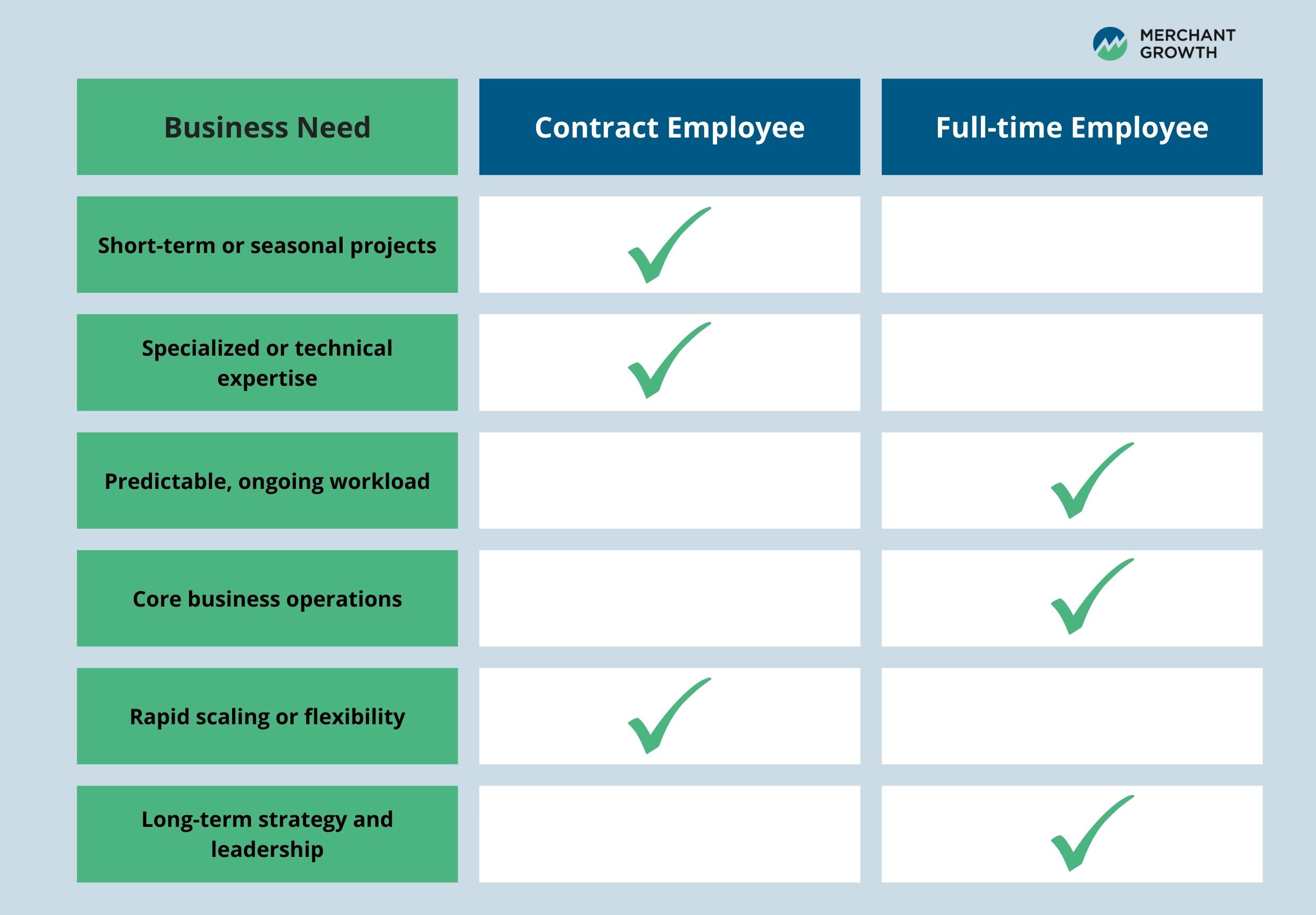
Many businesses use a blend of both to stay agile while maintaining a strong core team. By matching the type of work to the right hiring model, employers can control costs, reduce risk, and build teams that support sustainable growth.
These decisions also tie closely to cash flow and planning. Flexible workforce models often work best when businesses have access to financing that helps manage payroll, project costs, or growth periods. In this way, workforce strategy and financial strategy go hand in hand, supporting both operational stability and long-term success.
Take the quiz to see what type of hire is best for your business.
Ready for Flexible Work? Find Out If Contract or Freelance Life Fits You
Thinking about contract or freelance work is exciting, but it’s also a big shift in how you earn, plan, and manage your career. Before making the leap, it’s worth taking a moment to reflect on what this kind of work really demands day to day.
Ask yourself a few honest questions:
- Do you enjoy variety, independence, and taking on new challenges regularly?
- Are you comfortable with income that may fluctuate from month to month?
- Can you stay organized when it comes to invoicing, taxes, and budgeting?
- Do you feel motivated working on your own without a traditional team or manager?
There’s no right or wrong answer. Contract and freelance work can be incredibly rewarding for the right person, but it works best when your lifestyle, financial habits, and career goals are aligned.
To help you decide with confidence, download our free worksheet. It walks you through practical considerations around income stability, taxes, lifestyle priorities, and long-term goals so you can determine whether flexible work is the right next step for you — or whether a hybrid or full-time path makes more sense right now.
Download the worksheet and map out your next move with clarity.
This keeps the tone encouraging and practical, while giving readers a clear, actionable takeaway at the end of the article.
Choosing the Path That Fits Your Career and Life
There is no single “best” way to work. Full-time roles, contract work, and freelancing all offer meaningful opportunities, and the right choice depends on your priorities, risk tolerance, and long-term goals. For some Canadians, stability, benefits, and predictable income matter most. For others, flexibility, autonomy, and control over how and when they work are worth the trade-offs.
As Canada’s job market continues to evolve, with more professionals moving toward contract, freelance, and hybrid models, understanding the financial and tax implications of each option is essential. Independent work can be rewarding, but it requires thoughtful planning around cash flow, taxes, and income variability. Taking time to assess your readiness and test different models can help you make decisions with confidence rather than pressure.
Ultimately, the most sustainable career is one that aligns with how you want to live and work. Whether you choose full-time employment, flexible contract work, or a mix of both, being informed and proactive puts you in control of your next step.
Top Home-Based Business Ideas in Canada (And How to Get Started)
More Canadians than ever are turning their homes into business headquarters—and for good reason. Running a business from home offers unmatched flexibility, low overhead, and the ability to launch with limited capital. Whether you’re freelancing, baking, tutoring, or building a product line, home-based entrepreneurship has become a powerful way to take control of your income and work-life balance.
According to Statistics Canada, over 2.5 million Canadians were self-employed in 2023, and a large portion of that figure includes home-based businesses. While the autonomy of being your own boss is a major draw, navigating the steps—from permits to promotion—can be overwhelming.
This guide will walk you through everything you need to get your home-based business started, from choosing a profitable idea to understanding zoning laws, marketing, and funding.
Key Takeaways
- Canada offers hundreds of viable home business ideas—online, creative, service-based, and more.
- Regulatory steps like permits and business registration vary by province but are essential.
- Low startup costs make home businesses accessible—especially with good planning.
- Local funding, training, and online marketing tools can accelerate success.

Why Home-Based Businesses Are Booming in Canada
Driven by post-pandemic lifestyle changes, rapid digital transformation, and a growing desire for flexibility, home-based entrepreneurship is gaining serious momentum across Canada. As remote work became the norm—rising from just 7% in 2016 to over 20% of Canadians working from home in 2023—many took it a step further by launching their own businesses. With no need for costly retail space and the freedom to set their own schedules, home-based businesses offer both practical and personal advantages.
While starting a business still takes planning and persistence, today’s digital tools and government resources make it more manageable than ever before.

Top Home-Based Business Ideas in Canada
When it comes to starting a business from home, most Canadian entrepreneurs gravitate toward one of two paths: digital services you can offer entirely online, or hands-on, locally-focused businesses that draw on your skills. Whether you're tech-savvy or creatively inclined, there’s a home-based business model that fits.
Online & Virtual Services
Digital services are among the easiest and most affordable home businesses to launch for Canadians. They require minimal overhead, can be done from anywhere with a reliable internet connection, and scale well as you grow your client base.
Virtual Assistant
Virtual assistants help businesses stay organized and efficient. With more small businesses outsourcing admin work, the demand continues to grow. You can offer scheduling, email management, customer service, or niche support like bookkeeping or marketing coordination. According to Ontario Business Central, entry-level VAs will start making anywhere from your provincial minimum wage - $25/hour, but as your experience increases, you can look to charge anywhere from $50/hour or more.
Why it’s appealing: Offers flexibility and the ability to specialize in administrative or industry-specific tasks.
Freelance Writing
Freelance writing is one of the most versatile home-based businesses you can launch in Canada. It offers complete control over your schedule and the freedom to work with a variety of clients—from blogs and startups to major corporations and government agencies. If you enjoy researching, storytelling, or simplifying complex topics, there’s likely a writing niche that fits your skills. Whether you're writing speeches, technical manuals, or social media copy, the pay scale varies widely based on the format, industry, and your experience level.
Here’s a look at the average hourly rates across different types of freelance writing:
| Writing Type | Hourly Rate ($/hour) |
|---|---|
| Speech Writing | $60 to $130 |
| Teaching/Instruction | $25 to $80 |
| Online/Website Writing | $60 to $100 |
| Government Writing | $50 to $125 |
| Newsletters | $50 to $80 |
| Advertising Material | $75 to $150 |
| Advertorials | $40 to $100 |
| Corporate/Business Writing | $50 to $125 |
Reference: Canada Freelance Guild
Why it’s appealing: Great for strong communicators with subject-matter expertise who enjoy working independently.
Social Media Management
Many small businesses need help managing their social channels. If you’re creative and savvy with platforms like Instagram and TikTok, this is a scalable business with strong income potential. Freelancers in Canada typically charge between $25 to $100 per hour for social media management, with monthly packages ranging from $500 to $2,000, depending on the scope of services, according to data from Jeff Social. With more experience and higher-profile clients, there’s also potential to earn significantly more, especially if you offer strategy, paid ad management, or content production in addition to day-to-day posting.
Why it’s appealing: Fast-growing demand, creative flexibility, and potential for recurring clients.
Bookkeeping
Bookkeepers are always in demand. This business offers stable, repeat work and allows for remote client relationships once trust is built—ideal for those who are detail-oriented and comfortable with numbers. According to the Canadian Job Bank, bookkeepers in Canada typically charge between $18.46 and $42.05 per hour. This wide range reflects varying levels of experience, certification, and specialization, so if you build strong relationships and perhaps expand into additional services like financial reporting or bookkeeping software support, you can command higher rates and build a reliable, home-based bookkeeping business.
Why it’s appealing: Recession-resistant, reliable work with a path to certification.
Online Tutoring
Online tutoring lets educators and bilingual professionals share their expertise in subjects like math, science, ESL, or standardized test prep. It’s flexible and in high demand among parents and adult learners. According to Tutor Lyft, the starting rate for tutoring through an agency is typically around $45 per hour, but this can rise to $80 or more depending on the subject, tutor qualifications, and delivery method. One-on-one sessions and in-person formats generally cost more than group or online tutoring, making virtual tutoring a particularly attractive and accessible business model for home-based educators.
Why it’s appealing: Makes use of existing teaching skills and offers a meaningful way to help others.
Graphic designer
Running a graphic design business from home gives you the freedom to be creative while keeping startup costs low. Whether you focus on branding, logos, packaging, web graphics, or social media content, there’s no shortage of demand. Most designers work remotely with clients, using digital tools to collaborate and deliver polished, professional work. In Canada, freelance designers typically earn between $19 and $50 per hour, with higher rates for specialized or complex projects. Building a strong online portfolio and actively reaching out to clients are both essential to growing a successful design business.
Why it’s appealing: High demand across industries, flexible hours, scalable workload, and a great fit for creative professionals who want to work independently.
Creative & Specialized Services
These businesses are rooted in hands-on skills or local service needs. They may require more upfront investment or licensing, but can be incredibly rewarding and profitable, especially when tailored to your community’s demand.
Esthetician/Beauty Services
From lash extensions and brow waxing to facials and spray tanning, beauty services are consistently in demand—and can be successfully run from a well-equipped home studio. Certified estheticians often specialize in specific services, which helps keep overhead costs low while building a loyal, returning client base. In Canada, estheticians typically earn around $18–$29 per hour, though rates can vary significantly depending on the service. For example, full lash sets may range from $80–$200, while brow services generally start around $15–$25. Many beauty professionals operate by appointment only, offering greater flexibility and control over their schedules.
Why it’s appealing: Low startup costs, high potential for repeat business, and the ability to specialize and grow within a thriving self-care market.
Hair Stylist
Hair styling is one of the most resilient personal service businesses in Canada, thanks to consistent demand and loyal clientele. Independent stylists operating from a home studio can avoid the overhead costs of renting a chair or commercial space, keeping more of their earnings. Most Canadian hairstylists begin with an hourly wage of $18/hour and with time can make more than $30 per hour, depending on experience and services offered. Many also develop long-term relationships with clients, leading to steady repeat visits and a reliable stream of income.
Why it’s appealing: Steady demand, strong potential for client loyalty, and a creative career path with room to grow.
Photography
Running a photography business from a home studio offers creative freedom and the flexibility to specialize in areas like portraits, branding, product shoots, or family sessions. While working from home can save significantly on studio rent, it’s still important to budget for insurance, equipment, and online marketing. In Canada, beginner photographers typically earn between $25–$75 per hour, while experienced professionals can charge anywhere from $250–$500 per hour, depending on the shoot type and expertise. Many home-based photographers also boost income by offering packages and seasonal mini sessions, which help generate steady, repeat business.
Why it’s appealing: Flexible scheduling, creative expression, and the potential to grow through referrals and repeat clients.
Therapy
Licensed therapists and counsellors can operate a professional practice from a dedicated home office, provided they meet provincial regulations and privacy standards. With increased demand for mental health services in Canada, therapists can charge between $90–$250 per session. Offering virtual appointments also expands reach and accessibility, especially for clients in rural areas.
Why it’s appealing: Meaningful, purpose-driven work with the flexibility of remote or in-home appointments and consistent client demand.
Dog Grooming
A home-based dog grooming setup can be a rewarding business for animal lovers. With minimal space and a few specialized tools, groomers can provide services like haircuts, bathing, nail trimming, and de-shedding treatments right from home. In Canada, grooming fees typically range from $50 to $100+ per dog depending on the breed, size, and complexity of services. Many pet owners become repeat clients, booking regular appointments and helping to create a stable, predictable income stream.
Why it’s appealing: A niche with loyal customers, repeat business, and the ability to scale with recurring appointments.
Pet Sitting
For animal lovers, pet sitting is a rewarding and flexible business you can run from home or by visiting clients. Whether offering overnight stays or day care, pet sitting is always in demand, especially in urban areas. In Canada, rates typically range from $17.50 –$28 per hour, depending on services and location.
Why it’s appealing: Low overhead, flexible scheduling, and the chance to build a loyal base of furry clients and their owners.
Daycare/Childcare
If you love working with children, running a daycare from home can be both personally fulfilling and financially stable. It’s also a business that meets a major need in communities across Canada, where affordable childcare is in high demand.
There are two primary models: licensed and unlicensed home daycare. Most provinces allow unlicensed childcare providers to care for a small number of children (often 2–5, depending on the province) without needing a license. This option has lower startup costs and fewer regulatory hurdles, making it more accessible for those just starting out.
Licensed home daycares, on the other hand, must meet stricter requirements around space, safety standards, staffing ratios, and daily operations. While becoming licensed can make your daycare more attractive to families—especially since many provincial childcare subsidies only apply to regulated care—it often requires a greater upfront investment. In some cases, this might mean renovating or purchasing a home to meet compliance standards, bringing it closer in cost and complexity to a commercial daycare setup.
In Canada, childcare providers typically charge between $20 and $58 per day, though this varies by region, child age, and the services offered.
Personal Trainer (Home or Virtual)
With the growing demand for fitness at home, certified personal trainers can run sessions from a home gym or virtually via video. Specializing in areas like strength training, mobility, or weight loss can help carve out a niche. Hourly wages in Canada typically start around $18/hour and extend beyond $30/hour, depending on experience and session type.
Why it’s appealing: Low equipment investment, flexible schedule, and the ability to build strong client relationships.
Private Pilates or Yoga Instructor
Teaching private yoga or Pilates sessions from a home studio—or virtually—is a calming and fulfilling career path for wellness-focused entrepreneurs. Instructors often offer one-on-one programs or small group packages, with rates typically ranging from $20–$120 per session, depending on experience and format. While session fees vary, the average take-home wage for Canadian instructors falls between $17 and $32 per hour. There’s also room to grow by expanding into workshops, retreats, or corporate wellness offerings.
Why it’s appealing: Combines wellness with entrepreneurship, builds community, and allows for creative program design in your own space.
Sustainable Product Maker
Eco-conscious products like reusable bags, soy candles, beeswax wraps, or natural skincare are growing in popularity as more consumers seek sustainable alternatives to everyday items. If you're crafty or already making these products as a hobby, turning your passion into a home-based business could be a natural next step. Profit margins in this space can vary widely depending on the type of product, material costs, and whether you sell directly to consumers or through retailers or online marketplaces. Handmade, small-batch goods with premium branding often command higher prices, while simpler or bulk items may rely on volume sales. Regardless, this niche allows for creativity, flexibility, and alignment with environmentally conscious values.
Why it’s appealing: Aligns with environmental values and allows for creative expression.
Profitable Mobile Business Ideas with a Home Base
Running a business from home doesn’t always mean staying home. Many Canadian entrepreneurs operate mobile businesses—where your home serves as your headquarters, but the work takes you out into the community. This model lets you keep overhead low, skip the storefront, and serve clients directly at their homes, job sites, or events. Whether you’re a creative professional, service provider, or consultant, there are countless ways to turn your skills into income with a flexible, home-based setup and a mobile service approach.
Home Cleaning
Home and office cleaning services are in steady demand, making this a reliable and scalable home-based business option. You can start solo with minimal equipment, then gradually expand by hiring staff or offering specialized services such as deep cleans, move-in/move-out packages, or post-renovation cleanup. One of the biggest advantages of this industry is flexibility—you set your hours, choose your clients, and determine your service area. Rates vary across the country, but here’s a general breakdown of average hourly cleaning rates by province:
| Province | Average Hourly Rate |
|---|---|
| Ontario | $25 – $35 |
| British Columbia | $20 – $30 |
| Alberta | $22 – $32 |
| Quebec | $18 – $28 |
| Nova Scotia | $20 – $30 |
Reference: No More Chores
Note: These rates are approximate and can vary based on factors such as property size, the number of rooms, and specific services provided. It’s always a good idea to check local rates to stay competitive.
Why it’s appealing: High demand, easy to start, and scalable with repeat clients.
Mobile Notary
Mobile notaries in Canada verify legal documents for individuals and businesses, often by travelling directly to clients’ homes or offices. Fees typically range from $50 to $199, including base travel costs and standard notarization charges. It’s a low-overhead, flexible business model ideal for those with a professional demeanour and attention to detail. To operate legally, you must be commissioned as a notary public or commissioner for oaths through your province or territory—requirements usually include being at least 18 years old, a Canadian citizen or permanent resident, and completing any necessary applications, training, or certifications.
Why it’s appealing: Professional, flexible, and needed across industries.
Personal Chef
If you love cooking, offering in-home meal prep or catering services is a fantastic business option. Busy families and individuals with dietary needs often seek out personal chefs, and the best part is, you don’t need formal culinary training to get started. Many chefs begin as passionate home cooks. The role offers flexibility, no late-night restaurant hours, and the chance to work closely with clients to create customized meals that fit their tastes and dietary needs. It’s a fulfilling business that blends creativity with personal connection.
Why it’s appealing: Great for food lovers who enjoy working one-on-one with clients and customizing meals.
Dog Walker
Dog walking is a simple, scalable business that combines exercise, fresh air, and reliable income. Popular in busy neighbourhoods and condo-dense cities, dog walkers can earn $15–$30 per walk (more for group outings or longer sessions). Apps like Rover or Pawshake can help you get started, but many successful walkers build direct relationships with clients.
Why it’s appealing: Great for active entrepreneurs, requires minimal startup costs, and offers consistent demand.
Event Planner
Whether it’s weddings, corporate functions, or milestone celebrations, event planning is an ideal business for detail-oriented, organized individuals. You can run most aspects of the business from home, managing timelines, vendor coordination, and budgets remotely. Canadian event planners typically charge between $25–$100+ per hour, depending on experience, or they may opt for a flat rate based on 10–15% of the total event budget. This flexible pricing structure allows planners to tailor services to a range of client needs while maintaining profitability.
Why it’s appealing: Offers creative freedom, the chance to work on exciting events, and high earning potential for experienced planners.
Property Manager
Managing rental properties on behalf of landlords—especially in vacation or long-term rental markets—can be a lucrative home-based business. Responsibilities may include tenant communication, maintenance coordination, and rent collection. In Canada, property managers can earn a flat fee or a percentage of monthly rental income (often 6–12%).
Why it’s appealing: Reliable monthly income, scalable with multiple properties, and ideal for those with admin or real estate experience.
Permits, Licenses & Business Structure: What You Need to Know
Before you mix your first batch of candles or log into your client dashboard, it’s important to ensure your business meets local regulations. Home-based businesses in Canada are subject to a range of requirements—some set federally, others provincially or municipally. Understanding these early can save you legal and financial headaches down the road.
Home-Based Business Permits & Licenses
Even a small, home-run operation needs to be properly licensed. Depending on your industry and location, this could include zoning permissions, health inspections, or operating licenses.
- Zoning: Your municipality may require a “home occupation” permit.
- Food/Childcare: Health inspections and safety standards may apply.
- Helpful Link: Ontario Ministry of Health Home-Based Food Business Guide
- National Info: Canada.ca Business Licensing
Check with your local municipality and province to determine what types of licenses or permits are required for your specific business type. Most home businesses need at least basic registration, and depending on what you offer—especially food, childcare, or personal services—you may need health inspections or special permissions to operate out of your home.
Choosing the Right Structure (Sole Proprietor vs Incorporation)
Your business structure affects everything from taxes and liability to how you register your business.
- Sole Proprietor: Easier and less expensive to set up; ideal for single-person businesses. Offers simplicity but no liability protection.
- Incorporation: Offers liability protection and potential tax advantages. It may involve more paperwork and ongoing compliance, but adds credibility and separates personal from business assets.
Tip: Check your province’s business registration page for detailed guidance on how to register and what’s required for each structure.
Costs, Profitability & Scaling Tips
Starting a business from home is often one of the most cost-effective ways to launch, particularly if you’re offering a digital or service-based solution. Many entrepreneurs can get started with relatively little investment, focusing instead on skills, time, and smart planning.
What to Expect
Startup Costs:
Home-based businesses typically require fewer resources than traditional brick-and-mortar ventures. Online services often have the lowest overhead, while creative or hands-on businesses may involve additional costs such as equipment, supplies, or regulatory compliance.
Time to Profit:
While some home-based businesses may start generating revenue early on, most small businesses take 2 to 3 years to become truly profitable. Long-term success often builds over time, with many businesses hitting their stride after 7 to 10 years. This timeline underscores the importance of patience and persistence in the early stages.
Risk Factors:
It’s important to be aware that around 20% of small businesses fail within their first year. Choosing a business model that aligns with your skills and lifestyle—and starting with a clear plan—can help you avoid common pitfalls.
Scaling Tips
- Reinvest early revenue into tools, automation, or marketing efforts to increase efficiency.
- Consider outsourcing or bringing in support (like a virtual assistant) as demand grows.
- Focus on customer feedback to evolve your offerings and stay competitive.
Some businesses—such as bookkeeping, freelance writing, or virtual assistance—can scale quickly with relatively low costs. Others, like product-based ventures or daycare services, may take longer to grow but can offer reliable, long-term returns once established.
Marketing Your Home-Based Business
Even with the best service or product, you’ll need a solid marketing plan to attract customers. Fortunately, there are several low-cost strategies that work well for home businesses.
Social Media Marketing
Use platforms like Instagram, Facebook, LinkedIn, and TikTok to promote your business visually, build trust, and connect with your audience. Tools like Canva or Later can help you design and schedule posts.
Local SEO (Search Engine Optimization)
Register your business with Google Business Profile to appear in local search results. Include keywords like “home-based bookkeeping in Toronto” or “custom candles in Vancouver” on your website to boost search visibility.
Community Boards & Groups
- Post on Facebook Marketplace and local buy/sell groups.
- Put up flyers in coffee shops or libraries.
- Join local entrepreneur groups or business associations.
Virtual Networking
Attend webinars, join Slack or Discord communities, and build referral partnerships with other small businesses.
Helpful Marketing Tools
No matter what kind of home-based business you run, smart marketing can make all the difference. Thankfully, you don’t need a big budget to promote your services effectively. There are plenty of free or low-cost tools available that can help you manage everything from design and email marketing to task planning and invoicing. Here are some of the most popular options to get you started:
- Canva – For creating marketing graphics.
- Mailchimp – For email campaigns.
- Google Business Profile – For local search visibility.
- Wave – For invoicing and financial tracking.
- Trello/Notion – For business planning and task management.
Resources & Support for Canadian Entrepreneurs
You don’t have to build your home business alone. Across Canada, entrepreneurs can tap into an impressive range of free and subsidized support programs—from funding to mentorship.
Government of Canada (Canada.ca)
The federal government offers a central hub of resources to help Canadians plan, register, and grow their businesses. Whether you're searching for funding or just figuring out where to begin, Canada.ca is a great place to start.
- Business Benefits Finder
- Guides for business registration, taxes, and structure
- Federal funding and grants directory
Business Development Bank of Canada (BDC)
BDC is Canada’s only bank devoted exclusively to entrepreneurs. From financing to expert advice, it offers tools designed to help home-based and small business owners thrive at every stage of growth.
- Offers financing and small business loans
- Free business planning tools and calculators
- Online courses and advisory services
➡️ Explore BDC’s small business tools
Small Business Centres (By Province)
Across Canada, provincial and municipal governments run small business centres that offer free services tailored to local entrepreneurs. These centres provide everything from licensing support to one-on-one mentorship.
- Ontario’s Small Business Enterprise Centres (SBECs) offer free mentorship, workshops, and help with licensing.
- Similar services are available in provinces like B.C., Alberta, and Nova Scotia.
FedDev Ontario & Other Regional Development Agencies
Regional development agencies are focused on boosting local economies by supporting small business innovation and expansion. Whether you're in Ontario, the Prairies, or the North, there's likely a regional agency ready to help you grow.
- FedDev Ontario provides grants and regional economic development support.
- Regional agencies across Canada (e.g., PrairiesCan, ACOA, CanNor) provide funding and business growth services.
How to Start a Home-Based Business in Canada
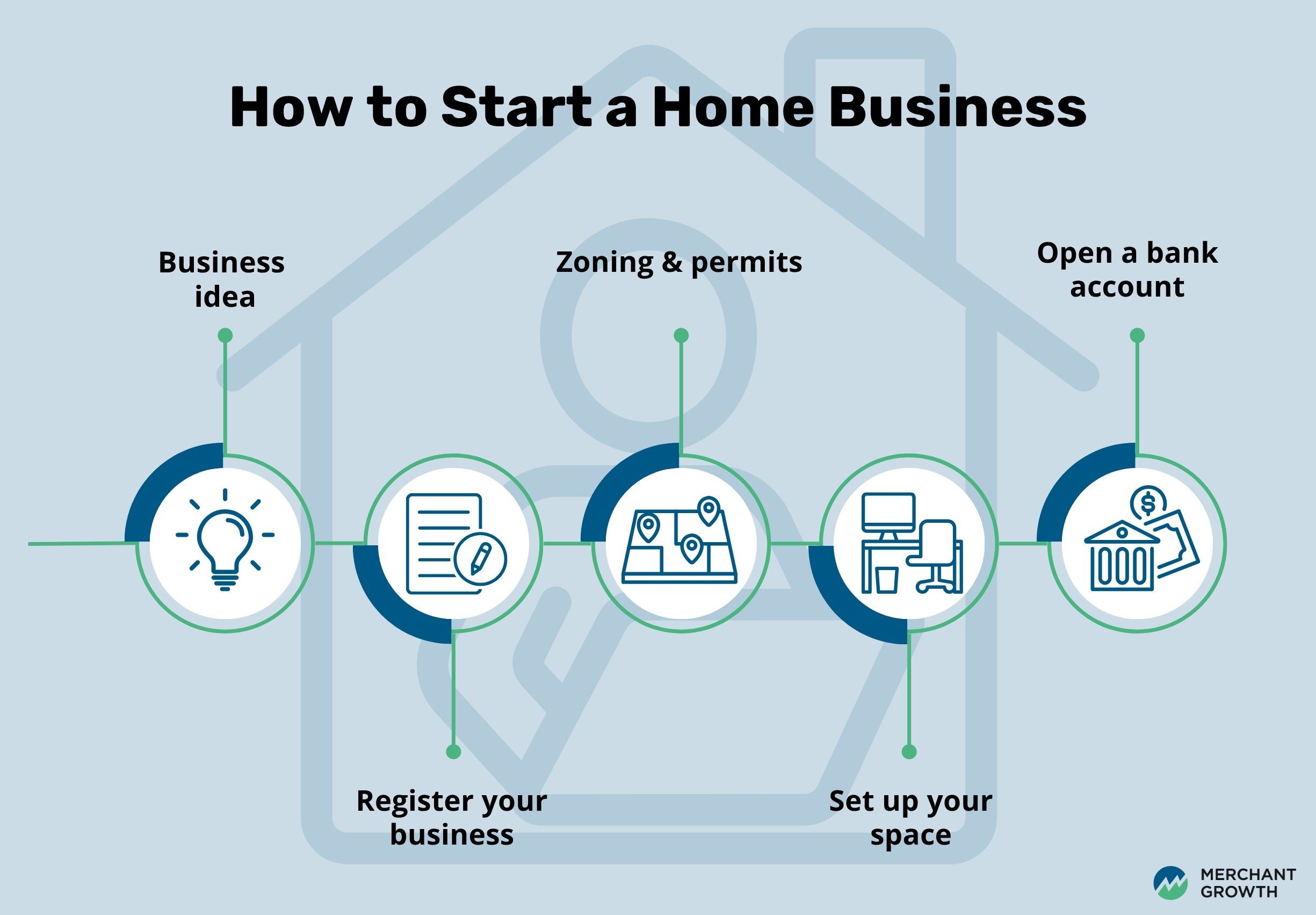
Starting small is smart, but getting the foundations right is key. Here's how to go from idea to launch.
1. Choose a Business Idea That Fits Your Lifestyle & Skills
Select something you enjoy and are skilled at. Consider your available time, home space, and startup budget. Start part-time if you're unsure, and validate demand before investing heavily.
2. Register Your Business
Each province has its own registration portal. You'll need to check name availability, decide on a legal structure, and file any required documents.
3. Check Local Zoning & Permit Requirements
Some municipalities limit certain business types (like daycare or food sales) from being run at home. You may need a “home occupation” permit or specific zoning approval.
4. Set Up Your Business Space
Designate a specific area of your home for your business. Whether it’s a home office, kitchen, or garage workshop, make sure it’s safe, productive, and aligned with legal requirements (especially for childcare or food services).
5. Open a Business Bank Account & Track Finances
Separate your business finances from personal funds from day one. Use simple accounting software (like Wave, FreshBooks, or QuickBooks) to stay organized and ready for tax time.
Pros and Cons of Starting a Home-Based Business
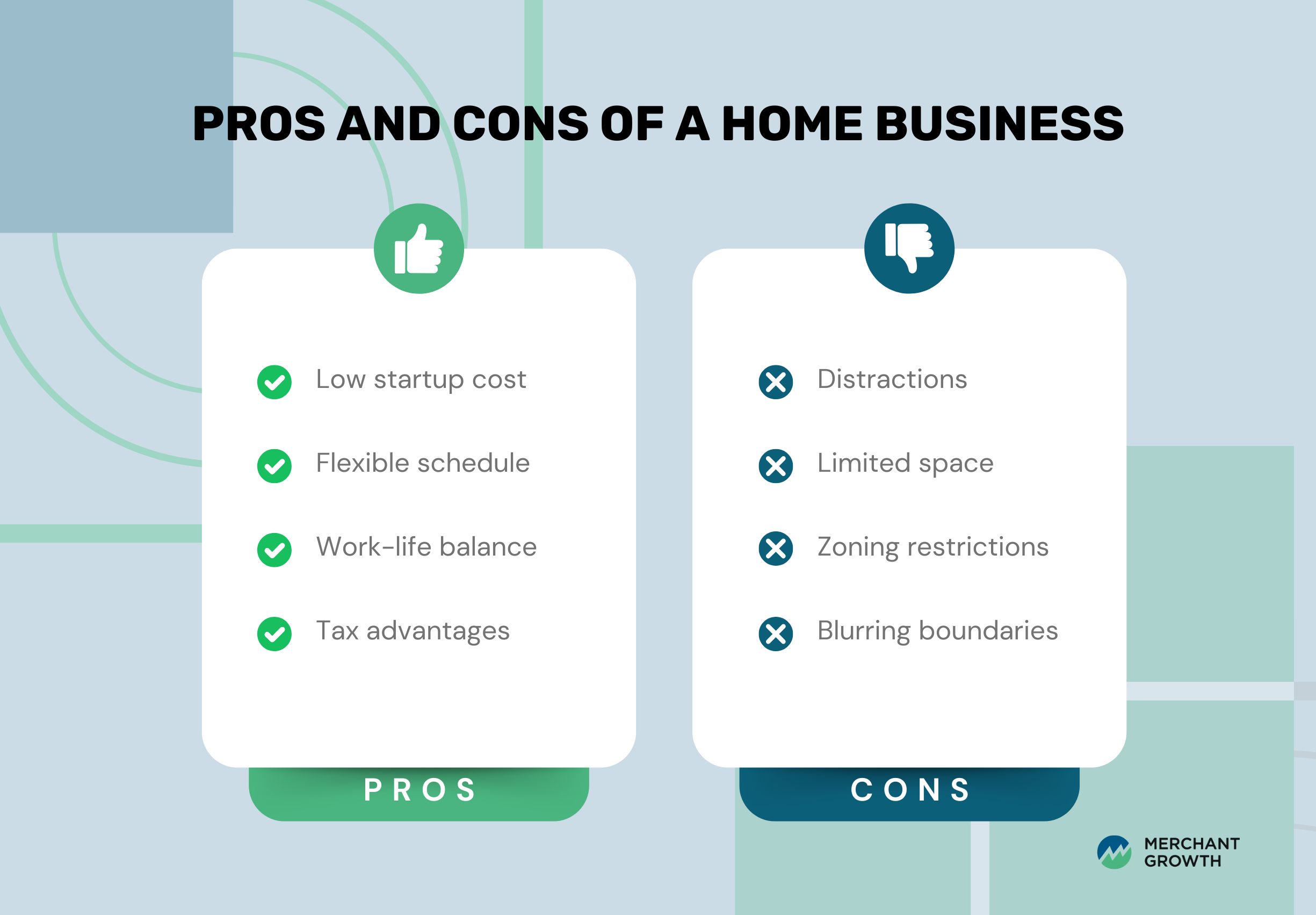
Running a business from home can offer significant rewards, but it also comes with its own set of challenges. Whether you're considering the move or are already in the planning stages, it’s important to weigh both sides to determine if a home-based model fits your goals, lifestyle, and work environment.
| Pros | Cons |
|---|---|
| Low Startup Costs: Avoid expensive leases and overhead. | Distractions: Family or roommates can disrupt focus. |
| Flexible Schedule: Work around family, caregiving, or other responsibilities. | Limited Space: Physical storage and work areas may be constrained. |
| Work-Life Balance: No commute and more control over your environment. | Zoning Restrictions: Certain business types may not be allowed. |
| Tax Advantages: Home office deductions, business expenses, and equipment write-offs. | Blurring Boundaries: It’s easy to let work spill into personal time. |
From Home to Growth: How Financing Can Support Your Next Step
While many home-based businesses are intentionally lean at the start, growth often brings new opportunities—and new expenses. Expanding your operations, investing in better equipment, or even hiring support can require more cash than your business has on hand. That’s where strategic financing comes in.
Why Financing Matters for Home Businesses
Even the most profitable home-based businesses encounter moments when access to capital is crucial:
- Unexpected expenses can stall progress and delay growth plans.
- Equipment upgrades or staffing often require an upfront investment.
- Seasonal income fluctuations can make it difficult to manage cash flow year-round.
Working capital gives you the flexibility to take on opportunities without sacrificing stability or dipping into personal savings.
How Merchant Growth Can Help
Merchant Growth specializes in small business financing that’s built to scale with your needs. Whether you’re looking to smooth over seasonal dips or fund a big next step, we offer options that align with your goals:
- Term Financing: Ideal for one-time investments like purchasing equipment or launching a new product.
- Lines of Credit: A flexible way to manage cash flow, cover payroll, or invest in marketing.
Once your business generates consistent revenue, our financing solutions can help you grow confidently, on your terms.
Ready to grow your business from home and beyond? Explore our small business financing options.
Is Your Business Failing? How to Recognize the Signs, Rebuild with Confidence, and Access Support in Canada
Running a small business comes with ups and downs, and if you're feeling like the challenges are starting to outweigh the wins, you're not alone. Many business owners experience periods of financial stress, declining momentum, or even full-blown burnout. The important thing is recognizing the warning signs early and knowing that there are proven strategies and support systems available to help you recover.
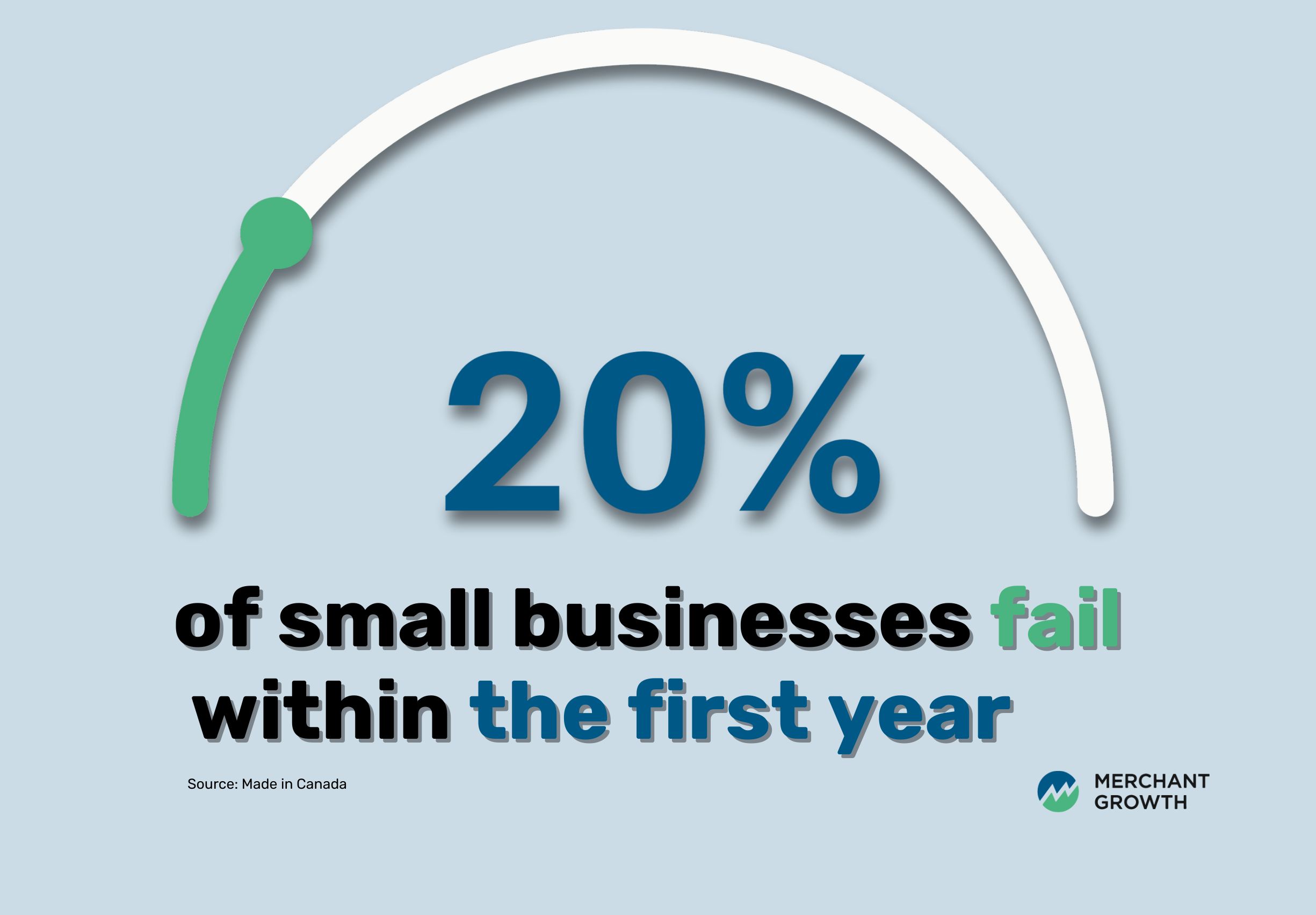
According to Made in Canada, about 20% of small businesses don't survive their first year. But that means approximately 80% do—and with the right tools and support, many struggling businesses can be turned around.
In this article, we’ll walk you through how to spot trouble early, figure out your next steps, and tap into the resources that can help your business get back on track.
Key Takeaways
- Business failure can stem from cash flow issues, poor planning, shifting markets, or burnout, but these challenges can be addressed with the right strategies.
- Recognizing early warning signs like declining revenue, customer loss, or staff turnover is critical.
- Canadian small businesses have access to support, from government programs (BDC, Futurpreneur, etc.) to advisory services and financing solutions.
- Not every business can be saved, but many can be stabilized, pivoted, or reborn with the right approach.
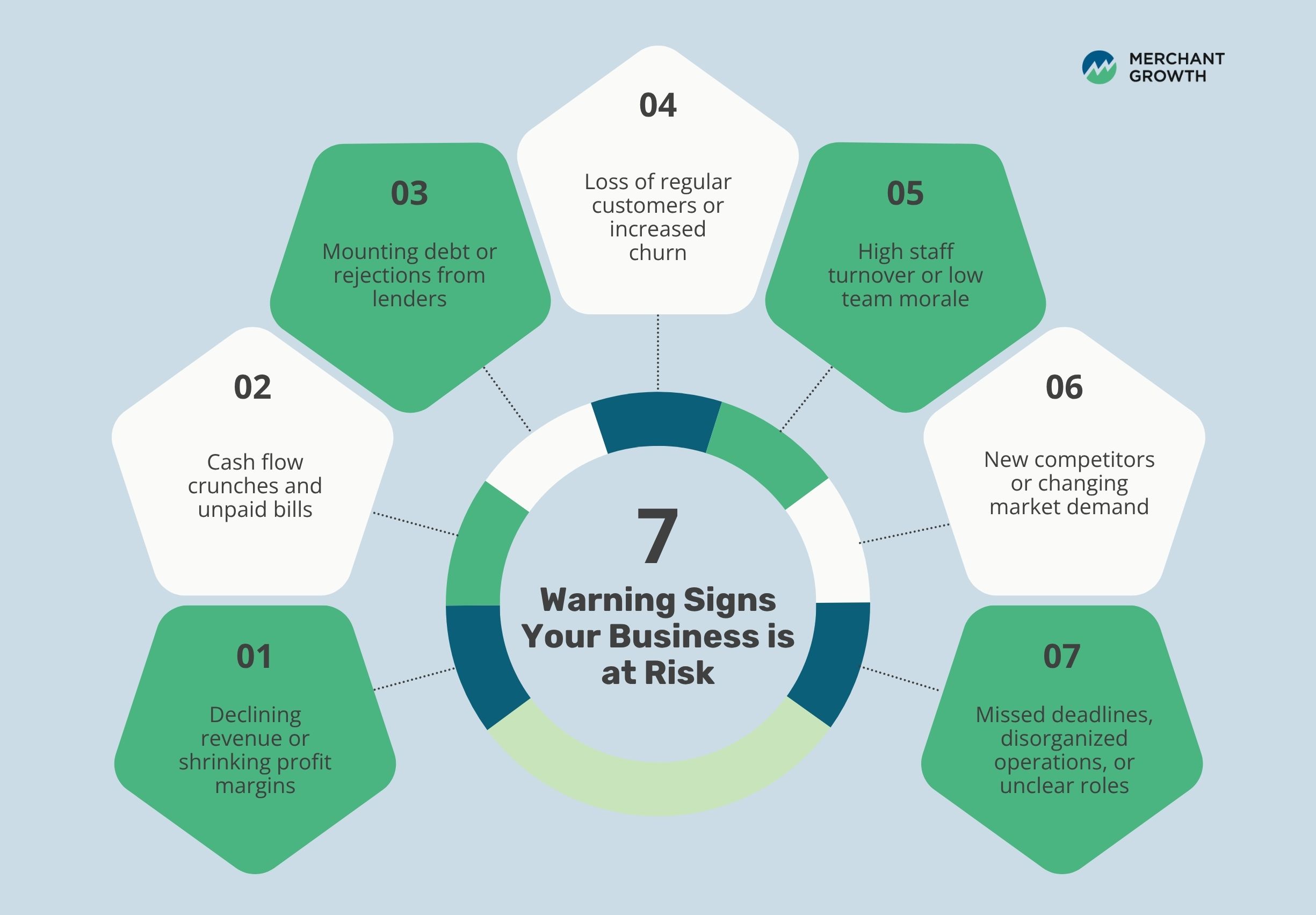
Early Warning Signs of a Failing Business
Spotting trouble early can mean the difference between a successful recovery and having to shut your doors for good. In fact, only about 7% of businesses cite a 'failure to make necessary changes' as the primary cause for closure, highlighting just how powerful it can be to adapt when warning signs appear. Here are some red flags that should prompt a closer look:
- Declining revenue or shrinking profit margins
- Cash flow crunches and unpaid bills
- Mounting debt or rejections from lenders
- Loss of regular customers or increased churn
- High staff turnover or low team morale
- New competitors or changing market demand
- Missed deadlines, disorganized operations, or unclear roles
If several of these signs feel familiar, take it as your cue to act, not out of panic, but out of possibility. Identifying issues early gives you the best chance to course-correct, stabilize, and build a stronger, more resilient business.
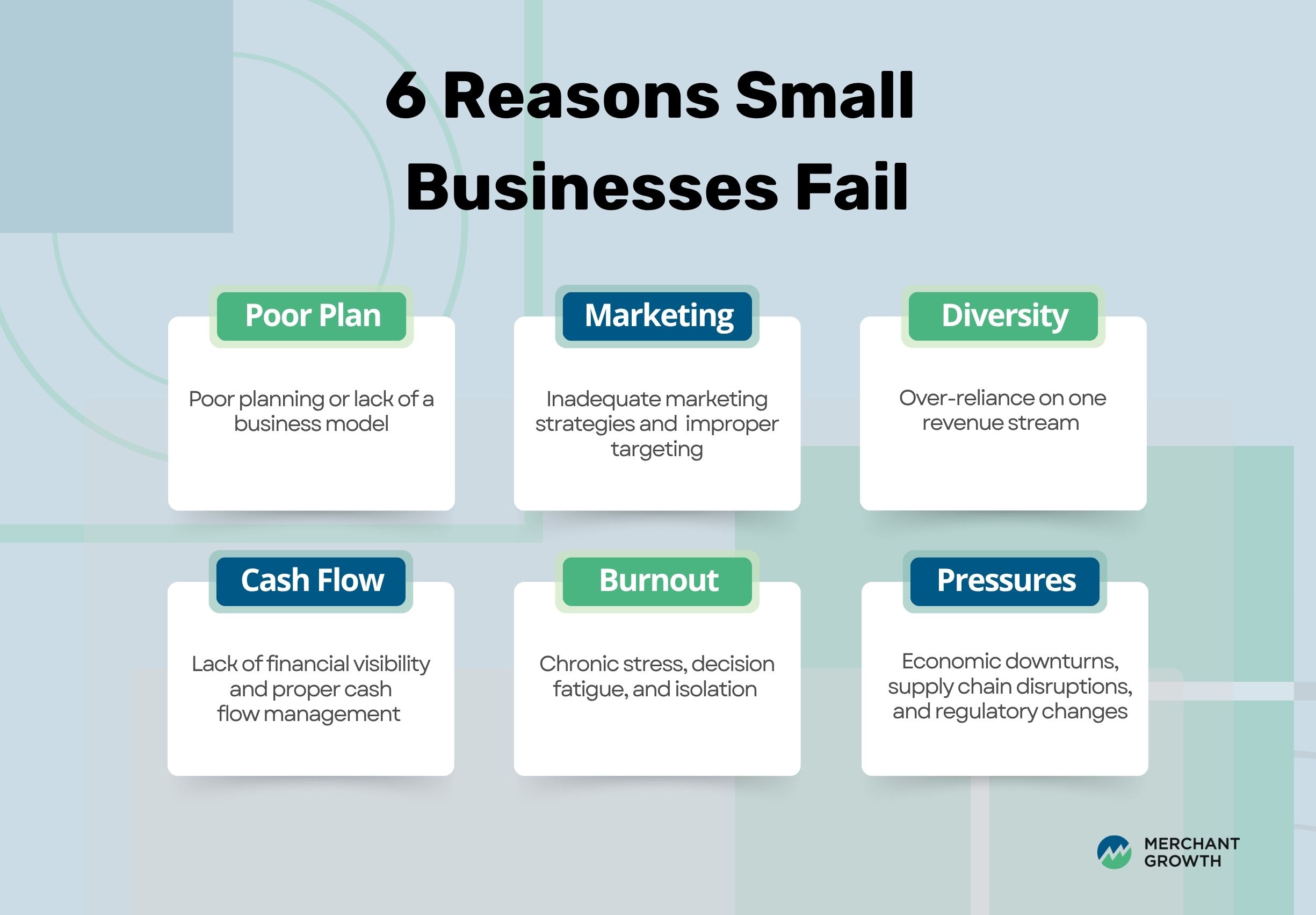
Common Reasons Small Businesses Fail
Understanding why small businesses fail isn’t about placing blame—it’s about empowering yourself with the knowledge to avoid the same missteps. Many entrepreneurs pour their hearts, time, and savings into their ventures, only to be blindsided by avoidable pitfalls. Whether it’s a lack of planning, poor cash flow management, or not adapting to market changes, the root causes of failure often follow predictable patterns. By getting clear on what commonly derails small businesses, you can make smarter, more informed decisions to protect your own. Below, we break down the key challenges Canadian entrepreneurs face—and how to navigate them.
Poor Planning or Lack of a Business Model
Without a clear plan or strategy, it's easy to drift. Whether it's skipping market research, overestimating demand, or failing to forecast expenses, weak business planning puts you at a disadvantage from day one.
Tip: Create a simple business plan—even a one-page version—that outlines your goals, target market, revenue model, and key expenses. Tools like the BDC’s free business plan template can make this process easier and more focused.
Inadequate Marketing
If you're not reaching the right audience or clearly showing what makes your business different, it's hard to stand out, let alone grow. According to the CFIB, 42% of small businesses fail because they haven’t properly researched the market. That means many entrepreneurs launch without fully understanding who their customers are, where to find them, or what messages resonate.
Tip: To avoid falling into this trap, take time to define your target audience, study their behaviours, and test different marketing channels. Even a small, consistent marketing strategy can go a long way in building awareness and attracting loyal customers.
Over-Reliance on One Revenue Stream
Many businesses fail because a single client or product line dries up. Diversification is essential to long-term resilience. When too much depends on one revenue source, any disruption—like a client leaving or a product becoming obsolete—can quickly spiral into a crisis.
Tip: Explore complementary revenue streams such as new product offerings, subscription models, or targeting different customer segments. Even a modest second stream can provide helpful stability.
Weak Cash Flow Management
A lack of financial visibility is one of the top reasons small businesses fail. Late payments, poor pricing strategies, or over-investment can quickly drain your resources and leave you scrambling to cover expenses. In fact, 22% of small business owners expect to face challenges maintaining their cash flow, highlighting just how common and critical this issue is.
Tip: Use cash flow forecasting tools or work with a bookkeeper to project future cash flow needs. Review pricing regularly to ensure you're covering costs and building in a margin for growth.
Business Owner Burnout
Business owners often wear every hat, and it catches up fast. Chronic stress, decision fatigue, and isolation can lead to poor choices or a complete loss of motivation.
Tip: Build rest and support into your business plan. Set realistic work hours, take regular breaks, and seek out mentors, peer networks, or even part-time help to reduce isolation and overload.
External Pressures
Economic downturns, supply chain disruptions, and regulatory changes can throw even successful businesses off course. These are often out of your control, but how you respond makes all the difference.
Tip: Stay agile by regularly reviewing industry trends, maintaining strong supplier relationships, and having contingency plans in place for major disruptions.
Assessing Your Business’s Financial Health
When a business starts to struggle, it’s easy to focus on surface-level symptoms—missed deadlines, mounting stress, or slow sales. But the root cause often lies in the numbers. Understanding your financial health is one of the most important steps in regaining control and avoiding deeper trouble. Consider it a financial health check—looking closely at your cash flow, revenue, and obligations to understand where your business truly stands.
Here are key areas to examine:
- Cash Flow Statement: Are your incoming funds consistently covering your expenses? If not, your business may be at risk of running into operational trouble. Download our free Cash Flow Statement Template to help you get a clearer picture ➡️ Download Here
- Profit & Loss Trends: Are you profitable month to month? Is your growth flat, steady, or slipping?
- Debt & Loan Obligations: Are repayments manageable, or are they adding strain?
- Payroll & Vendor Payments: Are you paying people (or yourself) on time, or constantly behind?
- Client Base: Are customers sticking around, or are you always trying to replace lost business?
These indicators can reveal not just how your business is doing—but where to focus your efforts first. Even small improvements in one area can create a ripple effect. Don’t be discouraged by what you find. This isn’t about perfection; it’s about clarity, direction, and taking control.
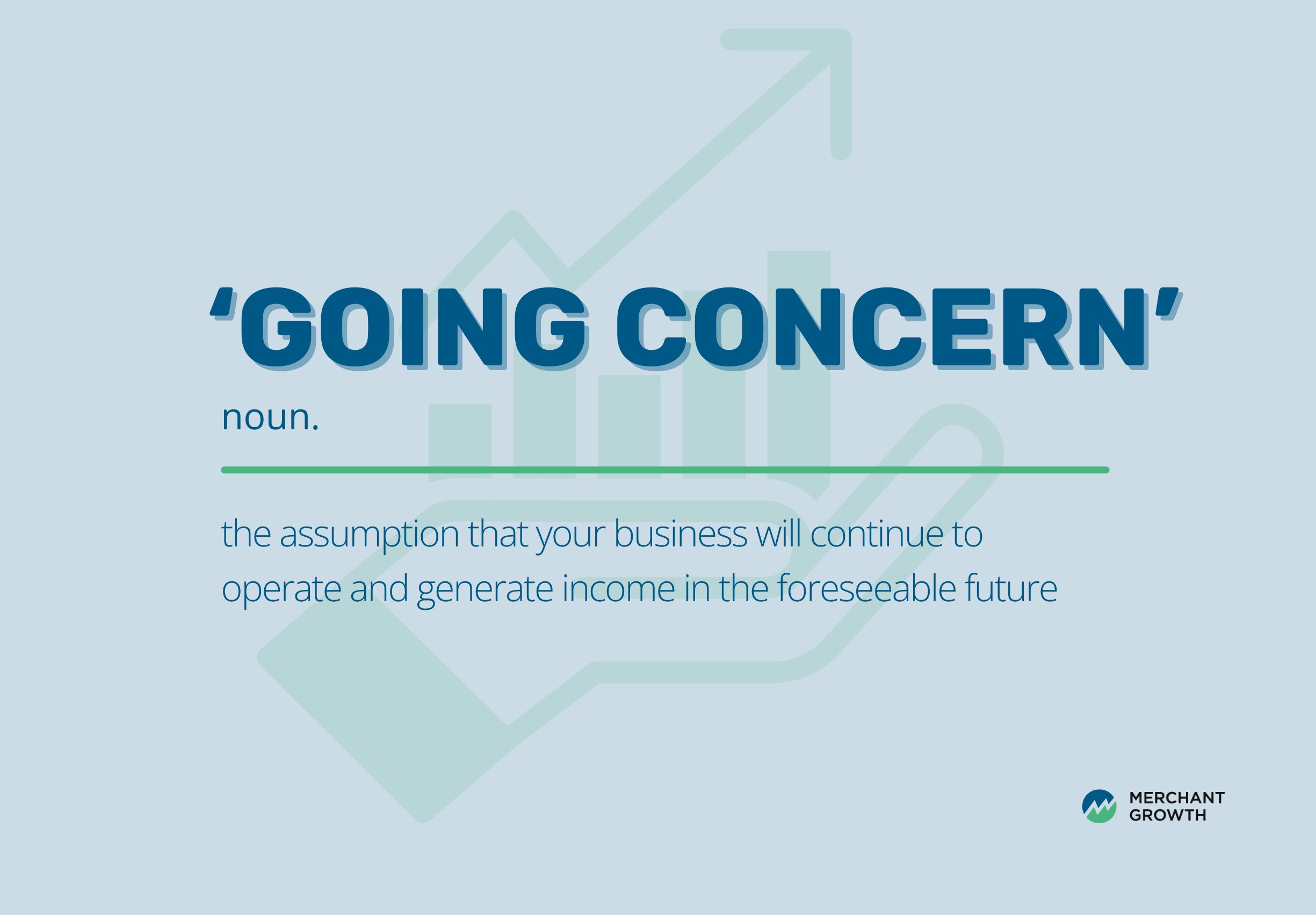
What Does “Going Concern” Mean in Business?
You may have heard the term “going concern” in business conversations, but what does it actually mean? In simple terms, it’s the assumption that your business will continue to operate and generate income in the foreseeable future, typically at least the next 12 months.
But when that assumption is at risk—due to sustained losses, cash flow problems, or mounting debt—your business may no longer be considered a going concern. This status has serious implications and is often a red flag to lenders, investors, and even employees.
Signs your business may no longer be a going concern:
- You're unable to pay your bills or meet payroll consistently
- Your debt is growing faster than your revenue
- You’ve lost access to financing or are being turned down for credit
- Auditors raise concerns about your financial statements
- You’re relying heavily on personal savings or short-term fixes to stay afloat
Why it matters:
- It affects how you report your finances, potentially requiring disclosure of material uncertainty in your statements
- It can impact your ability to raise funds or renew lines of credit
- It signals to stakeholders (employees, partners, banks) that significant changes may be needed
Recognizing and addressing these risks early gives you a better chance to stabilize and rebuild before the situation becomes irreversible.
Revisit Your Business Model and Strategy
When your business hits a plateau—or worse, begins to decline—it’s often not just about cash flow or marketing. The root issue may lie in the foundation: your business model. What once worked to attract and retain customers may no longer meet market needs, especially in fast-changing industries or economic conditions.
Taking a step back to assess your overall strategy can give you the clarity needed to make smart, intentional changes. Think of it less as starting over and more as a recalibration.
Here are some questions to guide your evaluation:
- Does your product or service still solve a real problem?
- Are there new audiences you could reach?
- Can you adjust pricing or add new revenue streams?
- Are your operations bloated or outdated?
Small, strategic changes—like bundling your services, refining your niche, or experimenting with new sales channels—can breathe new life into a tired business model. The key is to stay curious, test ideas, and be willing to pivot. A fresh perspective might reveal untapped opportunities hiding in plain sight.
Canadian Support Programs That Can Help
You are not alone. Whether you're experiencing a slow season, rethinking your strategy, or trying to turn your business around, there are many support systems across Canada designed to help small business owners like you.
From mentorship and financial guidance to grants and digital adoption programs, these resources can offer the tools, insight, and encouragement you need to move forward with confidence. Tapping into the right support at the right time can make all the difference.
Here’s a snapshot of national and regional programs worth exploring:
| Resource | What It Offers |
|---|---|
| BDC (Business Development Bank of Canada) | Advisory services, small business loans, planning tools, and financial calculators. |
| Futurpreneur Canada | Financing and mentorship for entrepreneurs aged 18–39, including business plan support. |
| Canada Digital Adoption Program (CDAP) | Grants and expert advisors to help small businesses modernize their digital operations. |
| Provincial Programs | Most provinces offer their own funding, training, or low-interest loan programs through economic development offices or business hubs. |
| Local Chambers of Commerce | Access to networking events, training sessions, and local business advisors or consultants. |
If you're unsure where to start, consider speaking with a local mentor, accountant, or business coach. These professionals can help you map out a recovery plan and connect you with the programs that fit your goals and challenges best. Sometimes, just having a sounding board can reframe a tough situation—and remind you that better days are ahead.
How to Deal with Burnout as a Business Owner
Burnout isn’t just being tired—it’s a state of chronic physical, mental, and emotional exhaustion that can make even basic business decisions feel overwhelming. And it’s more common than most entrepreneurs admit.
In fact, two-thirds of small business owners reported feeling close to burnout in 2022, and over half said they were actively struggling with their mental health. With so many hats to wear and never enough hours in the day, it’s no surprise. A healthy work-life balance is not just a nice-to-have—58% of Canadian small business owners say it’s crucial to long-term success.
Recognizing what’s causing your burnout is the first step toward managing it. Here's a breakdown of common triggers and how to address them:
| Cause | Strategy to Manage It |
|---|---|
| Overworking with no breaks | Set clear work hours and stick to them. Use scheduling tools to create structured time off—even just an hour or two daily. |
| Constant financial pressure | Work with a financial advisor to build a realistic budget or seek out flexible financing options to ease short-term stress. |
| Isolation from peers or mentors | Join a local small business network, peer mastermind group, or online community to share experiences and gain support. |
| Decision overload | Delegate low-impact decisions where possible. Use checklists, SOPs, or hire a virtual assistant to streamline daily choices. |
| Disconnect from business purpose | Revisit why you started. Reflect on wins, review client testimonials, or set fresh short-term goals to reignite motivation. |
No business thrives when the person running it is burned out. Seeking support—whether through mentorship, therapy, or a trusted network—can make the journey more manageable. Don’t wait until you're running on empty. Just like your business, your well-being needs ongoing investment.
Resources:
For mental health and burnout prevention, explore the Government of Canada’s guide to preventing burnout and BDC’s entrepreneur well-being resources for practical tools and support.

Should You Pivot, Downsize, or Close?
It’s a tough truth: not every business survives in its original form. But choosing to pivot, scale down, or close isn’t a failure—it’s a smart, strategic decision that many successful entrepreneurs have made. Sometimes letting go of what’s not working is the bravest and most empowering move you can make.
If you’ve been losing money month after month, feeling constant anxiety, or noticing that your business is harming your health, relationships, or overall quality of life—it may be time to re-evaluate. You’re not alone. Thousands of small business owners each year go through this process, and many come out stronger on the other side.
Here are some options to consider, and when they might make sense:
| Option | When to Consider It |
|---|---|
| Pivot to a more viable offering | You’ve identified a product, service, or market with stronger demand or profitability, and still feel committed to entrepreneurship. |
| Downsize to reduce costs | Overhead is too high, but you believe in the business. Shrinking operations could give you time to regroup. |
| Merge with a complementary business | You’ve found a business with strengths that complement yours—joining forces could spark new growth. |
| Sell your assets | You’re ready to step away, but have valuable assets. Selling helps recover investment and move on cleanly. |
| Close your business legally and cleanly | You’ve tried other paths, but it’s time to move on. Formal closure frees you from future obligations. |
If you're considering a major change—whether that's pivoting, downsizing, or exiting entirely—what matters most is making a thoughtful, informed decision. Reflect on your goals, weigh the trade-offs, and seek guidance if needed. Clarity, not pressure, should drive your next move. Your future success doesn’t depend on holding on—it depends on choosing what’s right for you now.
Not sure where to start? ➡️ Download our Is Your Business at Risk? Self Assessment Quiz to help identify key warning signs and clarify your next step.
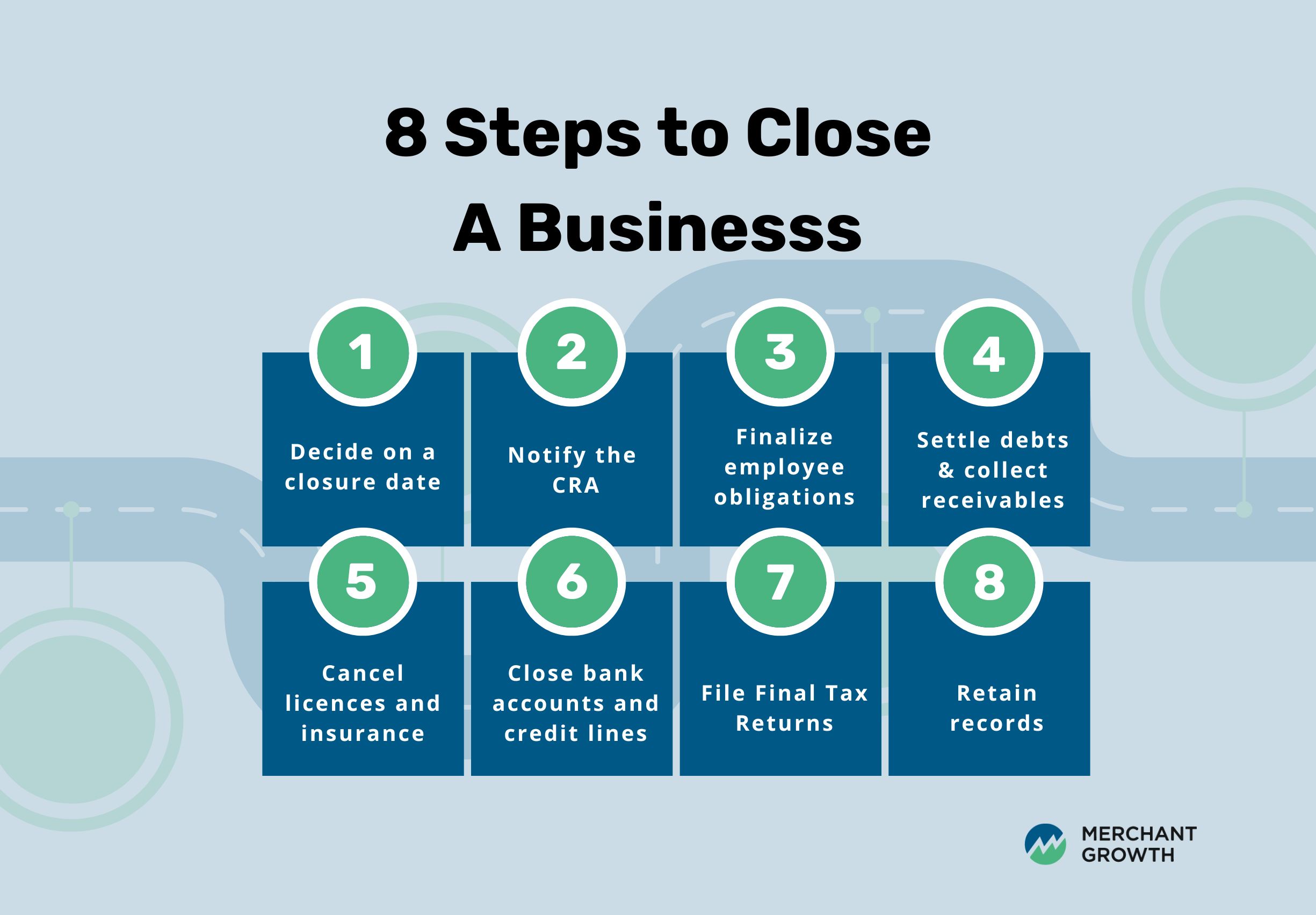
How to Close a Business in Canada
Deciding to close your business can be emotional and complex, but once the choice is made, handling the closure properly is essential. From notifying the CRA to settling outstanding debts, following the right steps ensures you remain compliant, protect your finances, and leave the door open for future opportunities. Below is a clear, step-by-step guide to closing a business in Canada responsibly and efficiently.
Step 1 – Decide on a Closure Date
Your closure date will act as the anchor point for everything that follows. Choose a date that gives you enough time to notify employees, inform clients, fulfill any outstanding orders, and manage final accounting. Providing advance notice shows professionalism and helps maintain your reputation.
Step 2 – Notify the CRA
Once you’ve chosen your closure date, inform the Canada Revenue Agency. You’ll need to cancel your Business Number as well as associated accounts like GST/HST, payroll deductions, and corporate income tax. Doing this prevents further tax obligations from accruing. You can start the process through the CRA’s official “Closing your business” page.
Step 3 – Finalize Employee Obligations
If you have employees, this step is critical. You’re responsible for issuing final paycheques, preparing T4 slips, and submitting Records of Employment (ROEs). Make sure you're meeting all legal requirements related to notice periods, severance (if applicable), and final remittances.
Step 4 – Settle Debts & Collect Receivables
Take a full inventory of what your business owes and what it’s owed. Pay off any outstanding debts to suppliers, lenders, or service providers. At the same time, follow up on unpaid invoices or accounts receivable to bring in any final income before you close your books.
Step 5 – Cancel Licences and Insurance
Reach out to your municipal and provincial licensing bodies to cancel any business licences or permits. Do the same with your insurance provider to end commercial policies like liability, equipment, or property insurance. Be sure to keep a record of these cancellations.
Step 6 – Close Bank Accounts and Credit Lines
Close all business bank accounts and credit lines once your final transactions have cleared. This prevents future charges or fraudulent activity and helps you avoid ongoing fees. If your business account is linked to other services, be sure to unlink and transition them.
Step 7 – File Final Tax Returns
Even if your business is winding down, you still need to file one last set of tax returns. This includes GST/HST filings, corporate income tax returns, and payroll deductions. Submit all necessary paperwork to ensure you remain compliant and avoid penalties.
Step 8 – Retain Records
By law, you must retain business records for at least six years after closure. This includes financial statements, invoices, payroll records, and correspondence with the CRA. Store these records securely—digitally or physically—in case of audits or future reference needs.
Stabilize, Simplify, and Rebuild Confidence
When a business has gone through a rough patch, jumping straight into growth mode isn’t always the answer. In fact, recovery often starts with slowing down, taking stock, and simplifying what’s already there. It’s about regaining control, reducing unnecessary complexity, and building back your confidence—one decision at a time.
Here are some simple but powerful ways to stabilize your operations:
- Cut unnecessary subscriptions, tools, or office space that no longer serve your core needs
- Streamline your invoicing process to improve cash flow and reduce missed payments
- Double down on your most profitable services or products—let go of anything that drains time or resources
- Reconnect with loyal clients through personalized outreach to reignite trust and repeat business
Even modest changes can make a big difference. By reducing overwhelm and focusing on what works, you can build a more sustainable business foundation. Momentum builds with clarity, and every small win is a step toward long-term success.
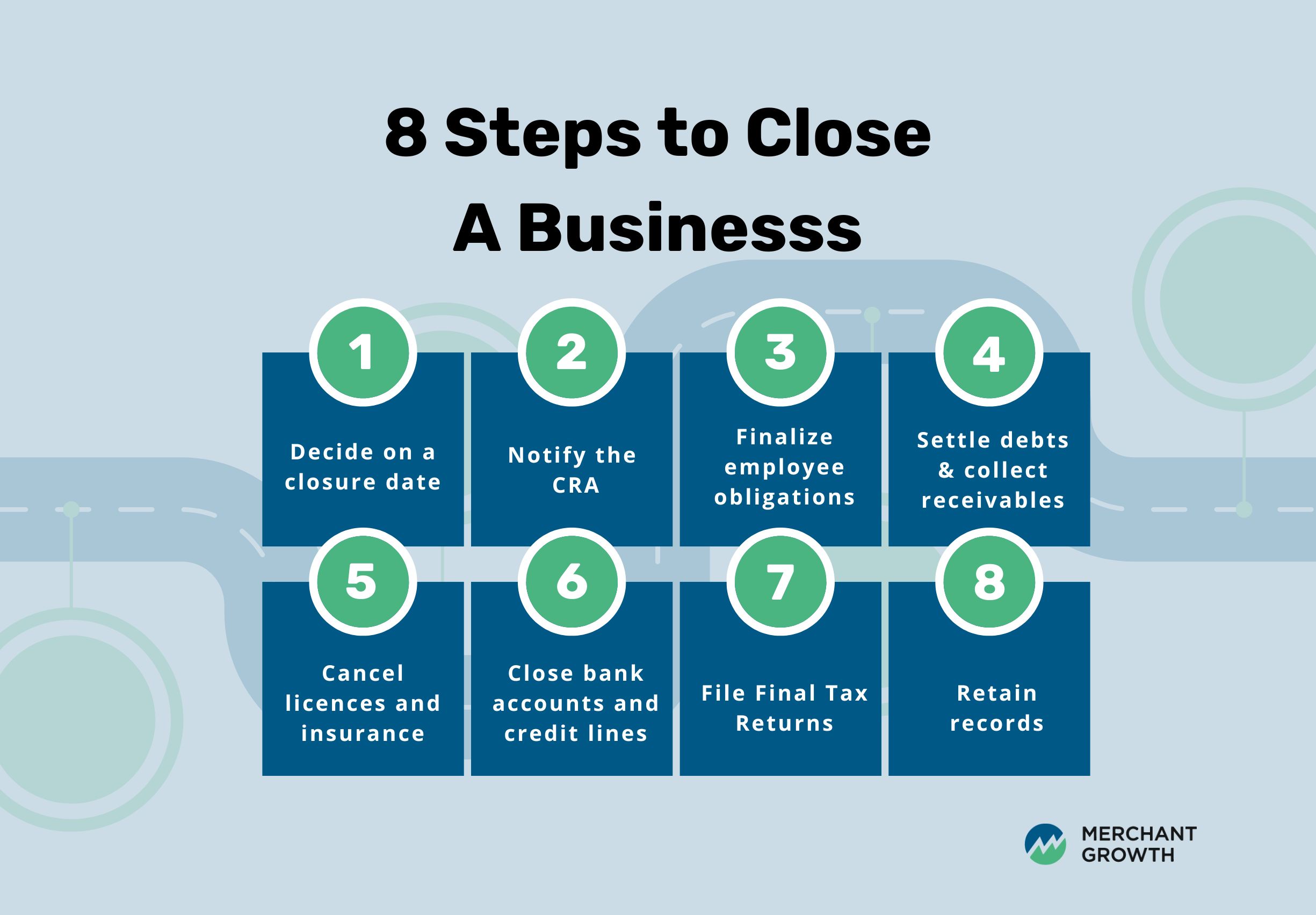
Rebuilding with the Right Tools
If you’re facing business struggles, you're not alone—and you're not without options. Many entrepreneurs face bumps (or brick walls) on the road to success.
What matters most is how you respond.
Revisit your business model. Monitor your cash flow. Seek expert advice. Protect your mental health. Explore available resources.
Merchant Growth offers financing solutions tailored to Canadian small businesses, including:
- Term Financing for large one-time investments
- Lines of Credit to support cash flow or marketing pushes
With the right mindset and support system, many businesses find new life even after hitting a rough patch.
Ready to take the next step? Explore how Merchant Growth can help your business regain momentum and move forward with confidence.
Are We in a Recession? What Canadian Small Businesses Are Saying—and How to Prepare
Are we in a recession, or just feeling like we are? With rising costs, cautious consumers, and increasing chatter about a potential economic downturn, many Canadian small business owners are left navigating more questions than answers. Officially, Canada hasn't entered a recession—but the warning signs are starting to stack up, and the uncertainty is real.
To better understand how this moment is impacting entrepreneurs on the ground, Merchant Growth conducted an exclusive survey of 150 small business owners across Canada in June 2025. While economists debate GDP numbers and technical definitions, our goal was simple: to capture how business owners are actually feeling, what they’re doing, and where they’re struggling most.
The result is a real-world snapshot of how small businesses are bracing for economic turbulence—and what strategies they’re already putting in place to stay resilient.
Here’s what Canadian entrepreneurs told us—and what you can learn from their experiences to better prepare your own business.
Key Takeaways
- Most small businesses believe Canada is already in a recession or will be soon — 61% think we’re in a downturn now, and another 22% expect one within the year.
- Concern is high, and action is happening — 74% of respondents are concerned about the economy, with the majority cutting costs, delaying hiring, and pausing expansion to stay ahead.
- Access to support is a top priority — 75% of businesses surveyed said access to low-interest loans would be most helpful, alongside requests for tax relief, subsidies, and less red tape.
- Preparation is the best strategy — Understanding cash flow, diversifying revenue, and building lender relationships now can help businesses stay resilient, no matter what the economy brings.
What Is a Recession—and Why Does It Matter for Small Businesses?
A recession is typically defined as two consecutive quarters of economic decline, often measured by GDP. For small business owners, however, the technical definition matters less than the real-world impact—reduced customer spending, tighter credit, slower payments, and pressure to scale back operations.
Recessions also bring opportunity. Some of the most successful businesses today were born or rebuilt during downturns. What matters is how you prepare and adapt.
What Canadian Small Businesses Are Saying Right Now
To better understand how entrepreneurs are feeling about the economy in mid-2025, Merchant Growth surveyed 150 small business customers across Canada. Their responses provide an honest and insightful snapshot of how businesses are interpreting the current climate and preparing for potential economic turbulence.
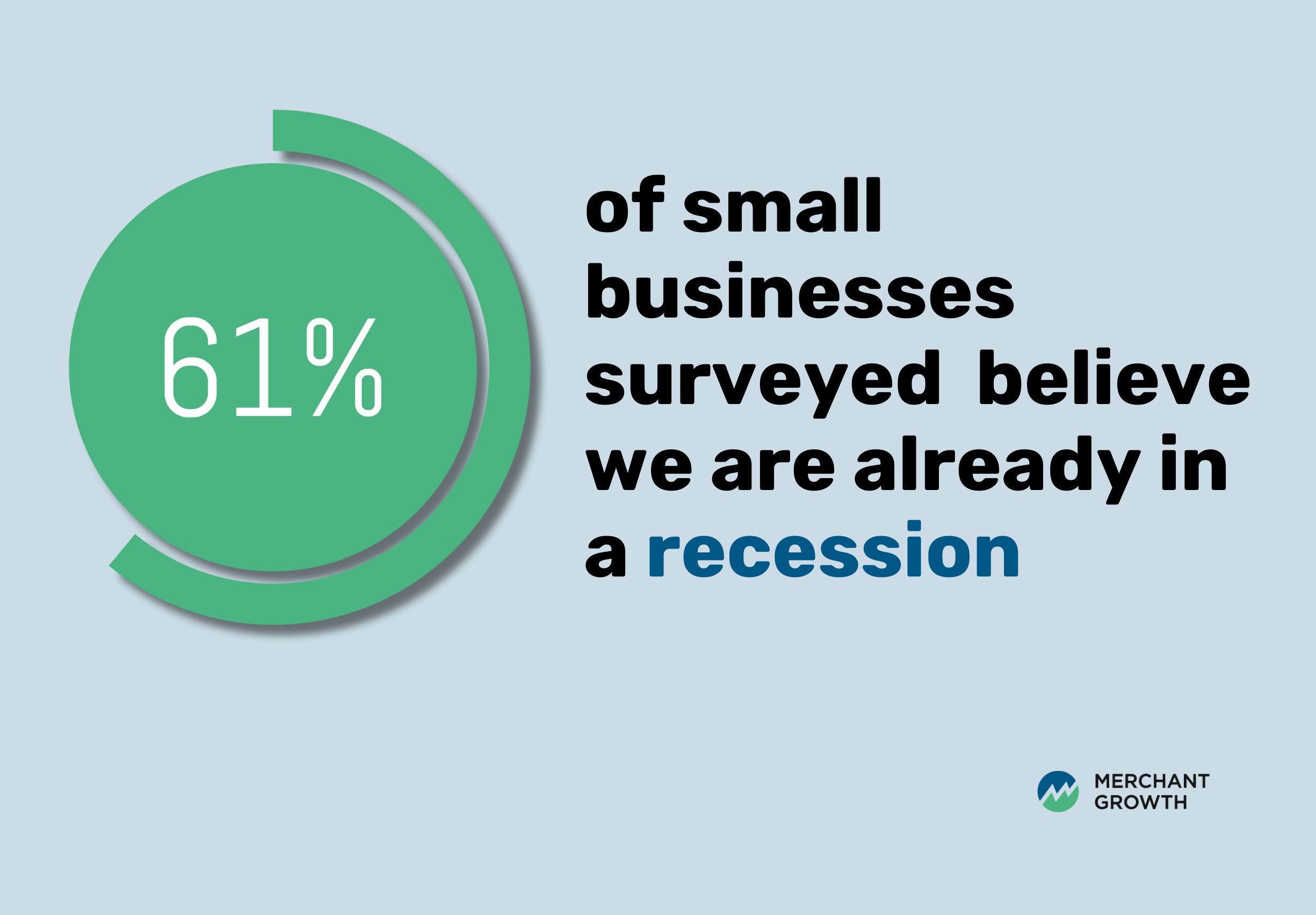
How Small Business Owners Feel About the Current Canadian Economy
When asked about the current state of the Canadian economy, 61% of small business owners said they believe the country is already in a recession or economic downturn. Another 22% felt a downturn is not yet here, but likely within the next 12 months. Only a small fraction—9%—believe a recession isn’t coming anytime soon.
This shows a strong majority of small business owners are either already feeling the impact or bracing themselves for a shift in the coming year.
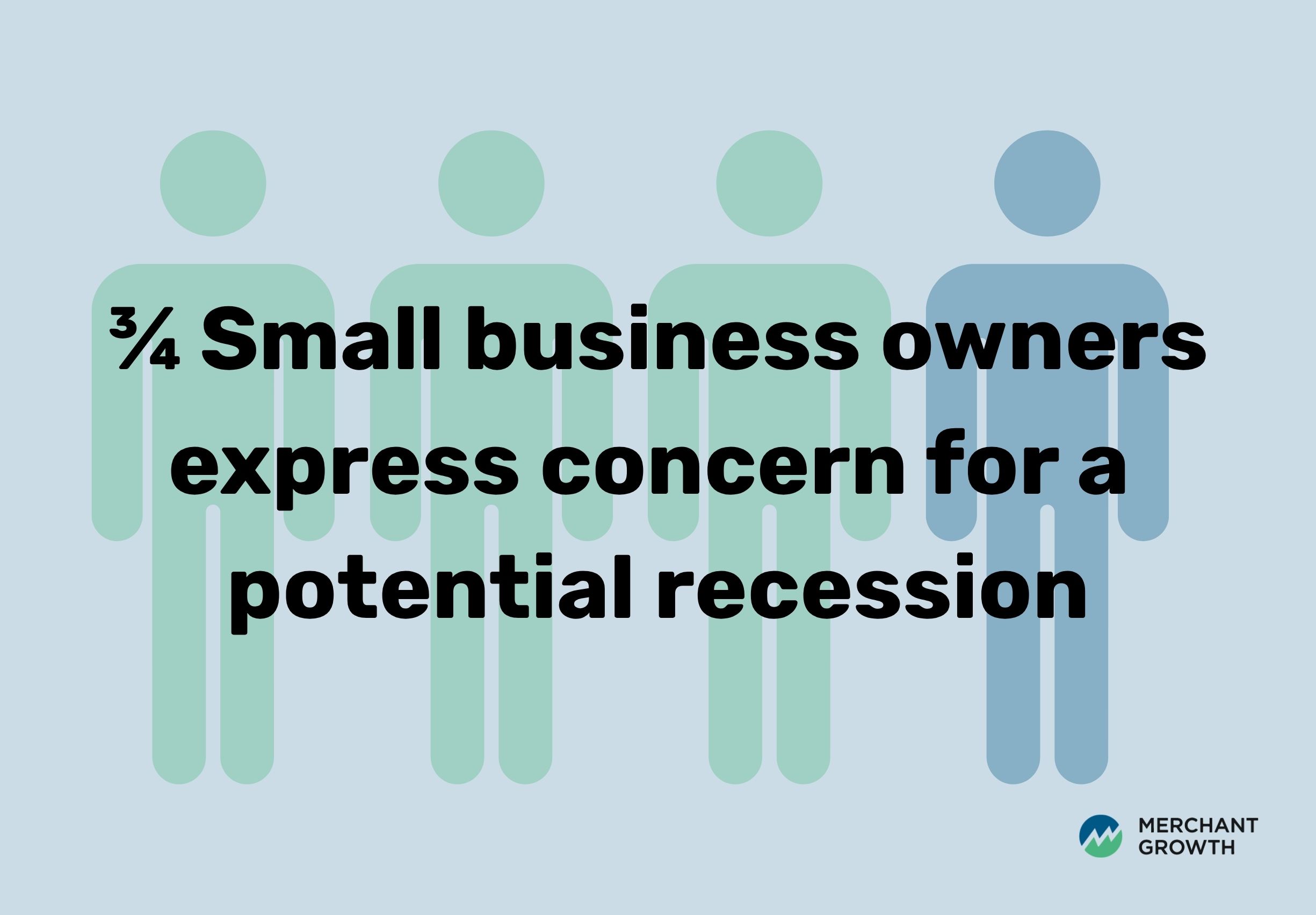
Entrepreneurs Share Concern for Potential Recession
Not surprisingly, this economic sentiment is paired with a high level of concern. Three in four business owners (74%) reported feeling either somewhat or very concerned about a potential recession. Meanwhile, only 3% said they are not at all concerned, suggesting that anxiety about the economy is nearly universal among respondents.
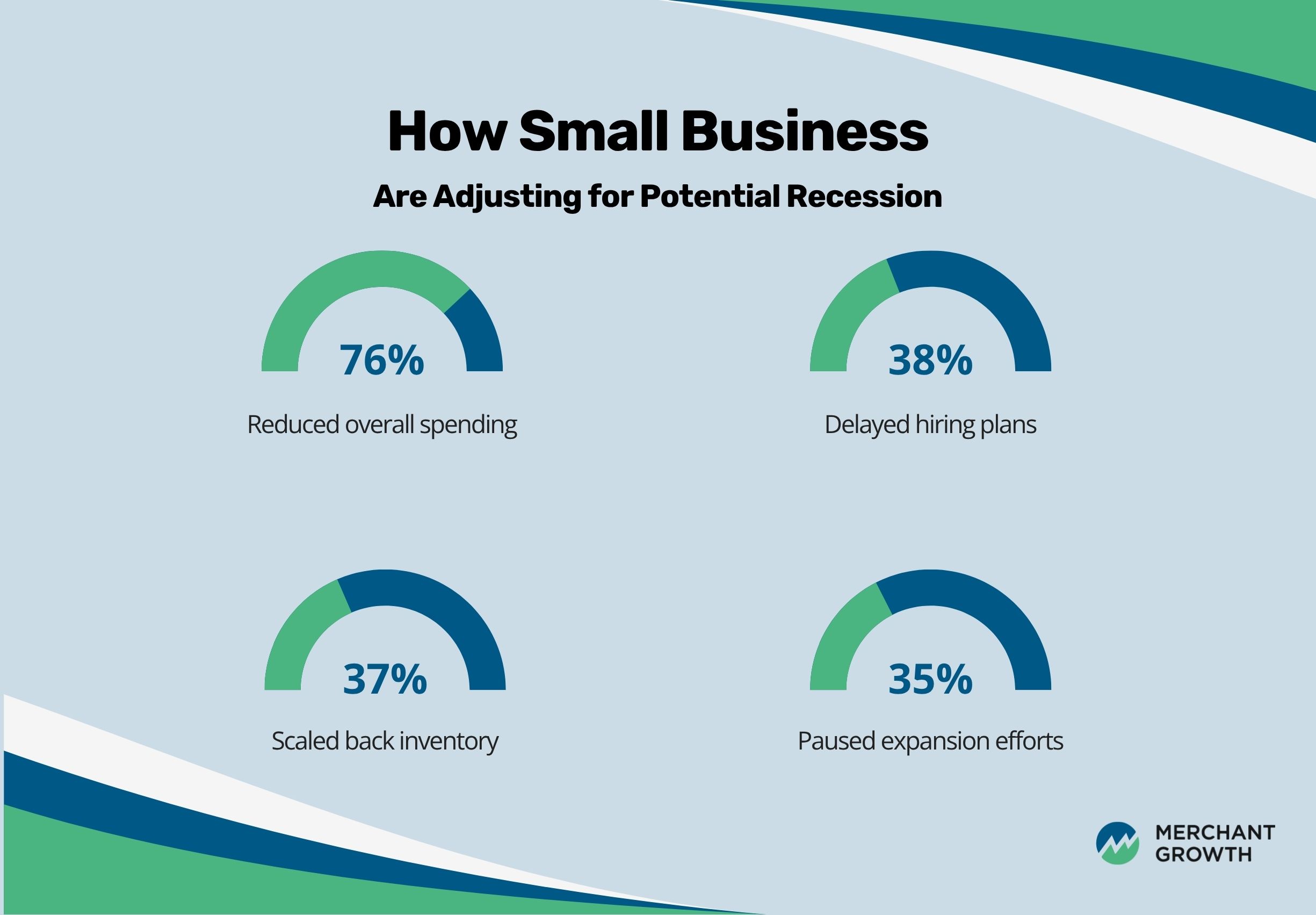
Many Small Businesses Are Already Adjusting
That concern is turning into action. Many entrepreneurs are already making strategic decisions to protect their operations. Among those who have taken steps to prepare:
- 76% have reduced overall spending
- 38% have delayed hiring plans
- 37% have scaled back inventory
- 35% have paused expansion efforts
Interestingly, 20% of businesses haven’t made any changes yet, which may reflect either confidence in their current model or uncertainty about what steps to take.
Canadian Businesses Maintain Confidence to Navigate a Recession
Despite the challenges, more than half of the respondents still feel optimistic about their ability to weather a potential downturn. 56% of business owners said they feel confident—or very confident—in their ability to navigate a recession. That said, 26% feel neutral, and 18% expressed low confidence, indicating that many are still unsure how they’ll manage if conditions worsen.
Is Canada Officially in a Recession?
Economists are divided. While inflation has cooled and interest rates remain high, GDP growth has slowed, and consumer spending has softened. Technically, Canada may not yet meet the formal criteria for a recession at the time of writing, but many small business owners are already feeling the effects.
Remember: small businesses often feel the economic pinch well before it shows up in official data. Declining foot traffic, longer sales cycles, and cautious customers are often the first signs.
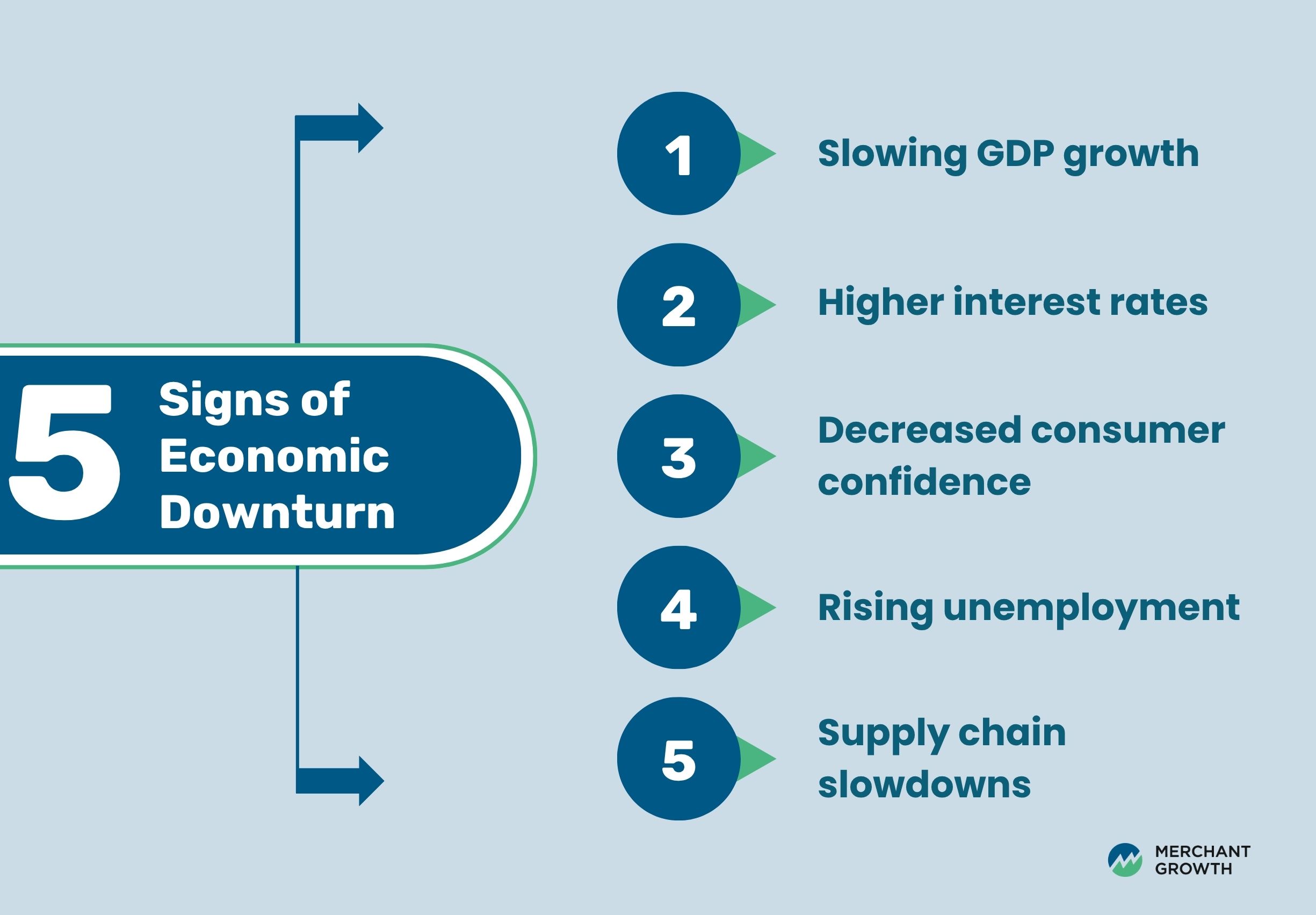
Signs We Might Be Heading for a Downturn
Economic forecasts can be uncertain, but there are consistent indicators that economists and business leaders alike watch to assess the health of the economy. While Canada hasn’t officially declared a recession, many of these markers are flashing yellow, and small business owners are feeling the pressure.
Some of the clearest signs pointing to a potential downturn include:
- Slowing GDP growth
- Higher interest rates
- Decreased consumer confidence
- Rising unemployment
- Supply chain slowdowns
These factors don’t guarantee a recession, but they do signal shifting conditions. Our survey shows many entrepreneurs aren’t waiting for confirmation—they’re already adjusting their strategies in response to what they’re seeing on the ground.

How a Recession Impacts Canadian Small Businesses
A recession can hit small businesses in subtle ways at first—until suddenly, it’s everywhere. Sales slow down, clients become cautious, and the everyday rhythm of your business feels off. For many entrepreneurs, it’s not one big crisis but a series of small strains that build over time.
Here are some of the most common challenges small businesses face during a downturn:
Customers pull back on spending
Whether you're selling products or services, recessions typically cause consumers and businesses alike to cut non-essential purchases. Even loyal customers may reduce how often they buy or start shopping around for cheaper alternatives. If your business serves other businesses (B2B), their tightening budgets can also reduce demand for your services.
Sales cycles stretch out
It often takes longer to close deals. Prospects may hesitate, postpone decisions, or require more convincing than usual. For subscription-based or service-oriented businesses, this can lead to inconsistent cash flow and added stress on sales teams or solo operators.
Inventory and supply chain costs rise
Inflation and supply disruptions don’t disappear during a downturn—in fact, they can worsen. You may find yourself paying more for inventory while customers are simultaneously spending less. This squeeze on both sides makes it harder to maintain healthy margins.
Credit terms become stricter
Suppliers, lenders, and partners may tighten payment terms or reduce access to credit. If you’ve relied on trade credit or small loans to keep operations running smoothly, this shift can limit your flexibility or even force you to scale back unexpectedly.
Financing becomes harder to secure
Banks and alternative lenders typically become more risk-averse during uncertain times. If your business isn’t already on solid financial footing—or lacks a strong track record—it may be more difficult to qualify for loans or lines of credit just when you need them most.
Employee stress and retention issues
In times of economic uncertainty, your team may worry about job security, reduced hours, or frozen wages. For small teams, even one resignation or burnout episode can have a big impact.
While these impacts are challenging, they’re not insurmountable. The key is to stay agile—keep a close eye on your cash flow, focus on high-value customers, and be ready to adjust your strategy as conditions evolve.
Recessions test your resilience, but they also push you to run a smarter, leaner, and more focused business. By being proactive rather than reactive, you can protect what you’ve built—and even find opportunities others overlook.

How to Prepare Your Business for a Recession
Recessions are challenging, but with thoughtful preparation, your business can weather the storm and even come out stronger. Preparation doesn’t mean bracing for disaster; it means making intentional decisions to strengthen your foundation, improve cash flow, and reduce vulnerability. The following strategies are practical, proactive, and widely recommended by financial experts and small business advisors.
1. Review Your Cash Flow in Detail
Cash flow is the heartbeat of your business—especially in uncertain times. Review your inflows and outflows regularly to understand how much working capital you truly have. Can you confidently cover next month’s expenses if revenue slows down? Look for any recurring costs that are quietly eroding your margins.
Tip: Use a cash flow forecast to map out your finances for the next 3–6 months. And if you don’t already have one, now’s a great time to download our free Cash Flow Template.
2. Cut Non-Essential Expenses
Recessions call for a leaner approach. Scrutinize every recurring cost—subscriptions, software tools, professional memberships, marketing services—and ask, “Is this absolutely necessary right now?” Cancel or pause anything that doesn’t directly contribute to revenue or business stability. Be careful not to cut things that will hurt long-term growth, like essential marketing or client service tools.
3. Diversify Your Revenue Streams
If most of your income comes from one product, client, or market segment, you’re vulnerable. Look for ways to broaden your offerings: introduce lower-cost services, bundle packages, explore new platforms, or tap into different customer groups. The goal isn’t to reinvent your business overnight, but to reduce reliance on any one source of income.
Example: A freelance designer could offer template packages or branded merchandise. A retailer might introduce subscription boxes or pop-up sales online.
4. Stay Visible with Smart Marketing
Marketing doesn’t need to stop during a downturn—it just needs to be smarter. Keep your brand top of mind by focusing on cost-effective tactics: email newsletters, organic social media, customer referrals, and community partnerships. Messaging should reflect the moment—emphasize value, empathy, and solutions to customer pain points.
5. Build or Maintain a Cash Buffer
If you can, set aside at least 2–3 months’ worth of operating expenses in an emergency fund. If that’s not possible right now, focus on improving your accounts receivable: invoice promptly, follow up consistently, and consider offering small early payment incentives. Having some runway gives you breathing room when income dips or costs spike.
6. Talk to Lenders Before You Need Them
If financing might be part of your strategy during a downturn, don’t wait until you’re desperate. Build relationships with lenders while your business is still relatively stable. This includes your bank, government-backed programs like the BDC, and alternative lenders. Being proactive gives you more options—and better terms—than scrambling under pressure.
Canadian entrepreneurs are already taking action—cutting costs, pausing expansion plans, and focusing on what matters most. These small, strategic shifts can build real financial resilience and help maintain control, even in uncertain times.
What Canadian Small Businesses Say They Need Most
Access to the right support can make the difference between simply surviving a downturn and emerging stronger. We asked Canadian entrepreneurs what types of assistance would help them navigate an economic slowdown—and their answers were clear. From affordable financing to reduced red tape, small business owners are looking for targeted, accessible resources that meet the realities they’re facing on the ground.
Here’s what they told us:
| Support Type | % of Respondents Wanting It |
|---|---|
| Low-interest small business loans | 75% |
| Permanent tax relief | 55% |
| Wage or hiring subsidies | 39% |
| Rent or utility subsidies | 36% |
| Reduced red tape/regulatory burden | 18% |
Fortunately, programs like the BDC, Canada Digital Adoption Program, and provincial loan initiatives exist, but many businesses say it’s still hard to access support quickly.

Why Recession Talk Feels So Uncertain
The truth is, there’s no single light switch that flips from “growth” to “recession.” Economic slowdowns don’t always follow a clear timeline—and for small business owners, that uncertainty can be one of the biggest challenges.
Canada’s current economic landscape is shaped by a mix of persistent and emerging pressures:
- Lingering post-pandemic shifts continue to affect how people work, shop, and spend.
- Global supply chain issues are still causing delays and unpredictability across industries.
- High household debt is limiting consumer spending and stretching budgets thin.
- Rising borrowing costs—driven by high interest rates—are making it harder for businesses to access capital or finance growth.
These overlapping factors create a grey zone, where the economy may not be in a technical recession, but still feels strained. For entrepreneurs, it can feel like walking a tightrope—balancing caution with ambition.
That’s why this is the time to prioritize scenario planning, improve financial visibility, and stay adaptable. When conditions are uncertain, clarity becomes your most powerful tool.
Merchant Growth: Standing with Canadian Businesses
At Merchant Growth, we’re committed to supporting entrepreneurs through all economic cycles. That’s why we surveyed our customers, and why we continue to offer flexible financing options like:
- Term loans for equipment or one-time investments
- Lines of credit for working capital or seasonal dips
Whether you’re preparing, pivoting, or growing through uncertainty, we’re here to help.
Final Thoughts: Stay Grounded, Stay Ready
There’s no need to panic—but there is a need to plan. Whether or not Canada enters a technical recession, many small businesses are already making smart, proactive decisions.
Take time now to understand your numbers, streamline your operations, and strengthen relationships with clients, partners, and lenders.
Need support or financing? Let’s talk. Merchant Growth is ready to help you face whatever comes next—with confidence.
How to Build Business Credit in Canada: A Step-by-Step Guide for Small Business Owners
Wondering how to take your business to the next level without maxing out your own credit cards? Building business credit can be one of the smartest long-term moves you make as an entrepreneur in Canada. It opens the door to better loan terms, larger credit limits, and supplier trust—all without relying solely on your personal credit profile. Whether you’re launching your first business or scaling an existing one, strong business credit gives you financial flexibility when it matters most.
According to Innovation, Science and Economic Development Canada, only 18% of small businesses requested debt financing in 2022—a signal that many may be unsure how to access or qualify for credit. That’s why learning how to build and maintain your business credit from day one is so important. In this guide, we’ll walk you through the key steps, offer practical tips, and explain the Canadian-specific tools available to help you succeed.
Key Takeaways
- Business credit is separate from your personal credit and crucial for long-term financial health.
- Building credit starts with proper registration, bank setup, and vendor relationships.
- Products like business credit cards, bank loans, lines of credit and net-30 accounts can help establish your credit.
- Monitoring your business credit score allows you to catch issues early and unlock better financing options.

What Is Business Credit and Why Does It Matter?
Business credit reflects your company’s ability to repay borrowed money and manage financial obligations responsibly. It works much like personal credit, but instead of being tied to you as an individual, it’s linked directly to your business entity—meaning lenders, suppliers, and insurers evaluate your business’s financial health separately from your own. Business credit scores are assessed by commercial credit bureaus like Equifax Canada or Dun & Bradstreet and are influenced by factors such as payment history, credit utilization, and the length of your credit profile.
A strong business credit score can:
- Help you qualify for business loans and lines of credit
- Unlock trade credit and supplier terms
- Improve your reputation with landlords and service providers
- Separate your business and personal finances for tax and legal purposes

Does Personal Credit Impact Your Business Credit?
In the early stages, yes. Lenders may review your personal credit to assess risk, especially if your business doesn’t yet have its own credit history. This is particularly common with sole proprietorships and startups applying for loans or credit cards. However, as your business credit profile develops, it becomes possible to access financing based on your company’s financial health alone.

How to Build Business Credit in Canada
Building business credit doesn’t happen overnight, but with the right steps, it’s absolutely within reach. Whether you’re just getting started or looking to take your next big leap, here’s how to lay a strong credit foundation for your business.
Step 1 – Formalize Your Business Structure
Before you can start building credit, your business needs to be seen as a separate legal and financial entity. That means establishing a formal structure and setting up the essential tools that lenders and credit bureaus recognize.
Register Your Business Entity
Incorporating or legally registering your business is a foundational step toward building business credit in Canada. Most lenders and credit bureaus require your business to be formally registered, meaning unregistered sole proprietors often won’t qualify for business credit products. Creating a legal business structure gives your company its own identity, increasing your credibility with banks, suppliers, and government agencies.
In Canada, you can choose from several types of legal business structures, each with its own implications for liability, taxation, and credit access:
- Sole Proprietorship:
The simplest and most common structure. It’s quick to set up, but there’s no legal separation between the business and the owner, meaning your personal credit may be used for loans and liabilities. - Partnership:
Two or more individuals share ownership. In a general partnership, all partners are personally liable. A limited partnership (LP) or limited liability partnership (LLP) offers varying levels of personal protection. - Corporation:
A legally separate entity from its owners (shareholders). Incorporating federally or provincially provides limited liability protection and helps you build credit under the business’s name. Corporations are more likely to be approved for credit and financing on their own merit. - Cooperative (Co-op):
A business owned and democratically controlled by its members. Less common, but can be registered as a separate legal entity eligible for credit and funding.
You can register your business federally or provincially through the Government of Canada Business Registration Portal, depending on where and how you plan to operate.
Open a Business Bank Account
Separating your personal and business finances is a crucial early step in building business credit. A dedicated business bank account signals to lenders, suppliers, and even the CRA that you're operating as a legitimate business, not just managing side income. It also makes your financial records easier to track and audit, especially when it comes time to apply for financing, file taxes, or monitor cash flow.
In Canada, most financial institutions offer tailored business banking solutions. These accounts often include features like expense tracking, mobile cheque deposits, credit card integration, and overdraft protection.
To open an account, you’ll typically need your business registration documents, business number (BN), and valid ID. Starting with a business chequing account will help you build the financial foundation necessary to qualify for credit cards, lines of credit, or term financing in the future.

Apply for a DUNS Number or Business Identifier
A D-U-N-S® Number (short for Data Universal Numbering System) is a unique nine-digit identifier used by Dun & Bradstreet to track a business’s credit activity and global credibility. Think of it as a business fingerprint—recognized worldwide by lenders, suppliers, and even governments. In Canada, having a DUNS Number is especially useful if your business plans to:
- Apply for vendor credit or supplier terms
- Build a credit file with Dun & Bradstreet
- Expand into international markets or work with global partners
Even if you're a small, local business, having a DUNS Number signals to potential lenders and partners that you're a legitimate, established operation worth trusting. Many suppliers and credit bureaus rely on your DUNS profile to determine payment history and creditworthiness.
The good news? It’s free to apply for a DUNS Number in Canada, and it only takes a few minutes. You can get started directly on Dun & Bradstreet’s Canadian website to request your number and begin building your business credit profile.
Step 2 – Start Building a Credit History
Once your business is set up, the next step is to start building a credit history. This involves using financial products that are reported to commercial credit bureaus and managing them wisely.
Apply for a Business Credit Card
Getting a business credit card is one of the easiest ways to start building your credit profile. Choose a low-limit card that reports to commercial bureaus like Equifax Business and use it for regular expenses, like software subscriptions or office supplies. Paying the balance each month helps establish a strong payment history.
To qualify for a business credit card, you’ll typically need a registered business, a business bank account, and may be asked to provide income details or undergo a personal credit check. Make sure any card you choose reports to a commercial credit bureau—this is key for building real business credit.
Work with Vendors Who Report to Credit Bureaus
Just like credit cards, not all vendors your business is financing with report payment activity to credit bureaus, but those that do can play a big role in helping you establish and strengthen your business credit. Look for suppliers that offer net-30 or net-60 accounts. These are trade credit terms that give you a set number of days to pay your invoice after receiving goods or services:
- Net-30 means payment is due 30 days after the invoice date.
- Net-60 gives you 60 days to pay.
These arrangements not only support your cash flow but also help establish a positive payment history, provided payments are made on time. Common vendors that may offer these kinds of terms include:
- Office supply companies (e.g., Staples Business Advantage)
- Logistics and shipping providers
- Marketing firms or print shops
- Small business lenders or commercial service providers
Use a Secured Business Card or Small Loan
If your business has little or no credit history, there are smart ways to start building it.
Secured Business Credit Card
A secured business credit card is a great first step. It requires a refundable deposit as collateral and helps you build credit with regular use and on-time payments. It's ideal for covering smaller expenses while showing financial responsibility.
Small Business Loan
Another option is a small business loan from a bank or alternative lender, typically ranging from a few thousand to tens of thousands of dollars. These loans can provide working capital for things like inventory, equipment, or marketing. Bank loans generally report to credit bureaus and can help build your business credit. Keep in mind that not all alternative lenders do the same, so it’s important to ask before applying if building credit is a priority.
No matter which option you choose, consistent, on-time repayment is key to establishing strong business credit.
Step 3 – Practice Smart Credit Behaviour
Once you’ve opened credit lines or trade accounts, the key to growing your score is using them responsibly. Smart habits and proactive management go a long way.
Pay Bills on Time or Early
Your payment history is the single most important factor in your business credit score. Paying bills early—even just a few days ahead—can help avoid negative impacts on your Days Beyond Terms (DBT), a metric tracked by credit bureaus.

Maintain Low Credit Utilization
Credit utilization measures how much of your available credit you’re using. Try to keep this under 30%. For example, if your credit limit is $10,000, using $2,000–$3,000 or less will show lenders that you can manage debt effectively.
Step 4 – Monitor and Manage Your Credit Profile
Good credit management doesn’t stop once your accounts are open. Monitoring and refining your profile helps you stay on track and spot issues before they become problems.
Check Your Business Credit Reports
Keeping an eye on your business credit is one of the smartest things you can do. You can easily check your profile through Equifax Canada or Dun & Bradstreet by setting up a business account on their websites.
When you review your report, look out for things like incorrect balances, unfamiliar accounts, or late payments that you know were made on time. A sudden drop in your score without explanation can also be a red flag.
If something doesn’t look right, don’t worry — both bureaus let you dispute errors online by submitting a quick form and any proof you have. Catching and correcting mistakes early helps keep your credit healthy and your financing options open.
Limit Credit Applications
Applying for too much credit too quickly can trigger multiple hard inquiries, which may temporarily lower your business credit score. Lenders may also see frequent applications as a sign of financial stress.
To protect your credit profile, apply only when necessary, and try to space out applications by a few months when possible. Before applying, research your options and check if a lender offers a soft check or pre-qualification — this can give you insight into your chances without impacting your score.
Credit Tools to Help You Grow
Once you've laid the foundation for business credit, the next step is putting it to work. The right credit tools don’t just help you cover expenses—they can support growth, improve cash flow, and even earn rewards. Whether you're managing seasonal swings or preparing for expansion, these financing solutions can provide the flexibility your business needs.
Use Business Credit Cards Strategically
Business credit cards are one of the simplest ways to build credit and streamline your spending. Look for cards that offer cashback or points on common business purchases such as gas, travel, software subscriptions, or office supplies. Many Canadian banks and fintech companies offer no-fee business cards designed for small business owners.
Leverage Business Lines of Credit
A business line of credit gives you ongoing access to capital, so you can draw what you need—when you need it—and only pay interest on the amount you use. It’s ideal for covering short-term expenses, managing seasonal fluctuations, or seizing unexpected opportunities.
As your business credit improves, you’ll typically qualify for higher limits and better rates. For Canadian businesses, It’s a powerful tool to help keep your business moving forward.
How Business Structure Impacts Credit
Your legal structure affects how lenders assess your business, your liability, and your access to financing:
Your business’s legal structure does more than define how you operate—it also plays a major role in how lenders assess your creditworthiness, who holds liability for debts, and what types of financing you may qualify for. Whether you’re running a solo operation or have partners and employees, the way you set up your business can directly impact your access to credit, your tax obligations, and the financial protections available to you. Understanding the differences can help you make smarter decisions from day one.
| Sole Proprietorship | Limited Partnership (LP) |
|---|---|
| Credit decisions often based on your personal credit. | General partners have personal liability. |
| Full personal liability for business debts. | Limited partners are not evaluated for credit. |
| Limited Liability Partnership (LLP) | Corporation |
| Partners share liability protection. | Credit is based on the corporation’s profile. |
| Credit may still be based on personal profiles. | Offers the strongest legal and financial separation. |

Set Your Business Up for Success—Download the Credit-Building Checklist
Building strong business credit doesn’t have to be overwhelming, especially when you have a clear roadmap to follow. From registering your business and setting up proper banking to tracking payments, monitoring your credit reports, and managing your credit utilization, staying organized is key. To help you stay on track, we’ve created a free business credit builder checklist you can download and use as you build your credit step by step.
 Download Here: Free Business Credit Checklist

The 8 Types of Business Credit (and How to Use Them)
Not all credit is created equal. In fact, different types of business credit serve different purposes—some are great for everyday expenses, while others help fund larger investments or cover short-term gaps in cash flow. Understanding the credit tools available to you can help build a stronger financial foundation and improve your business credit profile over time.
1. Vendor Credit (Trade Credit)
Vendor credit refers to short-term financing offered by suppliers, typically with net-30 or net-60 payment terms (meaning payment is due 30 or 60 days after purchase). This type of credit is commonly used for routine business needs like office supplies, inventory, or equipment. To make the most of it, choose vendors that report your payment history to business credit bureaus, and always pay on time—or early—to build a positive credit history.
2. Supplier Credit (Trade Credit)
Supplier credit is often extended to businesses purchasing in bulk or on a recurring basis, especially in industries like manufacturing, wholesale, or international trade. These credit terms are typically longer or more flexible than vendor credit and may require a more established relationship. Using supplier credit responsibly can help you maintain steady inventory without draining cash reserves.
3. Service Credit
Service credit comes from companies that provide essential business services, like internet, phone, and software subscriptions. While often overlooked, consistent on-time payments to service providers can positively impact your business credit, especially if those providers report to credit agencies. Set up autopay or reminders to stay current on these bills.
4. Retail Credit
Retail credit includes loans or lines of credit offered by banks, credit unions, or large retailers. These are often used to finance major purchases like renovations, equipment upgrades, or technology. Make sure to compare interest rates and terms, and avoid carrying high balances to protect your credit score.
5. Business Credit Cards
Business credit cards are one of the most accessible ways to start building credit. They allow you to separate personal and business expenses, track spending, and often earn rewards like cashback or travel points.
6. Business Loans
Business loans provide a lump sum of capital that’s repaid over time with interest. They can come from traditional banks or alternative lenders, including online platforms. Loans are typically used for larger, long-term investments such as purchasing equipment, expanding operations, or covering major expenses. Evaluate repayment terms, interest rates, and qualification requirements before applying.
7. Business Lines of Credit
A business line of credit offers flexible access to funds, allowing you to borrow only what you need—when you need it—up to a set limit. Interest is only charged on the amount used. Lines of credit are ideal for managing cash flow, covering seasonal dips in revenue, or handling unexpected expenses. They can be secured (backed by collateral) or unsecured (based on creditworthiness).
8. Merchant Financing / Cash Advances
Merchant financing or cash advances provide upfront capital in exchange for a percentage of your future sales. This option is especially useful for businesses with fluctuating revenue, such as retailers or seasonal businesses. While it’s a fast way to access funds, the cost can be higher than traditional credit products. Use merchant financing for short-term needs, and make sure the repayment terms align with your cash flow.

How Financing Helps Businesses With Established Credit
Once your business has a solid credit foundation, accessing financing becomes both easier and more affordable. Lenders are more likely to offer faster approvals, higher credit limits, and better interest rates to businesses with strong credit histories. This financial flexibility allows you to invest confidently in key areas like marketing, hiring, new equipment, or expanding operations, without putting unnecessary strain on your cash flow.
Your Next Step: Financing That Grows With You
Business credit isn’t just a score—it’s your ticket to sustainable growth. Once you’ve established a reliable track record (typically six months or more), you may qualify for term financing or a business line of credit from Merchant Growth.
Explore financing options that work with your business goals, not against them. Learn more about term financing with Merchant Growth.
Startup Funding in Canada: A Practical Guide for New Entrepreneurs
Canada has become an increasingly appealing place to launch a business, with vibrant startup ecosystems, supportive communities, and a growing number of resources for new founders. Cities like Toronto, Vancouver, and Montreal are home to incubators, accelerators, and funding programs designed to help entrepreneurs get started. But despite this progress, securing capital remains a challenge for new businesses globally. According to a 2024 report from Startup Genome, access to adequate funding is still one of the biggest hurdles facing early-stage startups.
If you're just starting out, it's easy to feel overwhelmed. Where do you begin? What kind of funding makes sense for your stage? And how do you access it without giving up control of your business? This guide will walk you through the most common startup funding options in Canada, so you can make confident, informed choices about fueling your business growth.
Key Takeaways
- There are many types of funding available, from government grants and startup loans to private investments.
- Choosing the right option depends on your business stage, industry, and funding goals.
- Planning ahead with a solid business plan and financial forecast can increase your odds of getting funded.
- Once your business has consistent revenue, term financing can help accelerate growth.
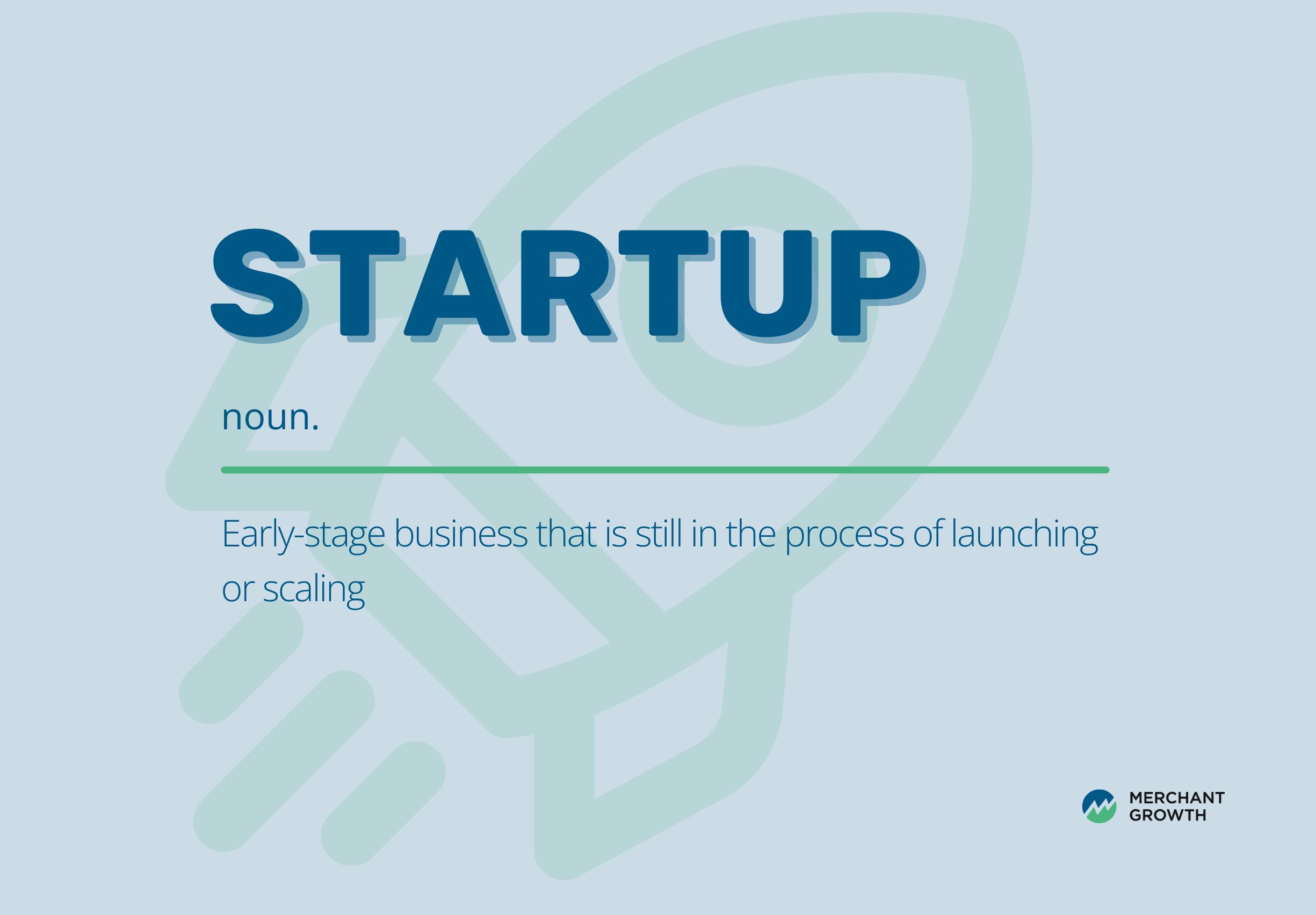
What Exactly Is a Startup?
There isn't one universal definition of what makes a business a "startup," but there are a few key indicators. In general, startups are new businesses that are still refining their products or services, building teams, and testing the market. A company might still be considered a startup even two or three years after launch, especially if it's still focused on growth and not yet fully established.
What’s the Difference Between a Startup and a Small Business?
Startups and small businesses often get lumped together, but they tend to have different goals and trajectories. Startups usually aim to disrupt the market with a new product, technology, or approach, and often scale quickly. Small businesses, on the other hand, typically focus on steady growth, long-term sustainability, and serving local or niche markets.
That said, the line between the two is blurry. For this article, when we say "startup," we're referring to early-stage businesses still in the process of launching or scaling.
The Basics of Startup Funding in Canada
Launching a startup takes more than passion and grit—it requires funds. Unfortunately, many startups fail not because the idea wasn’t good, but because they ran out of money or couldn’t raise it fast enough.
Balancing the day-to-day operations of your business while also pitching to investors, applying for grants, or preparing loan documents can feel like two full-time jobs. And while raising capital is important, focusing too much on funding at the expense of building your product or service can also backfire.
That’s why it’s important to choose a funding option that fits your business stage and your strategy. Some founders are comfortable exchanging equity for early investment. Others prefer to retain ownership and pursue non-dilutive options like grants or loans. Either way, planning ahead and staying focused on building a viable business is key.
Why Early-Stage Capital Matters
Before you can generate consistent revenue, you’ll likely need to spend money to get off the ground. Early-stage costs can include:
- Product development and testing
- Equipment and software
- Hiring or outsourcing
- Branding and marketing
- Legal and administrative setup
Having access to capital early on can mean the difference between a quick launch and a stalled idea. The BDC Startup Financing Guide is a great place to explore more.
What Are Your Funding Options?
Before diving into specific programs and sources, it’s helpful to understand the two major types of startup funding:
- Dilutive funding means giving up a portion of your business in exchange for capital, typically through investors like angel investors or venture capital firms.
- Non-dilutive funding allows you to raise capital without giving up ownership. This includes grants, loans, and certain government support programs.
Choosing between these types depends on how much control you want to retain, how fast you plan to grow, and what stage your business is in. Many startups use a mix of both over time.
You’ll also want to think about where your business is in its journey. Early-stage businesses often need small, strategic injections of capital to get off the ground, while later-stage companies are usually looking for ways to accelerate growth or scale quickly.
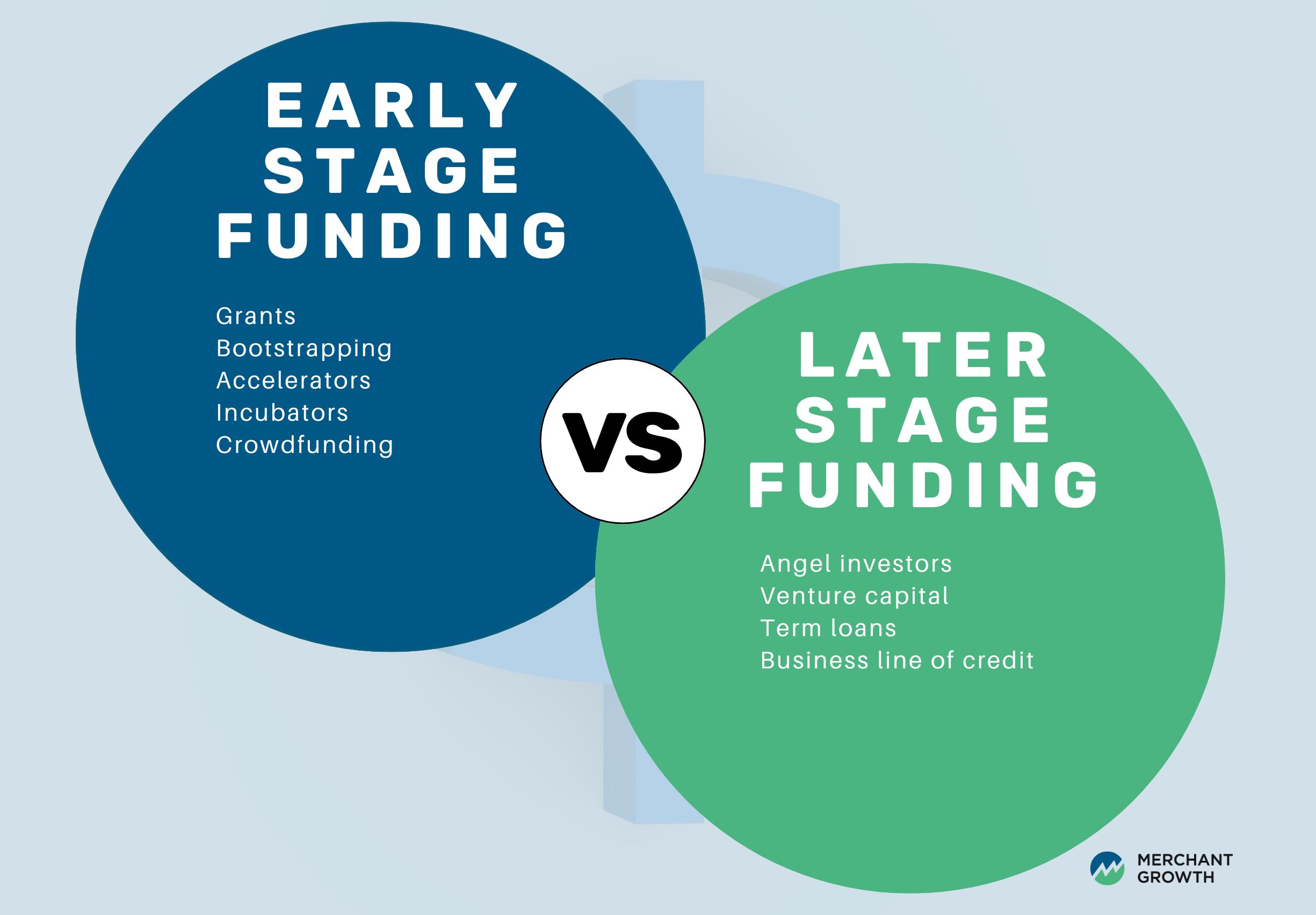
Early-Stage Funding Options
If you're in the early days of building your business—still validating your idea, creating a prototype, or setting up operations—then early-stage funding is what you'll be looking for. These options are designed to help you get started without needing to give up a large stake in your company before you've even launched.
- Grants: These are non-repayable funds provided by government bodies, non-profits, or private organizations. They're often tied to innovation, job creation, or specific sectors like tech or clean energy.
- Bootstrapping: This involves using your savings, or early revenue from the business, to cover expenses. It's a common starting point for many founders who want full control and minimal debt.
- Accelerators & incubators: These programs often provide a small amount of funding in exchange for equity, but the real value comes in the form of mentorship, networking, and access to resources.
- Crowdfunding: A great option for consumer-facing products. Platforms like Kickstarter or Indiegogo let you validate your idea while raising funds from early supporters.
Later-Stage Funding Options
Once your business has traction—some consistent revenue, customer demand, or proven product-market fit—you may be ready for more significant funding to scale. These later-stage funding sources typically offer larger amounts of capital but often require a stronger business case or willingness to give up some equity.
- Angel investors: These are typically high-net-worth individuals who invest their own money into startups they believe in. They often bring industry experience and networks, in addition to capital.
- Venture capital: VC firms invest larger sums of money into high-growth startups in exchange for equity. They're looking for businesses that can scale rapidly and generate a strong return on investment.
- Term loans & business lines of credit: These non-dilutive options allow you to borrow money while maintaining ownership. Term loans provide a lump sum with fixed repayment terms, while lines of credit offer flexibility for managing cash flow or covering short-term needs.

Government Grants and Public Support
When you're just starting out, every dollar counts—and government grants can be a game-changer. These non-dilutive funding options allow you to access capital without giving up ownership of your business. While grants are competitive and often come with strict eligibility requirements, they’re absolutely worth exploring if you qualify. Many are designed specifically to support innovation, research, and early-stage growth—making them a great fit for startups still building momentum.
Federal Funding Programs
Canada offers a range of national programs aimed at supporting startups through research, development, and global expansion. If your business is working on new technologies, entering international markets, or investing in R&D, these programs could be a strong fit:
- IRAP (Industrial Research Assistance Program): Provides advisory services and financial support to businesses conducting technology innovation or product development.
- CanExport: Offers funding to help small and medium-sized businesses grow into international markets through trade shows, market research, and promotional activities.
- SR&ED (Scientific Research and Experimental Development Tax Incentive): One of Canada’s largest tax incentive programs, offering refundable tax credits for eligible R&D activities.
To explore what programs you may qualify for, visit the Innovation Canada Navigator—a handy tool that matches you with the most relevant funding opportunities based on your business profile.
Ontario-Based Programs
If your business is based in Ontario, you’ll find several provincial programs designed to support regional development, tech innovation, and job creation. These options are especially helpful for businesses looking to grow within the province or connect with local startup ecosystems:
- OCE (Ontario Centre of Innovation): Supports high-potential startups working on tech and innovation projects through funding, mentorship, and commercialization support.
- NOHFC (Northern Ontario Heritage Fund Corporation): Offers grants and loans to businesses located in Northern Ontario to promote economic development and job growth.
- Regional Innovation Centres: Organizations like MaRS Discovery District, Invest Ottawa, and Innovation Factory offer access to grants, expert mentorship, and a strong network of peers and partners.
To start exploring these options, head over to the Ontario.ca business funding portal. It’s a great first step to see which programs are currently accepting applications and what documentation you'll need to apply.
British Columbia-Based Programs
If you're launching your business in British Columbia, you’ll find a growing number of provincial programs and innovation hubs designed to support startups through funding, mentorship, and community-building. From clean tech to life sciences, BC is a hotspot for entrepreneurial growth, especially for founders focused on sustainability, innovation, and export potential.
- Innovate BC: A crown agency that supports BC-based startups through grant programs, accelerator partnerships, and innovation challenges. Programs include the Ignite Grant (for R&D projects) and the Tech Co-op Grant (to hire student talent).
- BC Tech Association: While not a direct funder, BC Tech offers access to partner funding opportunities, accelerator programs, and a valuable support network for growing tech companies.
- Regional Innovation Centres: Organizations like Spring Activator, Accelerate Okanagan, VIATEC, and Innovation Island provide localized support, funding navigation, and community mentorship to startups across the province.
To explore these and other BC-specific resources, check out the Innovate BC website or connect with your nearest innovation centre to learn about current grant programs, pitch opportunities, and upcoming cohorts.
Quick Grant Checklist
Before applying for any grant, it’s important to have your key documents in order. While every program has its own specific requirements, most will ask for similar core materials that show your business is prepared and funding ready. Use this checklist as a quick reference to make sure you’ve got the essentials covered before you hit “submit.”
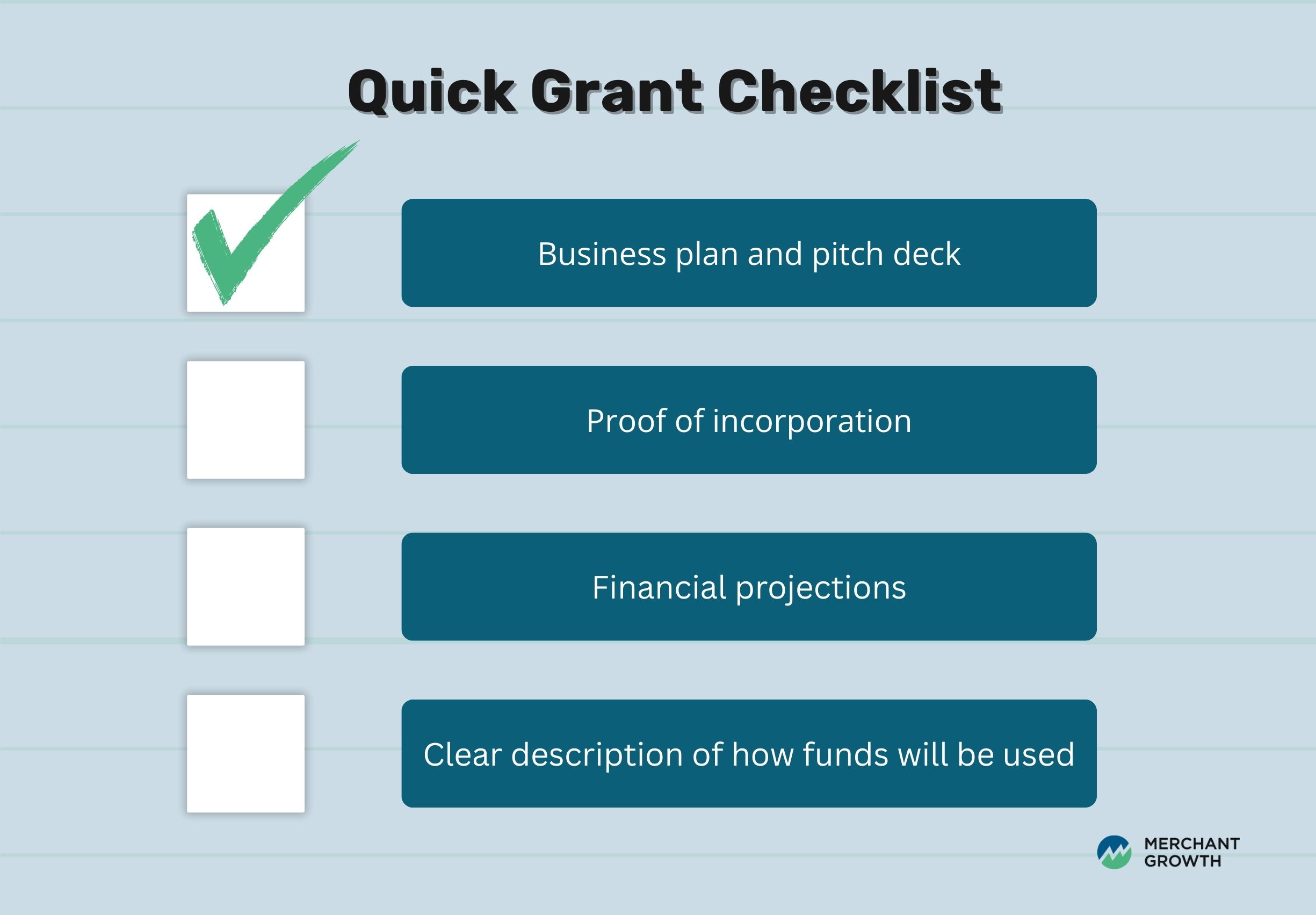

Loans, Credit, and Other Financing Options
If you're not ready to give up ownership in your business—or just want to maintain full control over how things grow—loan-based financing might be the best path forward. For many founders, accessing capital through loans or lines of credit is a practical and empowering way to fund operations, hire staff, or launch new products—without diluting equity.
The key is finding an option that aligns with your current stage, cash flow, and goals. Fortunately, there are several startup-specific lending options available across Canada, from government-backed loans to flexible private financing.
Small Business Loans
Government-supported lenders like BDC and Futurpreneur offer accessible startup loans tailored to new entrepreneurs. These loans may be secured (requiring collateral) or unsecured, and they often come with additional support like mentorship, low-interest rates, or extended repayment terms. If you're early in your journey and still building revenue, a small business loan can be a great way to get capital while benefiting from some extra guidance.
Alternative Financing & Term Loans
If you need faster access to capital or want a more streamlined alternative to traditional bank loans, fixed-rate financing or a business line of credit might be a better fit. These options are especially helpful for businesses with steady revenue that need capital to take advantage of growth opportunities.
Fixed-Rate Term Financing
Perfect for businesses with consistent income, this type of loan offers funding with predictable daily or weekly payments. It’s a smart way to smooth out cash flow and fund necessities like equipment purchases, marketing efforts, or team expansion—all without hidden fees or variable rates.
Business Line of Credit
This flexible option gives you access to capital as needed, and you only pay interest on what you use. It's great for covering short-term needs or managing seasonal swings, without locking into a full loan or dealing with credit card interest.
Explore small business financing with Merchant Growth and see how we can help support your next move.

Private Investment & Crowdfunding
Not all funding needs to come from traditional institutions. In fact, some of the most successful startups get their early momentum from private investors or the public crowd. These options are especially appealing if you're building something innovative, community-driven, or built to scale quickly. While both come with their own challenges—like pitching, marketing, and equity trade-offs—they also open up unique opportunities to grow your business with real-world support and visibility.
Angel Investors & Venture Capital
If your startup is targeting rapid growth or working on disruptive tech, angel investors and venture capital (VC) could be the right fit. These investors are looking for big potential, and in return for funding, they’ll often ask for a share of your company.
Angel investors are typically high-net-worth individuals who invest in early-stage startups they believe in. They may also bring valuable expertise, mentorship, and industry connections to the table. Venture capital firms tend to come in at a slightly later stage, offering larger amounts of funding in exchange for equity, often with more aggressive growth expectations.
To succeed here, you’ll need a strong pitch deck, solid proof of concept, and a clear vision for how the funding will fuel your growth. Transparency, traction, and a well-researched business plan go a long way.
Crowdfunding as a Launch Strategy
Crowdfunding can be an incredibly powerful way to bring your idea to life while building a community around your brand. It involves raising small contributions from a large number of people through platforms like Kickstarter, Indiegogo, or GoFundMe. This method works particularly well for product-based startups and social ventures, as it allows you to validate demand and gain early traction before going to market.
Successful crowdfunding campaigns often share a few key elements:
- A compelling story
- Clear goals
- Attractive rewards
- Solid marketing strategy
Beyond the money, crowdfunding gives you visibility, feedback, and a built-in base of early supporters who are excited about what you’re creating.
If you're building something people can get behind—be it a product, mission, or movement—crowdfunding could be the boost you need to get off the ground.
Incubators, Accelerators, and Ecosystem Support
When you’re building a business from the ground up, funding can only take you so far. Sometimes what you really need is guidance, connections, and a community of people who’ve been where you are. That’s where incubators, accelerators, and innovation hubs come into play.
Across Canada, these programs offer much more than just early-stage capital. They can connect you with mentors, help you refine your business model, give you access to investor networks, and create opportunities to collaborate with other founders. Whether you’re an entrepreneur with an early-stage idea or a growing company looking to scale, there's likely a program designed for your stage and sector.
Here are just a few standout ecosystems across the country:
- MaRS Discovery District (Toronto, ON): One of the largest innovation hubs in North America, MaRS supports science, health, and tech-focused startups through advisory services, funding opportunities, and investor connections.
- Futurpreneur Canada (National): While not a traditional incubator, Futurpreneur provides financing, mentorship, and resources to young entrepreneurs aged 18–39 across the country. Their programs are particularly helpful for founders launching their very first business.
- Accelerate Okanagan (Kelowna, BC): Based in the Okanagan tech corridor, this BC accelerator helps early- and growth-stage companies through mentorship programs, pitch training, and access to local investor networks.
- District 3 Innovation Hub (Montreal, QC): Housed at Concordia University, District 3 supports entrepreneurs in Quebec through incubator and accelerator programs, venture support, and access to research and technical expertise.
No matter where you’re located, joining a startup ecosystem can dramatically increase your chances of success, especially in the early days.
What to Look for in An Incubator or Accelerator:
- Equity Terms: Some accelerators offer funding in exchange for equity, while others are non-dilutive. Be sure to ask what the financial structure looks like upfront.
- Mentorship & Community: A good program will connect you with experienced advisors and peers, not just a co-working space and generic advice.
- Alumni Outcomes: Look at how past participants have performed. Did they raise capital? Launch successfully? Grow their teams?
If you’re not quite ready for investors but want to surround yourself with support, mentorship, and resources, joining an incubator or accelerator can be a powerful step forward, no matter where you are in Canada.
Making the Right Choice for Your Business
There’s no universal roadmap for building a successful startup, and that includes how you fund it. The best financing option for your business depends on where you are today and where you want to go next. Your stage of growth, revenue model, and risk tolerance should all play a role in shaping your funding strategy.
Matching Funding to Your Stage of Growth
Understanding what stage your business is in can help narrow down which options are most realistic and effective. Here’s a quick guide to aligning your funding approach with your current needs.
Early Stage
Just getting started? You’re likely still validating your idea, building a prototype, or launching a minimum viable product (MVP). At this point, options like grants, bootstrapping (using personal savings), or joining an incubator can help you get off the ground without taking on debt or giving up ownership too early.
Mid Stage
If you’ve launched and have started generating some traction—think early customers, initial revenue, or growing brand awareness—you might be ready for more structured capital. At this stage, traditional bank loans can still be tough to secure, but alternative lenders, crowdfunding platforms, and business lines of credit are often more accessible. These options can help fuel your growth while giving you flexibility and keeping your ownership intact.
Growth Stage
Once you’ve proven your model and you’re ready to scale—expanding your team, entering new markets, or launching additional products—you may want to explore venture capital, angel investment, or term financing. These options can give you the capital needed to grow quickly, though they come with different levels of commitment and trade-offs.
Building a Funding-Ready Business Plan
No matter what kind of funding you pursue, one thing is certain: you’ll need a solid business plan. Lenders, investors, and grant reviewers all want to see that you’ve done your homework and can clearly communicate your vision.
A strong plan should include:
- A compelling executive summary
- A defined problem/solution your business addresses
- A practical revenue model
- A transparent breakdown of how funds will be used
Planning for Cash Flow
Securing funding is just the beginning. Once the money hits your account, managing it wisely becomes the next challenge. Cash flow forecasting is key, especially if you’ve taken on loans or flexible credit. Understanding when your expenses hit, how revenue comes in, and what your repayment schedule looks like will help you stay ahead of potential cash gaps.
Your Next Steps: From Idea to Growth-Stage Business
Startup funding in Canada isn’t one-size-fits-all. The best approach often involves a mix of funding types at different stages. As your business evolves, so will your financing needs.
Stay focused, be realistic with your goals, and use the tools available to you. Funding is possible—but it takes planning, persistence, and the right partners.
Merchant Growth Helps Businesses Access the Funds They Need
At Merchant Growth, we support Canadian businesses across industries with fast, flexible financing options. Whether you're an e-commerce brand, a service provider, or just getting off the ground, our team is here to help.
If you've been in business for at least six months and generate $10K in monthly revenue, you may be eligible for term financing of up to $800,000. Use it to:
- Hire your first employees or contractors
- Launch a new product line
- Expand your marketing or infrastructure
With fast approvals, predictable payments, and no collateral required, our financing helps small businesses grow—on their terms.
Apply today for a free, no-obligation quote and see what your business qualifies for.
This post is intended as general information only and does not constitute financial advice. Please consult with a professional advisor to determine what financing solution is right for your business.
What is Leasing & Why More Businesses Are Choosing It to Improve Cash Flow
Leasing has evolved from a simple affordability tactic into a strategic financial tool for businesses of all sizes. Whether you’re outfitting an office, upgrading equipment, or adding vehicles to your fleet, leasing provides much more than just cost savings. It offers flexibility, preserved cash flow, and the ability to scale faster—all without the upfront burden of large capital investments.
In fact, leasing is becoming a go-to option for many Canadian business owners: according to Equipment Financing Canada, the 2024 market is shaped by several key trends, including a rising reliance on flexible financing solutions, increasing demand for sustainable equipment, and the ongoing impact of technological innovation. In today’s fast-moving economy, more Canadian businesses are choosing leasing to remain agile, competitive, and financially resilient. Let’s explore why.
Key Takeaways
- What leasing is and how it works for small businesses
- The three main types of leasing arrangements
- How leasing can fuel business growth while maintaining strong cash flow
- Whether leasing is the right financial decision for your business
What is Leasing in Business?
Leasing is a financial arrangement that allows businesses to access and use essential equipment, vehicles, or property without owning them outright. Instead of purchasing the asset, the business (known as the lessee) agrees to pay a fixed monthly fee to the lessor—the leasing company or lender that owns the asset—over a set term.
This model is especially beneficial for small businesses looking to preserve working capital while still acquiring the tools needed for growth. Leasing can apply to a wide range of assets, including office furniture, medical or construction equipment, software, commercial vehicles, and more.
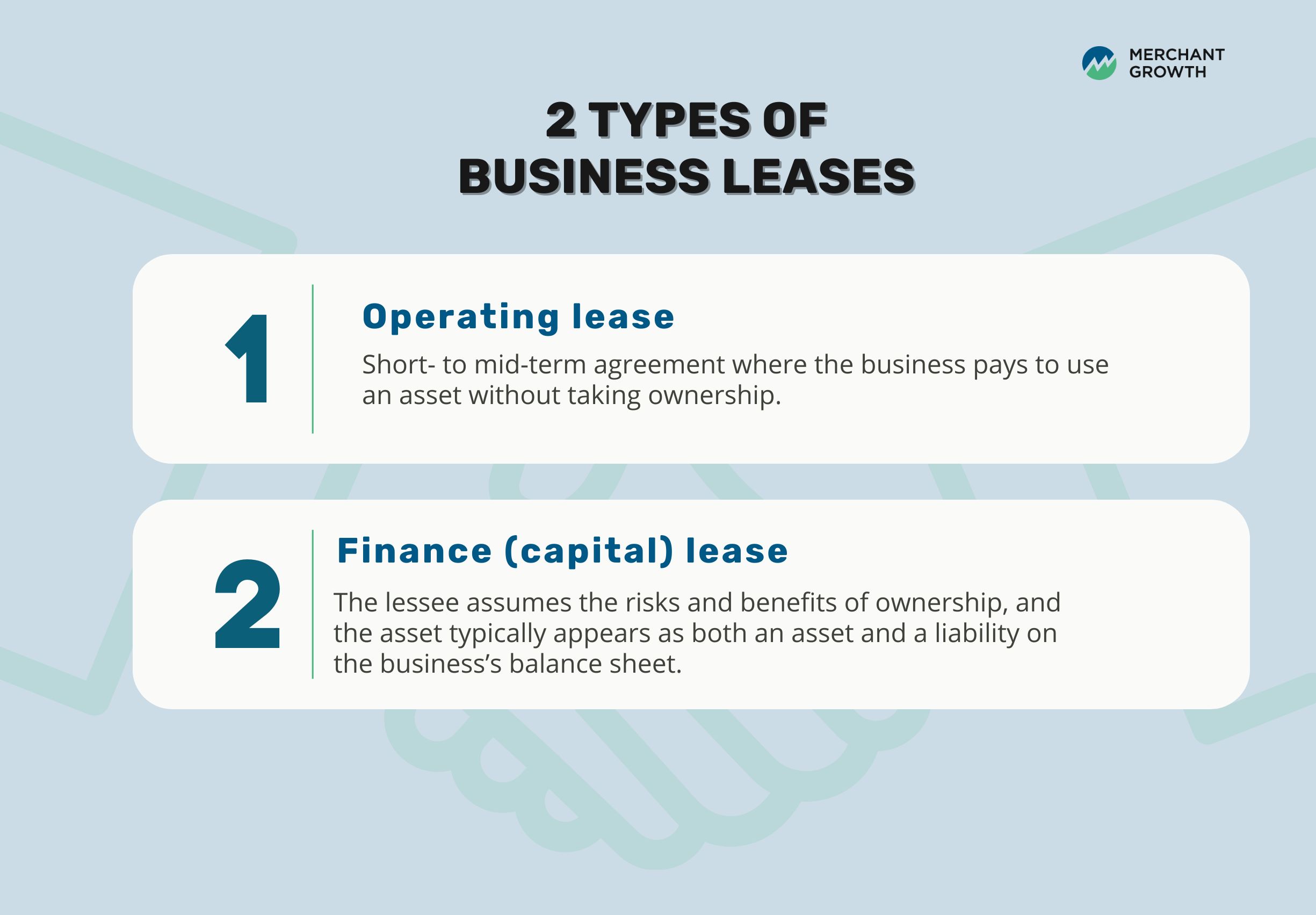
The Two Main Types of Leasing
Choosing the right leasing structure can make a significant difference in how your business manages cash flow, accesses equipment, and plans for the future. Whether you're a start-up looking to preserve capital or an established business planning to scale, understanding the different types of leases is key to selecting an option that fits your operational and financial needs.
Operating lease
An operating lease is typically a short- to mid-term agreement where the business pays to use an asset without taking ownership. The asset remains on the lessor’s balance sheet, and lease payments are treated as operating expenses, often fully deductible. This type of lease is commonly used for assets that depreciate quickly or require frequent upgrades, such as office equipment, technology, or vehicles.
Best for: Businesses that need flexibility or regularly upgrade equipment.
Finance lease (capital lease)
A finance lease—also known as a capital lease—is structured more like a purchase. The lessee assumes the risks and benefits of ownership, and the asset typically appears as both an asset and a liability on the business’s balance sheet. Finance leases often include a buyout option at the end of the term, making them ideal for businesses that intend to retain the equipment long-term.
Best for: Businesses that plan to keep the asset long-term and want the benefits of ownership without a large upfront payment.

Breaking Down the Components of a Lease
Lease agreements can be intimidating, especially if you’re not familiar with the terminology or how the numbers are calculated. If you've ever wondered what exactly you're paying for, how lease payments are structured, or what happens at the end of your lease, you're not alone. Many business owners hesitate to lease because the details feel murky or overly technical.
But understanding just a few key components can make a big difference. By breaking down the most important elements of a lease—like how costs are calculated, what fees to expect, and how asset value plays a role—you’ll be in a much stronger position to evaluate your options and make decisions that support your business and your cash flow. Let’s take a closer look at what really goes into a lease.
The capitalized cost
Also known as the “cap cost,” this is the total amount being financed through the lease. It typically includes the negotiated price of the asset, plus any additional fees, delivery costs, or taxes rolled into the lease. The higher the capitalized cost, the higher your monthly payment will be.
Example: A small dental clinic leases a new digital imaging machine with a negotiated price of $45,000. Delivery and installation add another $2,000, bringing the capitalized cost to $47,000. This full amount is used to calculate the monthly lease payment.
The lease term
This refers to the length of time you’ll be making lease payments, usually ranging from 12 to 60 months. Shorter lease terms typically mean higher monthly payments but offer more flexibility to upgrade sooner, while longer terms reduce monthly costs but lock you in for a longer period.
Example: A catering company leases a commercial-grade oven. They choose a 36-month term to keep payments manageable while ensuring they’ll have the option to upgrade when technology or capacity needs change.
The residual value
Residual value is the estimated worth of the leased asset at the end of the lease term. It plays a critical role in determining your monthly payments—the higher the residual value, the lower your payments. It also affects your buyout cost if you decide to purchase the asset when the lease ends.
Example: A small architecture firm leases a high-end plotter with a residual value of $10,000 after a 48-month lease. This reduces the amount being amortized over the lease term and gives them the option to purchase it affordably later.
The disposition fee
This is a fee some lessors charge at the end of the lease to cover costs like inspection, cleaning, and preparing the asset for resale. It’s typically non-negotiable and can range from a few hundred to over a thousand dollars.
Example: A logistics company returns three leased delivery vans at the end of a 3-year lease. They’re charged a $750 disposition fee per vehicle to cover inspection and preparation for auction.
Depreciation
Depreciation is the loss in value of the asset over time. In most leases, you’re essentially paying for the portion of the asset’s life you’re using. Depreciation is factored into your monthly payments and varies based on asset type and usage.
Example: A tech startup leases laptops for its developers. The devices are expected to depreciate by 50% over two years. Their lease payments are structured to cover that loss in value, with the option to upgrade when the term ends.

Misconceptions We Often Hear About Leasing for Your Business
Leasing is often misunderstood as a financial last resort or a backup plan for businesses that can’t afford to buy outright, but that couldn’t be further from the truth. In reality, leasing is a widely used and strategic financial tool embraced by companies of all sizes, from lean start-ups to large-scale enterprises.
Yet, many business owners hesitate to explore leasing because of outdated assumptions or unclear information. Let’s take a moment to debunk some of the most common myths and shed light on what leasing really offers in today’s business environment.
Myth: Leasing is more expensive in the long run.
Fact: While monthly payments may add up over time, leasing can be cheaper when you account for cash flow preservation, tax deductions, and lower maintenance costs.
Myth: Leasing is only for businesses that can’t afford to buy.
Fact: Leasing is a strategic choice used by successful businesses to keep capital free for growth and operations.
Myth: Leased equipment is outdated.
Fact: Many leasing programs give access to the newest models or let you upgrade regularly.
Myth: Leasing contracts are rigid.
Fact: Lease terms can be customized—short-term, seasonal, or tailored to cash flow cycles.
Myth: Leasing means you’ll never own the equipment.
Fact: Many leases include end-of-term buyout options, giving you flexibility.
How Leasing Can Support Your Cash Flow
For many businesses, managing cash flow is a constant balancing act—ensuring there’s enough capital to cover day-to-day expenses while also funding growth and staying ahead of the competition. That’s where leasing can offer significant advantages. Beyond simply acquiring the tools or equipment you need, leasing can be a powerful tool for protecting liquidity, improving predictability, and allowing your business to operate with greater confidence.
Here are a few of the most impactful ways leasing can support your cash flow:
Preserves capital
Rather than spending a large lump sum to purchase equipment outright, leasing spreads costs over time, keeping your cash reserves intact. This allows businesses to stay nimble and redirect funds toward higher-return activities like hiring, marketing, or product development.
Predictable monthly payments
Leasing agreements typically involve fixed monthly payments, which makes it easier to plan, forecast, and manage budgets with less financial volatility. This kind of stability is especially helpful for businesses with tight margins or fluctuating revenues.
Frees up cash for growth or operations
Because leasing limits large capital expenditures, businesses can reallocate their available cash toward immediate operational needs or expansion initiatives. Whether you're launching a new product, entering a new market, or hiring talent, having cash on hand creates strategic flexibility.
Avoids equipment obsolescence
Technology and equipment evolve quickly, and owning assets outright often means holding onto outdated tools longer than you should. Leasing gives businesses the ability to refresh and upgrade regularly, without the full burden of replacement costs, keeping operations efficient and competitive.
Utilize Equipment Leasing as a Tool to Grow Your Business
Leasing isn't just about keeping the lights on—it’s about fueling growth without overextending your business financially. For companies ready to expand, take on larger contracts, or enter new markets, leasing can provide the freedom to act quickly and confidently. By removing the need for major upfront capital, leasing helps business owners move forward on their own timeline, without compromising cash flow or delaying key initiatives.
Here’s how leasing empowers strategic, scalable growth:
Supports expansion without cash drain
Whether you're opening a new location or ramping up production, growth often comes with the need for new equipment, and that can get expensive. Leasing lets you access the tools, vehicles, or technology you need without putting a strain on your cash reserves. It’s a practical way to scale sustainably, giving you the resources to grow while maintaining a strong financial foundation.
Example: A landscaping business lands a citywide maintenance contract and leases additional lawnmowers and trucks to scale up quickly, without tying up capital needed for staffing and supplies.
Allows faster execution on opportunities
Opportunities don’t always wait for your bank balance to catch up. Leasing gives you the power to act when the timing is right. Whether it’s onboarding a new client, upgrading outdated equipment, or preparing for a busy season, with leasing, you can move fast without financial hesitation.
Example: A printing company secures a high-volume contract but needs additional machines to meet demand. Instead of dipping into reserves, they lease the equipment and start production immediately.
Simplifies forecasting
One of the biggest advantages of leasing is predictability. Fixed monthly payments make it easier to build reliable cash flow forecasts and long-term budgets. This consistency helps with planning, investor reporting, and reducing surprises that can derail growth strategies.
Example: A medical clinic leasing diagnostic equipment knows exactly what their monthly costs will be for the next three years, making it easier to budget for hiring and expansion.

Get to Know the Potential Tax Benefits of Leasing
Leasing doesn’t just help with cash flow—it can also offer meaningful tax advantages for Canadian businesses. In many cases, lease payments are fully deductible as business expenses. This means the total lease cost can be subtracted from your gross income when calculating taxable income, lowering your overall tax burden.
Depending on the type of lease and how it’s structured, leasing may also qualify as an off-balance-sheet transaction, particularly in the case of operating leases. This means the leased asset and its corresponding liability don’t appear on your balance sheet, which can improve your debt-to-equity ratio and make your business appear less leveraged to potential investors or lenders.
According to the Canada Revenue Agency (CRA), leasing costs may be deductible if they are reasonable and incurred to earn business income. Generally, operating lease payments for assets used in a business are deductible, though certain limitations—such as those related to passenger vehicles—may apply. To be fully deductible, the expense must relate to business use and comply with CRA rules.
Keep in mind that tax treatment can vary based on province, lease structure, and the nature of the asset, so it’s always best to consult a tax professional or accountant for personalized advice.
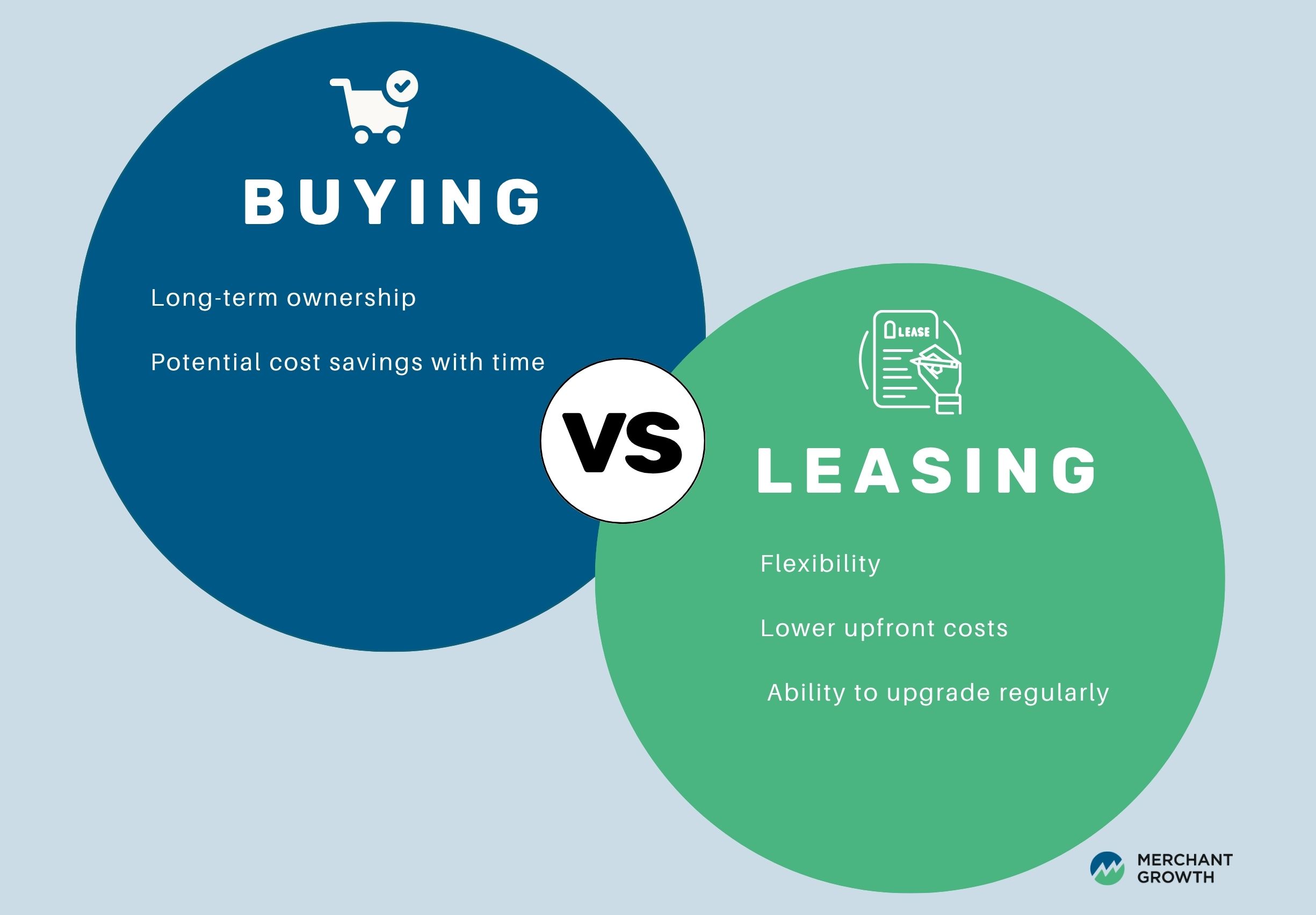
Equipment Leasing vs. Buying: Which is Right for Your Business?
Both leasing and buying have their advantages—it all depends on your business’s financial goals, cash flow situation, and how you plan to use the asset. Leasing offers flexibility, lower upfront costs, and the ability to upgrade regularly, while buying provides long-term ownership and potential cost savings over time. Understanding the pros and cons of each option can help you make a decision that aligns with your current needs and future plans.
Here’s how the two approaches stack up:
| Leasing | Buying | |
|---|---|---|
| Upfront Cost | Low | High |
| Monthly Cost | Fixed payments | No payments after purchase |
| Ownership | No (unless buyout) | Yes |
| Maintenance | Often included | Owner responsibility |
| Tax Benefits | Lease payments often deductible | Depreciation over time |
| Cash Flow Impact | Positive | Negative (initially) |
Questions to Ask Yourself Before Entering a Business Lease
Before signing a lease, ask yourself the following:
Does this decision support my business goals today and tomorrow?
Leasing can be a powerful financial tool, but like any commitment, it works best when it aligns with your cash flow, operational needs, and long-term plans. By taking a few minutes to reflect on the questions below, you’ll set yourself up for a more confident, strategic decision.
- Is this equipment something I need every day, or just for a specific project or short-term use?
- How long will I actually need the equipment, and would leasing give me more flexibility than buying it outright?
- If I lease instead of buy, could I use that saved capital for other important areas like payroll, marketing, or inventory?
- Will the monthly lease payments fit comfortably within my current cash flow?
- Do I need the latest and greatest tech, or would a slightly older model still get the job done?
- What options do I have at the end of the lease—can I buy the asset, return it, or upgrade to something newer?
- Are there any hidden costs I should watch for—like maintenance, end-of-term fees, or penalties for ending the lease early?
How Merchant Growth Can Help
Acquiring new equipment or assets is a strategic move, and leasing offers a smart way to do it without draining your cash flow. It’s flexible, scalable, and ideal for growing businesses that need to stay agile. But if leasing isn’t the right fit—whether due to eligibility or a need for full ownership—term financing can be a strong alternative, offering upfront capital with predictable repayments. The right choice depends on your goals, budget, and how you plan to grow.
At Merchant Growth, we offer flexible financing options that can complement or replace leasing depending on your business needs. From lines of credit to working capital loans, we help Canadian businesses grow without compromising their cash flow.
Explore our financing solutions or speak to our team about how we can help support your next big move.
Get Funding with Small Business Grants in Canada
Securing funding is one of the biggest challenges small business owners in Canada face when launching a new venture or planning to expand. While loans and private investment are options, small business grants remain highly sought after because they provide non-repayable funds to help businesses grow.
The good news? More funding opportunities are available than ever—if you know where to look.
We're diving into the top government-run initiatives and grant programs available in Canada. We’ll cover both federal and provincial opportunities and share essential tips for applying successfully. Plus, we’ll introduce other financing options when grants don’t quite cover everything. Whether you're just starting out or ready to scale, we’ll help you find the perfect funding for your business.
Key Takeaways:
- Canada offers a wide range of federal, provincial, and industry-specific grants for small businesses.
- Programs like the Canada Small Business Financing Program (CSBFP) and CanExport provide accessible funding support.
- Strategic planning improves your chances of securing a grant.
- City-level funding opportunities are growing across Canada.
- When grants aren't enough, fast business financing options are available through Merchant Growth.
Types of Grants Available
Grants are a valuable resource for businesses at every stage of growth, but not all grants are created equal. Each type is tailored to meet different needs, whether you're just getting started or looking to scale. Let’s break down the various options available so you can find the right fit for your business journey.
| Grant Type | Description |
|---|---|
| General Support & Start-Up Grants | Help new businesses with initial costs like training, equipment, or marketing. (Example: Starter Company Plus Program in Ontario.) |
| Grants for Innovation & R&D | Fund research, technology development, and commercialization projects. (Example: Industrial Research Assistance Program (IRAP).) |
| Grants for Exports & International Expansion | Support businesses entering international markets. (Example: CanExport SMEs Program.) |
| Grants for Digital Adoption | Help businesses adopt digital tools and e-commerce solutions. (Example: Canada Digital Adoption Program.) |
Each grant program has its own eligibility criteria, funding limits, and application process, so it’s important to find the right fit for your needs.
Canada Small Business Financing Program (CSBFP)
Although not a grant in the traditional sense, the Canada Small Business Financing Program (CSBFP) is a critical government initiative that helps small businesses access financing they might otherwise struggle to secure. By sharing the risk with lenders, CSBFP encourages banks and credit unions to provide loans of up to $1 million for purchasing or improving equipment, commercial property, or leasehold improvements.

Top Federal Grants for Small Business
Canada provides a range of powerful federal grants designed to fuel business growth, spark innovation, and help companies expand their reach globally. Whether you're looking to enhance your product development, adopt new technologies, or break into international markets, these grants can offer the support you need to turn your vision into reality.
Industrial Research Assistance Program (IRAP)
The IRAP offers funding and advisory support to small and medium-sized businesses in Canada that are working on technology-driven innovations. This program is particularly beneficial for businesses that are developing new products, processes, or services in technology sectors such as engineering, electronics, or software. The amount of funding varies depending on the project size and scope, but it can cover up to 80% of eligible project costs.
Example businesses that would benefit:
- A tech startup developing a new software tool or mobile app.
- A small electronics company working on innovative hardware products.
Accessibility:
- Moderate to difficult: The process involves submitting a detailed project proposal and demonstrating the potential technological innovation. Successful applicants often have a clear innovation pathway and the ability to show a defined technological challenge.
Canada Digital Adoption Program (CDAP)
The CDAP provides small businesses with grants of up to $15,000 to help them create digital adoption strategies. This is an excellent program for businesses that are looking to increase their digital presence, enhance customer engagement through online tools, or implement new technologies. In addition, the program offers access to 0% interest loans for technology upgrades such as new software or digital infrastructure.
Example businesses that would benefit:
- A retail business seeking to establish an online store and improve its e-commerce capabilities.
- A manufacturing business looking to integrate digital tools for better supply chain management.
Accessibility:
- Moderate: The application process requires proof that the business is ready to adopt digital solutions and that the funding will lead to measurable improvements in digital capabilities.
Canada Job Grant
The Canada Job Grant helps businesses cover up to two-thirds of training costs for new or existing employees, with a maximum of $10,000 per employee. This grant is ideal for businesses looking to invest in the skill development of their workforce, whether through specialized training, certification programs, or other professional development.
Example businesses that would benefit:
- A manufacturing company seeking to train employees on new machinery or technology.
- A healthcare provider looking to fund professional development in advanced patient care or software use.
Accessibility:
- Easy to moderate: The application is relatively straightforward, requiring businesses to show how the training will benefit their employees and the company. Training must be with an eligible third-party provider.
CanExport Program
The CanExport SMEs Program provides grants of up to $50,000 to help small and medium-sized businesses expand into international markets. This grant can cover costs associated with market research, promotional activities, and attending trade shows or missions. It’s an excellent option for businesses looking to increase their exports and gain exposure in foreign markets.
Example businesses that would benefit:
- A Canadian food producer aiming to enter the European market.
- A software development company seeking to expand its client base to the U.S. or Asia.
Accessibility:
- Moderate: The application process requires businesses to demonstrate a clear strategy for international expansion and market development. Success is more likely with a solid plan and an understanding of the target market.
Strategic Innovation Fund (SIF)
The Strategic Innovation Fund (SIF) offers funding to large-scale projects that support growth in critical sectors like life sciences, clean tech, advanced manufacturing, and aerospace. This fund is designed to promote innovation and investment in transformative projects that will have long-term benefits for the Canadian economy. The funding can be substantial, often in the millions, depending on the project size and potential impact.
Example businesses that would benefit:
- A clean tech company developing breakthrough renewable energy solutions.
- A pharmaceutical company conducting advanced R&D in medical treatments.
Accessibility:
- Difficult: The SIF is highly competitive and typically requires businesses to demonstrate substantial innovation, scalability, and the potential for significant economic impact. Projects must also show alignment with Canada’s innovation priorities.
Innovation Solutions Canada (ISC)
ISC provides innovation challenges, grants, and contracts to help Canadian businesses scale their research solutions for public sector use. This program is designed to help businesses develop innovative products and services that can solve public sector problems. It’s a great option for businesses with research-based solutions that could benefit government operations.
Example businesses that would benefit:
- A cybersecurity company developing solutions to protect government data.
- A company creating software for improving healthcare delivery in the public sector.
Accessibility:
- Moderate to difficult: ISC challenges businesses to find solutions to specific government needs. It requires companies to engage with public sector issues and demonstrate the value of their innovation in a government setting.
Women Entrepreneurship Strategy (WES)
The Women Entrepreneurship Strategy (WES) supports women entrepreneurs looking to grow their businesses and expand into international markets. WES provides funding for projects that help women entrepreneurs overcome barriers to success, including mentorship, networking, and access to financing.
Example businesses that would benefit:
- A woman-owned fashion business looking to expand its brand internationally.
- A female tech entrepreneur seeking funding to scale her software development company.
Accessibility:
- Moderate: The WES is designed to support women entrepreneurs, but the application process is competitive. Businesses must clearly outline how the funding will help them scale and overcome specific challenges related to gender-based barriers in entrepreneurship.

Small Business Grants by Province
Across Canada, every province provides unique grants designed to support and nurture small businesses in their local communities. These region-specific programs not only reflect the diverse needs of businesses but also offer opportunities for growth and innovation in various sectors. Let’s explore some of the key programs available in different provinces to help you take your business to the next level.
- Ontario: Starter Company Plus Program – Grants and mentorship for entrepreneurs aged 18+.
- British Columbia: Innovate BC – Funding and resources for tech companies.
- British Columbia: Launch Online Grant Program – Funding to develop or improve e-commerce platforms.
- Alberta: Alberta Innovates – Supports R&D and innovation initiatives.
- Alberta: Digital Economy Program – Supports small businesses adopting digital solutions.
- Quebec: Programme d'aide à l'entrepreneuriat – Provides financial assistance to new entrepreneurs.
City-Level Grant Opportunities to Get Funding in Your Community
Beyond the provincial and federal programs, many cities across Canada provide their own unique set of small business grants, tax incentives, and specialized support services. These local opportunities are designed to help businesses thrive in specific communities, whether it’s through financial support, resources for innovation, or access to networking and mentorship. City-based economic development offices are often at the forefront, offering tailored solutions to help businesses grow and succeed within their unique local economies.
For example:
- Toronto: Digital Main Street grants.
- Vancouver: Small Business Grants Program (VEC).
- Calgary: Calgary Innovation Grants.
Find the Right Grant for You
Finding the right grant for your business can be a game-changer, but it often depends on your specific business type and goals. Whether you're just starting out, running an e-commerce store, or leading a non-profit organization, there are grants tailored to your unique needs. This table highlights some of the best grant options available for different business types, helping you quickly identify the right fit and take the next step toward growth and success.
| Business Type | Relevant Grant Options |
|---|---|
| New Entrepreneurs | Starter Company Plus, Futurpreneur Canada Grants |
| Retail/E-Commerce | Launch Online Grant, Digital Main Street |
| Tech Startups | IRAP, SIF, Innovate BC |
| Rural Business Owners | CanExport Community Investment, Regional Development Agencies |
| Non-Profits | Canada Summer Jobs Grant, Community Services Recovery Fund |
| Solo/Freelancers | Canada Digital Adoption Program (Boost Your Business) |
| Indigenous Business Owners | Aboriginal Entrepreneurship Program, Indigenous Growth Fund |
| Women in Business | Women Entrepreneurship Strategy |
Take the Guesswork Out of Finding Small Business Grants
Finding grants can be time-consuming and overwhelming. That’s where Granted Consulting comes in—with tools like GetGranted, a searchable database of Canadian grants, and a comprehensive Small Business Grant Guidebook to help entrepreneurs identify and secure available funding.
Stay Organized with the 2025 Small Business Funding Planner
Ready to fuel your next stage of growth? The Merchant Growth Business Funding Planner highlights key grants, financing opportunities, and insider tips for Canadian small businesses. Whether you're launching, expanding, or innovating, this planner will help you stay on track and ahead of deadlines. Download it for free and start planning your success! 👉 Download Here: 2025 Small Business Funding Planner

6 Tips for Successful Grant Applications
Applying for grants can be competitive, but with the right approach, you can improve your chances of success. Whether you’re a first-time applicant or a seasoned pro, these key steps will help you create a thoughtful, strong application that stands out. Here’s how to get started:
1. Research & Plan
Before jumping into the application process, take the time to thoroughly research the grants available to you. Understand the specific criteria, funding amounts, and deadlines. It’s important to ensure that the grants you apply for align with your business goals and that you meet all eligibility requirements. Proper planning can save you time and effort in the long run, helping you focus on the opportunities most suited to your needs.
2. Keep it Concise & Clear
Funders read dozens, if not hundreds, of applications. To make sure yours gets the attention it deserves, keep your application clear and to the point. Avoid jargon and lengthy explanations. Funders are looking for straightforward answers that quickly demonstrate how your business fits the criteria and how the funding will be used. A concise, well-organized application is more likely to make a lasting impression.
3. Tailor Your Application to the Grant
Every grant has its own specific requirements and goals. It’s important to customize each application to address the criteria outlined by the funding body. Highlight how your business aligns with the grant’s objectives and explain exactly how the funding will help achieve those goals. A tailored application shows that you’ve put in the effort and are truly invested in the success of the program.
4. Review & Revise
After completing your application, take the time to review and refine it. Proofread for any spelling or grammatical errors, and make sure your ideas flow logically. If possible, ask a mentor or advisor to look over your application and provide feedback. A fresh set of eyes can catch details you might have missed and offer valuable suggestions to improve clarity and impact.
5. Follow-Up
Once you’ve submitted your application, don’t be afraid to follow up—if the process allows. A polite follow-up can show your enthusiasm for the grant and reinforce your commitment to the project. It’s also an opportunity to address any lingering questions or provide additional information that may support your application.
6 Don’t be Afraid to Try Again
Rejection isn’t the end of the road. If your application is unsuccessful, don’t be discouraged. Instead, use the feedback you receive to strengthen your future applications. Whether it’s adjusting your approach, refining your business plan, or providing more evidence of your project’s impact, each rejection is an opportunity to learn and improve your chances next time.
The Difference Between Grants & Loans
Grants and loans are both valuable sources of funding, but they serve different purposes. Grants are non-repayable funds provided for specific purposes, such as supporting innovation, business growth, or community development. While grants can be highly beneficial, they are also often highly competitive, requiring businesses to meet certain criteria and demonstrate clear goals. On the other hand, loans are funds that must be repaid with interest. Loans tend to be quicker and more flexible compared to grants, making them a more accessible option for businesses that need immediate funding or require larger sums of money. While loans come with the responsibility of repayment, they can offer more straightforward access to capital.

The Limitations of Small Business Grants in Canada
While grants are attractive, they come with limitations. Many grants require funds to be used for a specific project, such as hiring, digital adoption, or export development, which may not match your immediate needs. Grant applications can also take months to process, delaying critical initiatives. If you're facing urgent needs, business financing may offer faster, more flexible support.
Fast & Flexible Funding Solutions When Grants Aren’t Enough
If you’re ineligible for grants or need quicker funding, Merchant Growth offers flexible financing options built for Canadian small businesses.
Term Financing
At Merchant Growth, we offer term financing ranging from $5,000 to $800,000 to support a wide variety of small businesses, from restaurants and coffee shops, to construction contractors and hardware stores. The application process takes only a few minutes, and you can receive funding in as little as 24 hours. Unlike a traditional loan, our financing does not require collateral and offers flexible payment terms to meet your needs.
Business Line of Credit
Our business line of credit is a versatile financing option designed to give small businesses quick access to capital whenever they need it. With this revolving credit facility, you can borrow funds as required and only pay interest on the amount you withdraw. This helps business owners manage cash flow effectively and reduce dependency on credit cards. Our business line of credit features competitive interest rates and repayment terms that suit your business’s needs, providing the flexibility to borrow, repay, and borrow again as needed.
Wrapping Up: Navigating Small Business Funding
Small business grants provide a powerful funding option for entrepreneurs across Canada, but they aren't always enough or available when you need them. Whether you're applying for grants, seeking a loan, or combining funding sources, planning ahead is key to building a sustainable, thriving business.
At Merchant Growth, we’re proud to offer flexible, fast financing solutions to support Canadian small businesses through every stage of their journey.
Minimum Eligibility Requirements:
- Located in Canada
- Monthly revenue of at least $10,000
- Minimum of 6 months in business
Small Business Financing: From Start-Up to Expansion
Launching or growing a small business in Canada is an exciting journey, but it comes with one critical challenge: funding. Whether you’re starting from scratch or scaling your operations, securing the right financing can make or break your success. Yet, navigating the world of financing as a small business can feel overwhelming, especially with so many options, from government grants to private investments.
The good news? Canadian entrepreneurs have access to a wide range of financing options. From loans to innovative crowdfunding platforms, there’s never been a better time to find the capital to grow your business. The key is knowing which option fits your goals, your structure, and your stage of growth.
Ready to dive in? Below is your comprehensive guide to financing your start-up or expanding your small business, with insights tailored specifically to Canada’s funding landscape.
Key Takeaways
- There are multiple financing options for small businesses, including loans, grants, crowdfunding, and private investments.
- Canada offers valuable government programs at both federal and provincial levels.
- Strategic financial planning greatly increases your chances of securing and using funding effectively.
Understanding Financing for Growing Small Businesses: The Basics
Before diving into specific funding options, it’s important to understand why financing plays such a pivotal role in small business growth. Whether you’re launching a start-up or expanding an existing venture, having access to capital gives you the flexibility to act on opportunities, weather unexpected challenges, and scale sustainably. In Canada, where competition is strong and economic conditions can shift quickly, a solid financial foundation is key to long-term success.
Why Securing Funding Matters for Small Businesses
Access to capital is often the bridge between an idea and a thriving business. Funding enables entrepreneurs to cover start-up costs, invest in marketing, hire staff, purchase equipment, and scale operations. Yet, according to Statistics Canada, 49.3% of Canadian small businesses requested access to external financing to support their business operations.
Without adequate funding, businesses may struggle with cash flow, delayed launches, or missed growth opportunities. That’s why securing the right financing—early and strategically—is key.

Types of Financing for Small Businesses
Small Business Loans
For many Canadian entrepreneurs, small business loans are the most familiar—and accessible—form of start-up or small business financing. These loans come in several forms, including traditional bank loans, microloans, and government-backed lending programs. Each option has its own advantages, depending on your business’s age, credit history, and capital needs.
- Bank Loans: Traditional loans from Canadian banks, ideal for established businesses. These loans offer predictable repayment schedules, competitive interest rates, and the ability to borrow larger amounts (often over $100,000). However, they typically require a strong credit history, solid financial statements, and collateral, making them challenging for newer businesses to access.
- Microloans: Small loans, usually under $50,000, designed specifically for start-ups and very small businesses. Offered by organizations like Futurpreneur Canada and the Canadian Women’s Foundation, microloans help cover early-stage expenses like inventory, marketing, or equipment. They often come with additional benefits such as business mentoring or advisory support.
- Government-Backed Loans: These loans reduce lender risk, making it easier for start-ups to qualify. Available through programs like the Canada Small Business Financing Program (CSBFP), Futurpreneur Canada’s Start-Up Program (offering loans up to $60,000), and BDC’s Small Business Loan, they can be used for various purposes such as equipment purchase, commercial property, or leasehold improvements.
Government Grants
Government grants are non-repayable funds provided by various levels of government to support small business growth, innovation, and job creation. In Canada, grants are available at the federal level—often targeting nationwide priorities like research, export development, or digital adoption—as well as at the provincial level, where programs are tailored to regional industries and economic goals. Additionally, industry-specific grants are offered to businesses in sectors such as technology, agriculture, clean energy, and media, typically through partnerships with government agencies or sector organizations. Each type of grant comes with its own eligibility criteria, funding limits, and application process, making it important for entrepreneurs to research which ones align best with their goals.
Personal Investment and Bootstrapping
Many entrepreneurs launch their businesses using personal savings or contributions from close family and friends. This approach—often called bootstrapping—allows for complete ownership and avoids the complexities of taking on debt or giving up equity. It’s a popular path for businesses with low startup costs, such as service-based or home-based ventures, and for founders who want to validate a business idea before seeking outside funding. However, relying solely on personal investment can limit your ability to scale quickly and increases personal financial risk, especially if the business encounters early challenges.
Crowdfunding
Crowdfunding remains a popular and accessible funding route for product-based businesses, creative projects, and social enterprises—especially those looking to validate an idea or build early momentum. It involves raising small amounts of money from a large group of supporters, typically through online campaigns that offer rewards, early access, or public recognition. Canadian entrepreneurs can launch campaigns on local platforms like FundRazr or Ulule, as well as international leaders like Kickstarter, Indiegogo, and GoFundMe. With a compelling pitch, clear incentives, and an engaged community, businesses can generate significant capital without giving up equity or taking on debt.
Tips for success:
- Create a compelling pitch video
- Offer rewards or incentives
- Promote across your social channels
- Be transparent with goals and timelines
Angel Investors and Venture Capital
Angel investors are high-net-worth individuals who provide early-stage funding, usually between $25,000 and $250,000, in exchange for equity. They often bring valuable mentorship, industry expertise, and local connections, making them ideal for start-ups in the early stages needing both capital and guidance.
Venture capital (VC) firms invest larger sums, typically in the hundreds of thousands to millions, once a company has shown traction and is ready for rapid growth. In return, VCs take a larger equity stake and may seek a board seat to influence strategic decisions. VCs are best suited for companies looking to scale quickly after proving their business model.
| Funding Source | Benefits | Risks |
|---|---|---|
| Angel Investors | Early-stage funding (typically $25,000 to $250,000); Mentorship and industry expertise; Local connections; Flexible investment terms. | Equity dilution for early-stage start-ups; Limited control over business direction; Investors may expect quick growth and returns. |
| Venture Capital | Larger funding amounts (hundreds of thousands to millions); Expertise in scaling businesses; Access to networks and resources; Potential for rapid growth. | High equity dilution; Loss of control due to board involvement; Pressure for rapid growth and scaling; May require significant business restructuring. |
Government Programs and Grants for Small Business Growth
For many Canadian small businesses, grants are an attractive funding option because they provide non-repayable capital—meaning you don’t have to give up equity or pay interest. Federal, provincial, and industry-specific grants are available across a range of sectors, and often focus on promoting innovation, sustainability, skills development, or job creation. Understanding what’s available and where to apply can significantly boost your chances of securing this valuable financial support.
Federal Grants
Federal grants are offered by the Government of Canada to support national economic priorities such as innovation, export development, and R&D. These programs are often administered through agencies like Innovation, Science and Economic Development Canada (ISED) or the National Research Council of Canada (NRC).
Popular Federal Grant Programs Include:
- Canada Job Grant – Offers funding to help employers train new or existing employees.
- IRAP (Industrial Research Assistance Program) – Supports R&D projects by providing financial assistance and advisory services.
- CanExport Program – Provides funding to small businesses seeking to expand into international markets.
- Canada Digital Adoption Program (CDAP) – Assists small businesses with adopting digital technologies.
More information and application portals can be found at canada.ca.
Provincial Grants
Each province in Canada offers its own suite of grants and funding opportunities, often aligned with regional economic development priorities like innovation, workforce development, and clean energy.
Examples of Provincial Grant Programs:
- Ontario Creates – Supports creative industries including film, television, publishing, and digital media.
- Alberta Innovates – Offers funding for high-tech and health-related business initiatives.
- Investissement Québec – Provides various grants and loans to support innovation, export growth, and manufacturing modernization.
- Manitoba Industrial Opportunities Program (MIOP) – Assists companies with expansion or relocation in Manitoba.
Visit your province’s economic development or small business portal to find region-specific programs.
Industry-Specific Grants
Beyond geographic eligibility, many grant programs are tailored to specific industries such as technology, agriculture, clean energy, and health sciences. These grants often come from a mix of federal, provincial, and industry associations and are designed to stimulate growth in priority sectors.
Common Industry-Specific Grant Sources:
- Sustainable Development Technology Canada (SDTC) – Supports cleantech start-ups developing environmental solutions.
- AgriInnovate (AAFC) – Provides repayable contributions to agri-businesses pursuing innovation.
- Canadian Media Fund (CMF) – Offers financial support for interactive digital media and broadcasting projects.
- Mitacs Accelerate – Funds R&D collaboration between start-ups and post-secondary institutions.
If your business operates in a niche or emerging industry, it’s worth researching associations and sector councils that may offer or facilitate access to specialized grant programs.
Alternative Financing Options
While angel investors and venture capital may be the most well-known options, several other alternative financing methods can help get your business off the ground or fuel its growth. Here are a few:
- Peer-to-Peer (P2P) Lending: P2P lending platforms allow businesses to borrow directly from individual investors. These platforms, like Lending Loop in Canada, often offer lower interest rates compared to traditional banks, but interest rates and terms vary depending on your credit profile.
- Invoice Factoring: If your business has outstanding invoices, you can consider invoice factoring, where a lender buys your unpaid invoices at a discount, providing you with immediate cash flow. This option is particularly useful for businesses in industries with long payment cycles, such as construction or B2B services.
- Lines of Credit: A line of credit can provide your business with flexible access to funds when needed, with interest charged only on the amount borrowed. It can be a great option for managing short-term cash flow needs, like paying for operational expenses or covering unexpected costs.
- Trade Credit: Many suppliers offer trade credit, which allows you to receive goods or services now and pay for them later. This can help your business manage cash flow and reduce the need for immediate capital. It’s a great way to finance inventory purchases or manage working capital.
- Term Financing: Term financing provides a lump sum of capital that is repaid over a fixed period with regular payments. This option is ideal for businesses looking to fund larger investments, like equipment, renovations, or expansion, while maintaining predictable repayment terms. It helps manage growth without the immediate pressure on cash flow. At Merchant Growth we offer flexible term financing solutions tailored to the needs of Canadian small businesses, helping them access capital quickly and easily to support long-term success.
Financial Planning for Small Business Success
Getting funding—whether you're launching a start-up or growing an existing business—is just the beginning. What truly drives long-term success is how you plan, manage, and allocate those funds. Financial planning plays a crucial role not only in securing capital but also in using it effectively to boost profitability and support sustainable growth. Whether you're applying for your first loan or looking to scale, lenders will often look for signs of financial readiness, including a strong, well-structured business plan. From budgeting and forecasting to managing day-to-day cash flow, having a clear financial strategy helps you stay on track and make smart, confident decisions. Let’s dive into the key areas to focus on to set your business up for financial success.

Creating a Business Plan That Attracts Funding
A solid business plan is your most powerful tool when seeking funding. It not only serves as a roadmap for your business but also shows investors that you have a well-thought-out strategy for growth. A comprehensive business plan should include the following sections:
1. Executive Summary: This is a brief, high-level overview of your business, including your mission, vision, and what problem your product or service solves.
Pro Tip: Keep it concise and compelling. Investors often make quick decisions based on the executive summary, so make sure it grabs their attention by clearly stating your value proposition.
2. Market Analysis: A detailed examination of your industry, market size, customer segments, and competitors.
Pro Tip: Use data and research to demonstrate the demand for your product or service. Highlight your target market, including demographics and buying behaviors. Make sure to also cover potential competitors and your competitive edge.
3. Operational Plan: Describes the day-to-day operations of your business, including your supply chain, staffing needs, and business infrastructure.
Pro Tip: This is where you outline how your business will run efficiently. Include details about your production process, key team members, and any technology or equipment you need. Show investors that you have a plan for scaling operations as your business grows.
4. Financial Projections: A forecast of your business's future financial performance, including revenue, expenses, profits, and cash flow.
Pro Tip: Provide realistic, data-backed projections for at least the next three to five years. Be transparent about assumptions, and include key financial metrics such as gross margin, operating expenses, and break-even analysis. This section will give investors confidence in your ability to manage finances and generate profit.
5. Funding Request and Allocation Plan: A clear explanation of how much capital you are seeking and how it will be used.
Pro Tip: Be specific. Outline how the funds will be allocated, whether for product development, marketing, hiring, or other operational needs. Make sure to justify why each expenditure is necessary for growth.
By covering these sections in detail, your business plan will be well-positioned to attract potential investors, as it demonstrates that you have a clear vision and a solid plan for growth.

Maintaining Cash Flow Once Funded
Once you've secured funding, managing cash flow becomes critical to the sustainability of your business. Ensuring you have enough liquidity to cover your expenses while continuing to grow is essential for long-term success. Here are some tips to help you manage your finances effectively:
1. Create a Detailed Budget
Start by listing all your fixed and variable expenses, including salaries, rent, utilities, marketing, and supplies. Make sure to track both short-term and long-term expenses and allocate funds for unexpected costs. A well-organized budget will act as a financial map to guide your spending decisions. Be sure to also allocate for savings or contingencies to avoid running into cash shortfalls.
2. Track Expenses and Revenue with Financial Software
Use financial management software like QuickBooks or Wave to automate and streamline tracking your income and expenses. These tools provide real-time insights into your cash flow and can generate reports that help you analyze trends. You can set up automatic alerts for overdue payments or upcoming expenses, helping you stay on top of your financial obligations.
3. Forecast Cash Flow Quarterly
Regularly forecasting cash flow is key to ensuring you have enough capital to meet operational needs. A quarterly forecast will help you anticipate potential shortfalls or surpluses in your cash flow. It’s a proactive way to adjust your strategy and ensure that your spending is aligned with revenue.
4. Keep a Healthy Cash Reserve
Build and maintain a buffer in your business account to handle any unexpected financial challenges. A general rule of thumb is to have at least three to six months of operating expenses saved. This will give you the flexibility to continue operations during slow periods without scrambling for additional funds.
5. Monitor Financial Health Regularly
Consistently review your financial statements and reports to spot trends or issues early. This will help you adjust your spending and investments as needed. Pay attention to key performance indicators (KPIs) like profit margins, revenue growth, and operating costs.
6. Utilize a Budgeting Spreadsheet
In addition to financial software, you can use a customizable budgeting spreadsheet to manage your cash flow. A budgeting spreadsheet can be tailored to your specific business needs, allowing you to track income, expenses, and investments more easily. It’s especially helpful for small businesses that prefer a more hands-on approach to financial management.
By implementing these practices and utilizing financial tools, you’ll be in a much stronger position to manage your cash flow effectively and ensure the long-term financial health of your business.
Your Next Steps: Make Your Business Vision a Reality
Whether you're just starting out or scaling up, finding the right financing option can set your business on a trajectory for long-term success. From government-backed loans to angel investments, Canadian entrepreneurs have access to a rich ecosystem of funding tools.
Want to move fast? Merchant Growth offers flexible financing solutions built for entrepreneurs just like you. With fast approvals, customizable repayment options, and support tailored to your business, you can focus on what matters most: growth.