


Why Entrepreneurs Need a Break: Avoiding Burnout During Canada’s Entrepreneurial Drought
For many entrepreneurs, taking a break feels impossible. There is always another email to answer, another problem to solve, or another late night spent trying to keep the business moving forward. The pressure to constantly work has become so normalized in entrepreneurship that many business owners feel guilty stepping away for even a few hours, let alone taking an actual vacation.
At the same time, Canadian entrepreneurs are facing growing economic pressure that is making burnout even harder to avoid. Rising operating costs, inflation, staffing challenges, and economic uncertainty are putting significant strain on small business owners across the country. Many entrepreneurs are working longer hours simply trying to maintain stability, which is contributing to a growing sense of exhaustion throughout Canada’s small business community.
Why Canada’s Entrepreneurial Drought Is Fueling Founder Burnout
This pressure is happening during what many experts are calling an entrepreneurial drought in Canada. Fewer people are starting businesses, more businesses are closing, and many entrepreneurs are struggling to sustain the pace required to keep operations running. In the second quarter of 2025, exit rates decreased slightly to 5.6%, while entry rates fell to 4.8% in the fourth quarter of 2025, marking some of the highest closure rates and weakest startup activity outside the pandemic.
While conversations around entrepreneurship often focus on growth and hustle, far less attention is given to the reality that businesses become far more vulnerable when founders are overwhelmed, exhausted, and unable to disconnect from work.
The truth is that taking breaks is not a sign of weakness or lack of ambition. In many cases, stepping away is one of the most important things entrepreneurs can do to protect both their personal well-being and the long-term health of their business. Sustainable entrepreneurship is not built through nonstop exhaustion. It is built through resilience, operational structure, and the ability to lead effectively over the long term.
What Is Entrepreneur Burnout?
Entrepreneur burnout is a state of physical, emotional, and mental exhaustion caused by prolonged stress and overwork. Unlike temporary stress during busy periods, burnout tends to build gradually over time until business owners begin feeling constantly overwhelmed, emotionally drained, and disconnected from their work.
For entrepreneurs, burnout often goes beyond simply feeling tired. Many business owners struggle to fully disconnect from work because the business depends heavily on them personally. This can create a cycle where entrepreneurs feel pressure to remain constantly available, even during evenings, weekends, or personal time.
Burnout can affect nearly every part of a business owner’s life. Decision-making becomes more difficult, creativity declines, and motivation often starts to disappear. Entrepreneurs may also notice:
- increased frustration
- difficulty focusing
- disrupted sleep
- strain on personal relationships
One of the biggest challenges with entrepreneur burnout is that it is often normalized. Many founders assume constant stress and exhaustion are simply part of running a business. While entrepreneurship naturally comes with pressure, operating in a constant state of burnout is not sustainable for either the entrepreneur or the business itself.
Why Entrepreneurs Struggle to Take Breaks
Many entrepreneurs know they need a break long before they actually take one. The problem is that stepping away from the business often feels emotionally and financially risky. For founders who built the business from the ground up, work can feel deeply personal, making it difficult to separate their identity from the company they run.
One of the biggest reasons entrepreneurs avoid taking breaks is fear. Some worry revenue will slow down if they step away, while others fear missing opportunities, losing clients, or falling behind competitors. When a business relies heavily on the owner for decision-making, communication, or operations, taking time off can feel less like a vacation and more like a threat to business stability.
There is also a strong cultural pressure within entrepreneurship that glorifies overwork. Many business owners feel guilty resting because hustle culture has positioned nonstop productivity as a sign of commitment and success. Social media often reinforces this mindset by celebrating long hours, constant grinding, and being perpetually busy.
Technology has also made disconnecting far more difficult. Notifications, emails, customer inquiries, and communication platforms create an expectation of constant accessibility. Even when entrepreneurs physically step away from work, many remain mentally connected to the business at all times.
How Economic Pressure Contributes to Entrepreneur Burnout
Economic pressure has intensified many of the challenges entrepreneurs already face. Rising costs and financial uncertainty often force business owners into survival mode, where the focus shifts from strategic growth to simply keeping the business operational month to month.
Inflation has increased the cost of inventory, utilities, wages, transportation, and commercial rent for many Canadian businesses. At the same time, consumers have become more cautious with spending, which can create inconsistent cash flow and additional financial stress for entrepreneurs already managing tight margins.
Many business owners respond to economic uncertainty by working longer hours in an attempt to maintain stability. Entrepreneurs may delay hiring, take on additional responsibilities themselves, or reduce operational support to cut costs. While this may create short-term savings, it often increases personal workload significantly and accelerates burnout over time.
Economic pressure also affects work-life balance directly. When financial stress increases, entrepreneurs often struggle to mentally disconnect from the business because every decision feels more urgent. Over time, this constant mental strain can impact motivation, creativity, leadership quality, and overall business performance.
Why Taking Breaks Actually Makes Entrepreneurs More Effective
One of the biggest misconceptions in entrepreneurship is that working constantly automatically leads to better results. In reality, entrepreneurs operating in a constant state of stress often make poorer decisions, struggle creatively, and lose the ability to think strategically about the future of the business.
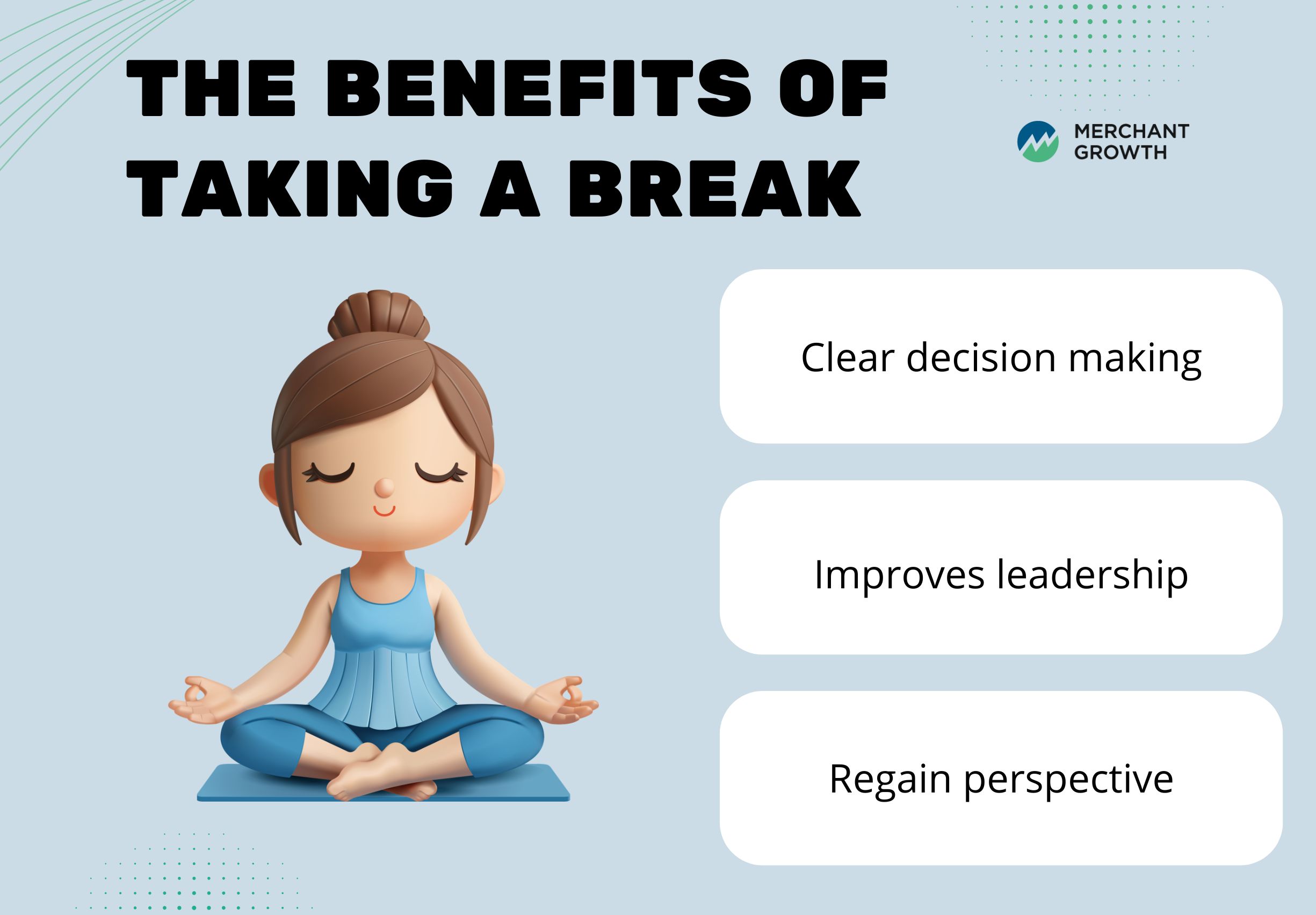
Clear-Decision Making
Breaks give entrepreneurs the opportunity to mentally reset and recover from prolonged pressure. Time away from daily operations can improve focus, reduce emotional exhaustion, and create space for clearer decision-making. Many entrepreneurs find that some of their best ideas and strategic insights happen when they finally step away from the constant demands of the business.
Improves Leadership
Rest also improves leadership. Entrepreneurs who are less overwhelmed tend to communicate more effectively, manage teams more confidently, and respond to challenges with greater patience and clarity. Burnout, on the other hand, often creates reactive leadership where decisions are driven by stress instead of long-term strategy.
Regain Perspective
Stepping away from work can also help entrepreneurs regain perspective. When founders are buried in day-to-day operations constantly, it becomes difficult to evaluate the broader direction of the business objectively. Taking breaks creates space for reflection, strategic planning, and long-term thinking that is difficult to achieve during nonstop operational pressure.
Signs It Might Be Time to Step Away From Your Business
Many entrepreneurs wait until they are completely overwhelmed before recognizing they need a break. The problem with this approach is that burnout becomes much harder to recover from once exhaustion has fully taken over.
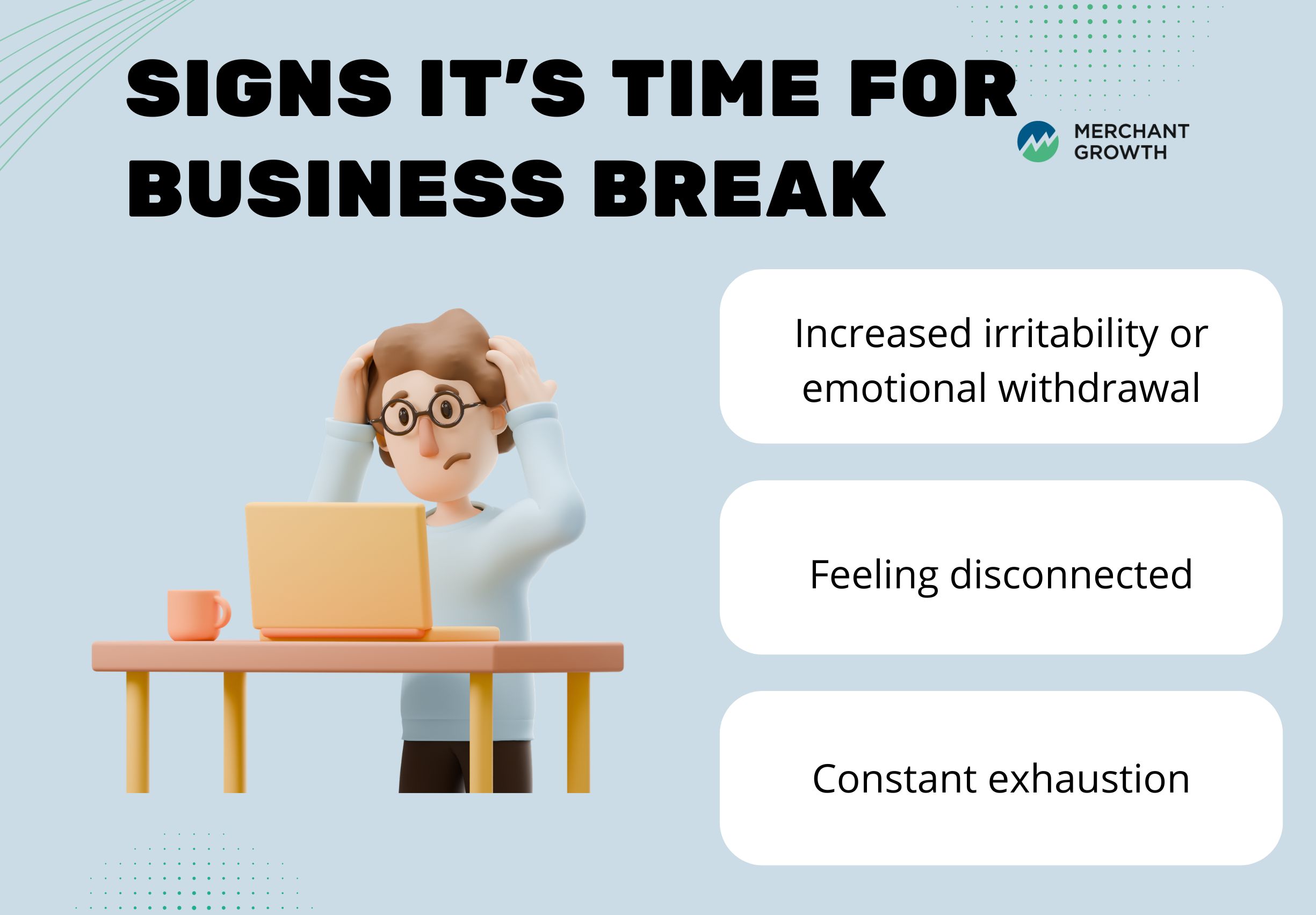
Constant Exhaustion
One of the clearest warning signs is constant exhaustion that does not improve with normal rest. Entrepreneurs may feel physically tired, mentally drained, or emotionally detached even after sleeping or taking short periods away from work. Difficulty concentrating, increased frustration, and declining motivation are also common indicators that burnout may be developing.
Feeling Disconnected
Some entrepreneurs begin feeling disconnected from the business itself. Work that once felt exciting starts feeling heavy, repetitive, or emotionally exhausting. Others notice they are working constantly but accomplishing less because stress is affecting focus and productivity.
Increased Irritability or Emotional Withdrawal
Burnout can also impact relationships outside the business. Increased irritability, emotional withdrawal, or difficulty being present during personal time are often signs that work stress is beginning to affect overall wellbeing. Recognizing these warning signs early allows entrepreneurs to take proactive steps before burnout becomes significantly more severe.
How Entrepreneurs Can Take a Break Without Everything Falling Apart
For many business owners, the idea of stepping away feels unrealistic because the business depends heavily on them personally. The key to taking breaks successfully is not abandoning responsibilities entirely, but building systems and structure that allow the business to operate more independently.
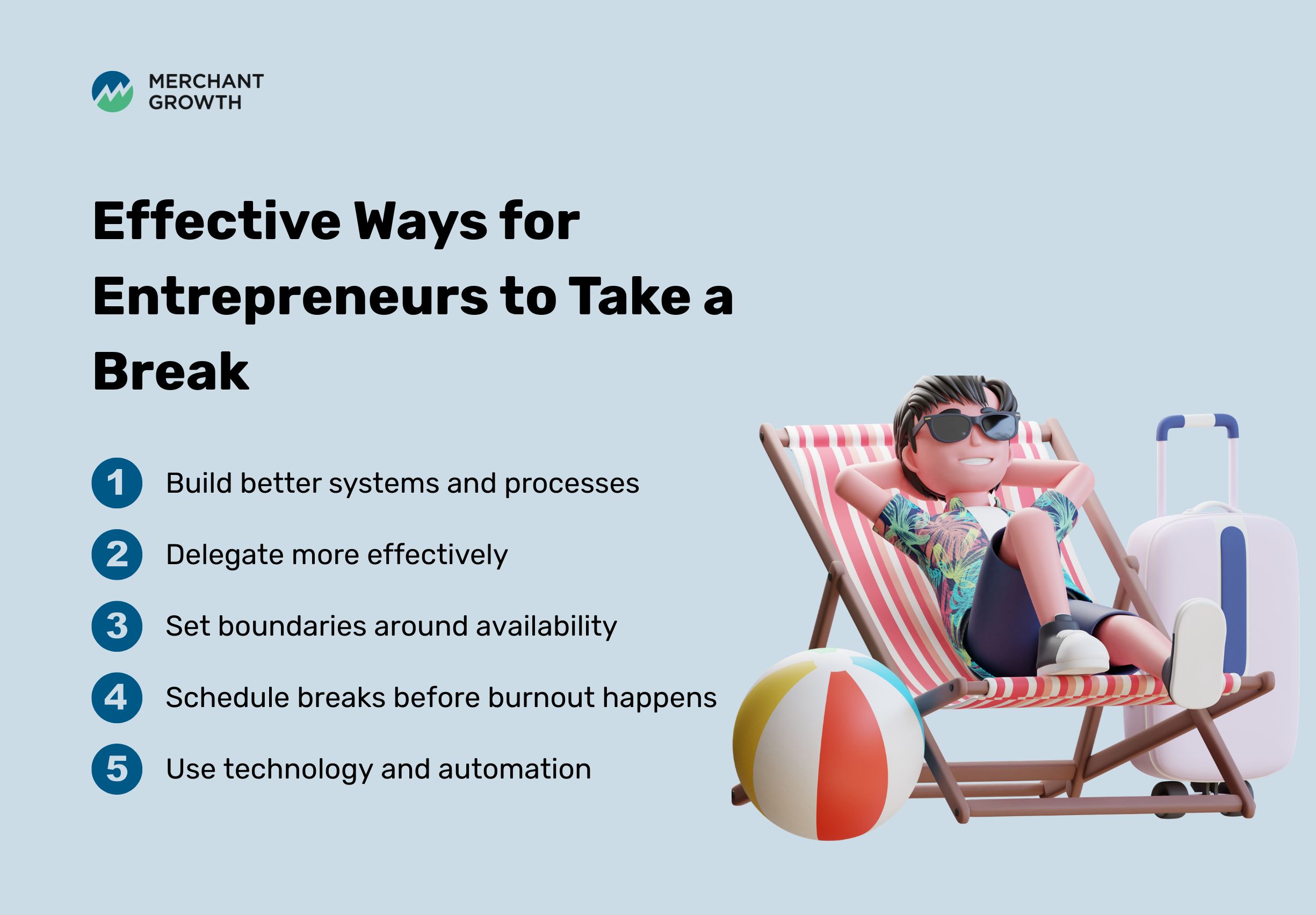
Build Better Systems and Processes
Businesses that rely entirely on the founder for every decision are far more vulnerable to burnout. Creating documented processes, repeatable workflows, and operational systems helps reduce daily chaos while making delegation easier over time.
When responsibilities are clearly organized, entrepreneurs can step away more confidently knowing the business is not dependent on constant oversight. Strong systems also improve consistency and scalability as the business grows.
Delegate More Effectively
Many entrepreneurs struggle with delegation because they fear losing control or believe tasks will not be completed properly. While delegation can feel uncomfortable initially, trying to handle every responsibility personally often creates long-term operational strain.
Delegating operational tasks, outsourcing administrative work, or empowering employees with greater responsibility can significantly reduce workload. This creates more space for entrepreneurs to focus on high-level leadership and strategic decision-making instead of constant day-to-day firefighting.
Set Boundaries Around Availability
Constant accessibility is one of the fastest paths to burnout. Entrepreneurs who answer emails late at night, respond to messages during vacations, or remain permanently connected to notifications rarely experience true mental recovery.
Setting boundaries around communication helps create healthier separation between work and personal time. This may include limiting after-hours communication, establishing response time expectations, or creating dedicated offline periods during evenings or weekends.
Schedule Breaks Before Burnout Happens
Many entrepreneurs only take breaks after reaching a breaking point. A healthier approach is treating recovery as part of long-term business planning rather than an emergency response to exhaustion.
Scheduling vacations, mental health days, or regular time away from operations proactively helps prevent stress from building continuously. Even shorter breaks throughout the year can improve energy, creativity, and overall resilience significantly.
Use Technology and Automation
Technology can help reduce repetitive manual tasks that contribute to entrepreneur overload. Scheduling software, automated email responses, CRM systems, invoicing tools, and workflow automation can all improve operational efficiency while reducing daily mental strain.
Automation does not replace human connection, but it can help entrepreneurs spend less time managing repetitive administrative work. This creates more capacity for leadership, strategic thinking, and recovery.
Work-Life Balance for Entrepreneurs: Why It Matters
Work-life balance is often misunderstood in entrepreneurship. Many business owners assume balance means working less or lacking ambition, when in reality it is about creating a sustainable way to operate long term without sacrificing personal well-being entirely.
Entrepreneurs who maintain healthier boundaries often experience better mental clarity, stronger communication, and more consistent leadership. They are also more likely to maintain long-term motivation because they are not operating in a constant state of exhaustion.
Burnout does not just affect the entrepreneur personally. It often affects the business itself through slower decision-making, reduced creativity, poor communication, and declining operational effectiveness. Businesses become more sustainable when founders have the energy and clarity needed to lead effectively over time.
Healthy work-life balance also improves relationships outside the business. Entrepreneurs who create time for rest, family, and personal recovery are often better equipped to handle the pressures of business ownership without becoming emotionally overwhelmed.
What Businesses Can Learn From the Entrepreneurial Drought
Canada’s entrepreneurial drought highlights how difficult it has become for many business owners to sustain long-term growth under ongoing economic pressure. Inflation, rising operating costs, recession concerns, trade uncertainty, and changing consumer spending habits are forcing many entrepreneurs to operate with tighter margins and greater financial stress than ever before. For some businesses, survival has required owners to work longer hours, absorb more responsibilities personally, and delay hiring or expansion plans just to maintain stability.
At the same time, the entrepreneurial slowdown also exposes the risks of building businesses entirely around nonstop hustle and founder dependency. Businesses that rely too heavily on the owner for every decision, customer interaction, or operational task often become far more vulnerable during periods of economic uncertainty. When entrepreneurs are exhausted or overwhelmed, the business itself can struggle to adapt effectively.
One of the biggest lessons from the current business climate is the importance of operational resilience. Businesses with stronger systems, healthier cash flow management, delegation structures, and operational flexibility are often better positioned to navigate economic challenges without placing unsustainable pressure on the founder personally. Resilience is not just about working harder during difficult periods. It is about creating a business that can continue operating effectively even during uncertainty.
The entrepreneurial drought also reinforces that sustainable growth matters more than constant growth at all costs. Businesses built entirely around overwork may create short-term momentum, but long-term sustainability requires adaptability, support systems, and realistic operational expectations. Entrepreneur wellbeing should not be treated as separate from business performance because healthy, supported founders are often better equipped to make strategic decisions, lead teams effectively, and guide businesses through economic change over time.
How Merchant Growth Supports Entrepreneurs During Challenging Economic Conditions
Financial pressure is one of the biggest drivers of entrepreneur stress and burnout. When cash flow becomes tight, many business owners feel forced to take on more responsibilities themselves, delay hiring, or put operational improvements on hold just to keep the business moving forward. Over time, that constant pressure can make stepping away from work feel impossible.
Access to financing can help relieve some of that strain by giving businesses more flexibility to invest in support systems, staffing, technology, inventory, or operational improvements that reduce day-to-day pressure on the founder. Rather than operating entirely in survival mode, businesses can focus more strategically on stability and long-term growth.
Merchant Growth helps Canadian entrepreneurs access flexible financing solutions designed to support sustainable business growth. Whether businesses are managing cash flow challenges or investing in operational improvements, financial flexibility can help create stronger, more resilient businesses without relying entirely on nonstop hustle.