

Whether you're buying groceries, filling up your vehicle, paying rent, or renewing a software subscription, one thing has become increasingly clear: prices have gone up. Business owners have felt this just as much as consumers. Rising supplier costs, higher wages, increasing insurance premiums, utilities, transportation expenses, and everyday operating costs have made it more expensive to run a business than it was just a few years ago.
Statistics Canada continues to report that inflation is affecting many of the expenses businesses rely on every day. In May, the Consumer Price Index (CPI) rose 3.2% year over year, while gasoline prices increased 33.2% compared to the previous year. Consumers also saw prices rise for travel, fresh fruit, and fresh vegetables, highlighting that rising costs are being felt across many sectors of the economy, not just by businesses but by the customers they serve.
This creates a difficult balancing act. On one hand, your prices need to reflect the true cost of delivering your products or services so your business can remain profitable and continue growing. On the other hand, you know your customers are facing many of the same financial pressures, which can make raising your prices feel uncomfortable, awkward, or even a little selfish.
The reality is that increasing your prices is not about charging customers more simply because you can. It's about protecting the long-term health of your business so you can continue delivering the quality, service, and experience your customers expect. Healthy businesses need healthy profit margins, and pricing is one of the most important tools for maintaining them.
Fortunately, most customers understand that prices change over time. What often determines whether a price increase is accepted isn't the increase itself; it's how clearly, professionally, and confidently it's communicated. A thoughtful price increase letter helps customers understand what's changing, why it's happening, and why your business continues to be worth the investment.
In this guide, we'll explain how to recognize when it's time to review your pricing, how to raise your prices without damaging customer relationships, what every effective price increase letter should include, and provide a customizable template you can use for your own business.
Key Takeaways
- Price increases are a normal part of building a profitable, sustainable business.
- Customers are more likely to accept a price increase when it's communicated clearly and with confidence.
- Small, planned increases are often easier to manage than waiting years before making one significant adjustment.
- A strong price increase letter focuses on value, transparency, and appreciation rather than apology.
- Reviewing your pricing regularly helps protect your margins as your business grows.
- Not every financial challenge requires a price increase—sometimes other funding solutions may be a better fit.
Is It Time to Raise Your Prices?
Knowing how to announce a price increase is important, but first you need to determine whether raising your prices is actually the right decision. Many business owners delay reviewing their pricing because they worry about upsetting loyal customers or losing business to competitors. In reality, regularly evaluating your pricing is simply part of running a healthy business.
The goal isn't to increase prices every chance you get. Instead, it's to ensure your pricing continues to reflect the value you provide, the costs of operating your business, and your long-term financial goals. Businesses that review their pricing regularly often avoid making large, unexpected increases because they make smaller adjustments before profit margins begin to suffer.
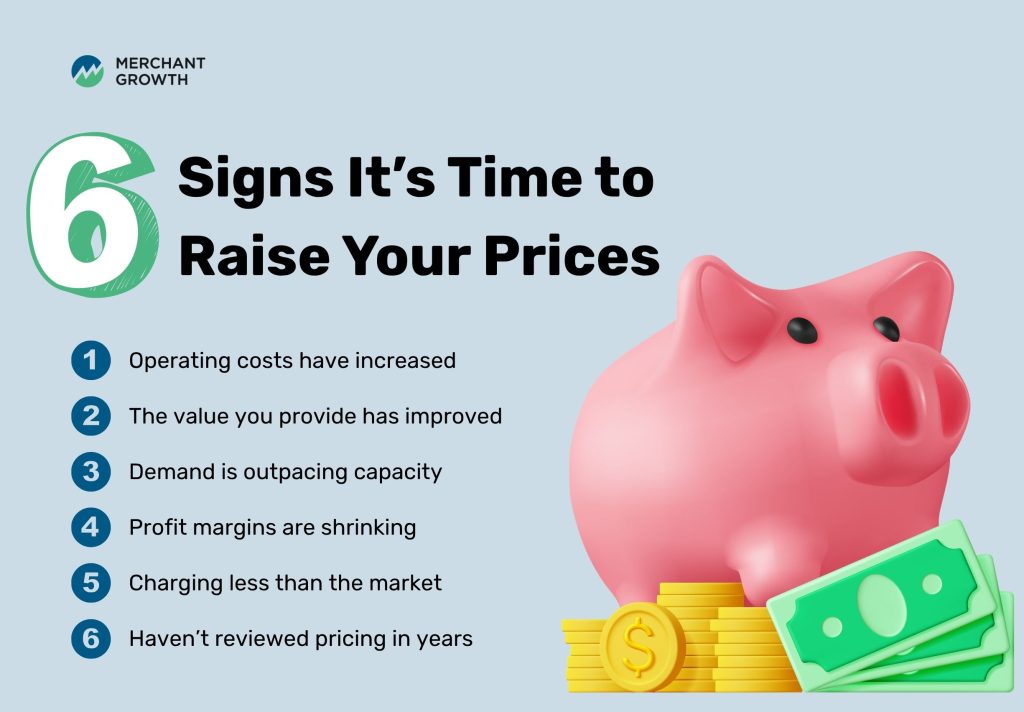
6 Signs It's Time to Increase Your Prices
There isn't a universal rule for when businesses should raise their prices. Every industry, business model, and customer base is different, which means the right timing depends on your unique circumstances rather than a fixed schedule. However, there are several common indicators that suggest your current pricing may no longer reflect the true cost or value of what you offer.
If one or more of the following situations sounds familiar, it may be time to review your pricing strategy. Raising your prices doesn't have to be a reaction to a financial emergency. In many cases, it's simply part of ensuring your business remains profitable, competitive, and positioned for long-term growth
Your Operating Costs Have Increased
One of the most common reasons businesses increase their prices is because their own expenses have increased. Rent, wages, insurance, fuel, software subscriptions, raw materials, utilities, and supplier pricing all influence what it costs to serve your customers. If those expenses continue rising while your pricing remains unchanged, your profit margins naturally begin to shrink.
Absorbing higher costs may seem like the customer-friendly choice in the short term, but it can eventually limit your ability to invest in your business. Sustainable pricing helps ensure you can continue providing the level of service, quality, and support your customers expect.
You've Increased the Value You Provide
Sometimes a price increase has nothing to do with inflation or rising expenses. As businesses grow, they often improve their products, expand their services, invest in new technology, earn additional certifications, or create a better overall customer experience.
Those improvements represent real value, and your pricing should evolve alongside them. If your business today offers significantly more than it did when you first established your pricing, your rates may no longer reflect what customers are actually receiving.
Demand Is Outpacing Your Capacity
A consistently full schedule can be a sign that your pricing deserves another look. If you're regularly booking weeks in advance, turning away new customers, or struggling to keep up with demand, it may indicate that your current pricing no longer reflects the market.
Strategic price increases can improve profitability without requiring your business to simply take on more work. Rather than increasing volume indefinitely, they allow you to grow more sustainably while continuing to deliver a high-quality customer experience.
Your Profit Margins Are Shrinking
Revenue only tells part of the story. A business can continue generating healthy sales while becoming less profitable each year if expenses increase faster than prices.
Regularly reviewing your financial performance can help identify this problem before it affects cash flow or growth plans. If you're working just as hard (or harder) but keeping less profit, your pricing strategy may need to be updated.
You're Charging Less Than the Market
It's natural to compare your pricing to competitors, but charging significantly less isn't always a competitive advantage. Customers often associate price with quality, expertise, and reliability, particularly for professional services.
Rather than trying to be the cheapest option, focus on pricing that reflects the value your business delivers. Businesses that consistently compete on price alone often find it difficult to invest in innovation, customer service, or future growth.
You Haven't Reviewed Your Pricing in Years
Sometimes the biggest reason businesses need a price increase is simply that they haven't looked at their pricing in a long time. Many entrepreneurs become so focused on serving customers that pricing quietly stays the same year after year, even as the business evolves around it.
Making pricing reviews part of your annual business planning can help prevent this from happening. Smaller, predictable adjustments are often much easier for customers to understand than one significant increase after years of unchanged pricing.
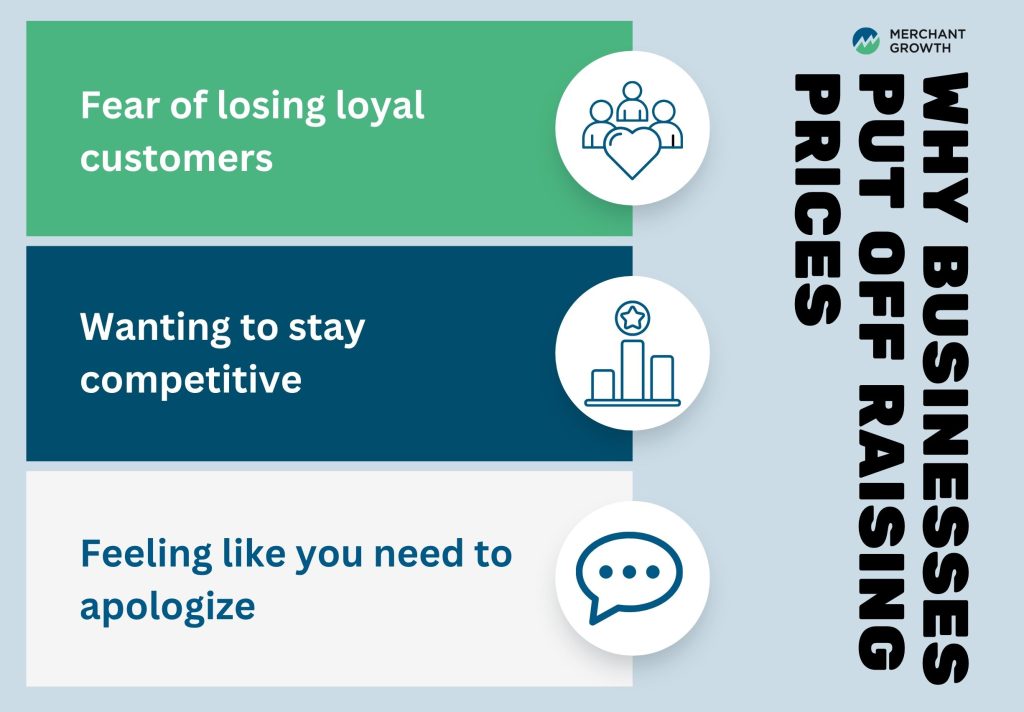
Why So Many Businesses Put Off Raising Their Prices
If the signs are there, why do so many business owners still avoid increasing their prices?
The answer is often more emotional than financial. Pricing isn't just about numbers; it feels personal. When you've spent years building trust with your customers, asking them to pay more can feel like you're risking the very relationships you've worked so hard to create.
The Fear of Losing Loyal Customers
For many entrepreneurs, the biggest concern is losing the customers they've worked so hard to earn. It's easy to imagine clients cancelling services, shopping elsewhere, or questioning the value you provide simply because prices have increased.
In reality, loyal customers rarely stay with a business because it's the cheapest option. They stay because they trust your expertise, appreciate your service, and believe they're receiving good value. When a price increase is communicated honestly and professionally, many customers understand that it's simply part of doing business.
Wanting to Stay Competitive
Many business owners also worry that raising prices will make competitors look more attractive. While keeping an eye on the market is important, competing primarily on price often creates challenges of its own.
Businesses that consistently underprice themselves have fewer resources to reinvest in staff, technology, customer service, and future improvements. Over time, that can make it even harder to compete on the things customers actually value most.
Feeling Like You Need to Apologize
One of the biggest mistakes businesses make when announcing a price increase is believing they need to justify every dollar. Long explanations about rising costs, supplier invoices, and operational expenses often make businesses sound uncertain about their own decision.
Customers generally don't expect a detailed financial breakdown. They simply want honest communication, reasonable notice, and confidence that they're continuing to receive great value. A short, transparent explanation is usually much more effective than an overly apologetic message.
Remember: Healthy Businesses Need Healthy Pricing
Perhaps the most important mindset shift is recognizing that raising your prices isn't something you're doing to your customers; it's something you're doing for the future of your business. Fair pricing allows you to continue investing in better products, stronger service, talented employees, and the customer experience that earned their loyalty in the first place.
When viewed through that lens, a price increase becomes less about charging more and more about ensuring your business remains healthy enough to continue serving customers for years to come. That's a conversation most customers are far more willing to understand than many business owners realize.
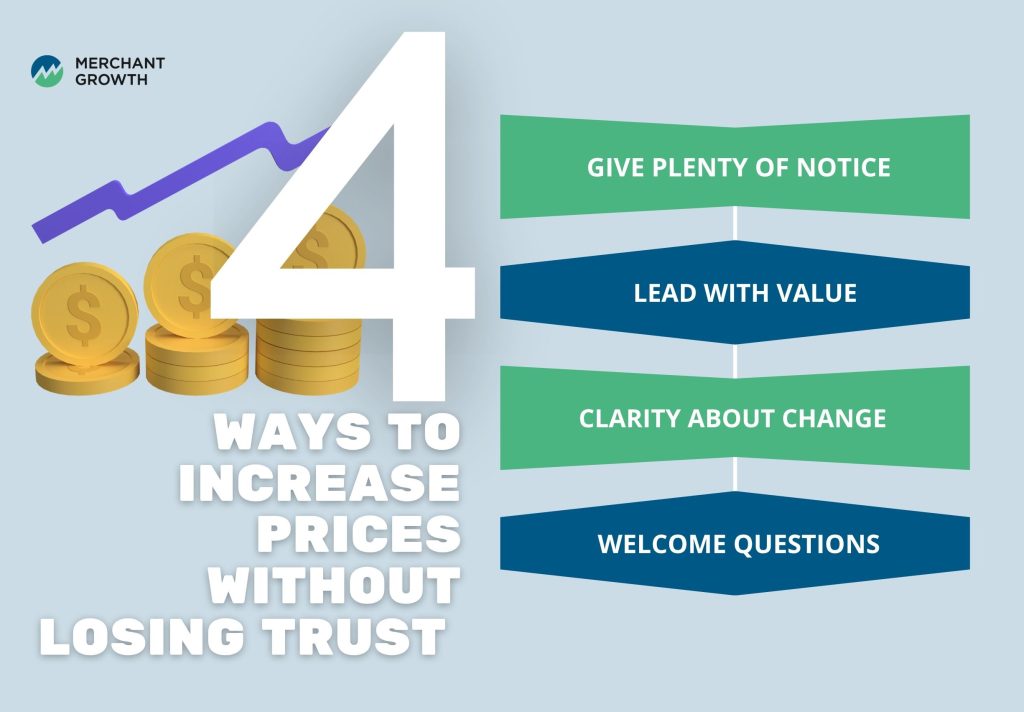
How to Raise Your Prices Without Losing Customer Trust
Once you've decided it's time to raise your prices, the next challenge is communicating the change. For many business owners, this can feel even more stressful than making the pricing decision itself. It's natural to worry about negative reactions, difficult conversations, or losing loyal customers you've spent years building relationships with.
The good news is that most customers don't expect prices to stay the same forever. They understand that businesses face rising costs, invest in improving their products and services, and need to remain profitable to continue operating. In many cases, customers aren't reacting to the price increase itself; they're reacting to how the increase is communicated.
A thoughtful approach can help customers feel informed rather than surprised. The goal isn't to convince every customer to love paying more. It's to communicate the change professionally, reinforce the value your business provides, and preserve the trust you've already built.
1. Give Customers Plenty of Notice
One of the quickest ways to frustrate customers is to announce a price increase with little or no warning. Whether you provide ongoing services, sell subscription products, or work under long-term agreements, giving customers time to prepare demonstrates professionalism and respect. It also allows them to adjust budgets, ask questions, or renew existing agreements before the new pricing takes effect.
The amount of notice you provide will depend on your business model, but in general, more notice is almost always better. Many businesses provide at least 30 days' notice for standard price changes, while businesses with annual contracts or recurring subscriptions may communicate changes several months before renewal. The key is making customers feel informed rather than caught off guard.
If possible, avoid announcing price increases immediately before invoices are sent or automatic renewals are processed. Giving customers time to process the information helps reduce frustration and reinforces that you're being transparent rather than trying to surprise them with additional costs.
2. Lead with Value, Not an Apology
Many businesses instinctively begin a price increase letter by apologizing. While it's understandable to acknowledge that nobody enjoys paying more, leading with an apology can unintentionally undermine confidence in your decision. If you sound uncertain about the increase, customers may begin questioning whether it's justified.
Instead, focus on the value your business continues to provide. Perhaps you've expanded your services, invested in new technology, improved turnaround times, added staff, or maintained the same high standards despite rising operating costs. Reminding customers why they chose your business in the first place helps shift the conversation away from price alone.
That doesn't mean ignoring the reality of rising costs. A brief, honest explanation is usually enough to provide context without sounding defensive. Customers appreciate transparency, but they don't need a detailed breakdown of every expense that contributed to the decision.
3. Be Clear About What's Changing
Uncertainty creates confusion, and confusion often creates frustration. Your customers should never have to guess when the new pricing begins, which products or services are affected, or how much they'll be paying moving forward. The clearer your communication, the fewer questions you'll need to answer later.
Every price increase letter should clearly outline the effective date, the updated pricing, and any changes to existing agreements or subscriptions. If certain customers will be grandfathered into their current rates for a period of time, explain exactly how that works and when the new pricing will eventually apply.
Keeping these details straightforward also helps your business appear organized and professional. Customers are far more likely to accept a price increase when they feel they have all the information they need to make informed decisions.
4. Make It Easy for Customers to Ask Questions
Even the clearest price increase notice won't answer every question. Some customers may want clarification, while others may simply appreciate the opportunity to discuss how the changes affect their account. Inviting those conversations shows confidence in your decision while reinforcing that customer relationships remain a priority.
Rather than ending your announcement immediately after explaining the new pricing, encourage customers to reach out if they have questions. Whether that's by phone, email, or speaking directly with their account representative, providing a clear point of contact helps reduce uncertainty and demonstrates that you're prepared to support them through the transition.
Being available doesn't mean negotiating every price increase. Instead, it gives customers reassurance that they're still valued and that your business is committed to open communication.
Why a Price Increase Letter Matters More Than You Think
Some businesses communicate price increases with a quick email, a line on an invoice, or a short social media announcement. While those methods may technically notify customers, they often miss an opportunity to reinforce trust and strengthen long-term relationships.
A well-written price increase letter does much more than communicate new pricing. It explains the decision with professionalism, reinforces the value your business provides, and reminds customers why they chose to work with you in the first place. Even if the message is delivered by email, approaching it as a thoughtful letter helps create a more personal and respectful customer experience.
The next section breaks down exactly what every effective price increase letter should include, along with a customizable template you can adapt to your own business.
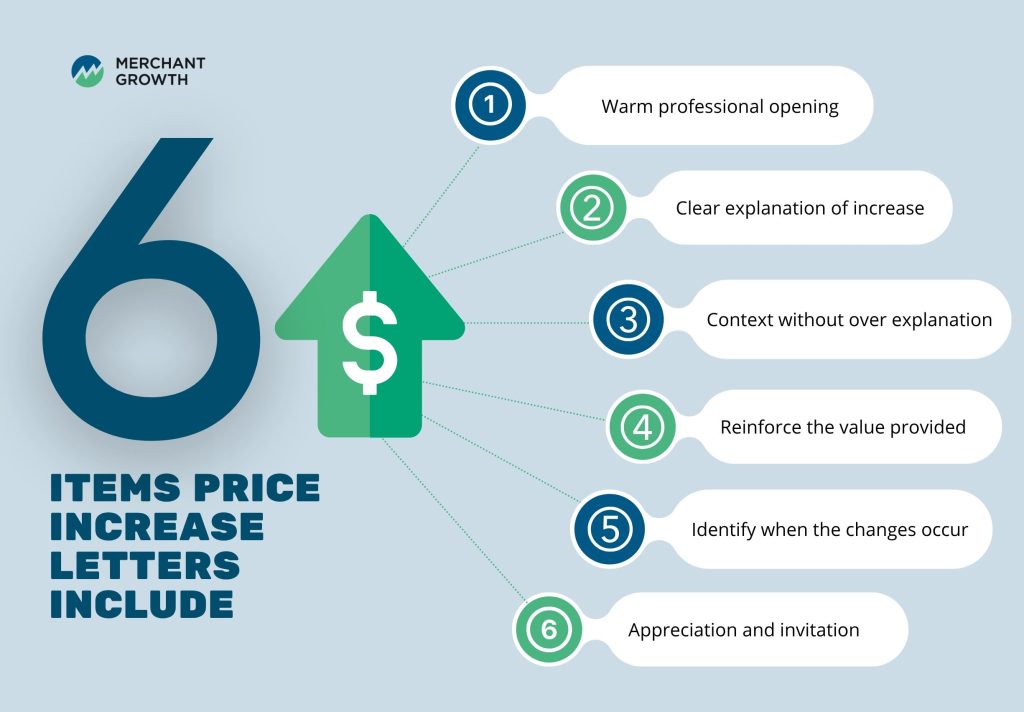
What Every Price Increase Letter Should Include
A price increase letter is more than just a notification that your prices are changing. It's an opportunity to communicate professionally, reinforce the value your business provides, and show customers that you appreciate their continued support. While every business will tailor its message differently, the strongest letters tend to follow the same overall structure.
Think of your letter as a conversation rather than an announcement. Customers should leave feeling informed, respected, and confident that your business is continuing to invest in providing excellent products or services. The goal isn't to justify every dollar of the increase. Instead, it's to explain the change clearly while maintaining the trust you've already built.
Start With a Warm, Professional Opening
The first few sentences help establish the tone for the rest of your message. Rather than immediately announcing a price increase, begin by thanking customers for their business and acknowledging the relationship you've built together. This helps customers feel valued before discussing any changes.
Keep your opening genuine and conversational. Whether you've worked with a customer for six months or six years, expressing appreciation reminds them that they're more than just an invoice or account number. A friendly introduction also makes the rest of the letter feel less transactional.
Clearly Explain the Price Increase
Once you've introduced the purpose of the letter, communicate the pricing change directly. Avoid vague language that forces customers to search for the important details. Instead, explain what is changing, when the new pricing takes effect, and which products or services are affected.
Being direct doesn't mean sounding abrupt. A confident explanation shows customers that the decision has been made thoughtfully and professionally. Keeping this section concise also prevents the announcement from becoming confusing or overwhelming.
Provide Context Without Overexplaining
Customers generally appreciate understanding why prices are changing, but they don't need a detailed breakdown of every business expense. A simple explanation is often enough to provide reassurance while keeping the focus on the future of your business.
Depending on your situation, you might briefly mention rising operating costs, investments in improving your products or services, expanding your team, or maintaining the level of quality customers expect. The explanation should provide context rather than become a lengthy justification. If the letter feels defensive, it can unintentionally create more questions than answers.
Reinforce the Value You Continue to Provide
A price increase naturally shifts attention toward cost, so it's important to remind customers why they chose your business in the first place. This is your opportunity to reinforce the expertise, service, reliability, and quality that continue to make your business worth choosing.
Rather than listing every feature you offer, focus on the overall experience customers receive. Whether that's responsive customer service, consistent quality, faster turnaround times, or years of industry expertise, reminding customers of your value helps reframe the conversation around the benefits they continue to receive—not simply the amount they'll pay.
Give Customers Time to Prepare
One of the most appreciated parts of any price increase letter is clear notice before the changes take effect. Customers don't like surprises, particularly when budgeting for recurring services or long-term agreements. Providing advance notice demonstrates professionalism and gives customers an opportunity to plan accordingly.
Be specific about the effective date and avoid leaving room for interpretation. If existing contracts, subscriptions, or ongoing projects will be handled differently, explain those details clearly so customers understand exactly what applies to them.
End With Appreciation and an Invitation to Connect
The closing should leave customers feeling confident that the relationship remains important to your business. Thank them for their continued trust, express your appreciation for their support, and reassure them that you're committed to providing the same high level of service moving forward.
It's also helpful to invite questions. Some customers may simply want clarification, while others may appreciate the opportunity to discuss the changes directly. Providing a point of contact shows transparency while reinforcing that your business remains approachable and customer-focused.
Price Increase Letter Template
Now that you understand the key elements of an effective price increase letter, it's much easier to put them together into a message that feels professional and authentic. While every business will personalize the wording, following a proven structure helps ensure you communicate the change clearly without overlooking important details.
The template below is designed as a starting point rather than a script. Feel free to adapt the tone, wording, and level of detail so it reflects your brand voice and the relationship you have with your customers.
Should You Send Your Price Increase Letter by Email?
For most businesses, email has become the preferred way to communicate pricing changes. It's fast, cost-effective, and allows customers to review the information on their own time. Email also provides a written record of the announcement and makes it easy to include additional resources, updated pricing guides, or frequently asked questions.
However, the delivery method should reflect the relationship you have with your customers. High-value clients, long-term contracts, or key business partnerships may deserve a more personal conversation before the written notice is sent. In some cases, a quick phone call followed by a formal price increase letter can help strengthen the relationship while ensuring there are no surprises.
Regardless of how you deliver the message, consistency matters. Every customer should receive the same core information, including the effective date, updated pricing, and an explanation of what the changes mean for them. Clear communication reduces confusion and helps create a smoother transition for everyone involved.
Common Price Increase Letter Mistakes to Avoid
Even well-intentioned businesses can make simple communication mistakes that leave customers feeling confused or frustrated. Fortunately, most of these issues are easy to avoid with a little planning and thoughtful wording.
Some of the most common mistakes include:
- Giving customers very little notice before the new pricing takes effect.
- Writing a lengthy apology that undermines confidence in the decision.
- Being unclear about when the increase begins or which services are affected.
- Focusing only on higher costs instead of the value customers continue to receive.
- Using overly complicated language instead of communicating clearly and directly.
- Sending the same generic message to every customer when a more personalized approach would strengthen important relationships.
A price increase letter doesn't need to be long to be effective. The strongest messages are usually the simplest: they're honest, respectful, and confident. When customers understand the change and continue to see the value your business provides, a price increase becomes much easier to accept.
What If Customers Push Back?
No matter how carefully you communicate a price increase, it's important to remember that not every customer will respond the same way. Some will understand immediately, others may have questions, and a small number may decide your business is no longer the right fit for their budget. While those conversations can feel uncomfortable, they don't necessarily mean the price increase was the wrong decision.
When customers raise concerns, resist the temptation to immediately discount your services or negotiate your new pricing. Instead, listen to their feedback, acknowledge their concerns, and confidently reinforce the value your business continues to provide. In many cases, customers simply want reassurance that they're still receiving the quality and service they've come to expect.
It's also helpful to remember that losing a small number of price-sensitive customers doesn't always have a negative impact on your business. Strategic pricing is about building a healthy, sustainable company, not trying to be the lowest-priced option in your market. Businesses that consistently underprice themselves often find it difficult to invest in improvements that benefit their customers over the long term.
Don't Let Short-Term Cash Flow Drive Long-Term Pricing Decisions
While price increases are often a smart business decision, they should support your long-term pricing strategy—not solve a temporary financial challenge. If you're increasing your prices simply because cash flow is tight this month or you're facing an unexpected expense, it may be worth taking a step back before making permanent pricing changes.
Short-term financial pressures happen to businesses of every size. Seasonal slowdowns, delayed customer payments, inventory purchases, equipment repairs, expansion opportunities, or hiring additional staff can all place temporary strain on cash flow. Those situations don't necessarily mean your pricing is wrong, they may simply require additional financial flexibility while your business continues to grow.
Before announcing a price increase, ask yourself a few important questions:
- Are my operating costs likely to remain higher over the long term?
- Does my current pricing accurately reflect the value I provide?
- Am I increasing prices because of a lasting business change or a temporary cash flow challenge?
- Could another financial solution help me achieve the same goal without changing my pricing today?
Answering these questions can help you make pricing decisions strategically rather than reactively. The most successful businesses treat pricing as part of their long-term growth plan rather than a quick solution whenever financial pressure arises.
How Merchant Growth Helps Businesses Grow With Confidence
Building a successful business often requires ongoing investment. Whether you're purchasing inventory, upgrading equipment, expanding your team, investing in marketing, or improving day-to-day operations, growth rarely happens without putting resources back into the business.
Rather than making pricing decisions based on short-term financial pressure, Merchant Growth gives Canadian small businesses access to flexible financing that can help bridge cash flow gaps and support future growth.
When your finances are supported, it's easier to make pricing decisions strategically instead of reactively. Whether you decide it's the right time to increase your prices or simply need additional working capital to keep your business moving forward, Merchant Growth helps give you the flexibility to grow on your own terms.